

 Download PDF
Market Overview
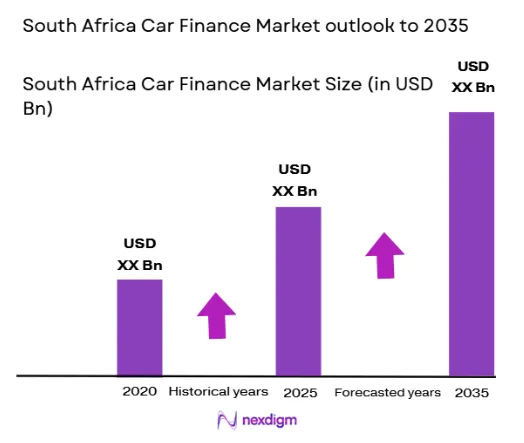
The South Africa Car Finance Market demonstrates steady expansion supported by increasing vehicle ownership and the strong presence of banking institutions offering automotive lending products. Based on a recent historical assessment, the market size reached approximately USD ~ billion, according to industry financial disclosures and banking sector reports from the South African Reserve Bank and National Credit Regulator. Demand is driven by rising urban mobility needs, expanding dealership financing partnerships, and increased consumer preference for structured repayment vehicle loans offered through banks and manufacturer-affiliated finance institutions.
Major urban centers such as Johannesburg, Cape Town, and Durban dominate the South Africa Car Finance Market due to their higher concentration of financial institutions, vehicle dealerships, and consumer purchasing power. Johannesburg remains the financial hub with strong banking penetration and vehicle lending activity, while Cape Town benefits from robust automotive retail networks and corporate fleet financing demand. Durban contributes through expanding logistics fleets and growing middle-income consumers who rely on vehicle financing solutions provided by banks and automotive finance companies.
Market Segmentation
By Product Type:
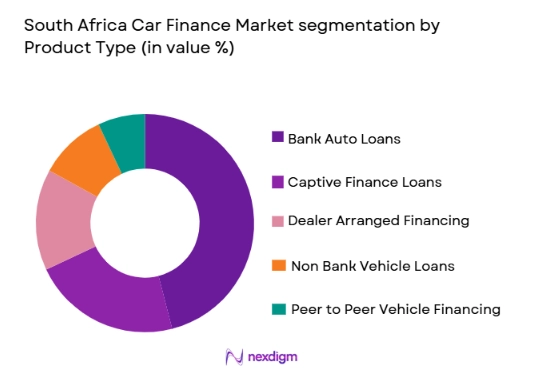
South Africa Car Finance market is segmented by product type into bank auto loans, captive finance loans, dealer arranged financing, non bank vehicle loans, and peer to peer vehicle financing. Recently, bank auto loans has a dominant market share due to factors such as strong banking sector penetration, established lending frameworks, and extensive consumer trust in large financial institutions. Commercial banks in South Africa maintain large vehicle loan portfolios and offer structured repayment schemes through dealership partnerships. The presence of nationwide branch networks and digital banking systems also supports easy loan approvals and refinancing options. Additionally, banks often provide competitive interest rates and longer repayment tenures compared with alternative lenders. Vehicle buyers frequently choose bank loans due to transparency, regulatory compliance under the National Credit Act, and the availability of bundled financial services such as insurance and vehicle protection products. These advantages collectively reinforce the dominance of bank-based auto financing in the South Africa Car Finance Market.
By Vehicle Type:
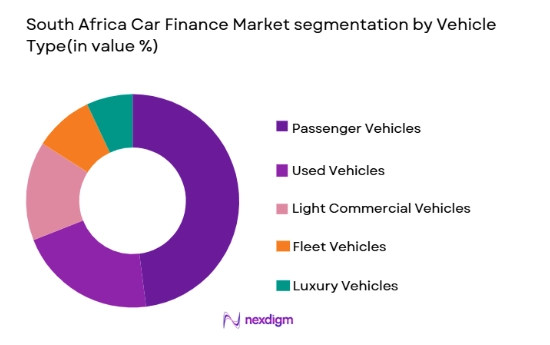
South Africa Car Finance market is segmented by vehicle type into passenger vehicles, light commercial vehicles, luxury vehicles, used vehicles, and fleet vehicles. Recently, passenger vehicles has a dominant market share due to factors such as growing middle income households, increasing commuting needs, and wider availability of entry level vehicle financing schemes. Passenger vehicle financing is widely promoted through dealership partnerships and bank loan programs that offer manageable repayment terms for individual buyers. Many lenders provide specialized packages for salaried professionals and first time vehicle owners, making passenger vehicle loans accessible to a broader consumer base. Urban expansion and suburban residential development also increase dependence on personal transportation, further boosting demand for financed passenger cars. Additionally, automakers collaborate with financial institutions to provide promotional loan offers and trade in programs, reinforcing passenger vehicle financing as the leading segment within the South Africa Car Finance Market.
Competitive Landscape
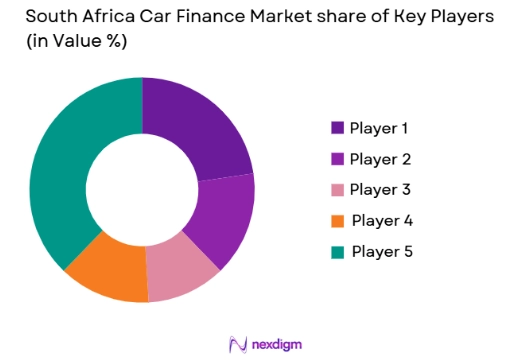
The South Africa Car Finance Market is moderately consolidated and led primarily by large commercial banks and automotive captive finance companies. Major financial institutions maintain extensive lending portfolios and strong dealership partnerships that enable widespread financing coverage across the country. Automotive manufacturers also operate captive finance divisions that provide tailored loan and leasing solutions for their vehicle brands. Digital lending platforms and fintech companies are gradually entering the market, increasing competition by offering faster credit approvals and flexible loan structures.
| Company Name | Establishment Year | Headquarters | Technology Focus | Market Reach | Key Products | Revenue | Automotive Financing Model |
| Standard Bank Group | 1862 | Johannesburg | ~ | ~ | ~ | ~ | ~ |
| Absa Group | 1991 | Johannesburg | ~ | ~ | ~ | ~ | ~ |
| Nedbank Group | 1888 | Johannesburg | ~ | ~ | ~ | ~ | ~ |
| FirstRand Bank | 1998 | Johannesburg | ~ | ~ | ~ | ~ | ~ |
| Toyota Financial Services | 1982 | Tokyo | ~ | ~ | ~ | ~ | ~ |
South Africa Car Finance Market Analysis
Growth Drivers
Vehicle Ownership Expansion Among Urban Middle Income Consumers:
Rising urbanization and income growth across metropolitan areas significantly contributes to the growth of the South Africa Car Finance Market. Increasing numbers of middle income households require reliable transportation for commuting, employment access, and daily mobility, which stimulates demand for financed vehicles. Many consumers cannot afford upfront vehicle purchases, making financing options essential for enabling car ownership. Financial institutions and automakers have responded by offering flexible repayment programs and extended loan tenures that make vehicle ownership more accessible. Dealership partnerships with banks facilitate on site loan approvals, reducing the time required to secure financing. Additionally, expanding suburban residential developments increase reliance on private transportation rather than public transit systems. Consumers often prefer financing programs that include bundled insurance, maintenance, and extended warranty coverage within the loan structure. These bundled offerings create convenience and financial predictability for borrowers. The increasing availability of digital loan applications further simplifies the process and attracts younger borrowers who prefer online financial services. As a result, urban consumer demand remains one of the most influential drivers supporting the expansion of the South Africa Car Finance Market.
Expansion of Digital Automotive Lending Platforms:
The increasing digitization of financial services is transforming the structure of vehicle financing across South Africa. Banks and financial institutions are integrating online loan platforms, mobile applications, and automated credit scoring systems to streamline the vehicle financing process. Digital platforms allow consumers to compare loan offers, submit applications, and receive approvals within significantly shorter timeframes. This convenience improves accessibility for borrowers who may not have immediate access to physical bank branches. Automotive dealerships also integrate digital lending tools within their sales systems, enabling customers to arrange financing directly at the point of vehicle purchase. Fintech companies entering the automotive lending sector further accelerate digital transformation by offering alternative credit scoring models based on transaction data and financial behavior. These technological innovations reduce administrative costs for lenders while improving customer experience. Faster loan approvals and simplified documentation encourage more consumers to pursue financed vehicle purchases. In addition, digital platforms support remote loan servicing and payment management, increasing operational efficiency for lenders. As financial technology adoption expands across South Africa, digital lending platforms continue to strengthen the growth trajectory of the South Africa Car Finance Market.
Market Challenges
High Interest Rate Environment Affecting Vehicle Loan Affordability:
Interest rate fluctuations represent a significant challenge for the South Africa Car Finance Market because borrowing costs directly influence consumer affordability. When interest rates rise, monthly loan repayments increase, which can discourage potential borrowers from purchasing vehicles through financing arrangements. Many households already face financial pressure from inflation, housing costs, and rising utility expenses, making vehicle financing commitments more difficult to sustain. Financial institutions must carefully assess borrower creditworthiness to manage default risks associated with higher lending rates. Increased loan costs can also extend the time required for consumers to qualify for financing or secure acceptable repayment terms. Automotive dealerships may experience slower vehicle sales when financing becomes less affordable for consumers. Additionally, high interest rates can impact the used vehicle market, where borrowers typically rely more heavily on financing due to lower upfront affordability. Financial institutions attempt to mitigate this challenge by offering promotional interest rates or flexible loan structures, but these incentives may reduce lender margins. The persistence of elevated borrowing costs therefore remains a structural challenge that affects loan demand and financing accessibility in the South Africa Car Finance Market.
Credit Risk Exposure Within Subprime Borrower Segments:
Credit risk management represents another key challenge within the South Africa Car Finance Market due to the presence of borrowers with limited credit histories or unstable income patterns. Financial institutions must balance the goal of expanding vehicle ownership access with the need to maintain responsible lending standards. Borrowers classified within subprime categories may face difficulty securing traditional vehicle loans because lenders perceive a higher probability of repayment delays or defaults. Economic volatility and employment fluctuations further increase financial uncertainty for certain consumer groups. Lenders must therefore implement advanced credit scoring systems and stricter risk assessment processes before approving vehicle financing applications. These measures can limit loan availability for potential borrowers who require financing the most. Automotive finance providers may also increase interest rates or require higher down payments to compensate for perceived credit risk. Such conditions reduce the accessibility of vehicle financing for low income consumers. In addition, loan defaults may create financial losses for lenders and disrupt dealership financing programs. As a result, credit risk exposure continues to represent a complex operational challenge that financial institutions must carefully manage within the South Africa Car Finance Market.
Opportunities
Expansion of Electric Vehicle Financing Programs:
The growing introduction of electric vehicles within the South African automotive sector creates new financing opportunities for lenders and automotive finance companies. Electric vehicles generally carry higher purchase prices than conventional vehicles, which increases the importance of accessible financing solutions for consumers interested in adopting new technologies. Financial institutions can develop specialized loan programs tailored specifically for electric vehicles, including longer repayment periods and competitive interest structures. Automakers and banks may collaborate to introduce financing packages that combine vehicle loans with charging infrastructure installation services. Government policies supporting sustainable transportation can further encourage financial institutions to create innovative loan products for electric mobility. As awareness of environmental sustainability increases among consumers, demand for electric vehicles and associated financing options is expected to expand. Automotive finance companies also benefit from the opportunity to diversify their lending portfolios through emerging vehicle technologies. New financing products targeting electric vehicles can attract environmentally conscious buyers and early technology adopters. Additionally, leasing models for electric vehicles may provide flexible financing structures that reduce ownership barriers. These developments collectively create substantial growth potential for the South Africa Car Finance Market as electric mobility adoption increases.
Growth of Digital Marketplace Vehicle Financing Platforms:
The expansion of online automotive marketplaces presents another important opportunity for the South Africa Car Finance Market by integrating vehicle sales and financing within a single digital ecosystem. Consumers increasingly use online platforms to research vehicle models, compare prices, and connect with dealerships before making purchasing decisions. Financial institutions can integrate financing tools directly into these marketplaces, allowing buyers to evaluate loan options while browsing vehicles. This integrated approach simplifies the purchasing process and encourages more consumers to complete transactions through digital channels. Online marketplaces also provide lenders with valuable consumer data that can improve credit assessment and risk management models. Fintech companies collaborating with automotive marketplaces can introduce innovative financing structures, including subscription based vehicle ownership and flexible loan repayment plans. These platforms also facilitate financing for used vehicles, which represent a large portion of automotive transactions in South Africa. By enabling faster loan approvals and seamless digital transactions, marketplace financing solutions enhance convenience for both consumers and lenders. As digital automotive retail platforms continue expanding, integrated financing services are expected to play an increasingly significant role in shaping the future of the South Africa Car Finance Market.
Future Outlook
The South Africa Car Finance Market is expected to experience sustained development driven by digital transformation in financial services and expanding vehicle ownership. Automotive lenders are increasingly integrating digital credit scoring, mobile loan applications, and automated underwriting systems to improve financing accessibility. Regulatory oversight from financial authorities continues to strengthen consumer protection while maintaining responsible lending practices. Growing interest in electric vehicles and alternative mobility solutions may also reshape financing products in the coming years. As dealership networks and fintech partnerships expand, the market is likely to witness broader access to vehicle financing across both urban and emerging consumer segments.
Major Players
- Standard Bank Group
- Absa Group
- FirstRand Bank
- Nedbank Group
- Capitec Bank
- Toyota Financial Services South Africa
- Volkswagen Financial Services South Africa
- BMW Financial Services South Africa
- Mercedes Benz Financial Services South Africa
- Investec Bank
- WesBank
- Motor Finance Corporation
- Nissan Finance South Africa
- Ford Credit South Africa
- Hyundai Finance South Africa
Key Target Audience
- Automotive manufacturers
- Vehicle dealership networks
- Automotive finance companies
- Commercial banks and lending institutions
- Private equity investment firms
- Government and regulatory bodies
- Automotive fleet operators
- Insurance and vehicle protection providers
Research Methodology
Step 1: Identification of Key Variables
The research process begins by identifying major market variables such as vehicle ownership rates, lending penetration, financing structures, and macroeconomic indicators that influence automotive loan demand within the South Africa Car Finance Market.
Step 2: Market Analysis and Construction
Comprehensive analysis is conducted using financial reports, automotive sales data, banking sector disclosures, and industry publications to construct a structured model representing the market size, segmentation patterns, and financial activity.
Step 3: Hypothesis Validation and Expert Consultation
Industry experts including automotive lenders, financial analysts, and dealership representatives are consulted to validate research assumptions and confirm the accuracy of financing trends and consumer borrowing behavior.
Step 4: Research Synthesis and Final Output
All collected information is consolidated into a structured analytical framework, enabling accurate evaluation of market dynamics, competitive positioning, and emerging opportunities within the South Africa Car Finance Market.

- Executive Summary
- Research Methodology (Definitions, Scope, Industry Assumptions, Market Sizing Approach, Primary & Secondary Research Framework, Data Collection & Verification Protocol, Analytic Models & Forecast Methodology, Limitations & Research Validity Checks)

- Market Definition and Scope
- Value Chain & Stakeholder Ecosystem
- Regulatory / Certification Landscape
- Sector Dynamics Affecting Demand
- Strategic Initiatives & Infrastructure Growth

- Growth Drivers
Rising Passenger Vehicle Ownership Across Urban Centers
Expansion of Digital Lending Platforms by Financial Institutions
Growing Demand for Used Vehicle Financing - Market Challenges
High Interest Rate Environment Impacting Borrowing Costs
Credit Risk Exposure in Subprime Borrower Segments
Regulatory Compliance Requirements for Lending Institutions - Market Opportunities
Expansion of Digital First Vehicle Financing Platforms
Growth of Financing Solutions for Electric Vehicles
Partnerships Between Automakers and Financial Institutions - Trends
Increasing Adoption of Online Car Loan Approval Platforms
Integration of AI Driven Credit Assessment Tools
Growing Popularity of Balloon Payment Financing Structures
Expansion of Used Vehicle Marketplace Financing
Rise of Fintech Partnerships in Automotive Lending - Government Regulations & Defense Policy
Consumer Credit Regulation Under National Credit Act
Responsible Lending Compliance Requirements
Financial Conduct Authority Oversight of Credit Providers - SWOT Analysis
- Stakeholder and Ecosystem Analysis
- Porter’s Five Forces Analysis
- Competition Intensity and Ecosystem Mapping

- By Market Value, 2020-2025
- By Installed Units, 2020-2025
- By Average System Price, 2020-2025
- By System Complexity Tier, 2020-2025

- By System Type (In Value%)
Bank Auto Loans
Captive Finance Programs
Dealer Arranged Financing
NonBank Vehicle Loans
Peer to Peer Vehicle Financing - By Platform Type (In Value%)
Bank Branch Financing Platforms
Dealer Integrated Financing Platforms
Online Loan Application Platforms
Mobile App Based Financing Platforms
Aggregator Auto Finance Platforms - By Fitment Type (In Value%)
New Vehicle Financing
Used Vehicle Financing
Refinancing Programs
Lease to Own Financing
Balloon Payment Financing - By EndUser Segment (In Value%)
Individual Car Buyers
Fleet Operators
Corporate Vehicle Buyers
Ride Hailing Drivers
Small Business Vehicle Owners - By Procurement Channel (In Value%)
Direct Bank Lending
Dealer Financing Desks
Online Lending Platforms
Financial Brokers
Captive Manufacturer Financing - By Material / Technology (in Value %)
Digital Credit Scoring Systems
AI Based Risk Assessment Platforms
Blockchain Based Loan Processing
Automated Loan Approval Systems
Cloud Based Financing Management Platforms

- Market structure and competitive positioning
- Market share snapshot of major players
- CrossComparison Parameters (Interest Rate Structure, Loan Tenure Options, Credit Approval Speed, Dealer Integration Capability, Digital Application Support, Risk Assessment Technology, Customer Service Network, Down Payment Flexibility, Residual Value Programs, Used Vehicle Financing Coverage)
- SWOT Analysis of Key Players
- Pricing & Procurement Analysis
- Key Players
Standard Bank Group
Absa Group
FirstRand Bank
Nedbank Group
Capitec Bank
Toyota Financial Services South Africa
Volkswagen Financial Services South Africa
BMW Financial Services South Africa
Mercedes Benz Financial Services South Africa
Santam Structured Insurance Vehicle Finance
Investec Bank
MFC Vehicle Finance
WesBank
Motor Finance Corporation
Ally Financial South Africa

- Increasing reliance on financing among first time car buyers
- Fleet operators leveraging structured financing for vehicle expansion
- Ride hailing drivers depending on flexible loan repayment structures
- Small businesses using vehicle finance to support logistics operations

- Forecast Market Value, 2026-2035
- Forecast Installed Units, 2026-2035
- Price Forecast by System Tier, 2026-2035
- Future Demand by Platform, 2026-2035


 Request a Sample
 Ask for Customization
 Get a Quote
 Enquire Now