

 Download PDF
 Download PDF
Market Overview
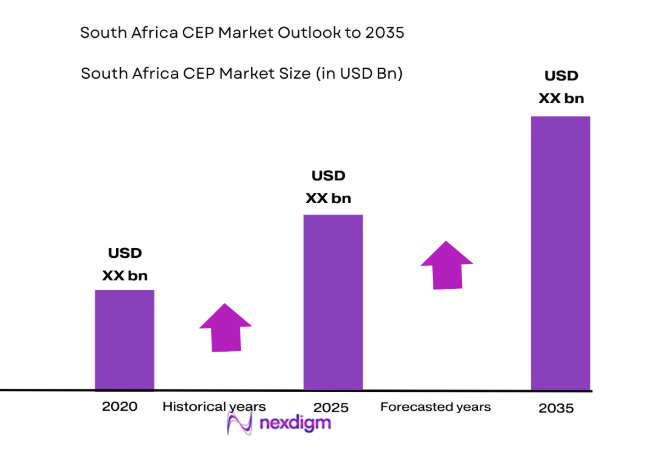
Based on a recent historical assessment, the South Africa courier, express, and parcel logistics sector recorded a market value of approximately USD ~ Billion, according to data published by the South African Department of Communications and Digital Technologies and logistics industry assessments. The sector is primarily driven by the rapid expansion of digital retail ecosystems, increasing parcel volumes generated by online marketplaces, and the growth of small and medium enterprises using courier networks for nationwide product distribution and supply chain fulfillment operations.
Johannesburg and Cape Town function as the most influential logistics hubs because they host major distribution centers, air cargo terminals, and integrated transport infrastructure that support high parcel throughput. Durban also remains strategically significant due to its port connectivity and international trade logistics operations. These metropolitan logistics ecosystems enable courier operators to process large shipment volumes efficiently while supporting domestic e commerce deliveries, cross border parcel shipments, and national distribution networks across retail, manufacturing, and healthcare supply chains.
Market Segmentation
By Product Type
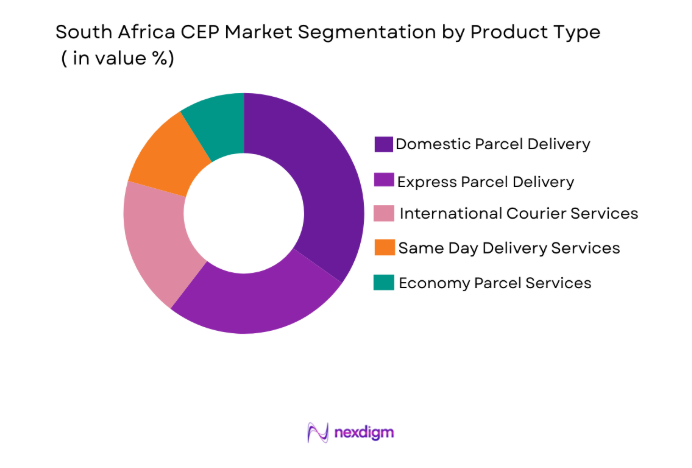
South Africa CEP market is segmented by product type into Domestic Courier Services, Express Parcel Delivery, International Courier Services, Same Day Delivery Services, and Economy Parcel Services. Recently, Domestic Courier Services has a dominant market share due to strong demand from online retail platforms and business-to-consumer shipping activities across metropolitan regions. National retailers, e commerce marketplaces, and SMEs rely heavily on domestic courier networks to move parcels between distribution hubs and residential delivery points, supported by extensive road logistics infrastructure and large urban consumer bases.
By Platform Type
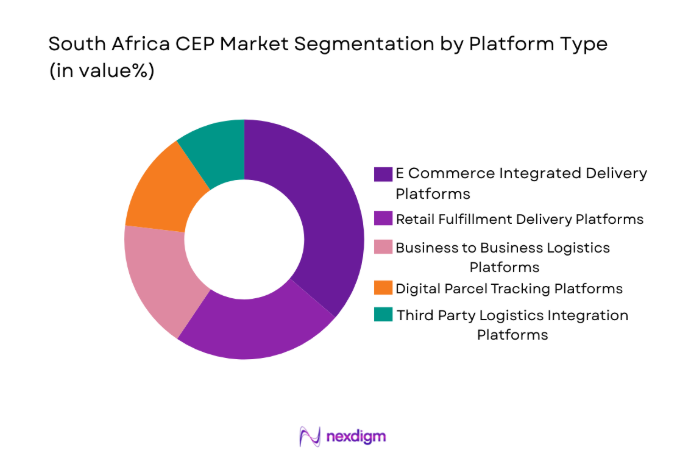
South Africa CEP market is segmented by platform type into E Commerce Integrated Delivery Platforms, Retail Fulfillment Delivery Platforms, Business to Business Logistics Platforms, Digital Parcel Tracking Platforms, and Third Party Logistics Integration Platforms. Recently, E Commerce Integrated Delivery Platforms has a dominant market share due to increasing integration between online retail systems and logistics providers. These platforms enable automated order processing, shipment tracking, warehouse integration, and rapid parcel dispatch, supporting the operational requirements of large online marketplaces and omnichannel retail distribution networks across major South African urban centers.
Competitive Landscape
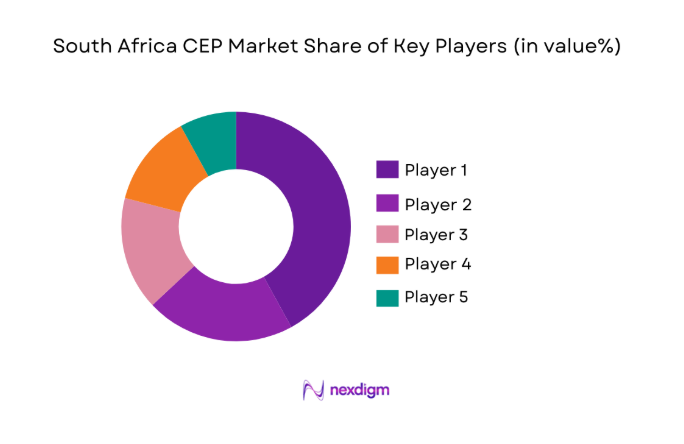
The South Africa CEP market remains moderately consolidated with several global logistics providers competing alongside strong regional courier companies. International firms leverage advanced parcel sorting technology, cross border delivery capabilities, and global logistics networks, while domestic operators maintain extensive last mile delivery coverage and localized distribution infrastructure. Competition is largely driven by delivery speed, technology-enabled tracking systems, fleet capacity, and partnerships with large e commerce platforms and national retailers.
| Company Name | Establishment Year | Headquarters | Technology Focus | Market Reach | Key Products | Revenue | Fleet Capacity |
| DHL Express South Africa | 1969 | Bonn, Germany | ~ | ~ | ~ | ~ | ~ |
| FedEx Express | 1971 | Memphis, USA | ~ | ~ | ~ | ~ | ~ |
| Aramex | 1982 | Dubai, UAE | ~ | ~ | ~ | ~ | ~ |
| The Courier Guy | 2000 | Johannesburg, South Africa | ~ | ~ | ~ | ~ | ~ |
| Dawn Wing | 1989 | Johannesburg, South Africa | ~ | ~ | ~ | ~ | ~ |
South Africa CEP Market Analysis
Growth Drivers
Expansion of E Commerce Retail and Online Marketplace Logistics Demand
The rapid expansion of digital retail platforms across South Africa significantly increases parcel shipment volumes handled by courier express and parcel service providers nationwide. Online marketplaces, fashion retailers, electronics sellers, and grocery delivery platforms depend heavily on reliable parcel distribution networks to deliver consumer orders efficiently across metropolitan and regional markets. Courier companies therefore expand sorting hubs, automated distribution facilities, and last mile delivery networks capable of processing large volumes of small shipments daily. Urban fulfillment centers located near high population density areas enable logistics operators to reduce transportation distances and accelerate delivery timelines for e commerce orders. Retailers also increasingly integrate omnichannel commerce models where physical stores and online sales platforms share centralized inventory distribution systems. This operational transformation generates continuous demand for courier logistics services responsible for transporting goods from warehouses to homes and retail pickup points. Logistics providers further deploy route optimization software, parcel tracking platforms, and digital logistics management systems to improve delivery efficiency and customer transparency. The structural growth of digital retail ecosystems therefore strengthens the strategic importance of courier express parcel networks supporting consumer commerce distribution. As online retail penetration continues expanding across urban and suburban markets courier companies experience sustained parcel volume growth driven by digital consumption patterns.
Growth of Small and Medium Enterprise Shipping and National Distribution Networks
South Africa’s rapidly expanding small and medium enterprise ecosystem increasingly depends on courier express and parcel logistics networks to distribute goods across regional and national markets. SMEs involved in consumer goods manufacturing fashion retail electronics distribution and specialty products rely on courier services to deliver shipments directly to retailers wholesalers and consumers. National courier networks provide cost efficient logistics infrastructure enabling smaller companies to participate in domestic and cross border trade without maintaining their own distribution fleets. Courier providers expand nationwide branch networks franchise distribution centers and parcel drop off points enabling businesses located in secondary cities to access reliable shipping services. Digital shipping platforms further simplify logistics operations by enabling SMEs to generate shipping labels schedule pickups and monitor parcel delivery progress through integrated online systems. This technological accessibility significantly reduces operational barriers for small businesses participating in national commerce networks. Growing entrepreneurship activity and digital marketplace participation therefore increase demand for parcel logistics solutions capable of supporting diverse business shipping requirements. Courier operators consequently invest in scalable logistics infrastructure designed to handle increasing volumes of business shipments. The continued growth of SME driven commerce ecosystems therefore remains a major structural driver supporting sustained expansion of South Africa’s courier express parcel logistics sector.
Market Challenges
Urban Congestion and Last Mile Delivery Inefficiencies in Major Metropolitan Areas
Major metropolitan logistics hubs across South Africa frequently experience severe traffic congestion that significantly affects courier fleet mobility and delivery efficiency during peak business hours. Cities such as Johannesburg Cape Town and Durban handle extremely high vehicle volumes due to dense commercial activity commuter traffic and urban infrastructure constraints. Courier vehicles operating within congested transport corridors often experience delays that increase delivery timeframes and reduce fleet productivity for logistics companies. Parcel operators must therefore allocate additional vehicles drivers and routing resources to complete delivery schedules within promised service timelines. Last mile distribution challenges become more complex in densely populated urban districts where limited parking availability and building access restrictions further slow delivery operations. Courier providers increasingly rely on route optimization technologies and micro fulfillment hubs to mitigate urban delivery inefficiencies but operational complexity remains high. Traffic congestion also increases fuel consumption and vehicle maintenance costs which affect overall logistics operating expenses. Delivery reliability therefore becomes more difficult to maintain during peak shipping seasons when parcel volumes increase substantially. These urban infrastructure limitations create operational constraints that courier operators must continuously manage while maintaining service quality across high demand metropolitan markets.
Security Risks and Parcel Theft Across Logistics Transport Corridors
Logistics security concerns represent a significant operational challenge for courier express and parcel companies operating across South Africa’s transportation networks. Cargo theft incidents targeting delivery vehicles warehouses and logistics facilities create financial losses and supply chain disruptions for courier operators and their customers. High value parcels including electronics consumer goods and pharmaceutical shipments often become targets for organized theft groups operating along major transport corridors. Courier companies must therefore invest heavily in advanced security infrastructure including vehicle tracking systems surveillance technologies and secure distribution facilities to protect shipment integrity. Additional operational costs arise from employing security personnel monitoring logistics facilities and implementing strict shipment verification procedures. Insurance premiums for logistics operations also increase due to the elevated risk associated with cargo theft incidents. Security concerns may also influence route planning decisions requiring logistics companies to avoid high risk transportation areas which can increase travel distances and operational complexity. Maintaining shipment safety and reliability therefore becomes a critical operational priority for courier providers operating nationwide. Persistent logistics security risks consequently remain a structural challenge affecting cost structures and operational planning within the South African courier express parcel distribution ecosystem.
Opportunities
Expansion of Cross Border E Commerce and Regional Parcel Trade Networks
South Africa’s position as one of the most advanced logistics hubs in sub Saharan Africa creates substantial opportunities for courier express parcel providers serving regional cross border commerce networks. Growing digital retail participation across neighboring African economies significantly increases demand for reliable parcel shipping services connecting South African distribution centers with regional consumer markets. Courier companies therefore expand international shipping capabilities customs clearance services and regional distribution partnerships designed to support cross border e commerce trade flows. Logistics operators increasingly integrate customs documentation automation digital shipment tracking and regional logistics infrastructure to streamline international parcel deliveries. Expansion of regional trade agreements and economic integration initiatives further supports cross border parcel movement across Southern African trade corridors. Retailers located in South Africa often utilize domestic distribution centers to fulfill online orders destined for consumers in neighboring countries. Courier providers therefore invest in international air freight partnerships regional sorting hubs and specialized customs compliance systems capable of managing international parcel volumes. Growth of cross border online shopping significantly expands the addressable logistics market for parcel operators operating within the regional digital commerce ecosystem. This structural shift positions South Africa as a regional parcel distribution gateway connecting African consumer markets through integrated courier logistics networks.
Adoption of Logistics Automation and Digital Parcel Management Technologies
Rapid technological innovation within logistics operations presents significant opportunities for courier express parcel providers seeking to improve operational efficiency and service quality across South Africa. Automated parcel sorting systems robotics assisted warehouse handling technologies and artificial intelligence based route planning platforms enable courier companies to process shipments faster and more accurately. These advanced logistics technologies significantly increase parcel processing capacity within distribution centers while reducing operational errors and labor intensive manual handling tasks. Digital parcel management platforms further enable customers and businesses to schedule shipments track deliveries and manage logistics operations through integrated online interfaces. Courier companies increasingly deploy real time fleet monitoring systems predictive analytics and automated dispatch software to optimize transportation routes and reduce delivery delays. Automation also supports scalability allowing logistics providers to manage rapidly growing parcel volumes generated by expanding e commerce ecosystems. Technology adoption therefore enhances operational productivity while strengthening service reliability for courier networks operating nationwide. Continued investment in logistics technology infrastructure creates competitive advantages for courier operators capable of delivering faster shipments with improved operational transparency. These technological advancements therefore represent a major opportunity supporting long term transformation of South Africa’s courier express parcel logistics industry.
Future Outlook
South Africa’s courier express parcel logistics sector is expected to experience sustained expansion as digital commerce ecosystems continue generating large parcel volumes across retail distribution networks. Logistics providers are expected to invest heavily in automated parcel sorting facilities advanced warehouse technologies and route optimization platforms designed to increase delivery efficiency. Urban logistics infrastructure including micro fulfillment hubs and electric delivery fleets will continue evolving to support high demand last mile distribution networks. Regulatory oversight related to parcel security data protection and transport safety will further shape operational frameworks across courier networks. Growing regional trade integration and cross border digital commerce will also expand international parcel shipment opportunities for logistics operators.
Major Players
- DHL Express South Africa
- FedEx Express
- UPS South Africa
- Aramex South Africa
- RAM Hand to Hand Couriers
- The Courier Guy
- Dawn Wing
- Fastway Couriers South Africa
- DSV South Africa
- SkyNet Worldwide Express South Africa
- Buffalo International Logistics
- PostNet South Africa
- Internet Express
- City Logistics
- Globeflight Worldwide Express
Key Target Audience
- Logistics and parcel delivery companies
- E-commerce retail platforms
- Manufacturing and distribution companies
- Investments and venture capitalist firms
- Government and regulatory bodies
- Transportation infrastructure operators
- Cross-border trade and export organizations
Research Methodology
Step 1: Identification of Key Variables
The research process begins with identification of key variables affecting the South Africa CEP market including parcel volumes logistics infrastructure digital commerce adoption and regional trade networks. Industry databases government logistics statistics and shipping company disclosures are analyzed to determine relevant market drivers demand patterns and operational structures across courier logistics ecosystems.
Step 2: Market Analysis and Construction
Market structure is constructed using logistics industry reports courier operator disclosures and national transportation statistics to estimate shipment volumes operational capacity and service segmentation. Supply chain infrastructure including distribution hubs sorting centers and transportation networks are mapped to evaluate operational capabilities and regional logistics coverage.
Step 3: Hypothesis Validation and Expert Consultation
Preliminary research findings are validated through consultations with logistics industry professionals courier network managers supply chain specialists and trade logistics analysts. Expert insights help confirm market assumptions operational dynamics and emerging logistics technology adoption influencing parcel distribution networks.
Step 4: Research Synthesis and Final Output
All validated data points operational insights and logistics industry findings are consolidated into a comprehensive market research framework. Analytical models are applied to synthesize market structure competitive dynamics technology adoption and logistics infrastructure developments to produce the final South Africa CEP market report.

- Executive Summary
- Research Methodology (Definitions, Scope, Industry Assumptions, Market Sizing Approach, Primary & Secondary Research Framework, Data Collection & Verification Protocol, Analytic Models & Forecast Methodology, Limitations & Research Validity Checks)

- Market Definition and Scope
- Value Chain & Stakeholder Ecosystem
- Regulatory / Certification Landscape
- Sector Dynamics Affecting Demand
- Strategic Initiatives & Infrastructure Growth

- Growth Drivers
Rapid Expansion of E Commerce Retail and Online Marketplaces
Growth in SME Shipping Demand and Domestic Trade
Increasing Consumer Preference for Fast Parcel Delivery - Market Challenges
Rising Transportation and Fuel Costs
Urban Congestion Affecting Delivery Efficiency
Security Risks and Parcel Theft in Logistics Corridors - Market Opportunities
Expansion of Same Day and Next Day Delivery Services
Adoption of Digital Logistics Platforms and Parcel Tracking Systems
Growth of Cross Border E Commerce Parcel Shipments - Trends
Adoption of Automated Parcel Sorting and Distribution Hubs
Expansion of Electric Delivery Vehicles for Urban Logistics - Government Regulations
National Postal Service Regulations and Courier Licensing Requirements
Customs Compliance for Cross Border Parcel Shipments
Data Protection Regulations Affecting Digital Logistics Platforms - SWOT Analysis
- Porter’s Five Forces

- By Market Value, 2020-2025
- By Installed Units, 2020-2025
- By Average System Price, 2020-2025
- By System Complexity Tier, 2020-2025

- By System Type (In Value%)
Domestic Courier Services
Express Parcel Delivery
International Courier Services
Same Day Delivery Services
Economy Parcel Services - By Platform Type (In Value%)
- E Commerce Integrated Delivery Platforms
Retail Fulfillment Delivery Platforms
Business to Business Logistics Platforms
Digital Parcel Tracking Platforms
Third Party Logistics Integration Platforms - By Fitment Type (In Value%)
- In House Delivery Networks
Outsourced Logistics Networks
Hybrid Delivery Models
Franchise Based Courier Networks - By End User Segment (In Value%)
- E Commerce Retailers
Manufacturing and Industrial Shippers
Healthcare and Pharmaceutical Distributors

- Market Share Analysis
- Cross Comparison Parameters (Service Coverage Network, Delivery Speed Capability, Pricing Structure, Technology Integration, Fleet Size, Parcel Handling Capacity, Cross Border Logistics Capability)
- SWOT Analysis of Key Competitors
- Pricing & Procurement Analysis
- Key Players
- DHL Express South Africa
FedEx Express
UPS South Africa
Aramex South Africa
RAM Hand to Hand Couriers
The Courier Guy
Dawn Wing
Fastway Couriers South Africa
DSV South Africa
SkyNet Worldwide Express South Africa
Buffalo International Logistics
PostNet South Africa
Internet Express
City Logistics
Globeflight Worldwide Express

- E Commerce Retailers Increasing Dependence on Reliable Parcel Networks
- Manufacturers Using Courier Services for Spare Parts Distribution
- Healthcare Sector Demand for Time Sensitive Medicine Deliveries
- SMEs Expanding Parcel Shipments Through Online Marketplaces

- Forecast Market Value, 2026-2035
- Forecast Installed Units, 2026-2035
- Price Forecast by System Tier, 2026-2035
- Future Demand by Platform, 2026-2035


 Request a Sample
 Ask for Customization
 Get a Quote
 Enquire Now