

 Download PDF
Market Overview
The South Africa commercial refrigeration equipment market, encompassing freezers used for ice cream and frozen desserts, recorded a revenue of USD ~ million in 2024, according to industry research tracking refrigeration and freezer equipment sales across retail and foodservice infrastructure. Refrigerators and freezers were identified as the largest revenue‑generating product segment, reflecting core demand for cold storage solutions that preserve ice cream, dairy, and frozen foods in supermarkets, convenience stores, and hospitality venues. This sizable demand base is driven by the expanding retail provision of frozen dessert products, the increasing number of modern trade outlets, and evolving consumer preferences toward convenience and indulgent foods that require reliable freezer display units and cold storage systems. The data reflects investment in commercial cooling infrastructure to support perishable and frozen food categories, with freezers integral to both product quality and merchandising strategies across South Africa’s urban and semi‑urban markets. In South Africa, major urban centres such as Gauteng (Johannesburg and Pretoria), Western Cape (Cape Town), and KwaZulu‑Natal (Durban) dominate commercial ice cream freezer demand due to population density, high retail density, and concentrated hospitality activity.
These regions host the largest concentration of supermarkets, food courts, convenience chains, and hospitality venues where frozen desserts are prominent offerings. Johannesburg, as the economic hub, exhibits extensive modern retail infrastructure that requires deep freezer installations across large hypermarkets and urban outlets. Cape Town’s robust tourism industry increases seasonal and year‑round consumption of artisanal and premium ice creams in cafés and leisure destinations. Durban’s tropical climate and population scale stimulate consistent frozen dessert demand. Together, these regions create concentrated demand for commercial ice cream freezer deployments and maintenance services, reinforced by strong cold‑chain logistics facilities that service national distribution networks.
Market Segmentation
By Product Type
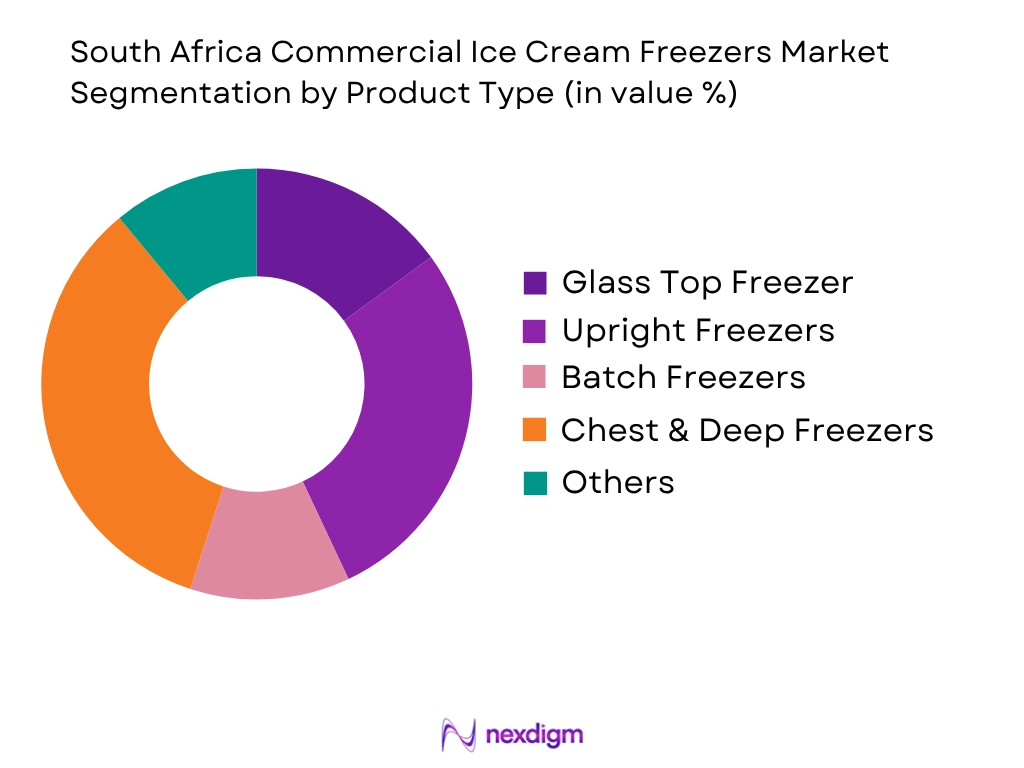
The commercial ice cream freezer market in South Africa is dominated by chest and deep freezers, supported by their widespread adoption in neighbourhood retail formats and petrol forecourts where impulse frozen dessert sales are common. These units offer cost‑effective, high‑volume storage capabilities essential for maintaining continuous stock of tubs, bars, and multipack ice cream products that are popular in the South African market, which saw significant ice cream consumption with retail values in the food sector. Upright display freezers are the second largest segment because they optimise product visibility in modern supermarkets and hypermarkets, meeting merchandising needs where consumers browse frozen dessert choices regularly. Glass‑top freezers are prevalent in convenience outlets focused on quick purchase flows. Soft‑serve and batch freezers are essential within the HoReCa channel where on‑site frozen dessert preparation is a differentiating service, while walk‑in and custom freezers serve larger hospitality and bulk storage facilities, often integrated with wider cold‑chain operations to support fluctuating inventory volumes and logistics demands in major cities.
By End‑User Segment
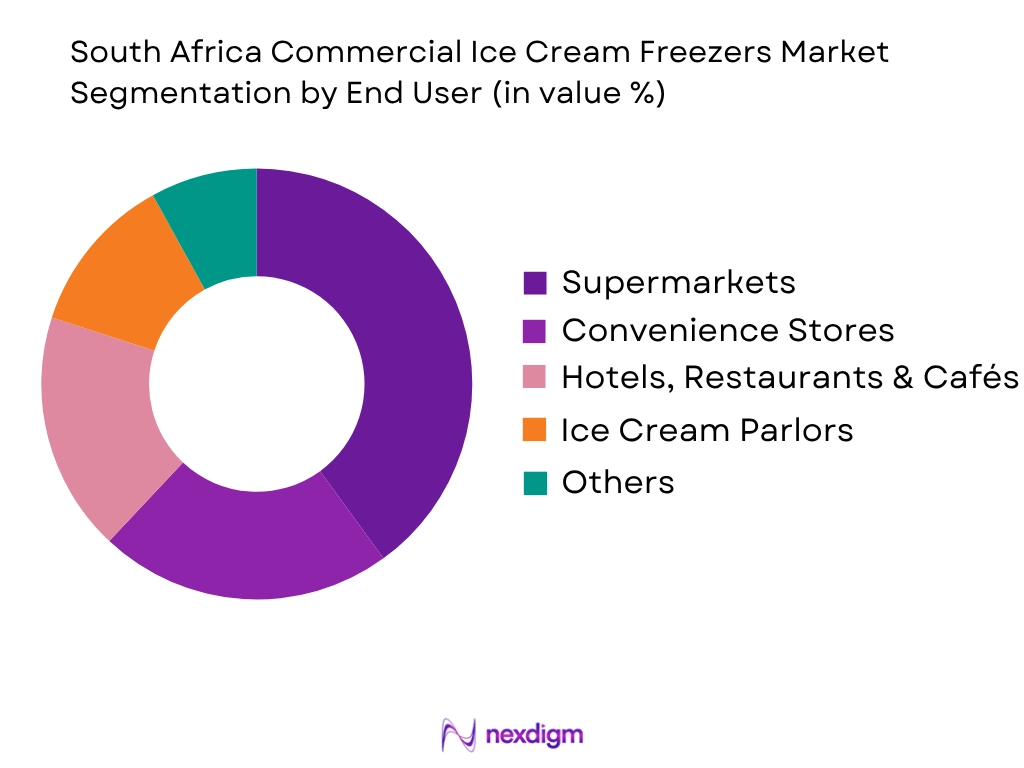
In South Africa, supermarkets and hypermarkets are the largest end‑user channel for commercial ice cream freezers. These formats host extensive frozen food aisles where chilled dessert and ice cream products require high‑capacity tilted chest models or upright displays for broad SKU presentation, catering to both take‑home and impulse purchase occasions. Convenience stores and petrol outlets contribute significantly due to consumer behaviour favouring ready‑to‑go frozen treats across daily travel routes. The hospitality sector—hotels, restaurants, and cafés—deploy specialised soft‑serve and batch units for in‑house dessert menus, supporting premium dining experiences. Ice cream parlors and specialty shops focus on equipment tailored to their unique service formats and frozen texture requirements, while e‑commerce distribution and cold storage hubs, though smaller, reflect an emerging channel where frozen goods are stored before last‑mile delivery, indicating growth in online retail cold‑chain demand.
Competitive Landscape
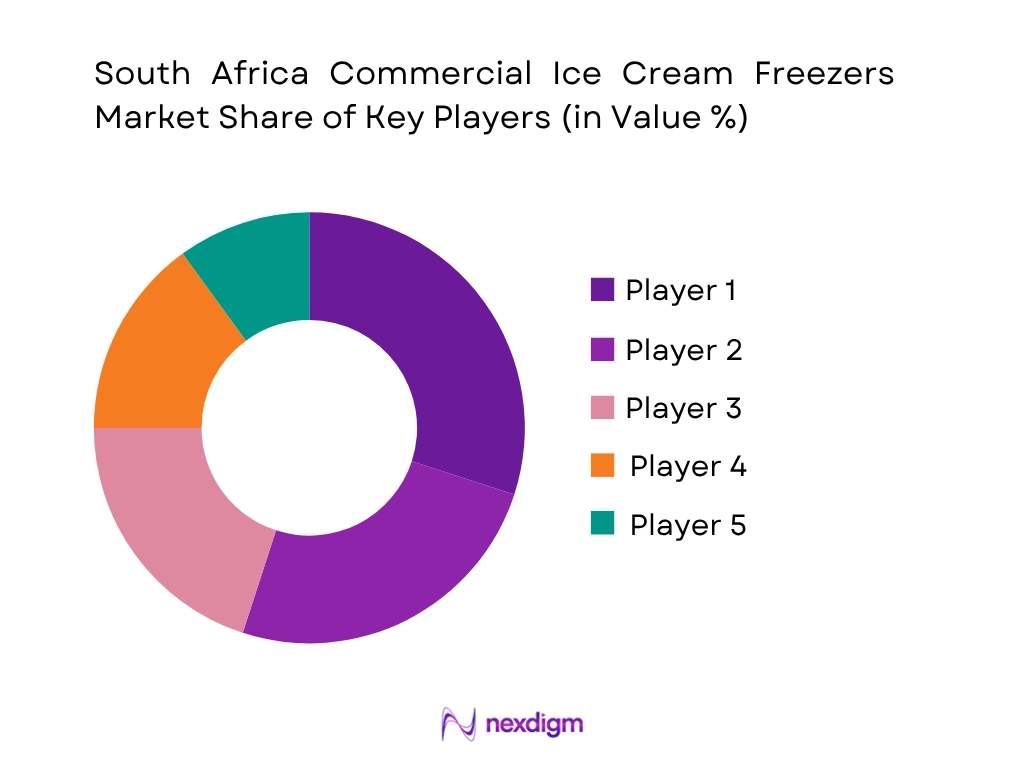
The commercial refrigeration equipment sector in South Africa is competitive with strong influence from global and regional players that supply ice cream freezers, cold storage units, and associated cooling technologies. This landscape reflects a blend of multinational OEMs and local integrators addressing varied market needs across retail, hospitality, and logistics channels. The South Africa market is served by a range of established refrigeration OEMs with broad portfolios that include chest freezers, upright display units, and specialised refrigerated display units, each differentiated by energy efficiency, ambient performance resilience, service infrastructure, and distribution reach. The competitive environment is shaped by the need for reliable cold storage performance in high‑temperature climates and consistent product quality standards demanded by retailers and foodservice operators.
| Company | Establishment Year | Headquarters | Product Range Breadth | Cooling Technology | Energy Efficiency Rating | Service & Support Network | Regional Market Presence |
| Hussmann | 1907 | USA | ~ | ~ | ~ | ~ | ~ |
| Electrolux Professional | 1919 | Sweden | ~ | ~ | ~ | ~ | ~ |
| True Manufacturing | 1945 | USA | ~ | ~ | ~ | ~ | ~ |
| AHT Cooling Systems | 1945 | Austria | ~ | ~ | ~ | ~ | ~ |
| Haier Commercial Refrigerators | 1984 | China | ~ | ~ | ~ | ~ | ~ |
South Africa Commercial Ice Cream Freezers Market Outlook to 2035
Growth Drivers
Rising Population and Household Retail Activity Supporting Freezer Demand
South Africa’s population—recorded at 64,007,187 people in 2024 according to World Bank data—underpins broad consumption fundamentals that directly influence demand for commercial ice cream freezers across retail and foodservice channels. A growing population increases footfall in modern trade outlets and convenience stores where frozen dessert offerings require reliable freezer infrastructure. The country’s retail sales volume index rose to 53.034 in 2024 from 51.600 in 2023, indicating expanding retail activity and consumer purchase occasions that include frozen goods stored and displayed in commercial freezers. South African households continue to purchase convenience and indulgence food products, including ice cream and other frozen desserts, particularly in urban centres where structured retail formats dominate. With GDP reaching USD ~ billion and GDP per capita at USD 6,267.2, households maintain capacity for discretionary food purchases despite broader economic challenges, supporting persistent investment in freezer equipment by retailers and foodservice operators seeking to capture consumer demand across diverse price points and products.
Export Volume of Ice Cream Supporting Production and Freezer Utilization
South Africa’s active participation in international ice cream exports highlights production scale and distribution networks that sustain freezer demand both domestically and at export terminals requiring cold‑chain infrastructure. In 2024, South African exports of “ice cream and other edible ice” totaled USD 56,165.44 thousand, with 5,480,190 kilograms exported to the United States alone, indicating robust outbound shipments that necessitate commercial freezers for storage, handling, and logistic staging prior to export. Exports also extended to Botswana (3,505,760 kilograms) and Namibia (2,395,500 kilograms) in the same period. These export volumes require freezer capacity at manufacturing facilities, distribution centres, and logistics hubs, creating ongoing investment demand in commercial freezer units beyond domestic retail and foodservice contexts. The export activity reflects a broader relevance of freezer technology for preserving product quality in both domestic and international supply chains. Both outbound quantity and value figures reinforce the link between production scalability and the practical requirement for commercial freezers throughout the supply chain, from production lines to storage depots and point‑of‑sale environments.
Market Challenges
Household Consumption Expenditure Constraints Limiting Consumer Spending
Despite positive retail activity trends, South African household consumption faces constraints that affect discretionary food spending, including on higher‑margin frozen dessert products that drive freezer placements. National statistics indicate that household final consumption expenditure by households decreased by 0.3% in the first quarter of 2024, reflecting subdued disposable income growth that can temper demand for non‑essential food categories like premium ice cream. Moreover, economic activity data shows that while GDP grew modestly overall during 2024 compared with 2023, real consumption expenditure by households remained under pressure due to inflation and stagnant wage growth. These dynamics can limit the frequency and volume of consumer purchases of frozen desserts in certain segments, particularly premium or artisanal products that rely on discretionary spending. Retailers may respond by adjusting assortment strategies towards value and volume segments, which can compress freezer utilization for higher‑margin offerings. The challenge here is structural: weak consumption patterns in some household segments restrict growth opportunities for freezer sales tied to premium and impulse frozen dessert categories in segments where disposable income growth does not keep pace with living costs.
Macroeconomic Slowdown Moderating Capital Investment
The broader economic environment in South Africa shows signs of moderation in 2024, with GDP growth reported at 0.5% for the year, indicating slower expansion of economic activity relative to previous periods. This environment can influence capital investment decisions by retail and foodservice operators, who may delay or scale back expenditure on new commercial ice cream freezer installations and technology upgrades amid uncertain macro conditions. Slower economic growth can tighten budgets for equipment refresh cycles and expansion plans, especially for mid‑tier and independent operators who lack deep financing reserves. At the same time, high unemployment rates and cost‑of‑living pressures can divert household spending toward essential goods, reducing demand for premium frozen dessert segments that stimulate freezer deployment. These macroeconomic headwinds can affect confidence among buyers of commercial freezer solutions, leading to prioritisation of maintenance and operational cost control over expansion or modernization. In this context, the commercial ice cream freezer market may experience slower adoption of high‑end and cutting‑edge technologies as operators focus on core operations and cost efficiencies in response to a broadly subdued economic backdrop.
Market Opportunity
Retail Value Growth of Ice Cream Products Supporting Freezer Demand
The ice cream category in South Africa continues to generate retail value momentum that presents opportunities for commercial freezer adoption. Industry data indicates that retail current value sales of ice cream in South Africa remain strong, fuelled in part by price adjustments and consumer engagement with bulk dairy and take‑home ice cream formats. Retailers are introducing premium and artisanal frozen dessert products that appeal to discerning consumers, expanding the depth of SKU assortments requiring dedicated freezer space. Increased inclusion of quality frozen dessert products in supermarket and convenience store assortments directly translates into demand for commercial freezers that can support varied temperature requirements and merchandising configurations. This dynamic is underscored by consistent investment by major retail chains to maintain attractive cold‑chain presentations, enhancing shopper experience and increasing basket size. The broader retail environment, coupled with expanding modern trade formats, provides a structural uplift in freezer placements across tier‑one and tier‑two cities, making this an opportune segment for equipment suppliers to introduce energy‑efficient, display‑ready models tailored for diverse retail footprints.
Export Diversification and Regional Distribution Networks Driving Freezer Infrastructure
South Africa’s growing role as an exporter of ice cream products presents opportunity for expansion of cold‑chain and freezer infrastructure beyond domestic retail and foodservice use. Export data shows USD 56,165.44 thousand of ice cream and edible ice exported in 2024, primarily to North America and Southern African regional markets. These export flows require robust temperature‑controlled storage at multiple stages—manufacturing, warehousing, handling, and cross‑border logistics—thus creating demand for commercial freezers integrated with cold‑chain solutions. As South African producers extend distribution networks to regional markets like Botswana and Mozambique, the need for freezer capacity at export hubs and distribution centres becomes integral to maintaining product quality and supply reliability. This increase in logistical complexity provides an opportunity for commercial freezer manufacturers and service providers to align offerings with export market requirements, including ruggedised units suited for long‑haul transport nodes and border distribution points. Leveraging export activity thus allows equipment sellers to capture infrastructure demand that goes beyond traditional retail point‑of‑sale deployments, integrating freezer solutions into national and regional cold‑chain networks.
Future Outlook
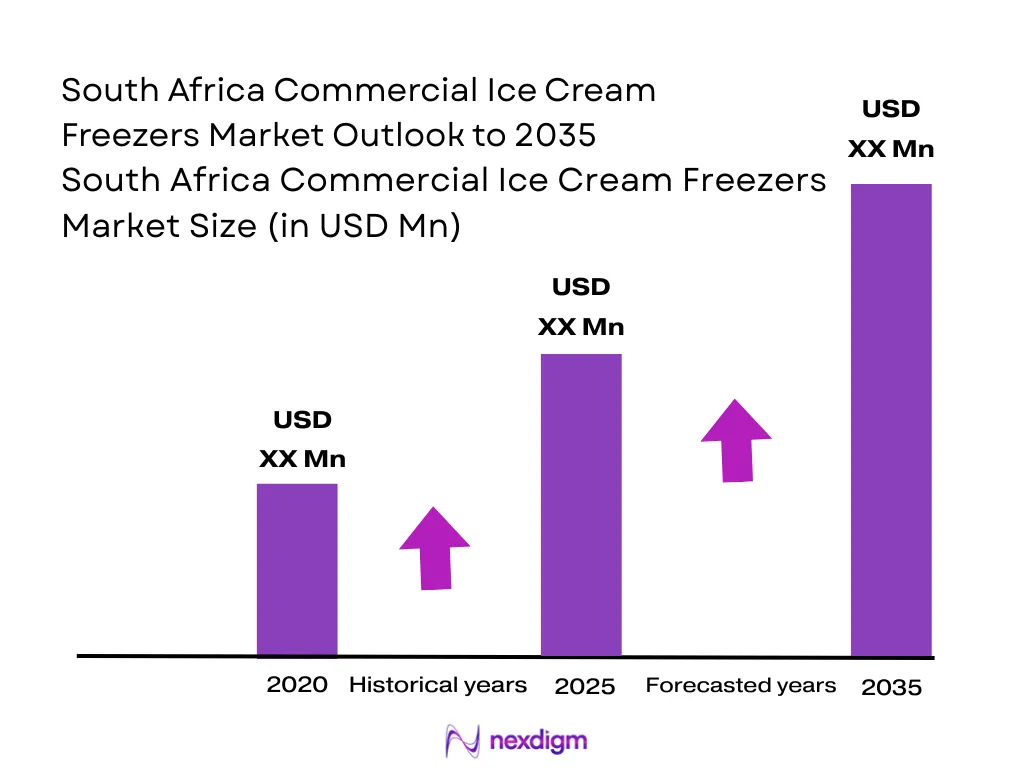
The South Africa Commercial Ice Cream Freezers Market is positioned for sustained growth through 2035, supported by expanded retail modernisation, growth of convenience and hospitality segments, and ongoing improvements in cold‑chain infrastructure nationwide. South Africa’s broad commercial refrigeration market—valued at USD 497.9 million in 2024—indicates strong installed base and investment potential for freezer technologies. The underlying ice cream and frozen dessert consumption environment, which builds on consumer trends toward indulgence, premium products, and retail convenience, continues to incentivise deployment of specialised freezer equipment. Additionally, improvements in cold storage logistics and smarter cooling technologies are likely to optimise operational costs for retail and foodservice operators, strengthening freezer adoption across both urban and growing secondary markets.
Key Players
- Hussmann
- Electrolux Professional
- True Manufacturing
- AHT Cooling Systems
- Haier Commercial Refrigeration
- TurboAir
- Tecfrigo
- Metalfrio Solutions
- Beverage Air
- Gram Commercial
- Carrier Refrigeration
- Samsung Commercial Cooling
- LG Commercial Refrigeration
- Johnson Controls (York/Frigoscandia)
- Local South African Refrigeration Distributors & Integrators
Key Target Audience
- Retail Chain Procurement Heads
- Hospitality & Foodservice Facility Equipment Managers
- Quick Service Restaurant Equipment Leadership
- OEM Commercial Freezer Product Strategy Teams
- Cold‑Chain & Temperature‑Controlled Logistics Directors
- Investments and Venture Capitalist Firms
- Government and Regulatory Bodies
- Large Independent Retail & Franchise Group Operators
Research Methodology
Step 1: Identification of Key Variables
The initial phase involved mapping the South Africa commercial ice cream freezer ecosystem, identifying influential stakeholders such as retail chains, foodservice operators, freezer OEMs, and logistics providers. This stage leveraged credible secondary sources to align equipment demand with frozen dessert consumption patterns.
Step 2: Market Analysis and Construction
Historical data on commercial refrigeration revenues, ice cream market size and retail expansion were compiled to establish baseline freezer installation estimates. Analysis included distribution channels, product portfolios, and cooling technology relevance across multiple end‑use segments.
Step 3: Hypothesis Validation and Expert Consultation
Market hypotheses were evaluated through structured interviews with industry operators, including supermarket procurement heads and refrigeration distributors. Insights on operational challenges, technology performance, and deployment priorities enriched quantitative foundations.
Step 4: Research Synthesis and Final Output
The final phase integrated macroeconomic, industry, and expert insights to produce a validated and comprehensive analysis of the commercial ice cream freezer market. Trends, competitive dynamics, and equipment demand drivers were synthesised for strategic clarity.

- Executive Summary
- Research Methodology (Market Definitions and Assumptions, Abbreviations, South Africa Market Sizing Approach, Data Sources Framework, Bottom‑Up & Top‑Down Integration, Primary Research Methodology with Retail & Foodservice Buyers, Limitations and Future Scope)

- Definition and Scope
- Market Genesis & Industry Evolution
- Macro Demand Drivers
- Business Cycle & Seasonal Demand Patterns
- Supply Chain and Cold‑Chain Infrastructure Analysis

- Growth Drivers (Expansion of structured retail formats and modern grocery outlets, Rising consumption of ice cream and frozen desserts in formal trade, Urban population growth and climate‑influenced year‑round demand, Increasing adoption of energy‑efficient refrigeration technology)
- Market Challenges (Inconsistent cold‑chain infrastructure and power reliability issues, High operational energy costs and maintenance burden, Price sensitivity in commercial equipment procurement, Regulatory standards on refrigerants and energy performance)
- Market Opportunities (Upgrades across retail networks with energy‑optimized freezer solutions, Growth in gourmet, artisanal, and impulse ice cream segments, Expansion of distribution networks into secondary cities, Integration of IoT and smart monitoring for freezer uptime optimization
- Trends (Shift towards low‑GWP refrigerants and eco‑friendly freezers, Demand for inverter and smart systems enhancing performance, Modular and serviceable designs for cost‑effective operations)
- Government Regulation (Import and product safety standards impacting freezer certification, National energy performance guidelines for commercial appliances)
- SWOT Analysis
- Stakeholder Ecosystem
- Porter’s Five Forces
- Competition Landscape

- By Value (2020-2025)
- By Freezer Specific Deployment Value (2020-2025)
- By Installed Base & Unit Shipments (2020-2025)

- By Freezer Type (In Value %)
Chest & Deep Freezers
Upright Display Freezers
Glass‑Top Freezers
Soft‑Serve/Batch Freezers
Walk‑In & Custom Freezers - By End‑User Channel (In Value %)
Supermarkets & Hypermarkets
Convenience Stores & Petrol Outlets
HoReCa (Hotels, Restaurants, Cafés)
Ice Cream Parlors & Gelaterias
E‑commerce & Delivery Hubs - By Cooling Technology (In Value %)
Static Cooling Systems
Ventilated/Forced‑Air Systems
Remote Glycol / Split Systems
Low‑GWP Refrigerant Systems
IoT‑Enabled & Smart Control Freezer - By Sales & Distribution Channel (In Value %)
Direct OEM Sales
Distributor / Dealer Network
Retail Procurement Platforms
Project Integrators
Equipment Leasing & Service Contracts

- Cross Comparison Parameters (Company Profile, Product Portfolio Breadth, Cooling Technology Stack, Refrigerant & Energy Efficiency Ratings, After‑Sales and Service Coverage, Distribution Network Strength, Installed Base Density, Warranty Terms & Support Infrastructure)
- Pricing & Feature Benchmarking
- Competitive SWOT Profiles
- Detailed Company Profiles
- Competitors in the South Africa Commercial Ice Cream Freezers Market
Hussmann
Electrolux Professional
True Manufacturing
Johnson Controls (York, Frigoscandia)
AHT Cooling Systems
Tecfrigo
TurboAir
Metalfrio Solutions
Beverage Air
Gram Commercial
Summit Commercial
Samsung Commercial Refrigeration
LG Commercial Cooling
Carrier Refrigeration
Local Multi‑Brand Refrigeration Distributors & Integrators

- Retail Demand and Frozen SKU Assortment Strategies
- Purchasing Behavior & Budget Allocation
- Needs, Pain Points & Decision Criteria
- Service & Maintenance Expectations
- Replacement & Upgrade Decisions

- By Value Demand for Freezers (2026-2035)
- By Units Deployed Across Channels (2026-2035)
- By Freezer Type Demand Shifts (2026-2035)
- By End‑User Channel Expansion (2026-2035)


 Request a Sample
 Ask for Customization
 Get a Quote
 Enquire Now