

 Download PDF
Market Overview
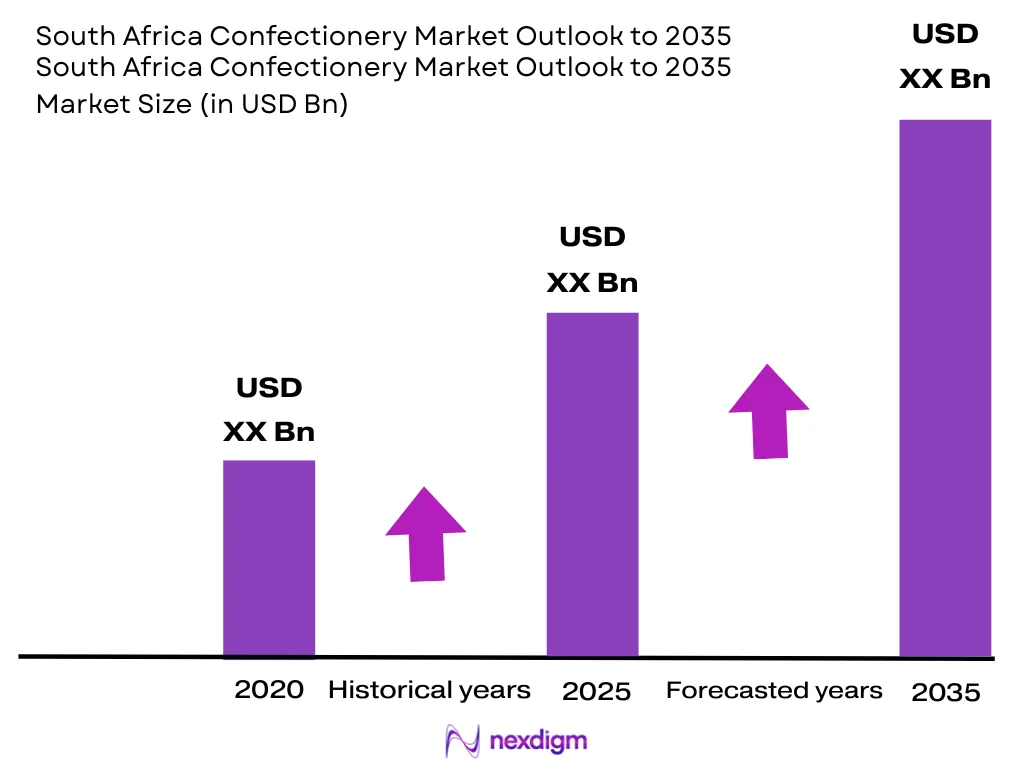
The South Africa confectionery market was valued at USD ~ billion in 2024 and is projected to expand at a CAGR of ~% during the 2026–2035 forecast period. According to industry statistics published by Statistics South Africa (Stats SA), the country’s food and beverage manufacturing sector remains one of the largest contributors to manufacturing gross value added on the continent, with confectionery representing a well-established processed food category. Data from the Confectionery Manufacturers Association of South Africa indicates that chocolate and sugar confectionery production continues to benefit from strong impulse purchasing behaviour, extensive informal retail penetration through spaza shops and tuck shops, seasonal consumption peaks, and expanding modern retail networks led by chains such as Shoprite, Pick n Pay, and Woolworths. Growth is supported by South Africa’s role as the most industrialised confectionery manufacturing base in Sub-Saharan Africa, rising urbanisation, product innovation, and continued demand for premium chocolates, sugar confectionery, and functional sweets across both formal and informal trade channels.
Market Segmentation
By Product Type
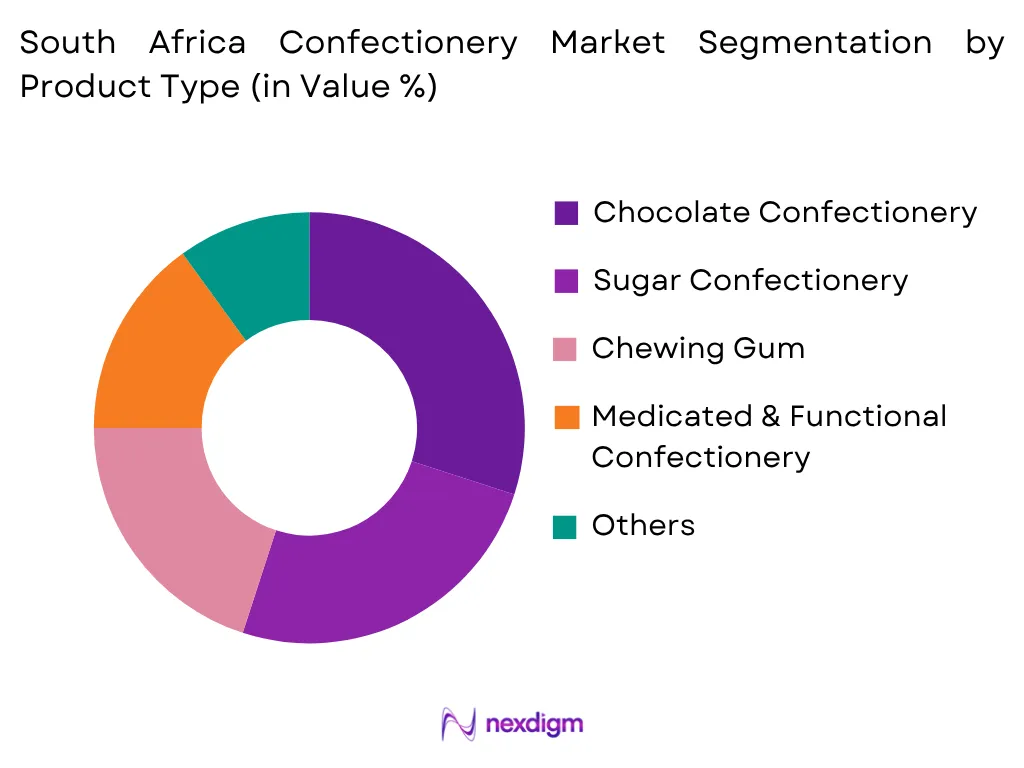
Chocolate confectionery dominates the South African confectionery market owing to the country’s well-established chocolate manufacturing heritage, strong domestic production capabilities led by companies such as Beacon Sweets and Cadbury, and expanding premium product offerings targeting the country’s growing middle class. Consumer demand remains particularly strong during seasonal celebrations such as Easter, Christmas, and Valentine’s Day, when chocolate gifting significantly increases retail sales across both formal supermarkets and informal township retail outlets. South Africa serves as a regional manufacturing hub, with several multinational confectionery companies operating production facilities that supply not only the domestic market but also neighbouring Southern African Development Community (SADC) countries. Large domestic manufacturers alongside multinational companies continue introducing innovative flavors, premium cocoa formulations, and limited-edition products that attract both young and adult consumers. Continuous investments in premium chocolates, filled products, locally manufactured offerings, and sustainable cocoa sourcing have further strengthened the segment’s leadership while expanding its presence across supermarkets, spaza shops, specialty stores, convenience outlets, and online retail platforms.
By Distribution Channel
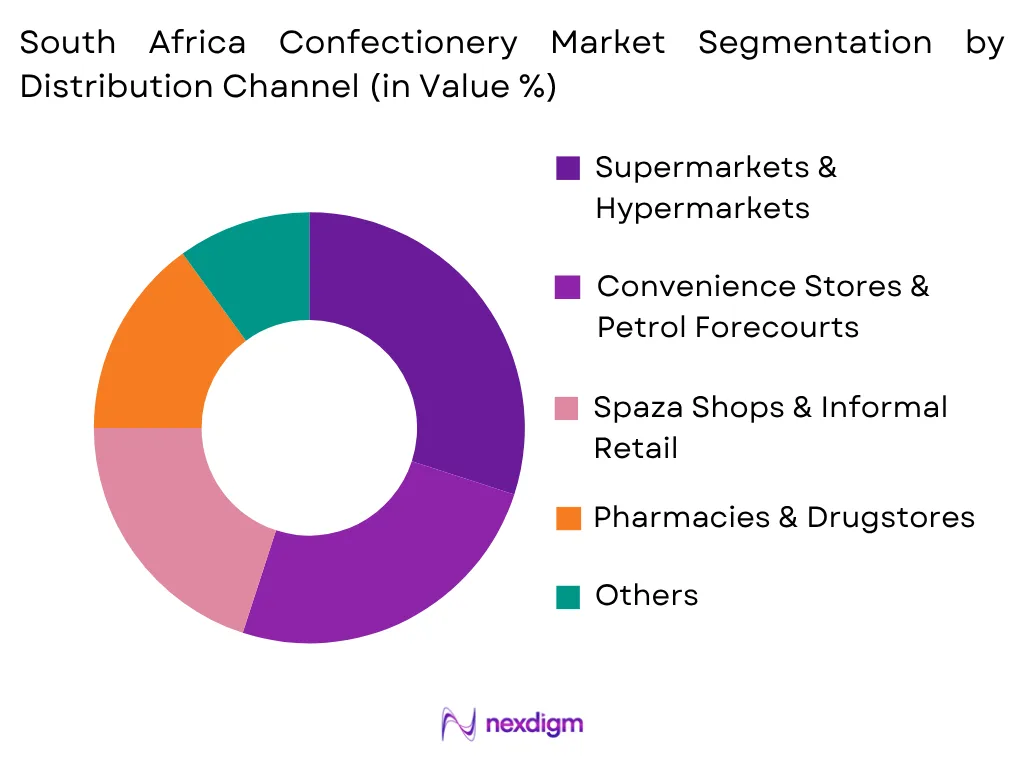
Supermarkets and hypermarkets account for the largest share of confectionery sales in South Africa because they provide consumers with extensive product assortments across multiple price segments and brands under one roof. Large retail chains including Shoprite Checkers, Pick n Pay, Spar, and Woolworths maintain strong procurement relationships with domestic and international confectionery manufacturers, ensuring continuous product availability throughout the year. These stores also capitalise on impulse purchasing by positioning confectionery products near checkout counters and promotional displays. However, spaza shops and informal township retail outlets represent a uniquely significant distribution channel in South Africa, serving as the primary confectionery purchase point for millions of consumers in townships and peri-urban areas, particularly for single-serve chocolate bars, sugar confectionery, and low-cost impulse items. Seasonal merchandising during Easter and Christmas further boosts sales volumes across both channels. Additionally, supermarkets frequently introduce exclusive promotional campaigns, private-label offerings, multipack discounts, and premium confectionery sections, attracting both value-conscious and premium consumers. Their widespread geographic presence alongside the extensive informal retail network further reinforces the dual-channel dominance within the South African confectionery retail landscape.
Competitive Landscape
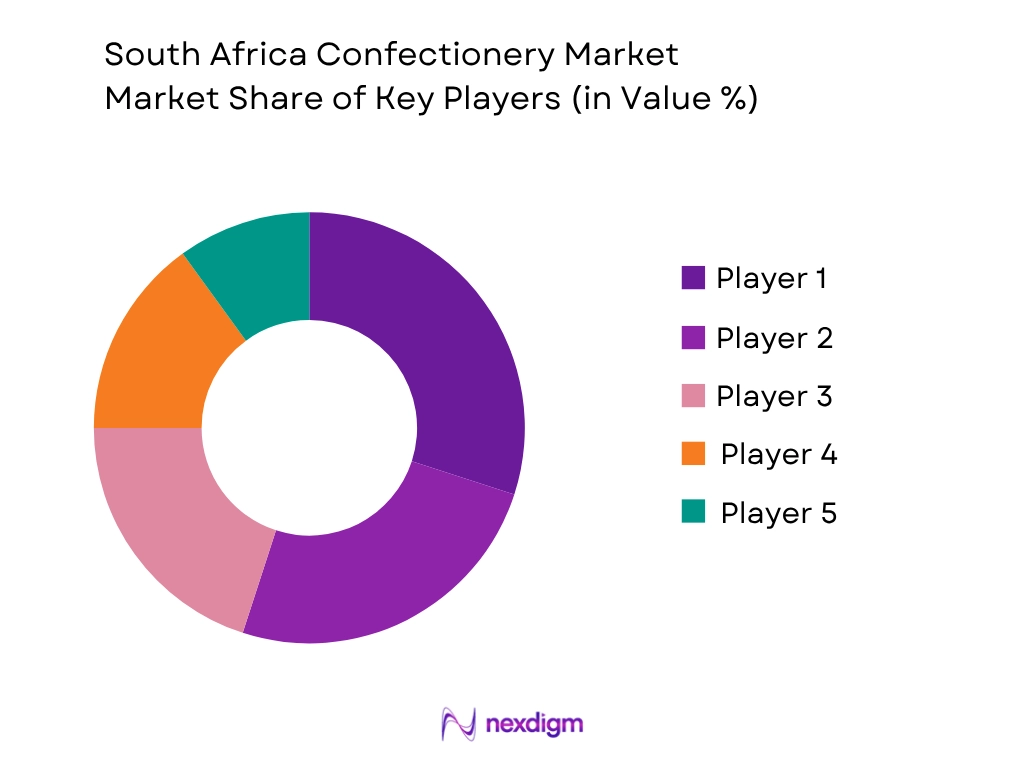
The South Africa confectionery market is moderately consolidated, with multinational manufacturers competing alongside well-established domestic companies that have operated in the country for over a century in several cases. Global companies such as Mondelez (Cadbury), Nestlé, Ferrero, and Mars leverage extensive distribution networks across South Africa and the broader SADC region, while domestic brands including Tiger Brands (Beacon Sweets), Clover Industries, and Wilson-Rowntree maintain strong consumer loyalty through localized product offerings, heritage branding, and price-accessible formats suited to South Africa’s diverse income segments. Continuous investments in premium chocolates, sustainable cocoa sourcing, manufacturing automation, energy resilience amid load-shedding, and omnichannel retail strategies remain key competitive differentiators.
| Company | Establishment Year | Headquarters | Primary Protein Focus | Processing Facilities
|
Export Presence | Production Integration | Sustainability Programs | Value-Added Product Portfolio |
| Tiger Brands (Beacon Sweets) | 1944 | ~ | ~ | ~ | ~ | ~ | ~ | ~ |
| Nestlé South Africa | 1916 | ~ | ~ | ~ | ~ | ~ | ~ | ~ |
| Cadbury South Africa (Mondelez) | 1924 | ~ | ~ | ~ | ~ | ~ | ~ | ~ |
| Clover Industries (Confectionery Division) | 1898 | ~ | ~ | ~ | ~ | ~ | ~ | ~ |
| Wilson-Rowntree (Pioneer Foods/PepsiCo) | 1908 | ~ | ~ | ~ | ~ | ~ | ~ | ~ |
South Africa Confectionary Market Analysis
Growth Drivers
Strong Informal Retail Penetration and Affordable Indulgence Demand
South Africa’s extensive informal retail network continues to be one of the primary growth drivers for the confectionery market, distinguishing it from other major Sub-Saharan African economies. According to Statistics South Africa (Stats SA), the country’s population exceeded 62 million people in 2024, with a substantial proportion residing in townships and peri-urban communities served predominantly by an estimated 100,000 to 150,000 spaza shops and informal traders nationwide. These informal outlets remain the dominant point of purchase for low-cost, single-serve confectionery products, particularly among lower and middle-income consumers seeking affordable indulgence. The World Bank estimated South Africa’s GDP at approximately USD 403 billion in 2024, reflecting the largest and most diversified economy in Sub-Saharan Africa, capable of supporting both premium and value-tier confectionery consumption. Urbanisation further strengthens demand, with Stats SA reporting that approximately 68 percent of South Africans now reside in urban areas, encouraging frequent purchases through supermarkets, convenience stores, petrol forecourt shops, and informal traders alike. The International Monetary Fund (IMF) projected continued, albeit modest, GDP growth for South Africa supported by mining, manufacturing, and services sectors. Seasonal celebrations including Easter, Christmas, and Valentine’s Day continue to stimulate chocolate sales as manufacturers introduce limited-edition products and value-pack formats tailored to South Africa’s price-sensitive consumer base, reinforcing confectionery as a resilient, high-frequency purchase category across all income segments.
South Africa’s Position as a Regional Manufacturing and Export Hub
South Africa’s well-developed manufacturing infrastructure and strategic position as the gateway to the Southern African Development Community (SADC) region continue to support sustained growth in the confectionery market. According to the World Bank, South Africa possesses the most industrialised and diversified manufacturing base on the African continent, with several multinational confectionery companies, including Nestlé, Mondelez, and Tiger Brands, operating large-scale production facilities that serve both domestic demand and export markets across Botswana, Namibia, Mozambique, Zambia, and Zimbabwe. Statistics South Africa (Stats SA) data shows that food and beverage manufacturing remains a significant contributor to the country’s industrial output, supported by established cold chain logistics, port infrastructure at Durban and Cape Town, and a comparatively developed road and rail freight network. The International Monetary Fund (IMF) estimated South Africa’s nominal GDP at approximately USD 403 billion in 2024, the second-largest economy in Africa, providing a stable manufacturing investment base despite ongoing energy infrastructure challenges. The African Continental Free Trade Area (AfCFTA) is expected to progressively reduce intra-African trade barriers, creating additional export opportunities for South African confectionery manufacturers seeking to expand their footprint across the broader Sub-Saharan African market of more than 1.4 billion consumers. These structural advantages continue to position South Africa as a preferred manufacturing and distribution base for both multinational and domestic confectionery companies operating across the region.
Market Challenges
Load-Shedding and Energy Infrastructure Disruption to Manufacturing
South African confectionery manufacturers continue to face significant operational challenges arising from persistent electricity supply disruptions, commonly referred to as load-shedding, implemented by the national utility Eskom to manage capacity constraints across the national grid. According to Eskom’s published data, South Africa experienced extended periods of rotational power cuts in recent years, reaching multiple stages of load-shedding that disrupted continuous manufacturing processes, including chocolate tempering, moulding, and packaging lines that require uninterrupted temperature-controlled environments. The Confederation of South African Confectionery Manufacturers has noted that production downtime, the cost of diesel generator backup power, and cold storage reliability concerns have materially increased operating costs across the industry. Statistics South Africa (Stats SA) reported that manufacturing sector output has been periodically constrained by electricity availability, with food and beverage producers among the sectors most affected due to the temperature-sensitive nature of chocolate and confectionery production. Smaller and medium-sized confectionery manufacturers face disproportionate exposure to these disruptions, as they typically lack the capital resources to invest in solar power, battery storage, or large-scale diesel generation capacity available to larger multinational operators. While Eskom and the Department of Mineral Resources and Energy have implemented generation capacity expansion programmes and accelerated renewable energy procurement to stabilise supply, continued investment in alternative energy infrastructure remains essential for manufacturers seeking to maintain consistent production schedules and protect cocoa-based product quality.
Health Promotion Levy and Rising Regulatory Compliance Costs
Growing public health initiatives and evolving nutritional regulations are creating structural challenges for confectionery manufacturers operating in South Africa. The country has a population exceeding 62 million people, with the Department of Health citing rising rates of obesity, diabetes, and non-communicable diseases as justification for the Health Promotion Levy, commonly known as the sugar tax, introduced on sugar-sweetened beverages in 2018 and subject to periodic review for potential expansion to other high-sugar product categories, including confectionery. The National Regulator for Compulsory Specifications (NRCS) continues to enforce food safety and labelling standards, while the Department of Trade, Industry and Competition (DTIC) oversees compliance frameworks affecting packaging and import requirements. Increasing front-of-pack nutritional labelling transparency requirements have heightened consumer awareness regarding products containing high levels of added sugars, encouraging comparison shopping and reformulation pressure across the industry. At the same time, South Africa’s expanding middle-income population is becoming more health conscious, leading to stronger demand for sugar-free, reduced-sugar, functional, and clean-label confectionery. Manufacturers are therefore required to reformulate recipes while maintaining taste, texture, and shelf stability in South Africa’s hot climate conditions, an increasingly complex technical and cost challenge. These trends require confectionery companies to invest continuously in research and development, alternative sweeteners, and transparent labelling practices, increasing formulation complexity and operational requirements across manufacturing and product development activities.
Market Opportunities
Premium, Functional and Better-for-You Confectionery
South Africa’s evolving consumer preferences are creating substantial opportunities for premium, functional, and health-oriented confectionery products, particularly within the country’s growing urban middle class. With a population of more than 62 million and an urban population share of approximately 68 percent according to Stats SA, the country provides a sizeable addressable market for manufacturers introducing premium chocolates, sugar-free confectionery, protein-enriched products, and clean-label innovations. Rising disposable income among South Africa’s expanding middle-income consumer base, concentrated particularly in Gauteng and the Western Cape, has encouraged greater spending on indulgent products with perceived quality and health benefits. The World Bank estimated South Africa’s GDP per capita at approximately USD 6,300 in 2024, supporting stronger household expenditure on premium packaged foods among upper-income consumer segments concentrated in major metropolitan areas. Simultaneously, increasing awareness of nutrition has accelerated demand for confectionery containing natural ingredients, higher cocoa content, reduced sugar formulations, plant-based ingredients, and Halaal and Kosher certified products that serve South Africa’s religiously diverse consumer base. Premium gifting has also become increasingly important during festive occasions including Easter, Christmas, and Heritage Day, creating opportunities for manufacturers to introduce artisanal collections, personalised gift boxes, and limited-edition products. Expansion of specialty chocolate boutiques in shopping centres across Johannesburg, Cape Town, and Durban further enables companies to target affluent urban consumers with differentiated offerings, while manufacturers investing in product innovation, premium packaging, and healthier ingredient profiles are well positioned to capture future demand while strengthening brand loyalty across South Africa’s increasingly segmented consumer market.
Regional Export Expansion Through AfCFTA and SADC Trade Frameworks
The strengthening of South Africa’s regional trade position presents a significant long-term opportunity for the confectionery industry. South Africa remains the most industrially developed economy in Sub-Saharan Africa, with well-established manufacturing facilities, port infrastructure, and logistics networks connecting producing regions in Gauteng and KwaZulu-Natal with export markets across the Southern African Development Community (SADC) and beyond. Continued investments in manufacturing automation, energy resilience, and productivity enhancement programmes are increasing the competitiveness of South African confectionery exports to neighbouring markets including Botswana, Namibia, Mozambique, Zambia, and Zimbabwe, where South African brands already maintain strong consumer recognition. The African Continental Free Trade Area (AfCFTA), which South Africa has ratified, is expected to progressively reduce intra-African tariff and non-tariff trade barriers, creating substantial export opportunities for South African confectionery manufacturers seeking to expand their footprint across a continental market of more than 1.4 billion consumers. Growing international demand for sustainably sourced cocoa and certified chocolate products also provides South African manufacturers with opportunities to enhance product value through Rainforest Alliance and Fairtrade certification programmes. Furthermore, increasing investments in traceability, environmental compliance, and responsible sourcing enable South African confectionery manufacturers to meet evolving international procurement standards, improving competitiveness in both regional African export markets and select premium international markets, thereby creating new avenues for long-term industry growth.
Future Outlook
The South Africa confectionery market is expected to witness steady growth throughout the forecast period, supported by South Africa’s position as the continent’s most developed confectionery manufacturing base, rising disposable incomes among the urban middle class, and evolving consumer preferences toward indulgent and functional confectionery. Manufacturers are increasingly investing in energy resilience to mitigate load-shedding disruptions, sugar-reduced formulations to address regulatory and health pressures, premium cocoa products, and digital commerce platforms. Growing penetration of organized retail alongside the continued importance of South Africa’s extensive informal trade network, expansion of specialty chocolate stores, and innovation in seasonal gifting products are expected to create additional growth opportunities. Continued investments in manufacturing efficiency, regional export capacity through AfCFTA, and environmentally responsible packaging will further strengthen long-term market competitiveness.
Major Players
- Tiger Brands (Beacon Sweets)
- Nestlé South Africa
- Cadbury South Africa (Mondelez)
- Clover Industries (Confectionery Division)
- Wilson-Rowntree (Pioneer Foods/PepsiCo)
- Ferrero South Africa
- Parmalat South Africa
- Astral Foods
- Chocolat Du Cap
- Sweetworld Manufacturing
- Albany Confectionery
- Foxes Biscuits South Africa
- Heaven Chocolates
- Cape Cookies
- Just Sweets
Key Target Audience
- Confectionery Manufacturers
- Chocolate Manufacturers
- Cocoa Processors and Importers
- Sugar and Ingredient Suppliers
- Modern Retail Chains, Spaza Shops and Food Distributors
- Packaging Material Manufacturers
- Investments and Venture Capitalist Firms
- Government and Regulatory Bodies (National Regulator for Compulsory Specifications (NRCS), Department of Health, Department of Trade, Industry and Competition (DTIC))
Research Methodology
Step 1: Identification of Key Variables
The research begins by identifying the major stakeholders across the South Africa confectionery value chain, including cocoa suppliers, ingredient manufacturers, confectionery producers, formal and informal distributors, retailers, and consumers. Extensive secondary research is conducted using government publications, industry associations, trade databases, company reports, and proprietary databases to establish the key variables influencing market performance.
Step 2: Market Analysis and Construction
Historical market information is compiled and evaluated to estimate the overall market size, product penetration, production volumes, consumption trends, pricing dynamics, and revenue generation across major confectionery categories. Both demand-side and supply-side indicators are analyzed using bottom-up and top-down market sizing approaches to ensure comprehensive market coverage, accounting for both formal retail and South Africa’s extensive informal trade channels.
Step 3: Hypothesis Validation and Expert Consultation
Preliminary market estimates and analytical assumptions are validated through Computer Assisted Telephone Interviews (CATIs) and structured discussions with confectionery manufacturers, cocoa processors, distributors, retail executives, procurement specialists, and industry experts. These interviews provide valuable commercial insights that strengthen the reliability of market estimates.
Step 4: Research Synthesis and Final Output
The final stage integrates primary research findings with secondary information to develop a comprehensive assessment of market size, segmentation, competitive landscape, consumer behavior, and future opportunities. Multiple validation techniques, including data triangulation and cross-verification, are employed to ensure the consistency, accuracy, and credibility of the final market report.

- Executive Summary
- Research Methodology (Market Definitions and Assumptions, Abbreviations, Market Taxonomy, Market Sizing Approach, Top-Down Analysis, Bottom-Up Analysis, Demand-Side Assessment, Supply-Side Assessment, Primary Industry Interviews, Secondary Research Validation, Data Triangulation, Forecasting Framework, Limitations and Future Conclusions)

- Definition and Scope
- Market Evolution and Industry Genesis
- Timeline of Major Industry Developments
- Industry Value Chain Analysis
- Supply Chain Analysis

- Growth Drivers (Growing Affordable Indulgence Demand, Strong Informal Retail Penetration, Expansion of Modern Retail, Strong Seasonal Chocolate Demand, Increasing Urban Snacking Culture, Product Innovation, Rising Convenience Consumption, Expanding E-Commerce Sales)
- Market Challenges (Volatility in Cocoa Prices, Sugar Price Fluctuations and Health Promotion Levy, High Logistics and Energy Costs, Inflationary Pressure on Consumer Spending, Health Concerns Regarding Sugar Intake, Import Dependency for Cocoa Derivatives, Counterfeit and Grey Market Products, Load-Shedding Disruption to Manufacturing)
- Market Opportunities (Sugar-Free Confectionery Expansion, Functional Gummies, Premium Chocolate Gifting, Sustainable Cocoa Sourcing, Plant-Based Chocolate, Halaal and Kosher Certified Products, Premium Packaging Innovation, Quick Commerce Expansion)
- Market Trends (Bean-to-Bar Chocolates, Clean Label Ingredients, Premiumization, Limited Edition Seasonal Products, Protein-Enriched Confectionery, Sustainable Packaging Adoption, Reduced Sugar Formulations, Premium Filled Chocolates)
- Government Regulations (NRCS Food Safety Standards, Department of Health Nutritional Labeling Requirements, Health Promotion Levy on Sugary Beverages, Allergen Declaration Requirements, Food Additive Regulations, Packaging Compliance Standards, Import Tariffs and Regulations, Environmental Packaging Policies)
- Cocoa Supply and Pricing Analysis (Cocoa Bean Imports, Cocoa Butter Prices, Cocoa Liquor Supply, Processing Capacity, Price Transmission Analysis)
- Sugar Supply Analysis (Domestic Sugar Availability, Sugar Cost Trends, Health Promotion Levy Impact, Alternative Sweetener Adoption)
- Seasonal Demand Analysis (Easter, Christmas, Valentine’s Day, Heritage Day, Halloween, Mother’s Day, Corporate Gifting)
- Retail Shelf Space Analysis (Modern Trade Penetration, Category Allocation, Promotional Displays, Checkout Placement)
- Innovation Landscape (Flavor Innovation, Texture Innovation, Functional Ingredients, Packaging Innovation, Premium Launches)
- Sustainability Analysis (Rainforest Alliance Adoption, Cocoa Traceability, Sustainable Packaging, Carbon Reduction Initiatives)
- SWOT Analysis
- Porter’s Five Forces Analysis
- PESTLE Analysis
- Stakeholder Ecosystem
- Competition Ecosystem

- By Market Value (2020-2025)
- By Volume Consumption (2020-2025)
- By Average Selling Price (2020-2025)

- By Product Type (In Value %)
Chocolate Confectionery
Sugar Confectionery
Chewing Gum
Medicated & Functional Confectionery
Seasonal Confectionery
Premium & Gourmet Confectionery
Filled and Molded Chocolates
Countlines and Chocolate Bars - By Ingredient Type (In Value %)
Cocoa-Based Confectionery
Sugar-Based Confectionery
Sugar-Free Confectionery
Functional & Fortified Confectionery
Organic & Natural Confectionery
Plant-Based & Vegan Confectionery - By Distribution Channel (In Value %)
Supermarkets & Hypermarkets
Convenience Stores & Petrol Forecourts
Spaza Shops & Informal Retail
Pharmacies & Drugstores
Specialty Chocolate Stores
Cash & Carry Wholesale
E-Commerce
Direct-to-Consumer - By Packaging Type (In Value %)
Flexible Packs
Flow Wraps
Boxes
Pouches
Gift Packs
Multipacks
Sustainable Packaging - By Region (In Value %)
Gauteng
Western Cape
KwaZulu-Natal
Eastern Cape
Other Provinces (Free State, Mpumalanga, Limpopo, North West, Northern Cape)

- Market Share Analysis (By Value, Volume, Product Category, Distribution Channel, Price Segment)
- Cross Comparison Parameters (Chocolate Portfolio Breadth, Sugar Confectionery Portfolio, Annual New Product Launches, Cocoa Processing Capability, Distribution Reach Across South Africa, Seasonal Product Portfolio Strength, Premium Product Mix, Manufacturing Capacity)
- SWOT Analysis of Major Players
- Pricing Analysis (By SKU, Product Type, Cocoa Content, Premium Positioning, Pack Size)
- Detailed Profiles of Major Companies
Tiger Brands (Beacon Sweets)
Nestlé South Africa
Cadbury South Africa (Mondelez)
Clover Industries (Confectionery Division)
Wilson-Rowntree (Pioneer Foods/PepsiCo)
Ferrero South Africa
Parmalat South Africa (Tiger Brands Beacon)
Astral Foods
Chocolat Du Cap
Sweetworld Manufacturing
Albany Confectionery
Foxes Biscuits South Africa
Heaven Chocolates
Cape Cookies
Just Sweets

- Consumption Pattern Analysis (Consumption Frequency, Chocolate Preference, Sugar Confectionery Preference, Seasonal Buying Behavior, Household Penetration)
- Demographic Consumption Analysis (Age, Gender, Income Level, Household Size, Urban-Rural Distribution)
- Household Expenditure Analysis
- Premium vs Mass Market Consumption Analysis
- Brand Loyalty Analysis
- Health & Wellness Purchase Behaviour
- Product Attribute Preference Analysis (Taste, Cocoa Content, Texture, Sugar Content, Brand Reputation, Packaging, Price, Ingredients)
- Impulse Purchase Behaviour
- Online vs Offline Purchase Behaviour
- Consumer Pain Point Analysis
- Purchase Decision-Making Process

- By Market Value (2026-2035)
- By Volume Consumption (2026-2035)
- By Average Selling Price (2026-2035)


 Request a Sample
 Ask for Customization
 Get a Quote
 Enquire Now