
 Download PDF
Market Overview
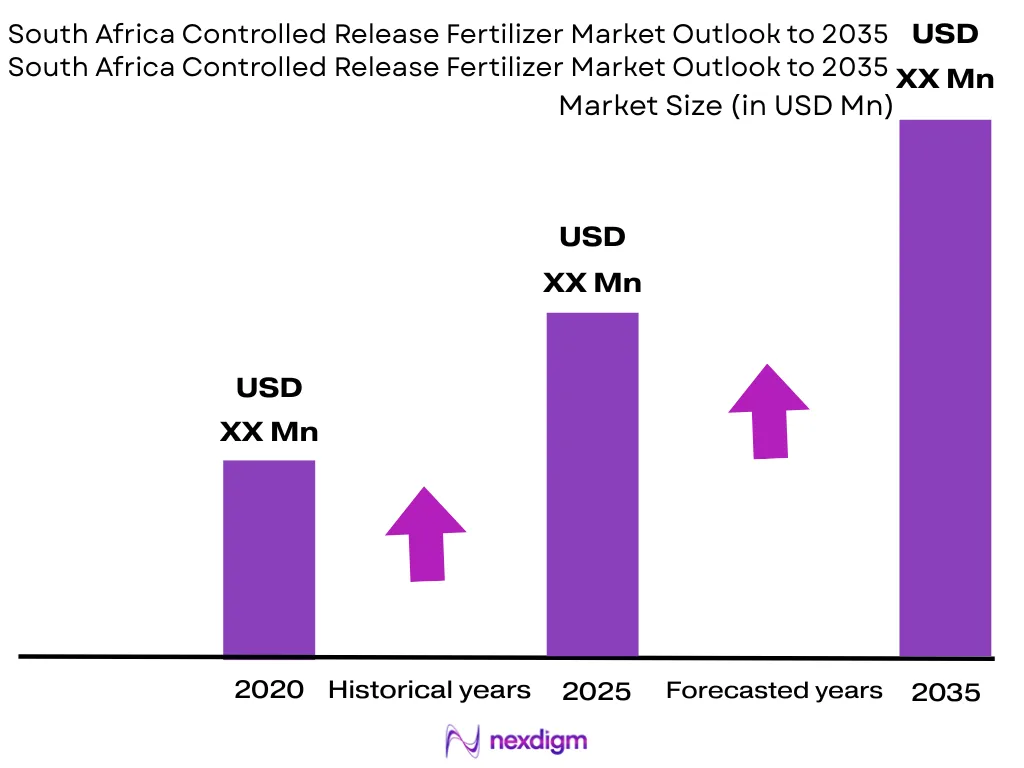
The South Africa Controlled Release Fertilizer Market was valued at approximately USD ~ Million in 2024 and is expected to expand at a CAGR of ~% during 2026–2035. The market is driven by the country’s advanced commercial agriculture sector, growing adoption of precision farming techniques, and increasing emphasis on nutrient-use efficiency. According to the Department of Agriculture, Land Reform and Rural Development, South Africa’s agricultural exports exceeded USD 13 billion in 2023 and crossed USD 14 billion in 2024, reflecting strong demand for productivity-enhancing agricultural inputs. Controlled release fertilizers are increasingly utilized in high-value crops, including citrus, grapes, maize, and vegetables, due to their ability to reduce nutrient losses and improve crop performance.
Market Segmentation
By Nutrient Type
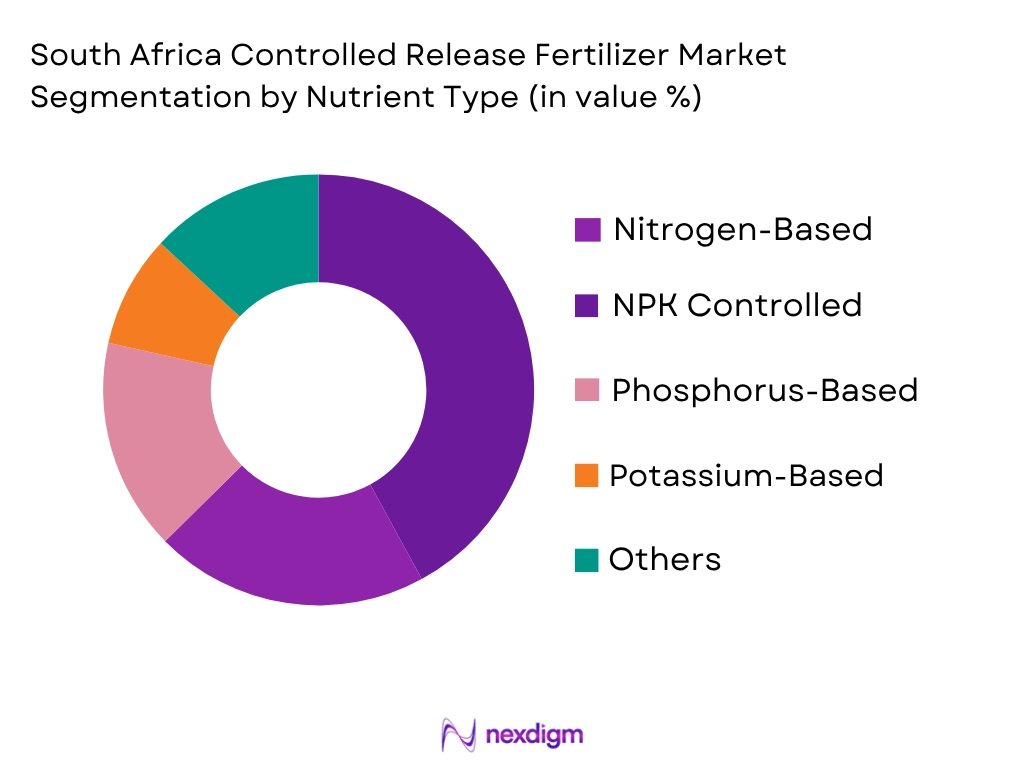
By Nutrient Type, the South Africa Controlled Release Fertilizer Market is segmented into nitrogen-based controlled release fertilizers, NPK controlled release fertilizers, phosphorus-based controlled release fertilizers, potassium-based controlled release fertilizers, micronutrient controlled release fertilizers, and secondary nutrient controlled release fertilizers. Recently, nitrogen-based controlled release fertilizers have held the dominant market share due to their critical role in supporting major South African crops such as maize, wheat, sugarcane, and citrus. Nitrogen remains the most demanded nutrient because it directly influences vegetative growth, biomass development, and yield enhancement. Controlled release nitrogen products are increasingly preferred as they minimize volatilization and leaching losses, particularly in regions facing water scarcity and variable climatic conditions. Commercial farmers are increasingly adopting coated urea and enhanced-efficiency nitrogen fertilizers to optimize nutrient uptake while reducing application frequency. The strong presence of commercial agriculture and growing emphasis on sustainable nutrient management further reinforce the dominance of nitrogen-based controlled release fertilizers across South Africa.
By Crop Type
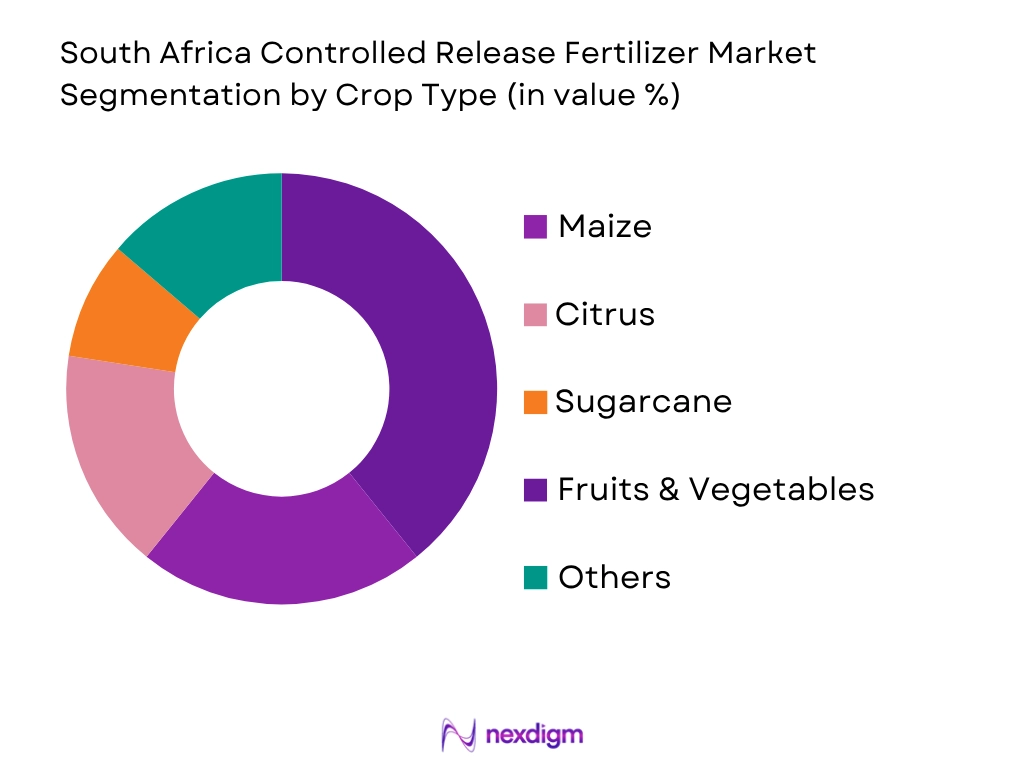
By Crop Type, the South Africa Controlled Release Fertilizer Market is segmented into maize, citrus, sugarcane, fruits and vegetables, grapes and vineyards, wheat, oilseeds, and others. Recently, maize has emerged as the dominant segment due to its importance as South Africa’s primary field crop and staple agricultural commodity. Large-scale commercial maize farming operations require efficient nutrient management solutions to maximize yields and maintain profitability. Controlled release fertilizers are increasingly being adopted in maize cultivation because they provide a sustained nutrient supply throughout crop growth stages while reducing nutrient losses. Farmers benefit from fewer fertilizer applications, improved nutrient utilization, and enhanced crop performance. The extensive maize cultivation area across Free State, Mpumalanga, North West, and Gauteng provinces contributes significantly to demand. Additionally, growing concerns regarding fertilizer efficiency, environmental sustainability, and fluctuating climatic conditions support the adoption of controlled release fertilizer technologies within maize production systems.
Competitive Landscape
The South Africa Controlled Release Fertilizer Market is characterized by the presence of established domestic fertilizer manufacturers alongside global specialty fertilizer companies. Competition is driven by product innovation, distribution capabilities, agronomic support services, and crop-specific nutrient solutions. Market participants are increasingly focusing on enhanced-efficiency fertilizers, sustainable nutrient management technologies, and strategic partnerships with agricultural cooperatives and commercial farming enterprises.
| Company | Establishment Year | Headquarters | CRF Portfolio | Coating Technology Capability | Production Presence in South Africa | Crop Focus | Distribution Strength | Sustainability Focus |
| Omnia Holdings | 1953 | ~ | ~ | ~ | ~ | ~ | ~ | ~ |
| Kynoch Fertilizer | 1919 | ~ | ~ | ~ | ~ | ~ | ~ | ~ |
| Yara South Africa | 1905 | ~ | ~ | ~ | ~ | ~ | ~ | ~ |
| ICL Group | 1968 | ~ | ~ | ~ | ~ | ~ | ~ | ~ |
| Haifa Group | 1966 | ~ | ~ | ~ | ~ | ~ | ~ | ~ |
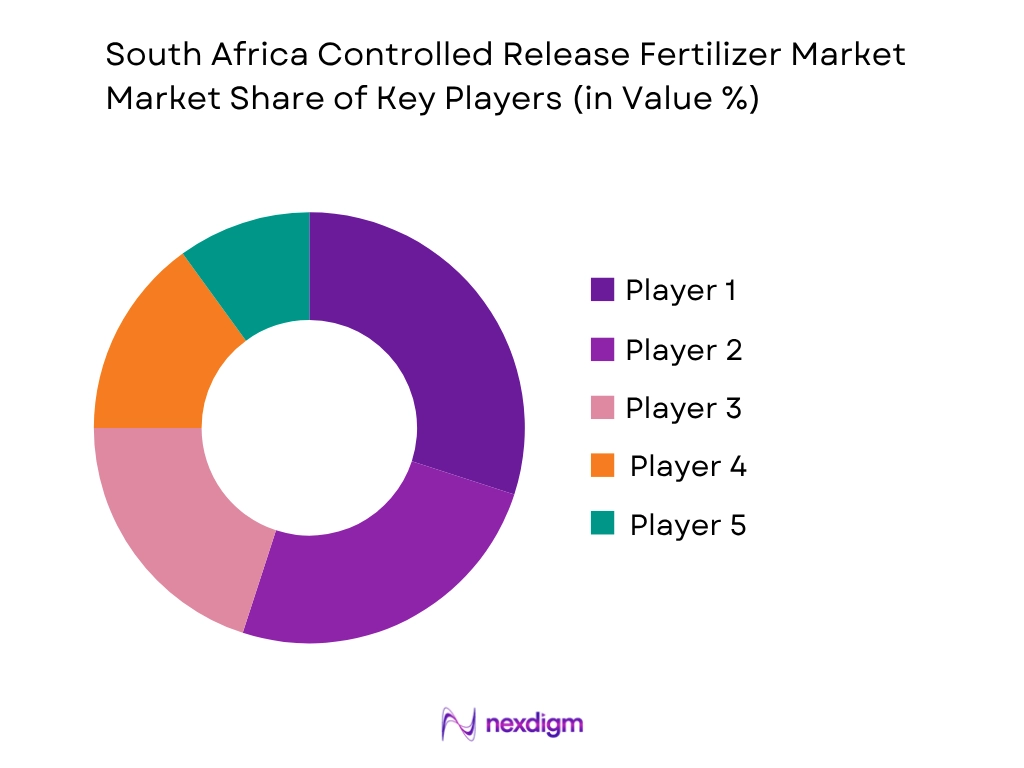
South Africa Controlled Release Fertilizer Market Analysis
Growth Drivers
Expansion of Commercial Agriculture and High-Value Crop Production
South Africa’s controlled release fertilizer market is being supported by the expansion of commercial agriculture and the increasing cultivation of high-value crops requiring precise nutrient management. According to the Department of Agriculture, Land Reform and Rural Development, South Africa exported agricultural products worth more than USD 13 billion in 2023 and over USD 14 billion in 2024, demonstrating the growing importance of export-oriented farming. Citrus production exceeded 170 million export cartons during the 2024 season, while table grape exports remained above 75 million cartons. The country’s agricultural GDP contributed more than ZAR 150 billion to the economy during recent periods, highlighting the scale of agricultural activity. World Bank data shows South Africa’s population exceeded 63 million in 2024, increasing domestic food demand alongside export requirements. Controlled release fertilizers are increasingly adopted in citrus, grapes, avocados, vegetables, and maize cultivation because these crops require consistent nutrient availability throughout the growing cycle. The expansion of irrigated agriculture across provinces such as Western Cape, Limpopo, Mpumalanga, and KwaZulu-Natal is creating additional demand for nutrient-efficient fertilizer products. As growers focus on improving yields, nutrient uptake, and export-quality produce while minimizing nutrient losses, the use of controlled release fertilizers continues to gain momentum across South Africa’s commercial farming sector.
Increasing Focus on Nutrient Use Efficiency and Water Conservation
The growing emphasis on nutrient use efficiency and water conservation is driving adoption of controlled release fertilizers throughout South Africa. The country remains one of the world’s water-stressed economies, with renewable freshwater resources estimated at approximately 50 billion cubic meters annually according to World Bank indicators. Agriculture accounts for the largest share of national water withdrawals, making efficient nutrient and water management critical for long-term sustainability. Statistics South Africa reported that the agricultural sector remains a major contributor to rural employment, supporting more than 850,000 formal jobs. South Africa cultivated more than 2.5 million hectares of maize and significant areas under fruits, vegetables, sugarcane, and vineyards during recent production cycles. Controlled release fertilizers reduce nutrient leaching and volatilization while extending nutrient availability in the root zone, helping farmers achieve better fertilizer utilization rates. The country’s GDP exceeded USD 400 billion according to IMF estimates for 2024, supporting investments in modern agricultural technologies. Commercial producers increasingly utilize precision agriculture systems, fertigation networks, and controlled nutrient-release products to optimize resource use. These factors collectively strengthen demand for advanced fertilizer technologies capable of supporting sustainable agricultural production under water-constrained conditions.
Market Challenges
Dependence on Imported Specialty Fertilizer Technologies and Raw Materials
A major challenge facing the South Africa controlled release fertilizer market is dependence on imported specialty fertilizer technologies, coating materials, and advanced nutrient formulations. South Africa imports a significant portion of its fertilizer requirements due to limited domestic production of specialty fertilizer inputs. According to trade statistics, fertilizer imports exceeded several million tonnes annually, exposing the market to global supply chain disruptions and logistical constraints. South Africa’s merchandise imports surpassed USD 120 billion in recent periods, reflecting dependence on international supply networks. The South African Rand remains sensitive to international commodity and currency fluctuations, creating uncertainty for agricultural input suppliers. Controlled release fertilizers require advanced polymer coatings, sulfur coatings, and specialized manufacturing technologies that are often sourced from international suppliers. Port congestion, freight bottlenecks, and shipping disruptions can affect product availability and delivery timelines. Furthermore, commercial farmers require timely fertilizer application during planting windows, making supply reliability essential. While demand for nutrient-efficient products is increasing, dependence on imported technologies can limit market penetration, particularly during periods of global supply volatility. This structural challenge continues to influence the pace of adoption of controlled release fertilizers across South Africa’s agricultural sector.
Limited Adoption Among Smallholder Farmers and Technical Knowledge Gaps
Despite increasing awareness of nutrient efficiency, adoption among smallholder and emerging farmers remains relatively limited due to technical knowledge gaps and insufficient agronomic support. According to government agricultural statistics, South Africa has thousands of small-scale farming enterprises operating across rural provinces, many of which continue to rely on conventional fertilizer application practices. The country’s unemployment level remained above 8 million people in 2024 according to Statistics South Africa, highlighting financial pressures within rural communities. Controlled release fertilizers require understanding of nutrient release patterns, crop-specific nutrient requirements, soil characteristics, and irrigation management. Many smaller farming operations lack access to precision agriculture tools, soil testing services, and agronomic advisory support needed to maximize product benefits. South Africa’s rural population remains substantial, particularly in provinces such as Eastern Cape, Limpopo, and KwaZulu-Natal. While commercial growers increasingly utilize advanced nutrient management systems, knowledge dissemination among smaller producers remains uneven. Inadequate technical training can reduce confidence in adopting enhanced-efficiency fertilizers and slow overall market penetration. Expanding farmer education programs, demonstration projects, and extension services will therefore remain essential for accelerating broader adoption of controlled release fertilizer technologies throughout South Africa.
Market Opportunities
Growth of Precision Agriculture and Digital Farming Technologies
The increasing adoption of precision agriculture technologies presents a significant opportunity for the South Africa controlled release fertilizer market. South Africa possesses one of Africa’s most advanced commercial farming sectors, with widespread use of GPS-guided equipment, remote sensing systems, drone technologies, and variable-rate application techniques. According to the World Bank, internet penetration and digital infrastructure development have continued to improve across the country, supporting the expansion of data-driven farming practices. South Africa’s agricultural exports surpassed USD 14 billion in 2024, encouraging producers to invest in technologies that improve productivity and crop quality. Controlled release fertilizers complement precision farming systems because they deliver nutrients gradually and align with site-specific nutrient management strategies. Commercial maize, citrus, grape, and horticultural producers increasingly seek solutions that reduce nutrient wastage while improving crop performance. The country’s agricultural land base exceeds 96 million hectares, creating substantial opportunities for advanced nutrient management technologies. As digital agriculture platforms continue expanding and farmers gain access to more sophisticated crop monitoring tools, demand for controlled release fertilizers is expected to strengthen due to their compatibility with precision nutrient application practices.
Expansion of Export-Oriented Horticulture and Specialty Crop Cultivation
The continued expansion of export-oriented horticulture and specialty crop cultivation provides a strong growth opportunity for controlled release fertilizer suppliers. South Africa remains a major global exporter of citrus fruits, table grapes, avocados, apples, pears, and macadamia nuts. Citrus exports exceeded 170 million cartons during the latest export season, while avocado and macadamia production areas continue expanding across Limpopo, Mpumalanga, and KwaZulu-Natal. The agricultural export sector generated more than USD 14 billion in trade value during 2024, underlining the importance of maintaining high crop quality standards. Controlled release fertilizers are particularly beneficial for horticultural crops because they provide sustained nutrient delivery, reduce nutrient losses, and support uniform crop development. The country’s logistics infrastructure, export facilities, and established trade relationships with Europe, Asia, and the Middle East further support the growth of high-value agricultural production. As producers increasingly focus on maximizing yields, fruit quality, nutrient efficiency, and environmental sustainability, demand for advanced fertilizer technologies is expected to rise. This trend creates a favorable environment for wider adoption of controlled release fertilizer products across South Africa’s horticulture and specialty crop sectors.
Future Outlook
The South Africa Controlled Release Fertilizer Market is expected to experience sustained growth over the forecast period due to increasing adoption of precision agriculture, rising demand for export-quality crops, and greater focus on nutrient-use efficiency. Commercial farmers are expected to continue investing in advanced fertilizer technologies that enhance productivity while reducing environmental impact. Growth in citrus exports, vineyard production, horticulture cultivation, and protected agriculture is likely to create new opportunities for market participants. Additionally, climate-smart farming practices and sustainable agriculture initiatives are expected to accelerate the adoption of controlled release fertilizers across key agricultural regions.
Major Players
- Omnia Holdings
- Kynoch Fertilizer
- Sasol Agriculture
- Villa Crop Protection
- Yara South Africa
- Haifa Group
- ICL Group
- Nutrien Ltd.
- COMPO Expert
- EuroChem Group
- Koch Agronomic Services
- Kingenta Ecological Engineering Group
- Coromandel International
- OCI Global
- AgroLiquid South Africa
Key Target Audience
- Fertilizer Manufacturers
- Specialty Fertilizer Producers
- Agricultural Cooperatives
- Commercial Farm Operators
- Horticulture and Vineyard Growers
- Agri-Input Distributors and Retailers
- Investment and Venture Capitalist Firms
- Government and Regulatory Bodies (Department of Agriculture, Land Reform and Rural Development; Department of Forestry, Fisheries and the Environment)
Research Methodology
Step 1: Identification of Key Variables
The initial phase involves constructing an ecosystem map encompassing all major stakeholders within the South Africa Controlled Release Fertilizer Market. This step is supported by extensive secondary research utilizing government databases, trade statistics, agricultural publications, and industry reports. The objective is to identify critical variables influencing market demand, adoption rates, and competitive dynamics.
Step 2: Market Analysis and Construction
In this phase, historical market data related to fertilizer consumption, agricultural production, crop cultivation patterns, and nutrient demand are compiled and analyzed. Market estimates are developed using both top-down and bottom-up methodologies to ensure consistency and reliability.
Step 3: Hypothesis Validation and Expert Consultation
Market assumptions are validated through interviews with fertilizer manufacturers, distributors, agronomists, commercial farmers, and industry experts. These consultations provide insights into technology adoption trends, crop-specific fertilizer requirements, and competitive developments within the market.
Step 4: Research Synthesis and Final Output
The final phase integrates primary and secondary research findings through data triangulation. Market forecasts, segmentation analysis, competitive positioning, and growth opportunities are assessed to create a comprehensive and validated analysis of the South Africa Controlled Release Fertilizer Market.

- Executive Summary
- Research Methodology (Market Definitions and Assumptions, Abbreviations, Market Sizing Approach, Top-Down Analysis, Bottom-Up Analysis, Demand-Side Assessment, Supply-Side Assessment, Primary Industry Interviews, Data Triangulation, Forecasting Framework, Limitations and Future Conclusions)

- Definition and Scope
- Market Evolution and Industry Genesis
- South Africa Fertilizer Industry Ecosystem
- Timeline of Major Industry Developments
- Agricultural Input Value Chain Analysis

- Growth Drivers (Expansion of High-Value Horticulture Exports, Rising Adoption of Precision Agriculture, Increasing Water Scarcity Concerns, Government Support for Sustainable Farming, Demand for Higher Nutrient Use Efficiency)
- Market Challenges (Dependence on Imported Specialty Fertilizers, High Product Cost Relative to Conventional Fertilizers, Volatility in Raw Material Availability, Farmer Awareness Gaps, Distribution Challenges in Rural Areas)
- Market Opportunities (Growth of Protected Cultivation, Expansion of Export-Oriented Fruit Production, Bio-Based Controlled Release Fertilizer Development, Smart Farming Adoption, Carbon-Smart Agriculture Initiatives)
- Market Trends (Polymer-Coated Fertilizer Adoption, Precision Nutrient Management, Fertigation Integration, Sustainable Nutrient Release Technologies, Climate-Resilient Crop Nutrition)
- Government Regulations (Fertilizers, Farm Feeds, Agricultural Remedies and Stock Remedies Act, Product Registration Requirements, Nutrient Content Standards, Environmental Compliance Requirements, Import Regulations)
- PESTLE Analysis
- Porter’s Five Forces Analysis
- SWOT Analysis
- Competitive Landscape Analysis

- By Market Value (2020-2025)
- By Volume Consumption (2020-2025)
- By Average Selling Price (2020-2025)

- By Nutrient Type (In Value %)
Nitrogen-Based Controlled Release Fertilizers
NPK Controlled Release Fertilizers
Phosphorus-Based Controlled Release Fertilizers
Potassium-Based Controlled Release Fertilizers
Micronutrient Controlled Release Fertilizers
Secondary Nutrient Controlled Release Fertilizers - By Coating Technology (In Value %)
Polymer Coated Fertilizers
Sulfur Coated Fertilizers
Resin Coated Fertilizers
Bio-Based Coated Fertilizers
Hybrid Coated Fertilizers - By End User (In Value %)
Commercial Farms
Plantation Farms
Horticulture Growers
Greenhouse Operators
Agricultural Cooperatives
Government Agricultural Projects
Turf and Landscape Management - By Crop Type (In Value %)
Maize
Wheat
Sugarcane
Fruits & Vegetables
Citrus
Grapes and Vineyards
Oilseeds
Others - By Application Method (In Value %)
Soil Application
Fertigation
Foliar Application
Precision Application Systems
Greenhouse Application

- Market Share of Major Players (By Value, Volume, Nutrient Type, Crop Segment, Coating Technology)
- Cross Comparison Parameters (Product Portfolio Breadth, Controlled Release Technology Portfolio, Nutrient Release Duration Range, Manufacturing Capacity, Distribution Network Strength, Agronomic Advisory Services, Presence in High-Value Crop Segments, Sustainability and R&D Capabilities)
- SWOT Analysis of Major Players
- Pricing Analysis by Nutrient Grade and Crop Application
- Detailed Profiles of Major Companies
Omnia Holdings
Kynoch Fertilizer
Sasol Agriculture
Villa Crop Protection
Yara South Africa
Haifa Group
ICL Group
Nutrien Ltd.
COMPO Expert
EuroChem Group
Kingenta Ecological Engineering Group
Koch Agronomic Services
Coromandel International
OCI Global
AgroLiquid South Africa

- Fertilizer Consumption Patterns by Farm Size
- Nutrient Management Practices Assessment
- Commercial Farming Adoption Analysis
- Horticulture and Specialty Crop Demand Assessment
- Greenhouse Cultivation Fertilizer Utilization
- Purchasing Power and Input Spending Analysis
- Farmer Pain Point Analysis
- Product Selection Criteria Assessment
- Sustainability and Environmental Preference Analysis
- Decision-Making Process Analysis
- Dealer and Agronomist Influence Assessment

- By Market Value (2026-2035)
- By Volume Consumption (2026-2035)
- By Average Selling Price (2026-2035)


 Request a Sample
 Ask for Customization
 Get a Quote
 Enquire Now