
 Download PDF
Market Overview
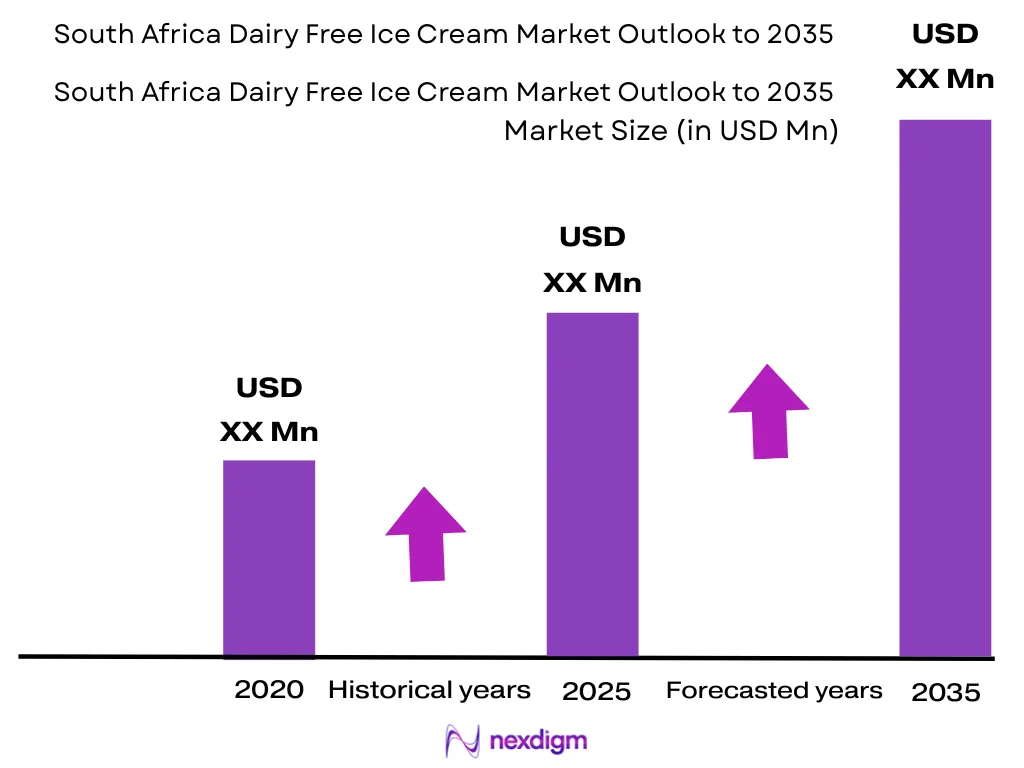
The South Africa Dairy Free Ice Cream Market was valued at approximately USD ~ million in 2024, compared to USD ~ million in 2023. The market growth is supported by increasing consumer preference for plant-based food products, rising awareness regarding lactose intolerance, growing vegan and flexitarian populations, and expanding availability of dairy-free frozen desserts across organized retail channels. The market is also benefiting from innovations in coconut-based, almond-based, oat-based, and soy-based ice cream formulations, alongside premium product launches by both domestic and international manufacturers.
Market Segmentation
By Base Ingredient Type
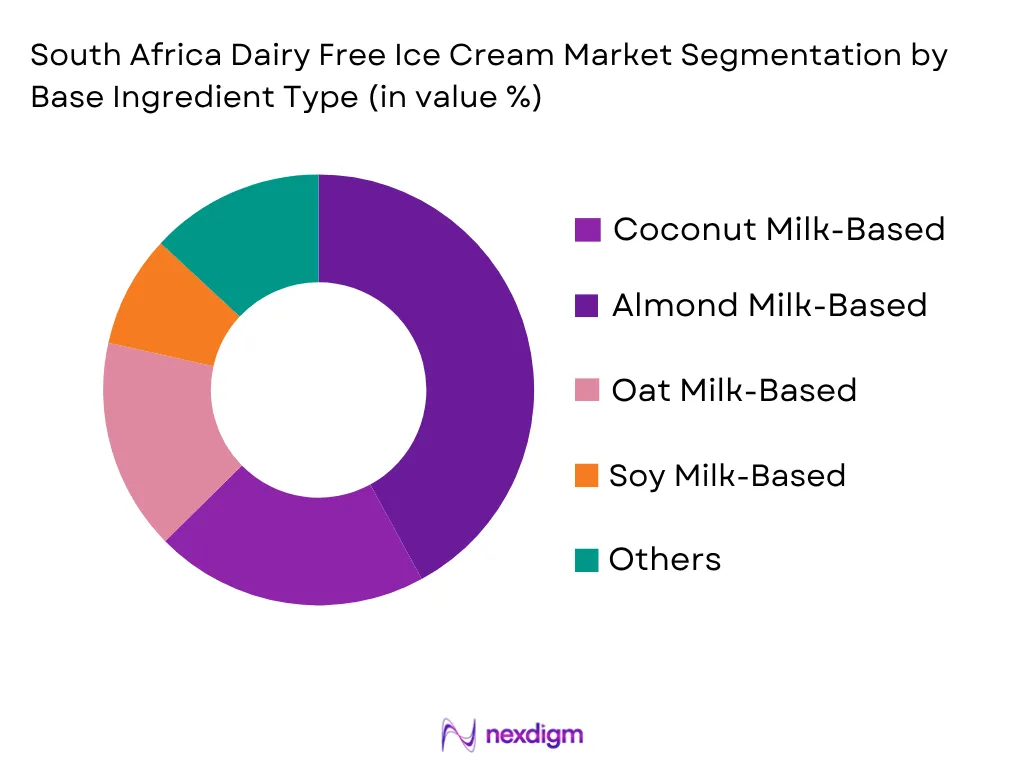
South Africa Dairy Free Ice Cream Market is segmented by plant-based source into coconut milk-based, almond milk-based, oat milk-based, soy milk-based, cashew milk-based, and blended plant-based formulations. Recently, coconut milk-based dairy-free ice cream has emerged as the dominant segment due to its creamy texture and strong compatibility with frozen dessert applications. Coconut milk closely replicates the mouthfeel of traditional dairy ice cream, making it highly attractive among consumers transitioning toward plant-based alternatives. Manufacturers also favor coconut milk because it supports a wide range of flavor profiles, including chocolate, vanilla, tropical fruit, and premium gourmet varieties. The segment has gained traction through increasing product availability in retail stores and specialty health-food outlets. Furthermore, coconut-based formulations align with clean-label trends and provide a natural positioning that resonates strongly with health-conscious and vegan consumers.
By Distribution Channel
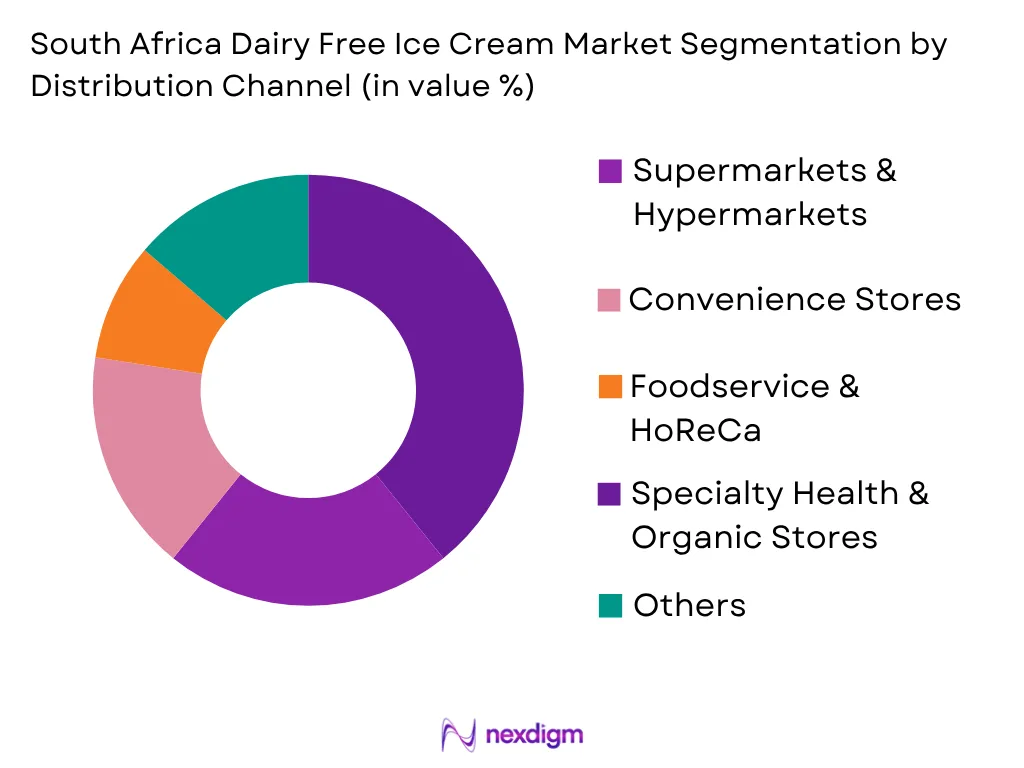
South Africa Dairy Free Ice Cream Market is segmented by distribution channel into supermarkets & hypermarkets, convenience stores, specialty health & organic stores, online retail & e-commerce, foodservice & HoReCa, and independent grocery stores. Recently, supermarkets & hypermarkets have accounted for the dominant market share under this segmentation. Their leadership is attributed to extensive product visibility, broad SKU availability, strong cold-chain infrastructure, and the ability to offer both premium and mass-market dairy-free ice cream brands under one roof. Major retail chains have expanded dedicated plant-based and health-focused product sections, making dairy-free ice cream more accessible to consumers. Furthermore, supermarkets frequently conduct promotional campaigns, bundle offers, and in-store sampling activities that encourage trial purchases. Consumers also prefer these outlets due to convenience, product comparison opportunities, and assured product quality. The presence of both international and local dairy-free ice cream brands within organized retail channels has significantly strengthened the dominance of supermarkets and hypermarkets, making them the primary purchase destination for dairy-free frozen desserts across South Africa.
Competitive Landscape
The South Africa Dairy Free Ice Cream Market remains moderately consolidated with the presence of international plant-based brands and regional specialty manufacturers. Competition is centered around product innovation, flavor differentiation, distribution expansion, ingredient sourcing, and premium positioning. Companies are increasingly investing in sustainable packaging, clean-label formulations, and alternative plant protein technologies to strengthen their market presence. The competitive environment is expected to intensify as mainstream frozen dessert companies expand their dairy-free product portfolios.
| Company | Establishment Year | Headquarters | Plant-Based Base Portfolio | Dairy-Free SKU Count | Distribution Reach | Premium Product Portfolio | Vegan Certification | Packaging Sustainability |
| Unilever (Ben & Jerry’s Non-Dairy) | 1929 | ~ | ~ | ~ | ~ | ~ | ~ | ~ |
| Oatly | 1994 | ~ | ~ | ~ | ~ | ~ | ~ | ~ |
| Halo Top Dairy Free | 2012 | ~ | ~ | ~ | ~ | ~ | ~ | ~ |
| So Delicious | 1987 | ~ | ~ | ~ | ~ | ~ | ~ | ~ |
| The Dairy-Free Ice Cream Co. | 2017 | ~ | ~ | ~ | ~ | ~ | ~ | ~ |
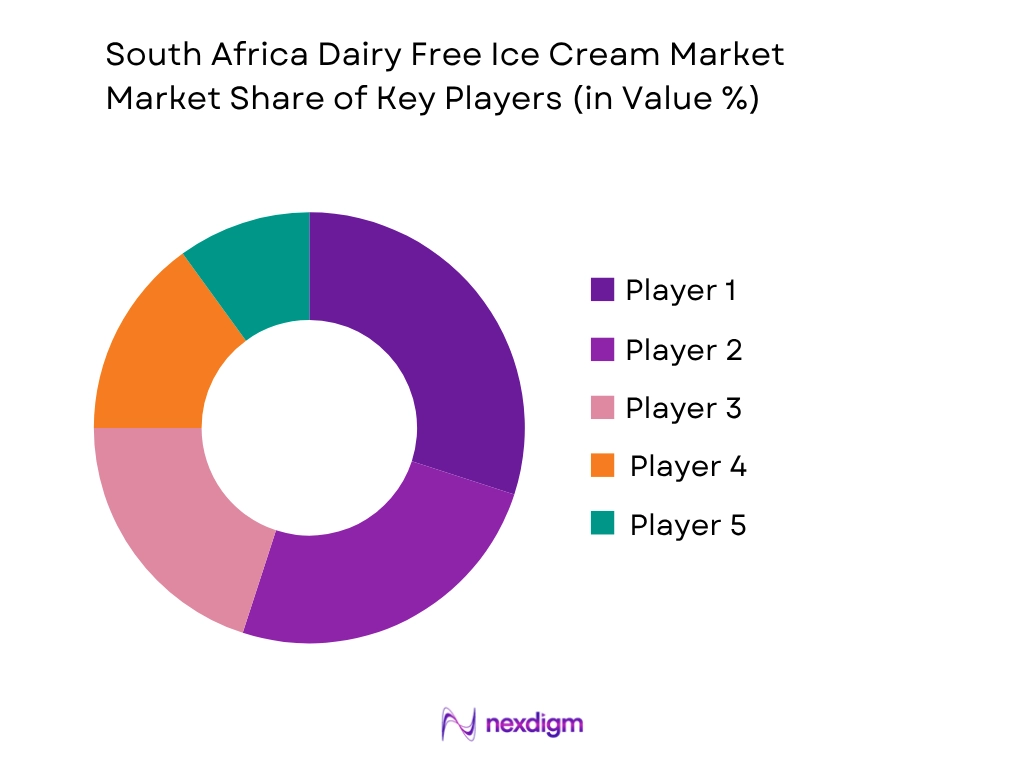
South Africa Dairy Free Ice Cream Market Analysis
Growth Drivers
Health and Wellness-Oriented Consumer Shift
The South Africa Dairy Free Ice Cream Market is increasingly supported by changing consumer dietary preferences and growing health consciousness. According to the World Bank, South Africa’s population exceeded 63 million in 2024, creating a large consumer base for alternative food products. The World Bank also reported GDP of approximately USD 403 billion and GDP per capita above USD 6,300, indicating growing purchasing power among urban consumers seeking premium and functional food products. Statistics South Africa reported that household expenditure on food and non-alcoholic beverages remains one of the largest spending categories, while urbanization levels exceeded 43 million urban residents, supporting access to modern retail channels where dairy-free products are predominantly sold. Increasing awareness regarding lactose intolerance, dairy sensitivities, vegan diets, and plant-based nutrition has encouraged consumers to explore alternatives such as almond, oat, coconut, and soy-based frozen desserts. The expansion of organized retail chains including Pick n Pay, Woolworths, Checkers, and Spar has significantly improved shelf visibility for dairy-free ice cream products. Furthermore, internet users in South Africa exceeded 45 million, according to data published by national communications authorities, facilitating digital exposure to health-focused dietary trends and international plant-based product innovations. These demographic and economic indicators continue to support the expansion of dairy-free frozen dessert consumption across major metropolitan regions.
Expansion of Modern Retail and Premium Food Consumption
The rapid expansion of modern retail infrastructure and premium food categories is driving demand for dairy-free ice cream products across South Africa. According to Statistics South Africa, retail trade sales continued to exceed ZAR 1 trillion annually, reflecting the scale of the country’s consumer goods market. South Africa’s urban population surpassed 43 million people, while major metropolitan regions including Johannesburg, Cape Town, Durban, Pretoria, and Gqeberha collectively account for a substantial share of formal retail activity. The IMF estimated South Africa’s nominal GDP at more than USD 400 billion during 2024, supporting growth in premium food consumption. Dairy-free ice cream products are increasingly positioned as premium offerings, benefiting from rising demand for specialty food categories. Modern grocery chains continue expanding freezer capacity and introducing dedicated plant-based sections, enabling broader consumer access. South Africa also recorded merchandise imports exceeding USD 110 billion, facilitating the entry of international dairy-free brands and plant-based ingredients. Additionally, increasing participation in e-commerce grocery platforms and food delivery services has strengthened product accessibility. The combination of urban concentration, organized retail expansion, premiumization trends, and rising consumer spending on healthier food alternatives creates a favorable environment for sustained growth in the dairy-free ice cream category.
Market Challenges
Dependence on Imported Plant-Based Ingredients and Supply Chain Constraints
One of the key challenges facing the South Africa Dairy Free Ice Cream Market is the dependence on imported plant-based ingredients used in premium formulations. South Africa imported goods valued at more than USD 110 billion according to international trade statistics, with a considerable portion comprising processed food ingredients and agricultural inputs. Dairy-free ice cream manufacturers frequently rely on imported almond derivatives, oat ingredients, stabilizers, flavor systems, and specialty plant proteins that are not produced at sufficient scale domestically. The South African Rand continues to experience currency volatility against major international currencies, creating uncertainty in procurement planning. The country’s logistics sector also faces challenges related to port congestion and transportation inefficiencies. South Africa’s road freight network transports over 80% of domestic freight volumes, increasing dependency on fuel-intensive logistics. Electricity supply disruptions have further complicated frozen food distribution, particularly for products requiring strict cold-chain maintenance. According to Eskom operational reports, energy constraints have continued to impact food manufacturing and storage facilities. These structural challenges can affect product availability, inventory management, and manufacturing efficiency for dairy-free ice cream producers. Consequently, manufacturers must continuously optimize sourcing strategies and distribution networks to maintain consistent product supply across the country.
Premium Product Positioning and Consumer Affordability Constraints
The South Africa Dairy Free Ice Cream Market faces challenges associated with affordability and consumer purchasing priorities. According to Statistics South Africa, unemployment remained above 32 million economically active population participants with significant job-seeking pressure, while income inequality continues to be among the highest globally. The IMF reported real economic growth remaining moderate, limiting broad-based expansion of discretionary consumer spending. Dairy-free ice cream products are commonly positioned within premium food categories due to specialized ingredient requirements, advanced processing methods, and smaller production volumes. As a result, a significant portion of consumers continues to prioritize conventional frozen desserts that are more familiar and widely available. South Africa’s consumer price environment also influences purchasing behavior, with households allocating substantial portions of disposable income toward essential categories including housing, transport, electricity, and food staples. Although urban middle-income consumers increasingly adopt plant-based products, broader market penetration remains constrained by affordability considerations. Additionally, dairy-free ice cream awareness levels vary significantly between metropolitan and smaller regional markets. Retailers must balance shelf space allocation between established conventional products and emerging dairy-free alternatives. These factors collectively create challenges for manufacturers seeking rapid category expansion across all consumer segments within South Africa.
Market Opportunities
Growth in Plant-Based Food Ecosystem and Product Innovation
The expanding plant-based food ecosystem presents a significant opportunity for the South Africa Dairy Free Ice Cream Market. South Africa’s population exceeded 63 million, while internet penetration surpassed 45 million users, facilitating widespread consumer exposure to international dietary trends and product innovations. The country possesses one of Africa’s most developed food manufacturing sectors, supported by extensive retail networks and sophisticated cold-chain infrastructure. According to national trade statistics, South Africa maintains substantial agricultural production capabilities including fruits, nuts, and alternative ingredient crops that can support innovation within plant-based food categories. The food and beverage manufacturing industry contributes billions of rand annually to industrial output, creating opportunities for manufacturers to diversify product portfolios. Consumer demand for clean-label foods, functional ingredients, reduced-allergen products, and sustainable nutrition solutions continues to increase across urban markets. Dairy-free ice cream manufacturers are leveraging ingredients such as oats, almonds, coconut, cashews, and blended plant proteins to develop differentiated offerings. The growing presence of specialty health stores, premium supermarkets, and online grocery platforms provides additional routes to market. Current consumer interest in wellness-oriented products creates favorable conditions for expanded flavor innovation, localized product development, and premium dairy-free frozen dessert offerings.
Expansion Through Foodservice and Hospitality Channels
The South Africa Dairy Free Ice Cream Market has substantial opportunities within the country’s foodservice and tourism sectors. According to official tourism statistics, South Africa continues to attract millions of international visitors annually, while domestic tourism remains an important contributor to economic activity. The hospitality industry encompasses thousands of hotels, restaurants, cafés, resorts, and entertainment venues that increasingly seek inclusive menu options catering to diverse dietary preferences. South Africa’s services sector contributes more than 60% of national GDP, highlighting the economic significance of hospitality and consumer-facing businesses. Urban centers such as Cape Town, Johannesburg, Durban, and Pretoria continue to experience growing demand for vegan, vegetarian, lactose-free, and health-focused menu offerings. Restaurant chains and premium dessert outlets are expanding dairy-free product availability to attract broader customer demographics. Food delivery platforms have also strengthened consumer access to specialty frozen desserts. Additionally, South Africa’s established cold-chain logistics infrastructure supports distribution into hospitality venues nationwide. The increasing incorporation of plant-based menu items by hotels, restaurants, cafés, and quick-service operators creates meaningful opportunities for dairy-free ice cream manufacturers to diversify sales channels beyond traditional retail environments and strengthen long-term category growth.
Future Outlook
The South Africa Dairy Free Ice Cream Market is expected to witness substantial growth through the forecast period. Market expansion will be supported by increasing adoption of plant-based diets, rising awareness regarding lactose intolerance, and expanding vegan consumer communities. Product innovation involving oat milk, almond milk, and blended plant proteins is expected to enhance product appeal. Retailers are anticipated to allocate larger shelf spaces to dairy-free frozen desserts, while e-commerce channels and foodservice operators will contribute significantly to category expansion. Sustainable packaging and clean-label product positioning are also expected to remain key growth catalysts.
Major Players
- Unilever (Ben & Jerry’s Non-Dairy)
- Oatly
- Halo Top Dairy Free
- So Delicious Dairy Free
- Coconut Bliss
- Swedish Glace
- Alpro
- Booja-Booja
- Cado
- Van Leeuwen Non-Dairy
- The Dairy-Free Ice Cream Co.
- Nice Cream
- Coconut Collaborative
- Wicked Kitchen
- Planet Oat Frozen Desserts
Key Target Audience
- Dairy Free Ice Cream Manufacturers
- Plant-Based Ingredient Suppliers
- Frozen Dessert Brands
- Retail Chains and Supermarkets
- Foodservice and HoReCa Operators
- Investments and Venture Capitalist Firms
- Government and Regulatory Bodies (Department of Health South Africa, National Consumer Commission, Department of Trade, Industry and Competition)
- E-Commerce and Online Grocery Platforms
Research Methodology
Step 1: Identification of Key Variables
The initial phase involves constructing an ecosystem map covering all stakeholders associated with the South Africa Dairy Free Ice Cream Market. Extensive secondary research is conducted through industry publications, company reports, trade databases, and regulatory sources. The objective is to identify key demand-side and supply-side variables influencing market performance.
Step 2: Market Analysis and Construction
Historical industry information is collected and analyzed to understand consumption patterns, distribution structures, product innovation trends, and revenue generation mechanisms. Market segmentation is developed through a combination of demand-side assessment and supply-side validation. The process ensures reliable market estimates across all major categories.
Step 3: Hypothesis Validation and Expert Consultation
Preliminary market assumptions are validated through interviews with manufacturers, distributors, retailers, ingredient suppliers, and industry experts. These consultations provide insights into consumer behavior, product demand, operational challenges, and future growth opportunities. Findings are incorporated into the final analytical framework.
Step 4: Research Synthesis and Final Output
The final stage combines findings from secondary research, primary interviews, and market modeling exercises. Data triangulation techniques are applied to ensure consistency and accuracy. The final output presents a comprehensive and validated assessment of the South Africa Dairy Free Ice Cream Market.

- Executive Summary
- Research Methodology (Market Definitions and Assumptions, Abbreviations, Market Sizing Approach, Consolidated Research Approach, Top-Down Analysis, Bottom-Up Analysis, Demand-Side Assessment, Supply-Side Assessment, Primary Industry Interviews, Data Triangulation, Forecasting Framework, Limitations and Future Conclusions)

- Definition and Scope
- Market Evolution and Industry Genesis
- Timeline of Major Industry Developments
- Business Cycle Analysis
- Plant-Based Frozen Dessert Ecosystem

- Growth Drivers (Rising Lactose Intolerance Awareness, Growing Vegan and Flexitarian Population, Expansion of Modern Retail Chains, Increasing Premium Frozen Dessert Consumption, Growth in Health and Wellness Spending)
- Market Challenges (Dependence on Imported Plant-Based Ingredients, Cold Chain Infrastructure Constraints, Premium Product Pricing, Limited Consumer Awareness Outside Urban Areas, Supply Chain Volatility)
- Market Opportunities (Oat-Based Ice Cream Innovation, Clean Label Product Development, Expansion into Secondary Cities, Partnerships with Foodservice Operators, Sustainable Packaging Adoption)
- Market Trends (Plant-Based Protein Enrichment, Sugar-Free Formulations, Premium and Gourmet Flavor Launches, Sustainable Ingredient Sourcing, Direct-to-Consumer Distribution Models)
- Government Regulations (Food Safety and Labeling Requirements, Import and Customs Regulations, Plant-Based Product Compliance Standards, Packaging and Environmental Regulations)
- SWOT Analysis
- Porter’s Five Forces Analysis
- PESTLE Analysis
- Competition Ecosystem

- By Market Value (2020-2025)
- By Volume Consumption (2020-2025)
- By Average Selling Price (2020-2025)

- By Base Ingredient Type (In Value %)
Coconut Milk-Based
Almond Milk-Based
Oat Milk-Based
Soy Milk-Based
Cashew Milk-Based
Blended Plant Protein-Based - By Flavor Type (In Value %)
Chocolate
Vanilla
Fruit-Based Flavors
Caramel and Toffee
Nut-Based Flavors
Premium Gourmet Flavors - By Distribution Channel (In Value %)
Hypermarkets and Supermarkets
Convenience Stores
Health and Organic Stores
Online Retail and E-Commerce
Foodservice and HoReCa
Specialty Dessert Outlets - By Region (In Value %)
Gauteng
Western Cape
KwaZulu-Natal
Eastern Cape
Free State
Rest of South Africa - By Packaging Type (In Value %)
Tubs
Single-Serve Packs
Family Packs
Multipacks
Sustainable Packaging Formats

- Market Share of Major Players (By Value, Volume, Product Category, Distribution Channel)
- Market Share of Major Players by Plant-Based Source Segment
- Cross Comparison Parameters (Product Portfolio Breadth, Dairy-Free SKU Count, Plant-Based Ingredient Diversity, Retail Distribution Reach, E-Commerce Presence, Manufacturing and Sourcing Capability, Premium Product Positioning, Innovation & New Product Launch Frequency)
- SWOT Analysis of Major Players
- Pricing Analysis by SKU and Pack Size
- Detailed Profiles of Major Companies
Unilever South Africa (Magnum Vegan / Ben & Jerry’s Non-Dairy)
Nice Cream
The Dairy-Free Ice Cream Co.
Nature’s Choice
So Delicious Dairy Free
Oatly Frozen Desserts
Häagen-Dazs Non-Dairy
Halo Top Dairy Free
Coconut Collaborative
Alpro
Booja-Booja
Swedish Glace
Coconut Bliss
Van Leeuwen Non-Dairy
Cado

- Market Share of Major Players (By Value, Volume, Product Category, Distribution Channel)
- Market Share of Major Players by Plant-Based Source Segment
- Cross Comparison Parameters (Product Portfolio Breadth, Dairy-Free SKU Count, Plant-Based Ingredient Diversity, Retail Distribution Reach, E-Commerce Presence, Manufacturing and Sourcing Capability, Premium Product Positioning, Innovation & New Product Launch Frequency)
- SWOT Analysis of Major Players
- Pricing Analysis by SKU and Pack Size

- By Market Value (2026-2035)
- By Volume Consumption (2026-2035)
- By Average Selling Price (2026-2035)


 Request a Sample
 Ask for Customization
 Get a Quote
 Enquire Now