

 Download PDF
Market Overview
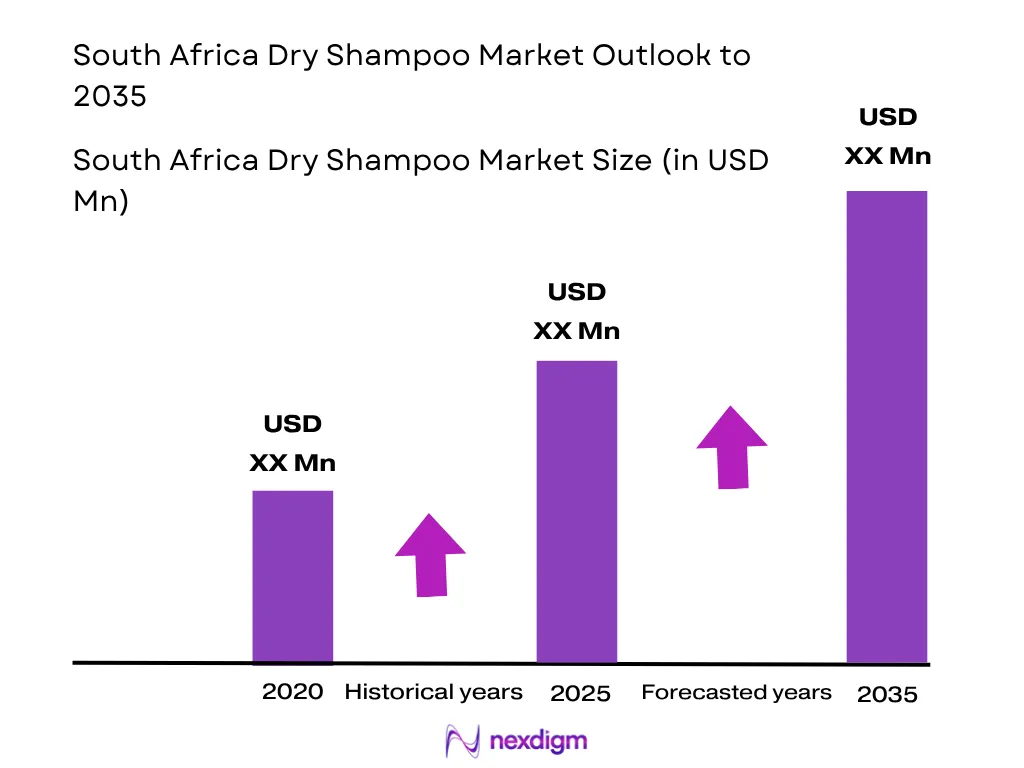
The South Africa Dry Shampoo market is valued at USD ~ million in 2025, according to Nexdigm Research. This reflects continued consumer adoption driven by busy lifestyles, increased hair grooming awareness, and preference for convenient waterless hair refresh solutions that fit urban daily routines. Historical consumption patterns also show rising retail availability across supermarkets, pharmacies, and e‑commerce platforms, contributing to steady market growth.
Within the market context, major urban centres such as Johannesburg, Cape Town, and Durban dominate demand. High population density, greater disposable income, and stronger retail penetration in these cities significantly increase product availability and consumption frequency. Urban beauty trends and influencer marketing further amplify product trial and repeat purchase behaviour in these regions.
Market Segmentation
By Form
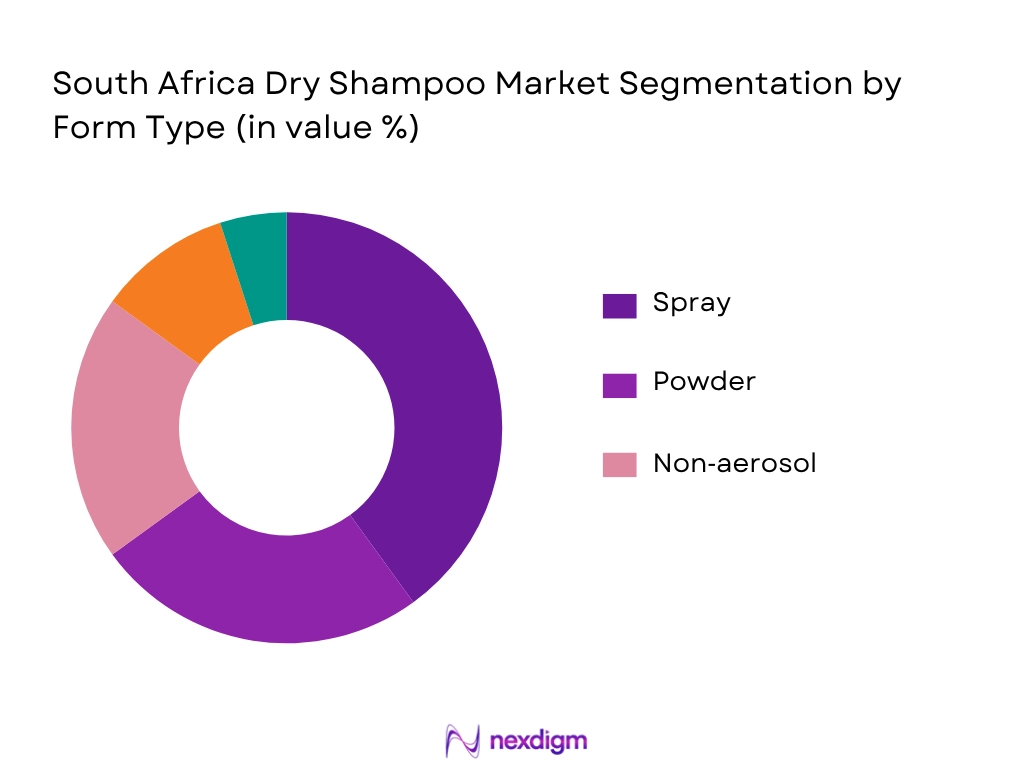
By form, the spray segment dominates the South Africa Dry Shampoo market, capturing the largest share of value. Spray formats are widely preferred because they offer ease of use, even distribution, and generally higher performance in oil absorption and volume enhancement. Many global and local brands focus their core SKUs in spray variants due to strong consumer familiarity and perceived effectiveness. Powder dry shampoos are gaining traction as a secondary segment, especially among consumers seeking eco‑friendly or non‑aerosol options that align with sustainability trends.
By Distribution Channel
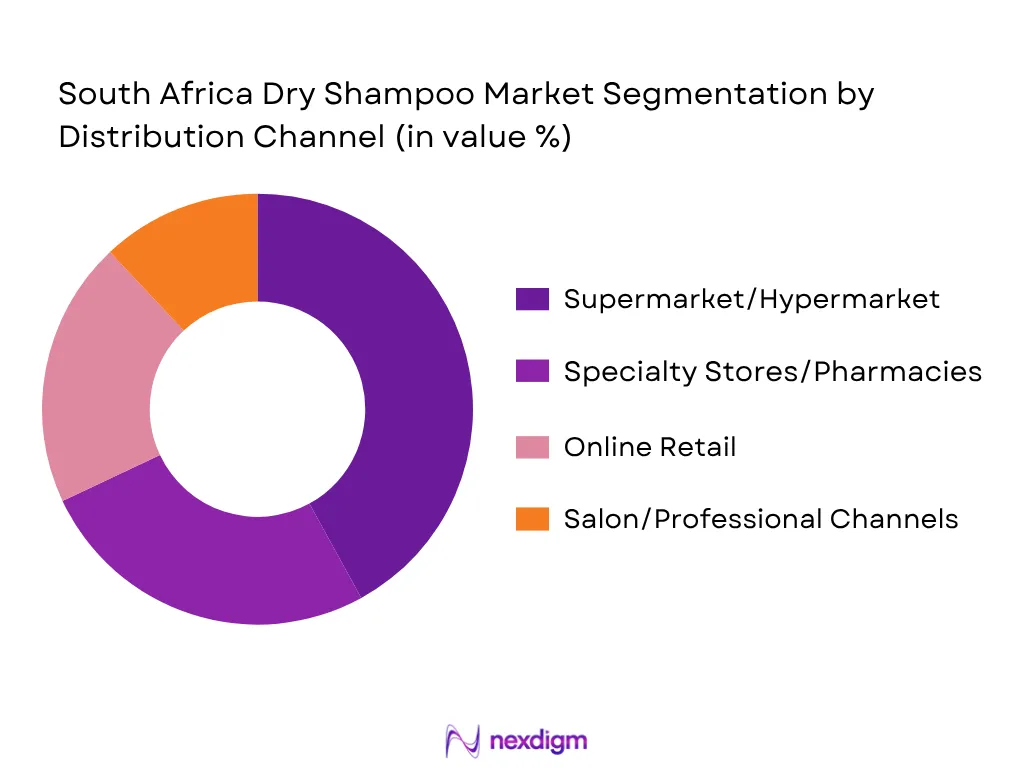
The modern retail segment (supermarkets and hypermarkets) leads distribution share for dry shampoo sales in South Africa. This is due to extensive physical footprint, promotional visibility, and consumer habit of picking hair care products during routine grocery shopping. Chain pharmacies and beauty specialty stores maintain a robust presence with targeted assortments and product testers that drive trial purchases, particularly for premium formulations. E‑commerce is growing rapidly as consumers increasingly leverage online platforms for convenience and broader brand choice. Salon channels contribute niche demand, especially for professional or higher‑end variants.
Competitive Landscape
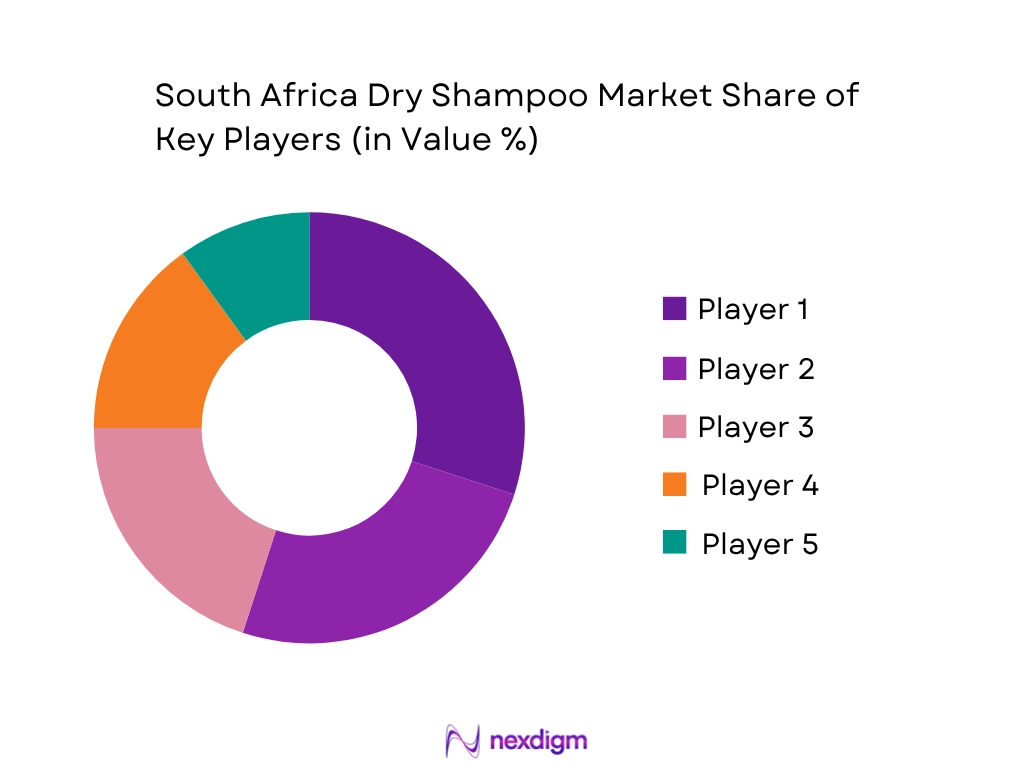
The South Africa Dry Shampoo market is characterized by participation from both global conglomerates and specialized hair care brands. A mix of well‑established multinational players together with prestige and niche brands shapes competitive intensity, emphasizing product diversity, distribution breadth, and marketing prowess. These companies drive the competitive landscape through broad SKU portfolios, multi‑channel distribution networks, and strong brand recognition. International brands generally leverage global R&D, marketing spend, and established retail partnerships. Local distribution partners play a key role in regional availability and price competitiveness.
| Company | Est. Year | Headquarters | Product Portfolio Depth | Distribution Reach | Channel Focus | Brand Equity Score | Innovation Index | Formulation Variants |
| Batiste (Church & Dwight) | 1974 | USA | ~ | ~ | ~ | ~ | ~ | ~ |
| Dove (Unilever) | 1957 | UK/Netherlands | ~ | ~ | ~ | ~ | ~ | ~ |
| Tresemmé (Unilever) | 1947 | USA | ~ | ~ | ~ | ~ | ~ | ~ |
| Pantene (P&G) | 1945 | USA | ~ | ~ | ~ | ~ | ~ | ~ |
| Klorane (Pierre Fabre) | 1965 | France | ~ | ~ | ~ | ~ | ~ | ~ |
South Africa Dry Shampoo Market Analysis
Growth Drivers
Convenience
The convenience of dry shampoo has gained prominence in South Africa against a backdrop of macroeconomic and digital adoption trends that favour quick‑use personal care products. In 2024, South Africa had an estimated 45.34 million internet users, representing 74.7 percent of the population, indicating widespread digital connectivity that supports online product discovery, reviews, and retail access for convenience products including dry shampoo. This digital penetration coincides with urban lifestyles; approximately 69.0 percent of the South African population lived in urban areas in early 2024, creating concentrated consumer demand for time‑saving grooming products that fit busy routines. Urban consumers often prioritize products that reduce grooming time without requiring water or salon appointments dry shampoo fits this behavioural pattern, especially among working professionals and students with limited time for traditional hair washing. High mobile adoption and online engagement also enable rapid access to product information and purchase options across e‑commerce platforms, strengthening convenience as a demand driver for dry shampoo.
Water Scarcity
Water scarcity and insecurity are persistent issues in South Africa that indirectly encourage the adoption of waterless hair care solutions like dry shampoo. According to the 2024 General Household Survey by Statistics South Africa, 77.1 percent of households had access to at least a basic level of drinking water but rural households faced significantly lower quality and reliability of supply. Moreover, while basic water access is higher in some provinces, interruptions in municipal water services remain a challenge, affecting households’ ability to perform frequent water‑dependent grooming routines. These infrastructure constraints highlighted by declining access to piped water in several provinces and ongoing service delivery gaps, mean that a notable proportion of the population occasionally must rely on alternative water sources or spend time fetching water, making products that reduce dependence on water appealing. In urban centres where water is comparatively more available, intermittent shortages still occur in municipalities, reinforcing interest in grooming products that require minimal or no water usage.
Market Challenges
Aerosol/VOC Limits
Environmental and regulatory constraints on aerosols and volatile organic compounds (VOCs) present a notable challenge for the dry shampoo market in South Africa. While specific VOC limits for dry shampoo formulations in South Africa are defined by cosmetic and environmental safety regulations, the broader context of environmental policy in the country reflects increasing scrutiny on products that contribute to air pollutants and emissions. South Africa’s energy and infrastructure challenges have been highlighted by economic assessments showing subdued GDP growth and ongoing reforms to stabilize service delivery systems, including utilities and environmental compliance frameworks. Regulatory agencies enforce limits on emissions and safety standards in consumer products to protect air quality and public health, which can affect formulation choices for aerosol dry shampoos and require manufacturers to invest in compliant alternatives such as non‑aerosol pump or powder formats. The need to reformulate products in line with evolving environmental standards increases production complexity and compliance costs, particularly for smaller local producers who may lack the R&D resources of larger multinational brands.
Price Sensitivity
Price sensitivity among South African consumers poses a challenge for the premium segments of the dry shampoo market. Macroeconomic indicators reveal that South Africa’s unemployment rate remained elevated at 32.4 percent in 2025, constraining disposable income for non‑essential products. Additionally, consumer price inflation showed moderation in 2024 but remains a factor in budget decisions. South Africa’s GDP per capita was approximately USD 6,267.2 in 2024, reflecting a middle‑income context where many consumers are price‑conscious and prioritise essential goods and services. Given these economic conditions, dry shampoo often positioned as a discretionary personal care item must compete on value versus cost, especially where traditional water‑based shampoos remain more affordable and familiar. For consumers with constrained budgets, especially youth and lower‑income segments, the perceived premium pricing of branded dry shampoo skews against routine trial and repeat purchases unless clear value is demonstrated. Thus, price competitiveness and targeted promotional strategies are critical to broaden adoption in South Africa’s cost‑sensitive consumer environment.
Opportunities
E‑Commerce Growth
The expansion of e‑commerce infrastructure in South Africa provides a significant opportunity for the dry shampoo market to increase reach and consumer accessibility. In 2024, South Africa’s retail environment saw substantial growth in online retail activity, with online sales accounting for nearly 8 percent of all retail trade and an estimated 96 billion rand in turnover, up from 96 billion rand in 2024 illustrating a shift toward digital purchasing behaviour. This trend is supported by high internet penetration around 74.7 percent of the population was online in early 2024 and ubiquitous mobile connectivity that facilitates online shopping and digital product research. E‑commerce platforms reduce geographical barriers to market entry, allowing dry shampoo brands to distribute products beyond major urban centres and directly to consumers who prefer digital channels. The rise of online marketplaces has also attracted global entrants and enhanced competitive dynamics, creating opportunities for brand discovery and wider assortment offerings. As consumers increasingly shop online for beauty and personal care products, including hair care categories, leveraging e‑commerce and omnichannel strategies is critical for expanding dry shampoo market penetration.
DTC/Subscription Models
Direct‑to‑consumer (DTC) and subscription business models are emerging as a strategic opportunity for dry shampoo brands to cultivate customer loyalty and stabilise recurring revenue streams. While South Africa’s e‑commerce sector is still evolving, digital engagement statistics indicate robust online behavioural patterns: over 45.34 million internet users and high mobile device use support frequent digital interactions, creating a foundation for DTC and subscription offerings. Subscription models can provide consumers with scheduled deliveries of dry shampoo products, reducing the friction of repeat purchases and enhancing lifetime customer value. This sales model also enables brands to collect first‑party consumer data, personalise offerings, and optimise inventory management. In a market where convenience is a key driver, consumers may find value in automatic replenishment services that ensure consistent product availability. Additionally, the expansion of online payment systems and digital wallets further supports the feasibility of subscription channels. For brands, DTC channels reduce reliance on traditional retail margins and allow closer engagement with consumer preferences and feedback.
Future Outlook
Over the forecast period, the South Africa Dry Shampoo market is expected to sustain growth, supported by expanding retail penetration and rising online consumer adoption. Urban consumer lifestyles and increased grooming consciousness, particularly among younger age cohorts, will continue to boost demand for convenient, quick‑use hair care products. With trends toward natural, clean‑label formulations strengthening, brands are likely to innovate with ingredient‑focused offerings that resonate with health and sustainability preferences.
Emerging digital marketing and influencer engagement will further support product awareness and trial across demographic segments. Market expansion is also anticipated through broader availability in secondary cities and rural markets via e‑commerce and retail partnerships. Strategic product tiering and value offerings may drive incremental volume growth in price‑sensitive segments.
15 Major Market Players
- Batiste (Church & Dwight)
- Dove Dry Shampoo (Unilever)
- Tresemmé Dry Shampoo (Unilever)
- Pantene Dry Shampoo (Procter & Gamble)
- Herbal Essences Dry Shampoo (P&G)
- Klorane Dry Shampoo (Pierre Fabre)
- Garnier Fructis Dry Shampoo (L’Oréal)
- Redken Dry Shampoo (L’Oréal)
- Moroccanoil Dry Shampoo
- Amika Dry Shampoo
- Living Proof Dry Shampoo
- OUAI Dry Shampoo
- Bumble and bumble Dry Shampoo
- Aveda Dry Shampoo (Estée Lauder)
- LUSH No Drought Dry Shampoo
Key Target Audience
- Retail Buyers & Category Managers (Beauty & Personal Care)
- FMCG Brand Managers (Hair Care Products)
- Private Equity & Investments and Venture Capitalist Firms (Consumer Goods)
- Head of Hair Care Product Development
- Chief Marketing Officers (Personal Care Brands)
- Procurement Heads (Retail Chains)
- Government and Regulatory Bodies (SAHPRA – South African Health Products Regulatory Authority)
- Distribution & Logistics Heads (Beauty Supply & E‑commerce)
Research Methodology
Step 1: Market Definition & Scope Mapping
This phase defines dry shampoo and delineates South Africa market scope. Secondary research from industry databases and regulatory sources was used to ensure clarity on products, classifications, and boundaries. The objective was to identify key market variables and baseline metrics.
Step 2: Data Collection & Historical Analysis
In this stage, historical market data was collated and analyzed to determine market size and trends. Sources included industry reports, retail scanner data, and distribution metrics. Channel performance and consumer purchase behaviour were evaluated for accuracy.
Step 3: Expert Validation & Stakeholder Consultations
Market hypotheses and key trends were validated through consultations with beauty brand executives, retail buyers, and hair care experts. These conversations provided operational insights that informed assumptions and refined data accuracy.
Step 4: Forecasting & Synthesis
Using validated historical data and trend drivers, market projections and CAGR forecasts were developed. Multiple analytical models were applied to verify growth estimates, ensuring robust forecast outputs aligned with observed industry dynamics.

- Executive Summary
- Research Methodology (Market Definitions and Assumptions (category definitions: spray, powder, aerosol, formulation classifications), Abbreviations and Glossary (dry shampoo specific terms), Market Sizing Approach (value & volume methodology), Primary/Secondary Data Sources, Sample Frame and Interview Protocol (retailers, manufacturers, salons), Limitations and Report Boundaries)

- Market Dynamics and Genesis
- Market Value Chain
- Consumer Adoption Trends
- Regulatory Landscape (cosmetic regulations, aerosol restrictions)
- Supply Chain Mapping

- Growth Drivers (Convenience, Water Scarcity, Urban Youth, Hair Health, Premiumization, Social Media, Clean/Natural Products, Dual-Income Households)
- Market Challenges (Aerosol/VOC Limits, Price Sensitivity, Traditional Shampoo Competition, Raw Material Costs, Awareness Gaps, Rural Distribution, Import Dependence)
- Opportunities (E-Commerce Growth, DTC/Subscription Models, Sustainable Products, Private Label Expansion, Salon Partnerships, Regional Customization, Travel-Size Formats)
- Emerging Trends (Influencer Marketing, Hair-Type Formulations, Sustainable Packaging, Hybrid Volume/Conditioning, Multi-Use Products, Fragrance Innovation, Curly/Kinky Hair Focus)
- Regulatory Environment (SAHPRA Compliance, VOC/Aerosol Rules, Labeling & Claims, Advertising Guidelines, Packaging Standards, Import Tariffs)
- Porter’s Five Forces Analysis (New Entrants, Supplier Power, Buyer Power, Substitutes, Rivalry)
- SWOT Analysis (Market Level) (Strengths: Convenience & Urban Adoption; Weaknesses: Price & Awareness; Opportunities: Clean/Natural Products & E-Commerce; Threats: Regulations & Traditional Shampoo)
- Value Chain & Supply Chain Analysis (Raw Materials – Talc, Starches, Rice Powder, Propellants, Natural Extracts; Domestic vs Imports; Production Lines; Logistics & Distribution; Wholesale & Retail; Quality Checks)
- Pricing Dynamics & Margin Stack (ASP by Segment – Value/Mid/Premium; Channel Price Differences; Promotions & Trade Allowances; Margins; Online vs Offline Economics; Cost Pass-Through)
- Consumer Purchase Behavior & Retail Analytics (Purchase Frequency, Basket Affinity, Brand Loyalty, Online vs In-Store, Social Media Impact, Salon Recommendations, Hair Type Awareness)

- By Market Value (2020-2025)
- By Market Volume (2020-2025)
- Per Capita Consumption (2020-2025)

- By Form (In Value%)
Aerosol Spray (form factor share)
Powder/Dry Powder (growth rate)
Foam/Cream/Non‑aerosol Pump (innovation uptake) - By End User (In Value%)
Women (consumption share)
Men (grooming segment)
Unisex
Salon/Professional Use - By Distribution Channel (In Value%)
Modern Retail (hypermarkets/supermarkets)
Specialty Beauty Retail (Clicks, Dis‑Chem)
Pharmacies/Drugstores
Online Marketplaces (e‑commerce penetration)
Salon/Professional Channels - By Hair Type Positioning (In Value%)
Oily Scalp Formulations
Normal Hair
Curly/Kinky Hair (curl‑friendly products)
Sensitive Scalp - By Price Tier (In Value%)
Mass Market (budget)
Mid‑Tier (affordable premium)
Premium/Luxury (salon/clean beauty) - By Ingredient/Nature (In Value%)
Conventional
Natural/Organic (clean‑label)
Sulfate/Paraben/Silicone‑free variants

- Market Structure & Intensity (Global vs Local Mix, Competitive Concentration, Market Fragmentation, Niche Players, Emerging Startups)
- Market Share Analysis (Value & Volume Share, Brand Penetration, Formulation Segment Share, Channel-Specific Share)
- Cross‑Comparison Parameters (Company Overview, Product Portfolio Range (form & hair type), SKU Distribution Count, Distribution Channel Presence, Retail Touchpoints Coverage, Gross Margins by SKU Tier, Pricing by Formulation & Packaging Size, R&D and Innovation Index, Marketing & Brand Positioning Score, Consumer Review Sentiment Score)
- SWOT Analysis (Company Level) (Strengths: Brand Recognition, Distribution; Weaknesses: Limited Local Presence, Price Positioning; Opportunities: E-Commerce & Clean Products; Threats: Regulations & Substitute Products)
- Pricing Analysis (ASP by Segment – Value/Mid/Premium, Channel Price Variations, Promotions & Trade Allowances, Online vs Offline Pricing, Margin Stack)
- Strategic Initiatives & Recent Developments (Product Launches, Marketing Campaigns, E-Commerce Expansion, Collaborations & Partnerships, Sustainable Packaging Initiatives)
- Profiles of Major Competitors
Batiste (Church & Dwight)
Dove Dry Shampoo (Unilever)
Tresemmé Dry Shampoo (Unilever)
Pantene Dry Shampoo (P&G)
Herbal Essences Dry Shampoo (P&G)
Klorane Dry Shampoo (Pierre Fabre)
Garnier Fructis Dry Shampoo (L’Oréal)
Redken Dry Shampoo (L’Oréal)
Moroccanoil Dry Shampoo
Amika Dry Shampoo
Living Proof Dry Shampoo
OUAI Dry Shampoo
Bumble and bumble Dry Shampoo
Aveda Dry Shampoo (Estée Lauder)
LUSH No Drought Dry Shampoo

- Demographic & Psychographic Profile (Age: 18–35, Gender: Women/Men/Unisex, Urban vs Suburban, Income Tier, Lifestyle: Busy/Travel, Hair Concern Awareness)
- Purchase Drivers (Convenience, Quick Styling, Oil Control, Hair Health, Brand Reputation, Social Media Influence, Price vs Quality Perception, Eco/Organic Preference)
- Buying Behavior & Patterns (Purchase Frequency, Repeat Purchase Rate, Multi-Brand Usage, Occasion-Based Purchases, Salon Recommendations, Online vs In-Store Preference)
- Product Preferences (Form: Aerosol/Powder/Non-Aerosol; Hair Type: Oily/Curly/Kinky/Sensitive; Fragrance & Scent; Size & Portability; Ingredient Preference – Natural/Organic)
- Channel Insights (Modern Retail, Specialty Stores, Pharmacies, Online Marketplaces, Salon/Professional Channels, Omni-Channel Influence)
- Price Sensitivity & Value Perception (Value vs Mid-Tier vs Premium, Promotions Influence, Trade Offers Awareness, Perceived Performance vs Cost)
- Customer Pain Points & Needs (White Residue, Limited Hair Type Options, Availability in Rural Areas, Awareness of Proper Usage, Limited Sustainable Options, Product Performance Expectations)
- Influencer & Social Media Impact (Instagram/TikTok Reviews, Influencer Recommendations, User-Generated Content, Beauty Bloggers, Trend Adoption, Peer Influence)
- Loyalty & Retention Metrics (Brand Loyalty Index, Repeat Purchase Rate, Subscription Engagement, Cross-Sell with Haircare, Referral Influence, Customer Satisfaction Score)

- By Market Value (2020-2035)
- By Market Volume (2020-2025)
- Per Capita Consumption (2020-2025)


 Request a Sample
 Ask for Customization
 Get a Quote
 Enquire Now