
 Download PDF
 Download PDF
Market Overview
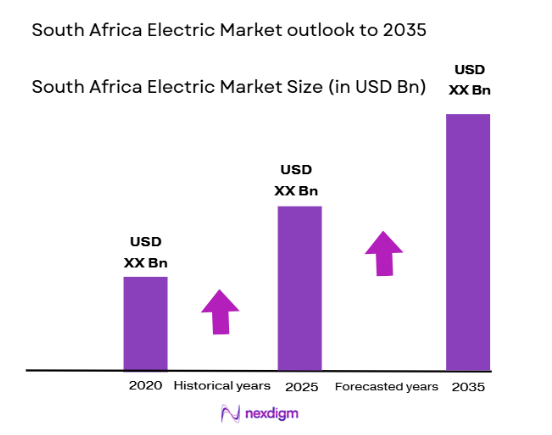
The South Africa Electric Vehicle Market recorded a market size of USD ~ billion based on a recent historical assessment supported by data from the International Energy Agency and South African automotive industry statistics. Market expansion is driven by rising fuel prices, growing environmental awareness, and increasing government interest in transport electrification. Automakers are gradually introducing electric models while energy firms expand charging infrastructure. Corporate fleet electrification and urban mobility initiatives are also supporting steady demand for electric vehicles across passenger and commercial transport segments.
Major urban centers such as Johannesburg, Cape Town, and Pretoria dominate the South Africa Electric Vehicle Market due to higher purchasing power, supportive municipal policies, and stronger charging infrastructure deployment. Johannesburg hosts a large portion of corporate fleets transitioning toward electric mobility, while Cape Town has promoted renewable powered charging facilities and low emission transport initiatives. Pretoria’s proximity to automotive manufacturing hubs and government agencies also contributes to stronger electric vehicle adoption through fleet procurement programs and pilot projects.
Market Segmentation
By Product Type:
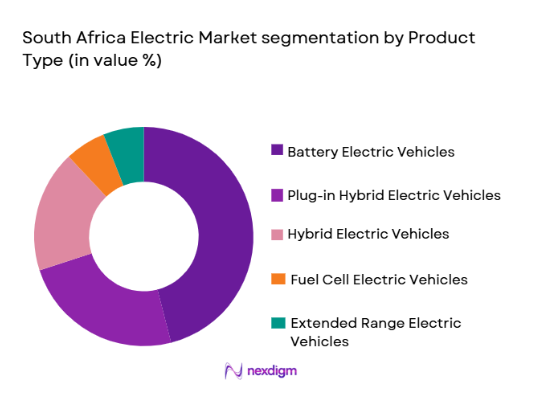
South Africa Electric Vehicle market is segmented by product type into Battery Electric Vehicles, Plug-in Hybrid Electric Vehicles, Hybrid Electric Vehicles, Fuel Cell Electric Vehicles, and Extended Range Electric Vehicles. Recently, Battery Electric Vehicles have a dominant market share due to factors such as expanding charging infrastructure in major cities, increased model availability from global manufacturers, and consumer preference for zero emission mobility solutions. Corporate fleet electrification programs and government sustainability initiatives have further strengthened demand. Battery Electric Vehicles also benefit from lower maintenance requirements and better compatibility with renewable electricity integration, making them the most widely adopted electric vehicle category in the country.
By Platform Type:
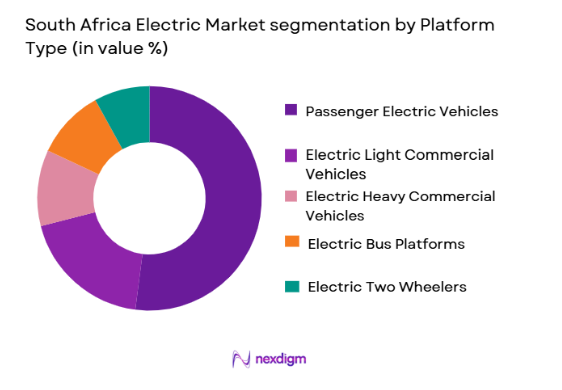
South Africa Electric Vehicle market is segmented by platform type into Passenger Electric Vehicles, Electric Light Commercial Vehicles, Electric Heavy Commercial Vehicles, Electric Two Wheelers, and Electric Bus Platforms. Recently, Passenger Electric Vehicles have a dominant market share due to factors such as growing consumer interest in sustainable transportation, wider product availability from premium automotive brands, and increasing awareness regarding fuel cost savings. Urban professionals and corporate users are particularly adopting passenger electric vehicles as daily mobility solutions, while vehicle manufacturers focus on introducing technologically advanced models with extended driving range and advanced battery systems.
Competitive Landscape
The South Africa Electric Vehicle Market remains moderately consolidated, with global automotive manufacturers holding significant influence through their established distribution networks and technological expertise. Companies such as Tesla, BMW, Nissan, and Volkswagen dominate early electric vehicle adoption by introducing premium electric models and investing in charging infrastructure partnerships. Local dealerships and automotive distributors also play a critical role in facilitating market entry for international brands. Strategic alliances between automakers, charging infrastructure providers, and renewable energy companies are strengthening the competitive environment and accelerating market development.
| Company Name | Establishment Year | Headquarters | Technology Focus | Market Reach | Key Products | Revenue | Charging Infrastructure Partnerships |
| Tesla Inc | 2003 | Austin, USA | ~ | ~ | ~ | ~ | ~ |
| BMW Group | 1916 | Munich, Germany | ~ | ~ | ~ | ~ | ~ |
| Nissan Motor Corporation | 1933 | Yokohama, Japan | ~ | ~ | ~ | ~ | ~ |
| Volkswagen Group | 1937 | Wolfsburg, Germany | ~ | ~ | ~ | ~ | ~ |
| Hyundai Motor Company | 1967 | Seoul, South Korea | ~ | ~ | ~ | ~ | ~ |
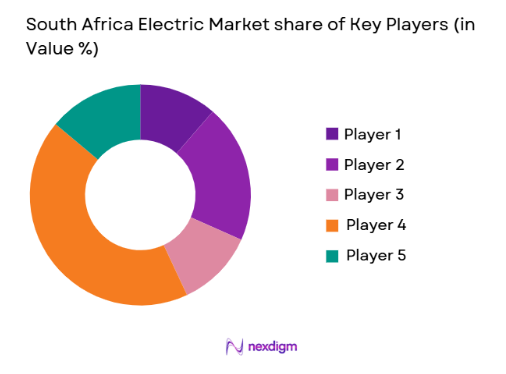
South Africa Electric Vehicle Market Analysis
Growth Drivers
Electrification Policies and Sustainable Mobility Initiatives:
Governments and municipal authorities across South Africa are gradually introducing policies aimed at reducing transport sector emissions and promoting sustainable mobility. These initiatives include incentives for electric vehicle imports, tax considerations for clean transportation technologies, and strategic planning for electrified transport networks. Public awareness campaigns highlighting environmental benefits are also encouraging adoption of electric mobility solutions among urban consumers. Corporate sustainability commitments are pushing large organizations to transition their vehicle fleets toward electric alternatives to reduce operational emissions and long term fuel expenses. Urban transport policies increasingly support low emission vehicles as part of broader climate commitments. Automotive manufacturers are also responding to policy signals by introducing new electric vehicle models into the South African market through local dealerships. Energy companies are simultaneously expanding charging infrastructure to support electric vehicle usage across metropolitan regions. These policy driven initiatives are strengthening investor confidence and enabling gradual development of the electric mobility ecosystem. The growing alignment between environmental policy frameworks and automotive innovation is therefore emerging as a major driver supporting long term expansion of the South Africa Electric Vehicle Market.
Rapid Expansion of Charging Infrastructure and Energy Integration:
Charging infrastructure development represents a critical factor influencing electric vehicle adoption across South Africa. Energy companies, charging technology providers, and automotive manufacturers are increasingly collaborating to expand charging networks across highways, commercial facilities, and residential complexes. Large retail centers and office parks are installing electric vehicle charging stations to attract environmentally conscious consumers and corporate tenants. Integration of renewable energy sources such as solar power is also supporting the development of sustainable charging solutions across urban areas. Infrastructure providers are deploying both fast charging and standard charging technologies to address different consumer mobility needs. Public charging networks are gradually expanding beyond major metropolitan areas, enabling intercity electric vehicle travel and broader market acceptance. Automotive companies are also supporting charging infrastructure expansion through strategic partnerships and investment programs. These infrastructure improvements reduce range anxiety among potential buyers and increase consumer confidence in electric mobility technologies. As charging availability improves and energy integration becomes more efficient, electric vehicle ownership becomes more practical for both individuals and commercial fleets across the country.
Market Challenges
Limited Charging Infrastructure Outside Major Urban Centers:
One of the most significant barriers to electric vehicle adoption across South Africa is the uneven distribution of charging infrastructure beyond major metropolitan regions. While cities such as Johannesburg and Cape Town have witnessed increasing installation of public charging stations, rural and intercity regions still face significant infrastructure limitations. This uneven infrastructure availability creates range anxiety among potential electric vehicle buyers who require reliable charging access for long distance travel. Many consumers remain hesitant to adopt electric vehicles due to uncertainty regarding charging accessibility outside urban areas. Commercial fleet operators also face operational challenges when deploying electric vehicles across logistics routes that extend beyond metropolitan charging networks. Infrastructure expansion requires significant capital investment and coordination between energy providers, government agencies, and private companies. The lack of standardized charging networks across regions further complicates infrastructure deployment strategies. Electric grid capacity constraints in certain areas also pose additional challenges for installing high capacity fast charging stations. As a result, infrastructure development must progress significantly before electric vehicles can achieve widespread adoption across all regions of South Africa.
High Initial Cost of Electric Vehicles for Mainstream Consumers:
Electric vehicles currently remain significantly more expensive than conventional internal combustion engine vehicles in the South African automotive market. The high upfront purchase cost primarily results from expensive battery technology, limited local manufacturing capacity, and reliance on imported electric vehicle components. For many consumers, the initial price difference between electric vehicles and gasoline powered alternatives remains a critical purchasing barrier. Limited availability of affordable electric vehicle models further restricts adoption among middle income households. Financing institutions and automotive dealerships are still developing specialized financing products that could support electric vehicle affordability. Import duties and taxes applied to electric vehicles also contribute to higher retail prices compared with conventional vehicles. While electric vehicles offer long term savings through lower fuel and maintenance costs, many consumers remain focused on upfront purchase prices when making vehicle decisions. Until battery production costs decline significantly and local assembly capacity expands, the affordability challenge is likely to remain a major constraint affecting market growth.
Opportunities
Development of Domestic Electric Vehicle Manufacturing and Assembly Facilities:
South Africa possesses a well established automotive manufacturing ecosystem that provides strong potential for local electric vehicle production. Major automotive manufacturers already operate assembly plants within the country, producing vehicles for both domestic consumption and export markets. Transitioning some of these facilities toward electric vehicle production could significantly strengthen the national electric mobility ecosystem. Local manufacturing would reduce reliance on imported electric vehicles and improve cost competitiveness within the domestic market. It could also stimulate domestic supply chains involving battery assembly, electronic components, and powertrain systems. Government industrial policy initiatives supporting advanced manufacturing could further accelerate electric vehicle production capabilities. Domestic manufacturing would create employment opportunities while strengthening technological capabilities within the automotive sector. Automotive companies are increasingly evaluating South Africa as a potential regional hub for electric vehicle production targeting African markets. Establishing local production capacity would therefore support both economic development and long term growth of the South Africa Electric Vehicle Market.
Expansion of Electric Mobility Solutions for Commercial Fleets and Public Transportation:
Commercial transportation sectors represent a major opportunity for accelerating electric vehicle adoption in South Africa. Logistics companies, ride hailing platforms, and public transport operators are increasingly exploring electric mobility solutions to reduce operational fuel expenses and environmental impact. Electric buses and electric delivery vehicles can significantly lower long term operational costs compared with conventional diesel vehicles. Municipal governments are also examining electric bus fleets to improve urban air quality and reduce greenhouse gas emissions. Fleet electrification programs offer strong economies of scale because large vehicle operators can deploy charging infrastructure within centralized depots. Commercial fleet adoption also helps increase public visibility of electric vehicles and build consumer confidence in the technology. Energy companies and mobility providers are collaborating to develop charging solutions specifically designed for fleet operations. As corporate sustainability commitments expand and transportation companies prioritize cost efficiency, electric mobility solutions for fleets and public transport will become a major opportunity driving market expansion.
Future Outlook
The South Africa Electric Vehicle Market is expected to experience steady expansion as technological innovation, infrastructure development, and environmental policy initiatives converge. Increasing investment in charging infrastructure and renewable energy integration will support broader adoption of electric mobility solutions across urban and commercial transportation sectors. Automotive manufacturers are expected to introduce additional electric vehicle models tailored to local consumer preferences and driving conditions. Government sustainability initiatives and corporate fleet electrification strategies will further strengthen long term demand.
Major Players
- Tesla Inc
- BMW Group
- Nissan Motor Corporation
- Volkswagen Group
- Hyundai Motor Company
- Kia Corporation
- Toyota Motor Corporation
- Mercedes-Benz Group
- Ford Motor Company
- Volvo Cars
- BYD Company Limited
- Stellantis N V
- Mahindra Electric Mobility
- SAIC Motor Corporation
- Great Wall Motors
Key Target Audience
- Automotive manufacturers
- Electric vehicle battery manufacturers
- Automotive component suppliers
- Charging infrastructure providers
- Renewable energy companies
- Automotive dealerships and distributors
- Investments and venture capitalist firms
- Government and regulatory bodies
Research Methodology
Step 1: Identification of Key Variables
Primary and secondary data sources were examined to identify critical variables influencing the South Africa Electric Vehicle Market, including vehicle sales, charging infrastructure deployment, regulatory developments, and consumer adoption trends across different vehicle categories.
Step 2: Market Analysis and Construction
Collected data was analyzed using industry databases, government statistics, and automotive sector reports to construct market estimates, segmentation structures, and competitive positioning across electric vehicle categories and platforms.
Step 3: Hypothesis Validation and Expert Consultation
Industry experts, automotive manufacturers, and energy infrastructure specialists were consulted to validate assumptions regarding technology adoption, infrastructure expansion, and policy impact on electric vehicle demand patterns.
Step 4: Research Synthesis and Final Output
All validated data points were integrated into a structured analytical framework to generate a comprehensive report covering market size, segmentation, competitive landscape, and future outlook for the South Africa Electric Vehicle Market.

- Executive Summary
- Research Methodology (Definitions, Scope, Industry Assumptions, Market Sizing Approach, Primary & Secondary Research Framework, Data Collection & Verification Protocol, Analytic Models & Forecast Methodology, Limitations & Research Validity Checks)

- Growth Drivers
Government initiatives supporting low emission mobility and transport electrification
Expansion of renewable energy capacity supporting EV charging infrastructure
Rising fuel prices encouraging transition toward electric mobility solutions
Increasing investment by automotive manufacturers in EV production facilities
Growing corporate fleet electrification strategies across logistics and transport sectors - Market Challenges
Limited national charging infrastructure coverage across rural and intercity corridors
High upfront purchase cost of electric vehicles relative to internal combustion vehicles
Electric grid reliability concerns affecting large scale charging deployment
Limited consumer awareness and technical expertise for EV servicing
Dependence on imported batteries and critical raw materials - Market Opportunities
Development of domestic EV assembly and battery manufacturing facilities
Expansion of public fast charging infrastructure across highways and urban centers
Growth of electric fleet solutions for logistics, ride hailing, and public transport - Trends
Increasing partnerships between automakers and energy companies for charging networks
Adoption of solar powered EV charging infrastructure in commercial facilities
Integration of smart charging and vehicle to grid technologies
Entry of global EV manufacturers into the South African automotive market
Expansion of electric buses within metropolitan public transport systems - Government Regulations & Defense Policy
National policies promoting reduction of vehicle emissions and transport decarbonization
Automotive production incentives encouraging electric vehicle manufacturing investment
Energy transition frameworks supporting electrified mobility infrastructure - SWOT Analysis
- Stakeholder and Ecosystem Analysis
- Porter’s Five Forces Analysis
- Competition Intensity and Ecosystem Mapping

- By Market Value, 2020-2025
- By Installed Units, 2020-2025
- By Average System Price, 2020-2025
- By System Complexity Tier, 2020-2025

- By System Type (In Value%)
Battery Electric Vehicles
Plug in Hybrid Electric Vehicles
Hybrid Electric Vehicles
Fuel Cell Electric Vehicles
Extended Range Electric Vehicles - By Platform Type (In Value%)
Passenger Electric Vehicles
Electric Light Commercial Vehicles
Electric Heavy Commercial Vehicles
Electric Two Wheelers
Electric Bus Platforms - By Fitment Type (In Value%)
Factory Integrated EV Systems
Retrofit Electric Conversion Systems
Modular Electric Powertrain Kits
Integrated Charging Enabled Platforms
Fleet Conversion Electric Systems - By EndUser Segment (In Value%)
Private Vehicle Owners
Commercial Fleet Operators
Public Transportation Authorities
Corporate Mobility Providers
Government and Municipal Agencies - By Procurement Channel (In Value%)
Authorized Vehicle Dealerships
Direct OEM Procurement Programs
Fleet Leasing and Mobility Providers
Online Automotive Marketplaces
Government Tender Procurement - By Material / Technology (in Value %)
Lithium Ion Battery Technology
Nickel Manganese Cobalt Batteries
Lithium Iron Phosphate Batteries
Solid State Battery Systems
Hydrogen Fuel Cell Technology

- Market structure and competitive positioning
- Market share snapshot of major players
- CrossComparison Parameters (Vehicle Type Portfolio, Battery Technology Integration, Charging Network Partnerships, Local Manufacturing Capability, Pricing Strategy, Fleet Solutions Offering, Technology Innovation, Distribution Network Strength, After Sales Support, Strategic Alliances)
- SWOT Analysis of Key Players
- Pricing & Procurement Analysis
- Key Players
Tesla Inc
BYD Company Limited
Volkswagen Group
BMW Group
Mercedes Benz Group
Nissan Motor Corporation
Hyundai Motor Company
Kia Corporation
Toyota Motor Corporation
Ford Motor Company
Stellantis N V
Mahindra Electric Mobility
Great Wall Motors
SAIC Motor Corporation
Volvo Cars

- Private consumers increasingly adopting EVs due to fuel savings and environmental awareness
- Commercial logistics fleets transitioning toward electric vehicles for operational efficiency
- Municipal transport authorities adopting electric buses for sustainable urban mobility
- Corporate organizations integrating EV fleets as part of ESG and sustainability commitments

- Forecast Market Value, 2026-2035
- Forecast Installed Units, 2026-2035
- Price Forecast by System Tier, 2026-2035
- Future Demand by Platform, 2026-2035


 Request a Sample
 Ask for Customization
 Get a Quote
 Enquire Now