
 Download PDF
 Download PDF
Market Overview
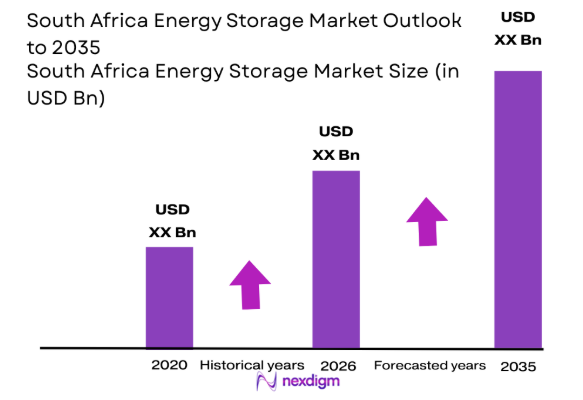
The South Africa Energy Storage market is experiencing significant growth, driven by the increasing demand for renewable energy solutions, government support for clean energy initiatives, and a growing focus on energy security. Based on a recent historical assessment, the market is projected to reach USD ~ billion in value, with significant investments in energy storage technologies, such as lithium-ion and flow batteries, as well as advancements in grid modernization and battery storage solutions. The demand for energy storage systems is expected to increase as South Africa continues to invest in energy infrastructure.
South Africa, particularly in urban centers like Johannesburg, Cape Town, and Durban, is leading the energy storage market. The country’s investment in renewable energy generation, such as wind and solar, has contributed to this growth. The dominance of South Africa is attributed to its progressive renewable energy policies, which encourage the development of clean energy projects, along with its growing adoption of energy storage solutions to enhance grid reliability. These cities serve as key hubs for energy infrastructure development, benefiting from government incentives, private sector participation, and growing market demand.
Market Segmentation
By System Type
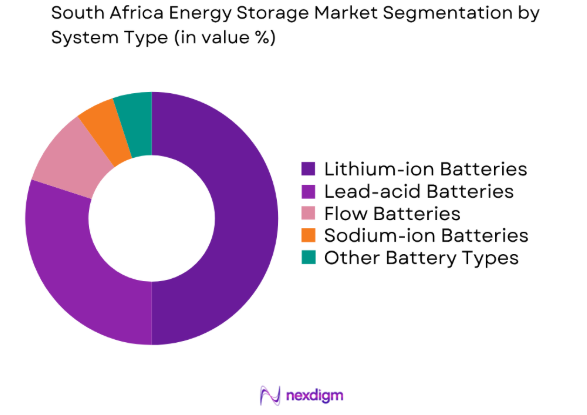
The South Africa Energy Storage market is segmented by system type into various sub-segments, including lithium-ion batteries, lead-acid batteries, and flow batteries. Lithium-ion batteries currently dominate the market due to their high efficiency, long cycle life, and decreasing costs. Their ability to store energy efficiently for use in grid applications, commercial and residential sectors, and off-grid solutions makes them highly preferred by consumers and energy providers alike. The widespread adoption of electric vehicles also contributes to the growing demand for lithium-ion batteries, making them a key driver for the energy storage market.
By Platform Type
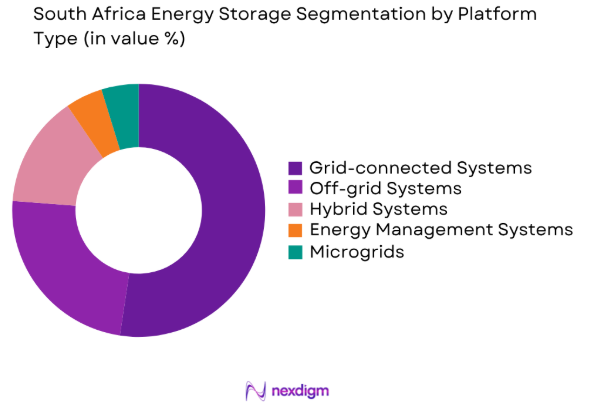
The South Africa Energy Storage market is segmented by platform type into grid-connected systems, off-grid systems, and hybrid systems. Grid-connected systems dominate the market, driven by the increasing integration of renewable energy into the national grid and the need for backup power solutions. These systems allow energy to be stored during periods of high generation and used during periods of peak demand, ensuring a stable power supply. With the government’s emphasis on renewable energy targets, the demand for grid-connected energy storage systems is expected to continue growing as more wind and solar projects are implemented.
Competitive Landscape
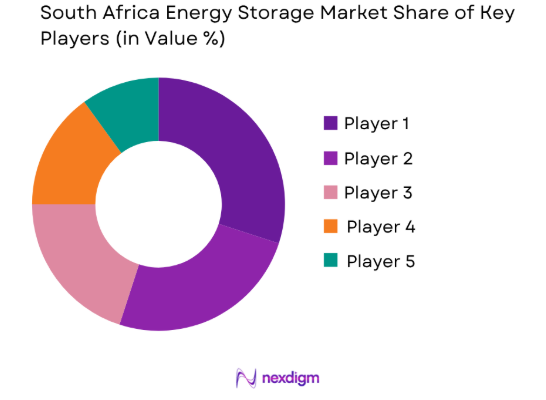
The South Africa energy storage market is competitive, with several global and local players involved in providing energy storage solutions. Major companies are working on innovations and technological advancements to offer efficient, cost-effective storage solutions for various applications, including grid support, renewable energy storage, and off-grid solutions. As more renewable energy projects come online and regulatory frameworks continue to evolve, the market is expected to see further consolidation and partnerships between energy storage providers, technology firms, and utilities.
| Company Name | Establishment Year | Headquarters | Technology Focus | Market Reach | Key Products | Revenue | Additional Parameter |
| Tesla Energy | 2003 | USA | ~ | ~ | ~ | ~ | ~ |
| Samsung SDI | 1970 | South Korea | ~ | ~ | ~ | ~ | ~ |
| BYD Company | 1995 | China | ~ | ~ | ~ | ~ | ~ |
| Vestas | 1945 | Denmark | ~ | ~ | ~ | ~ | ~ |
| Enphase Energy | 2006 | USA | ~ | ~ | ~ | ~ | ~ |
South Africa Energy Storage Market Analysis
Growth Drivers
Government Support for Renewable Energy
The South African government has been proactive in supporting the renewable energy sector through initiatives like the Renewable Energy Independent Power Producer Procurement Programme (REIPPPP) and the Renewable Energy Feed-in Tariff (REFIT). These policies have encouraged significant investments in renewable energy projects, which has, in turn, increased the demand for energy storage solutions to address the intermittent nature of solar and wind power. By focusing on energy security and reducing reliance on fossil fuels, the government has spurred the widespread adoption of energy storage systems. This support has prompted various market players to develop solutions capable of efficiently storing and deploying renewable energy, making government policies a key driver of growth in the energy storage market.
Technological Advancements in Energy Storage Systems
As the energy storage market evolves, technological advancements are playing a key role in driving its growth. Innovations in battery chemistry, energy management software, and power electronics are making energy storage systems more efficient, longer-lasting, and cost-effective. Lithium-ion batteries, for example, continue to benefit from improvements in their energy density, cycle life, and efficiency, making them a popular choice for residential, commercial, and industrial applications. The development of alternative battery technologies, such as flow batteries and sodium-ion batteries, is also expanding the available options in the market, providing additional benefits like longer life cycles and better scalability for large-scale applications. These advancements are helping reduce the costs associated with energy storage and boosting market adoption.
Market Challenges
High Capital Expenditure for Energy Storage Projects
One of the primary challenges in the South Africa energy storage market is the high upfront capital investment required for energy storage systems. Although the costs of batteries, such as lithium-ion batteries, have been steadily declining, the initial investment for large-scale installations, including grid-connected systems, can still be prohibitive for many stakeholders. The capital required for infrastructure development, installation, and integration with renewable energy sources, along with maintenance costs, continues to be a significant barrier to widespread adoption. Many utilities and industrial users are hesitant to commit to such significant investments without further assurance of long-term returns and regulatory support, especially in a market that is still evolving.
Regulatory and Policy Uncertainty
Despite government efforts to promote renewable energy and energy storage, regulatory and policy uncertainty remains a significant challenge for South Africa’s energy storage market. Inconsistent policies and frequent changes in regulatory frameworks create risks for investors and energy providers. The absence of clear, long-term incentives for energy storage, coupled with slow progress in integrating storage systems into national policy, has hindered sector growth. Additionally, the complex and lengthy regulatory approval processes for energy storage projects discourage potential investors from entering or expanding in the market. This uncertainty hampers the confidence needed to drive investment and further development in energy storage solutions, which are crucial for South Africa’s energy transition.
Opportunities
Growing Demand for Off-grid Solutions
South Africa’s rural and off-grid communities present a significant growth opportunity for the energy storage market. With over 20% of the population living in rural areas with limited access to the national grid, there is a rising demand for off-grid energy solutions. Energy storage systems, when integrated with solar or wind power generation, can provide reliable electricity to these underserved areas, helping to reduce energy poverty and improve quality of life. The government’s rural electrification programs and the growing availability of financing options for off-grid energy solutions further increase the potential for energy storage systems in these regions. As off-grid demand continues to rise, energy storage companies are well-positioned to play a pivotal role in expanding energy access.
Development of Hybrid Storage Solutions
Hybrid energy storage systems, which combine different types of energy storage technologies such as lithium-ion batteries and flow batteries, present a promising market opportunity in South Africa. These hybrid systems can optimize the storage and deployment of renewable energy by combining the strengths of different technologies. For instance, lithium-ion batteries are suitable for short-term energy storage, while flow batteries can provide longer-duration storage. The integration of both systems can help balance supply and demand, improving grid stability and reducing reliance on fossil fuels. With the decreasing cost of hybrid systems and growing interest in renewable energy solutions, this market segment is expected to see significant growth in the coming years.
Future Outlook
The South African energy storage market is poised for substantial growth over the next five years. The continued development of renewable energy projects, coupled with technological innovations in energy storage, will contribute to the market’s expansion. As battery costs continue to fall and efficiency improves, more businesses and utilities are expected to adopt energy storage solutions to complement renewable energy generation. Furthermore, regulatory support from the government will play a crucial role in driving market growth, with initiatives aimed at promoting cleaner energy sources and enhancing energy security. Demand for off-grid and hybrid energy storage solutions is expected to rise, especially in rural areas and remote locations, as the country seeks to expand energy access and reduce its dependence on the national grid.
Major Players
- Tesla Energy
- Samsung SDI
- BYD Company
- Vestas
- Enphase Energy
- ABB Ltd
- Siemens Gamesa
- Schneider Electric
- General Electric
- Panasonic
- LG Chem
- JinkoSolar
- Fluence Energy
- Honeywell
- Eaton
Key Target Audience
- Investments and venture capitalist firms
- Government and regulatory bodies
- Renewable energy developers
- Utilities and energy providers
- Residential and commercial users
- Off-grid communities
- Energy storage system integrators
- Environmental NGOs
Research Methodology
Step 1: Identification of Key Variables
Identifying key factors such as market size, technology types, growth drivers, and geographical analysis to set a baseline for research.
Step 2: Market Analysis and Construction
Analyzing current market trends, customer needs, and technological developments to develop a clear market framework.
Step 3: Hypothesis Validation and Expert Consultation
Validating hypotheses through consultations with industry experts, stakeholders, and market leaders.
Step 4: Research Synthesis and Final Output
Synthesizing all collected data, market analysis, and expert insights into a comprehensive market report with actionable insights.

- Executive Summary
- Research Methodology (Definitions, Scope, Industry Assumptions, Market Sizing Approach, Primary & Secondary Research Framework, Data Collection & Verification Protocol, Analytic Models & Forecast Methodology, Limitations & Research Validity Checks)

- Market Definition and Scope
- Value Chain & Stakeholder Ecosystem
- Regulatory / Certification Landscape
- Sector Dynamics Affecting Demand
- Strategic Initiatives & Infrastructure Growth

- Growth Drivers
Increase in Renewable Energy Generation
Government Support for Clean Energy Initiatives
Technological Advancements in Energy Storage
Rising Demand for Off-grid Solutions
Declining Costs of Energy Storage Systems - Market Challenges
High Capital Investment for Large-Scale Projects
Intermittency of Renewable Energy Sources
Lack of Standardized Infrastructure
Regulatory and Policy Uncertainty
Limited Public Awareness of Energy Storage Solutions - Market Opportunities
Expansion of Renewable Energy Integration
Development of Hybrid Storage Solutions
Increasing Demand from Off-grid Communities - Trends
Growth of Lithium-ion Batteries
Integration of Energy Storage with Smart Grids
Increased Investment in Green Technologies - Government Regulations
- SWOT Analysis of Key Competitors
- Porter’s Five Forces

- By Market Value, 2020-2025
- By Installed Units, 2020-2025
- By Average System Price, 2020-2025
- By System Complexity Tier, 2020-2025

- By System Type (In Value%)
Lithium-ion Batteries
Lead-acid Batteries
Flow Batteries
Sodium-ion Batteries
Other Battery Types - By Platform Type (In Value%)
Grid-connected Systems
Off-grid Systems
Hybrid Systems
Microgrids
Energy Management Systems - By Fitment Type (In Value%)
On-site Energy Storage
Centralized Energy Storage
Residential Energy Storage
Commercial Energy Storage
Utility-scale Storage - By End User Segment (In Value%)
Residential Sector
Commercial Sector
Industrial Sector
Utility Providers
Government & Municipalities - By Procurement Channel (In Value%)
Direct Procurement
Government Tenders
Private Sector Procurement
Online Platforms
Third-party Distributors

- Market Share Analysis
- Cross Comparison Parameters (System Type, Platform Type, Procurement Channel, End User Segment, Fitment Type, Storage Capacity, Battery Chemistry, Application Type, Deployment Location, Energy Source)
- SWOT Analysis of Key Competitors
- Pricing & Procurement Analysis
- Key Players
Samsung SDI
BYD Company
LG Chem
Vestas
Siemens Gamesa
Sungrow Power Supply
NextEra Energy
Tesla Energy
Schneider Electric
ABB Ltd
GE Renewable Energy
JinkoSolar
SMA Solar Technology
Mitsubishi Power
Fluence Energy

- Residential Sector Adoption of Storage Systems
- Government’s Role in Funding Energy Storage Projects
- Increased Use of Storage for Commercial Buildings
- Energy Storage Demand from Industrial Sector

- Forecast Market Value, 2026-2035
- Forecast Installed Units, 2026-2035
- Price Forecast by System Tier, 2026-2035
- Future Demand by Platform, 2026-2035


 Request a Sample
 Ask for Customization
 Get a Quote
 Enquire Now