

 Download PDF
Market Overview
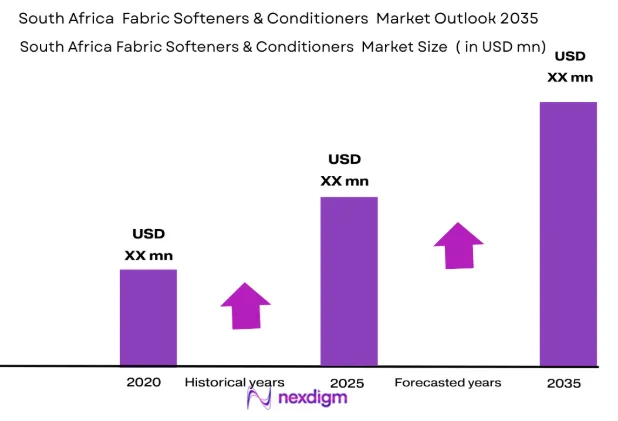
The South Africa fabric softeners and conditioners market is valued at approximately USD ~ million in 2025, supported by strong demand from household laundry, modern retail, hospitality, healthcare, and commercial laundry sectors. South Africa’s population reached approximately 64.0 million in 2024 according to World Bank data, creating a sizeable consumer base for daily-use laundry and home care products. The country’s GDP reached USD 401.14 billion in 2024, while GDP per capita stood at USD 6,267.2, supporting demand for branded household care products across urban and semi-urban households. Retail trade sales increased by 3.1% year-on-year in December 2024, reflecting continued activity in consumer goods retail. Additionally, South African consumers spent R214 billion on FMCG and technology durable products in Q3 2024, indicating strong retail consumption across essential and household categories.
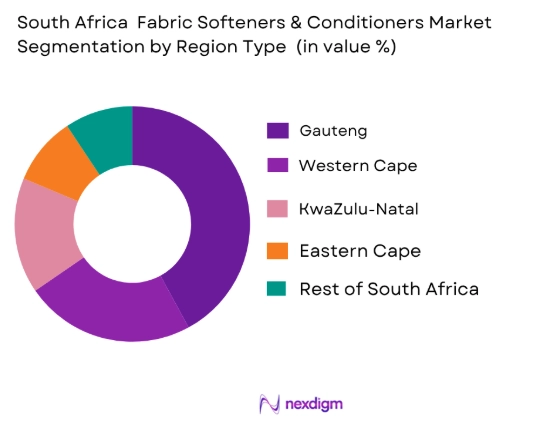
The South Africa fabric softeners and conditioners market is concentrated in Gauteng, Western Cape, and KwaZulu-Natal due to high urbanization, strong supermarket penetration, higher disposable income, and advanced retail infrastructure. Gauteng dominates as the country’s economic and commercial hub, supported by Johannesburg, Pretoria, dense urban households, and large-scale FMCG distribution networks. Western Cape contributes through Cape Town’s urban household demand, tourism, hospitality, and modern retail adoption. KwaZulu-Natal supports demand through Durban’s logistics network, coastal tourism, and commercial laundry services. These regions benefit from higher population density, developed retail channels, and stronger availability of branded laundry care products.
Market Segmentation
By Product Type
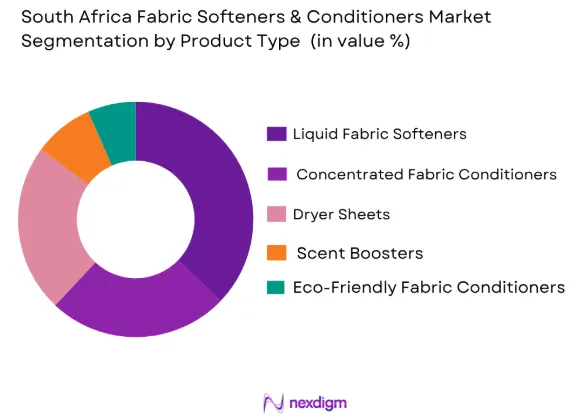
South Africa fabric softeners and conditioners market is segmented by product type into liquid fabric softeners, concentrated fabric conditioners, dryer sheets, scent boosters, and eco-friendly fabric conditioners. Liquid fabric softeners dominate the market due to their widespread use in household laundry and strong availability across supermarkets, traditional stores, pharmacies, and online channels. Consumers prefer liquid fabric conditioners because they provide softness, freshness, static reduction, easier ironing, and long-lasting fragrance. Concentrated fabric conditioners are gaining demand due to their smaller pack size, lower dosage per wash, and premium positioning. Unilever South Africa positions Comfort as a concentrated fabric conditioner with encapsulated fragrance technology, supporting the shift toward longer-lasting fragrance products.
By Region Type
South Africa fabric softeners and conditioners market is segmented by region into Gauteng, Western Cape, KwaZulu-Natal, Eastern Cape, and Rest of South Africa. Gauteng dominates the market due to strong household consumption, higher income levels, dense urban population, and the presence of major retail and distribution centers. Western Cape follows due to high urbanization, tourism, premium retail penetration, and strong demand from hospitality and commercial laundry services. KwaZulu-Natal contributes through Durban’s logistics activity, coastal hospitality, and retail demand. Eastern Cape and Rest of South Africa represent growth markets for refill pouches, sachets, value packs, and mass-market fabric conditioner brands.
Competitive Landscape
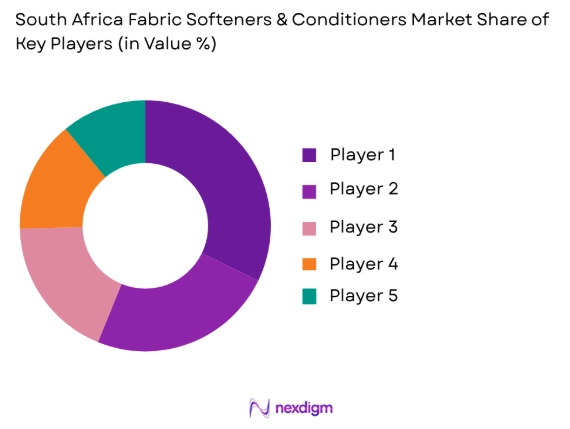
The South Africa fabric softeners and conditioners market is highly competitive, with strong participation from multinational FMCG companies, domestic home care manufacturers, supermarket private labels, and imported brands. Global companies dominate through strong brand recognition, fragrance innovation, advertising, and wide distribution. Domestic and private-label brands compete through affordability, bulk packs, regional availability, and value positioning. Retailers are increasingly important because private labels and promotional bundles influence household purchase decisions.
| Company | Establishment Year | Headquarters | Product Focus | Distribution Network | Key Consumer Segment | Import/Local Presence | Competitive Advantage |
| Unilever South Africa | 1891 | United Kingdom / South Africa | ~ | ~ | ~ | ~ | ~ |
| Procter & Gamble South Africa | 1837 | United States / South Africa | ~ | ~ | ~ | ~ | ~ |
| Colgate-Palmolive South Africa | 1806 | United States / South Africa | ~ | ~ | ~ | ~ | ~ |
| Henkel South Africa | 1876 | Germany / South Africa | ~ | ~ | ~ | ~ | ~ |
| Bliss Brands | 2001 | South Africa | ~ | ~ | ~ | ~ | ~ |
South Africa Fabric Softeners & Conditioners Market Analysis
Growth Drivers
Rising Urban Household Consumption and Laundry Care Awareness
Urban households in South Africa are increasingly adopting structured laundry routines, supported by wider access to washing machines, branded detergents, and fabric care products. Fabric softeners and conditioners are gaining importance as consumers associate them with softness, freshness, fragrance, and better garment maintenance. In cities, consumers are more exposed to advertising, supermarket promotions, and product variety, which improves awareness of laundry additives beyond basic detergent. Demand is also supported by working households that prefer convenient laundry products offering long-lasting freshness and reduced ironing effort. As middle-income consumers become more brand-conscious, fabric conditioners are increasingly viewed as part of regular household care rather than a luxury purchase. This trend supports steady growth across both mass-market and premium product segments.
Increasing Demand for Concentrated and Long-Lasting Fragrance Products
Concentrated and long-lasting fragrance fabric conditioners are becoming more attractive to South African consumers because they offer better value per wash, easier storage, and stronger product performance. Concentrated formats require smaller doses, which appeals to households looking to manage costs without reducing product use. At the same time, fragrance remains a major purchase driver in laundry care, as consumers often judge cleanliness by how fresh clothes smell after washing. Brands are responding with perfume-inspired variants, scent capsules, and products promising freshness that lasts for days. These premium features help manufacturers differentiate their products in a competitive market. The shift toward concentrated and fragrance-led conditioners is expected to support value growth, especially among urban and middle-income consumers.
Market Challenges
High Price Sensitivity among Mass-Market Consumers
Price sensitivity remains one of the main challenges in South Africa’s fabric softeners and conditioners market. For many lower- and middle-income households, fabric conditioner is considered a discretionary product compared with detergent, food, electricity, and other essential expenses. During periods of inflation or reduced disposable income, consumers may reduce usage, buy smaller packs, switch to cheaper private-label options, or stop purchasing conditioners altogether. This limits premium product penetration in the mass market. Brands must therefore offer flexible pack sizes, affordable refill options, and clear value-per-wash messaging. Without accessible pricing, fabric conditioners risk being seen as non-essential. Companies that fail to balance affordability with performance may lose volume share to cheaper alternatives or informal-market products.
Environmental Concerns Around Plastic Packaging and Chemical Formulations
Environmental concerns are becoming a growing challenge for fabric softener and conditioner brands in South Africa. Most products are sold in plastic bottles or pouches, contributing to packaging waste and increasing pressure on manufacturers to adopt recyclable, refillable, or reduced-plastic formats. Consumers and regulators are also paying more attention to chemical formulations, especially ingredients that may affect water systems, skin sensitivity, or biodegradability. Brands that rely heavily on conventional packaging and synthetic ingredients may face reputational risks as sustainability awareness increases. However, sustainable alternatives can raise production costs, which is difficult in a price-sensitive market. Companies must therefore develop products that are environmentally responsible while remaining affordable, effective, and widely available to mainstream South African consumers.
Opportunities
Growth in Concentrated and Refill-Pack Fabric Conditioners
Concentrated and refill-pack fabric conditioners offer a strong growth opportunity in South Africa. Concentrated products allow consumers to use smaller quantities per wash, making them attractive to households seeking better value and convenience. Refill packs can reduce packaging costs and appeal to environmentally aware consumers who want to limit plastic waste. These formats also benefit manufacturers and retailers by lowering transport, storage, and shelf-space requirements. For price-sensitive consumers, refill packs can provide a lower-cost repurchase option while maintaining brand loyalty. Brands can strengthen this opportunity through clear dosing instructions, value-per-wash claims, and promotions that bundle bottles with refill packs. As sustainability and affordability become more important, concentrated and refill formats are likely to gain wider acceptance.
Rising Demand for Baby-Safe and Sensitive-Skin Fabric Conditioners
Baby-safe and sensitive-skin fabric conditioners present a valuable opportunity as South African consumers become more aware of skin health and product safety. Families with babies, children, or allergy-prone members often prefer mild laundry products that are gentle on clothing and skin. This creates demand for hypoallergenic, dermatologically tested, dye-free, and lightly fragranced conditioners. These products can command a premium because consumers are willing to pay more for perceived safety and care. The opportunity is also relevant for hospitals, clinics, care homes, and hospitality providers that require gentle textile care. To succeed, brands must use credible claims, transparent labeling, and trusted certifications where possible. Sensitive-skin positioning can help brands differentiate beyond fragrance and softness in a crowded market.
Future Outlook
Over the next five years, the South Africa fabric softeners and conditioners market is expected to grow steadily due to urban household demand, modern retail expansion, online grocery growth, and increasing consumer preference for fragrance-based laundry care. Concentrated fabric conditioners and refill pouches will gain stronger adoption as consumers seek convenience, value, and reduced packaging waste. Household laundry will continue to dominate demand, while hospitality, healthcare, laundromats, student accommodation, and commercial laundry services will support bulk consumption. Premium fragrance variants, baby-safe conditioners, and private-label value products are expected to shape competitive growth. Multinational companies will continue to lead branded segments, while domestic and retailer-owned brands will expand in value and refill-pack categories.
Major Players
- Unilever South Africa
- Procter & Gamble South Africa
- Colgate-Palmolive South Africa
- Henkel South Africa
- Reckitt South Africa
- Tiger Brands
- Bliss Brands
- Liby Group
- Kao Corporation
- Lion Corporation
- Woolworths Private Label
- Pick n Pay Private Label
- Shoprite Checkers Private Label
- Clicks Private Label
- Dis-Chem Private Label
Key Target Audience
- Fabric softener and conditioner manufacturers
- Laundry care product distributors
- Supermarkets and hypermarkets
- Convenience store chains
- Traditional grocery wholesalers
- Online grocery and e-commerce platforms
- Commercial laundry operators
- Hotels and hospitality companies
- Hospitals and institutional laundry operators
- Packaging suppliers
- Fragrance and specialty chemical suppliers
- Investments and venture capitalist firms
- Government and regulatory bodies
Research Methodology
Step 1: Identification of Key Variables
The initial phase involves mapping stakeholders in the South Africa fabric softeners and conditioners market, including manufacturers, importers, distributors, retailers, e-commerce platforms, household consumers, commercial laundries, and hospitality operators. Secondary data sources such as government publications, retail sales statistics, company disclosures, trade data, and FMCG industry reports are used to identify key variables influencing market demand.
Step 2: Market Analysis and Construction
Historical data is analyzed to understand household laundry habits, retail channel growth, pricing trends, product adoption, and brand penetration across regions. The study evaluates fabric conditioner usage across households, hotels, hospitals, laundromats, and institutional buyers to construct a reliable market model.
Step 3: Hypothesis Validation and Expert Consultation
Industry experts are consulted to validate assumptions and provide insights into market dynamics. These include FMCG distributors, retail category managers, commercial laundry operators, hospitality procurement managers, and product formulation specialists. These interactions help refine demand estimates, pricing assumptions, competitive positioning, and future growth drivers.
Step 4: Research Synthesis and Final Output
The final phase integrates primary and secondary research findings to deliver a validated market assessment. Data triangulation ensures accuracy and consistency across market size, segmentation, growth drivers, challenges, opportunities, and competitive analysis.

- Executive Summary
- Research Methodology (Market Definitions and Assumptions, Abbreviations, Market Sizing Approach, Consolidated Research Approach, Understanding Market Potential Through In-Depth Industry Interviews, Primary Research Approach, Limitations and Future Conclusions)

- Definition and Scope
- Market Dynamics Overview
- Market Genesis
- Major Players and Market Timeline
- Business Cycle and Trends
- Supply Chain and Value Chain Analysis

- Growth Drivers
Rising Urban Household Consumption and Laundry Care Awareness
Growth of Modern Retail and FMCG Distribution Networks
Increasing Demand for Concentrated and Long-Lasting Fragrance Products
Expansion of Online Grocery and Household Care Sales
Growing Demand from Hospitality, Healthcare, and Commercial Laundry Services - Market Challenges
High Price Sensitivity among Mass-Market Consumers
Strong Competition from Established Laundry Care Brands
Raw Material and Packaging Cost Volatility
Counterfeit and Low-Quality Products in Informal Retail Channels
Environmental Concerns Around Plastic Packaging and Chemical Formulations - Opportunities
Growth in Concentrated and Refill-Pack Fabric Conditioners
Expansion of Private Label and Value-Oriented Laundry Care Products
Premiumization through Perfume-Based and Long-Lasting Fragrance Variants
Rising Demand for Baby-Safe and Sensitive-Skin Fabric Conditioners
Development of Sustainable Packaging and Biodegradable Formulations - Key Trends
Shift toward concentrated fabric conditioners
Rising demand for refill pouches and value packs
Growth in premium fragrance-based laundry products
Increasing adoption of baby-safe and hypoallergenic conditioners
Expansion of online grocery and household care sales - Government Regulations
- SWOT Analysis
- Porter’s Five Forces

- By Value, 2020–2025
- By Volume, 2020–2025
- By Average Price, 2020–2025

- By Product Type (In Value %)
Liquid Fabric Softeners
Concentrated Fabric Conditioners
Dryer Sheets
Scent Boosters
Eco-Friendly Fabric Conditioners - By Packaging Type (In Value %)
Bottles
Refill Pouches
Sachets
Bulk Packs - By Fragrance Type (In Value %)
Floral
Fresh / Ocean
Baby Care / Mild
Luxury Perfume
Natural / Herbal - By Application (In Value %)
Household Laundry
Commercial Laundry
Hospitality
Institutional Laundry
Industrial / Workwear Laundry - By Distribution Channel (In Value %)
Supermarkets and Hypermarkets
Convenience Stores
Traditional Grocery Stores
Online Channels
Direct / Institutional Sales - By Region (In Value %)
Gauteng
Western Cape
KwaZulu-Natal
Eastern Cape
Rest of South Africa

- Market Share of Major Players by Value/Volume
- Market Share of Major Players by Product Type
- Cross Comparison Parameters (Company Overview, Business Strategies, Recent Developments, Strength, Weakness, Organizational Structure, Revenues, Revenues by Product Type, Number of Touchpoints, Distribution Channels, Number of Dealers and Distributors, Margins, Production Plant, Capacity, Unique Value Offering and Others)
- SWOT Analysis of Major Players
- Pricing Analysis Based on Product Categories for Major Players
- Detailed Profiles of Major Companies
Unilever South Africa
Procter & Gamble South Africa
Colgate-Palmolive South Africa
Henkel South Africa
Reckitt South Africa
Tiger Brands
Bliss Brands
Liby Group
Kao Corporation
Lion Corporation
Woolworths Private Label
Pick n Pay Private Label
Shoprite Checkers Private Label
Clicks Private Label
Dis-Chem Private Label

- Market Demand and Utilization
- Purchasing Power and Budget Allocations
- Regulatory and Compliance Requirements
- Needs, Desires, and Pain Point Analysis
- Decision-Making Process

- By Value, 2026–2035
- By Volume, 2026–2035
- By Average Price, 2026–2035


 Request a Sample
 Ask for Customization
 Get a Quote
 Enquire Now