

 Download PDF
Market Overview
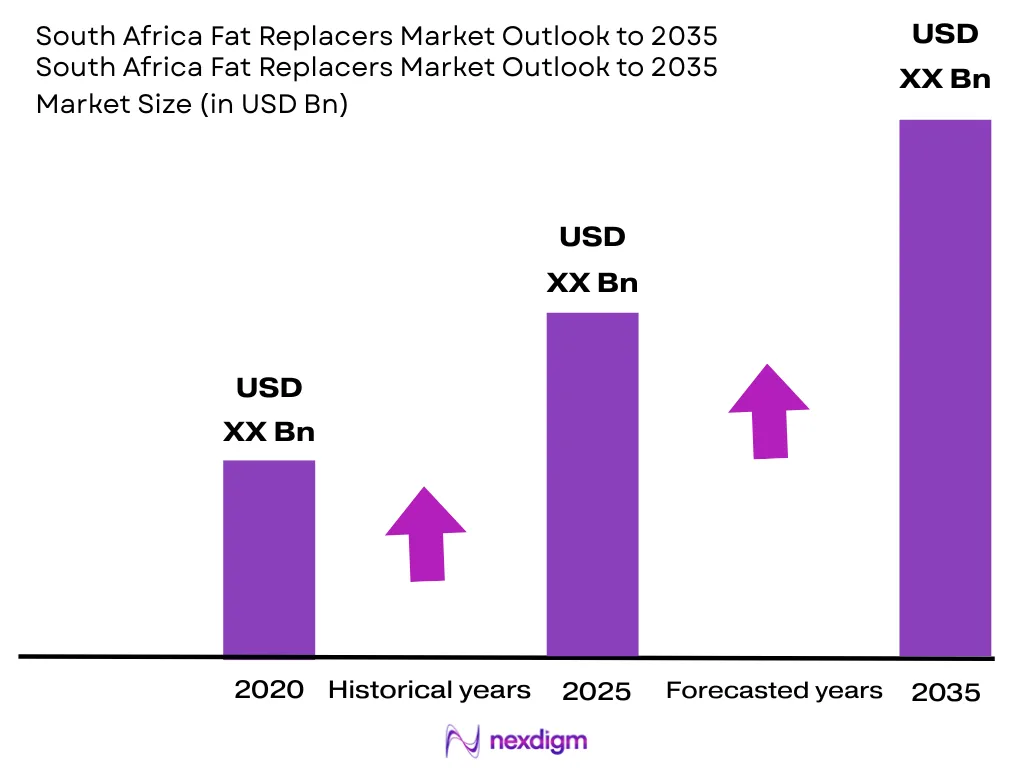
The South Africa Fat Replacers Market was valued at approximately USD ~ billion in 2024 and is projected to grow at a CAGR of ~% during the 2026–2035 forecast period. The market is driven by increasing demand for reduced-fat and low-calorie food products, rising health consciousness among South African consumers — particularly in urban centres — and growing reformulation activities by food manufacturers across bakery, dairy, processed meats, snacks, and functional food categories. South Africa is sub-Saharan Africa’s most sophisticated and largest food processing economy, with the food and beverage manufacturing sector contributing approximately ZAR 300 billion to the national economy while serving a domestic population of approximately 62 million consumers across highly diverse income segments. According to the South African Medical Research Council (SAMRC) and the National Department of Health, South Africa faces a dual burden of nutrition — persistent undernutrition in lower-income communities alongside a rapidly rising prevalence of overweight, obesity, and diet-related non-communicable diseases in urban middle and upper-income segments. The government’s proposed front-of-pack warning label regulations under the Foodstuffs, Cosmetics and Disinfectants Act have significantly increased food manufacturer attention to nutritional reformulation as companies seek to avoid mandatory warning labels on high-fat and high-calorie products. The expansion of organised retail, branded packaged food, dairy products, and functional snacks has increased the utilisation of carbohydrate-, protein-, and fibre-based fat replacers across South Africa’s sophisticated domestic food manufacturing base. Continuous innovation in clean-label ingredients, dietary fibres, plant proteins, hydrocolloids, and modified starches derived from South Africa’s domestically produced maize is further accelerating adoption across multiple food applications.
Market Segmentation
By Source
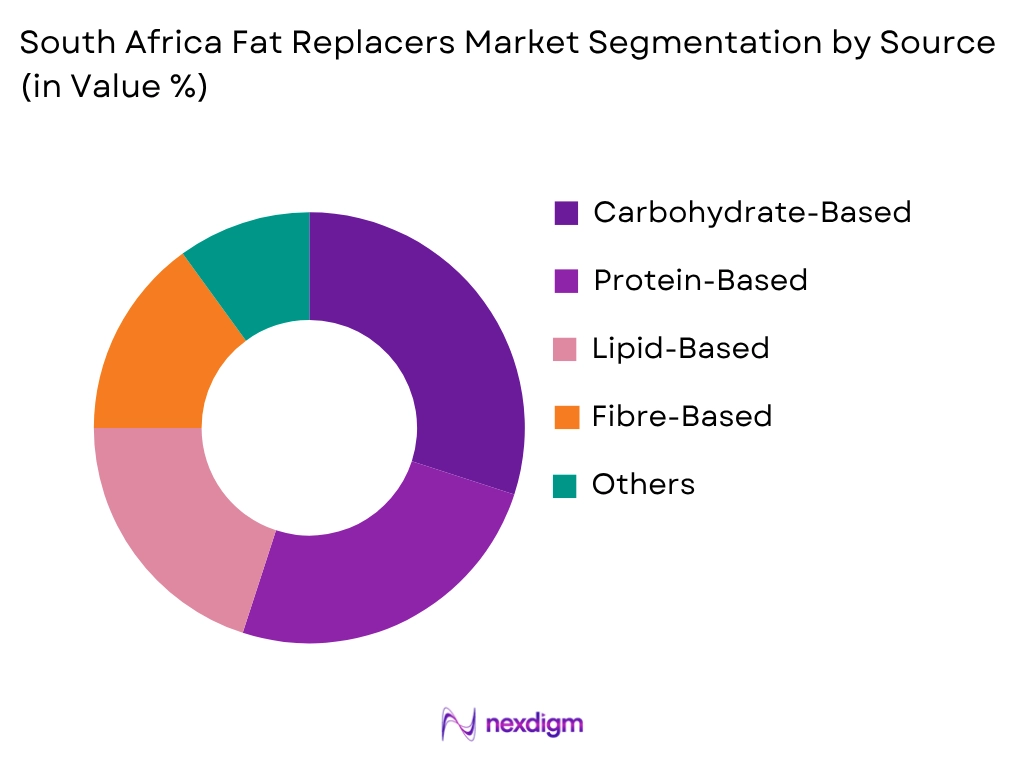
Carbohydrate-based fat replacers dominate the South African market because they provide excellent functionality while maintaining product texture, viscosity, moisture retention, and mouthfeel at comparatively lower formulation costs — a critical consideration in South Africa’s cost-pressured food manufacturing environment, where load shedding-related energy costs and currency depreciation already exert significant margin pressure on processors. Ingredients such as modified starches, maltodextrins, cellulose derivatives, polydextrose, and hydrocolloids are extensively incorporated into bakery products, dairy products, sauces, processed meats, snacks, and ready-to-eat foods across South Africa’s large and well-established packaged food sector. South Africa’s domestic maize production — with the country regularly producing 14–16 million metric tonnes annually — provides manufacturers with a competitively priced and locally available feedstock for starch-based fat replacement ingredients. South Africa is also a significant chicory producer, with chicory root cultivation concentrated in the Eastern Cape providing a domestic source of inulin and chicory-derived soluble fibres with significant fat replacement and prebiotic fibre properties. Food manufacturers increasingly prefer carbohydrate-based solutions because they allow significant fat reduction without adversely affecting sensory characteristics or consumer acceptance, while also satisfying the clean-label and regulatory labelling requirements increasingly important in the South African market. Continuous innovation in resistant starches and soluble fibres further strengthens the segment by enabling product reformulation that improves nutritional profiles and supports calorie reduction in response to the government’s proposed front-of-pack warning label regulations.
By Application
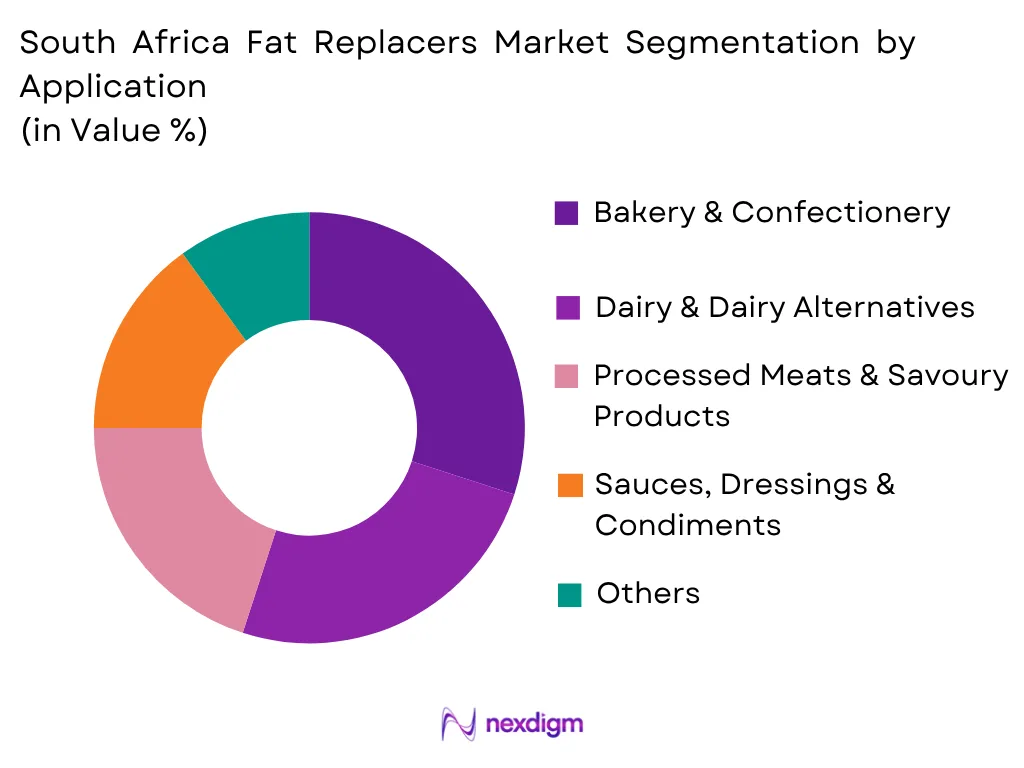
Bakery and confectionery represent the largest application segment in South Africa’s fat replacers market, reflecting the country’s well-developed and sophisticated commercial bakery industry led by companies including Sasko (Pioneer Foods), Albany (Premier Foods), and a large base of artisanal and industrial bakeries. Fat replacers play a crucial role in reducing calories while maintaining the softness, moisture retention, texture, volume, and shelf stability that South African consumers expect from commercial bread, vetkoek, rusks, biscuits, cakes, and pastries. Major bakery manufacturers are increasingly introducing reduced-fat premium product lines to satisfy growing health-conscious consumer preferences while preparing for potential front-of-pack warning label implications on high-fat bakery products. Dairy represents the second-largest application segment, driven by South Africa’s significant commercial dairy industry — with Parmalat, Clover, Woodlands Dairy, and numerous regional processors — and growing consumer demand for low-fat yoghurt, reduced-fat cheese, and lighter dairy-based beverages. The processed meat sector — encompassing polony, viennas, russians, and other distinctively South African processed meat formats that represent important affordable protein staples for lower-income consumers — also represents a significant fat replacer application area as manufacturers seek to improve the nutritional profile of these products while managing the cost implications of proposed health-related labelling requirements.
Competitive Landscape
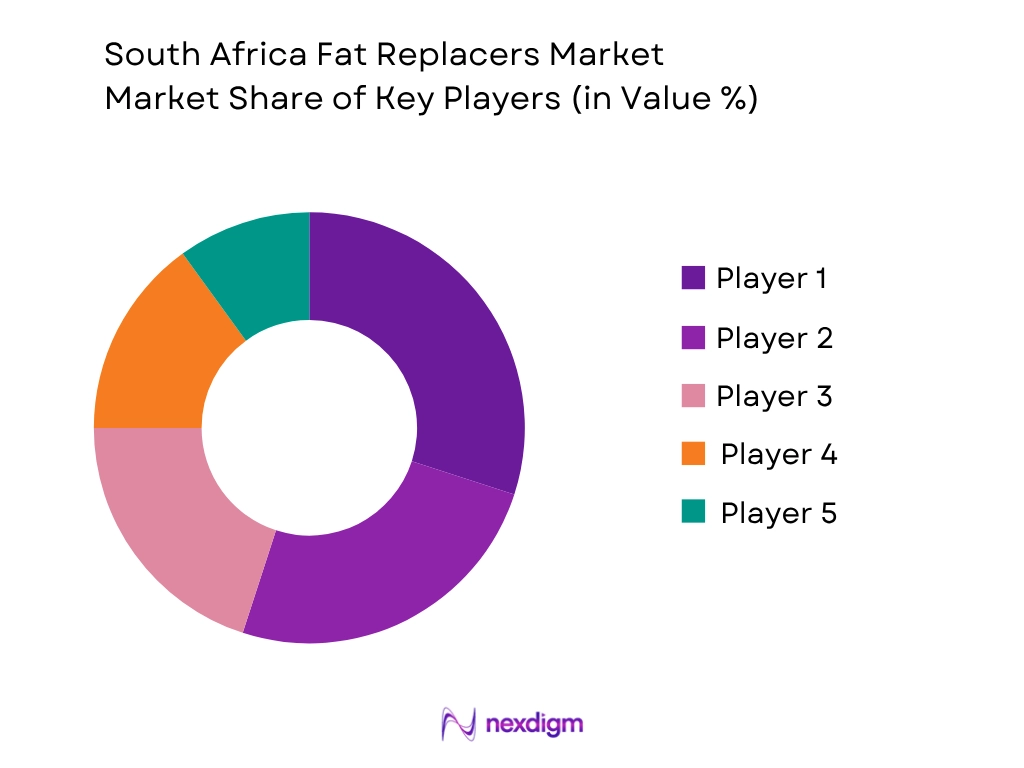
The South Africa Fat Replacers Market is moderately fragmented, with a small number of multinational ingredient companies competing through local distribution partners alongside domestic starch, hydrocolloid, and specialty ingredient distributors. Global companies including Ingredion South Africa, Cargill South Africa, Tate & Lyle, Kerry South Africa, and IMCD compete through established distribution networks and technical service capabilities, while domestic and regional ingredient distributors including AECI Food & Beverage and Brenntag South Africa serve as critical access channels for international ingredient principals. The market is characterised by significant cost pressure given South Africa’s challenging macroeconomic environment, requiring ingredient suppliers to balance technical performance, regulatory compliance expertise, and formulation cost-effectiveness. Proximity of technical service support, understanding of specifically South African food formats and consumer preferences, and SAHPRA and Department of Health regulatory compliance expertise represent important additional competitive differentiators.
| Company | Establishment Year | Headquarters | Primary Fat Replacer Portfolio | Key Application Industries
|
Manufacturing Presence | R&D Capability | Distribution Network | Clean Label Solutions |
| Ingredion South Africa | 1906 | ~ | ~ | ~ | ~ | ~ | ~ | ~ |
| Cargill South Africa | 1987 | ~ | ~ | ~ | ~ | ~ | ~ | ~ |
| Tate & Lyle | 1921 | ~ | ~ | ~ | ~ | ~ | ~ | ~ |
| IMCD South Africa (Specialty Ingredients) | 1995 | ~ | ~ | ~ | ~ | ~ | ~ | ~ |
| Kerry South Africa | 1972 | ~ | ~ | ~ | ~ | ~ | ~ | ~ |
South Africa Confectionary Market Analysis
Growth Drivers
Rising Non-Communicable Disease Burden and Government Nutritional Labelling Regulations
South Africa’s rapidly escalating burden of obesity, type 2 diabetes, hypertension, and cardiovascular disease is creating strong and increasingly regulation-driven structural demand for reduced-fat and nutritionally improved food products across the country’s sophisticated food processing industry. According to the South African Medical Research Council (SAMRC) and Statistics South Africa, the prevalence of overweight and obesity among South African adults has increased significantly over the past decade, with the most recent South African Demographic and Health Survey (SADHS) indicating that more than 31% of South African adults are obese — one of the highest obesity rates in sub-Saharan Africa — with women in particular showing disproportionately high obesity prevalence above 41%. The National Department of Health has proposed front-of-pack warning label regulations for foods exceeding threshold levels of total fat, saturated fat, sugar, and sodium, modelled on similar regulations implemented in Chile, Mexico, and other markets, which have created significant urgency among South African food manufacturers to reformulate products and reduce fat content below threshold levels before mandatory labelling takes effect. The World Bank estimated South Africa’s GDP at approximately USD 380 billion in 2024, supporting a food industry of sufficient scale and sophistication to invest in product reformulation and ingredient innovation. South Africa’s Regulation R429 under the Foodstuffs, Cosmetics and Disinfectants Act already mandates nutritional information labelling, providing a regulatory foundation on which the proposed front-of-pack warning labels would build, further increasing transparency around fat and calorie content and accelerating corporate reformulation investment. Major South African food companies including Tiger Brands, Pioneer Foods, Clover, and Parmalat have publicly engaged with the government’s nutritional policy agenda, signalling increasing industry-level commitment to product reformulation as a response to both regulatory requirements and consumer health awareness.
Domestic Maize Production and Chicory Cultivation Supporting Cost-Competitive Fat Replacer Development
South Africa’s significant domestic agricultural production of maize and chicory root provides the country’s fat replacers market with structural cost and clean-label advantages that are distinctive within the sub-Saharan African context. According to the South African Grain Information Service (SAGIS) and the Crop Estimates Committee, South Africa produces approximately 14–16 million metric tonnes of maize annually, making it one of Africa’s largest maize producers and a consistent net exporter of maize grain to regional markets. This domestic maize availability supports the cost-competitive production of maize-derived modified starches and maltodextrins — core carbohydrate-based fat replacement ingredients — by processing companies including Ingredion South Africa (operating the Germiston starch processing facility) and other starch manufacturers, providing South African food manufacturers with locally available and competitively priced fat replacement ingredient options. South Africa’s Eastern Cape is also a significant producer of chicory root — primarily cultivated for soluble chicory extract and chicory inulin production — providing a domestically available source of functional soluble fibre with prebiotic and fat replacement properties. The South African dairy industry, producing approximately 3.3 billion litres of raw milk annually according to Milk SA, further provides a domestic source of whey protein — a by-product of cheese manufacture — that can be utilised as a protein-based fat mimetic in bakery, dairy, and functional food applications. These domestic raw material advantages enable South African food ingredient manufacturers and distributors to offer certain fat replacement solutions at price points more accessible than fully imported specialty ingredients, supporting broader adoption across the country’s price-sensitive food processing industry.
Market Challenges
Load Shedding, Currency Risk, and Price Sensitivity in Food Manufacturing
South Africa’s fat replacers market faces compounding structural challenges arising from the country’s chronic electricity supply crisis, persistent Rand currency depreciation, and extreme cost sensitivity throughout the food manufacturing value chain. According to Eskom and the National Energy Regulator of South Africa (NERSA), South Africa experienced record stages of load shedding in 2022 and 2023 — with power cuts reaching Stage 6 and beyond for extended periods — imposing significant additional energy costs on food manufacturers who must operate diesel backup generators to maintain continuous production, refrigeration, and cold chain operations. These energy cost pressures directly reduce the operational budget available for product reformulation and premium ingredient investment, creating a headwind for fat replacer adoption that is specific to the South African manufacturing context. Simultaneously, the South African Rand has experienced significant depreciation against the US Dollar and Euro over recent years, substantially increasing the landed cost of imported fat replacer ingredients — the majority of which are sourced from Europe and North America — for domestic food manufacturers operating in Rand-denominated revenue environments. According to the South African Reserve Bank (SARB), imported food ingredient costs have risen significantly in Rand terms even where global commodity prices in Dollar terms have remained stable, compressing manufacturer margins and creating formulation cost pressure that prioritises the lowest-cost ingredient solutions over technically superior but more expensive alternatives. The combination of load shedding cost burdens, currency depreciation, and South Africa’s persistent inflationary pressures — with CPI remaining above the SARB’s target range — severely constrains the financial capacity of many South African food manufacturers to invest in product reformulation and premium fat replacer ingredients.
Import Dependency for Specialty Ingredients and Small Market Scale Constraints
South Africa’s fat replacers market faces structural constraints arising from high import dependency for specialty and high-performance fat replacement ingredients and the market’s relatively small scale compared to the investment thresholds that major global ingredient manufacturers apply when prioritising local manufacturing and R&D investment decisions. While South Africa benefits from domestic maize starch and chicory inulin production, the majority of advanced fat replacement ingredients — including high-performance modified hydrocolloids, purified protein concentrates with specific fat mimetic functionality, precision fermentation-derived proteins, and novel botanical extracts — must be imported from manufacturing facilities in Europe, North America, and Asia. This import dependency creates exposure to Rand/Dollar exchange rate fluctuations, import duty costs, extended lead times relative to locally manufactured alternatives, and supply chain disruption risks. The relatively small scale of South Africa’s food ingredient market — estimated at a fraction of comparable markets in Western Europe, the United States, or India — means that major global ingredient manufacturers may not justify dedicated local manufacturing investment, limiting the range of locally produced fat replacer options available to South African food processors and constraining the level of application-specific technical support and co-development partnership resources that global ingredient companies dedicate to the South African market relative to larger global markets. Small and medium-sized South African food manufacturers, which constitute a large proportion of the domestic food processing sector, often lack the R&D formulation expertise, regulatory affairs resources, and procurement leverage required to independently navigate the technical complexity and supplier relationships needed to access and optimise the most advanced fat replacer ingredient systems.
Market Opportunities
Front-of-Pack Warning Labels and Reformulation-Driven Ingredient Demand
The South African government’s proposed front-of-pack warning label regulations — modelled on the Chilean Octagon warning label system — present the most significant near-term structural demand catalyst for fat replacer ingredients in the South African market. According to the National Department of Health’s regulatory proposals under the Foodstuffs, Cosmetics and Disinfectants Act, food products exceeding threshold levels of total fat, saturated fat, sugar, and sodium would be required to carry prominent front-of-pack warning labels indicating the relevant nutritional exceedance, creating strong commercial incentives for food manufacturers to reformulate products below threshold levels to avoid mandatory warning labels. Industry experience in Chile, Mexico, and Brazil — where similar front-of-pack warning label systems have been implemented — demonstrates that regulatory labelling requirements of this nature have consistently driven significant industry-level investment in product reformulation, creating sustained demand for fat replacers, sugar reduction ingredients, and sodium reduction systems across multiple food categories. South Africa’s large and sophisticated food processing sector — encompassing multinationals including Tiger Brands, Pioneer Foods, Clover, Nestlé, Unilever, and many domestic manufacturers — has the technical capability and financial scale to respond to reformulation imperatives, provided appropriately performing and cost-competitive fat replacer ingredient solutions are available. Ingredient suppliers that can offer South African food companies technically validated, DAFF and Department of Health-compliant fat replacer systems at competitive formulation cost, with strong local technical application support, are therefore well positioned to benefit from the reformulation investment wave that South Africa’s proposed nutritional labelling regulations are expected to catalyse.
Sub-Saharan Africa Export Gateway and Plant-Based Food Sector Expansion
South Africa’s position as sub-Saharan Africa’s most sophisticated food processing economy and its established export relationships with neighbouring markets create complementary opportunities for fat replacer adoption driven both by domestic consumption trends and by export market reformulation requirements. According to the African Union and the African Continental Free Trade Area (AfCFTA) secretariat, the progressive reduction of intra-African trade barriers under AfCFTA is expanding market access opportunities for South African food manufacturers seeking to export reformulated and health-oriented packaged food products to growing consumer markets across sub-Saharan Africa. South African food companies already export branded packaged food products across southern Africa — to Namibia, Botswana, Zimbabwe, Mozambique, Zambia, and beyond — and the nutritional reformulation of these products to reduce fat content and comply with evolving labelling requirements in destination markets creates incremental demand for fat replacer ingredients. Simultaneously, South Africa’s plant-based food sector is experiencing meaningful growth, with consumers in the country’s urban centres increasingly aware of plant-based dietary options, creating new commercial applications for plant protein-based fat mimetics, oat-based dairy alternatives, and plant-based processed meat alternatives. South Africa’s well-developed soy processing industry provides a domestic source of soy protein ingredients with fat replacement functionality, while the country’s sunflower and canola oil production creates potential feedstocks for lipid-based fat replacer development. Ingredient suppliers capable of supporting South African food manufacturers’ export ambitions through technically certified and internationally compliant reformulated product development are therefore well positioned to build sustained commercial relationships across multiple fat replacer application categories.
Future Outlook
The South Africa Fat Replacers Market is expected to experience sustained growth throughout the forecast period, supported by the government’s proposed front-of-pack warning label regulations creating reformulation imperatives, rising urban consumer health awareness, and the continued expansion of organised and branded food manufacturing across bakery, dairy, processed meats, and functional food categories. Ingredient suppliers are expected to benefit from increasing manufacturer investment in product reformulation as nutritional labelling requirements tighten and consumer health consciousness rises among South Africa’s urban middle class. Continued innovation in domestically sourced ingredients — particularly maize-derived modified starches, chicory-derived inulin, and domestically processed whey protein — is expected to improve cost-competitive fat replacement options for South Africa’s price-sensitive food manufacturing sector. Progressive recovery in the domestic energy supply environment as renewable energy capacity expands under NERSA reforms will reduce load-shedding-related operational cost pressures on food manufacturers, improving capacity for reformulation investment. South Africa’s role as a gateway food processing and export economy for sub-Saharan Africa will further broaden the addressable market for fat replacer ingredients as reformulated products reach consumers across the broader region.
Major Players
- Ingredion South Africa
- Cargill South Africa
- Tate & Lyle South Africa
- Kerry South Africa
- IMCD South Africa
- IFF (Danisco South Africa)
- DSM-Firmenich South Africa
- CP Kelco South Africa
- BENEO South Africa
- Corbion South Africa
- Glanbia Nutritionals South Africa
- Ashland South Africa
- Jungbunzlauer South Africa
- Brenntag South Africa (Specialty Ingredients Distribution)
- AECI Food & Beverage (Local Distributor)
Key Target Audience
- Food & Beverage Manufacturers
- Bakery & Confectionery Manufacturers
- Dairy Product Manufacturers
- Meat & Processed Food Manufacturers
- Functional Food & Nutraceutical Companies
- Ingredient Distributors & Specialty Food Ingredient Suppliers
- Investments and Venture Capitalist Firms
- Government and Regulatory Bodies (National Department of Health, South African Bureau of Standards (SABS), Department of Agriculture, Land Reform and Rural Development (DALRRD), Consumer Goods Council of South Africa (CGCSA))
Research Methodology
Step 1: Identification of Key Variables
The research process begins with identifying all major stakeholders across the South Africa Fat Replacers Market ecosystem, including raw material suppliers, specialty ingredient manufacturers, food processors, distributors, retailers, regulatory authorities, and end-use industries. Extensive desk research is conducted using South African government publications, National Department of Health databases, SABS standards, Statistics South Africa data, company annual reports, food ingredient databases, industry journals, and proprietary databases to determine the key variables influencing market demand, supply dynamics, technological developments, and regulatory compliance.
Step 2: Market Analysis and Construction
Historical market information is compiled and analysed to evaluate consumption patterns, ingredient utilisation rates, production capacities, import-export movements, application trends, and industrial demand across different food categories. A combination of top-down and bottom-up market sizing approaches is adopted to estimate market revenues, supported by demand-side consumption analysis and supply-side production assessment. Data triangulation techniques are employed to ensure consistency across all market segments and sub-segments.
Step 3: Hypothesis Validation and Expert Consultation
The preliminary market estimates and analytical assumptions are validated through Computer Assisted Telephone Interviews (CATIs) and structured discussions with food ingredient manufacturers, formulation experts, procurement managers, product development specialists, regulatory professionals, and executives from food processing companies. Their operational and commercial insights are utilised to verify ingredient adoption trends, technological developments, purchasing behaviour, and future market opportunities while improving the accuracy of market forecasts.
Step 4: Research Synthesis and Final Output
The final phase integrates findings from secondary research and primary interviews to prepare a comprehensive assessment of the South Africa Fat Replacers Market. Detailed analyses covering market size, segmentation, competitive landscape, innovation trends, application analysis, consumer preferences, and future growth prospects are developed through multiple rounds of validation. Cross-verification using both supply-side and demand-side information ensures that the final report delivers reliable, actionable, and business-oriented market intelligence.

- Executive Summary
- Research Methodology (Market Definitions and Assumptions, Abbreviations, Market Taxonomy, Market Sizing Approach, Top-Down Analysis, Bottom-Up Analysis, Demand-Side Assessment, Supply-Side Assessment, Primary Industry Interviews, Secondary Research Validation, Data Triangulation, Forecasting Framework, Limitations and Future Conclusions)

- Definition and Scope
- Market Evolution and Industry Genesis
- Timeline of Major Industry Developments
- Fat Replacer Industry Value Chain Analysis
- Supply Chain Analysis

- Growth Drivers (Rising Obesity and Non-Communicable Disease Burden, Expanding Branded Packaged Food Manufacturing Sector, Growing Health and Wellness Consumer Awareness Among Urban Middle Class, Government Regulation 429 Nutritional Labelling Requirements, Expansion of Functional and Fortified Foods, Rising Dairy and Bakery Reformulation Activities)
- Market Challenges (High Import Dependency for Specialty Fat Replacer Ingredients, Price Sensitivity Amid Cost-of-Living Pressures and Load Shedding Cost Burden, Functional Performance Limitations Under South African Food Preferences, SAHPRA and DAFF Regulatory Complexity, Raw Material Price Volatility and Rand Currency Risk, Small Market Size Relative to Global Ingredient Supplier Investment Thresholds)
- Market Opportunities (Expansion of Plant-Based Food Sector, Government Regulatory Push on Nutritional Labelling and Front-of-Pack Warnings, Rising Functional and Fortified Nutrition Products, Premium Healthy Snack Innovation, Dairy Reformulation for Low-Fat Products, Sub-Saharan Africa Export Gateway for Reformulated Food Products)
- Market Trends (Hydrocolloid Innovation, Plant Protein Fat Mimetics, Fibre-Enriched Fat Replacers, Clean Label Reformulation, Multi-Functional Ingredient Systems, Maize-Derived Ingredient Innovation)
- Government Regulations (Department of Health Regulation R429 Labelling Requirements, South African Bureau of Standards (SABS) Food Safety Standards, Foodstuffs, Cosmetics and Disinfectants Act 54 of 1972, Proposed Front-of-Pack Warning Label Regulations, DAFF Agricultural Product Standards, Novel Food Ingredient Approval under Department of Health)
- Ingredient Innovation Landscape (Novel Hydrocolloids, Resistant Starches, Soluble Fibres, Functional Proteins, Botanical Fat Mimetics, Enzyme-Based Fat Modification, Fermentation-Based Ingredients)
- Raw Material Supply Analysis (Maize Starch, Wheat Starch, Soy Protein, Whey Protein, Chicory Root Fibre, Sunflower Seed Fibre, Sugar Cane Fibre)
- Import Dependency Assessment (Specialty Modified Starches, High-Performance Hydrocolloids, Advanced Protein Isolates, Novel Food Ingredients, Precision Fermentation Ingredients)
- Product Reformulation Landscape (Fat Reduction Targets in Response to Labelling Regulations, Texture Optimisation for South African Food Formats, Flavour Retention, Shelf-Life Stability, Calorie Reduction)
- Consumer Health & Nutrition Analysis (Low-Fat Consumption Trends, Clean Label Preference, Functional Food Adoption, Diabetes and Cardiovascular Disease Health Demand, High-Protein Consumption)
- Sustainability Assessment (Renewable Domestic Raw Materials, Sustainable Ingredient Sourcing, Food Waste Reduction, Carbon Footprint Optimisation)
- SWOT Analysis
- Porter’s Five Forces Analysis
- PESTLE Analysis
- Stakeholder Ecosystem
- Competition Ecosystem

- By Market Value (2020-2025)
- By Volume Consumption (2020-2025)
- By Average Selling Price (2020-2025)

- By Source (In Value %)
Carbohydrate-Based Fat Replacers
Protein-Based Fat Replacers
Lipid-Based Fat Replacers
Fibre-Based Fat Replacers
Botanical & Plant-Derived Fat Replacers
Microbial Fermentation-Based Fat Replacers - By Ingredient Type (In Value %)
Starch-Based Fat Replacers
Cellulose-Based Fat Replacers
Protein-Based Fat Replacers
Functional & Fortified Fat Replacers
Organic & Natural Fat Replacers
Plant-Based & Vegan Fat Replacers - By Product Type (In Value %)
Starch Derivatives
Cellulose Derivatives
Inulin
Maltodextrin
Whey Protein Concentrates
Microparticulated Proteins
Polydextrose
Hydrocolloids - By Functionality (In Value %)
Fat Mimetic
Fat Substitute
Fat Extender
Texture Enhancer
Mouthfeel Enhancer - By Application (In Value %)
Bakery & Confectionery
Dairy & Dairy Alternatives
Processed Meats & Savoury Products
Sauces, Dressings & Condiments
Snacks & Extruded Products
Functional & Nutritional Foods
Frozen & Ready Meals - By Province (In Value %)
Gauteng
Western Cape
KwaZulu-Natal
Eastern Cape
Other Provinces

- Market Share Analysis (By Value, Volume, Source Type, Application, End User)
- Cross Comparison Parameters (Fat Replacement Technology Portfolio, Clean Label Ingredient Portfolio, Functional Ingredient Innovation, Food Application Coverage, Manufacturing Capacity, South Africa Distribution Network, Regulatory Compliance Expertise, R&D Investment & Product Development Capability)
- SWOT Analysis of Major Players
- Pricing Analysis (By Ingredient Type, Functional Performance, Application Category, Inclusion Rate, Purity Level)
- Detailed Profiles of Major Companies
Ingredion South Africa
Cargill South Africa
Tate & Lyle South Africa
Kerry South Africa
IMCD South Africa
IFF (Danisco South Africa)
DSM-Firmenich South Africa
CP Kelco South Africa
BENEO South Africa
Corbion South Africa
Glanbia Nutritionals South Africa
Ashland South Africa
Jungbunzlauer South Africa
Brenntag South Africa (Specialty Ingredients Distribution)
AECI Food & Beverage (Local Distributor)

- Ingredient Utilisation Analysis (Application Intensity, Inclusion Rate, Formulation Complexity, Processing Compatibility)
- Purchasing Criteria Assessment (Functionality, Cost Efficiency, Regulatory Compliance, Label Friendliness, Ingredient Availability)
- Product Reformulation Analysis (Fat Reduction Targets, Sensory Performance, Texture Retention, Shelf-Life Extension)
- Consumer Preference Analysis (Taste Acceptance, Mouthfeel, Nutrition Claims, Clean Label Preference, Protein Enrichment)
- Decision-Making Framework (R&D Teams, Procurement, Regulatory Affairs, Product Development, Commercialisation)

- By Market Value (2026-2035)
- By Volume Consumption (2026-2035)
- By Average Selling Price (2026-2035)


 Request a Sample
 Ask for Customization
 Get a Quote
 Enquire Now