
 Download PDF
Market Overview
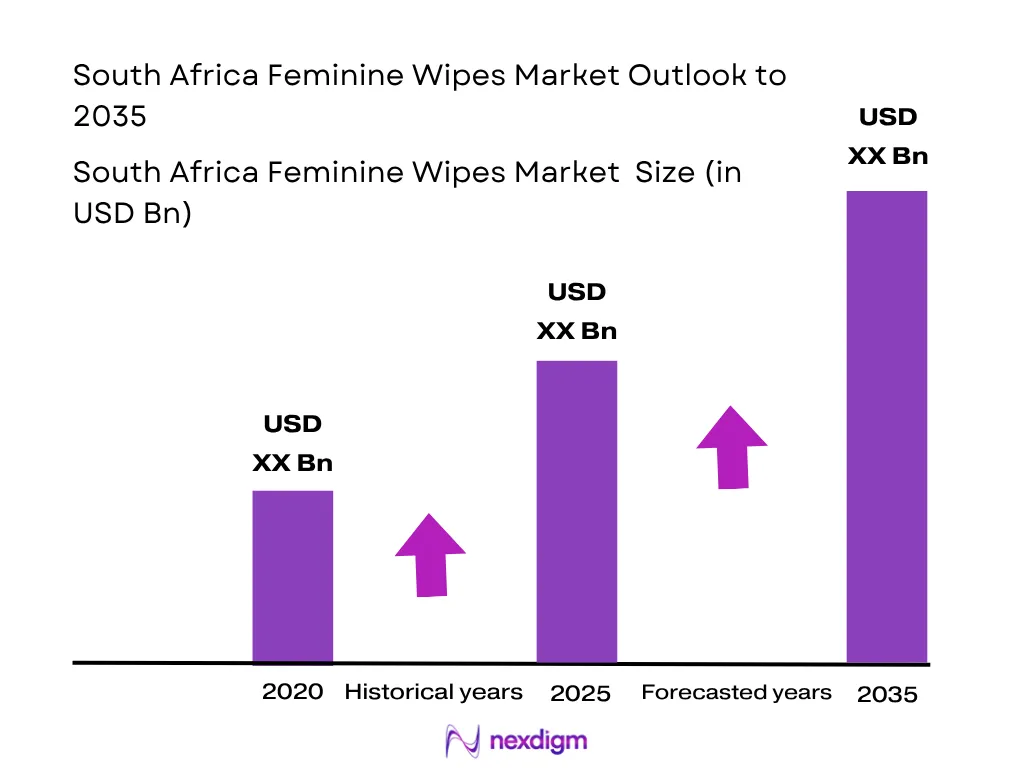
The global feminine wipes market is valued at USD ~ billion in 2025, reflecting a rising demand for female intimate hygiene products that offer convenience, portability, and pH‑balanced care versus traditional options. Key demand drivers include increasing awareness about feminine hygiene practices, growth in female workforce participation, and expanding retail availability in both physical stores and e‑commerce channels, all contributing to consistent consumption growth worldwide. Within the Middle East & Africa region (MEA), which includes South Africa, the feminine wipes market generated revenue of USD ~ million in 2024, supported by adoption in urban centers and rising incomes. This regional growth is propelled by improved distribution channels, rising hygiene consciousness and expanding availability of international and local brands across retail formats.
Globally, Asia Pacific countries such as India and China dominate the feminine wipes market due to high population bases, rapid urbanization, increasing female workforce participation and intensified marketing efforts to drive personal care adoption. Within the MEA region, UAE and South Africa are influential markets, driven by higher consumer spending on personal care, strong presence of multinational brands, and rapidly expanding modern retail and e‑commerce channels that improve accessibility. Societal shifts toward proactive hygiene and lifestyle improvements also contribute to elevated product uptake in these urban centers.
Market Segmentation
By Product Type
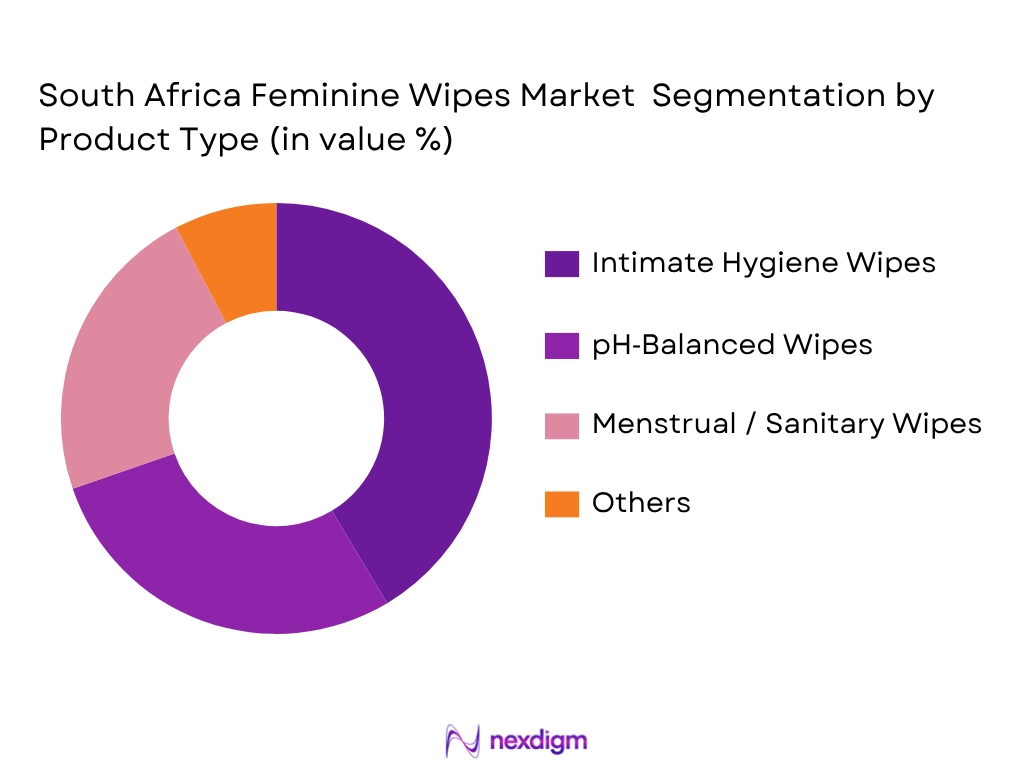
The feminine wipes market is segmented by product type into intimate hygiene wipes, pH‑balanced wipes, menstrual/sanitary wipes, and other specialized wipes. Currently, intimate hygiene wipes command the largest share worldwide, driven by everyday use for freshness and convenience across age groups. These products are easily accessible through supermarkets, pharmacies, and online channels, aligning with modern lifestyles that prioritize discreet, portable hygiene solutions. In addition, increases in female workforce participation and on‑the‑go lifestyles have expanded demand beyond menstrual contexts to daily use, making this segment foundational to overall market sales. Premium variants like pH‑balanced wipes are also gaining traction as consumers become more aware of sensitive skin requirements and product safety, but they remain secondary to the broader intimate hygiene category due to price sensitivity.
By Distribution Channel
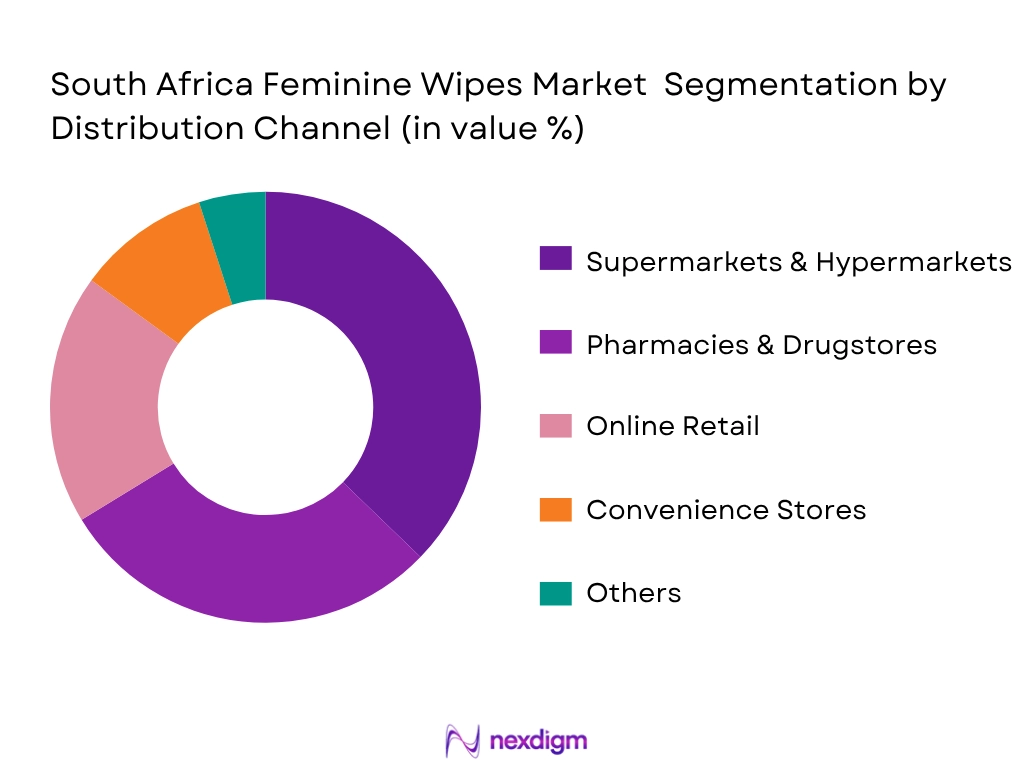
Under distribution channel segmentation, supermarkets and hypermarkets dominate due to their wide reach, strong visibility, and frequent promotional activities that increase trial and purchase frequency. These channels provide one‑stop shopping for consumers seeking personal hygiene goods alongside other essentials, improving convenience and accessibility. They also benefit from strong relationships with key manufacturers, ensuring consistent shelf placement and inventory availability. Pharmacies remain significant due to consumer perceptions of health and hygiene trustworthiness, particularly for premium and sensitive skin products. Meanwhile, the online channel is rapidly expanding as e‑commerce adoption grows, particularly among younger consumers who value discreet, home delivery options and subscription services trends that are gaining strength in urban South Africa and other emerging markets.
Competitive Landscape
The feminine wipes market is characterized by a mix of global majors and regional players, with multinational companies leveraging brand heritage, extensive distribution networks, and ongoing product innovation to maintain leadership. Consolidation is moderate, with significant competition in product formulation (e.g., pH‑balanced, organic), pricing strategies, and retail partnerships driving differentiation across store and online channels.
| Company | Establishment Year | Headquarters | Core Product Focus | Distribution Reach | Innovation Focus | Dermatological Claims | Brand Positioning | Online Engagement |
| Procter & Gamble | 1837 | USA | ~ | ~ | ~ | ~ | ~ | ~ |
| Johnson & Johnson Services, Inc. | 1886 | USA | ~ | ~ | ~ | ~ | ~ | ~ |
| Edgewell Personal Care | 1996 | USA | ~ | ~ | ~ | ~ | ~ | ~ |
| Unicharm Corporation | 1961 | Japan | ~ | ~ | ~ | ~ | ~ | ~ |
| Albaad | 1961 | Israel | ~ | ~ | ~ | ~ | ~ | ~ |
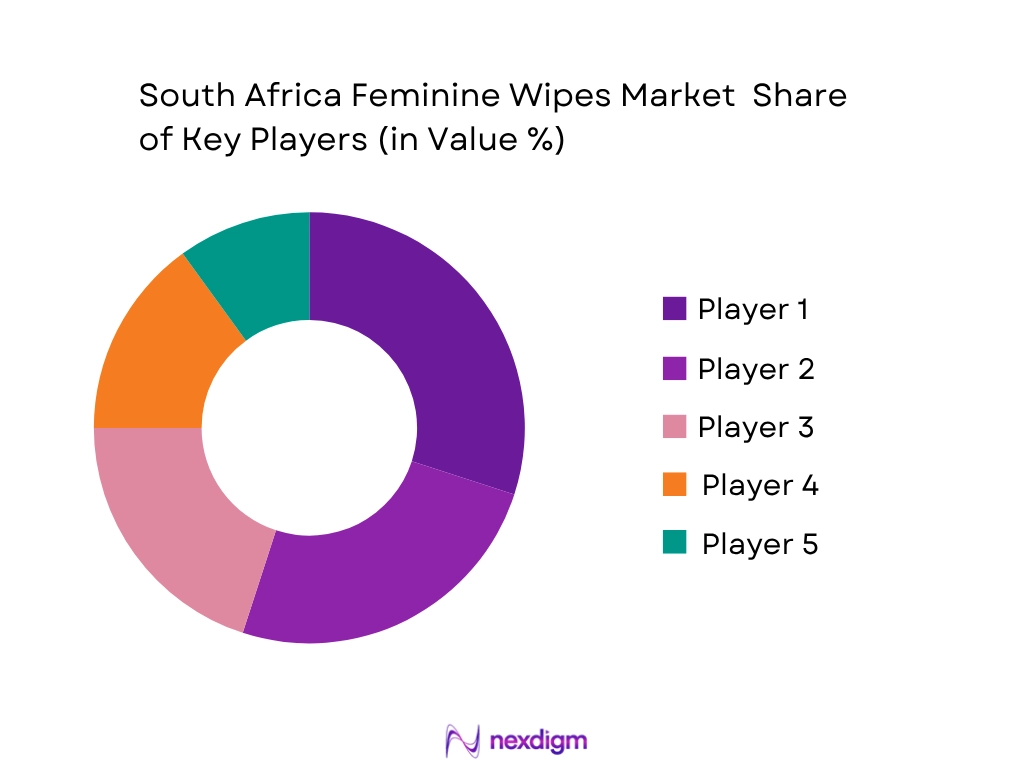
South Africa Feminine Wipes Market Analysis
Growth Drivers
Hygiene Awareness
In South Africa, rising female health and hygiene consciousness is a key driver for products like feminine wipes. The country’s total female population is a significant portion of the overall 64,007,187 people; the female share remains roughly half of the population, indicating a large potential consumer base for personal hygiene products. Access to sanitation services also supports this hygiene focus: 74 out of every 100 people use safely managed sanitation services, reflecting an environment where hygiene standards are increasingly recognised and maintained. Concurrently, internet usage among the population is 78 out of every 100 individuals, providing a channel for awareness campaigns, social media education, and digital‑first brand engagement that informs women about intimate hygiene routines and product benefits. These figures demonstrate that as South Africans have better sanitation infrastructure and significant digital connectivity, awareness of personal and feminine hygiene grows, underpinning greater adoption of products like feminine wipes.
Urban Female Workforce
The participation of women in economic activities materially influences their autonomy in purchasing decisions, including feminine care products. In South Africa, the labour force participation rate for females aged 15 and above is reported at 52.99 out of every 100 women, indicating over half of the adult female population is economically active. A higher participation rate correlates with improved purchasing power, especially in urban settings where employment opportunities are more concentrated and discretionary spending on health and hygiene products is feasible. South Africa’s overall GDP was USD 401.14 billion in 2024, with GDP per capita at USD 6,267.2, demonstrating macroeconomic capacity that supports consumer spending. Despite unemployment being high at approximately 32–33 out of every 100 people, employed women contribute to household income and are more likely to allocate spending toward personal care essentials such as feminine wipes. This combination of relatively high female workforce participation and economic activity in urban centres supports sustained market demand.
Challenges
Price Sensitivity
Price sensitivity remains a significant challenge for the South Africa feminine wipes market due to broader economic constraints that influence consumer spending on non‑essential or premium personal care items. South Africa’s GDP per capita is USD 6,267.2, reflecting moderate income levels compared with high‑income economies, which can limit discretionary expenditure among a large portion of the population. Additionally, broad economic pressure is indicated by the total unemployment rate at around 32 out of every 100 people, which constrains household budgets and heightens sensitivity to product pricing, particularly for items perceived as non‑core essentials. With many consumers prioritising basic needs, feminine wipes, often priced above traditional alternatives, may be deprioritised when budgets tighten. These macroeconomic realities mean consumers may favour lower‑cost menstrual hygiene alternatives or opt for multi‑purpose wipes over dedicated feminine products unless clear value is communicated. Price sensitivity is therefore a key barrier to broader adoption, and brands must navigate this by offering tiered pricing, value packs, or promotional strategies aligned with consumer financial realities.
Skin Sensitivity Concerns
Concerns about skin sensitivity and product safety pose a challenge for the feminine wipes market, as intimate products directly interact with sensitive skin areas and require consumer trust to drive adoption. Women often prioritise products that minimise irritation and are dermatologically tested; this is particularly relevant given that South Africa’s consumers increasingly access information online. 78 out of every 100 individuals use the internet, enabling research into product ingredients and safety profiles prior to purchase. Although direct national statistics on skin irritation from wipes are not available, broader consumer behaviour studies show that perceived product quality and safety are key determinants of purchase decisions in hygiene categories, especially where products are used daily. High unemployment and economic sensitivity also amplify this concern: consumers are less likely to repurchase products that may cause discomfort or health issues because the financial cost of trial and error is greater when disposable income is limited. This dynamic places pressure on manufacturers to invest in sensitive‑skin friendly formulations, clear labelling, and rigorous testing standards to build trust, making skin sensitivity a material market challenge.
Opportunities
Eco‑Friendly / Natural Products
An increasing preference for sustainable and natural products presents a significant growth opportunity for the South Africa feminine wipes market. Broader consumer trends in the country show a rising emphasis on healthy and environmentally conscious purchasing habits, especially among younger demographics. While exact percentages related specifically to feminine wipes are limited, a broader indicator from consumer studies finds that a sizable portion of South African shoppers consciously avoid harmful chemical pollutants and show interest in organic or sustainably certified products when making purchases. This behavioural shift reflects openness toward eco‑friendly alternatives, creating a market entry point for natural, biodegradable feminine wipes that align with these values. Moreover, the population’s internet connectivity, with 78 out of every 100 people online, facilitates discovery of sustainability claims and eco‑certified options, amplifying demand. Combined with the country’s rising female labour participation and urbanisation, this presents a compelling opportunity for brands to introduce differentiated, environmentally oriented product lines that resonate with both health and sustainability motivations among South African consumers.
Subscription & Direct‑to‑Consumer Models
The rise of digital connectivity in South Africa opens up opportunities for subscription and direct‑to‑consumer (DTC) business models in the feminine wipes category. With 78 out of every 100 individuals using the internet, digital channels have become instrumental for consumer shopping behaviours, enabling convenience‑driven purchases, personalised recommendations, and repeat orders. This digital readiness supports the growth of subscription services where consumers can receive monthly or periodic deliveries of feminine wipes, aligning with menstrual cycles or daily hygiene routines. Such models reduce purchase friction and create predictable revenue streams for brands. Furthermore, internet penetration supports DTC engagement strategies such as targeted online promotions, influencer partnerships, and e‑commerce marketplaces, which can expand reach beyond traditional brick‑and‑mortar retail. Given broader economic conditions, such as moderate GDP per capita and workforce participation, subscription models that offer convenience and value could appeal to digitally active consumers with limited time, particularly in urban centres. This presents fertile ground for brands to implement DTC initiatives that enhance customer loyalty and lifetime value within the feminine wipes sector.
Future Outlook
The global feminine wipes market is expected to grow steadily over the next decade, supported by rising hygiene awareness, increased discretionary spending on personal care, and expanding retail and e‑commerce penetration. Product innovations focusing on dermatological safety, eco‑friendly materials, and multifunctional uses will continue to attract broader consumer segments. Markets in Africa, including South Africa, are likely to benefit from improvements in distribution infrastructure and greater exposure to international brands through digital channels. While offline retail will remain important, rapid adoption of online shopping services is anticipated to accelerate market growth as convenience and privacy remain priority drivers for consumers.
15 Major Players
- Procter & Gamble
- Johnson & Johnson Services, Inc.
- Edgewell Personal Care
- Unicharm Corporation
- Albaad
- Bodywise (UK) Limited
- Corman SpA
- KCWW
- Guy & O’Neill, Inc.
- Reckitt Benckiser (where applicable)
- The Honey Pot Company
- BeBodyWise SE
- Laclede, Inc.
- Private Label / Retailer Brands (local)
- Regional SME innovators
Key Target Audience
- Consumer Packaged Goods Investors and Venture Capitalist Firms
- Retail & FMCG Chain Buyers and Category Managers
- Personal Care Brand Product Strategy Teams
- Institutional Hygiene Program Planners
- Healthcare Retail Operations and Procurement Leads
- Government and Regulatory Bodies (SAHPRA, Department of Trade & Industry)
- E‑commerce Channel Heads & Marketplace Category Leaders
- Sustainability and ESG Purchasing Committees
Research Methodology
Step 1: Identification of Key Variables
The initial phase involves defining the scope of products within the feminine wipes market, including pH‑balanced, sanitary, and intimate hygiene variants. Comprehensive secondary research was conducted using proprietary databases and industry reports to establish market boundaries and critical variables that influence demand.
Step 2: Market Analysis and Construction
Historical data were compiled and analyzed to understand consumption trends, distribution channel dynamics, and category growth. Retail scanner data, online sales figures, and industry panel insights were assessed to construct accurate market valuation and segmentation.
Step 3: Hypothesis Validation and Expert Consultation
Market assumptions and forecasting models were validated through interviews with industry stakeholders, including brand managers, distribution partners, and hygiene product specialists. These consultations refined market growth drivers and demand forecasts.
Step 4: Research Synthesis and Final Output
Final analysis was synthesized by correlating quantitative findings with qualitative insights from manufacturers and distributors. This ensures that market size, segmentation, and growth projections are comprehensive and aligned with real‑world industry conditions.

- Executive Summary
- Research Methodology (Market Definitions and Assumptions, Terminology Standards for Hygiene Wipes, Estimation Method for Value & Volume, Primary Research Approach [Retail & Consumer Panels], Retail Scanner Data Integration [SKU & Outlet Level], Brand Share Estimation Logic, Limitations and Mitigation Strategies)

- Definition and Product Scope
- Category Genesis and Adoption Patterns
- Use Cases and Behavioral Triggers
- Supply Chain Dynamics
- Value Chain Analysis

- Growth Drivers (Hygiene Awareness, Urban Female Workforce, Disposable Income, Social Media Influence)
- Challenges (Price Sensitivity, Skin Sensitivity Concerns, Regulatory Scrutiny)
Opportunities (Eco‑friendly/Natural Products, Subscription & Direct‑to‑Consumer Models) - Trend Analysis (Dermatologist endorcements, Sustainable Packaging, Ingredient Transparency)
- Regulatory Framework (South African Health Products Regulatory Authority standards)
- Regulatory Environment (South African Health Products Regulatory Authority (SAHPRA) Compliance, Product Safety & Dermatological Testing Standards, Labeling Guidelines & Ingredient Disclosure, Import Regulations for Nonwoven Materials)
- Value Chain and Supply Chain Analysis (Raw Material Sourcing, Domestic vs Imported Nonwovens, Manufacturing Nodes & Contract Manufacturing, Logistics Hubs & Cold Chain Considerations for Sensitive Products, Wholesale & Retail Distribution Efficiency, Quality Assurance and Batch Testing Standards)
- Pricing Dynamics and Margin Stack (ASP by Pack Size and Functional Claim, Premium vs Mass-Market Positioning, Promotional Cadence & Retail Discounts, Gross & Contribution Margins, Channel Economics for Pharmacies, Supermarkets, and E‑commerce)
- Private Label vs Branded Landscape (Price Positioning of Retailer-Owned Brands vs International Brands, Brand Loyalty & Trust Gap, Innovation Frequency in Functional Claims, Shelf Productivity in Supermarkets & Pharmacies)
- SWOT Analysis of Industry
- Stakeholder Ecosystem (Manufacturers, Distributors, Retailers, E‑commerce Platforms, Government Regulatory Bodies, Dermatologists & Health Influencers, NGOs Promoting Female Hygiene Awareness)
- Porter’s Five Forces Analysis
- Competitive Landscape Overview (Major Players Influence, Market Consolidation Level, Distribution Reach Across Provinces, Pricing Power & Promotional Leverage, Innovation Pipeline for New Product Variants)

- By Market Value (2020-2025)
- By Market Volume (2020-2025)
- By Average Selling Price Movement (2020-2025)
- By Consumption Intensity Metrics (2020-2025)

- By Product Type (In Value%)
pH‑Balanced
Antibacterial
Sensitive/Skin‑Friendly
Scented, Unscented - By Pack Size (In Value%)
Travel
Standard
Economy - By Consumer Application (In Value%)
Daily Hygiene
Menstrual Care
Intimate Cleansing
Travel/Convenience
Clinical Use - By End Consumer Group (In Value%)
Individual Female Consumers
Institutional Buyers
Clinics
Gyms
Universities - By Distribution Channel (In Value%)
Supermarkets & Hypermarkets
Pharmacies/Health & Beauty Stores
E‑commerce Platforms
Convenience & General Stores
B2B/Institutional - By Region (In Value%)
Gauteng
Western Cape
KwaZulu‑Natal
Eastern Cape

- Market Share by Value & Volume (Retail Scanner Data)
- Cross‑Comparison Parameters (Brand Positioning, SKU Breadth, Retail Penetration, Price Tiers, Distribution Depth, Dermatological Claims, Sustainability Claims, Marketing Influence, Packaging Formats, Consumer Ratings)
- Category-Claim Benchmarking (premium vs mass-market positioning, organic/biodegradable claims, dermatologically tested, hypoallergenic, unscented options, antibacterial properties, multi-functional use, travel-friendly packaging)
- SKU Pricing and Pack Architecture Analysis (ASP by pack type and size, promotional depth and frequency, assortment ladder across hygiene segments, SKU normalization by pack count & material)
- SWOT Analysis (strengths, weaknesses, opportunities, and threats of major competitors, including global vs local brand positioning, innovation pipeline, and brand trust)
- Certifications, Claims, and Innovation Benchmarking (eco-certifications, biodegradable claim verification, dermatological endorsements, new product launch cadence, signature/hero product innovation, ingredient transparency)
- Company Profiles of Key Competitors
Procter & Gamble
Kimberly‑Clark Corporation
Johnson & Johnson
Essity AB
Kenvue Inc
Unicharm Corporation
The Honest Company
Cora
Seventh Generation
Natracare
Pee Safe
Bodywise
Private Label South African Retailers
Lil‑Lets Group
Local SME/Startups

- Buyer Cohort Profiling (age, income level, urban vs peri-urban residence, lifestyle orientation, health & hygiene consciousness, working vs non-working females)
- Purchase Drivers and Barriers (pH‑balance & dermatological claims, brand reputation & trust, price sensitivity, fragrance vs unscented preference, eco-friendly/biodegradable perception, product availability, concerns over skin irritation)
- Shopper Journey and Decision Funnel (awareness channels: social media, online reviews, word-of-mouth, influencer endorsements, trial triggers such as travel packs or free samples, impact of dermatologists’ recommendations)
- Channel Behavior Analysis (discovery channels: pharmacies, e-commerce, supermarkets; purchase channels: online vs offline; replenishment frequency: daily hygiene vs menstrual care; basket mission)
- E-Commerce, DTC, and Social Commerce Analysis (traffic sources: social ads, search, influencer campaigns; customer acquisition cost (CAC), conversion rate, subscription/refill models, repeat purchase rate)
- Basket Composition and Repurchase Economics (cross-sell & upsell rates with complementary hygiene products, attach rate per category, replenishment cycles by pack size, bundle adoption, seasonal SKU preference during holidays, travel seasons, or menstruation cycles)

- By Market Value (2026-2035)
- By Market Volume (2026-2035)
- By Average Selling Price Movement (2026-2035)
- By Consumption Intensity Metrics (2026-2035)


 Request a Sample
 Ask for Customization
 Get a Quote
 Enquire Now