
 Download PDF
Market Overview
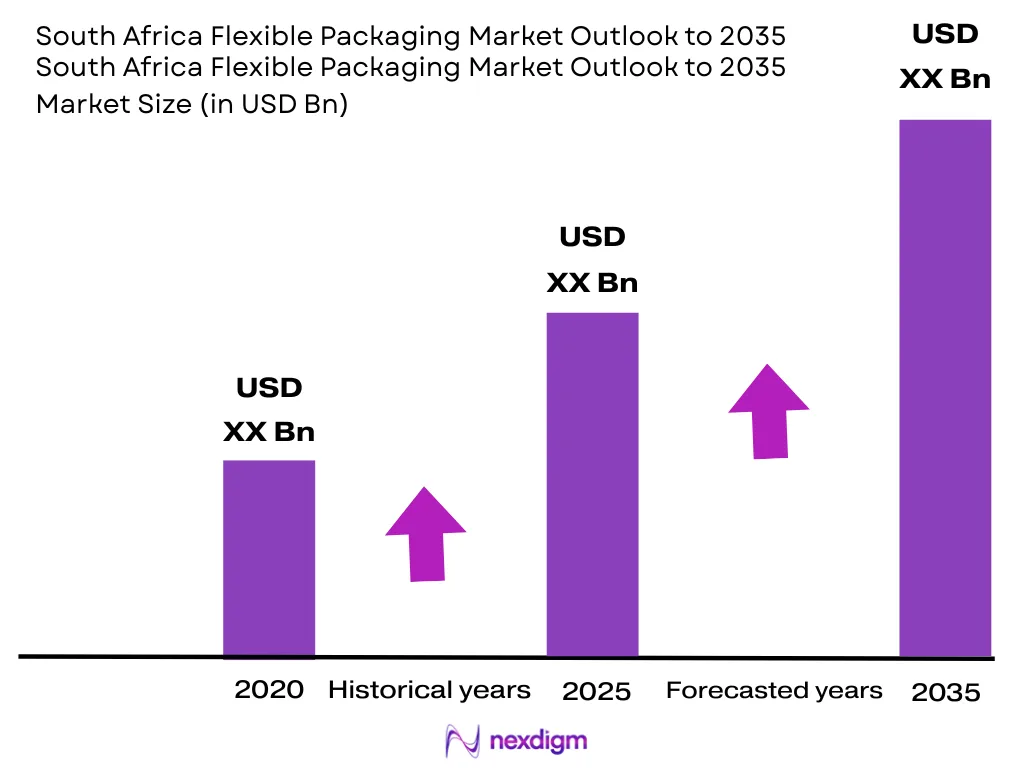
The South Africa Flexible Packaging Market was valued at USD ~ Billion in 2024 and is anticipated to expand at a CAGR of ~% during 2026-2035. The market is primarily driven by rising demand for convenience and ready-to-eat packaged foods, rapid growth of e-commerce parcel packaging, and increasingly stringent Extended Producer Responsibility (EPR) regulations enforced by the Department of Forestry, Fisheries and the Environment (DFFE). Industry estimates place the South Africa flexible packaging market at approximately USD ~ billion in 2025, growing toward approximately USD ~ billion by 2031 at a compound annual growth rate of approximately 3.24%. Government regulations mandating recycled content in plastic carrier bags, requiring 50% recycled material since January 2023, 75% since January 2025, and 100% from January 2027, continue to reshape converter investment priorities across the industry, alongside the broader South African Plastics Pact initiative bringing together packaging manufacturers, retailers, and recycling facilities to advance circular economy outcomes.
Market Segmentation
By Material
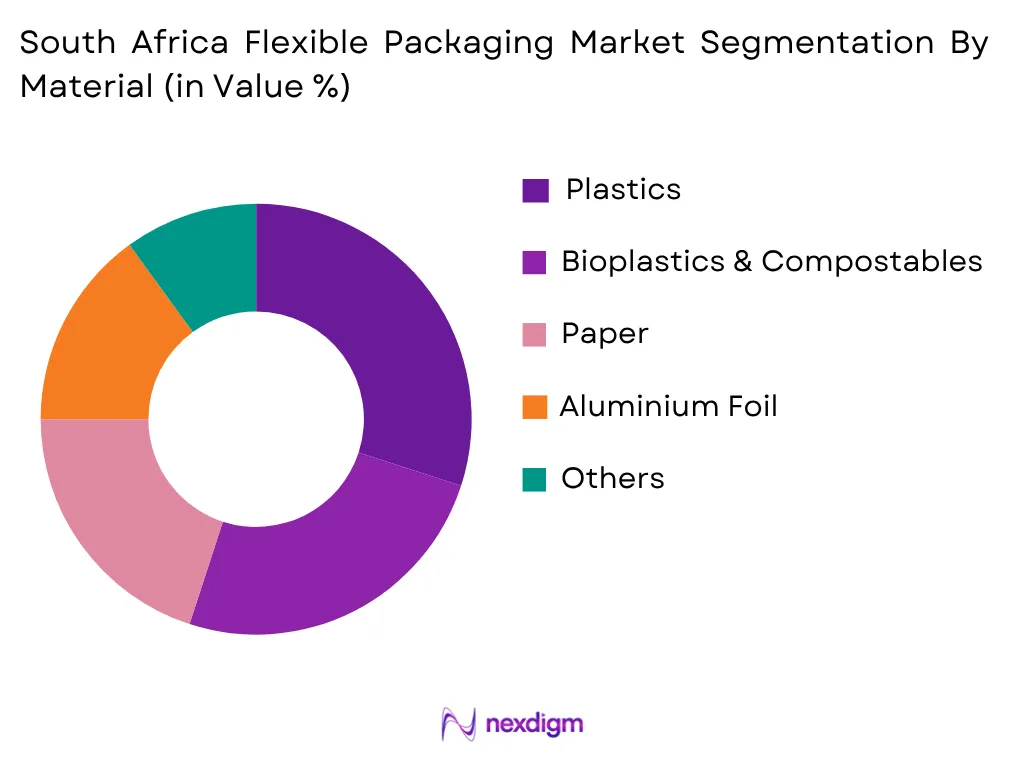
Plastic, primarily polyethylene and polypropylene, dominates the South Africa Flexible Packaging Market, accounting for more than two-thirds of material-type revenue, owing to its proven cost-to-performance ratio and its entrenched position in mass food, beverage, and household applications. Established converters already own optimized extrusion and printing assets calibrated for polyolefin substrates, reinforcing plastic’s continued dominance despite growing sustainability pressure. Bioplastics & Compostables represent the fastest-growing material segment, driven by EPR scorecards and retailer sustainability pledges, while paper-based laminates continue to gain share among brands seeking curbside-recyclable claims and lower carbon footprint credentials. Aluminum foil retains a durable niche in moisture-sensitive dairy and pharmaceutical applications where barrier performance requirements exceed what mono-material plastic films can reliably deliver, though global suppliers including Mondi continue scaling hybrid paper-plastic designs intended to meet toughness targets without compromising recyclability.
By Product Type
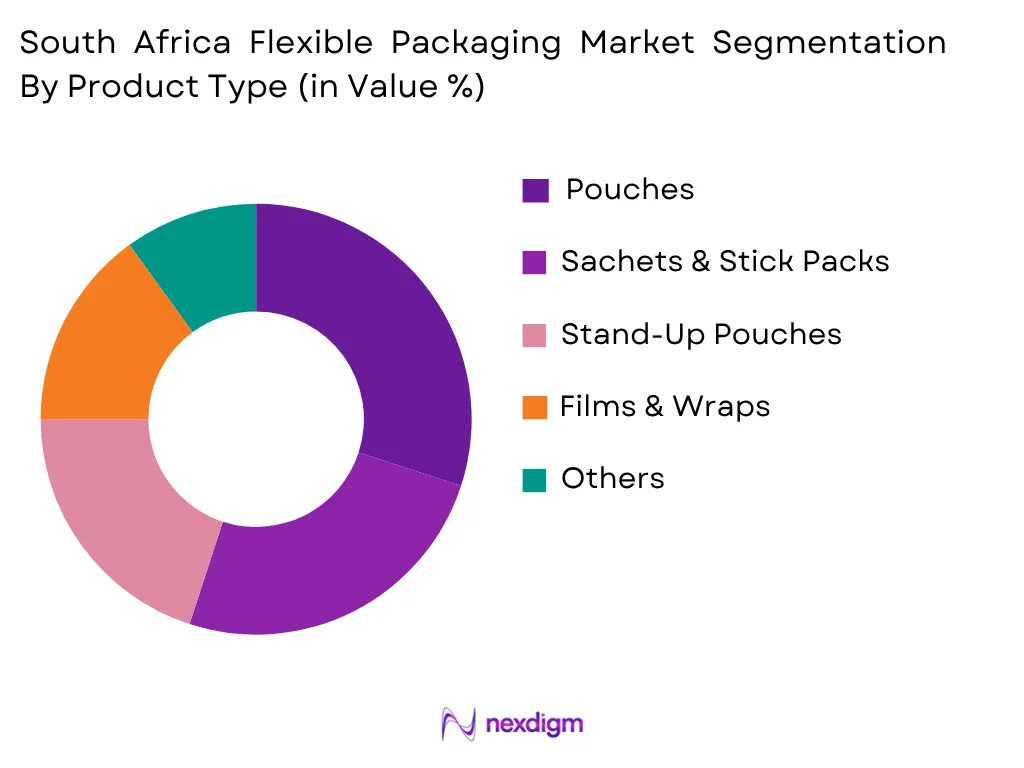
Pouches represent the largest product-type segment, supported by their widespread use across food, beverage, and personal care applications where flexibility, shelf appeal, and material efficiency are highly valued by brand owners. Flexible formats offer substantial material savings of approximately 30-40% compared to rigid packaging alternatives, encouraging brand owners to continue migrating from rigid to flexible formats as barrier technology continues to improve. Sachets & Stick Packs are expanding at an above-market growth rate, reflecting rising demand for single-serve and portion-controlled packaging formats among increasingly convenience-oriented South African consumers. Films & Wraps maintain substantial volume share, particularly in fresh produce packaging concentrated in the Western Cape’s agricultural export zones, although paper substitution pressure is beginning to compress growth in retail carryout applications specifically.
Competitive Landscape
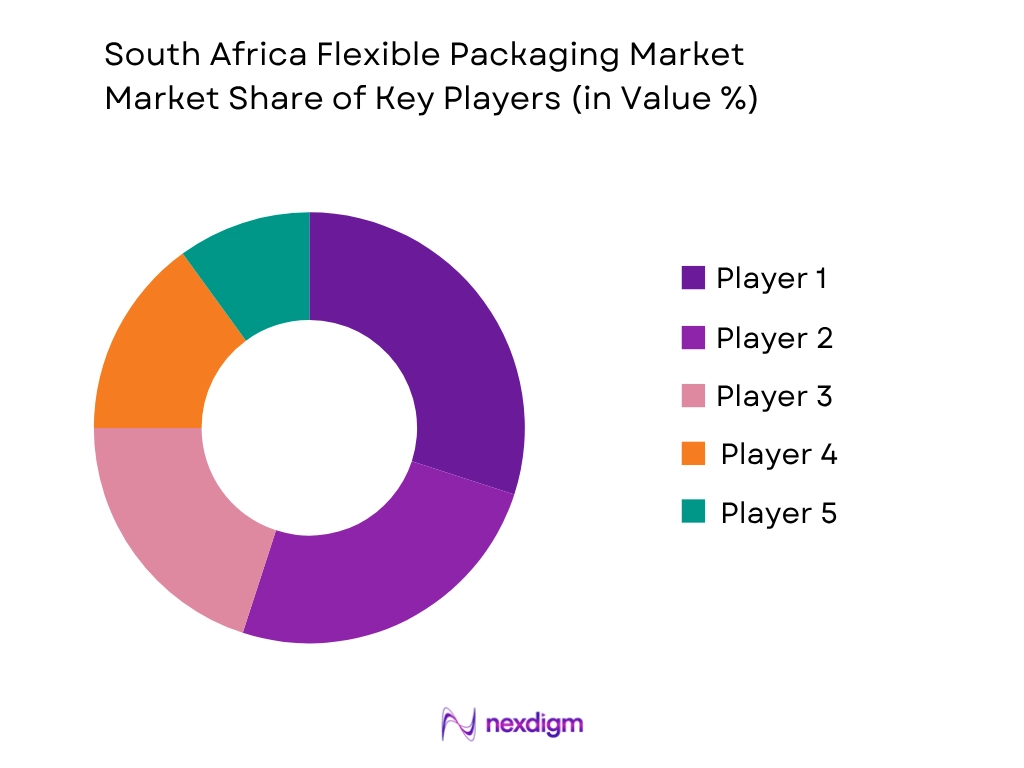
The South Africa Flexible Packaging Market exhibits a moderately concentrated structure, with several major domestic and multinational converters operating alongside numerous smaller regional players. Competition is primarily based on barrier technology performance, recycled-content capability, regulatory compliance, application-specific formulation expertise, and manufacturing capacity. Domestic players such as Mpact Ltd. have strengthened their competitive position through strategic acquisitions, including a PET recycling plant that reinforces the company’s sustainability credentials, while multinational converters including Constantia Flexibles, Amcor, Mondi, and Huhtamaki continue investing in local manufacturing capacity, exemplified by Huhtamaki’s KwaZulu-Natal production facility and ALPLA’s Lanseria plant near Johannesburg, which produces approximately 3.5 billion packaging pieces annually. Major retail chains are increasingly specifying oxygen transmission rates below 0.5 cc per square meter per day for sensitive products, a technical threshold that is compressing the viable supplier base to converters with captive multilayer coextrusion capacity.
| Company | Establishment Year | Headquarters | Primary Product Portfolio | Flexible Packaging Portfolio
|
Manufacturing Presence | Major End-Use Industries | Key Strategic Focus | Certifications & Compliance |
| Mpact Ltd. | 2011 | ~ | ~ | ~ | ~ | ~ | ~ | ~ |
| Constantia Flexibles | 1979 | ~ | ~ | ~ | ~ | ~ | ~ | ~ |
| Amcor | 1860 | ~ | ~ | ~ | ~ | ~ | ~ | ~ |
| Huhtamaki | 1920 | ~ | ~ | ~ | ~ | ~ | ~ | ~ |
| Mondi | 1967 | ~ | ~ | ~ | ~ | ~ | ~ | ~ |
South Africa Flexible Packaging Market Analysis
Growth Drivers
Rising Demand for Convenience Foods and E-Commerce Packaging
South Africa’s flexible packaging market is experiencing sustained growth due to rapid urbanization, which continues to increase demand for packaged and ready-to-eat convenience foods requiring high-volume applications of flexible films, pouches, and sachets. Food processing represents the single largest end-user segment, capturing approximately 30% of South Africa’s flexible packaging market in 2025, concentrated in major urban consumption hubs including Gauteng’s Johannesburg-Pretoria corridor and the Western Cape. E-commerce has emerged as one of the fastest-growing demand drivers for the broader packaging industry, as online retailers increasingly require secure, tamper-evident, and protective flexible packaging formats for parcel transit. Rising disposable incomes and increasing health awareness continue to expand consumption of packaged food products and both alcoholic and non-alcoholic beverages, sustaining strong underlying demand for flexible packaging formats across South Africa’s retail and foodservice channels.
Extended Producer Responsibility Regulations Driving Recycled-Content Adoption
South Africa’s increasingly stringent Extended Producer Responsibility regulations, enforced by the Department of Forestry, Fisheries and the Environment, continue to reshape investment priorities across the flexible packaging industry. Government regulations require all plastic carrier bags and flat plastic bags used in South Africa, including imported bags, to contain progressively higher shares of recycled material, rising from 50% since January 2023 to 75% since January 2025, with a target of 100% recycled content from January 2027. The South African Plastics Pact, launched in April 2023 with participation from major retailers including Naspers subsidiaries Takealot and Media24 alongside packaging manufacturers and recycling facilities, continues to advance shared industry commitments toward circular economy outcomes. These regulatory requirements are compelling converters to demonstrate verified post-consumer collection tonnages or face market access restrictions, driving substantial investment in recycled-content films, mechanical recycling partnerships, and redesigned mono-material packaging structures that simplify end-of-life recovery.
Market Challenges
Energy Reliability and Rising Input Cost Pressure
South Africa’s flexible packaging converters continue to navigate significant operational challenges stemming from persistent electricity supply constraints associated with Eskom load-shedding, which has compelled many manufacturers to invest in on-site solar installations as a standard hedge against unplanned production interruptions. Currency volatility affecting the South African Rand, combined with global polymer price swings, continues to add cost pressure for converters that rely on imported resin feedstocks and specialty barrier materials. While established converters increasingly rely on long-term supply contracts and lightweight packaging designs to help protect margins, smaller regional converters with less negotiating leverage and limited capital for backup power infrastructure face a more difficult operating environment. These energy and input cost pressures directly affect the industry’s ability to compete on price with imported flexible packaging products while simultaneously funding the capital investments required to meet tightening recycled-content and barrier performance regulations.
Paper and Mono-Material Substitution Pressure
South Africa’s flexible packaging market faces growing competitive pressure from paper-based alternatives, particularly within fresh produce and retail carryout applications where brand owners are increasingly pursuing curbside-recyclable claims to align with evolving consumer and regulatory expectations. Major retail chains now specify oxygen transmission rates below 0.5 cubic centimeters per square meter per day for sensitive dairy and edible oil products, a technical threshold that is compressing the viable supplier base to converters with captive multilayer coextrusion capacity. This shift toward mono-material and high-barrier film redesigns requires substantial polymer science and formulation expertise, yet local universities produce an insufficient pipeline of qualified formulation specialists to support the pace of specification redesign the market increasingly demands. Bureau of Standards food-contact migration testing and, for pharmaceutical-grade applications, primary packaging approval processes further extend commercialization timelines for converters seeking to bring new mono-material and barrier-enhanced products to market.
Market Opportunities
Expansion of High-Barrier Mono-Material and Recycled-Content Films
Growing retailer and regulatory demand for recyclable, high-barrier flexible packaging creates substantial opportunity for converters investing in advanced film technology. Global suppliers including Amcor have already introduced paper-based packaging alternatives for dry beverage mixes and continue scaling high-barrier mono-material films such as AmPrima, which achieved 10% recycled content in 2025 with a stated target of 30% by 2030. ALPLA’s Lanseria facility near Johannesburg, which produces approximately 2.4 billion preforms annually already containing 25% recycled content, illustrates the scale of investment multinational converters are directing toward recycled-content capacity in South Africa specifically. As EPR compliance timelines continue to tighten annually, converters that can demonstrate verified recycled-content credentials and mono-material recyclability are well positioned to capture premium contract positioning from major retail chains increasingly building sustainability commitments into their supplier specifications.
Growth in Healthcare Cold-Chain and E-Commerce Protective Packaging
Expanding cold-chain pharmaceutical distribution and continued e-commerce growth create meaningful new demand opportunities for South Africa’s flexible packaging converters. Healthcare and pharmaceutical applications represent one of the fastest-growing end-user segments in South Africa’s broader packaging industry, driven by expanding domestic cold-chain distribution infrastructure for biologics and temperature-sensitive medicines requiring specialized barrier-enhanced flexible formats. E-commerce continues to significantly influence packaging requirements and design as online retailers require secure, tamper-evident, and protective flexible packaging for parcel transit, a trend expected to accelerate as online retail penetration continues to expand across South Africa’s major metropolitan centers. Converters capable of offering validated barrier performance for pharmaceutical primary packaging alongside cost-efficient, protective e-commerce packaging solutions are well positioned to diversify revenue beyond traditional food and beverage applications as these two segments continue to outpace overall market growth.
Future Outlook
The South Africa Flexible Packaging Market is expected to witness steady expansion over the forecast period, supported by continued urbanization-driven demand for convenience foods, tightening Extended Producer Responsibility regulations accelerating recycled-content adoption, and growth in e-commerce and healthcare cold-chain applications. Continued investment in mono-material films, high-barrier recyclable structures, and renewable energy manufacturing capacity will further shape competitive positioning across the industry. The market is also likely to benefit from South Africa’s position as the continent’s most advanced packaging manufacturing base, supporting both domestic demand and export-oriented opportunities across the Southern African Development Community.
Major Players
- Mpact Ltd.
- Constantia Flexibles
- Amcor
- Mondi
- Huhtamaki
- ALPLA Group
- RPC Astrapak Ltd.
- Berry Global
- Sealed Air
- Sonoco Products
- Greif
- Coveris
- Polyoak Packaging
- Transpaco Ltd.
- Mauser Packaging Solutions
Key Target Audience
- Flexible Packaging Manufacturers
- Food & Beverage Processing Companies
- Healthcare & Pharmaceutical Companies
- Personal Care & Cosmetics Manufacturers
- E-Commerce & Retail Companies
- Investment and Venture Capitalist Firms
- Government and Regulatory Bodies (Department of Forestry, Fisheries and the Environment (DFFE), South African Bureau of Standards (SABS), National Regulator for Compulsory Specifications (NRCS))
- Raw Material Suppliers and Polymer Producers
Research Methodology
Step 1: Identification of Key Variables
The research process begins with identifying the complete ecosystem of the South Africa Flexible Packaging Market, including raw material suppliers, packaging converters, printing technology providers, brand owners, retailers, and regulatory authorities. Extensive secondary research is conducted using company annual reports, government publications, trade associations, customs statistics, industry journals, and proprietary databases to determine the variables influencing market demand, pricing, production, consumption, and technological developments.
Step 2: Market Analysis and Construction
Historical market information is collected and analyzed to estimate market size, production volumes, import-export activity, application-wise demand, and pricing trends. A combination of top-down and bottom-up approaches is used to estimate market revenues and validate segment-level performance. Consumption patterns across food processing, beverage, healthcare, and e-commerce packaging are evaluated to establish an accurate representation of the industry.
Step 3: Hypothesis Validation and Expert Consultation
The preliminary findings are validated through Computer-Assisted Telephone Interviews (CATIs) and structured discussions with flexible packaging converters, procurement managers, distributors, packaging engineers, regulatory experts, and senior executives operating within the South African packaging industry. These interviews help verify market assumptions, competitive developments, technology adoption trends, pricing dynamics, and future investment opportunities while refining the overall market estimates.
Step 4: Research Synthesis and Final Output
The final stage integrates insights obtained from primary interviews with quantitative information collected through secondary sources. Data triangulation techniques are applied to reconcile differences between supply-side and demand-side estimates, ensuring robust market forecasting. The report is then reviewed through multiple quality assurance checkpoints to deliver a comprehensive analysis covering market size, segmentation, competitive landscape, future outlook, and strategic recommendations for industry stakeholders.

- Executive Summary
- Research Methodology (Market Definitions and Assumptions, Abbreviations, Market Sizing Approach, Top-Down Analysis, Bottom-Up Analysis, Demand-Side Assessment, Supply-Side Assessment, Primary Industry Interviews, Secondary Research Validation, Data Triangulation, Forecasting Framework, Limitations and Future Conclusions)

- Definition and Scope
- Market Evolution and Industry Genesis
- Timeline of Major Industry Developments
- Flexible Packaging Industry Value Chain Analysis
- Supply Chain Analysis

- Growth Drivers (Rising Demand for Convenience Foods, Growth of E-Commerce Parcel Packaging, Expansion of Healthcare & Pharmaceutical Applications, Increasing Adoption of Recycled-Content Films, Urbanization-Driven Retail Growth, Growth in Fresh Produce Export Packaging)
- Market Challenges (Energy Reliability & Load-Shedding Costs, Paper & Mono-Material Substitution Pressure, Polymer Price and Currency Volatility, Recycling Infrastructure Gaps, Technical Talent Scarcity, Compressing Multilayer Supplier Base)
- Market Opportunities (Expansion of High-Barrier Mono-Material Films, Growth in Recycled-Content Packaging, Healthcare Cold-Chain Packaging Demand, E-Commerce Protective Packaging Growth, Bioplastics & Compostables Adoption, Regional Export-Oriented Manufacturing)
- Market Trends (Shift Toward Mono-Material Recyclable Films, Growth in Digital Printing Adoption, Paper-Plastic Hybrid Design Innovation, Oxygen-Scavenging Barrier Technology, Solar-Powered Manufacturing Adoption, Retailer-Driven Sustainability Mandates)
- Government Regulations (Extended Producer Responsibility (EPR) Framework, Mandatory Recycled-Content Requirements for Plastic Bags, SABS Food-Contact Migration Standards, South African Plastics Pact Commitments, Import Compliance, Packaging Waste Management Regulations)
- Import and Export Analysis (Trade Volume, Major Import Sources, Export Destinations, HS Code Analysis, Trade Balance)
- Raw Material Availability Analysis (Polyethylene & Polypropylene Resins, Recycled PET & PCR Feedstock, Kraft Paper & Pulp, Aluminum Foil Stock, Bio-Based Polymer Feedstocks)
- Technology Landscape (Multilayer Coextrusion Technologies, Flexographic & Digital Printing Systems, Barrier Coating Technologies, Mechanical & Chemical Recycling Technologies, Form-Fill-Seal Automation)
- Sustainability Assessment (Post-Consumer Recycled Content Adoption, Mono-Material Recyclability, Carbon Footprint Reduction, Renewable Energy Manufacturing Adoption, Circular Economy Partnerships)
- PESTLE Analysis
- SWOT Analysis
- Porter’s Five Forces Analysis
- Stakeholder Ecosystem
- Competition Ecosystem

- By Market Value (2020-2025)
- By Volume Consumption (2020-2025)
- By Average Selling Price (2020-2025)

- By Material Type (In Value %)
Plastic (Polyethylene & Polypropylene)
Paper-Based Laminates
Aluminum Foil
Bioplastics & Compostables
Multilayer Composite Films - By Product Type (In Value %)
Pouches
Bags
Films & Wraps
Sachets & Stick Packs
Wraps & Labels
Lids & Rollstock - By Printing Technology (In Value %)
Flexography
Rotogravure
Digital Printing
Offset Printing
Others - By End User (In Value %)
Food Processing
Beverage
Healthcare & Pharmaceutical
Personal Care & Cosmetics
Household & Home Care
E-Commerce & Retail
Agriculture & Fresh Produce - By Region (In Value %)
Gauteng
Western Cape
KwaZulu-Natal
Eastern Cape
Other Provinces

- Market Share of Major Players (By Value, Volume, Material Type, Application Industry, Product Category)
- Cross Comparison Parameters (Product Portfolio Breadth, Recycled-Content Capability, Barrier Technology Performance, Application Technical Support, Manufacturing Capacity, Regulatory Compliance & Certifications, Food & Beverage Customer Base, Innovation & New Product Launch Frequency)
- SWOT Analysis of Major Players
- Pricing Analysis by Product Category and SKU
- Production Capacity Analysis
- Manufacturing Footprint Analysis
- Distribution Network Analysis
- Innovation Benchmarking
- Detailed Profiles of Major Companies
Mpact Ltd.
Constantia Flexibles
Amcor
Mondi
Huhtamaki
ALPLA Group
RPC Astrapak Ltd.
Berry Global
Sealed Air
Sonoco Products
Greif
Coveris
Polyoak Packaging
Transpaco Ltd.
Mauser Packaging Solutions

- Consumption Pattern Analysis (Industrial Usage, Batch Size, Product Category Penetration, Seasonal Demand, Reformulation Activity)
- Purchasing Criteria (Barrier Performance, Regulatory Compliance, Cost Efficiency, Recyclability, Print Quality, Shelf Appeal)
- Procurement and Supplier Selection Analysis
- Recycled-Content Adoption Assessment
- Premium vs Conventional Packaging Demand
- Product Attribute Preference Analysis (Oxygen Transmission Rate, Moisture Barrier Performance, Seal Integrity, Print Definition, Recyclability, Shelf Life Extension)
- Sustainability & Regulatory Compliance Influence on Product Development
- Pain Point Analysis
- Decision-Making Process

- By Market Value (2026-2035)
- By Volume Consumption (2026-2035)
- By Average Selling Price (2026-2035)


 Request a Sample
 Ask for Customization
 Get a Quote
 Enquire Now