
 Download PDF
Market Overview
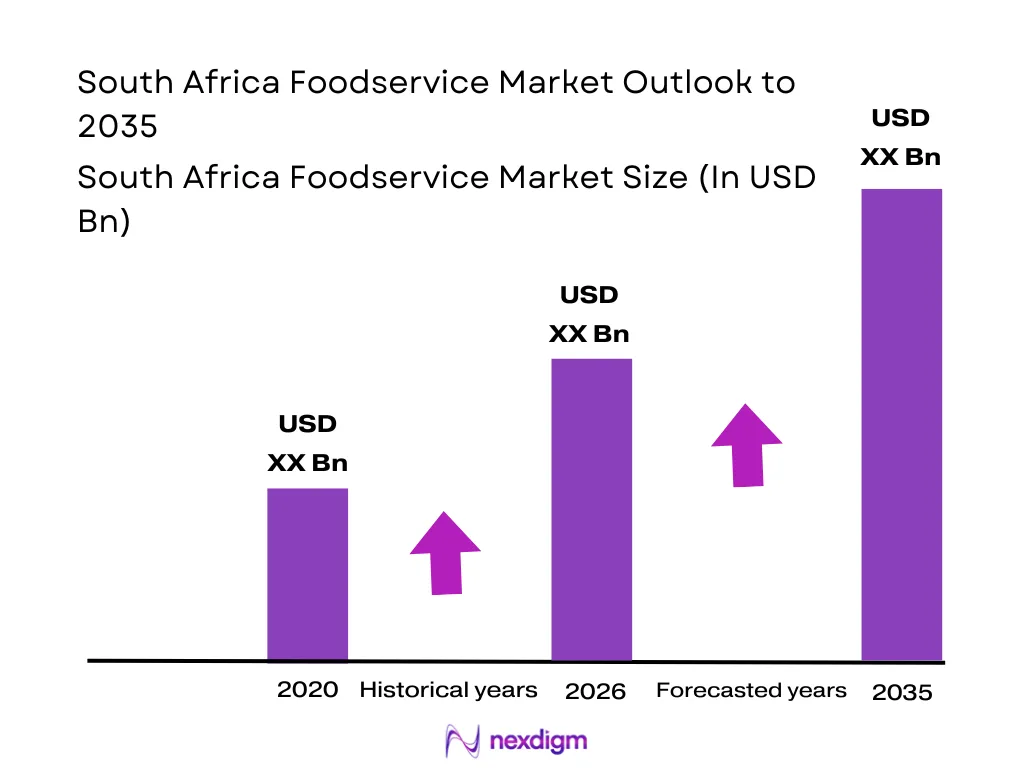
The South Africa Foodservice Market is supported by increasing urbanization, expansion of organized restaurant chains, rising tourism activity, and strong adoption of digital food ordering platforms. The market generated nearly USD ~ billion in foodservice revenue, supported by growing consumer spending on convenience dining and takeaway meals. Quick service restaurants and delivery-focused operators continue expanding across metropolitan regions due to rising smartphone penetration and changing work-life patterns. The growth of shopping malls, mixed-use developments, and fuel station retail hubs has accelerated outlet expansion, while digital payment integration and app-based ordering systems continue strengthening commercial foodservice consumption across urban consumers.
Cities and regions such as Johannesburg, Cape Town, Durban, Pretoria, and Sandton dominate the South Africa Foodservice Market because of stronger retail infrastructure, higher disposable income levels, advanced delivery connectivity, and tourism concentration. Gauteng remains the largest commercial foodservice hub due to high corporate activity, dense population clusters, and stronger franchise penetration. Cape Town dominates premium dining and café culture because of international tourism and hospitality investments, while Durban maintains strong demand for seafood, multicultural cuisine, and convenience dining due to its coastal tourism ecosystem and diversified consumer demographics.
Market Segmentation
By Foodservice Type
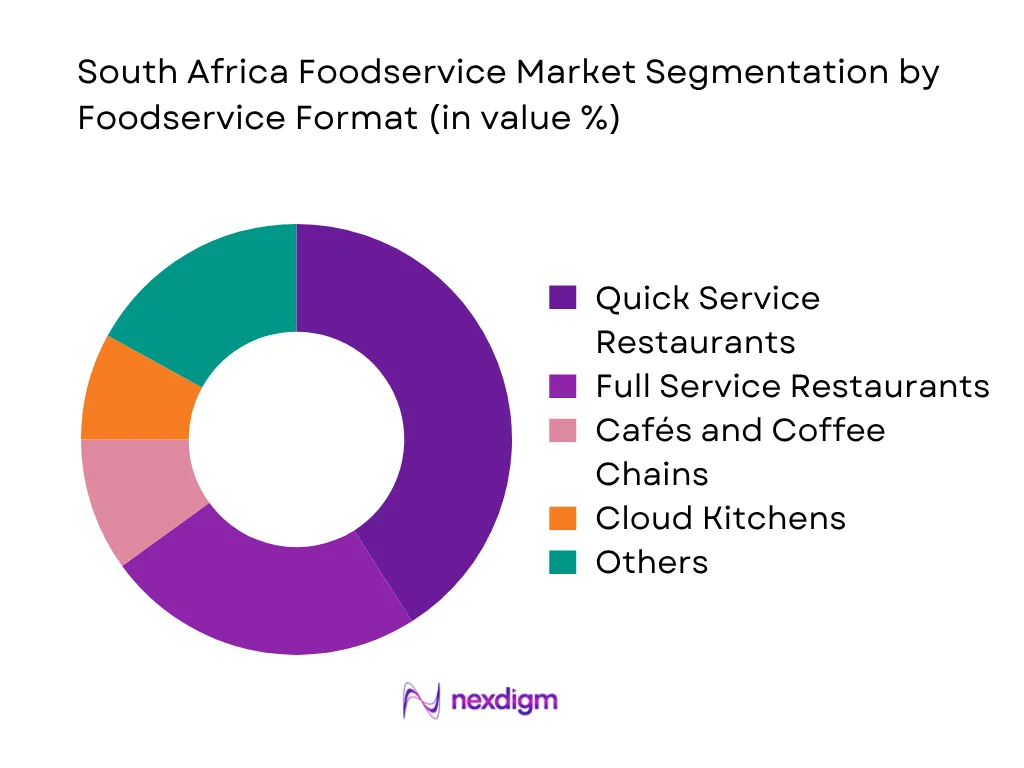
The South Africa Foodservice Market is segmented by foodservice type into quick service restaurants, full service restaurants, cafés and coffee chains, cloud kitchens, bakery and dessert chains, bars and pubs, and street food vendors. Quick service restaurants dominate the South Africa Foodservice Market because of affordability, convenience, extensive franchise expansion, and strong delivery integration. Urban consumers increasingly prefer fast and accessible meal options supported by mobile ordering and promotional pricing strategies. Shopping malls, fuel stations, transport hubs, and township retail clusters continue accelerating quick service outlet penetration. In addition, franchise-led operational models provide scalability and standardized service quality, strengthening customer retention and repeat purchase frequency. The segment also benefits from growing digital food ordering behaviour and efficient drive-thru operations, particularly among younger consumers and working professionals seeking convenience-oriented dining experiences.
By Service Mode
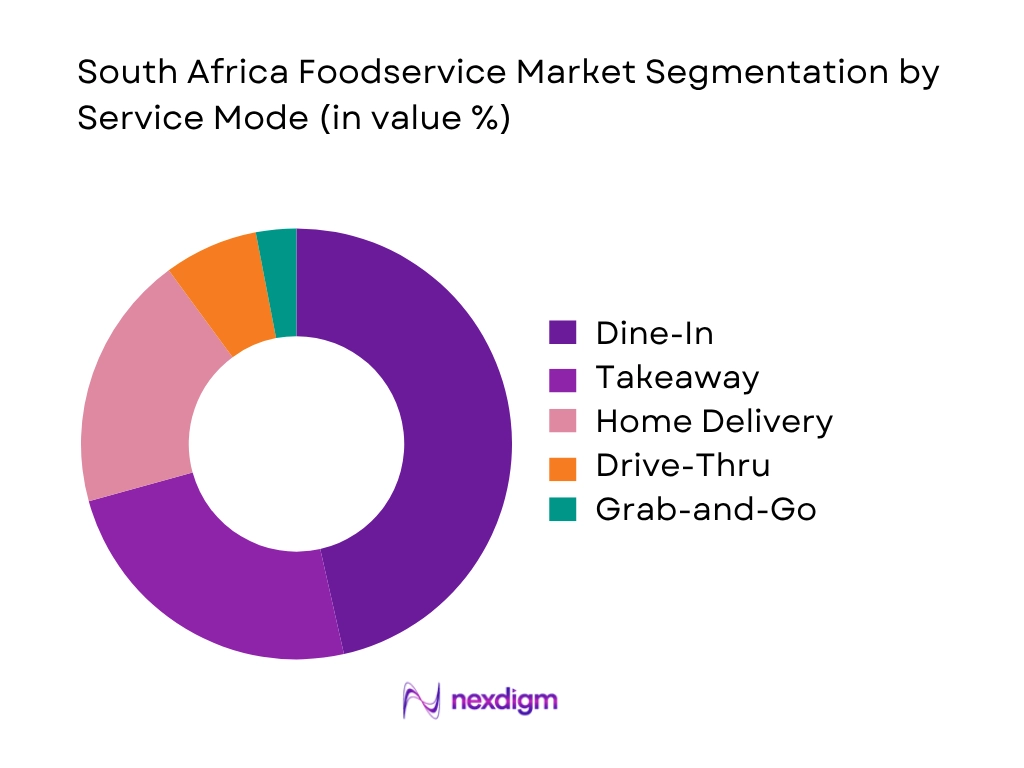
The South Africa Foodservice Market is segmented by service mode into dine-in, takeaway, home delivery, drive-thru, and grab-and-go services. Dine-in services dominate the South Africa Foodservice Market because restaurants continue functioning as social and lifestyle destinations for families, tourists, and professionals. Premium casual dining, cafés, and entertainment-linked restaurants continue witnessing strong footfall across Gauteng and Western Cape because consumers increasingly seek experiential dining environments. Tourism recovery and expansion of shopping center dining hubs have further strengthened dine-in demand. In addition, business meetings, family outings, and social gatherings continue supporting restaurant traffic across urban centers. Although delivery services are expanding rapidly through aggregator platforms, consumers still prefer dine-in experiences due to freshness, restaurant ambiance, and broader menu customization opportunities. Premiumization trends within café culture and family dining formats also continue reinforcing dine-in dominance.
Competitive Landscape
The South Africa Foodservice Market is moderately consolidated, with major operators focusing on franchise expansion, digital delivery integration, menu localization, and loyalty program development. Organized restaurant chains continue strengthening market presence through expansion into secondary cities and township economies, while cloud kitchens and independent premium dining concepts are intensifying competition across metropolitan regions. Foodservice companies are also investing in drive-thru infrastructure, mobile ordering systems, and AI-enabled operational technologies to improve customer convenience and operational efficiency.
| Company | Establishment Year | Headquarters | Key Foodservice Focus | Number of Outlets | Franchise Strength | Delivery Partnerships | Digital Loyalty Presence | Regional Penetration |
| Famous Brands | 1969 | Johannesburg, South Africa | ~ | ~ | ~ | ~ | ~ | ~ |
| Spur Corporation | 1967 | Cape Town, South Africa | ~ | ~ | ~ | ~ | ~ | ~ |
| KFC South Africa | 1971 | Johannesburg, South Africa | ~ | ~ | ~ | ~ | ~ | ~ |
| Nando’s | 1987 | Johannesburg, South Africa | ~ | ~ | ~ | ~ | ~ | ~ |
| McDonald’s South Africa | 1995 | Johannesburg, South Africa | ~ | ~ | ~ | ~ | ~ | ~ |
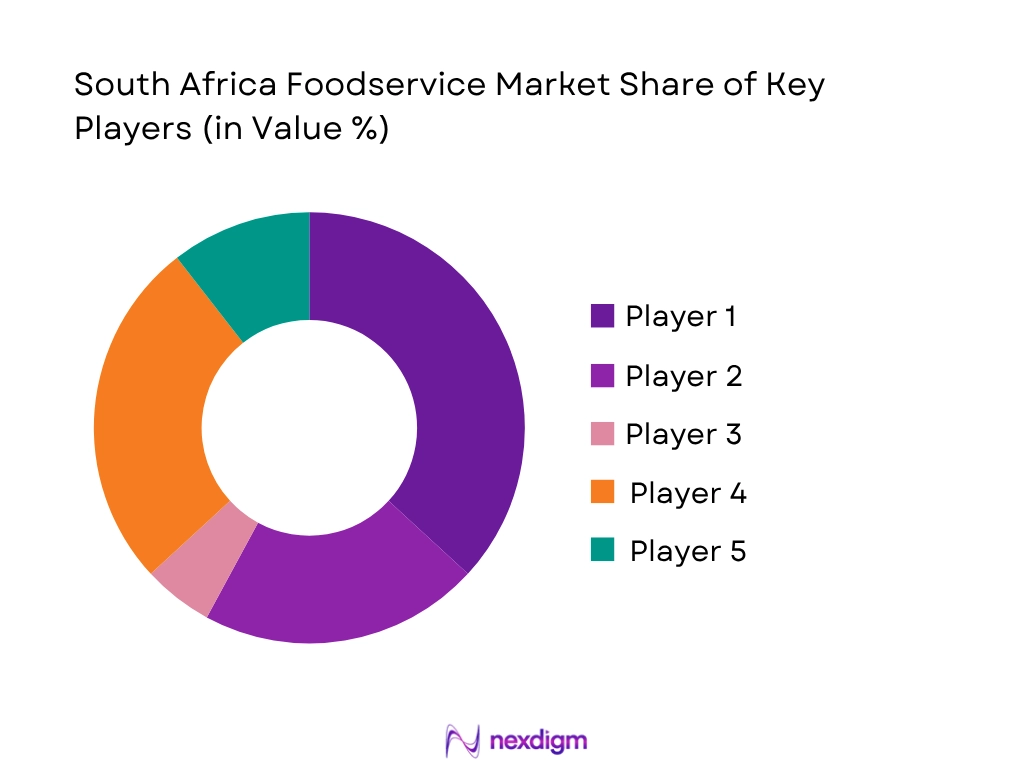
South Africa Foodservice Market Analysis
Growth Drivers
Rising Urbanization and Expansion of Middle-Income Consumers
South Africa’s foodservice market is significantly driven by rising urbanization and increasing concentration of economically active consumers in metropolitan regions. According to the World Bank, South Africa’s urban population reached 68.8% of the total population during 2024, compared to 67.4% during 2022, reflecting increasing migration toward commercial cities such as Johannesburg, Cape Town, Durban, and Pretoria. Statistics South Africa reported household final consumption expenditure exceeding ZAR 3.5 trillion, supported by growing spending across restaurants and accommodation services. The IMF reported South Africa’s GDP surpassed USD 400 billion, strengthening consumer purchasing capability within organized foodservice channels. Expansion of shopping malls, mixed-use commercial developments, and fuel station retail hubs continues accelerating quick service restaurant penetration and convenience dining demand across urban clusters.
Growth of Tourism and Hospitality Activities
Tourism recovery has become a major growth driver for the South Africa Foodservice Market, particularly benefiting restaurants, cafés, airport dining outlets, and premium hospitality operators. Statistics South Africa reported international tourist arrivals crossing 8.9 million travelers through the country’s ports of entry. Cape Town, Johannesburg, and Durban continue attracting substantial volumes of business and leisure travelers due to hospitality investments and tourism infrastructure development. The World Travel & Tourism Council reported that travel and tourism contributed nearly ZAR 660 billion to South Africa’s economy while supporting approximately 1.8 million jobs. Recovery in conference tourism, hotel occupancy, and coastal leisure travel has significantly strengthened premium dining demand, café consumption, and entertainment-linked foodservice traffic across urban hospitality districts.
Market Challenges
Electricity Shortages and Load Shedding Disrupting Foodservice Operations
Electricity shortages and load shedding remain major operational challenges for restaurants, cafés, bakeries, and cloud kitchens across South Africa. Commercial foodservice businesses rely heavily on uninterrupted electricity for refrigeration systems, cooking equipment, digital payments, and cold-chain operations. South Africa experienced scheduled power cuts across hundreds of operational days during recent years, affecting service sector productivity and restaurant operational continuity. Businesses continue investing heavily in generators, solar backup systems, and battery infrastructure, increasing operational complexity and capital requirements. Food spoilage risks, interrupted delivery timelines, inconsistent customer experiences, and rising utility costs continue pressuring both franchise operators and independent restaurants operating within urban and township markets.
Rising Food Inflation and Consumer Affordability Pressure
Food inflation and elevated living costs continue creating affordability challenges within the South Africa Foodservice Market. Official economic indicators reported unemployment levels remaining above 32%, limiting discretionary spending growth across several consumer groups. Rising electricity expenses, imported ingredient costs, logistics expenditure, and wage pressures continue affecting restaurant profitability and menu pricing structures. Consumers increasingly demonstrate price-sensitive purchasing behaviour, particularly within mid-income and lower-income segments. Premium dining frequency has slowed across certain urban locations because households are allocating greater portions of expenditure toward essential goods and services. Independent restaurants remain particularly vulnerable due to weaker procurement efficiencies and limited operational scale compared with organized franchise-led foodservice chains.
Market Opportunities
Expansion of Digital Food Delivery and Cloud Kitchen Ecosystem
Rapid adoption of digital ordering platforms and smartphone connectivity is creating substantial opportunities within the South Africa Foodservice Market. Internet penetration exceeded 75% of the population, while app-based food ordering continues expanding among urban consumers. Delivery-focused restaurant formats and cloud kitchens are benefiting from lower infrastructure requirements compared to traditional dine-in operations, enabling faster scalability across metropolitan residential clusters. Food aggregators continue onboarding franchise operators and independent restaurants onto integrated digital ecosystems, improving customer reach and operational efficiency. Growth in digital payment systems, AI-enabled customer engagement, and convenience-based ordering behaviour continues strengthening long-term opportunities for delivery-first foodservice models across South African urban markets.
Growing Investment in Franchise Expansion and Retail Infrastructure
Expansion of organized retail infrastructure and franchise-led commercial development presents significant opportunities for the South Africa Foodservice Market. Retail trade sales exceeded ZAR 1.2 trillion annually, indicating sustained commercial consumption activity across shopping centers and mixed-use retail developments. Franchise restaurant brands continue targeting township economies and secondary cities due to rising population density and improved transportation infrastructure. International foodservice operators increasingly view South Africa as a regional gateway for broader African expansion because of developed logistics networks and mature shopping center ecosystems. Retail developers are integrating larger food courts, drive-thru facilities, and experiential dining zones within commercial real estate projects, strengthening long-term outlet expansion opportunities for organized foodservice brands.
Future Outlook
The South Africa Foodservice Market is expected to witness substantial expansion over the coming years due to increasing urban population growth, rising digital food ordering adoption, and changing consumer dining preferences. Expansion of cloud kitchens, delivery-focused restaurant formats, and drive-thru infrastructure is expected to strengthen convenience-based foodservice consumption across metropolitan and secondary cities. Premium café culture, healthier menu innovation, and AI-enabled restaurant automation are anticipated to reshape customer engagement strategies within the industry. Foodservice operators are also expected to focus heavily on loyalty programs, menu localization, and digital payment integration to improve retention and operational efficiency. In addition, increasing investments in shopping malls, mixed-use commercial developments, and tourism infrastructure are expected to support long-term restaurant expansion across South Africa.
Major Players
- Famous Brands
- KFC South Africa
- McDonald’s South Africa
- Nando’s
- Spur Corporation
- Burger King South Africa
- Debonairs Pizza
- Steers
- Roman’s Pizza
- Chicken Licken
- Vida e Caffè
- Ocean Basket
- Wimpy South Africa
- Starbucks South Africa
- Shoprite Checkers FreshX
Key Target Audience
- Quick Service Restaurant Operators and Franchise Owners
- Food Delivery Platform Companies
- Hospitality and Tourism Groups
- Commercial Kitchen Equipment Manufacturers
- Food and Beverage Ingredient Suppliers
- Investments and Venture Capitalist Firms
- Government and Regulatory Bodies
- Retail Real Estate Developers and Mall Operators
Research Methodology
Step 1: Identification of Key Variables
The initial stage involved identifying critical variables influencing the South Africa Foodservice Market, including franchise penetration, digital food ordering adoption, tourism activity, urban consumption trends, and convenience dining behaviour. Extensive secondary research was conducted using government databases, industry publications, company disclosures, and trade statistics to understand the foodservice ecosystem and value chain dynamics.
Step 2: Market Analysis and Construction
Historical market analysis was conducted using restaurant revenue data, foodservice outlet penetration, consumer spending trends, delivery platform activity, and retail infrastructure expansion. Market estimations were derived using bottom-up calculations supported by transaction volume analysis, regional consumption mapping, and operational benchmarking across foodservice categories.
Step 3: Hypothesis Validation and Expert Consultation
The preliminary market findings were validated through interviews with restaurant operators, delivery aggregators, franchise managers, and hospitality industry experts. These consultations provided operational insights regarding customer behaviour, digital ordering trends, expansion strategies, and profitability structures across organized and independent foodservice formats.
Step 4: Research Synthesis and Final Output
The final stage involved consolidating qualitative and quantitative findings to develop a comprehensive assessment of the South Africa Foodservice Market. Cross-validation was conducted using trade statistics, company disclosures, and operational benchmarks to ensure reliability and consistency of market segmentation, competitive analysis, and future growth projections.

- Executive Summary
- Research Methodology (Market Definitions and Assumptions, Abbreviations, Research Framework, Bottom-Up Market Estimation, Top-Down Validation, Consumption Mapping, Foodservice Outlet Audit Analysis, Trade Flow Assessment, Primary Interviews with Restaurant Operators and Aggregators, Forecasting Model, Limitations and Assumptions)

- Definition and Scope
- Evolution of Organized Foodservice Consumption in South Africa
- Industry Ecosystem and Stakeholder Mapping
- Supply Chain and Value Chain Analysis
- Foodservice Procurement and Distribution Landscape
- Commercial Kitchen and Delivery Infrastructure Analysis

- Growth Drivers
Rising Urbanization and Expansion of Middle-Income Consumers
Growth of Tourism and Hospitality Activities
Expansion of Digital Food Ordering Ecosystem
Increasing Franchise Penetration Across Secondary Cities
Rising Workforce Participation and Convenience Dining Demand - Market Challenges
Electricity Shortages and Load Shedding Disrupting Foodservice Operations
Rising Food Inflation and Consumer Affordability Pressure
Cold Chain and Logistics Constraints
Labor Availability and Employee Retention Issues
High Rental and Utility Costs - Market Opportunities
Expansion of Digital Food Delivery and Cloud Kitchen Ecosystem
Growing Investment in Franchise Expansion and Retail Infrastructure
Increasing Demand for Health-Focused Dining Concepts
Drive-Thru and Convenience-Based Expansion Opportunities
AI and Kitchen Automation Integration - Market Trends
Growth of Delivery-Only Restaurant Models
Premiumization of Café and Coffee Culture
Expansion of Loyalty and Subscription Programs
Contactless Payment Integration
Growth in Plant-Based and Halal Food Offerings - Government Regulations
Food Safety and Hygiene Compliance
Labor and Wage Regulations
Restaurant Licensing Framework
VAT and Taxation Structure
Packaging and Environmental Compliance - Porter’s Five Forces Analysis
- Pricing Analysis
- Competition Ecosystem

- By Value, 2020-2025
- By Transaction Volume, 2020-2025
- By Number of Foodservice Outlets, 2020-2025
- By Average Order Value, 2020-2025
- By Delivery Contribution to Revenue, 2020-2025

- By Foodservice Type (in Value %)
Outlet Density
Average Ticket Size
Consumer Footfall
Delivery Penetration - By Cuisine Type (in Value %)
Consumer Preference Share
Menu Diversification
Repeat Purchase Frequency
Premiumization Index - By Service Mode (in Value %)
Digital Ordering Penetration
Order Frequency
Customer Retention Rate
Operational Efficiency - By Outlet Ownership Model (in Value %)
Franchise Penetration
CAPEX Intensity
Expansion Rate
Brand Standardization - By Location Type (in Value %)
Footfall Density
Rental Intensity
Consumer Accessibility
Revenue Productivity - By Order Channel (in Value %)
Aggregator Dependency
App Usage Rate
Online Conversion Rate
Customer Acquisition Efficiency - By Consumer Demographics (in Value %)
Dining Frequency
Income-Based Spending
Brand Loyalty
Urban Consumption Rate - By Price Positioning (in Value %)
Average Ticket Size
Affordability Index
Margin Structure
Consumer Reach - By Region (in Value %)
Gauteng
Western Cape
KwaZulu-Natal
Eastern Cape
Free State
Limpopo
Mpumalanga
North West
Northern Cape

- Market Share Analysis of Major Players on the Basis of Revenue and Outlet Count
- Cross Comparison Parameters (Company Overview, Foodservice Format Presence, Number of Outlets, Franchise Network Strength, Delivery Penetration Rate, Menu Localization Strategy, Drive-Thru Presence, Digital Loyalty Program Strength, Regional Penetration, Kitchen Infrastructure, Foodservice Partnerships, Brand Positioning, Average Ticket Size, Innovation Pipeline, EBITDA Margins, Expansion Strategy)
- Competitive Benchmarking Matrix
- SWOT Analysis of Major Players
- Pricing Analysis by Product Category and Combo Meals
- Detailed Profiles of Major Companies
Famous Brands
KFC South Africa
McDonald’s South Africa
Nando’s
Spur Corporation
Burger King South Africa
Debonairs Pizza
Steers
Roman’s Pizza
Chicken Licken
Vida e Caffè
Ocean Basket
Wimpy South Africa
Starbucks South Africa
Shoprite Checkers FreshX

- Consumption Frequency Analysis
- Consumer Spending and Basket Analysis
- Brand Loyalty and Switching Behaviour
- Purchase Decision Parameters
- Convenience Dining Preference Mapping
- Delivery App Usage Behaviour

- By Value, 2026-2035
- By Transaction Volume, 2026-2035
- By Number of Foodservice Outlets, 2026-2035
- By Average Order Value, 2026-2035
- By Delivery Revenue Contribution, 2026-2035


 Request a Sample
 Ask for Customization
 Get a Quote
 Enquire Now