
 Download PDF
 Download PDF
Market Overview
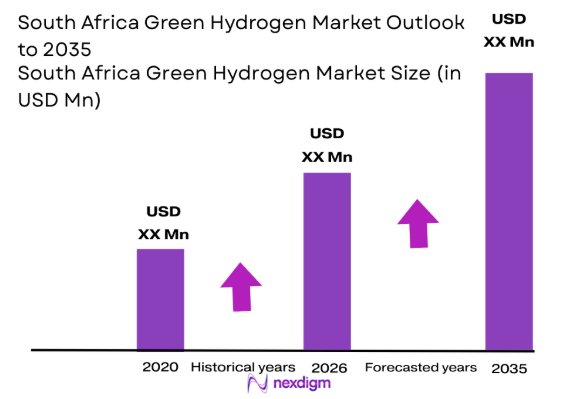
The South Africa Green Hydrogen Market is poised for substantial growth, driven by the country’s strong renewable energy potential and government-backed initiatives. Based on a recent historical assessment, the green hydrogen sector is projected to witness significant investments, with the market size estimated at USD ~ million. The demand for clean energy solutions, coupled with a growing focus on decarbonization, is contributing to the rise of green hydrogen as a viable alternative to traditional fossil fuels. The global shift towards reducing carbon emissions is anticipated to further drive the market.
Dominant players in the South African Green Hydrogen Market include government-led initiatives and private sector investments in key cities like Johannesburg and Cape Town. These areas, with strong infrastructure and proximity to renewable energy sources, have become hubs for green hydrogen production. The government’s ambitious energy policies are creating an environment conducive to green hydrogen production. Additionally, factors such as favorable climatic conditions for renewable energy generation, access to large-scale infrastructure, and a growing interest in sustainable energy solutions contribute to the dominance of these regions.
Market Segmentation
By Product Type
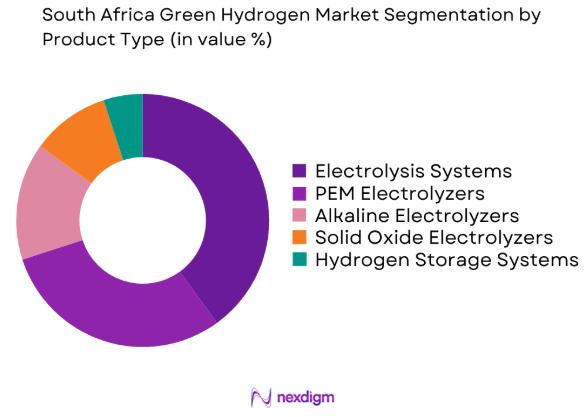
The South Africa Green Hydrogen Market is segmented by product type into various hydrogen generation methods. Recently, electrolysis-based systems have captured a dominant market share due to factors such as the scalability of renewable energy sources, advancements in electrolyzer technology, and the growing demand for green hydrogen as an industrial feedstock. Electrolysis systems, particularly those using renewable energy sources such as wind and solar, offer efficient production methods that are in high demand for sectors like transportation and power generation.
By Platform Type
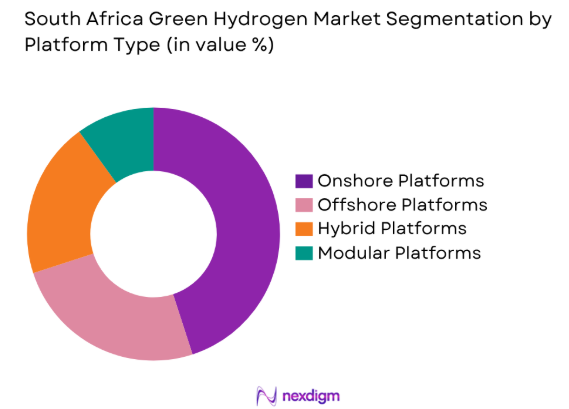
The South Africa Green Hydrogen Market is segmented by platform type, including onshore, offshore, hybrid, and modular platforms. The dominant platform is onshore due to its cost-effectiveness and infrastructure advantages. Onshore platforms have become increasingly popular as they allow for easy integration with existing renewable energy plants, making them ideal for large-scale production. Additionally, the growing adoption of hybrid platforms has seen notable growth due to their ability to combine the benefits of renewable energy sources and hydrogen production in a flexible manner.
Competitive Landscape
The South Africa Green Hydrogen Market is characterized by a competitive landscape with significant involvement from both global and local players. The market is in the early stages of development, with players focusing on establishing long-term contracts, technological advancements, and securing renewable energy sources. The key players have recognized the potential of South Africa as a green hydrogen hub and are investing in infrastructure and research to meet the growing demand. As the market expands, more consolidation is expected, with strategic collaborations and partnerships between major players.
| Company Name | Establishment Year | Headquarters | Technology Focus | Market Reach | Key Products | Revenue | Additional Parameter |
| Shell | 1907 | The Hague, Netherlands | ~ | ~ | ~ | ~ | ~ |
| Siemens Energy | 2020 | Munich, Germany | ~ | ~ | ~ | ~ | ~ |
| Linde | 1879 | Guildford, UK | ~ | ~ | ~ | ~ | ~ |
| Air Products | 1940 | Allentown, USA | ~ | ~ | ~ | ~ | ~ |
| Sasol | 1950 | Sandton, South Africa | ~ | ~ | ~ | ~ | ~ |
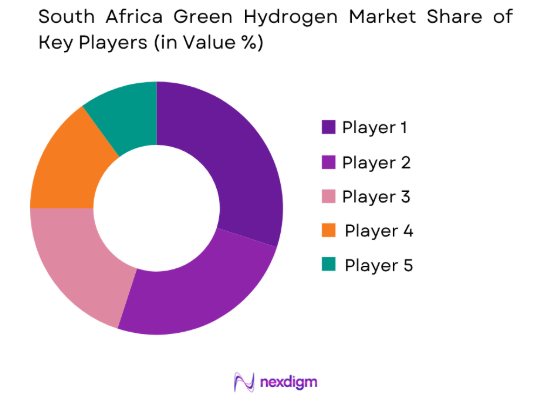
South Africa Green Hydrogen Market Analysis
Growth Drivers
Government Investment in Clean Energy
Government policies promoting clean energy technologies and decarbonization are key drivers of growth in the South Africa Green Hydrogen Market. The country’s focus on renewable energy as part of its national development strategy is channeling funds into green hydrogen projects, which are boosting infrastructure and enabling large-scale production. The South African government has introduced incentives for hydrogen production, aligning with its broader goals of reducing carbon emissions and meeting global environmental targets. These policies foster a favorable environment for investments, both locally and internationally, and support the expansion of the green hydrogen sector, positioning it as a significant player in the global clean energy transition.
Technological Advancements in Electrolysis
Continuous innovation in electrolysis technology is a major factor driving growth in the South Africa Green Hydrogen Market. Recent advancements in the efficiency and scalability of electrolyzers, especially PEM and alkaline systems, have made green hydrogen production more economically feasible. These innovations enable the use of abundant renewable energy sources, such as wind and solar, which are widely available in South Africa. As a result, hydrogen production costs are decreasing, making the technology more competitive with traditional energy sources. The improved efficiency of these systems is driving adoption across various industrial sectors, further fueling demand for green hydrogen and supporting the country’s transition toward sustainable energy solutions.
Market Challenges
High Capital Investment in Infrastructure
Despite the growing interest in green hydrogen, high capital expenditure for infrastructure development remains a major challenge. Establishing electrolysis plants, hydrogen storage systems, and transportation networks demands significant investment, raising concerns about the financial feasibility of large-scale projects. While the South African government’s incentives for renewable energy are providing some support, the high initial costs continue to be a barrier for many market participants, especially smaller firms. These financial hurdles make it difficult for new and smaller players to enter the market or expand operations. As a result, addressing these capital challenges is crucial for fostering broader adoption and accelerating the growth of the green hydrogen sector in South Africa.
Technological Integration and Standardization
Another challenge for the South Africa Green Hydrogen Market is the integration of hydrogen technologies into existing energy infrastructures. Electrolysis systems and other hydrogen production methods need to be standardized for interoperability and scalability, which remains a significant hurdle. Additionally, the absence of industry-wide standards for hydrogen storage and transportation further complicates the widespread adoption of hydrogen solutions. These technological barriers, along with inconsistent frameworks, slow down the commercialization of green hydrogen in South Africa. Standardization efforts are essential to streamline production, storage, and distribution processes, enabling a more efficient transition to hydrogen as a key component of the country’s clean energy future.
Opportunities
Renewable Energy Integration
South Africa’s abundant renewable energy resources, including solar and wind, present a significant opportunity for the green hydrogen market. By integrating hydrogen production with these renewable sources, the country can leverage low-cost, plentiful energy to produce hydrogen at scale. Hybrid systems, which combine renewable energy with hydrogen production, are gaining traction as they address energy storage challenges while lowering production costs. These systems enable more efficient use of excess renewable energy, reducing the need for costly energy storage solutions. As a result, the integration of renewable energy with hydrogen production will play a crucial role in driving down costs and supporting the growth of South Africa’s green hydrogen sector.
International Export Markets
South Africa’s green hydrogen market offers significant potential for international exports. With growing global demand for clean energy solutions, especially in Europe and Asia, the country is well-positioned to become a key exporter of green hydrogen. European nations, in particular, are seeking reliable sources of clean hydrogen to support their decarbonization efforts. By tapping into this demand, South Africa can expand its hydrogen market beyond its borders, potentially becoming a global leader in hydrogen production and export. The country’s abundant renewable energy resources, combined with supportive government policies, make it an attractive partner for international markets focused on achieving sustainability and reducing carbon emissions.
Future Outlook
The future outlook for the South Africa Green Hydrogen Market is optimistic, with significant growth expected over the next five years. Technological advancements, particularly in electrolyzers and hydrogen storage systems, will continue to drive market expansion. Regulatory support from the South African government, along with global demand for green hydrogen, will provide a favorable environment for market growth. Furthermore, increasing investments in infrastructure, coupled with demand from sectors like transportation and industrial applications, will create opportunities for both local and international players.
Major Players
- Shell
- Siemens Energy
- Linde
- Air Products
- Sasol
- Thyssenkrupp AG
- Nel ASA
- Plug Power
- Hydrogenics
- Ballard Power Systems
- ITM Power
- Enel Green Power
- Mitsubishi Heavy Industries
- Siemens Gamesa
- Acciona Energy
Key Target Audience
- Investments and venture capitalist firms
- Government and regulatory bodies
- Renewable energy companies
- Industrial sectors seeking decarbonization solutions
- Hydrogen production companies
- Energy infrastructure developers
- Environmental sustainability organizations
- Clean energy researchers
Research Methodology
Step 1: Identification of Key Variables
Understanding the key variables affecting the green hydrogen market, such as technological advancements, government regulations, and industry trends.
Step 2: Market Analysis and Construction
Analyzing market dynamics and constructing a comprehensive model to estimate market size, trends, and growth potential.
Step 3: Hypothesis Validation and Expert Consultation
Validating findings through expert consultations and primary research to ensure accuracy and relevance.
Step 4: Research Synthesis and Final Output
Synthesizing data and producing the final market report, which incorporates findings from secondary research and expert validation.

- Executive Summary
- Research Methodology (Definitions, Scope, Industry Assumptions, Market Sizing Approach, Primary & Secondary Research Framework, Data Collection & Verification Protocol, Analytic Models & Forecast Methodology, Limitations & Research Validity Checks)

- Market Definition and Scope
- Value Chain & Stakeholder Ecosystem
- Regulatory / Certification Landscape
- Sector Dynamics Affecting Demand
- Strategic Initiatives & Infrastructure Growth

- Growth Drivers
Increased Government Investment in Renewable Energy
Technological Advancements in Electrolyzers
International Demand for Clean Hydrogen
Favorable Geographical Conditions for Green Hydrogen
Incentives for Renewable Energy Adoption - Market Challenges
High Capital Investment for Hydrogen Infrastructure
Lack of Standardization in Hydrogen Production
Limited Domestic Market for Green Hydrogen
Technological Barriers in Hydrogen Storage
Political and Regulatory Uncertainty - Market Opportunities
Emerging Demand from International Export Markets
Government Policy Support for Green Hydrogen
Technological Innovations in Electrolyzer Systems - Trends
Increasing Investment in Hydrogen Infrastructure
Shift Towards Renewable Energy Integration
Rising Interest in Hydrogen for Transportation - Government Regulations
- SWOT Analysis of Key Competitors
- Porter’s Five Forces

- By Market Value, 2020-2025
- By Installed Units, 2020-2025
- By Average System Price, 2020-2025
- By System Complexity Tier, 2020-2025

- By System Type (In Value%)
Electrolysis Systems
PEM Electrolyzers
Alkaline Electrolyzers
Solid Oxide Electrolyzers
Hydrogen Storage Systems - By Platform Type (In Value%)
Onshore Platforms
Offshore Platforms
Hybrid Platforms
Modular Platforms
Integrated Platforms - By Fitment Type (In Value%)
On-site Solutions
Off-site Solutions
Portable Solutions
Modular Solutions
Integrated Solutions - By End User Segment (In Value%)
Industrial Applications
Transportation Sector
Power Generation Sector
Residential Applications
Government & Public Services - By Procurement Channel (In Value%)
Direct Procurement
Government Tenders
Private Sector Procurement
Online Bidding Platforms
Third-party Distributors

- Market Share Analysis
- Cross Comparison Parameters (System Type, Platform Type, Procurement Channel, End User Segment, Fitment Type, Technology Type, Region, Production Capacity, Installation Location, Hydrogen Storage Solutions)
- SWOT Analysis of Key Competitors
- Pricing & Procurement Analysis
- Key Players
Shell
Siemens Energy
Apex Group
Thyssenkrupp AG
Nel ASA
Green Hydrogen Systems
Linde
Sasol
Air Products
Plug Power
HyGear
ITM Power
Ballard Power Systems
H2B2 Electrolysis Technologies
Enel Green Power

- Increasing Adoption in Industrial Applications
- Governmental Push for Clean Hydrogen Solutions
- Rising Use of Hydrogen in Public Transport
- Private Sector Focus on Clean Energy Initiatives

- Forecast Market Value, 2026-2035
- Forecast Installed Units, 2026-2035
- Price Forecast by System Tier, 2026-2035
- Future Demand by Platform, 2026-2035


 Request a Sample
 Ask for Customization
 Get a Quote
 Enquire Now