

 Download PDF
Market Overview
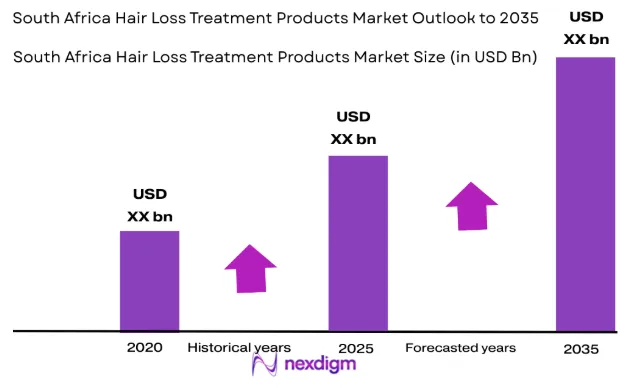
The South Africa Hair Loss Treatment Products Market is projected to see significant growth due to a rising focus on personal care, aesthetics, and grooming. The market is influenced by factors such as technological advancements in hair restoration treatments, increasing awareness around hair health, and rising disposable income. In 2023, the market was valued at USD ~ million and is estimated to grow to USD ~ billion by 2024, primarily driven by innovations in non-invasive treatment options and increased demand for hair restoration products.
South Africa, particularly major cities such as Johannesburg, Cape Town, and Durban, dominates the market due to high urbanization rates and rising disposable income in these regions. These cities have a large concentration of beauty and wellness centers, pharmacies, and retail outlets, making them hubs for hair loss treatment products. Johannesburg stands out as the largest market due to its central location, accessibility to international brands, and a more extensive consumer base seeking personal care solutions.
Market Segmentation
By Product Type
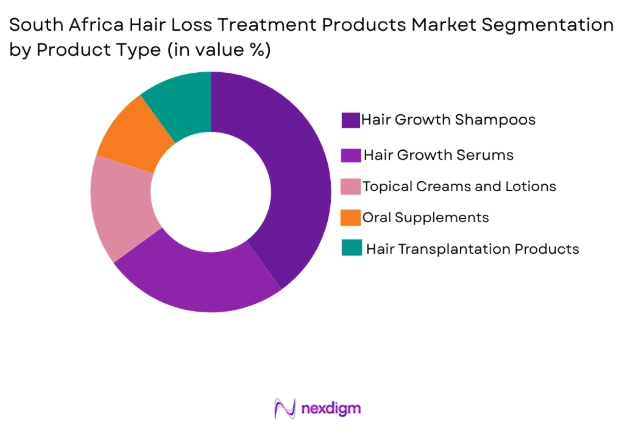
The South Africa Hair Loss Treatment Products Market is segmented by product type into hair growth shampoos, hair growth serums, topical creams and lotions, oral supplements, and hair transplantation products. Among these, hair growth shampoos hold the dominant market share in 2024. This segment’s dominance is attributed to the widespread use of shampoos as a daily grooming routine, making them an easy and accessible choice for consumers. Additionally, various well-established brands offer specialized hair growth shampoos that have earned consumer trust. The increasing demand for convenient and non-invasive treatments continues to support the growth of this segment.
By Distribution Channel Type
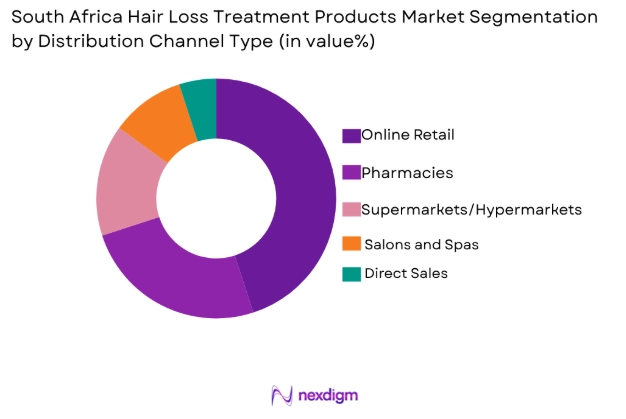
The distribution channels for hair loss treatment products in South Africa include online retail, pharmacies, supermarkets/hypermarkets, salons and spas, and direct sales. Online retail is the dominant channel in 2024, reflecting a global shift toward e-commerce and the convenience it offers. The growth of online shopping platforms and the increase in internet penetration in South Africa have contributed to this dominance. Consumers prefer buying hair loss treatment products online due to ease of access to a wider range of brands, competitive pricing, and doorstep delivery options.
Competitive Landscape
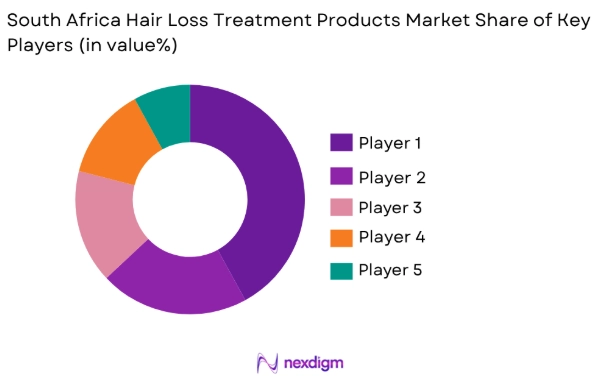
The South Africa Hair Loss Treatment Products Market is moderately concentrated, with several global and local players competing for market share. Leading brands like Rogaine, Hairmax, and Alpecin have established a strong presence due to their effective formulations and brand recognition. Local manufacturers also hold a significant portion of the market due to the demand for affordable products tailored to local preferences. Companies leverage innovation, research and development, and effective marketing strategies to differentiate themselves in this competitive landscape.
| Company | Establishment Year | Headquarters | Revenue (2024) | Key Products | Market Reach | Distribution Channels |
| Rogaine | 1988 | USA | ~ | ~ | ~ | ~ |
| Hairmax | 1997 | USA | ~ | ~ | ~ | ~ |
| Alpecin | 1905 | Germany | ~ | ~ | ~ | ~ |
| Regenix | 2000 | USA | ~ | ~ | ~ | ~ |
| Kerastase | 1964 | France | ~ | ~ | ~ | ~ |
South Africa Hair Loss Treatment Products Market Analysis
Growth Drivers
Increasing Male Grooming Trends
The increasing focus on male grooming is one of the primary growth drivers for the South Africa Hair Loss Treatment Products Market. With rising disposable income and changing attitudes towards personal appearance, more men are investing in grooming and hair care products. In 2023, South Africa saw a 19% increase in male consumer spending on personal care, with hair care products being a significant segment. Additionally, South Africa’s male population, which was over 25 million in 2023, is increasingly conscious of hair health, leading to a rise in demand for hair loss treatments. This trend is also driven by the growth of male-centric beauty salons and spas in urban areas.
Growing Focus on Personal Care and Aesthetics
South Africa’s growing focus on personal care and aesthetics is helping to fuel demand for hair loss treatment products. The country’s middle class, which is expected to grow by 3.5% annually, is becoming more invested in self-care routines. In 2023, personal care spending in South Africa increased by 10% year-on-year, reflecting a shift towards quality health and beauty products. The beauty industry is expected to benefit from the urban population’s rising income levels, which allows consumers to spend more on premium hair care and restoration treatments.
Market Challenges
High Cost of Advanced Treatments
The high cost of advanced hair loss treatments presents a significant challenge in the South Africa Hair Loss Treatment Products Market. For example, advanced hair restoration methods, such as hair transplants, can cost upwards of R30,000 (approx. USD 1,800), which limits accessibility for many consumers. The average South African salary, which was around R24,000 per month in 2023, means that many potential customers cannot afford these premium treatments. This economic divide is exacerbated in rural areas, where incomes are lower. As a result, while there is demand for hair restoration products, high treatment costs restrict broader market growth.
Lack of Awareness in Rural Areas
A significant challenge for the South Africa Hair Loss Treatment Products Market is the lack of awareness of available hair loss treatments in rural areas. Approximately 30% of South Africa’s population resides in rural areas, where access to hair care information and products is limited. Moreover, only 52% of rural households have internet access, restricting exposure to online hair care solutions and treatments. In 2023, rural areas accounted for less than 15% of total sales in the hair care market, indicating a clear gap in market penetration.
Opportunities
Rising Interest in Natural and Organic Products
The South African market is seeing a rising interest in natural and organic hair loss treatments, driven by a growing trend towards holistic health and sustainability. The organic beauty product market in South Africa is growing at a steady pace, with an increase of 7% in demand in 2023 alone. This shift is supported by a broader global move toward eco-conscious and chemical-free products. According to a report by South African Health Products Regulatory Authority (SAHPRA), 28% of new hair care product launches in the country in 2023 were formulated with organic or natural ingredients. This consumer preference for natural and organic options presents a strong opportunity for brands offering such products.
Growth of E-Commerce Platforms
The expansion of e-commerce platforms is providing a significant opportunity for growth in the South Africa Hair Loss Treatment Products Market. As of 2023, over 65% of South African internet users have made at least one online purchase in the last year, and the country’s e-commerce market continues to grow by an average of 10% annually. Online retail channels are increasingly popular for purchasing hair loss treatments due to convenience, better pricing, and wider product availability. The shift towards digital shopping is expected to contribute to the expansion of the hair loss treatment product market in the coming years, especially among younger and tech-savvy consumers.
Future Outlook
Over the next 5 years, the South Africa Hair Loss Treatment Products Market is expected to show considerable growth, driven by an increasing inclination towards personal care, technological advancements in non-invasive hair loss treatments, and rising disposable incomes. The continuous development of new formulations that cater to different hair types and preferences will further propel market growth. Additionally, the growing adoption of e-commerce platforms and a rise in consumer awareness will contribute to the market’s expansion during this forecasted period.
Major Players
- Rogaine
- Hairmax
- Alpecin
- Regenix
- Kerastase
- Nioxin
- Pura d’or
- Shiseido
- Neutrogena
- Zydus
- L’Oréal Professional
- Provillus
- P&G
- Genetech
- DHT Laboratories
Key Target Audience
- Investments and venture capitalist firms
- Government and regulatory bodies
- Hair restoration clinics and beauty salons
- Pharmaceutical companies involved in the production of personal care products
- E-commerce companies dealing with health and wellness products
- Retailers and distributors of health and beauty products
- Hair care product manufacturers
- Dermatologists and hair specialists
Research Methodology
Step 1: Identification of Key Variables
The first step involves mapping the key variables that impact the South Africa Hair Loss Treatment Products Market, including consumer behavior, product adoption rates, and the competitive environment. This process includes extensive secondary research and utilizing industry reports, surveys, and data analysis to identify the variables.
Step 2: Market Analysis and Construction
We gather and analyze historical data regarding market trends, consumer preferences, and distribution channel performance. This analysis helps identify how the market has evolved over the past years and forms a basis for forecasting future trends. We also assess the market share for major product types and regions.
Step 3: Hypothesis Validation and Expert Consultation
In this phase, hypotheses regarding market dynamics are validated through consultations with industry experts. These interviews provide critical insights into consumer preferences, market challenges, and growth drivers, thus refining the initial research assumptions.
Step 4: Research Synthesis and Final Output
The final phase includes compiling all gathered insights into a comprehensive report, synthesizing the data into actionable conclusions. Direct consultations with companies and distributors also help in validating the data, ensuring its accuracy for the final output.

- Executive Summary
- Research Methodology (Market Definitions and Assumptions, Abbreviations, Market Sizing Approach, Consolidated Research Approach, Understanding Market Potential Through In-Depth Industry Interviews, Primary Research Approach, Limitations and Future Conclusions)

- Definition and Scope
- Market Genesis
- Timeline of Major Players
- Business Cycle
- Supply Chain and Value Chain Analysis

- Growth Drivers
Increasing Male Grooming Trends
Growing Focus on Personal Care and Aesthetics
- Market Challenges
High Cost of Advanced Treatments
Lack of Awareness in Rural Areas
- Opportunities
Rising Interest in Natural and Organic Products
Growth of E-Commerce Platforms
- Trends
Increasing Use of Non-Invasive Treatments
Integration of Artificial Intelligence in Treatment Planning
Popularity of Personalized Hair Loss Solutions - Government Regulations
Import Tariffs and Duties
FDA and Local Compliance Regulations
Quality Assurance Standards - SWOT Analysis
- Stakeholder Ecosystem
- Porter’s Five Forces
- Competition Ecosystem

- By Value, 2020-2025
- By Volume, 2020-2025
- By Average Price, 2020-2025

- By Product Type (In Value %)
Hair Growth Shampoos
Hair Growth Serums
Topical Creams and Lotions
Oral Supplements
Hair Transplantation Products - By Distribution Channel (In Value %)
Online Retail
Pharmacies
Supermarkets/Hypermarkets
Salons and Spas
Direct Sales - By End User (In Value %)
Male
Female
Unisex - By Age Group (In Value %)
18-34 Years
35-44 Years
45-59 Years
60+ Years - By Region (In Value %)
Gauteng
Western Cape
KwaZulu-Natal
Eastern Cape
Free State

- Market Share of Major Players by Value/Volume
- Market Share by Product Type Segment
- Cross Comparison Parameters (Company Overview, Business Strategies, Recent Developments, Strengths, Weaknesses, Organizational Structure, Revenues, Revenues by Product Type, Number of Touchpoints, Distribution Channels, Number of Dealers and Distributors, Margins, Production Plant, Capacity, Unique Value Offering, and Others)
- SWOT Analysis of Major Players
- Pricing Analysis by SKUs for Major Players
- Detailed Profiles of Major Companies
DHT Laboratories
Genetech
Hairmax
Alpecin
Regenix
Kerastase
Nioxin
Rogaine
Provillus
Pura d’or
L’Oréal Professional
Shiseido
Neutrogena
Zydus
P&G (Head & Shoulders)

- Market Demand and Utilization
- Purchasing Power and Budget Allocations
- Regulatory and Compliance Requirements
- Needs, Desires, and Pain Point Analysis
- Decision-Making Process

- By Value, 2026-2035
- By Volume, 2026-2035
- By Average Price, 2026-2035


 Request a Sample
 Ask for Customization
 Get a Quote
 Enquire Now