

 Download PDF
Market Overview
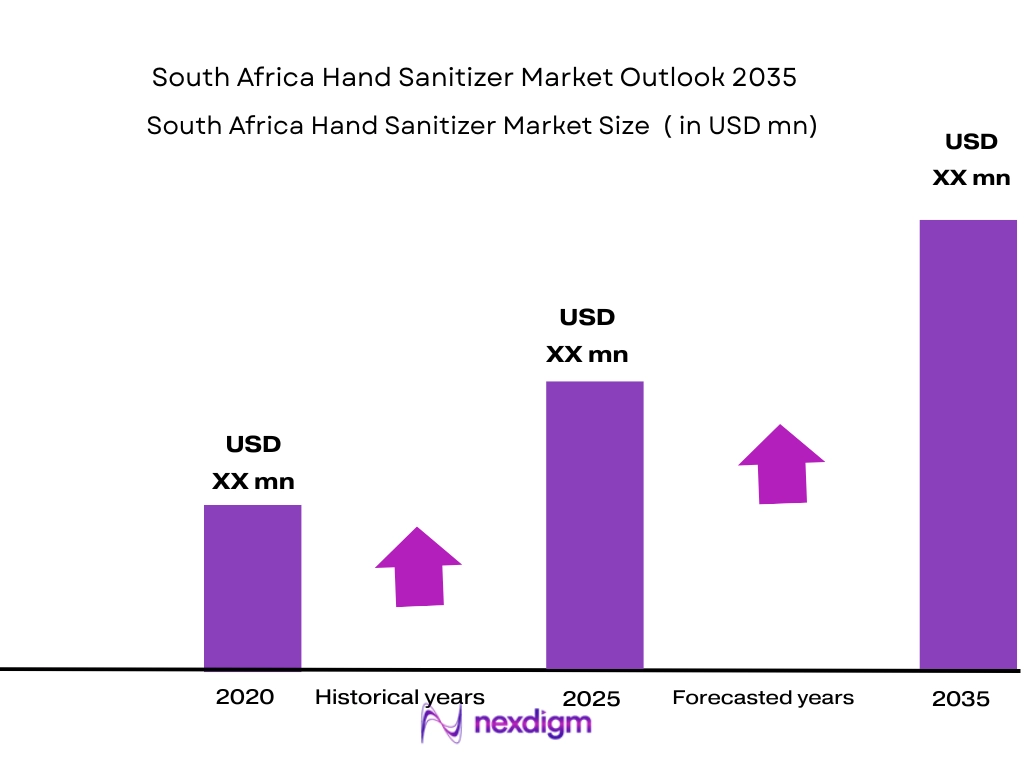
The South Africa hand sanitizer market is witnessing substantial growth, fueled by an increasing focus on hygiene practices and infection control. Based on a recent historical assessment, the market size has reached approximately USD ~ million. This growth is primarily driven by rising health concerns and the expansion of healthcare and commercial sectors. Additionally, the growing awareness of disease transmission and the demand for portable hygiene products have contributed significantly to this market’s performance. Moreover, the growth of the retail and pharmaceutical industries has led to greater availability and access to sanitizers, making them a staple in households and businesses.
The demand for hand sanitizers is highly concentrated in metropolitan areas, with key dominance in regions such as Gauteng, Western Cape, and KwaZulu-Natal. This dominance is driven by the higher concentration of healthcare infrastructure, urban population density, and economic activity in these regions. These cities have witnessed the highest consumption due to a combination of factors such as public health initiatives, large-scale retail chains, and greater awareness of personal hygiene. Furthermore, the prevalence of corporate offices, public institutions, and healthcare facilities in these areas ensures a continuous demand for hygiene products like hand sanitizers.
Market Segmentation
By Product Type
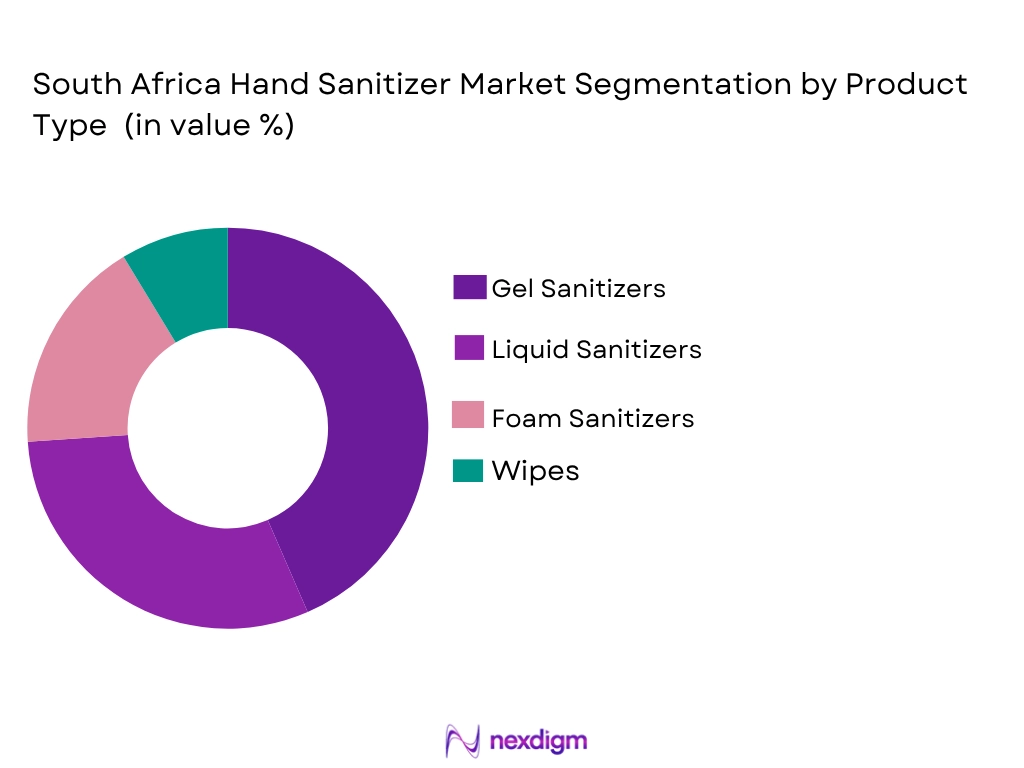
The South Africa hand sanitizer market is segmented by product type into gel sanitizers, foam sanitizers, liquid sanitizers, and wipes. Recently, gel sanitizers have dominated the market share due to their ease of use and widespread consumer preference. Gel formulations are often preferred for their quick absorption and non-greasy finish, making them ideal for both personal and professional use. The popularity of gel sanitizers is also linked to their high availability in retail outlets, as well as their compatibility with portable dispensers commonly used in offices, public spaces, and healthcare settings.
By Ingredient Type
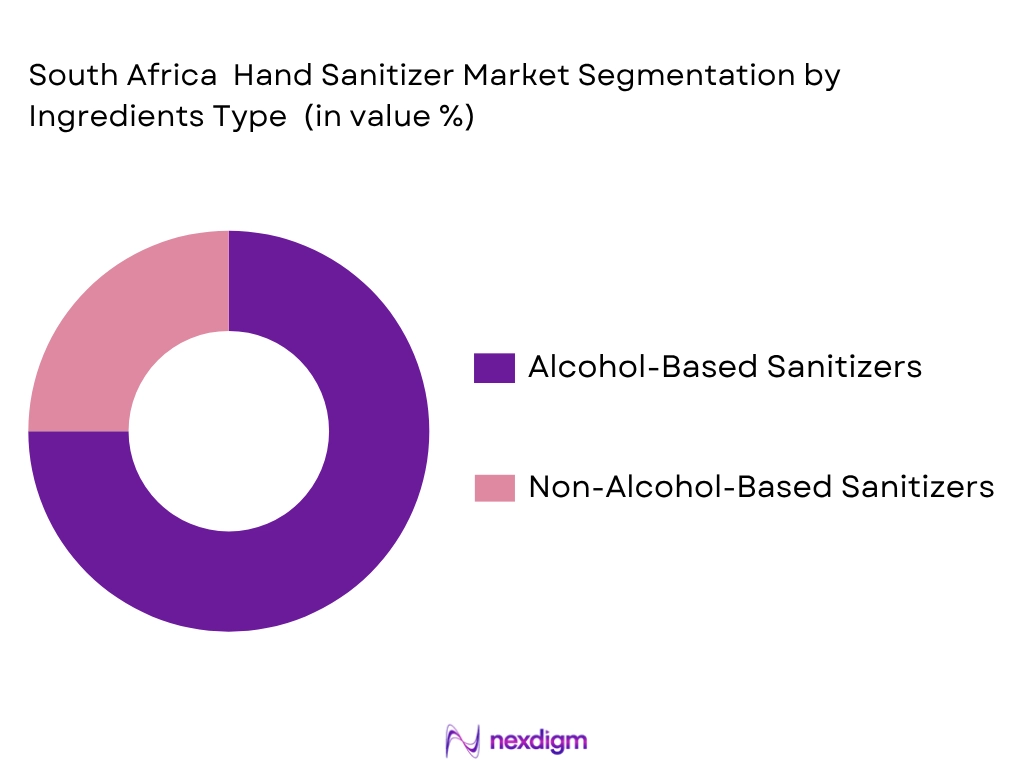
The market is further segmented by ingredient type into alcohol-based sanitizers and non-alcohol-based sanitizers. Alcohol-based sanitizers have a dominant market share due to their proven efficacy in killing germs and viruses. The high demand for alcohol-based products can be attributed to their widespread acceptance across healthcare facilities, industrial environments, and households. These sanitizers are also seen as more effective in controlling infections, leading to their preference in environments with a higher risk of contamination, such as hospitals and public transportation systems.
Competitive Landscape
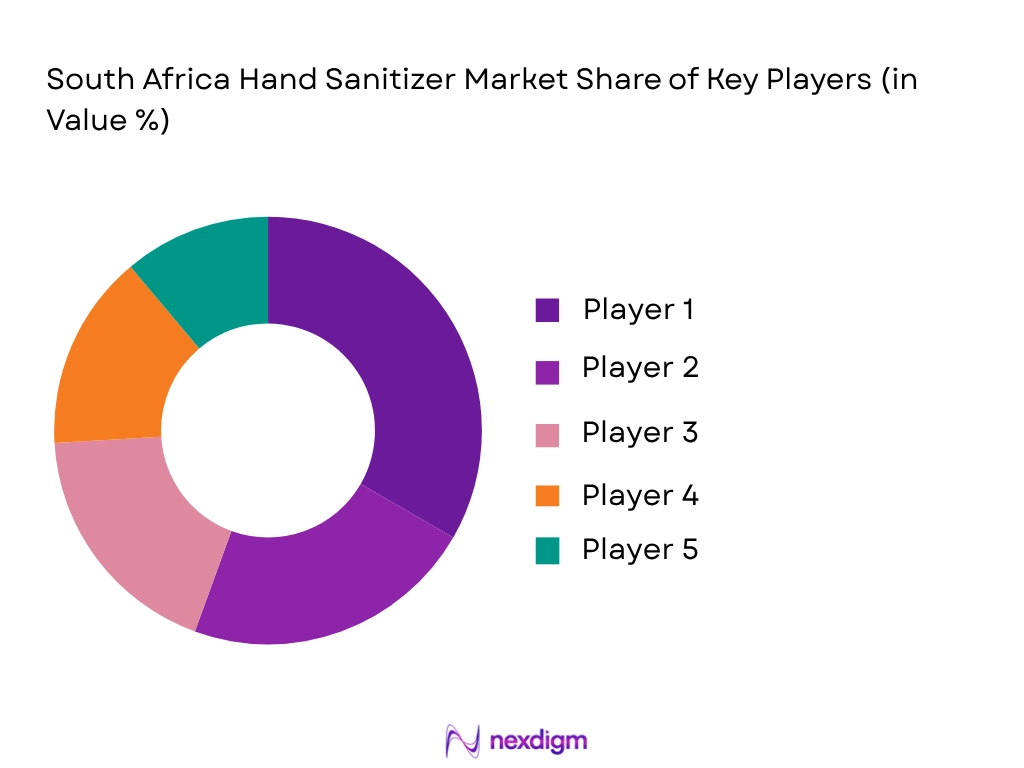
The competitive landscape of the South Africa hand sanitizer market is marked by moderate consolidation, with key players such as Reckitt Benckiser, Procter & Gamble, and GOJO Industries playing a dominant role. These companies influence the market through their established brand presence, advanced technology, and extensive distribution networks. Additionally, smaller local players are gaining ground by focusing on niche markets, organic formulations, and cost-effective pricing strategies. The market is characterized by a high level of product differentiation, with various brands offering innovative packaging, scent options, and additional skin-care benefits.
| Company Name | Establishment Year | Headquarters | Technology Focus | Market Reach | Key Products | Revenue (USD) |
| Reckitt Benckiser Group | 1823 | United Kingdom | ~ | ~ | ~ | ~ |
| Procter & Gamble | 1837 | United States | ~ | ~ | ~ | ~ |
| GOJO Industries | 1946 | United States | ~ | ~ | ~ | ~ |
| Unilever | 1929 | United Kingdom | ~ | ~ | ~ | ~ |
| Henkel | 1876 | Germany | ~ | ~ | ~ | ~ |
South Africa Hand Sanitizer Market Analysis
Growth Drivers
Rising Awareness of Hygiene and Infection Prevention:
Over the years, the growing awareness regarding hygiene and infection prevention has significantly driven the demand for hand sanitizers in South Africa. The rising incidence of communicable diseases, coupled with the global health crises like the COVID-19 pandemic, has accentuated the need for effective and accessible hygiene solutions. Public health campaigns and educational efforts have emphasized the importance of hand sanitization in preventing the spread of infections, thus fostering an increase in the adoption of hand sanitizers in various sectors, including healthcare, industrial, and retail. Moreover, the increasing adoption of hygiene protocols in workplaces, public spaces, and educational institutions has bolstered this growth. Consumers are now more likely to carry portable sanitizers, which has also led to an increase in demand for smaller, convenient packaging.
Growth of the Retail and Pharmaceutical Sectors
The expansion of the retail and pharmaceutical sectors in South Africa has further accelerated the growth of the hand sanitizer market. With the increase in the number of pharmacies, supermarkets, and convenience stores, there has been greater access to hygiene products, including hand sanitizers. Retail chains are now stocking various sanitizer brands in multiple forms, catering to both budget-conscious and premium consumers. Additionally, the growing availability of sanitizers in health and beauty stores has broadened the reach of the product to a diverse range of consumers. Pharmaceutical companies, in particular, have played a crucial role in promoting sanitizers as part of regular hygiene practices, providing both medicinal and non-medical consumers with easy access to hand hygiene solutions.
Market Challenges
High Dependence on Imported Raw Materials
One of the main challenges facing the South Africa hand sanitizer market is the high dependence on imported raw materials. Ingredients such as alcohol, essential oils, and other chemicals required for hand sanitizer production are often sourced from international suppliers. This dependency exposes the local market to the volatility of global supply chains and fluctuations in material costs. Any disruption in global supply chains, whether due to geopolitical issues, trade policies, or natural disasters, can lead to shortages and increased prices for essential raw materials. Furthermore, the quality and availability of these imports can directly affect production timelines and the ability of local manufacturers to meet increasing demand. The reliance on international suppliers also limits the capacity for localized production, creating potential vulnerabilities within the South African market.
Regulatory Compliance and Standardization
Another significant challenge within the South Africa hand sanitizer market is the regulatory compliance and standardization requirements set by local and international authorities. Ensuring that hand sanitizers meet safety and quality standards is critical, especially for products used in healthcare settings or by vulnerable populations. Regulatory bodies such as the South African Bureau of Standards (SABS) and the Department of Health have stringent guidelines regarding the formulation, labeling, and packaging of hand sanitizers. Manufacturers must comply with these regulations, which can result in increased operational costs and delays in product approvals. Additionally, the market’s fragmented nature, with both large multinational players and smaller local manufacturers, creates inconsistencies in regulatory adherence, which could affect the overall market quality and consumer trust.
Opportunities
Growth in Natural and Organic Products
There is a growing demand for natural and organic hand sanitizers, driven by the increasing awareness of health and environmental concerns. Consumers are becoming more selective about the ingredients in their hygiene products, opting for items that are free from synthetic chemicals, artificial fragrances, and preservatives. This trend presents an opportunity for manufacturers to develop and market organic, eco-friendly sanitizers that cater to health-conscious consumers. The rise in preference for natural alternatives is also linked to the broader wellness movement, where people are increasingly seeking products that promote overall well-being. This shift opens doors for new product innovations and formulations that incorporate plant-based ingredients, essential oils, and other natural substances. As consumer preferences evolve, manufacturers who can adapt and create sustainable products will capture a significant share of the market.
Increasing Demand for Travel-Sized Products
The demand for travel-sized hand sanitizers has seen an upward trajectory, offering a significant opportunity for market expansion. With the rising focus on convenience and portability, particularly in the post-pandemic era, consumers are seeking hygiene products that can easily fit into bags, backpacks, and car consoles. Travel-sized sanitizers are particularly popular among commuters, travelers, and individuals on the go who require a quick solution for maintaining hygiene. The availability of sanitizers in compact sizes has made it easier for consumers to integrate them into their daily routines, even outside of traditional spaces like healthcare settings. Retailers and manufacturers are capitalizing on this demand by offering smaller, more affordable sanitizer packages, which have become staples in both urban and rural markets.
Future Outlook
The future of the South Africa hand sanitizer market looks promising, with expected growth driven by continued consumer demand for hygiene products and ongoing developments in the healthcare sector. Technological advancements are likely to introduce new formulations and packaging solutions, such as antimicrobial coatings and recyclable materials. Regulatory support and the continued emphasis on hygiene practices will further encourage market growth. Additionally, the rising adoption of hand sanitizers in public spaces, schools, and offices will contribute to a sustained upward trajectory. The market is also expected to see increased competition and innovation, with more local and international players entering the space.
Major Players
- Reckitt Benckiser Group
- Procter & Gamble
- GOJO Industries
- Unilever
- Henkel
- SC Johnson Professional
- Diversey Holdings
- Medline Industries
- Ecolab
- Kimberly-Clark Corporation
- Kimberly-Clark Professional
- Lavo Group
- Lion Corporation
- Myra Vira Care
- PHS Group
Key Target Audience
- Investments and venture capitalist firms
- Government and regulatory bodies
- Healthcare providers and hospitals
- Supermarket chains
- Retail and online stores
- Pharmaceutical companies
- Logistics and distribution companies
- Manufacturers of personal care products
Research Methodology
Step 1: Identification of Key Variables
This step involves identifying the critical factors that influence market growth, such as product types, ingredient preferences, and consumer trends.
Step 2: Market Analysis and Construction
In this phase, data is gathered on market size, segmentation, and the overall landscape using both primary and secondary sources.
Step 3: Hypothesis Validation and Expert Consultation
This step validates the research hypotheses through consultations with industry experts, ensuring the accuracy of insights.
Step 4: Research Synthesis and Final Output
Finally, the collected data is synthesized into a comprehensive report, highlighting trends, challenges, and opportunities in the market.

- Executive Summary
- Research Methodology (Market Definitions and Assumptions, Abbreviations, Market Sizing Approach, Consolidated Research Approach, Understanding Market Potential Through In-Depth Industry Interviews, Primary Research Approach, Limitations and Future Conclusions)

- Definition and Scope
- Market Dynamics Overview
- Market Genesis
- Major Players and Market Timeline
- Business Cycle and Trends
- Supply Chain and Value Chain Analysis

- Growth Drivers
Rising Awareness of Hygiene and Infection Prevention
Increasing Demand in Healthcare and Industrial Sectors
Growth in Retail and Commercial Spaces
Shift Toward Convenient and Portable Sanitizing Solutions - Market Challenges
Dependence on Imported Raw Materials
Price Sensitivity and Competitive Market Environment
Regulatory Compliance and Standardization
Fluctuations in Alcohol and Other Ingredient Supply - Opportunities
Growing Demand for Natural and Organic Ingredients
Rising Focus on Eco-Friendly and Biodegradable Packaging
Expanding Distribution Networks in Rural and Underserved Areas
Introduction of New Product Forms and Innovations - Key Trends
Increased Preference for Alcohol-Free Hand Sanitizers
Rise in Multi-Purpose Sanitizers (Including Surface and Skin Use)
Adoption of Travel-Sized and Convenient Sanitizing Products
Increased Demand for Sustainable Packaging Solutions - Government Regulations
- SWOT Analysis
- Porter’s Five Forces

- By Value, 2020–2025
- By Volume, 2020–2025
- By Average Price, 2020–2025

- By Product Type (In Value %)
Gel Sanitizers
Foam Sanitizers
Liquid Sanitizers
Wipes - By Ingredient Type (In Value %)
Alcohol-Based Sanitizers
Non-Alcohol-Based Sanitizers - By Application (In Value %)
Healthcare
Industrial
Household and Personal Care
Commercial Spaces
Retail and Public Places - By Distribution Channel (In Value %)
Direct Sales
Distributors and Wholesalers
Retail Pharmacies
Online Channels - By Region (In Value %)
Gauteng
Western Cape
KwaZulu-Natal
Eastern Cape
Rest of South Africa

- Market Share of Major Players by Value/Volume
- Market Share of Major Players by Product Type
- Cross Comparison Parameters (Company Overview, Business Strategies, Recent Developments, Strength, Weakness, Organizational Structure, Revenues, Revenues by Product Type, Number of Touchpoints, Distribution Channels, Number of Dealers and Distributors, Margins, Production Plant, Capacity, Unique Value Offering, and Others)
- SWOT Analysis of Major Players
- Pricing Analysis Based on Product Categories for Major Players
- Detailed Profiles of Major Companies
Reckitt Benckiser Group
Procter & Gamble
GOJO Industries
Kimberly-Clark Corporation
Unilever
Henkel
SC Johnson Professional
Ecolab
Diversey Holdings
Medline Industries

- Market Demand and Utilization
- Purchasing Power and Budget Allocations
- Regulatory and Compliance Requirements
- Needs, Desires, and Pain Point Analysis
- Decision-Making Process

- By Value, 2026–2035
- By Volume, 2026–2035
- By Average Price, 2026–2035


 Request a Sample
 Ask for Customization
 Get a Quote
 Enquire Now