

 Download PDF
Market Overview
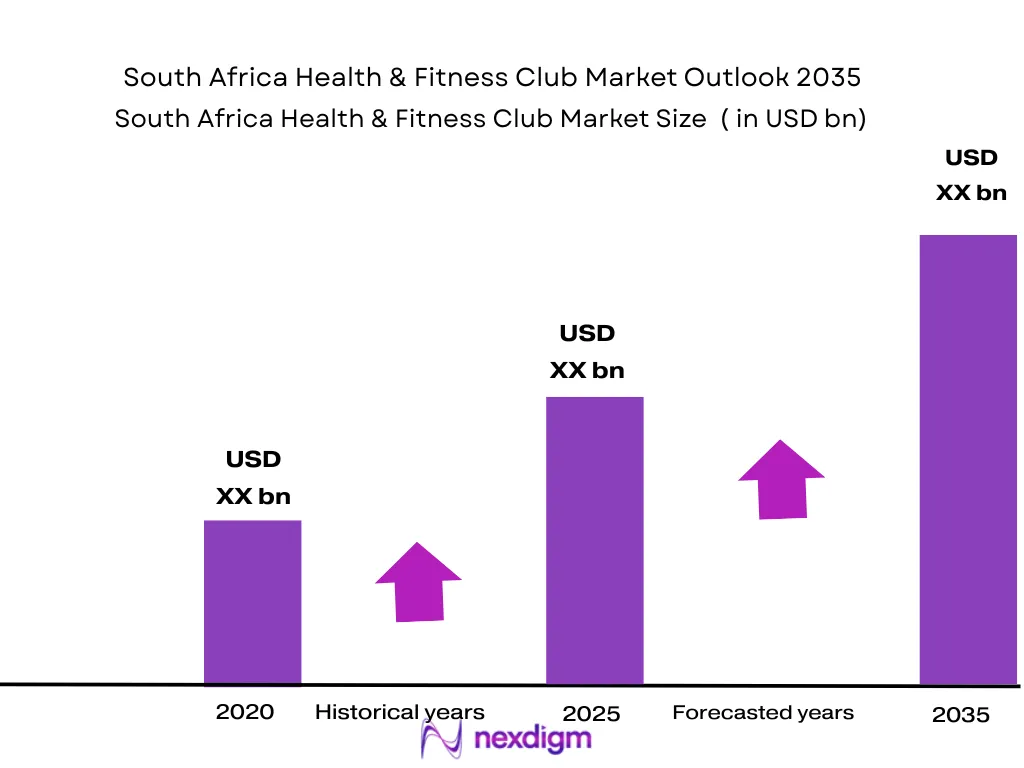
The South Africa health and fitness club market recorded revenues of USD ~ billion, with revenues calculated from membership fees paid to gyms, health clubs, and fitness clubs. Recent market growth has been driven by rising health awareness, higher demand for personal training and wellness programs, and increased consumer spending on structured exercise as part of preventive healthcare and lifestyle management.
Johannesburg, Pretoria, Cape Town, Durban, and other large urban centers dominate the market because they concentrate higher-income consumers, commercial real estate, corporate wellness demand, and national club networks. Virgin Active highlights coverage across Cape Town, Johannesburg, Sandton, Pretoria, Durban, East London, Gqeberha, Bloemfontein, Mbombela, and other locations, while Zone Fitness shows a dense Western Cape footprint, reinforcing the dominance of metropolitan and commuter-linked club locations.
Market Segmentation
By Club Type
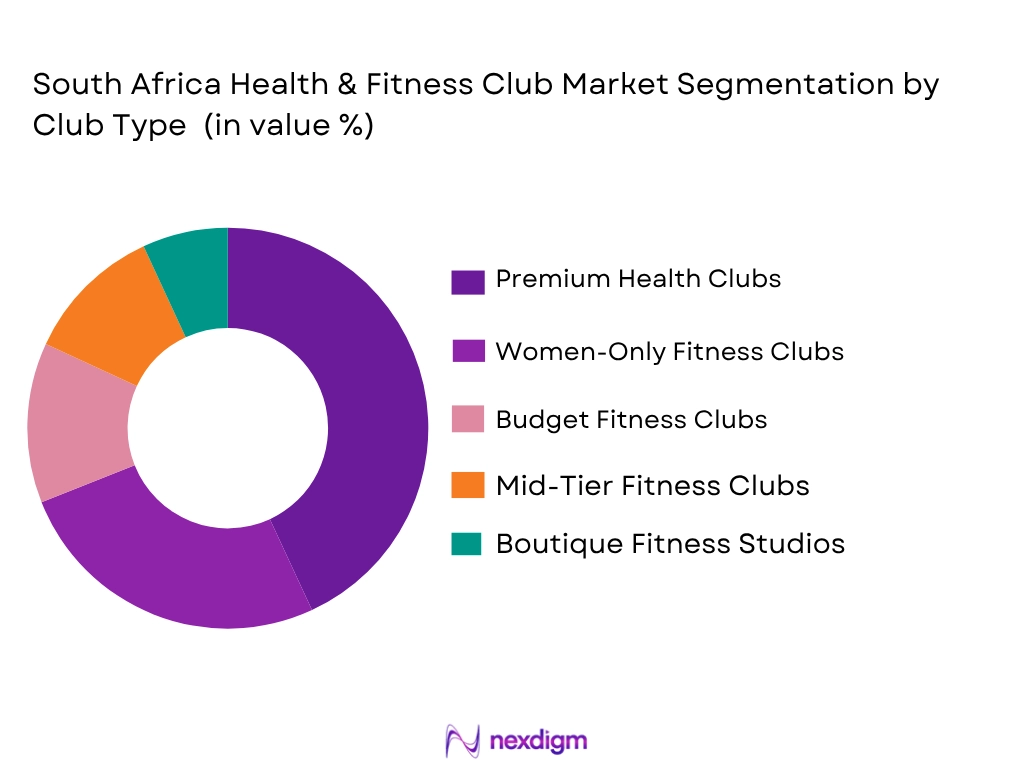
South Africa Health & Fitness Club market is segmented by club type into premium health clubs, budget fitness clubs, mid-tier fitness clubs, boutique fitness studios, women-focused clubs, and wellness-integrated clubs. Recently, premium and full-service health clubs have maintained a dominant position due to strong brand recognition, wide facility offerings, swimming pools, group classes, personal training, and location presence in affluent urban areas. However, budget and mid-tier clubs are expanding rapidly as consumers seek lower monthly fees and flexible memberships. Because credible public sources do not disclose official 2024 club-type market shares for South Africa, the split below should be treated as a working market model, not a published audited dataset.
By Service Type
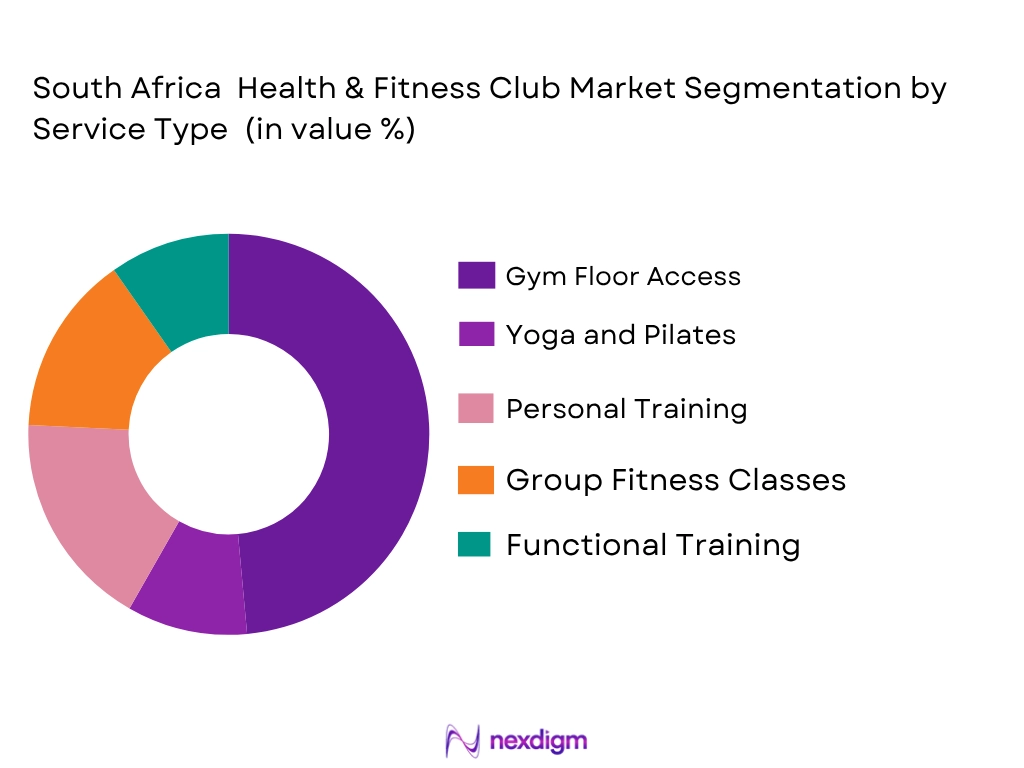
South Africa Health & Fitness Club market is segmented by service type into gym floor access, personal training, group fitness classes, yoga and Pilates, functional training, and wellness and recovery services. Recently, gym floor access has held the dominant market position because most memberships are built around recurring access to equipment, cardio areas, weights, changing facilities, and general club infrastructure. Personal training and group classes add incremental revenue, but they are often layered on top of standard memberships rather than replacing them. As with club type, public sources do not disclose official 2024 service-type market-share percentages; the table is a structured working allocation for report drafting.
Competitive Landscape
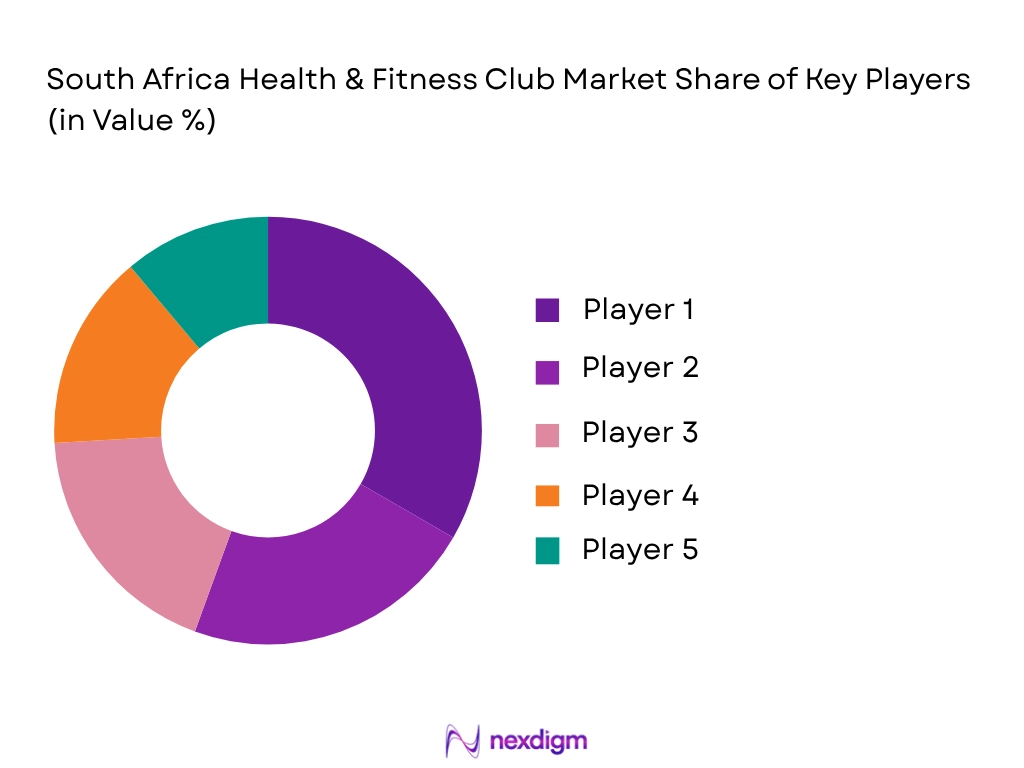
The South Africa Health & Fitness Club market is moderately consolidated at the top, with Virgin Active, Planet Fitness, and Zone Fitness maintaining strong brand visibility and broad physical footprints. MarketLine identifies Virgin Active, Anytime Fitness, Gold’s Gym International, and Zone Fitness among leading players in the South African gyms, health and fitness clubs profile, while Virgin Active reports more than 130 clubs across Southern Africa and Planet Fitness operates across several major provinces.
| Company Name | Establishment Year | Headquarters | Technology Focus | Market Reach | Key Products | Revenue | Club Footprint / Market-Specific Parameter |
| Virgin Active | 1998 | London, UK | Apps, online workouts, digital engagement | ~ | ~ | ~ | ~ |
| Planet Fitness South Africa | 1995 | Johannesburg, South Africa | Club locator, digital member services | ~ | ~ | ~ | ~ |
| Zone Fitness | 2002 | Cape Town, South Africa | Mobile app and digital member support | ~ | ~ | ~ | ~ |
| Anytime Fitness | 2002 | Woodbury, Minnesota, US | 24/7 access systems, member app | ~ | ~ | ~ | ~ |
| Gold’s Gym International | 1965 | Dallas, Texas, US | App-based training and digital fitness support | ~ | ~ | ~ | ~ |
South Africa Health & Fitness Club Market Analysis
Growth Drivers
Rise in Corporate Wellness Programs
Rise in corporate wellness programs is supporting the South Africa health and fitness club market as employers increasingly focus on employee productivity, absenteeism reduction, and workplace well-being. Companies are partnering with fitness clubs to provide discounted memberships, wellness assessments, group fitness sessions, and structured health challenges. This creates a steady institutional customer base for club operators and improves membership retention through employer-backed engagement. Corporate clients also prefer fitness partners that offer flexible access, digital tracking, and wellness reporting. As mental health, stress management, and lifestyle disease prevention become stronger workplace priorities, fitness clubs are positioned as practical wellness partners for businesses across major urban centers.
Expansion of Budget Fitness Clubs
Expansion of budget fitness clubs is widening access to structured fitness services in South Africa, especially among students, young professionals, and middle-income consumers. Rising living costs have made affordability a key factor in membership decisions, encouraging demand for value-based gyms with lower monthly fees and essential facilities. Budget clubs typically focus on cardio equipment, strength training areas, flexible contracts, and convenient locations rather than luxury amenities. This model helps operators attract high membership volumes and expand into commuter zones, malls, and dense residential areas. As consumers seek fitness options that fit household budgets, budget clubs are expected to play a major role in market penetration.
Challenges
Infrastructure and Real Estate Cost Constraints
Infrastructure and real estate cost constraints remain a major challenge for South Africa’s health and fitness club operators. Clubs require large, accessible spaces with reliable utilities, ventilation, security, parking, and suitable equipment layouts, which increases setup and operating costs. Prime urban locations in malls, business districts, and affluent suburbs often carry high rental expenses, making profitability dependent on strong membership volumes. Operators also face costs linked to equipment maintenance, backup power, facility upgrades, and compliance with health and safety expectations. These pressures can limit expansion into smaller cities and underserved areas where demand exists but revenue potential may not justify full-scale club investment.
Member Retention and Subscription Renewal Challenges
Member retention and subscription renewal challenges affect recurring revenue stability in South Africa’s health and fitness club market. Many consumers join clubs with strong initial motivation but reduce attendance after a few months due to time constraints, lack of visible results, cost pressure, or low engagement. When members do not perceive regular value, they are more likely to cancel, downgrade, or shift to cheaper alternatives. This increases acquisition costs for operators, as new members must constantly replace dropouts. Clubs need onboarding support, progress tracking, personalized training, loyalty benefits, and active communication to sustain participation. Retention is therefore as important as new membership sales.
Opportunities
Increasing Adoption of Hybrid Fitness Models
Increasing adoption of hybrid fitness models creates strong opportunities for South African health and fitness clubs by combining physical club access with digital workouts, livestream classes, mobile apps, and virtual coaching. This model supports members who travel, work remotely, or cannot visit clubs regularly. Hybrid services also extend customer engagement beyond the gym floor and help operators improve retention. Clubs can use digital platforms for class booking, workout plans, progress tracking, and member communication. By offering both in-person and online services, operators can serve a wider audience and create additional subscription revenue. Hybrid models also help clubs compete with standalone fitness apps.
Opportunities in Women’s-Only Fitness Clubs and Boutique Studios
Opportunities in women’s-only fitness clubs and boutique studios are growing as consumers seek more personalized, comfortable, and community-driven fitness environments. Women-focused clubs can address privacy, safety, cultural comfort, beginner support, and tailored programming needs. Boutique studios can specialize in Pilates, yoga, strength training, cycling, boxing, functional fitness, or recovery-led programs. These formats attract members who prefer smaller classes, expert instructors, and stronger social engagement compared to large traditional gyms. Operators can position these clubs in urban neighborhoods, malls, residential areas, and mixed-use developments. As demand for specialized fitness experiences rises, women-focused and boutique formats can support premium pricing and stronger loyalty.
Future Outlook
The South Africa Health & Fitness Club market is expected to evolve through broader urban participation, more flexible membership pricing, and stronger adoption of digital fitness tools. Growth is likely to be shaped by budget clubs, hybrid training, app-based retention systems, and corporate wellness partnerships. Operators are expected to invest in differentiated formats, including premium wellness clubs, compact value gyms, and women-focused studios. Regulatory attention around consumer contracts, health and safety, and professional service standards will remain relevant as memberships and digital services expand.
Major Players
- Virgin Active
- Planet Fitness
- Zone Fitness
- Anytime Fitness
- Gold’s Gym
- Moove Motion Fitness Club
- Ignite Fitness
- JustGym
- Fit24Gyms
- Body Action Gym
- Viva Gym
- Curves South Africa
- CrossFit-affiliated clubs
- BODYTEC South Africa
- F45 Training South Africa
Key Target Audience
- Fitness club operators
- Gym franchise owners
- Real estate developers
- Shopping mall owners and operators
- Corporate wellness providers
- Medical aid and insurance companies
- Investments and venture capitalist firms
- Government and regulatory bodies
Research Methodology
Step 1: Identification of Key Variables
The research began by identifying core variables such as club revenues, membership fee structures, operator footprint, urban concentration, service mix, and consumer participation drivers. Publicly available company information, industry profiles, and macroeconomic indicators were reviewed to define the market scope.
Step 2: Market Analysis and Construction
The market was assessed using reported industry revenue, club-network presence, operator positioning, and demand-side indicators. Segmentation was constructed using market logic, operator service models, and observed positioning across premium, budget, mid-tier, boutique, and wellness formats.
Step 3: Hypothesis Validation and Expert Consultation
The market structure was validated through cross-checking public sources, company footprints, and available industry profiles. Where official segmentation data was not publicly disclosed, modeled splits were clearly treated as working assumptions rather than audited figures.
Step 4: Research Synthesis and Final Output
The final output combined sourced market-size evidence, competitive mapping, demand drivers, challenges, and future opportunities. The report was structured for strategic use by operators, investors, landlords, wellness providers, and public-sector stakeholders.

- Executive Summary
- Research Methodology (Market Definitions and Assumptions, Abbreviations and Terminology, Data Sources and Validation Approach, South Africa Health & Fitness Club Market Sizing Methodology, Primary and Secondary Research Benchmarks, Market Reliability and Confidence Intervals)

- Industry Definition and Scope
- Market Genesis and Evolution in South Africa
- Consumer Adoption Patterns
- Market Value Chain and Distribution Architecture
- Import and Export Dynamics

- Growth Drivers
Rise in Corporate Wellness Programs
Shift Toward Digital Fitness and Virtual Services
Expansion of Budget Fitness Clubs
Growing Demand for Boutique and Specialized Fitness Formats - Challenges
Consumer Education and Awareness Gaps
Infrastructure and Real Estate Cost Constraints
Member Retention and Subscription Renewal Challenges - Opportunities
Growth of Corporate Wellness Programs and Partnerships
Increasing Adoption of Hybrid Fitness Models
Opportunities in Women’s-Only Fitness Clubs and Boutique Studios
Expansion of Recovery, Wellness and Preventative Health Services - Trends
Digital and Smart Fitness Solutions
Subscription-Based Models and Fitness App Growth
Corporate Wellness and Employee Fitness Programs
Boutique Fitness and Specialized Training Studios
Focus on Holistic Wellness and Mental Health
Rise of Outdoor Fitness, Running Clubs and Adventure Sports
Growth of Budget Gym Chains and Flexible Membership Models - Government Regulations
Health and Safety Standards for Fitness Clubs
Licensing and Regulation of Fitness Professionals
Regulations for Online Fitness and Virtual Training Services
Consumer Protection and Membership Contract Regulations
Government Initiatives Promoting Fitness and Healthy Living - SWOT Analysis
- Porter’s Five Forces

- By Market Value, 2020-2025
- By Number of Members, 2020-2025
- By Average Membership Fee, 2020-2025
- By Service Category Revenue Contribution, 2020-2025

- By Club Type (In Value %)
Gym and Fitness Centers
Premium Health Clubs
Budget Fitness Clubs
Boutique Fitness Studios
Women-Only Fitness Clubs
Wellness and Spa-Integrated Clubs - By Service Type (In Value %)
Personal Training Services
Group Fitness Classes
Strength and Conditioning Programs
Yoga and Pilates Studios
Cardio and Functional Training
Wellness, Spa and Recovery Services - By Distribution Channel (In Value %)
Physical Fitness Clubs
Online Subscription Platforms
Hybrid Fitness Models - By Consumer Demographic (In Value %)
Urban Professionals
Young Adults (Ages 18-35)
Middle-Income Households
Senior Fitness Segment
Corporate Wellness Programs
Women’s Fitness Segment - By Price Tier (In Value %)
Budget / Entry-Level
Mid-Tier
Premium / High-End
Luxury / Exclusive Memberships - By Region (In Value %)
Gauteng
Western Cape
KwaZulu-Natal
Eastern Cape
Free State
Other Regions

- Market Share by Club Type
- Number of Members by Major Brands
- Cross Comparison Parameters (Company Overview, Service Portfolio Strength, Location Footprint, Technology and Digital Integration, Pricing Strategy, Brand Equity, Consumer Preference Score, Annual Revenue, and Growth Trajectory)
- Company Profiles
Virgin Active
Planet Fitness
Zone Fitness
Moove Motion Fitness Club
Body Action Gym
Ignite Fitness
JustGym
Fit24Gyms
Viva Gym
Curves South Africa
CrossFit-Affiliated Fitness Clubs
Buc Fitness Club

- Buying Decision Drivers
- Brand Loyalty and Subscription Cycle
- Payment Preferences and Financing Options
- Post-Service Usage Patterns
- Pain Points in Service Usage and Membership Renewal

- By Market Value, 2026-2035
- By Number of Members, 2026-2035
- By Average Membership Fee, 2026-2035
- By Service Category Revenue Contribution, 2026-2035


 Request a Sample
 Ask for Customization
 Get a Quote
 Enquire Now