

 Download PDF
 Download PDF
Market Overview
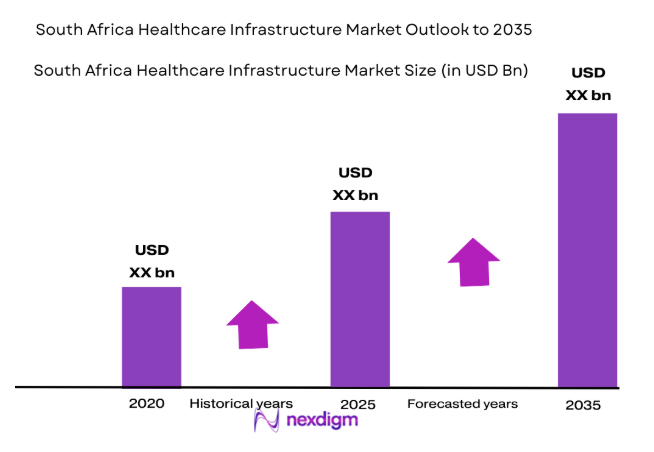
South Africa Healthcare Infrastructure Market is valued at approximately USD ~ Billion based on a recent historical assessment supported by national healthcare expenditure data published by the World Bank and the South African Department of Health. The market is driven by ongoing public investment in hospital construction, modernization of healthcare facilities, and increasing private sector participation in healthcare development. Demand for hospital infrastructure, medical equipment integration, and healthcare facility expansion continues to accelerate as the country strengthens healthcare delivery capacity.
Johannesburg, Cape Town, and Durban dominate the South Africa Healthcare Infrastructure Market due to the concentration of large hospital networks, private healthcare providers, and advanced medical facilities located within these metropolitan regions. These cities host major private hospital groups, academic medical centers, and specialized treatment facilities that attract patients from across the country. Strong urban healthcare demand, well-developed transport infrastructure, and higher healthcare investment levels contribute to the concentration of healthcare infrastructure projects within these metropolitan regions.
Market Segmentation
By Product Type
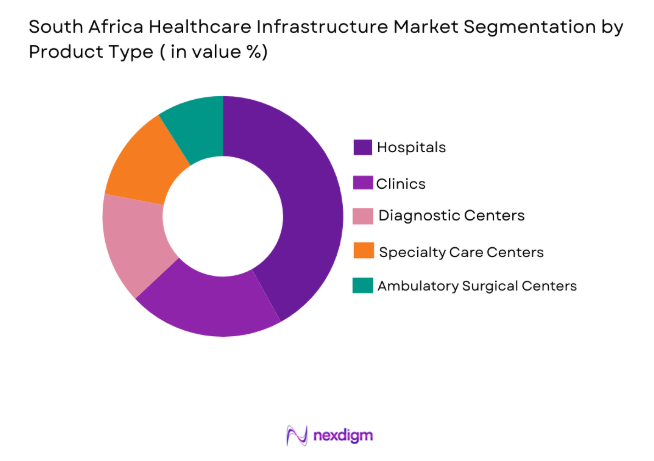
South Africa Healthcare Infrastructure Market is segmented by product type into hospitals, clinics, diagnostic centers, specialty care centers, and ambulatory surgical centers. Recently, hospitals has a dominant market share due to factors such as demand patterns, brand presence, infrastructure availability, or consumer preference. Large multi-specialty hospitals require extensive infrastructure including surgical facilities, diagnostic imaging departments, inpatient wards, and intensive care units. Public healthcare expansion programs prioritize hospital construction to improve national healthcare accessibility. Private hospital groups are also investing in high-capacity medical campuses equipped with advanced diagnostic technologies and surgical systems, strengthening the dominance of hospitals in national healthcare infrastructure development.
By Platform Type
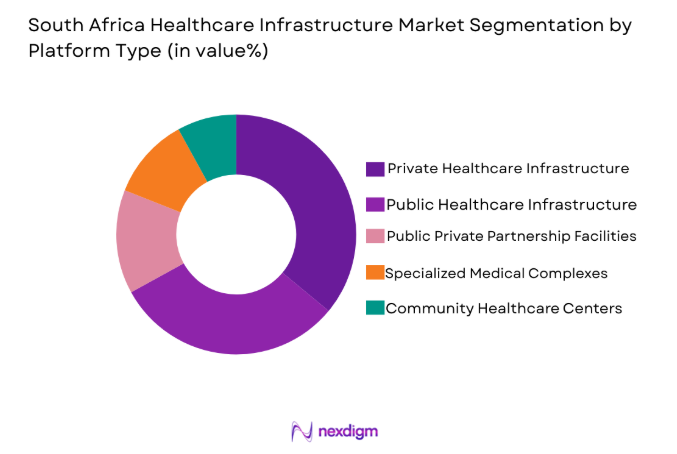
South Africa Healthcare Infrastructure Market is segmented by platform type into public healthcare infrastructure, private healthcare infrastructure, public private partnership healthcare facilities, specialized medical complexes, and community healthcare centers. Recently, private healthcare infrastructure has a dominant market share due to factors such as demand patterns, brand presence, infrastructure availability, or consumer preference. Private hospital groups invest heavily in technologically advanced hospitals, specialized treatment centers, and premium healthcare facilities. Strong financial capabilities, higher service quality expectations, and faster infrastructure development cycles allow private healthcare providers to expand rapidly across major cities, supporting the dominance of private healthcare infrastructure in the national market.
Competitive Landscape
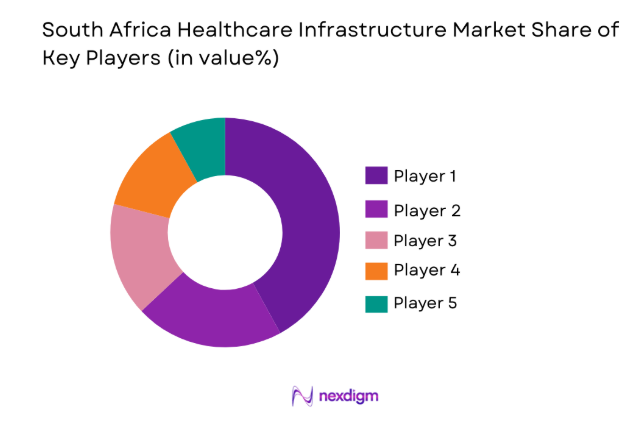
The South Africa Healthcare Infrastructure Market is moderately consolidated with several large private healthcare providers and infrastructure developers dominating hospital construction and facility expansion projects. Major hospital groups play a critical role in infrastructure investment, medical facility modernization, and expansion of specialized treatment centers across major urban regions. Private healthcare operators influence infrastructure development through large capital investments, advanced technology adoption, and expansion of premium healthcare networks across metropolitan healthcare markets.
| Company Name | Establishment Year | Headquarters | Technology Focus | Market Reach | Key Products | Revenue | Hospital Network Capacity |
| Netcare Limited | 1996 | Johannesburg | ~ | ~ | ~ | ~ | ~ |
| Life Healthcare Group | 1983 | Johannesburg | ~ | ~ | ~ | ~ | ~ |
| Mediclinic International | 1983 | Stellenbosch | ~ | ~ | ~ | ~ | ~ |
| Lenmed Health | 1984 | Johannesburg | ~ | ~ | ~ | ~ | ~ |
| Busamed Healthcare | 2016 | Durban | ~ | ~ | ~ | ~ | ~ |
South Africa Healthcare Infrastructure Market Analysis
Growth Drivers
Expansion of National Hospital Infrastructure Development Programs
expansion of hospital infrastructure programs significantly drives the South Africa Healthcare Infrastructure Market as the government continues investing in healthcare facility modernization and new hospital construction projects nationwide. Public healthcare reform initiatives aim to strengthen healthcare accessibility across rural and underserved regions through the development of new district hospitals and community healthcare centers. These infrastructure programs require large capital investments in building construction, medical facility design, and equipment installation. Healthcare infrastructure expansion also supports improvements in emergency care capacity and specialized treatment facilities. Modern hospitals increasingly incorporate advanced diagnostic imaging departments, surgical theaters, and intensive care units to meet growing clinical demand. Infrastructure upgrades also focus on replacing aging hospital buildings and improving patient capacity in major healthcare facilities. Private healthcare providers collaborate with public authorities to support infrastructure expansion through public private partnership hospital projects. Continued healthcare infrastructure development therefore stimulates sustained demand for construction services, hospital equipment integration, and healthcare facility management across the national healthcare ecosystem.
Growing Private Healthcare Investment and Medical Facility Expansion
growing private healthcare investment significantly accelerates infrastructure development within the South Africa Healthcare Infrastructure Market as private hospital groups expand advanced medical facilities across major cities. Private healthcare providers invest heavily in hospital construction, medical technology integration, and development of specialized treatment centers designed to provide high quality clinical services. Urban populations increasingly prefer private healthcare services due to shorter waiting times, advanced medical technologies, and specialized clinical expertise. As a result, private hospital networks continue expanding hospital campuses, outpatient surgical centers, and diagnostic imaging facilities across metropolitan healthcare markets. Investment in premium healthcare infrastructure also supports the development of medical tourism services that attract patients from neighboring African countries. Private healthcare companies continuously upgrade hospital facilities with advanced diagnostic equipment, robotic surgical systems, and digital health technologies. Strong financial performance among private hospital groups allows them to reinvest revenue into new infrastructure development projects. These investments significantly strengthen the growth of healthcare infrastructure across the country while improving the availability of specialized healthcare services.
Market Challenges
Limited Public Healthcare Infrastructure Funding Capacity
limited public healthcare funding remains a major challenge for the South Africa Healthcare Infrastructure Market because government healthcare budgets must support a wide range of healthcare services beyond infrastructure development. Public healthcare facilities serve a large portion of the population and therefore require continuous investment in hospital construction, facility maintenance, and medical equipment modernization. However, fiscal constraints restrict the ability of public authorities to rapidly expand healthcare infrastructure capacity nationwide. Aging hospital buildings in several regions require costly renovation and modernization programs to maintain clinical standards. Limited funding availability can delay hospital construction projects and slow infrastructure upgrades in public healthcare facilities. Healthcare infrastructure development also requires substantial investments in medical equipment installation and information technology systems. Budget limitations therefore affect both the pace and scale of healthcare infrastructure expansion across the country. Infrastructure funding gaps further increase pressure on existing hospital networks that must accommodate growing patient volumes.
Regional Inequality in Healthcare Infrastructure Distribution
uneven distribution of healthcare infrastructure across regions presents a significant challenge for the South Africa Healthcare Infrastructure Market because advanced hospital facilities are concentrated mainly in urban areas. Rural and remote communities often face limited access to modern healthcare facilities due to lower infrastructure investment levels. Healthcare providers frequently prioritize hospital development projects in metropolitan regions where patient demand and revenue potential are higher. As a result, rural healthcare facilities may operate with limited diagnostic equipment and fewer specialized treatment services. Infrastructure inequality also affects the availability of trained medical personnel and specialized healthcare technologies in underserved regions. Patients living outside major cities often travel long distances to access advanced medical treatment in urban hospitals. Addressing this imbalance requires significant investment in regional hospital development and healthcare infrastructure expansion programs. Without balanced infrastructure development, healthcare accessibility gaps across the country remain a persistent structural challenge.
Opportunities
Expansion of Public Private Partnership Healthcare Infrastructure Projects
Expansion of public private partnership hospital development projects creates major opportunities within the South Africa Healthcare Infrastructure Market as government authorities collaborate with private healthcare providers to build modern healthcare facilities. These partnerships enable public health systems to access private capital, advanced hospital management expertise, and modern healthcare technologies. Public private partnerships are increasingly used to finance hospital construction, diagnostic centers, and specialized treatment facilities across multiple provinces. Private healthcare companies benefit from long term operational contracts and stable revenue streams generated through government supported healthcare services. PPP projects also accelerate infrastructure development timelines because private sector partners bring project management capabilities and financial resources. Infrastructure collaboration allows the government to expand healthcare facility capacity without bearing the full financial burden of hospital construction. Increasing adoption of PPP models therefore represents a major structural opportunity for healthcare infrastructure development across the national healthcare system.
Growth of Specialized Medical Complexes and Advanced Treatment Facilities
development of specialized medical complexes presents a significant opportunity for the South Africa Healthcare Infrastructure Market as healthcare providers increasingly invest in advanced treatment centers focused on specialized medical services. Modern medical complexes integrate hospitals, diagnostic laboratories, outpatient treatment facilities, and research centers within unified healthcare campuses. These integrated healthcare hubs enable hospitals to provide specialized services such as oncology treatment, cardiac surgery, and advanced diagnostic imaging. Specialized healthcare facilities attract highly trained medical professionals and enable hospitals to deploy advanced medical technologies. Investment in specialized treatment infrastructure also strengthens the country’s position as a regional healthcare destination for patients seeking complex medical procedures. Healthcare providers continue developing specialized medical centers equipped with advanced surgical systems, robotic technologies, and precision diagnostic platforms. The expansion of these specialized healthcare facilities significantly increases infrastructure investment and strengthens the long term growth potential of the healthcare infrastructure market.
Future Outlook
The South Africa Healthcare Infrastructure Market is expected to experience steady expansion over the next five years as healthcare demand continues to rise and infrastructure investment accelerates. Government healthcare reforms and hospital modernization initiatives will support the development of new healthcare facilities across multiple provinces. Private hospital groups are expected to expand premium healthcare campuses equipped with advanced medical technologies. Increasing adoption of digital healthcare systems and modern hospital architecture will further shape healthcare infrastructure development across the country.
Major Players
- Netcare Limited
- Life Healthcare Group
- Mediclinic International
- Lenmed Health
- Busamed Healthcare
- Medicross Healthcare Group
- Intercare Group
- Akeso Hospitals
- Melomed Private Hospitals
- National Health Laboratory Service
- Joint Medical Holdings
- Cure Day Hospitals
- Clinix Health Group
- RH Bophelo
- Healthcare Development Partners
Key Target Audience
- Hospital Infrastructure Development Companies
- Private Hospital Networks
- Medical Equipment Manufacturers
- Healthcare Investment Firms
- Investments and venture capitalist firms
- Government and regulatory bodies
- Healthcare Infrastructure Project Developers
Research Methodology
Step 1: Identification of Key Variables
Key healthcare infrastructure indicators including hospital capacity, healthcare expenditure, facility construction projects, and private hospital investment patterns were identified. Data sources included public healthcare statistics, government infrastructure reports, and industry healthcare investment databases. These variables formed the core framework for evaluating healthcare infrastructure expansion trends across the country.
Step 2: Market Analysis and Construction
The healthcare infrastructure ecosystem was analyzed by examining hospital construction projects, healthcare facility expansion programs, and investment activity across public and private healthcare providers. Market segmentation was constructed based on infrastructure type, healthcare platforms, and hospital development patterns.
Step 3: Hypothesis Validation and Expert Consultation
Healthcare infrastructure experts, hospital administrators, and healthcare investment professionals were consulted to validate market assumptions and infrastructure growth trends. Expert insights helped confirm investment patterns, healthcare facility expansion strategies, and hospital development priorities within the national healthcare system.
Step 4: Research Synthesis and Final Output
All quantitative and qualitative findings were synthesized into a structured market analysis framework. Infrastructure investment patterns, healthcare facility expansion data, and expert insights were integrated to produce the final market report covering segmentation, competition, growth drivers, challenges, and future opportunities.

- Executive Summary
- Research Methodology (Definitions, Scope, Industry Assumptions, Market Sizing Approach, Primary & Secondary Research Framework, Data Collection & Verification Protocol, Analytic Models & Forecast Methodology, Limitations & Research Validity Checks)

- Market Definition and Scope
- Value Chain & Stakeholder Ecosystem
- Regulatory / Certification Landscape
- Sector Dynamics Affecting Demand
- Strategic Initiatives & Infrastructure Growth

- Growth Drivers
Expansion of National Hospital Construction and Modernization Programs
Rising Private Healthcare Investment and Hospital Network Expansion
Increasing Demand for Advanced Medical Infrastructure and Specialized Facilities - Market Challenges
Limited Public Healthcare Infrastructure Funding Capacity
Regional Inequality in Healthcare Infrastructure Distribution
High Capital Requirements for Advanced Medical Facility Development - Market Opportunities
Expansion of Public Private Partnership Healthcare Infrastructure Projects
Growth of Specialized Medical Complexes and Advanced Treatment Facilities
Increasing Investment in Digital Health Infrastructure and Smart Hospitals - Trends
Integration of Digital Health Systems in Hospital Infrastructure
Development of Multi Specialty Integrated Medical Complexes - Government Regulations
- SWOT Analysis
- Porter’s Five Forces

- By Market Value, 2020-2025
- By Installed Units, 2020-2025
- By Average System Price, 2020-2025
- By System Complexity Tier, 2020-2025

- By System Type (In Value%)
Hospitals Infrastructure Systems
Diagnostic and Imaging Infrastructure
Specialty Treatment Facility Infrastructure
Outpatient and Ambulatory Care Infrastructure
Digital Health and Telehealth Infrastructure - By Platform Type (In Value%)
Public Healthcare Infrastructure
Private Healthcare Infrastructure
Public Private Partnership Facilities
Specialized Medical Complexes
Community Healthcare Centers - By Fitment Type (In Value%)
New Healthcare Facility Construction
Healthcare Facility Expansion Projects
Healthcare Infrastructure Modernization
Hospital Renovation and Retrofit Projects - By End User Segment (In Value%)
Public Healthcare Providers
Private Hospital Networks
Specialized Medical Institutions

- Market Share Analysis
- Cross Comparison Parameters (Hospital Capacity, Infrastructure Investment Scale, Technology Integration Level, Facility Specialization, Geographic Presence, Infrastructure Development Projects, Strategic Partnerships)
- SWOT Analysis of Key Competitors
- Pricing & Procurement Analysis
- Key Players
Netcare Limited
Life Healthcare Group
Mediclinic International
Lenmed Health
Busamed Healthcare
Medicross Healthcare Group
Intercare Group
Akeso Hospitals
Melomed Private Hospitals
Clinix Health Group
Cure Day Hospitals
Joint Medical Holdings
National Health Laboratory Service
RH Bophelo
Healthcare Development Partners

- Government Healthcare Infrastructure Investment Programs
- Private Hospital Group Expansion Strategies
- Specialized Healthcare Facility Development Trends
- Healthcare Infrastructure Demand Across Urban and Rural Regions

- Forecast Market Value, 2026-2035
- Forecast Installed Units, 2026-2035
- Price Forecast by System Tier, 2026-2035
- Future Demand by Platform, 2026-2035


 Request a Sample
 Ask for Customization
 Get a Quote
 Enquire Now