

 Download PDF
Market Overview
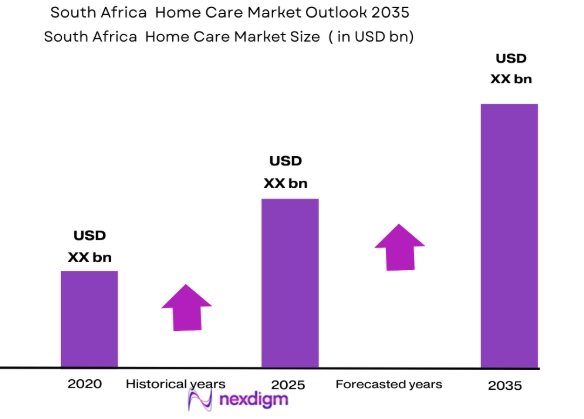
The South Africa home care market is valued at approximately USD ~ billion, based on historical data from industry reports and market analyses. The market is primarily driven by increasing urbanization, rising disposable incomes, and changing consumer preferences toward convenience and hygiene. With a growing middle class and a focus on sustainable, eco-friendly products, consumer demand for home care items like cleaning products, dishwashing solutions, and laundry detergents continues to rise. Government incentives for eco-friendly products, along with advancements in technology for home care devices, further fuel market growth.
South Africa’s home care market is predominantly driven by major urban centers such as Johannesburg, Cape Town, and Durban. These cities contribute to the highest demand due to their larger population density, higher disposable incomes, and greater consumer access to modern retail outlets. Johannesburg, as the largest city, leads in both retail sales and consumer preferences for premium home care products. Cape Town, with its eco-conscious demographic, significantly drives the demand for environmentally friendly cleaning solutions. These urban areas’ access to distribution networks and marketing channels plays a crucial role in maintaining their dominance.
Market Segmentation
By Product Type
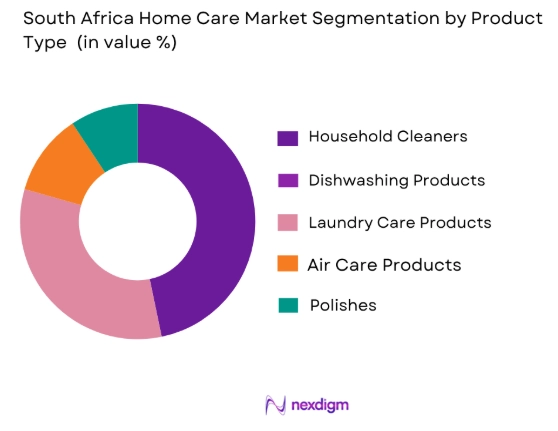
The South Africa home care market is segmented by product type into household cleaners, dishwashing products, laundry care products, air care products, polishes, and toilet care products. Household cleaners hold the dominant share within this segment. This is largely due to their consistent demand driven by a heightened focus on hygiene and sanitation, particularly in urban households. With increasing concerns over health and cleanliness, household cleaning products are viewed as essential, making them the preferred choice for South African consumers. Major global and local brands have established a strong presence in the market, contributing to the segment’s continued dominance.
By Distribution Channel
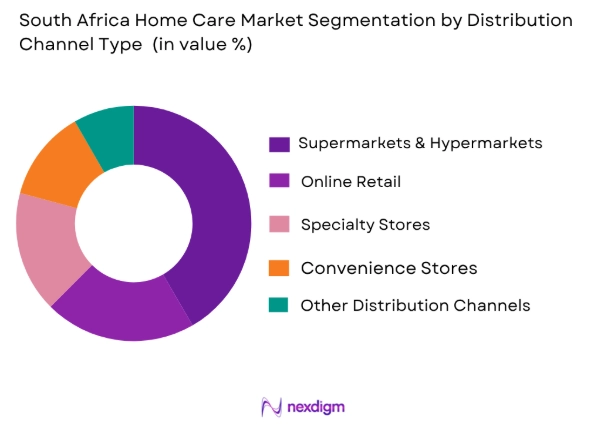
The market is also segmented by distribution channel into supermarkets & hypermarkets, online retail, specialty stores, and convenience stores. Supermarkets and hypermarkets hold the largest share of the market, driven by their wide reach and the convenience they offer to consumers. These retail outlets are well-distributed across urban areas, making home care products easily accessible to a broad range of consumers. With the growing trend of online shopping, however, e-commerce is slowly catching up, with more consumers preferring to purchase products online due to convenience, especially among younger demographics.
Competitive Landscape
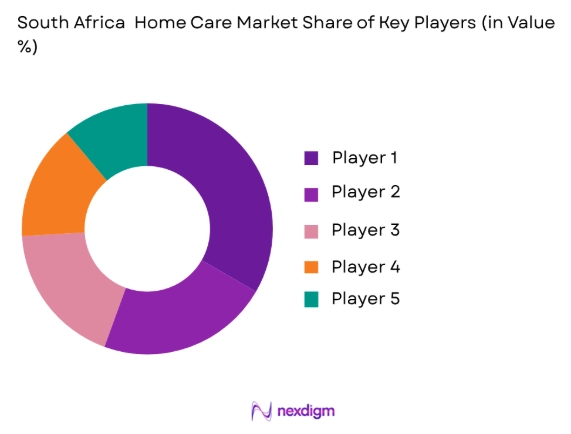
The South Africa home care market is dominated by a few major players, including global household names such as Unilever, Procter & Gamble, and Reckitt Benckiser, as well as local brands like Amka Products. These companies have established strong market positions due to their extensive product portfolios, brand recognition, and wide distribution networks across the country. Unilever, for instance, continues to leverage its diverse product range in cleaning, laundry, and dishwashing categories to maintain a significant share. The market is competitive, with brands continuously innovating to cater to the growing demand for eco-friendly and sustainable products.
| Company | Establishment Year | Headquarters | Product Innovation | Pricing Strategy | Market Reach | Sustainability Initiatives | Technology Integration | Brand Loyalty | Regulatory Compliance |
| Unilever | 1929 | London, UK | ~ | ~ | ~ | ~ | ~ | ~ | ~ |
| Procter & Gamble | 1837 | Cincinnati, USA | ~ | ~ | ~ | ~ | ~ | ~ | ~ |
| Reckitt Benckiser | 1823 | Slough, UK | ~ | ~ | ~ | ~ | ~ | ~ | ~ |
| Amka Products | 1986 | Johannesburg, SA | ~ | ~ | ~ | ~ | ~ | ~ | ~ |
| Henkel | 1876 | Düsseldorf, Germany | ~ | ~ | ~ | ~ | ~ | ~ | ~ |
South Africa Home Care Market Analysis
Growth Drivers
Increasing Demand for Eco-Friendly & Sustainable Products
In South Africa, the demand for eco-friendly and sustainable products has been rising steadily. According to a 2023 report from the South African Government, over 60% of South African consumers are increasingly inclined to purchase products with minimal environmental impact, reflecting a growing awareness of climate change. This trend is also reflected in the government’s commitment to achieving a 40% reduction in greenhouse gas emissions by 2030, which has spurred further demand for environmentally responsible products, including home care solutions. South Africa’s rising commitment to sustainable practices, particularly in urban areas, underscores the expanding market for eco-friendly home care products.
Growing Middle-Class Population
The South African middle class has been steadily growing, which significantly contributes to the increased demand for home care products. By 2023, the middle class in South Africa had expanded to about 17 million people, a 25% increase from 2010. This expanding demographic, with increased disposable income, is expected to continue driving consumer demand for home care products. This trend is supported by an increase in urbanization, with more South Africans moving to urban areas where the adoption of modern home care solutions is more prevalent. The middle class represents the largest consumer segment, significantly shaping the market’s direction.
Market Challenges
High Competition from Local & International Brands
The South African home care market faces significant competition, particularly from international brands like Unilever and Procter & Gamble, which dominate the retail shelves. Local players, however, are also growing rapidly by focusing on the regional consumer base and introducing products tailored to local preferences. The South African Competition Commission has noted that large brands account for over 75% of the home care product sales, creating an intensely competitive environment where smaller, local brands struggle to gain a foothold. This competitive landscape results in pressure on pricing and market share distribution.
Price Sensitivity in Key Segments
Price sensitivity is a key challenge for the home care market in South Africa, particularly in the lower-middle-income segments. In 2023, the South African Reserve Bank reported that inflation in consumer goods, particularly cleaning products, had risen by 7.2%, impacting consumer purchasing power. As a result, many consumers in lower-income brackets opt for cheaper, often lower-quality products, which puts pressure on premium brands to adjust their pricing strategies. The overall price-sensitive nature of the South African market makes it difficult for brands to increase prices without losing market share to more affordable alternatives.
Market Opportunities
Innovations in Natural and Organic Home Care Products
There is significant growth potential in the market for natural and organic home care products. South African consumers are increasingly seeking products that align with their growing environmental and health concerns. In 2023, the South African Department of Environmental Affairs noted that consumer preferences are shifting toward organic and non-toxic home care solutions. This demand for natural alternatives presents an opportunity for companies to innovate and introduce new products made with environmentally friendly ingredients, catering to the preferences of a growing segment of eco-conscious consumers.
Growth in E-Commerce & Online Shopping
E-commerce has seen a dramatic rise in South Africa, providing ample opportunities for growth in the home care market. In 2022, the South African e-commerce market was valued at USD 5.7 billion, and online retail is expected to continue its upward trajectory. The South African government has supported digital infrastructure and online platforms, providing consumers with greater access to home care products via online retail channels. As more consumers turn to online shopping for convenience, the market for home care products sold through e-commerce platforms is expected to see robust growth in the coming years.
Future Outlook
Over the next five years, the South Africa home care market is expected to exhibit significant growth, driven by increasing demand for eco-friendly products, advancements in home cleaning technology, and the growing awareness of hygiene. The rise in disposable incomes, along with an increasing preference for convenience-driven cleaning solutions, is expected to propel the market forward. Additionally, with innovations in smart home technologies and increased penetration of e-commerce platforms, the home care market in South Africa is poised for a major transformation.
Major Players
- Unilever
- Procter & Gamble
- Reckitt Benckiser
- Amka Products
- Henkel
- SC Johnson Professional
- Colgate-Palmolive
- The Clorox Company
- Kimberly-Clark
- Ecolab
- The Hershey Company
- Kao Corporation
- Method Products
- L’Oréal
- S.C. Johnson Professional
Key Target Audience
- Investments and Venture Capitalist Firms
- Government and Regulatory Bodies
- Retailers and Distributors in Home Care Products
- E-Commerce Platforms
- Household Product Manufacturers
- Sustainable Product Manufacturers
- Environmental Agencies
- Consumer Goods Associations
Research Methodology
Step 1: Identification of Key Variables
The first phase of the research involves identifying the key factors that influence the South Africa home care market, including market trends, consumer preferences, distribution channels, and product innovation. Secondary data from trusted market research reports and industry publications will be used to define these variables.
Step 2: Market Analysis and Construction
In this phase, historical market data will be analyzed to assess the market’s growth trajectory and segment performance. A deep dive into consumer behavior and retail penetration will also be conducted to understand market dynamics and consumer purchasing habits.
Step 3: Hypothesis Validation and Expert Consultation
Industry experts and key stakeholders in the home care sector will be interviewed to validate the market hypotheses developed during the analysis phase. This will include consultations with leading manufacturers and retailers to understand current challenges, growth drivers, and emerging trends.
Step 4: Research Synthesis and Final Output
The final research phase involves synthesizing the findings from primary and secondary data sources. This data will be compiled into a comprehensive report, which will also include future market forecasts and actionable insights based on expert consultations.

- Executive Summary
- Research Methodology (Definitions, Scope, Industry Assumptions, Market Sizing Approach, Primary & Secondary Research Framework, Data Collection & Verification Protocol, Analytic Models & Forecast Methodology, Limitations & Research Validity Checks)

- Market Definition and Scope
- Value Chain & Stakeholder Ecosystem
- Regulatory / Certification Landscape
- Sector Dynamics Affecting Demand

- Growth Drivers
Increasing Demand for Eco-Friendly & Sustainable Products
Growing Middle-Class Population
Rising Awareness of Hygiene and Sanitation
Evolving Consumer Preferences toward Convenient Solutions - Market Challenges
High Competition from Local & International Brands
Price Sensitivity in Key Segments
Supply Chain & Distribution Network Constraints - Market Opportunities
Innovations in Natural and Organic Home Care Products
Growth in E-Commerce & Online Shopping
Expansion of Premium Product Categories
Increased Adoption of Smart Home Care Products - Trends
Rising Demand for Multi-Purpose Home Care Solutions
Growth in DIY Home Care Products
Increasing Use of Subscription Models for Home Care Products - Government Regulations and Policies
Regulatory Environment for Home Care Products in South Africa
Product Certification & Safety Standards
Environmental Regulations Impacting Home Care Industry - SWOT Analysis
- Porter’s Five Forces

- By Market Value, 2020-2025
- By Market Volume, 2020-2025
- By Average Product Price, 2020-2025
- By Product Category, 2020-2025

- By Product Type (In Value%)
Household Cleaners
Dishwashing Products
Laundry Care Products
Air Care Products
Polishes
Toilet Care Products - By Distribution Channel (In Value%)
Supermarkets & Hypermarkets
Online Retail
Specialty Stores
Convenience Stores
Other Distribution Channels - By Consumer Demographics (In Value %)
Urban vs Rural
Income Level
Age Group
Household Size

- Market Share Analysis
Competitive Positioning of Key Players - Cross Comparison Parameters ( Product Innovation, Pricing Strategy, Distribution Network, Regulatory Compliance, Brand Recognition and Consumer Loyalty, Technology Integration Smart Home, IoT-enabled Products, After-Sales Support & Customer Engagement, Environmental Sustainability Practices
- SWOT Analysis of Key Competitors
Analysis of Strengths and Weaknesses of Leading Brands Pricing & Procurement Analysis
Pricing Strategies in the South African Home Care Market
Procurement & Sourcing Trends - Key Players
Unilever South Africa
Procter & Gamble South Africa
SC Johnson Professional
Reckitt Benckiser South Africa
Henkel South Africa
Colgate-Palmolive South Africa
The Clorox Company
Amka Products
Softcare (Pty) Ltd.
Kersia Group

- Growing Demand from Households
- Adoption of Home Care Products by Small Businesses
- Growth of Online Marketplaces and Digital Consumers
- Influence of Consumer Behavior on Product Types and Brands

- By Market Value, 2026-2035
- By Market Volume, 2026-2035
- By Average Product Price, 2026-2035
- By Product Category, 2026-2035


 Request a Sample
 Ask for Customization
 Get a Quote
 Enquire Now