

 Download PDF
 Download PDF
Market Overview
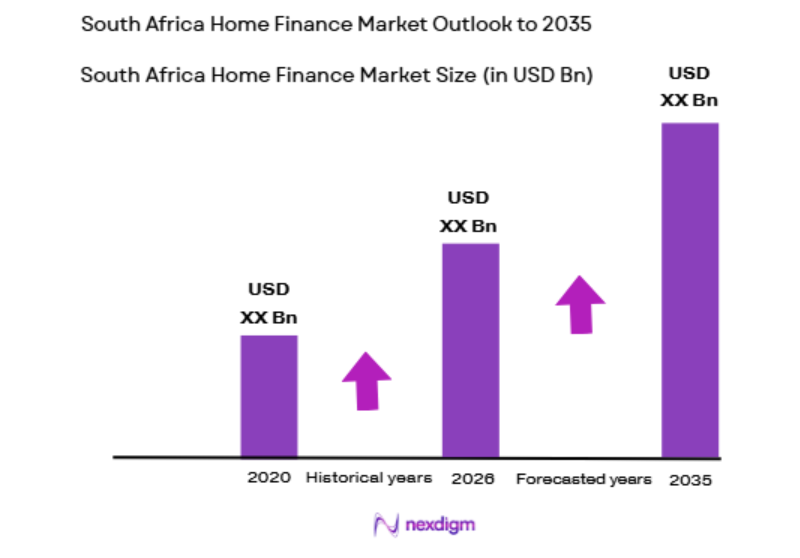
The South Africa home finance market, valued at approximately USD ~ billion, is primarily driven by increased demand for housing, rapid urbanization, and rising income levels, further supported by an expanding middle class. Key factors, such as attractive interest rates, government housing initiatives, and access to a variety of financial products, also contribute to market growth.
Regions such as Johannesburg, Cape Town, and Pretoria dominate the market, largely due to their advanced infrastructure, business hubs, and higher population densities. These cities attract significant real estate developments and offer favorable conditions for homebuyers, supported by ongoing residential projects and government housing policies aimed at boosting homeownership rates.
Market Segmentation
By Product Type
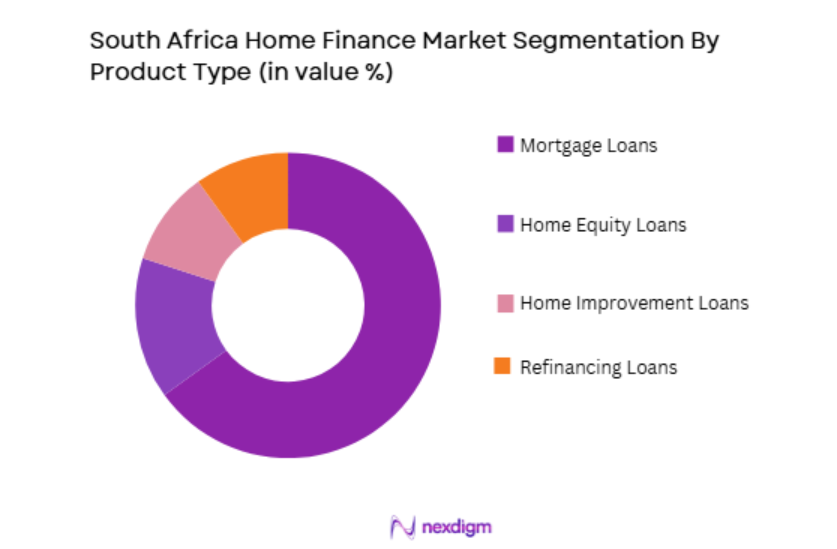
The South Africa home finance market is segmented by product type into mortgage loans, home equity loans, home improvement loans, and refinancing loans. Mortgage loans have a dominant market share, primarily driven by the rising demand for homeownership among first-time buyers and the growing middle class. Banks and financial institutions offer a range of mortgage products with competitive interest rates and repayment terms, making homeownership more accessible to a larger demographic. This is supported by government-backed housing schemes, which further drive mortgage loan adoption in the country.
By Region
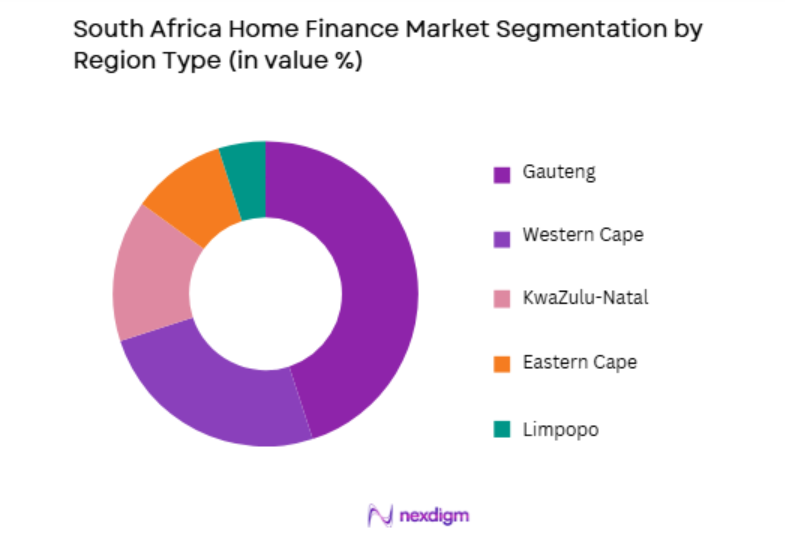
The South Africa home finance market is segmented by region into Western Cape, Gauteng, KwaZulu-Natal, Eastern Cape, and Limpopo. Gauteng leads the market due to its role as the economic and business hub of South Africa, home to Johannesburg and Pretoria. High demand for residential properties in these areas, coupled with a growing population and increased urbanization, significantly contributes to the dominant market share. Additionally, government housing initiatives targeting urban areas further fuel the demand for home finance products in Gauteng.
Competitive Landscape
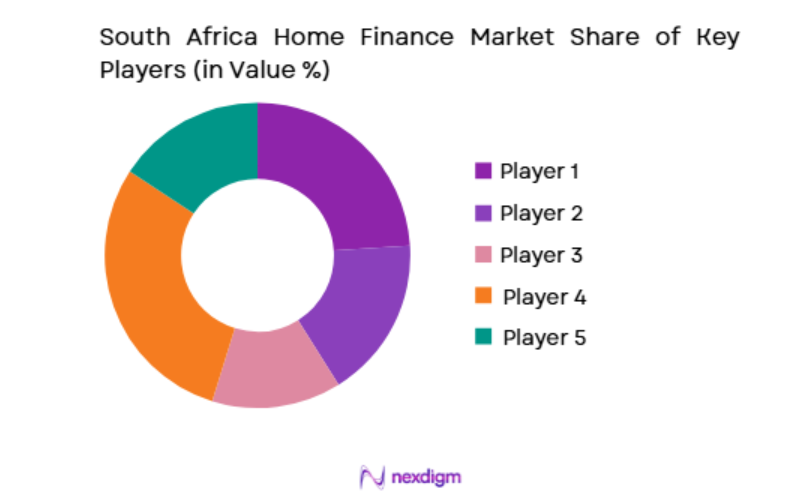
The competitive landscape of the South Africa home finance market is characterized by significant consolidation among major players, with banks and financial institutions leading the sector. Key players leverage advanced digital platforms and diverse financial products to capture market share and improve customer accessibility to home loans.
| Company Name | Establishment Year | Headquarters | Technology Focus | Market Reach | Key Products | Revenue (USD Billion) | Key Service Areas |
| Standard Bank | 1862 | Johannesburg, SA | ~ | ~ | ~ | ~ | ~ |
| ABSA Group | 1991 | Johannesburg, SA | ~ | ~ | ~ | ~ | ~ |
| FirstRand | 1998 | Johannesburg, SA | ~ | ~ | ~ | ~ | ~ |
| Nedbank | 1831 | Johannesburg, SA | ~ | ~ | ~ | ~ | ~ |
| Capitec Bank | 2001 | Stellenbosch, SA | ~ | ~ | ~ | ~ | ~ |
South Africa Home Finance Market Analysis
Growth Drivers
Government Housing Initiatives
South Africa’s government has introduced various programs such as the FLISP aimed at providing home finance to low-income buyers. These initiatives have spurred demand for affordable housing and increased access to mortgage loans, contributing significantly to the market’s growth. Government-backed programs like the RDP (Reconstruction and Development Programme) also support the construction of low-cost housing, making homeownership more attainable for the lower-income population.
Technological Advancements in Digital Banking
The rise of digital banking platforms has revolutionized the home finance market, offering consumers greater access to home loan products through mobile applications and online platforms. Digital banking innovations allow for quicker processing of loans, improved customer experiences, and better financial inclusion, making it easier for South Africans to obtain home finance products. Additionally, the increased adoption of AI in credit scoring models has enhanced lending processes, making it possible for more individuals to access home loans.
Market Challenges
High Interest Rates
South Africa’s relatively high interest rates pose a challenge to the home finance market, as many potential homebuyers find it difficult to afford home loans due to increased monthly repayments. The South African Reserve Bank’s decision to raise interest rates to curb inflationary pressures has made home finance products more expensive, limiting the affordability of home loans for first-time buyers. This challenge is particularly significant for individuals in low-income brackets, which can impact overall homeownership rates in the country.
Economic Uncertainty and Unemployment
South Africa faces significant economic challenges, including high unemployment rates and economic instability. These factors contribute to a reduced ability of consumers to meet financial commitments such as mortgage payments. As a result, the home finance market sees a decline in demand as individuals struggle to secure steady employment or income sources. Economic uncertainty also impacts consumer confidence, further exacerbating the challenges in the home finance market.
Opportunities
Affordable Housing Development
The demand for affordable housing continues to grow in South Africa, offering significant opportunities for financial institutions to expand their home finance product offerings. By introducing tailored loan products that cater to low-income and first-time buyers, banks can tap into this underserved market. Government initiatives aimed at encouraging affordable housing development, particularly in underserved regions, will further drive this opportunity.
Green Home Finance
The South African market presents an emerging opportunity for home finance products targeting environmentally conscious consumers. Green home loans, which finance energy-efficient homes or eco-friendly home improvements, are gaining popularity in response to rising environmental awareness and regulatory measures. The introduction of green building standards and energy efficiency policies provides an ideal environment for financial institutions to offer sustainable home loan products.
Future Outlook
The South Africa home finance market is poised for steady growth over the next five years. Increased demand for affordable housing, technological advancements in digital banking, and government-backed housing programs are expected to support market expansion. As more South Africans enter the middle class, the need for homeownership will rise, creating opportunities for financial institutions to offer innovative mortgage products. Moreover, the focus on green home finance and the continued development of affordable housing will further drive the market, particularly in urban and peri-urban areas. Technological advancements, regulatory support, and shifting consumer preferences will play crucial roles in shaping the future of the South Africa home finance market.
Major Players
- Standard Bank
- ABSA Group
- FirstRand
- Nedbank
- Capitec Bank
- African Bank
- Investec Bank
- FNB
- Mercantile Bank
- SA Home Loans
- Simodo
- Real People
- Betterbond
- HomeChoice International
- Home Finance Group
Key Target Audience
- Investments and venture capitalist firms
- Government and regulatory bodies
- Financial institutions
- Real estate developers
- Insurance companies
- Housing finance companies
- Property developers
- Homebuyers
Research Methodology
Step 1: Identification of Key Variables
Key variables impacting the home finance market are identified through market research and expert consultations. These variables include government policies, housing demand patterns, financial products, interest rates, and consumer behavior.
Step 2: Market Analysis and Construction
An in-depth market analysis is conducted by segmenting the home finance market into product types, regions, and consumer groups. Quantitative and qualitative research methods are applied to understand market dynamics and trends.
Step 3: Hypothesis Validation and Expert Consultation
Hypotheses based on preliminary research are validated through consultations with industry experts, including banking professionals, real estate developers, and government agencies. This step helps refine assumptions and ensures accuracy.
Step 4: Research Synthesis and Final Output
The collected data is synthesized, and the final output is generated, providing insights into market trends, growth drivers, challenges, opportunities, and competitive dynamics. This comprehensive research forms the basis for decision-making.

- Executive Summary
- Research Methodology (Definitions, Scope, Industry Assumptions, Market Sizing Approach, Primary & Secondary Research Framework, Data Collection & Verification Protocol, Analytic Models & Forecast Methodology, Limitations & Research Validity Checks)

- Market Definition and Scope
- Value Chain & Stakeholder Ecosystem
- Regulatory / Certification Landscape
- Sector Dynamics Affecting Demand

- Growth Drivers
Urbanization and Population Growth
Government Support for First-time Homebuyers
Rise in Property Values and Investment Opportunities - Market Challenges
High Loan Default Rates
Regulatory Compliance Costs
Limited Access to Financing in Rural Areas - Market Opportunities
Increasing Middle-Class Population
Shift to Online Mortgage Platforms
Integration of Smart Home Financing Solutions - Trends
Shift Toward Digital Lending Solutions
Growth in Green and Sustainable Home Financing - Government Regulations
- SWOT Analysis
- Porter’s Five Forces

- By Market Value, 2020-2025
- By Installed Units, 2020-2025
- By Average System Price, 2020-2025
- By System Complexity Tier, 2020-2025

- By System Type (In Value%)
Mortgage Lending
Home Loan Insurance
Renovation Financing
Property Investment Financing
Real Estate Backed Securities - By Platform Type (In Value%)
Online Platforms
Traditional Banks
Non-Banking Financial Companies (NBFCs)
Mortgage Brokers
Fintech Solutions - By Fitment Type (In Value%)
Owner-Occupied Financing
Rental Property Financing
Refinancing Options
Government Subsidized Programs - By End User Segment (In Value%)
Homebuyers
Property Investors
Real Estate Developers

- Market Share Analysis
- Cross Comparison Parameters (Loan Amount, Interest Rate, Loan Tenure, Lender Type, Customer Type, Property Type, Repayment Method, Loan Approval Process, Default Rate, Loan Product Type)
- SWOT Analysis of Key Competitors
- Pricing & Procurement Analysis
- Key Players
Standard Bank
ABSA Bank
First National Bank (FNB)
Nedbank
Investec
Capitec
SA Home Loans
HSBC South Africa
Old Mutual
SANTAM
Renasa Insurance
Momentum Metropolitan
Woolworths Financial Services
AfrAsia Bank
Nedgroup Investments

- Increased Demand for Affordable Housing
- Rise in Single-Property Investments
- Preference for Long-Term Financing
- Adoption of Digital Mortgage Solutions

- Forecast Market Value, 2026-2035
- Forecast Installed Units, 2026-2035
- Price Forecast by System Tier, 2026-2035
- Future Demand by Platform, 2026-2035


 Request a Sample
 Ask for Customization
 Get a Quote
 Enquire Now