
 Download PDF
Market Overview
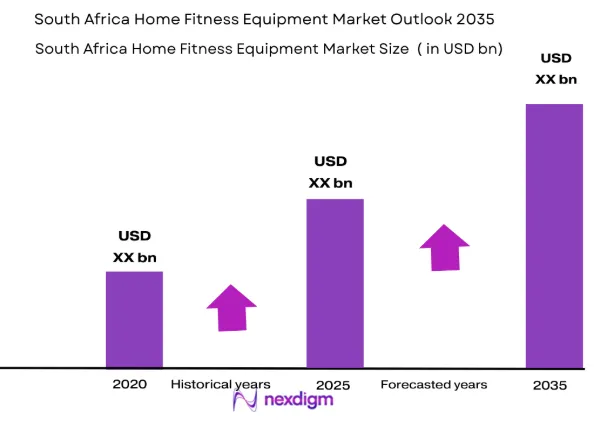
The South Africa Home Fitness Equipment market is valued at approximately ZAR ~ billion, with a steady growth trajectory driven by rising health-consciousness among consumers and the increasing demand for in-home fitness solutions. In recent years, the market has benefited from an uptick in the number of individuals investing in home fitness equipment, particularly due to lifestyle changes brought about by the COVID-19 pandemic. The growing awareness about fitness, coupled with the expanding influence of fitness apps and online workout content, has created a conducive environment for this market. In addition, the rising disposable income in urban areas has further fueled the demand for high-quality fitness products in the market.
The dominant cities in the South African market include Johannesburg, Cape Town, and Durban. Johannesburg, being the financial hub, contributes the largest share in terms of sales due to its affluent population and high purchasing power. Cape Town follows with its expanding middle-class consumer base, while Durban benefits from growing urbanization and increased interest in health and wellness among the youth. These cities dominate due to factors such as better infrastructure, higher disposable income, and greater access to international brands, making them the hotspots for fitness equipment consumption.
Market Segmentation
By Product Type
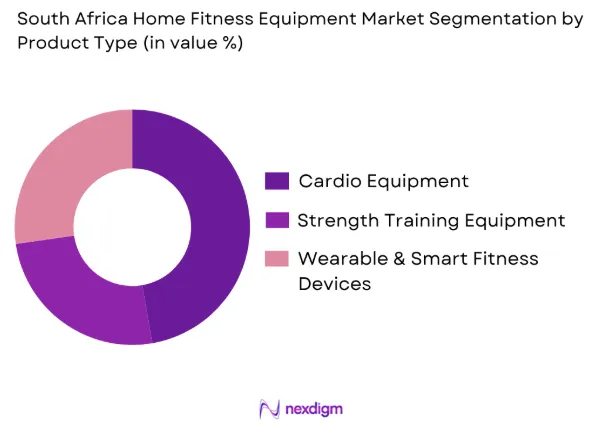
The South Africa Home Fitness Equipment market is segmented by product type into cardio equipment, strength training equipment, and wearable & smart fitness devices. Recently, cardio equipment has had a dominant market share, driven by the increasing popularity of products like treadmills, exercise bikes, and ellipticals. The market for cardio equipment is thriving due to growing awareness about cardiovascular health and the ability of these devices to provide a full-body workout at home. Furthermore, with the rise in digital fitness trends and smart equipment, cardio equipment with built-in workout programs and digital features has seen significant growth. Key players in the market, such as Technogym and Life Fitness, have capitalized on this trend by incorporating connected technology into their offerings, making cardio equipment more appealing to a tech-savvy consumer base.
By Distribution Channel
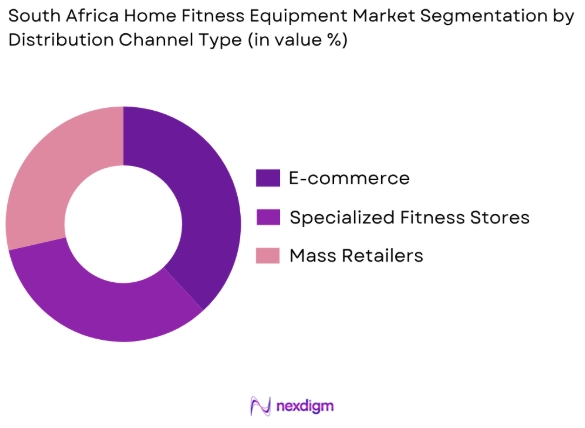
The market is also segmented by distribution channel into specialized fitness stores, e-commerce platforms, and mass retailers. E-commerce has seen a rapid rise in market share, accounting for a growing proportion of fitness equipment sales in South Africa. The surge in online shopping can be attributed to the convenience, wide product selection, and often better pricing options provided by online platforms. Online retailers like Takealot and Superbalist, along with global players such as Amazon, have capitalized on this trend, offering a seamless purchasing experience. Moreover, the ability to access customer reviews and expert advice has further enhanced the appeal of e-commerce for fitness equipment buyers. Physical retail stores remain strong, particularly in larger cities, but e-commerce is quickly gaining dominance.
Competitive Landscape
The South African home fitness equipment market is characterized by a few major players, including both local manufacturers and global brands. These companies have established strong brand recognition, and their products are widely available in both physical retail outlets and online platforms. Leading players include Technogym, Life Fitness, and Nautilus, which are known for their high-end equipment and integrated fitness solutions. Local brands, such as Core Health and Fitness, also hold significant market share by catering to the middle-income demographic with more affordable options.The market is dominated by a few key players, each with its strengths in product innovation, distribution channels, and customer loyalty. The presence of global brands alongside local manufacturers has created a competitive environment that fosters constant innovation in product design and technology. These companies are vying to capture the growing demand for both traditional fitness equipment and connected smart devices that integrate with digital fitness platforms.
| Company Name | Establishment Year | Headquarters | Product Portfolio | Price Range | Distribution Channels | Technology Integration |
| Technogym | 1983 | Italy | ~ | ~ | ~ | ~ |
| Life Fitness | 1977 | USA | ~ | ~ | ~ | ~ |
| Nautilus | 1986 | USA | ~ | ~ | ~ | ~ |
| Core Health & Fitness | 1997 | South Africa | ~ | ~ | ~ | ~ |
| Schwinn Fitness | 1895 | USA | ~ | ~ | ~ | ~ |
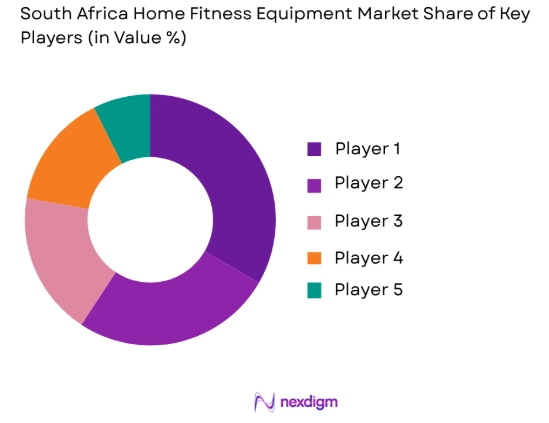
South Africa Home Fitness Equipment Analysis
Growth Drivers
Urbanization and Health Awareness
Urbanization in South Africa continues to rise, with the urban population estimated at around 67% of the total population in 2024. The shift towards urban living has fostered greater access to fitness facilities and health awareness. Additionally, there has been a marked increase in the demand for fitness-related products as urban consumers increasingly prioritize health and wellness. The rise in chronic diseases and obesity levels has triggered a shift toward preventive healthcare and home fitness solutions. According to a 2022 report by the South African Government’s Department of Health, non-communicable diseases (NCDs) such as diabetes and hypertension are rising due to lifestyle choices, making health a priority for urban dwellers. Source: South African Government, Department of Health, 2022.
Increase in Digital Fitness and Connected Equipment
The adoption of digital fitness platforms and connected home fitness equipment in South Africa has surged. In 2023, over 12 million South Africans used digital health apps, with this number expected to rise in 2024. This trend is driven by the growing number of smartphones in the market, which stood at 23 million units in 2024, according to Statista. As the South African population becomes increasingly reliant on technology, more consumers are opting for fitness equipment that integrates with apps and smart technology.
Challenges
High Price Sensitivity Among Core Segments
Price sensitivity remains one of the major challenges in the South African home fitness equipment market. In 2023, the inflation rate in South Africa stood at 7.5%, exerting significant pressure on household budgets. The rising cost of living, alongside volatile fuel prices and increased interest rates, has made consumers more cautious about large discretionary purchases like fitness equipment. According to a 2023 survey by the South African Reserve Bank, 60% of South African households reported reducing non-essential spending due to rising living costs.
Import Dependency and Forex Fluctuations
The South African market for fitness equipment is heavily reliant on imports, with over 80% of the products being sourced from international suppliers. This dependence exposes the market to fluctuations in foreign exchange rates. In 2023, the South African rand weakened by 12% against the US dollar, which led to increased import costs for fitness equipment. As the rand continues to be volatile, with the exchange rate expected to remain unstable in 2024, this may further drive up the prices of imported fitness products. The local manufacturing sector also faces challenges in meeting demand, leaving the market vulnerable to external price shocks.
Opportunities
Localization of Manufacturing and Assembly
Localizing the manufacturing and assembly of fitness equipment presents a significant opportunity for the South African market. With the government’s push for industrialization and local economic growth, manufacturers are increasingly looking to set up production facilities within South Africa. In 2023, the South African government launched the “Industrial Policy Action Plan” (IPAP), offering incentives for local manufacturers. This move is expected to reduce import dependency and lower production costs.
Integration of AI and Virtual Training Features
The integration of AI and virtual training features into home fitness equipment is an emerging opportunity in South Africa. According to a 2023 survey, 48% of South African consumers reported interest in using AI-driven fitness equipment. AI-powered features such as personalized training plans, real-time feedback, and virtual coaching are gaining traction, especially in the urban middle-class segment. In addition, the rise in virtual fitness services has fueled demand for connected equipment that can sync with online workout platforms. Companies such as Peloton and Zwift have already capitalized on this opportunity, showing promising results
Future Outlook
Over the next six years, the South Africa Home Fitness Equipment market is projected to experience steady growth. This growth is expected to be driven by increased consumer interest in health and fitness, particularly post-pandemic, where more people are choosing to work out at home rather than at gyms. Technological advancements, such as the integration of AI and virtual fitness programs, are also expected to fuel demand for smart and connected fitness equipment. Moreover, the expansion of e-commerce and digital fitness platforms will continue to enhance consumer access to fitness products, thus broadening the market’s reach.
In the coming years, it is expected that there will be a rise in demand for mid-tier priced fitness equipment as more consumers become aware of the benefits of home fitness but seek affordable yet functional options. This, combined with a growing middle-class demographic in urban areas, will further contribute to the market’s expansion.
Major Players in the Market
- Technogym
- Life Fitness
- Nautilus
- Core Health & Fitness
- Schwinn Fitness
- Precor
- Johnson Health Tech
- Bowflex
- Icon Health & Fitness
- Reebok Fitness
- ProForm
- Matrix Fitness
- Spirit Fitness
- Sole Fitness
- AFG
Key Target Audience
- Fitness Enthusiasts and Home Gym Owners
- Investors and Venture Capitalist Firms
- Government and Regulatory Bodies (e.g., South African Bureau of Standards)
- Sports and Fitness Equipment Retailers
- E-commerce Platforms and Online Retailers
- Commercial Gyms and Wellness Centers
- Healthcare Providers (e.g., physiotherapists and rehabilitation centers)
- Corporate Wellness Program Managers
Research Methodology
Step 1: Identification of Key Variables
The initial phase involves defining and mapping the key variables that influence the South Africa Home Fitness Equipment market, including consumer behavior, product preferences, and distribution channel dynamics. This is achieved through an extensive mix of desk research, secondary data collection from industry reports, and initial consultations with experts.
Step 2: Market Analysis and Construction
Historical data analysis is conducted to assess the penetration of home fitness equipment in various segments, including cardio and strength training equipment. This phase focuses on evaluating key market drivers, challenges, and demand patterns, helping to forecast future growth trends.
Step 3: Hypothesis Validation and Expert Consultation
In this phase, hypotheses are validated through interviews with industry experts, including manufacturers, retailers, and end users. This step ensures that market insights are accurate and reflective of real-world conditions. Expert feedback plays a critical role in refining data accuracy and filling any research gaps.
Step 4: Research Synthesis and Final Output
The final phase synthesizes all gathered information to generate actionable insights and forecasts for the South Africa Home Fitness Equipment market. Insights are refined through continuous engagement with key stakeholders, ensuring that the final output reflects a comprehensive, credible, and market-ready analysis.

- Executive Summary
- Research Methodology (Market Definitions and Assumptions, Abbreviations and Terminology, Data Sources and Validation Approach, South Africa Equipment Market Sizing Methodology, Primary and Secondary Research Benchmarks, Market Reliability and Confidence Intervals)

- Industry Definition and Scope
- Market Genesis and Evolution in South Africa
- Consumer Adoption Patterns
- Market Value Chain and Distribution Architecture
- Import and Export Dynamics

- Growth Drivers
Urbanization and Health Awareness
Increase in Digital Fitness and Connected Equipment
Work‑from‑Home Trend
Growing Fitness Subscription Apps and Ecosystem - Challenges
High Price Sensitivity Among Core Segments
Import Dependency and Forex Fluctuations
Distribution Infrastructure Constraints
Consumer Education and Awareness Gaps - Opportunities
Localization of Manufacturing and Assembly
Integration of AI and Virtual Training Features
Corporate Wellness Program Adoption
Retail‑Online Hybrid Sales Models - Trends
Shift Toward Smart and Connected Fitness Devices
Growth of Subscription‑Enabled Equipment
Bundled Fitness Content Ecosystems
Second‑Hand and Refurbished Equipment Market - Government regulations
- SWOT Analysis
- Porter’s Five Forces

- By Market Value, 2020-2025
- By Unit Shipments, 2020-2025
- By Average ASP, 2020-2025
- By Equipment Category Revenue Contribution, 2020-2025

- By Product (In Value %)
Cardio Equipment
Strength Training Equipment
Wearable & Smart Fitness Devices - By Distribution Channel (In Value %)
E-commerce
Specialized Fitness Stores
Mass Retailers - By Consumer Demographic (In Value % )
Urban Professionals
Middle‑Income Households
Senior Fitness Segment
Youth and Student Segment
Corporate Wellness Purchases - By Price Tier (In Value %)
Economy / Entry Level
Mid‑Tier
Premium / Connected Equipment
Smart / IoT Enabled - By Region (In Value %)
Gauteng
Western Cape
KwaZulu‑Natal
Eastern Cape
Other Provinces

- Market Share by Equipment Category
- Unit Shipments by Major Brands
- Cross Comparison Parameters (Company Overview, Product Portfolio Strength, Retail and Distribution Footprint, Technology and Digital Integration, Pricing Strategy and ASP Positioning, Brand Equity and Consumer Preference Score, After‑Sales Service Network, Annual Revenue and Growth Trajectory)
- Company Profiles
Technogym
Life Fitness
Icon Health & Fitness
Nautilus Inc.
Johnson Health Tech
Core Health & Fitness
Schwinn Fitness
Sole Fitness
Matrix Fitness
Precor
Bowflex
ProForm
Spirit Fitness
Reebok Fitness
Decathlon South Africa

- Buying Decision Drivers
- Brand Loyalty and Replacement Cycle
- Financing, Payment Preferences, and Credit Options
- Post‑Purchase Usage Patterns
- Pain Points in Purchase and Ownership

- By Market Value, 2026-2035
- By Unit Shipments, 2026-2035
- By Average ASP, 2026-2035
- By Equipment Category Revenue Contribution, 2026-2035


 Request a Sample
 Ask for Customization
 Get a Quote
 Enquire Now