
 Download PDF
Market Overview
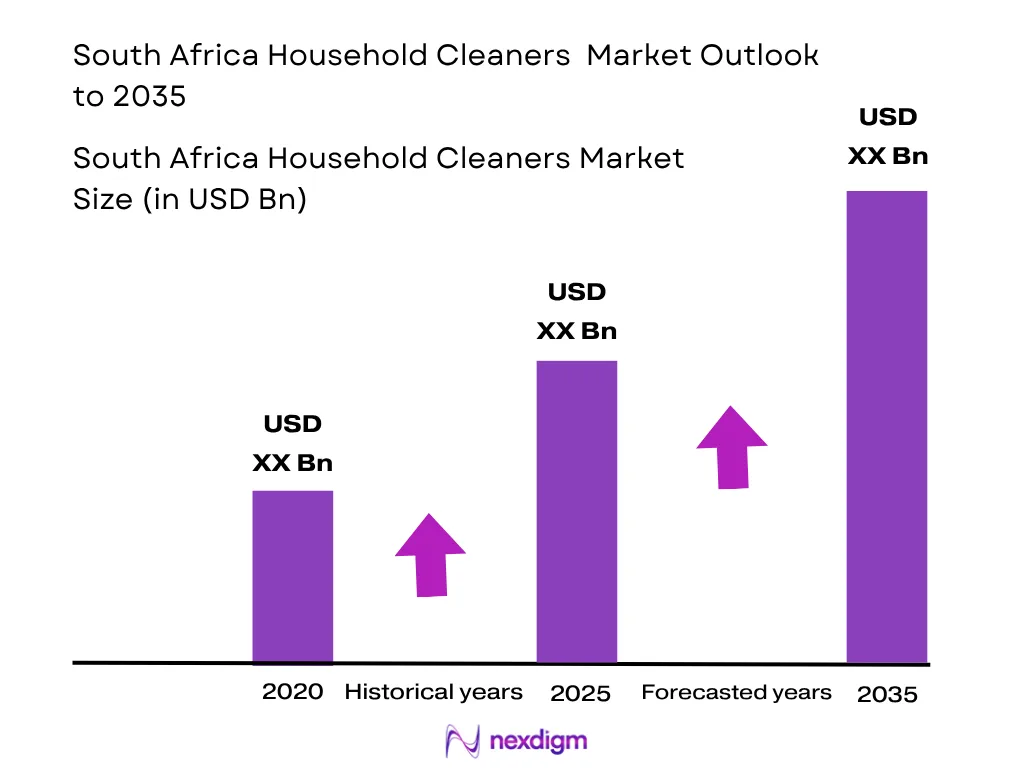
The South African household cleaners market is valued at approximately USD ~ billion. This growth is propelled by increasing hygiene and health awareness, especially post-pandemic, along with a surge in urbanization and dual-income households. Furthermore, the market benefits from the expansion of modern retail and e-commerce platforms, enabling easy access to cleaning products. The rising demand for hygiene-related products, influenced by both health and environmental concerns, significantly boosts market development. Consumers’ growing interest in eco-friendly alternatives and convenience-based solutions continues to drive the demand for various household cleaning products.
South Africa’s household cleaners market is dominated by major metropolitan regions such as Gauteng (Johannesburg and Pretoria), Western Cape (Cape Town), and KwaZulu-Natal (Durban). These regions represent economic and industrial hubs, contributing significantly to market demand due to higher disposable incomes, greater access to retail channels, and larger populations. Additionally, Gauteng, home to the country’s business capital, sees higher household consumption driven by urbanization and increasing dual-income households. The presence of both local and international players further strengthens these regions’ dominance, making them central to the market’s growth.
Market Segmentation
By Product Type
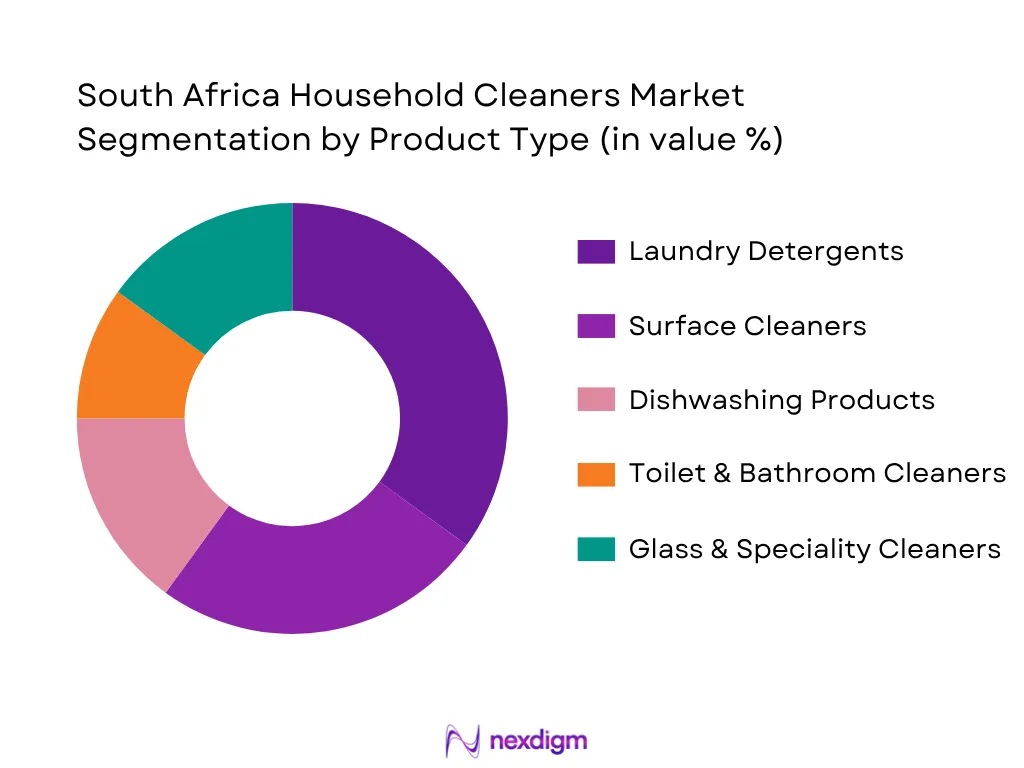
The South African household cleaners market is segmented by product type into laundry detergents, surface/multi-surface cleaners, dishwashing products, toilet & bathroom cleaners, and glass & specialty cleaners. Laundry detergents currently dominate the market. The growing preference for laundry detergents, particularly powders and liquids, can be attributed to their essential role in everyday cleaning. Key global brands like Unilever and Procter & Gamble have solidified their presence in this segment, maintaining strong customer loyalty through years of product innovation and extensive distribution networks. Additionally, as consumers become more health-conscious, demand for detergents with added antibacterial and eco-friendly properties continues to grow, contributing to this segment’s stronghold.
By Application
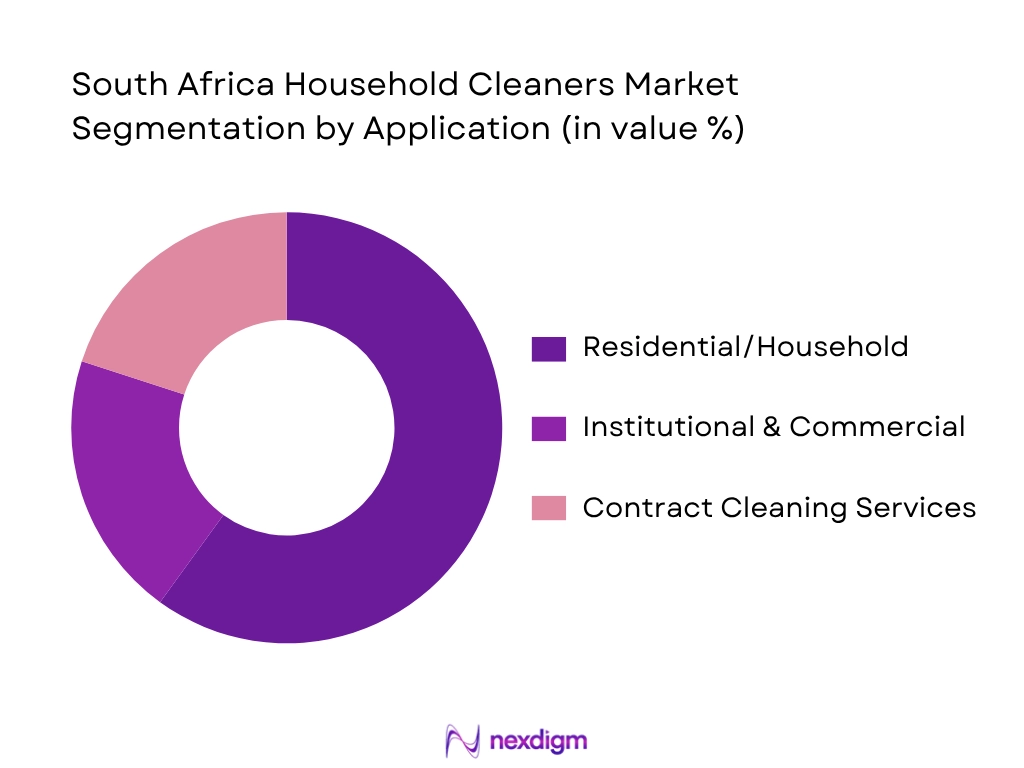
The South African household cleaners market is also segmented by application into residential/household use, institutional & commercial cleaning, and contract cleaning services. Residential cleaning holds the largest market share due to the widespread use of household cleaning products. With increased awareness of health and hygiene, households are investing in premium cleaning products. The rise in dual-income households has also led to greater demand for convenience-based cleaning solutions. Retail channels, including supermarkets and online platforms, have further fueled consumer access to cleaning products, ensuring continued dominance of this segment.
Competitive Landscape
The South African household cleaners market is largely driven by key international players alongside local manufacturers. The dominance of companies such as Unilever, Procter & Gamble, and Reckitt Benckiser can be attributed to their long-standing market presence, strong brand loyalty, and extensive distribution networks. These companies lead through innovations in product formulations, packaging, and sustainability initiatives, which resonate with consumers’ growing preference for eco-friendly solutions.
| Company | Establishment Year | Headquarters | Market Segment Focus | Product Portfolio | R&D Capabilities | Pricing Strategy | Sustainability Initiatives |
| Unilever South Africa | 1930 | Johannesburg | ~ | ~ | ~ | ~ | ~ |
| Procter & Gamble South Africa | 1993 | Durban | ~ | ~ | ~ | ~ | ~ |
| Reckitt Benckiser South Africa | 1924 | Johannesburg | ~ | ~ | ~ | ~ | ~ |
| S.C. Johnson & Son (SA) | 1958 | Johannesburg | ~ | ~ | ~ | ~ | ~ |
| Henkel South Africa | 1960 | Cape Town | ~ | ~ | ~ | ~ | ~ |
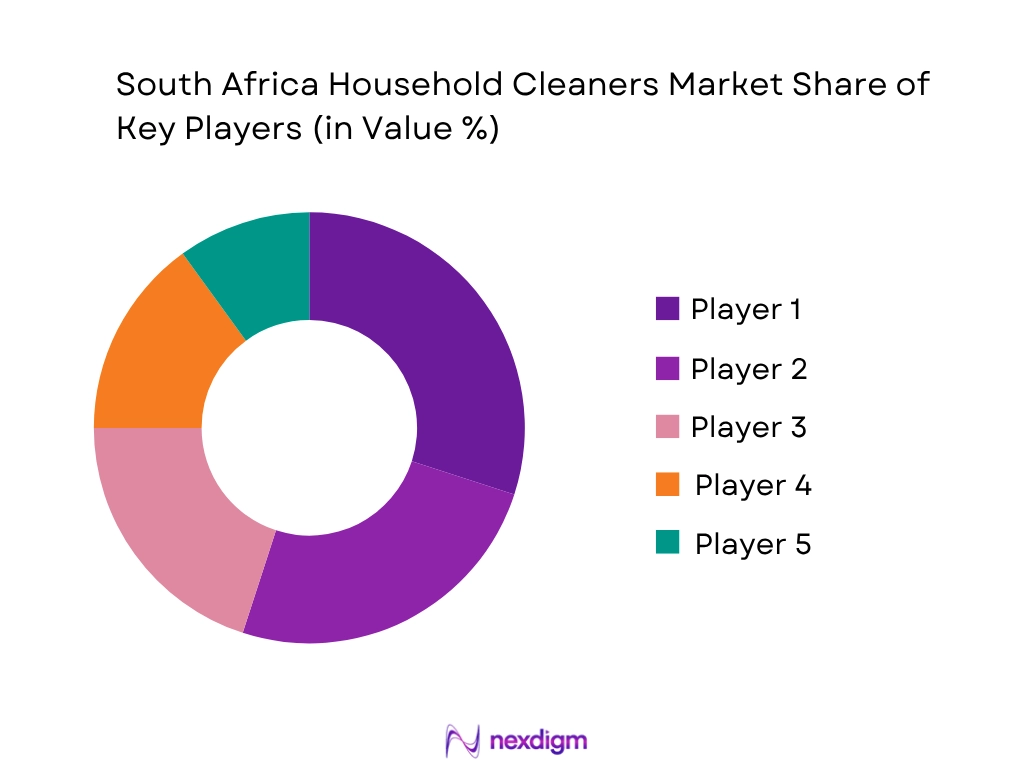
South Africa Household Cleaners Market Analysis
Growth Drivers
Rising Hygiene & Health Awareness
In South Africa, rising hygiene and health awareness is significantly shaping the household cleaners market. Post-pandemic, there has been an observable increase in consumer focus on health and hygiene, with households adopting more frequent and specialized cleaning routines. In 2024, the country’s healthcare expenditure is projected to increase, with the total spending reaching approximately USD 22.5 billion, driven by higher awareness of health-related concerns among the population. The government has also invested in public health initiatives that emphasize cleanliness in both private and public spaces. In parallel, the South African National Department of Health has launched various programs promoting cleanliness, particularly in urban areas. According to the World Bank, South Africa’s healthcare spending as a percentage of GDP is expected to remain stable at around 8% in 2024, reflecting the growing importance of hygiene in daily life. Moreover, the global health crisis highlighted the necessity of sanitization, which continues to influence consumer behavior, pushing demand for disinfectants and specialized cleaning products. As a result, this heightened hygiene awareness supports continued growth in the demand for household cleaning products.
Rapid Urbanization & Dual-Income Families
Urbanization is a key growth driver for the South African household cleaners market. By 2024, South Africa’s urban population is expected to account for over 67% of the total population, as more individuals are migrating to urban areas for employment and improved living conditions. This growing urban population contributes to an increased demand for household cleaning products, as urban dwellers tend to live in smaller spaces that require frequent cleaning. Alongside this, the rise in dual-income households is fostering an environment where both partners have busy schedules, leading to an increased preference for convenient and efficient cleaning solutions. The South African government has focused on urban development and infrastructure improvement, with a forecasted urban growth rate of 1.4% annually through 2026, which will continue to contribute to the expansion of the cleaning product market. Additionally, dual-income households now represent over 40% of the total households in South Africa, creating a higher demand for cleaning products that save time and effort. The rising urbanization and dual-income household trends have proven to be significant contributors to the overall growth in the household cleaning product market.
Market Challenges
Raw Material & Surfactant Price Volatility
One of the most prominent challenges facing the South African household cleaners market is the volatility of raw material prices, particularly surfactants. South Africa imports a large portion of its chemical ingredients, including surfactants derived from palm oil and petrochemical products. Fluctuations in global raw material prices significantly affect local product costs. In 2024, the price of crude oil is expected to remain volatile, with the South African Reserve Bank (SARB) predicting fluctuations between USD 60 and USD 75 per barrel. This impacts the cost of petrochemical-based ingredients used in cleaning products, making production costs unpredictable. Additionally, palm oil prices have surged due to supply chain disruptions in Southeast Asia, with prices in 2024 forecasted to reach USD 1,100 per metric ton, significantly higher than historical levels. The local cleaning product industry, reliant on these imports, faces challenges in maintaining cost-effective pricing, leading to price increases that could dampen consumer demand. This raw material and surfactant price volatility creates financial instability for manufacturers and could stifle market growth.
Power Outages & Infrastructure Constraints
South Africa’s ongoing power outages and infrastructure challenges are a significant concern for the household cleaning products market. The country’s power grid continues to struggle under the weight of high demand and underinvestment, resulting in regular electricity outages, also known as “load shedding.” According to the South African government, electricity supply interruptions are forecast to remain at 3-5% of total consumption in 2024, causing disruption in manufacturing processes, including those in the cleaning product sector. Frequent power outages can delay production schedules, particularly for energy-intensive cleaning product manufacturing processes such as mixing and packaging. Moreover, such outages increase operational costs for manufacturers, especially small and medium enterprises (SMEs), due to the reliance on backup generators, further adding financial strain. Additionally, these infrastructure constraints hinder timely delivery of products to retail outlets, limiting market availability. The continued instability of South Africa’s power supply poses a challenge to manufacturers in the household cleaners market, limiting their ability to scale operations and respond to increased consumer demand efficiently.
Market Opportunities
Demand for Natural/Bio-based Products
The growing trend towards eco-consciousness presents significant opportunities in the South African household cleaners market. South African consumers are increasingly seeking natural and bio-based cleaning solutions that are safer for both the environment and human health. In 2024, consumer preference for natural cleaning products is expected to grow as demand for chemical-free and biodegradable options intensifies. The government has also been actively promoting sustainability through various initiatives, such as the Extended Producer Responsibility (EPR) program, which encourages companies to adopt environmentally friendly practices. According to the Department of Environmental Affairs, approximately 80% of South Africans expressed interest in purchasing eco-friendly products in a 2024 consumer survey, which reflects the growing awareness around the environmental impact of chemical products. Additionally, the South African economy’s shift towards green technologies and sustainable practices is contributing to the growth of bio-based products, with consumers actively seeking alternatives to traditional harsh chemicals in household cleaners. This shift presents an opportunity for companies to innovate and meet this demand for natural, plant-based cleaning products.
Refill/Bulk Sales & Subscription Models
The demand for refill and bulk sales models is gaining traction in South Africa as consumers become more budget-conscious and environmentally aware. In 2024, refill stations for household cleaning products are becoming more common in retail environments, with large supermarket chains such as Shoprite and Pick n Pay already offering refill options for products like laundry detergents and multi-surface cleaners. The South African government’s focus on reducing plastic waste through policies like the Plastic Bag Levy and Extended Producer Responsibility (EPR) has also boosted the popularity of refillable product formats. Consumers are increasingly turning to these bulk purchase models to reduce packaging waste and lower their overall cleaning product costs. As of 2024, it is estimated that 60% of South African households are exploring alternatives to single-use plastic packaging, and refill solutions are seen as a viable option. The continued growth of e-commerce platforms, where subscription models for cleaning products are gaining popularity, further supports this trend, allowing consumers to purchase cleaning supplies in bulk or on a recurring basis, benefiting both their wallets and the environment.
Future Outlook
Over the next decade, the South African household cleaners market is expected to experience significant growth. This growth will be driven by an increasing consumer shift toward eco-friendly products, innovations in cleaning formulas, and rising disposable incomes. With government and private sector initiatives focusing on environmental sustainability, the demand for biodegradable and natural cleaning solutions will continue to rise. Moreover, as urbanization continues to accelerate, the adoption of cleaning products in households and commercial settings is expected to rise substantially.
Major Players
- Unilever South Africa
- Procter & Gamble South Africa
- Reckitt Benckiser South Africa
- S.C. Johnson & Son (SA)
- Henkel South Africa
- Colgate-Palmolive South Africa
- Tiger Consumer Brands
- Libstar Operations
- Diversey South Africa
- Ecolab South Africa
- Kenafric Consumer Products
- Bidvest Steiner
- Sasol South Africa
- Kimberly-Clark South Africa
- Johnson & Johnson (SA)
Key Target Audience
- Investments and Venture Capitalist Firms
- Government and Regulatory Bodies (e.g., South African Bureau of Standards (SABS), Department of Environmental Affairs)
- Retail Chains (Supermarkets/Hypermarkets)
- E-commerce Platforms (Online Retailers)
- Cleaning Service Providers (Commercial & Industrial)
- Packaging Manufacturers
- Ingredient Suppliers (e.g., Surfactant Producers)
- Private Label Brands (Local and Regional Companies)
Research Methodology
Step 1: Identification of Key Variables
The research begins with identifying the primary factors that influence the South African household cleaners market. These include consumer behavior, market trends, and technological advancements. Secondary data from reliable sources, including government reports and industry publications, is used to define these variables.
Step 2: Market Analysis and Construction
Historical data is analyzed to assess the market trends in terms of both revenue and volume. This phase also involves evaluating the impact of retail shifts, such as the growth of e-commerce and modern trade, on market penetration and revenue.
Step 3: Hypothesis Validation and Expert Consultation
Market hypotheses are tested through consultations with industry experts, including manufacturers, distributors, and retailers. This step involves conducting interviews and surveys to obtain insights that validate the hypotheses and refine the analysis.
Step 4: Research Synthesis and Final Output
Finally, the collected data is synthesized into a coherent report that provides a comprehensive analysis of the South African household cleaners market. The synthesis includes key insights on consumer behavior, market forecasts, and a detailed competitive landscape.

- Executive Summary
- Research Methodology (Market definitions and scope (household cleaning products, inclusion of laundry vs surface cleaners), Research approach: primary interviews (industry experts, retailers) and secondary data (reports, customs), Market sizing: top-down and bottom-up models; revenue and volume estimation, Data validation: Cross-referencing supply-chain and trade data, Assumptions, limitations and future research directions)

- Definition and Scope
- Industry Genesis and Evolution
- Timeline of Major Players
- Business Cycle Analysis
- South Africa Retail Cleaning Basket Structure
- Supply Chain & Value Chain Analysis

- Growth Drivers(Rising Hygiene & Health Awareness, Rapid Urbanisation & Dual-Income Families, Expansion of Modern Trade & E-Commerce, Product Innovation & Premiumization, Public Sanitation Campaigns)
- Market Challenges(Raw Material & Surfactant Price Volatility, Power Outages & Infrastructure Constraints, Regulatory Burden, High Price Sensitivity & Private-Label Competition, Packaging Waste & Sustainability Pressure)
- Opportunities(Demand for Natural/Bio-based Products, Refill/Bulk Sales & Subscription Models, Untapped Rural & Value Markets, Innovation in Water-Saving Formulations, Growth of Hygiene-Enforcing Segments)
- Trends (Rise of Private Labels & Value Packs, Smart Packaging & Digital Labeling, Integration with IoT/Smart Devices, Emphasis on Green Chemistry )
- Government Regulation(Chemical Safety Standards, Environmental & Waste Management Laws, Import Tariffs & Trade Policies, Packaging/Plastic Regulations)
- SWOT Analysis of Industry
- Stakeholder Ecosystem (Suppliers, Retailers, Distributors, Government)
- Porter’s Five Forces Analysis
- Competitive Landscape Overview

- By Value (2020-2025)
- By Volume (2020-2025)
- By Average Price (2020-2025)
- By Unit Sales (2020-2025)

- By Product Type (In Value %)
Laundry Detergents
Surface/Multi-surface Cleaner
Dishwashing Products
Toilet & Bathroom Cleaners
Glass & Specialty Cleaners - By Application (In Value %)
Residential/Household (home use)
Institutional & Commercial (hospitals, hotels, offices)
Contract Cleaning Services (commercial cleaning companies) - By Distribution Channel (In Value %)
Supermarkets/Hypermarkets
Convenience & Grocery Stores (incl. independent retailers)
Online Retail/E-commerce platforms
Wholesale/Institutional Procurement (B2B supply)
Other Channels (direct sales, traditional trade) - By Region (In Value %)
Gauteng (Johannesburg/Pretoria)
Western Cape (Cape Town)
KwaZulu-Natal (Durban)
Eastern Cape - By Packaging Type (In Value %)
Bottles
Sachets/Pouches
Aerosol Cans
Bars & Tablets
Wipes & Other Formats

- Market Share of Major Players (By Value, by Volume, by product segment,Region, Channel)
- Cross Comparison Parameters(Product Portfolio and Key Brands, Distribution Network and Channel Reach, Manufacturing Facilities & Production Capacity, Pricing Strategy and Gross Margins, Sustainability Initiatives and Eco Certifications, R&D and Innovation Capabilities, Marketing & Promotional Activities, Strategic Alliances & Partnerships)
- SWOT Analysis of Key Competitors
- Pricing Analysis (Leading SKUs)(Retail price ranges for flagship products across major brands)
- Channel Presence Mapping (Supermarkets, Atacarejo, Traditional Trade, Pharmacies, Marketplaces, Quick Commerce)
- Brand Positioning Map (Economy, Mass, Premium, Eco/Natural, Heavy-Duty, Fragrance-Led)
- Recent Developments (Product Launches, Packaging Changes, Retail Partnerships, Sustainability Claims, Capacity Expansion)
- Detailed Profiles of Major Players
Unilever South Africa
Procter & Gamble South Africa
Reckitt Benckiser South Africa
S.C. Johnson & Son (SA)
Henkel South Africa
Colgate-Palmolive South Africa
Tiger Consumer Brands
Libstar Operations
Diversey South Africa
Ecolab South Africa
Kenafric Consumer Products
Bidvest Steiner
Sasol South Africa
Kimberly-Clark South Africa
Johnson & Johnson

- Market Demand and Usage(Consumption patterns, Seasonal or cyclical usage )
Purchasing Power and Budget Allocation(Consumer spending tiers, Price vs. quality trade-off among segments) - Regulatory and Safety Compliance (End Users)(Consumer awareness of ingredient safety, Compliance with local standards for household chemicals)
- Consumer Needs, Desires, and Pain Points(Value-for-money and efficacy, Desire for multi-functionality and convenience (all-in-one cleaners), Environmental concerns)
- Decision-Making Process(Influencers, brand reputation, advertising, word-of-mouth, Role of promotions and loyalty programs in purchase decisions)

- By Value (2026–2035)
- By Volume (2026–2035)
- By Average Price (2026–2035)
- By Unit Sales (2026-2035)


 Request a Sample
 Ask for Customization
 Get a Quote
 Enquire Now