
 Download PDF
Market Overview
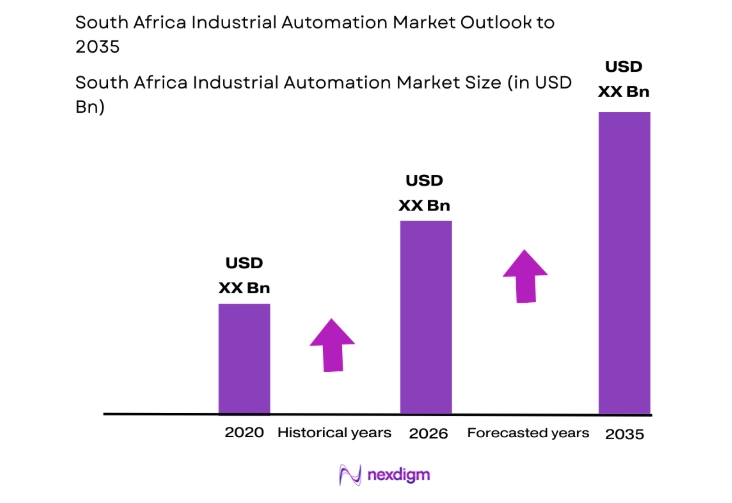
The South Africa Industrial Automation market is valued at approximately USD ~ billion based on a recent historical assessment, driven by the increasing demand for automation technologies across manufacturing, agriculture, and energy sectors. The growth is supported by advancements in robotics, artificial intelligence (AI), industrial Internet of Things (IoT), and machine learning, which are revolutionizing industries by improving efficiency, reducing operational costs, and increasing precision in production processes.
Key cities like Johannesburg, Cape Town, and Durban dominate the industrial automation market in South Africa. Johannesburg, as the economic hub, hosts numerous industries, including manufacturing and mining, driving the demand for automation solutions. Cape Town is emerging as a technology and innovation hub, further fostering the adoption of automation technologies. Durban’s strategic location and strong industrial base also contribute to the growing use of industrial automation in manufacturing, port logistics, and supply chain management.
Market Segmentation
By Product Type
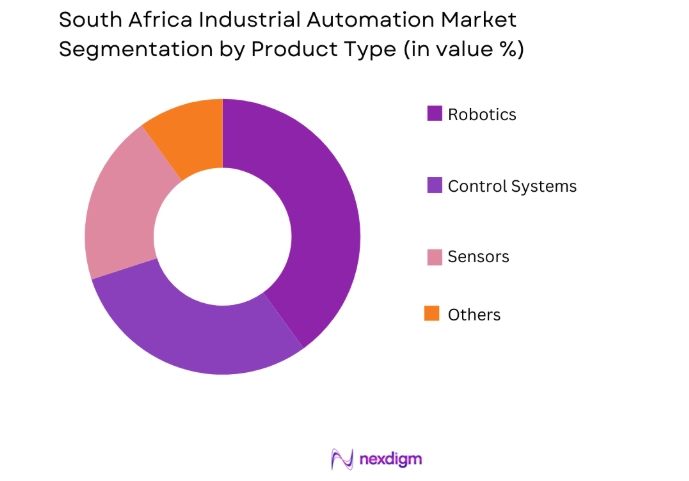
The South Africa Industrial Automation market is segmented by product type into robotics, control systems, sensors, and others. Recently, robotics has dominated the market share due to its extensive application across various industries such as manufacturing, automotive, and logistics. The demand for robotics is driven by the need for increased productivity, precision, and efficiency in industrial processes. With advancements in robotics technology, including collaborative robots (cobots) and autonomous mobile robots (AMRs), companies are increasingly adopting robotics to automate repetitive tasks, reduce human error, and optimize operations. The growth of industries such as automotive and consumer electronics in South Africa further drives the adoption of robotics solutions.
By Application Type
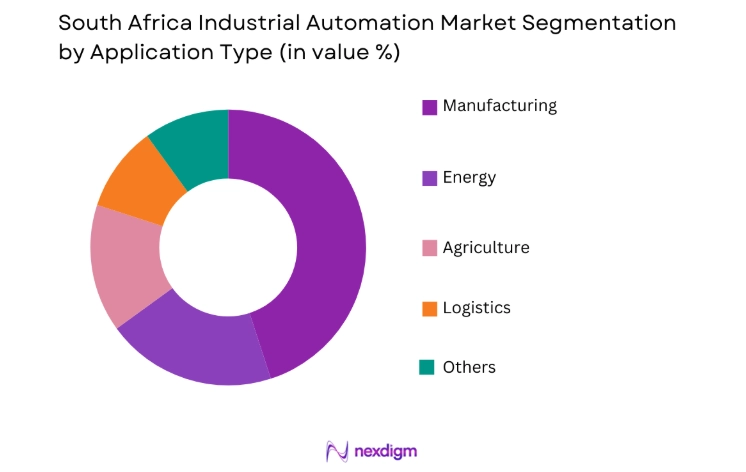
The South Africa Industrial Automation market is also segmented by application type into manufacturing, energy, agriculture, logistics, and others. Manufacturing holds the largest market share, driven by the increasing adoption of automation technologies to improve production processes, reduce labor costs, and enhance product quality. Automation in manufacturing industries such as automotive, electronics, and food processing has become essential for meeting global competitiveness and regulatory standards. As South Africa’s manufacturing sector continues to grow, automation is playing a key role in driving efficiency, minimizing waste, and boosting overall productivity, making it a dominant application type in the market.
Competitive Landscape
The competitive landscape of the South Africa Industrial Automation market is shaped by the presence of both global giants and local innovators. International players such as Siemens, Rockwell Automation, and ABB dominate the high-end industrial automation solutions sector, offering cutting-edge technologies and large-scale automation systems. However, local players are gaining traction by providing customized and cost-effective solutions for industries in South Africa, particularly in the agricultural and mining sectors. As the market grows, partnerships and collaborations between local and international firms are expected to increase, driving innovation and the broader adoption of automation solutions.
| Company Name | Establishment Year | Headquarters | Technology Focus | Market Reach | Key Products | Revenue | Industry-Specific Focus |
| Siemens AG | 1847 | Munich, Germany | ~ | ~ | ~ | ~ | ~ |
| Rockwell Automation | 1903 | Milwaukee, USA | ~ | ~ | ~ | ~ | ~ |
| ABB | 1988 | Zurich, Switzerland | ~ | ~ | ~ | ~ | ~ |
| Schneider Electric | 1836 | Rueil-Malmaison, France | ~ | ~ | ~ | ~ | ~ |
| Mitsubishi Electric | 1921 | Tokyo, Japan | ~ | ~ | ~ | ~ | ~ |
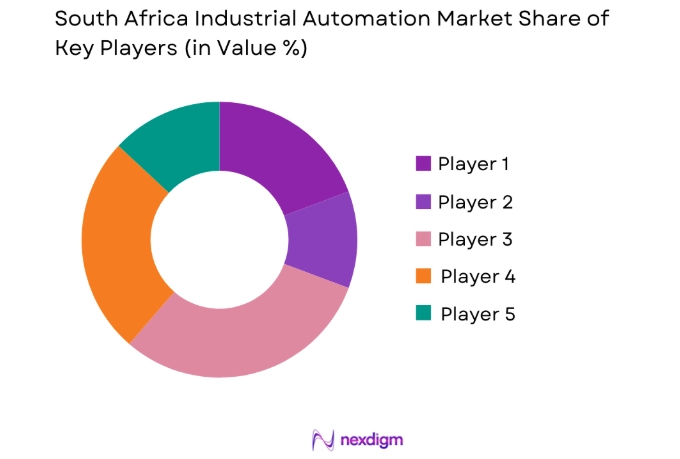
South Africa Industrial Automation Market Analysis
Growth Drivers
Technological Advancements in Robotics and AI
The South Africa Industrial Automation market is experiencing significant growth due to advancements in robotics and artificial intelligence (AI). The integration of AI into robotic systems has transformed industrial automation by enabling machines to perform more complex tasks with increased autonomy and accuracy. Robotics, including collaborative robots (cobots), are increasingly being used in South Africa’s manufacturing, automotive, and logistics sectors to automate repetitive tasks such as assembly, packaging, and material handling. This shift towards robotics and AI is driven by the need for businesses to increase productivity, reduce operational costs, and remain competitive in a globalized market. Furthermore, the increasing adoption of AI-powered analytics enables real-time monitoring of industrial processes, helping businesses make informed decisions, optimize resource usage, and predict maintenance needs. As the technology continues to evolve, it is expected to drive further growth in the market, particularly in industries that rely heavily on automation, such as manufacturing and automotive.
Government Support for Industrialization and Infrastructure Development
The South African government plays a critical role in driving the growth of the Industrial Automation market through policies that promote industrialization and infrastructure development. The government’s focus on initiatives such as the “Industrial Policy Action Plan (IPAP)” aims to support the growth of key industries, including manufacturing, energy, and agriculture, by encouraging the adoption of automation technologies. Additionally, investments in infrastructure, including energy-efficient buildings, smart grids, and modern transport systems, are further boosting the demand for industrial automation solutions. The government’s commitment to developing the country’s industrial base, particularly through the promotion of automation in various sectors, has created a favorable environment for the growth of the industrial automation market in South Africa. These efforts are expected to continue in the coming years, driving further demand for automation solutions across industries.
Market Challenges
High Initial Investment and Implementation Costs
One of the major challenges facing the South Africa Industrial Automation market is the high initial investment required to implement automation systems. The cost of acquiring, installing, and maintaining industrial automation equipment, including robotics, control systems, and IoT devices, can be prohibitively expensive, particularly for small and medium-sized enterprises (SMEs). The capital-intensive nature of automation means that many businesses in South Africa, especially those in industries like agriculture and small-scale manufacturing, may find it difficult to justify the upfront costs, despite the long-term benefits. As a result, the high initial cost of automation is a key barrier to widespread adoption, limiting the growth of the market in certain sectors. To overcome this challenge, it is necessary to introduce affordable solutions, provide financing options, and offer incentives for businesses that invest in automation.
Lack of Skilled Workforce
The shortage of skilled workers in automation, robotics, and IoT technology is another challenge facing the South African market. Industrial automation requires a specialized workforce capable of operating and maintaining complex automation systems, yet there is a limited pool of talent with the necessary expertise. Many industries in South Africa, particularly in manufacturing and agriculture, struggle to find qualified workers who can design, implement, and manage automation solutions. This skills gap is a significant barrier to the adoption of automation technologies, as businesses may be hesitant to invest in systems they are unable to fully utilize or maintain. To address this issue, South Africa needs to invest in education and training programs that focus on the skills needed for the automation and robotics industries. Increased collaboration between industry players, educational institutions, and government bodies is crucial to closing the skills gap and ensuring that the workforce is prepared for the demands of an automated industrial landscape.
Opportunities
Adoption of Smart Manufacturing Technologies
The growing demand for smart manufacturing presents a significant opportunity for the South Africa Industrial Automation market. As industries seek to improve efficiency, quality, and sustainability, the adoption of smart manufacturing technologies such as robotics, AI, and IoT is becoming essential. Smart factories, where machines and systems are interconnected, allow for real-time monitoring, predictive maintenance, and data-driven decision-making, leading to optimized production processes and reduced operational costs. South Africa’s manufacturing sector, particularly in industries such as automotive, food processing, and textiles, is increasingly embracing automation to meet global standards and remain competitive. As the demand for smart manufacturing solutions continues to rise, there is an opportunity for automation companies to provide advanced technologies and solutions to help South African manufacturers enhance their operations and meet market demands.
Growth of the Logistics and Supply Chain Industry
The logistics and supply chain industry in South Africa is expanding rapidly, creating an opportunity for the Industrial Automation market. Automation technologies, such as autonomous mobile robots (AMRs), automated guided vehicles (AGVs), and warehouse management systems (WMS), are revolutionizing the logistics sector by improving efficiency, reducing labor costs, and enhancing safety. With South Africa’s strategic location as a regional logistics hub for Africa, the need for automation in supply chain management is increasing. The adoption of industrial automation technologies in warehouses, distribution centers, and ports is expected to grow as companies look to streamline operations, reduce human error, and increase throughput. Furthermore, with the growth of e-commerce and the demand for faster delivery times, automation in logistics will become even more critical, creating substantial opportunities for growth in the Industrial Automation market.
Future Outlook
The South Africa Industrial Automation market is expected to experience steady growth over the next five years, driven by advancements in robotics, AI, and IoT technologies. The government’s push for industrialization and infrastructure development, combined with the increasing demand for smart manufacturing and logistics solutions, will continue to drive market expansion. However, addressing challenges such as high initial investment costs and the shortage of skilled labor will be critical for unlocking the full potential of the market. With continued innovation and investment in automation technologies, the market is poised for significant growth, particularly in manufacturing, logistics, and energy sectors.
Major Players
- Siemens
- Rockwell Automation
- ABB
- Schneider Electric
- Mitsubishi Electric
- Honeywell
- Bosch Rexroth
- Emerson Electric
- Yokogawa Electric
- KUKA
- FANUC
- Omron Corporation
- Endress+Hauser
- Beckhoff Automation
- B&R Industrial Automation
Key Target Audience
- Investments and venture capitalist firms
- Government and regulatory bodies
- Manufacturing companies
- Agriculture firms
- Logistics providers
- Industrial automation solution developers
- Energy providers
Research Methodology
Step 1: Identification of Key Variables
Identify key factors influencing the growth of the South African Industrial Automation market, including technological trends, market demands, and regulatory initiatives.
Step 2: Market Analysis and Construction
Analyze market trends, historical data, and growth patterns to develop a comprehensive market model based on real-world industry dynamics.
Step 3: Hypothesis Validation and Expert Consultation
Consult with industry experts, stakeholders, and technology providers to validate hypotheses and ensure the accuracy of research findings.
Step 4: Research Synthesis and Final Output
Synthesize the research data into a final report that provides actionable insights, strategic recommendations, and market forecasts for stakeholders.

- Executive Summary
- Research Methodology (Definitions, Scope, Industry Assumptions, Market Sizing Approach, Primary & Secondary Research Framework, Data Collection & Verification Protocol, Analytic Models & Forecast Methodology, Limitations & Research Validity Checks)

- Market Definition and Scope
- Value Chain & Stakeholder Ecosystem
- Regulatory / Certification Landscape
- Sector Dynamics Affecting Demand

- Growth Drivers
Increase in manufacturing automation
Government support for Industry 4.0 initiatives
Adoption of smart manufacturing technologies - Market Challenges
High initial capital investment
Lack of skilled workforce for automation systems
Integration of legacy systems with new technologies - Market Opportunities
Emerging demand for IoT and AI-based automation solutions
Growth of smart factories and digital twins
Expansion of automation in emerging industries - Trends
Shift towards predictive maintenance systems
Integration of AI and machine learning in industrial automation - Government Regulations
Regulations on industrial emissions and safety
Compliance with international automation standards
Government incentives for automation adoption - SWOT Analysis
- Porter’s Five Forces

- By Market Value, 2020-2025
- By Installed Units, 2020-2025
- By Average System Price, 2020-2025
- By System Complexity Tier, 2020-2025

- By System Type (In Value%)
Industrial Robots
Control Systems
Automation Software
Sensors
Actuators - By Platform Type (In Value%)
Factory Automation
Process Automation
Hybrid Automation
Industrial IoT - By Fitment Type (In Value%)
On-premise Solutions
Cloud-based Solutions
Integrated Solutions
Modular Solutions - By End User Segment (In Value%)
Manufacturing
Automotive
Pharmaceutical
Electronics

- Market Share Analysis
- Cross Comparison Parameters (System Complexity, Industry Focus, Automation Adoption, Technology Integration, Regional Demand, Competitive Intensity, Innovation in Automation)
- SWOT Analysis of Key Competitors
- Pricing & Procurement Analysis
- Key Players
Siemens
Rockwell Automation
Schneider Electric
ABB
Honeywell
Mitsubishi Electric
Yokogawa Electric
Fanuc
Bosch Rexroth
Emerson Electric
GE Digital
Panasonic
KUKA
Omron Corporation
Rexroth

- Manufacturers embracing automation for efficiency
- The automotive industry driving demand for advanced robotics
- Pharmaceutical industry increasingly adopting automated systems

- Forecast Market Value, 2026-2035
- Forecast Installed Units, 2026-2035
- Price Forecast by System Tier, 2026-2035
- Future Demand by Platform, 2026-2035


 Request a Sample
 Ask for Customization
 Get a Quote
 Enquire Now