

 Download PDF
 Download PDF
Market Overview
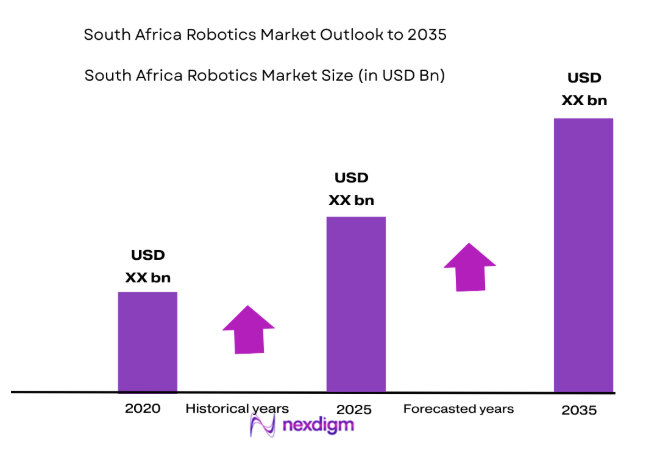
The South Africa robotics market is valued at approximately USD ~ billion, driven by the rapid adoption of automation technologies across various sectors. Key industries such as manufacturing, logistics, and healthcare are increasingly integrating robotic systems to improve operational efficiency, reduce labor costs, and enhance precision. The growing interest in artificial intelligence (AI) and machine learning further boosts the demand for robotics, as these technologies enable robots to perform more complex tasks with greater autonomy. As automation continues to evolve, the South Africa robotics market is expected to experience substantial growth in the coming years.
The major urban centers of Johannesburg, Cape Town, and Durban dominate the South Africa robotics market due to their advanced infrastructure, strong industrial presence, and strategic positioning within the African continent. These cities are increasingly becoming hubs for innovation, fostering collaboration between local businesses and international robotics companies. The government’s focus on enhancing automation across various industries, coupled with rising demand for smart manufacturing solutions, ensures the continued dominance of these cities in driving the robotics market forward.
Market Segmentation
By Product Type
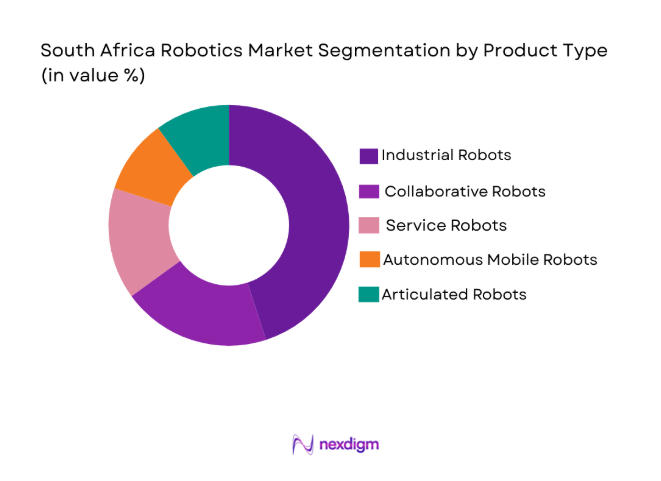
The South Africa robotics market is segmented by product type into industrial robots, collaborative robots, service robots, autonomous mobile robots, and articulated robots. Among these, industrial robots dominate the market due to their widespread use in manufacturing and automation across various sectors. Industrial robots are highly favored due to their efficiency in repetitive tasks, high precision, and ability to work in hazardous environments, reducing human labor costs and enhancing productivity. The adoption of industrial robots is also encouraged by the South African government’s push for smart factory solutions and digital transformation in manufacturing.
By Platform Type
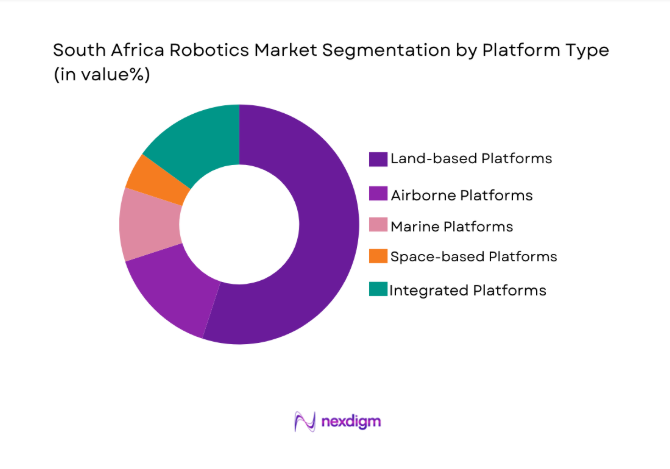
The South Africa robotics market is segmented by platform type into land-based platforms, airborne platforms, marine platforms, space-based platforms, and integrated platforms. Land-based platforms dominate the market, particularly in sectors such as agriculture, manufacturing, and logistics, where autonomous vehicles and robots are widely adopted for tasks like material handling and surveillance. These platforms benefit from the country’s strong logistics infrastructure and the growing demand for automation in warehouses, factories, and agricultural fields, making land-based robots an essential part of the automation trend.
Competitive Landscape
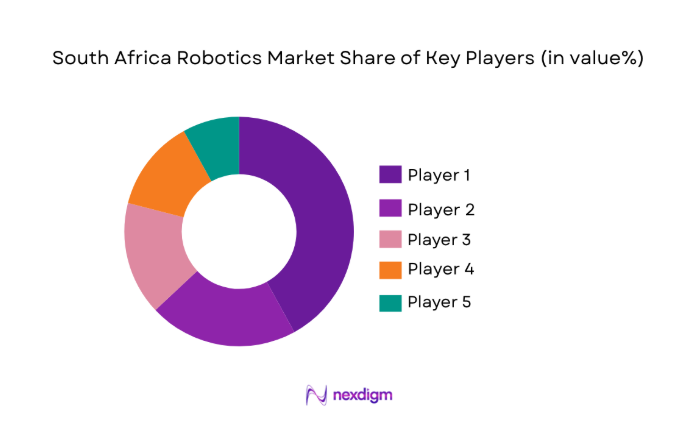
The South African robotics market is competitive, with several global and local players vying for market share. Major international companies, such as ABB Robotics, FANUC, and KUKA, have established a strong presence in the country, driving innovation and pushing the boundaries of robotic technology. Local companies are also playing a crucial role in driving adoption through localized solutions and partnerships with industries to support automation. As the market matures, consolidation is expected to occur, with major players strengthening their positions through strategic acquisitions and partnerships.
| Company Name | Establishment Year | Headquarters | Technology Focus | Market Reach | Key Products | Revenue (USD) | Custom Parameter |
| ABB Robotics | 1988 | Switzerland | ~ | ~ | ~ | ~ | ~ |
| KUKA Robotics | 1898 | Germany | ~ | ~ | ~ | ~ | ~ |
| FANUC | 1956 | Japan | ~ | ~ | ~ | ~ | ~ |
| Universal Robots | 2005 | Denmark | ~ | ~ | ~ | ~ | ~ |
| Yaskawa Electric | 1915 | Japan | ~ | ~ | ~ | ~ | ~ |
South Africa Robotics Market Analysis
Growth Drivers
Technological Advancements in AI and Robotics
Technological advancements in artificial intelligence (AI) and robotics are significantly driving the growth of South Africa’s robotics market. The integration of AI allows robots to handle more complex tasks, adapt to their environments, and make real-time decisions, which is particularly beneficial in industries such as manufacturing, healthcare, and logistics. These improvements make robots more cost-effective and efficient, leading to increased adoption by businesses seeking to streamline operations and enhance productivity. Furthermore, with AI capabilities, robots are able to learn from their experiences, improving their performance over time. The continued advancements in AI ensure that robots are becoming more versatile, expanding their roles beyond industrial tasks to more complex sectors such as healthcare and service industries. These innovations, along with the push for smart manufacturing and automation in South Africa, are contributing significantly to the expansion of the robotics market. The government’s focus on automation and support for AI-driven industries further strengthens the growth potential in the region.
Increased Government Investment in Automation
Government investment in automation and robotics is a crucial growth driver for South Africa’s robotics market. The South African government has prioritized the development of advanced technologies, including robotics, as part of its industrial modernization initiatives. Through funding programs and incentives, the government encourages local businesses to adopt robotics and automation technologies to increase competitiveness, reduce labor costs, and improve productivity. These investments support the transition towards Industry 4.0, promoting the adoption of smart factory solutions and AI-driven systems across industries such as automotive, manufacturing, and agriculture. As automation becomes integral to economic growth, government policies and financial incentives are expected to foster innovation and expand the market for robotics solutions.
Market Challenges
High Initial Capital Investment
High initial capital investment remains a significant barrier to the adoption of robotics in South Africa. While the long-term benefits of automation, such as increased productivity and reduced labor costs, are well recognized, the upfront costs of purchasing, installing, and maintaining robotic systems can be prohibitive, especially for small and medium-sized enterprises (SMEs). The financial constraints faced by many businesses in South Africa limit their ability to invest in advanced robotics solutions. Furthermore, the lack of affordable financing options and the complexity of integrating robotic systems into existing infrastructures discourage many potential adopters. As a result, while there is strong interest in robotics, the high initial costs remain a challenge to widespread adoption. For the market to expand, solutions that reduce the cost of entry and financial incentives to encourage investment in robotics will be essential.
Lack of Skilled Labor and Training
One of the key challenges for the South African robotics market is the shortage of skilled labor to operate, maintain, and innovate with robotic systems. Robotics technology requires a specialized workforce capable of handling the complexities of robot programming, integration, and troubleshooting. However, the current skill gaps in the South African workforce hinder the rapid adoption of advanced robotics solutions. The education and training system in South Africa needs to align more closely with the demands of the robotics industry. Investments in technical education, vocational training, and partnerships between academia and industry are necessary to ensure that a skilled workforce is available to support the growing demand for robotics technology.
Opportunities
Rise in Robotics Adoption in Agriculture
One of the major opportunities in the South African robotics market is the growing adoption of robots in agriculture. Robotics solutions can improve the efficiency of farming operations, from crop planting and harvesting to pest control and irrigation management. With South Africa’s agricultural sector facing labor shortages and the need for increased productivity, the integration of robotic technologies provides a promising solution. The demand for autonomous systems that can operate in harsh outdoor environments is driving the market for agricultural robots. Furthermore, the ability to enhance crop yields and reduce resource consumption makes agricultural robots highly attractive to farmers. As the South African government supports initiatives aimed at modernizing the agricultural sector, the demand for robotics is set to increase, creating new market opportunities.
Integration of Robotics in Healthcare
Another significant opportunity in the South African robotics market lies in the integration of robotics within the healthcare sector. Robotics is becoming increasingly important in areas such as surgery, rehabilitation, and elder care, with systems designed to improve the precision of medical procedures and assist patients in their recovery. South Africa’s healthcare system is expanding its adoption of robotics to enhance patient outcomes and optimize hospital operations. The rising demand for minimally invasive surgeries and the aging population are factors that contribute to the market potential for healthcare robotics. As robotics technology becomes more accessible, healthcare providers are expected to invest in robotic systems to improve care delivery and patient experiences.
Future Outlook
The South African robotics market is poised for significant growth over the next five years. Technological advancements in robotics and AI are expected to continue driving market expansion, with increasing demand for automation in industries such as manufacturing, agriculture, and healthcare. The growing focus on smart manufacturing and government support for digital transformation will further fuel market development. The country’s robotics market is also anticipated to benefit from improvements in workforce training and the availability of more affordable robotics solutions, which will encourage wider adoption.
Major Players
- ABB Robotics
- KUKA Robotics
- FANUC
- Universal Robots
- Yaskawa Electric
- Kawasaki Heavy Industries
- Stäubli Robotics
- Mitsubishi Electric
- Omron Corporation
- Rockwell Automation
- Rethink Robotics
- Bosch Rexroth
- Adept Technology
- Teradyne
- Epson Robots
Key Target Audience
- Investments and venture capitalist firms
- Government and regulatory bodies
- Automotive manufacturers
- Industrial automation companies
- Healthcare providers
- Agricultural businesses
- Logistics and warehousing firms
Research Methodology
Step 1: Identification of Key Variables
The first step is identifying the key factors influencing market growth, including technological innovations, regulatory frameworks, and industry-specific demand patterns.
Step 2: Market Analysis and Construction
This step involves gathering data from primary and secondary sources to build a comprehensive understanding of the market size, segmentation, and competitive landscape.
Step 3: Hypothesis Validation and Expert Consultation
In this stage, the hypotheses developed are tested through consultations with industry experts to ensure accuracy and reliability.
Step 4: Research Synthesis and Final Output
The final step involves synthesizing all collected data and insights into a cohesive report that accurately reflects the market’s current state and future prospects.

- Executive Summary
- Research Methodology (Definitions, Scope, Industry Assumptions, Market Sizing Approach, Primary & Secondary Research Framework, Data Collection & Verification Protocol, Analytic Models & Forecast Methodology, Limitations & Research Validity Checks)

- Market Definition and Scope
- Value Chain & Stakeholder Ecosystem
- Regulatory / Certification Landscape
- Sector Dynamics Affecting Demand
- Strategic Initiatives & Infrastructure Growth

- Growth Drivers
Technological Advancements in AI and Robotics
Government Initiatives in Automation
Increased Demand in Manufacturing Sectors - Market Challenges
High Initial Investment Costs
Skilled Labor Shortages
Regulatory and Certification Challenges - Market Opportunities
Expansion in Autonomous Robotics
Technological Integration in Healthcare
Rise in Automation in Agricultural Sectors - Trends
Integration of AI with Robotics
Use of Collaborative Robots in Various Sectors - Government Regulations
- SWOT Analysis
- Porter’s Five Forces

- By Market Value, 2020-2025
- By Installed Units, 2020-2025
- By Average System Price, 2020-2025
- By System Complexity Tier, 2020-2025

- By System Type (In Value%)
Industrial Robots
Collaborative Robots
Service Robots
Autonomous Mobile Robots
Articulated Robots - By Platform Type (In Value%)
Land-based Platforms
Airborne Platforms
Marine Platforms
Space-based Platforms
Integrated Platforms - By Fitment Type (In Value%)
On-premise Solutions
Cloud-based Solutions
Hybrid Solutions
Modular Solutions - By End User Segment (In Value%)
Manufacturing
Healthcare
Logistics & Warehousing
Agriculture

- Market Share Analysis
- Cross Comparison Parameters (System Type, Platform Type, Procurement Channel, End User Segment, Fitment Type, Technology Integration, Robotics Application)
- SWOT Analysis of Key Competitors
- Pricing & Procurement Analysis
- Key Players
Adept Technology
ABB Robotics
KUKA Robotics
FANUC
Yaskawa Electric
Rethink Robotics
Universal Robots
Rockwell Automation
Omron Corporation
Siemens AG
Kawasaki Heavy Industries
Stäubli Robotics
Mitsubishi Electric
Teradyne
SICK AG

- Increasing Adoption in Manufacturing
- Role of Robotics in Healthcare Solutions
- Automation Trends in Logistics
- Growth of Robotics in Agriculture

- Forecast Market Value, 2026-2035
- Forecast Installed Units, 2026-2035
- Price Forecast by System Tier, 2026-2035
- Future Demand by Platform, 2026-2035


 Request a Sample
 Ask for Customization
 Get a Quote
 Enquire Now