
 Download PDF
Market Overview
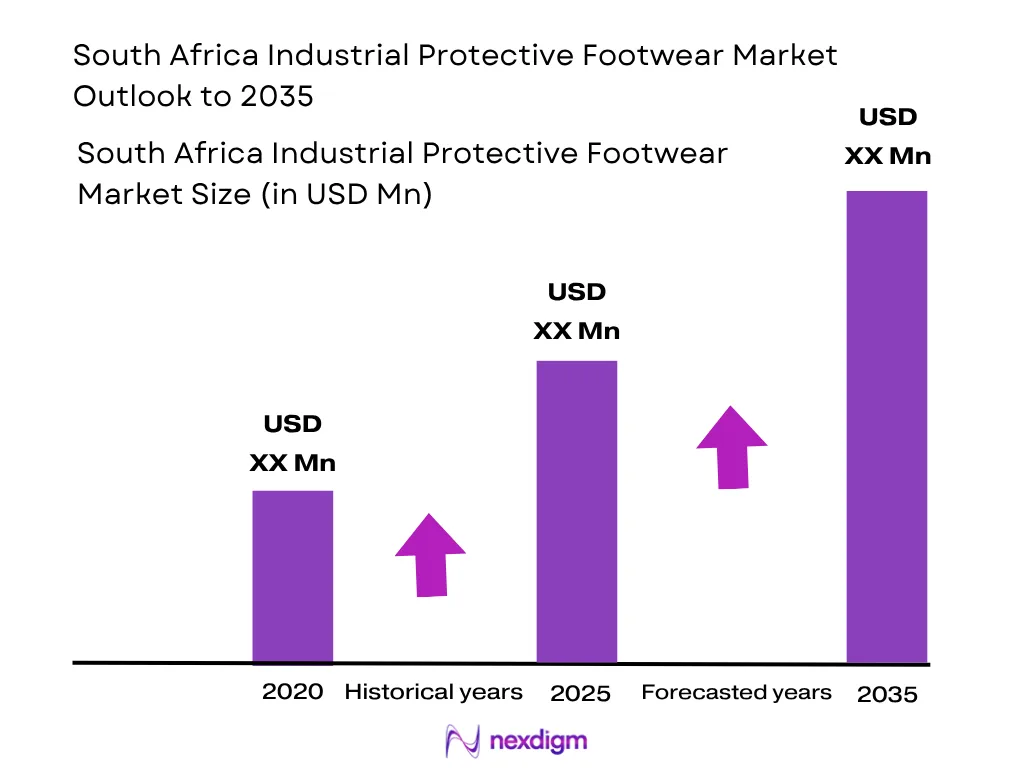
The South Africa Industrial Protective Footwear Market generated USD ~ million in 2025, based on disclosed industrial protective footwear revenue, and is forecast by the same source to expand at a 5.4% CAGR across its published forward period. Demand is driven by certified safety boots, leather safety shoes, rubber gumboots and anti-slip footwear used across mining, construction, manufacturing, logistics and utilities. South Africa’s wider PPE market reached USD ~ million in 2024, supporting footwear procurement as part of head-to-toe safety compliance.
Gauteng, KwaZulu-Natal, Western Cape, Mpumalanga, North West, Limpopo and Northern Cape dominate demand because they concentrate the country’s industrial workforce, manufacturing output, mining operations and distributor infrastructure. Gauteng contributed 40% of manufacturing value added, followed by KwaZulu-Natal at 19% and Western Cape at 16%; mining was the main economic driver in Mpumalanga, North West and Northern Cape. Mining also employed 474,876 people, compared with 479,228 previously, sustaining replacement demand for SANS/ISO-compliant safety boots and gumboots.
Market Segmentation
By Product Type
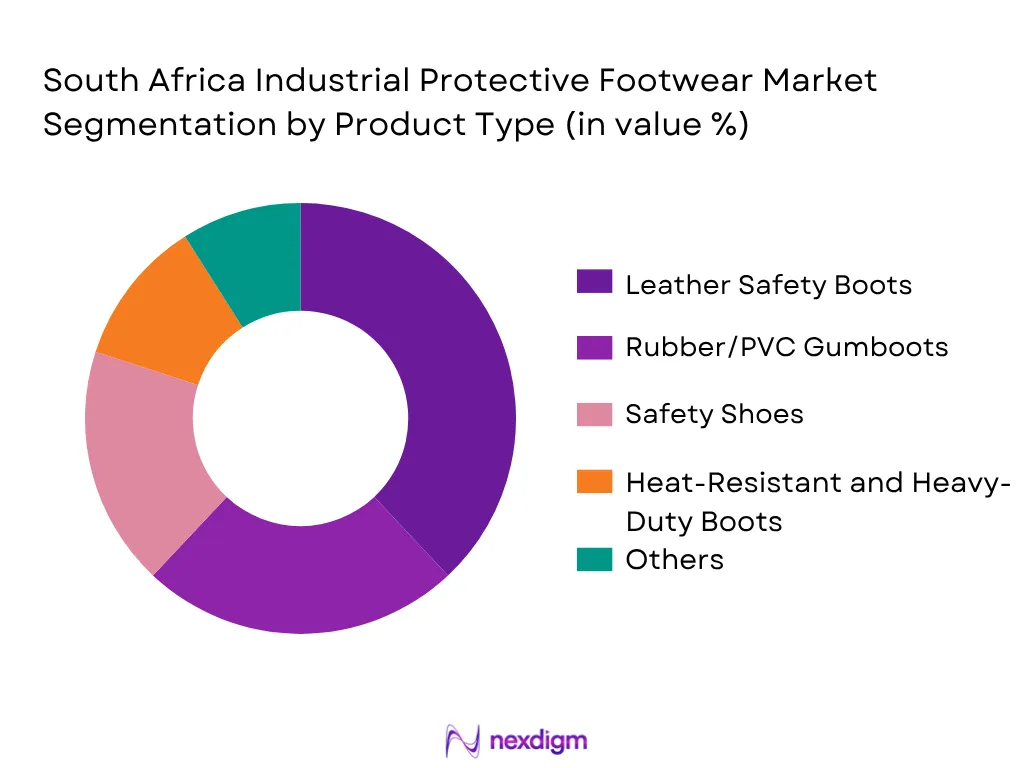
The South Africa Industrial Protective Footwear Market is segmented by product type into leather safety boots, rubber/PVC gumboots, safety shoes, heat-resistant and heavy-duty boots, ladies and ergonomic footwear, and metatarsal specialist footwear. Leather safety boots dominate because they are the default choice across construction, engineering, mining surface operations, automotive plants, warehouses and general industrial sites. Their dominance is reinforced by SANS 20345 requirements, availability through national PPE distributors, suitability for steel toe caps, anti-static protection, slip-resistant soles and penetration-resistant midsoles. The segment also benefits from strong domestic manufacturing capabilities through established local producers and brands. Buyers prefer leather boots because they balance durability, compliance, worker comfort and bulk procurement affordability better than premium imported safety shoes or highly specialised footwear.
By End-Use Industry
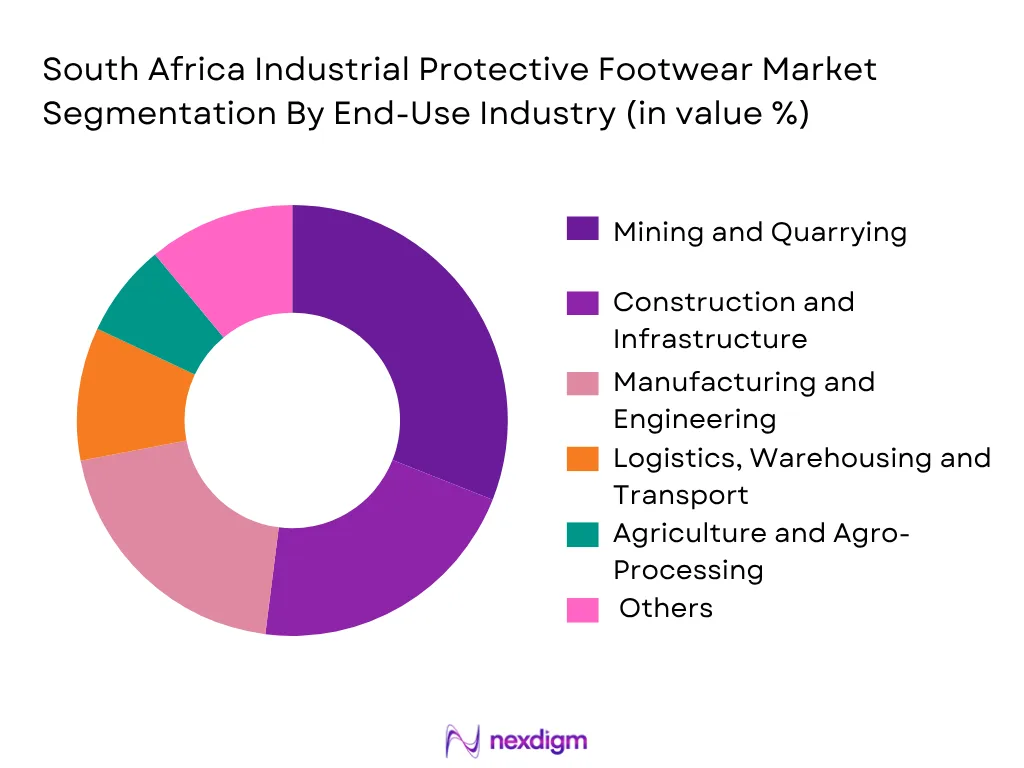
The South Africa Industrial Protective Footwear Market is segmented by end-use industry into mining and quarrying, construction and infrastructure, manufacturing and engineering, logistics and transport, agriculture, oil and gas, utilities, chemicals, food processing and security. Mining and quarrying hold the dominant share because South Africa has a large mining workforce, underground and surface hazard exposure, wet and abrasive operating conditions, and strict site-entry PPE requirements. Mining footwear purchases are also replacement-intensive because outsoles, uppers, toe caps and waterproofing degrade quickly under underground, open-cast and plant environments. The sector’s need for gumboots, metatarsal boots, heat-resistant soles, penetration resistance and anti-slip outsoles makes footwear procurement more specialised and higher value than many general industrial applications.
Competitive Landscape
The South Africa Industrial Protective Footwear Market is moderately consolidated around local manufacturers, national PPE wholesalers and international safety footwear brands. BBF Safety Group has scale through Bova, Lemaitre, Wayne, Frams and SiSi, while Rebel, DOT Safety Footwear and Dromex compete through wholesale distribution and broad product ranges. Bata Industrials, Caterpillar, Steel Blue and other imported or licensed brands compete mainly in premium, construction and comfort-led segments. The competitive advantage is shaped by NRCS approval, SANS/ISO certification, distributor reach, price-tier coverage and ability to supply mining and construction tenders.
| Company | Establishment Year | Headquarters | Product Strength | Certification Positioning | Key End-Use Industries | Distribution Model | Local/Imported Position | Market-Specific Differentiator |
| Wayne Safety Footwear | 1940 | Pinetown, KwaZulu-Natal | ~ | ~ | ~ | ~ | ~ | ~ |
| Bata Industrials South Africa | 1975 safety footwear launch | Pinetown, KwaZulu-Natal / global Bata network | ~ | ~ | ~ | ~ | ~ | ~ |
| Dromex | 1998 | Cornubia, KwaZulu-Natal | ~ | ~ | ~ | ~ | ~ | ~ |
| Rebel Safety Gear | 2004 | Johannesburg / Port Elizabeth operations | ~ | ~ | ~ | ~ | ~ | ~ |
| DOT Safety Footwear | 2005 | Johannesburg, Gauteng | ~ | ~ | ~ | ~ | ~ | ~ |
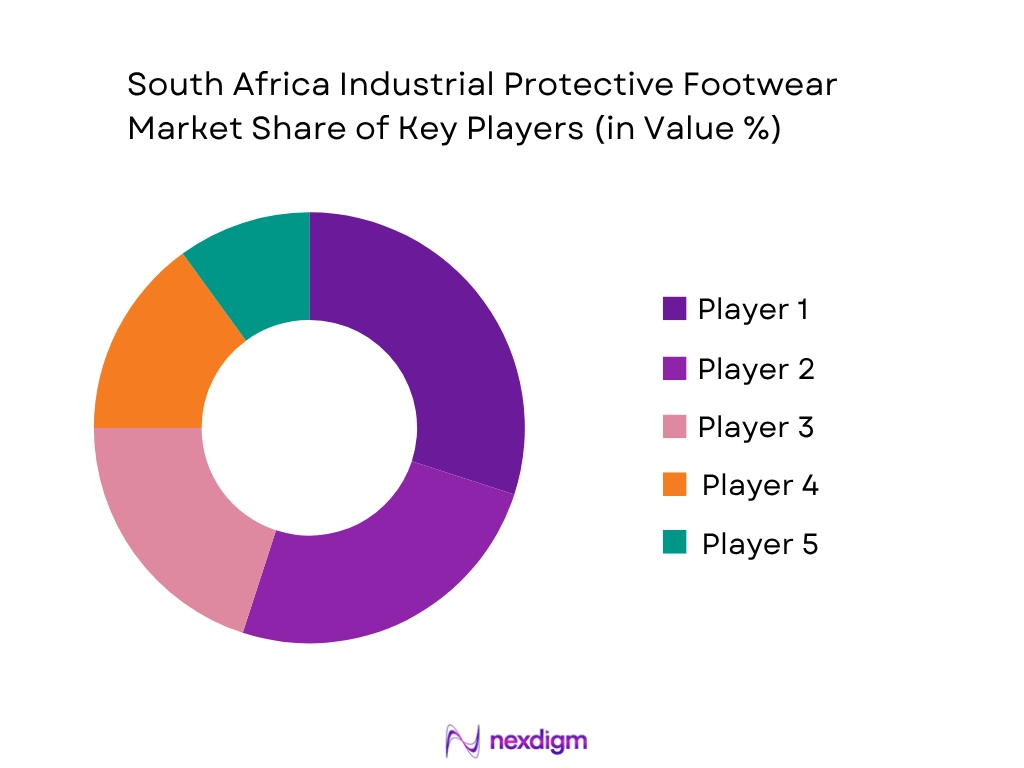
South Africa Industrial Protective Footwear Market Analysis
Growth Drivers
Mining Employment Base
South Africa’s industrial protective footwear demand is strongly anchored in mining because the sector has a large direct workforce, intensive site-safety rules, and harsh underground and surface operating environments that accelerate boot replacement. The mining industry employed 474,876 people in 2024, compared with 479,228 people in 2023, while mineral exports stood at R776.1 billion in 2024 and R779.8 billion in 2023. This workforce base directly supports demand for SANS/ISO-certified safety boots, gumboots, metatarsal protection footwear, penetration-resistant midsoles and oil-resistant outsoles used in gold, platinum, coal, iron ore, manganese and chrome operations. Stats SA also reported 466,000 people employed in mining in Q4 2024 under the Quarterly Labour Force Survey, compared with 446,000 in Q4 2023, showing that mining remained a large occupational safety footwear-consuming industry despite operational pressure. The macroeconomic context reinforces the point: South Africa’s GDP stood at USD 401.14 billion and GDP per capita at USD 6,267.2 in 2024, according to the World Bank, making mining-linked industrial procurement important within a constrained but sizeable economy. Safety pressure remains relevant because the Department of Mineral and Petroleum Resources reported 42 mining fatalities in 2024, compared with 55 fatalities in 2023. For protective footwear suppliers, this means mining demand is not only employment-driven but also compliance-driven, with procurement linked to injury prevention, site audits, contractor onboarding and replacement of worn-out safety boots in high-abrasion, wet, heat-exposed and impact-risk work areas.
Construction Recovery
Construction recovery supports South Africa Industrial Protective Footwear Market demand because construction workers require safety boots before entering civil, building, infrastructure, road, energy, water and municipal project sites. Stats SA reported 1.359 million people employed in construction in Q4 2024, compared with 1.322 million in Q4 2023, meaning the sector added 37,000 workers over the period. Formal-sector construction employment also added 12,000 workers between Q3 2024 and Q4 2024, which is relevant because formal contractors are more likely to purchase certified PPE through approved suppliers and framework agreements. The recovery signal strengthened in 2025, when the Department of Public Works & Infrastructure reported 130,000 construction jobs created in Q3 2025, and Stats SA later reported another 35,000 construction employment gain in Q4 2025. Public infrastructure spending also provides a demand base for construction PPE: National Treasury’s 2025 Budget Review estimated R1.03 trillion in public-sector infrastructure spending over the medium-term expenditure framework, including R410.9 billion from state-owned companies, R215.9 billion from provinces and R200.8 billion from municipalities. The 2026 Budget Review further identified buildings and other fixed structures as a fast-growing spending item and stated that the South African National Roads Agency Limited plans to invest R155.6 billion over three years. These construction and infrastructure indicators support demand for steel toe boots, S3 boots, slip-resistant soles and puncture-resistant midsoles used by contractors, road crews, public works teams and infrastructure subcontractor.
Market Challenges
Counterfeit Footwear
Counterfeit footwear is a direct challenge for the South Africa Industrial Protective Footwear Market because fake branded boots and sneakers compete with legitimate safety-footwear suppliers, weaken distributor trust and can expose workers to products that do not provide verified toe, sole, puncture or slip protection. Government enforcement data shows the scale of the issue across footwear-linked categories. SAPS reported counterfeit goods worth more than R160 million seized in March 2026 across multiple takedown operations, including more than R117 million in Bellville. The same operation seized more than 130,000 counterfeit items, including sneakers, branded clothing, caps, sunglasses and watches. SAPS also reported counterfeit goods and label-printing machines worth more than R28 million seized in Gauteng and counterfeit cigarettes worth more than R15 million seized in KwaZulu-Natal during the same enforcement cycle. CIPC, an agency of the Department of Trade, Industry and Competition, specifically stated that counterfeit clothing, footwear and other illicit goods undermine genuine brands, consumer confidence and legitimate businesses. The macroeconomic relevance is clear because South Africa’s GDP reached USD 401.14 billion in 2024, while total employment reached 17.078 million people in Q4 2024, creating a large market in which unsafe or counterfeit footwear can circulate through informal retail, online channels and low-cost resellers. For certified safety footwear suppliers, counterfeiting dilutes brand equity and can push buyers toward lower-priced products that look similar but may lack NRCS approval numbers, SANS/ISO compliance markings and tested 200-joule toe protection.
Non-Certified Imports
Non-certified imports constrain the South Africa Industrial Protective Footwear Market because safety footwear is a regulated product, not ordinary workwear. The NRCS warned mining, construction and chemical users against purchasing unsafe safety footwear that has not been homologated by the regulator, stating that all workplace safety footwear must carry a specific NRCS approval number beginning with NRCS/9002/XXXX on the tongue label. The same NRCS alert notes that safety footwear under VC 9002 was promulgated in 2015 to ensure products meet minimum safety requirements and that compliant footwear protects against chemical, mechanical and material hazards, including toe protection rated at 200J. The challenge is significant because the NRCS Annual Report 2024/25 found non-compliant products worth approximately R764 million in the market; the listed non-compliant categories included safety footwear. NRCS also reported 19,582 inspections across Automotive, Chemicals Materials and Mechanicals, Electro-Technical and Legal Metrology sectors in 2024/25, against 20,875 in the prior audited performance line. In the same report, the regulator highlighted high levels of non-compliant products at ports of entry and noted collaboration with SARS, SAPS and the Border Management Authority. This matters for industrial protective footwear because importers without valid approvals can undercut certified suppliers, create site-safety risk, and complicate tender evaluation for mining, construction and manufacturing buyers. South Africa’s 2024 GDP of USD 401.14 billion and Q4 2024 workforce of 17.078 million people mean that enforcement gaps can affect a broad occupational PPE base.
Opportunities
S3 Footwear
S3 footwear represents a growth opportunity in the South Africa Industrial Protective Footwear Market because the country’s industrial work base is concentrated in environments where footwear must go beyond a basic toe cap. Mining, construction, manufacturing, utilities and chemicals require protection against penetration, water exposure, oil, slips, heavy objects and uneven terrain. Stats SA reported 466,000 mining workers, 1.359 million construction workers and 1.675 million manufacturing workers in Q4 2024, creating a large addressable industrial workforce for higher-specification footwear. The Department of Mineral and Petroleum Resources reported 42 mining fatalities in 2024, compared with 55 in 2023, keeping safety procurement and PPE compliance visible across mines. The Department of Employment and Labour also stated that about 8 people die monthly in South African construction work because of occupational health and safety deficits, training gaps and non-compliance, reinforcing the need for hazard-specific protective footwear on project sites. NRCS requires approved safety footwear to meet SANS 20345 through VC 9002, while the standard requires safety footwear toe caps to protect against impact of at least 200 J and compression of at least 15 kN. S3 footwear is commercially relevant because it combines toe protection with penetration resistance and water-resistant uppers, making it more suitable for wet, muddy, debris-heavy and outdoor industrial environments than basic S1 footwear. With National Treasury identifying R1.03 trillion in public-sector infrastructure spending over the medium-term framework, S3 footwear suppliers can target road works, civil projects, municipal infrastructure, water projects, energy sites and contractor supply channels.
Composite Toe Safety Shoes
Composite toe safety shoes create an opportunity in the South Africa Industrial Protective Footwear Market because they align with demand for lighter, metal-free and comfort-oriented protective footwear in manufacturing, warehousing, logistics, engineering services, utilities and women-specific industrial roles. Stats SA reported 1.675 million manufacturing workers in Q4 2024, up by 168,000 from Q4 2023, and 1.064 million transport workers in Q4 2024, up by 41,000 from Q4 2023. These are key use cases for safety shoes because many workers spend long shifts on hard floors, around forklifts, pallets, metal components, packaging lines and dispatch zones, where toe protection, slip resistance and comfort are required but heavy mining-style boots may be excessive. The formal-sector employment base also matters because Stats SA reported formal employment increasing by 90,000 people in Q4 2024, with manufacturing adding 15,000 formal workers in the same quarter. NRCS safety footwear requirements still apply because toe-protected safety footwear must be approved before import, sale or supply under VC 9002, and ISO 20345 defines safety footwear as incorporating toe caps designed for at least 200 J impact protection and 15 kN compression protection. Composite toe shoes can therefore compete where buyers want certified protection while reducing footwear weight, metal-detection complications and fatigue-related complaints. South Africa’s macro base supports this shift: World Bank data shows GDP of USD 401.14 billion and GDP per capita of USD 6,267.2 in 2024, while the Q4 workforce of 17.078 million people creates a broad industrial PPE replacement base.
Future Outlook
The South Africa Industrial Protective Footwear Market is expected to maintain steady expansion, supported by mining replacement cycles, construction and infrastructure activity, formal manufacturing PPE compliance and demand for certified workwear. The market is forecast to grow at a 5.4% CAGR based on the closest disclosed industrial protective footwear outlook. Growth will be strongest in S3 safety footwear, composite toe footwear, slip-resistant outsoles, gumboots, ladies safety footwear and premium comfort boots. Suppliers with verified NRCS documentation, SANS/ISO compliance and distributor depth will be best positioned. The market’s next phase will be shaped by four commercial shifts. First, procurement teams will increasingly reject uncertified and non-compliant footwear because safety footwear is subject to compulsory specifications linked to SANS 20345. Second, mining and heavy industry will continue to require more specialised designs, including metatarsal protection, penetration-resistant midsoles, oil resistance, chemical resistance and slip resistance. Third, comfort will become a stronger purchase criterion, especially where workers use footwear for long shifts. Fourth, B2B online procurement and distributor consolidation will push suppliers to compete on stock depth, size availability, technical files and after-sales replacement support.
Major Players
- Beier Safety Footwear / Bova
- Lemaitre Safety Footwear
- Wayne Safety Footwear
- Frams Safety Footwear
- SiSi Safety Wear
- Rebel Safety Gear
- DOT Safety Footwear
- ProFit Footwear
- Dromex
- Bata Industrials South Africa
- Caterpillar Safety Footwear
- Steel Blue
- Bronx Safety
- Hi-Tec Safety Footwear
- JCB Safety Footwear
Key Target Audience
- Industrial protective footwear manufacturers
- PPE distributors and wholesalers
- Mining companies and mining contractors
- Construction and infrastructure contractors
- Manufacturing, engineering and automotive companies
- Logistics, warehousing and transport operators
- Investments and venture capitalist firms
- Government and regulatory bodies (National Regulator for Compulsory Specifications, South African Bureau of Standards, Department of Employment and Labour, Department of Mineral and Petroleum Resources)
Research Methodology
Step 1: Identification of Key Variables
The initial phase involves constructing an ecosystem map of the South Africa Industrial Protective Footwear Market, covering manufacturers, importers, PPE distributors, mining houses, construction buyers, government bodies and safety certification stakeholders. Key variables include SANS/ISO certification, NRCS approval, toe cap type, sole material, replacement cycle, industry demand and procurement channel.
Step 2: Market Analysis and Construction
The second phase compiles historical and current market data using published market revenue, PPE market benchmarks, industrial employment indicators and safety footwear product availability. Top-down analysis is built from PPE and industrial protective footwear revenue, while bottom-up analysis considers end-use employment, replacement intensity, average selling price and distributor channel structure.
Step 3: Hypothesis Validation and Expert Consultation
Market hypotheses are validated through structured discussions with PPE distributors, safety managers, procurement heads, industrial wholesalers, mining contractors and footwear suppliers. The focus is on confirming product mix, replacement intervals, tender pricing, certification requirements, buyer preferences and the practical differences between economy, mid-range and premium industrial safety footwear.
Step 4: Research Synthesis and Final Output
The final phase reconciles secondary data, company evidence, product catalogues, safety standards and interview-led assumptions into a market model. The output includes market size, segmentation, competitive benchmarking, growth drivers, regulatory context and future opportunities, ensuring the final report reflects both top-down industry value and bottom-up procurement behaviour.

- Executive Summary
- Research Methodology (Market Definitions and Assumptions, SANS 20345 and SANS 20347 Product Scope, NRCS LOA Validation Approach, Protective Footwear Classification, Primary Interviews with PPE Distributors and HSE Managers, Mining and Construction Procurement Mapping, Bottom-Up SKU and Volume Build-Up, Top-Down PPE Spend Allocation, Distributor Margin Benchmarking, B2B Tender Review, Import and Local Manufacturing Assessment, Limitations and Future Conclusions)

- Definition and Scope
- Market Genesis and Evolution
- Timeline of Major Local and International Safety Footwear Brands
- Business Cycle and Replacement Cycle
- Supply Chain and Value Chain Analysis
- Local Manufacturing, Import Dependency and Private Label Footwear Ecosystem
- Procurement Flow Across Mining Houses, EPC Contractors, OEM Plants and PPE Distributors
- Industry Compliance Landscape: SANS/ISO, NRCS, SABS and Occupational Health & Safety

- Growth Drivers (Mining Employment Base, Construction Recovery, Manufacturing Safety Mandates, PPE Compliance Audits, Rising HSE Budgets, Tender-Based Procurement, Replacement Demand, Women in Industrial Workforce)
- Market Challenges (Counterfeit Footwear, Non-Certified Imports, Price-Sensitive Procurement, Load Shedding Impact on Production, Currency Volatility, Tender Price Pressure, Limited Local Raw Material Base)
- Opportunities (S3 Footwear, Composite Toe Safety Shoes, Women’s Safety Footwear, Mining Boot Replacement Programs, Online B2B PPE Procurement, Local Assembly, Private Label Footwear, ESG-Linked Worker Safety)
- Trends (Lightweight Safety Boots, Slip-Resistant Outsoles, Anti-Fatigue Insoles, Breathable Linings, Waterproof Leather, Heat-Resistant Soles, Recycled Materials, Direct Injection Technology)
- Government Regulation and Standards (Occupational Health and Safety Act, Mine Health and Safety Act, SANS 20345, SANS 20347, NRCS LOA, SABS Testing, Import Compliance, Product Marking Requirements)
- SWOT Analysis (Local Brand Strength, Certified Product Portfolio, Distributor Reach, Import Exposure, Industrial Workforce Base, Compliance-Driven Demand)
- Stakeholder Ecosystem (Manufacturers, Importers, NRCS, SABS, PPE Distributors, Mining Houses, Construction Contractors, HSE Managers, Procurement Teams, Retailers, Workers, Labour Unions)
- Porter’s Five Forces (Supplier Power in Leather and PU Inputs, Buyer Power of Mining Houses, Threat of Imports, Distributor Rivalry, Substitution by Low-Cost Non-Compliant Footwear)
- Competition Ecosystem (Local Manufacturers, Imported Brands, Specialist Distributors, Private Labels, Tender Suppliers, Online PPE Sellers, Workwear Retailers)
- Pricing and Margin Structure (Ex-Factory Price, Import Landed Cost, Distributor Margin, Retail Mark-Up, Tender Discount, Bulk Procurement Pricing, VAT Impact, Freight and Warehousing Cost)
- Import-Export and Local Production Analysis (China Imports, European Premium Brands, Local Assembly, Leather Input Sourcing, PU Sole Components, Port and Logistics Costs, Currency Exposure)

- By Value (2020-2025)
- By Volume (2020-205)
- By Average Selling Price (2020-2025)
- By Replacement Demand vs New Workforce Demand (2020-2025)
- By Local Production vs Imported Footwear (2020-2025)

- By Product Type (In Value%)
Ankle Safety Boots
Chelsea Safety Boots
Lace-Up Safety Boots
Safety Shoes
Gumboots
Metatarsal Protection Boots
Heat-Resistant Industrial Boots
Women-Specific Industrial Safety Footwear - By Toe Cap Type (In Value%)
Steel Toe Cap Footwear
Composite Toe Cap Footwear
Aluminium Toe Cap Footwear
Non-Metallic Safety Footwear - By Protection Rating and Safety Feature (In Value%)
S1 and S1P Safety Footwear
Safety Footwear
S3 Safety Footwear
SRC Slip-Resistant Footwear
Anti-Static Footwear
Penetration-Resistant Midsole Footwear
Heat-Resistant Outsole Footwear
Chemical and Oil-Resistant Footwear - By Sole Material (In Value%)
Dual Density PU/PU Sole
PU/Rubber Sole
Nitrile Rubber Sole
PVC Sole
EVA/Rubber Sole
Direct Injection Sole Construction - By Upper Material (In Value%)
Full-Grain Leather Footwear
Split Leather Footwear
Nubuck Leather Footwear
PVC and Rubber Footwear
Breathable Textile and Hybrid Footwear - By End-Use Industry (In Value%)
Mining and Quarrying
Construction and Infrastructure
Manufacturing and Engineering
Oil, Gas and Petrochemicals
Logistics, Warehousing and Transport
Agriculture and Agro-Processing
Utilities, Energy and Municipal Services
Chemicals and Industrial Cleaning
Food Processing and Cold Storage
Security, Tactical and Public Sector Use - By Buyer Type (In Value%)
Enterprise and Contract Buyers
Government and Public Sector Buyers
SME Industrial Buyers
PPE Distributor and Reseller Buyers
Direct-to-Worker Retail Buyers - By Distribution Channel (In Value%)
Specialist PPE Distributors
Industrial Wholesalers
Brand-Owned Sales Channels
Online PPE and B2B E-Commerce Platforms
Hardware, Workwear and Retail Stores
Government and Corporate Tender Channels
Mining and Construction Supply Contracts - By Price Tier (In Value%)
Economy Safety Footwear
Mid-Market Certified Safety Footwear
Premium Comfort Safety Footwear
Heavy-Duty Industrial Safety Footwear
Imported Premium Safety Footwear - By Region (In Value%)
Gauteng
KwaZulu-Natal
Western Cape
Eastern Cape
Mpumalanga
North West
Limpopo
Free State
Northern Cape

- Market Share of Major Players by Value and Volume, by Safety Boot Segment, by Safety Shoe Segment, by Mining and Heavy-Duty Footwear Segment, by Premium Imported Safety Footwear Segment, by Distributor and Reseller Channel)
- Cross Comparison Parameters (SANS/ISO 20345 Certification Coverage, NRCS LOA Availability, Toe Cap Portfolio, Sole Technology, End-Use Industry Coverage, Distributor Network Depth, Tender Participation Strength, Price Tier Positioning)
- SWOT Analysis of Major Players (Brand Equity, Compliance Strength, Product Breadth, Local Availability, Import Dependency, Industrial Account Penetration, Comfort Differentiation, Price Competitiveness)
- Pricing Analysis Basis Key SKUs (Chelsea Boot, Lace-Up Boot, Safety Shoe, Gumboot, Heat-Resistant Boot, S3 Safety Footwear, Composite Toe Footwear, Ladies Safety Footwear)
- Distribution Benchmarking of Major Players (National Distributors, PPE Wholesalers, Online Platforms, Mining Supply Contracts, Construction Contractor Supply, Regional Dealer Presence)
- Product Portfolio Benchmarking (Steel Toe Range, Composite Toe Range, Slip-Resistant Range, Waterproof Range, Anti-Static Range, Heat-Resistant Range, Women’s Range, Gumboot Range)
- Detailed Profiles of Major Companies
Beier Safety Footwear
Bagshaw Footwear
Rebel Safety Gear
Wayne Safety
DOT Safety Footwear
ProFit Footwear
Dromex
Bata Industrials
Caterpillar Safety Footwear
Steel Blue
SiSi Safety Wear
Bronx Safety
Frams Safety Footwear
Hi-Tec Safety Footwear
JCB Safety Footwear

- Market Demand and Utilization (Replacement Frequency, Pair-per-Worker Ratio, Shift-Based Usage, Underground vs Surface Use, Wet-Site vs Dry-Site Footwear)
- Purchasing Power and Budget Allocation (HSE Budget, Tender Pricing, PPE Allowance, Bulk Order Size, Annual Replacement Budget, Distributor Credit Terms)
- Regulatory and Compliance Requirements (SANS/ISO Certification, NRCS LOA, Mine Safety Audits, Site Entry Requirements, Contractor Compliance, Product Traceability)
- Needs, Desires and Pain Point Analysis (Durability, Comfort, Sole Grip, Heat Resistance, Waterproofing, Toe Protection, Weight, Breathability, Size Availability, Fit for Women Workers)
- Decision-Making Process (HSE Manager Approval, Procurement Committee, Site Trials, Wearer Feedback, Tender Qualification, Distributor Evaluation, Compliance Documentation Review)
- End-User Replacement and Reorder Behaviour (Sole Wear, Upper Damage, Toe Cap Exposure, Water Ingress, Comfort Complaints, Audit-Triggered Replacement, Annual PPE Issuance Cycle)
- End-User Satisfaction Benchmarking (Comfort Score, Failure Rate, Complaint Frequency, Worker Adoption, Return Rate, Size Exchange Rate, Brand Loyalty)

- By Value (2026-2035)
- By Volume (2026-2035)
- By Average Selling Price(2026-2035)
- By Replacement Demand vs New Workforce Demand(2026-2035)
- By Local Manufacturing vs Imported Footwear (2026-2035)


 Request a Sample
 Ask for Customization
 Get a Quote
 Enquire Now