

 Download PDF
Market Overview
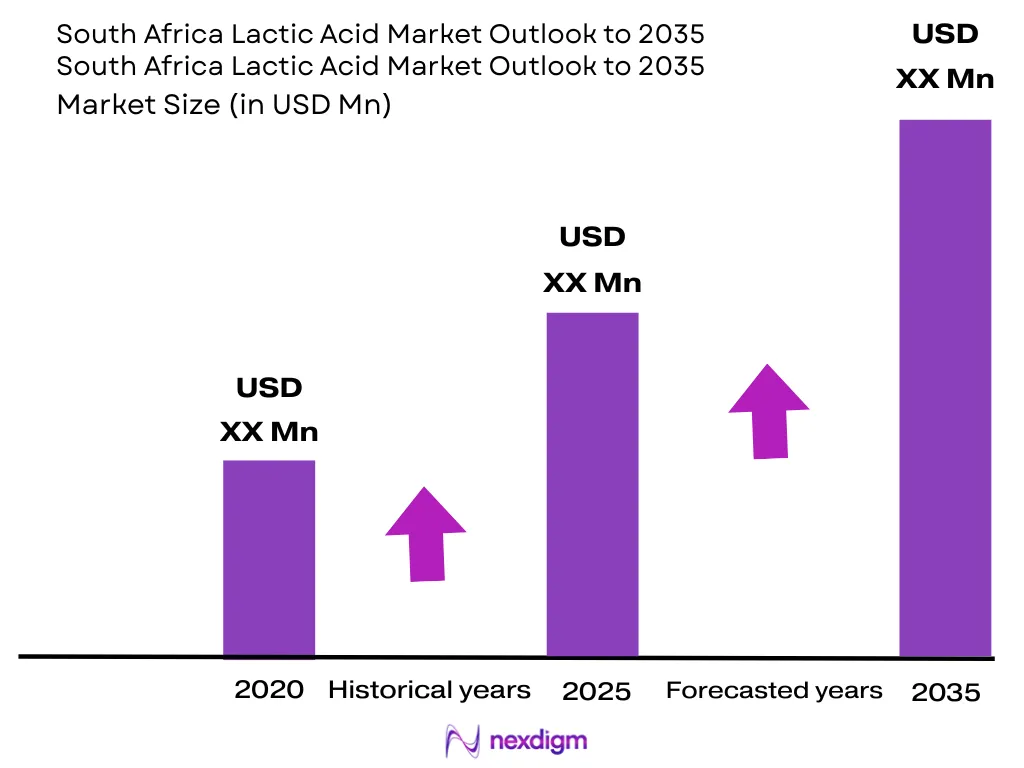
The South Africa Lactic Acid Market was valued at USD ~ Million in 2024 and is anticipated to expand at a CAGR of ~% during 2026–2035. The market is primarily driven by increasing urbanisation, growing consumption of processed foods and beverages, and South Africa’s position as one of the two most significant producer and consumer markets within the broader Africa Lactic Acid Market, alongside Nigeria. According to Mordor Intelligence, the Africa Lactic Acid Market is projected to grow at a CAGR of 6.3% between 2025 and 2030, while MarkWide Research estimates the regional market at USD 87.4 million in 2026, forecast to reach USD 234.69 million by 2035 at a CAGR of 11.60%. The Durban Container Terminal anchors Southern African lactic acid distribution, handling bulk chemical shipments that feed inland processing corridors through the Johannesburg-Durban freight spine, with beverage acidification and dairy preservation applications dominating demand across South Africa’s Gauteng and Western Cape provinces.
Market Segmentation
By Raw Material
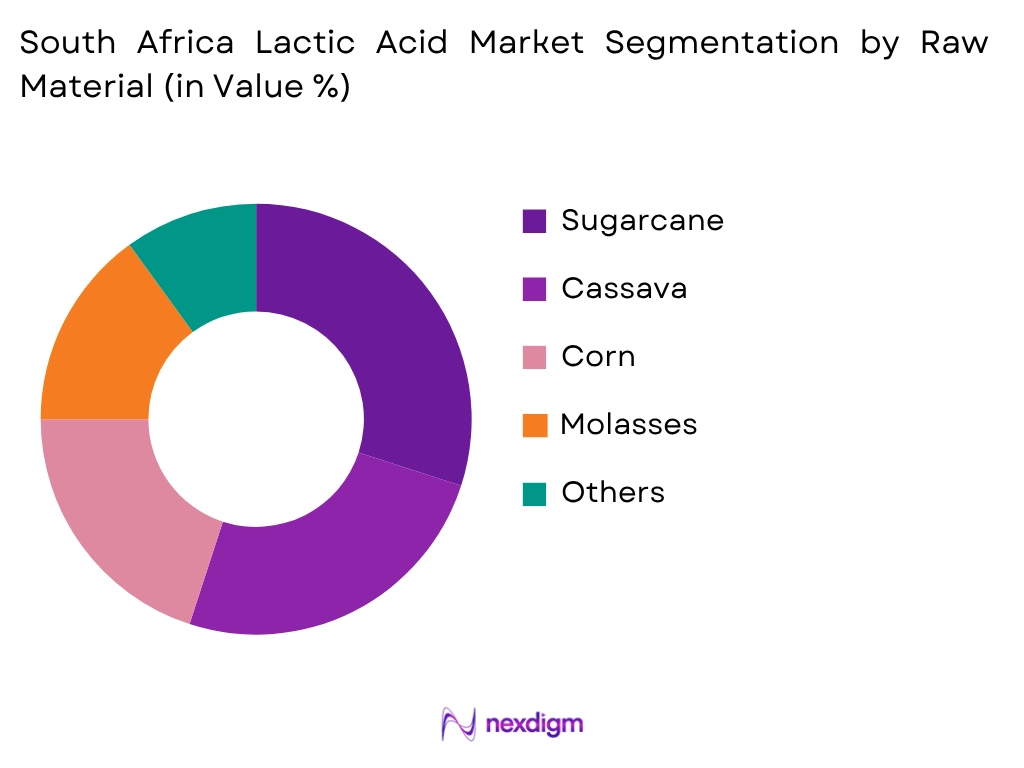
Sugarcane and molasses represent important potential feedstocks relevant to the South Africa Lactic Acid Market, reflecting the country’s substantial sugarcane cultivation base concentrated in KwaZulu-Natal and Mpumalanga. The availability of cost-effective raw materials such as molasses, starch, and sugarcane across the African region supports the broader market’s growth trajectory, according to Mordor Intelligence. However, South Africa’s chemicals sector remains dependent on imports for a significant share of processed chemical inputs, with the 20 largest companies in the country’s chemicals industry accounting for close to 90% of sector revenue, according to InvestSA, indicating a market structure in which a small number of larger distributors and processors, rather than numerous smaller domestic fermentation producers, account for the bulk of lactic acid supply and distribution.
By Application
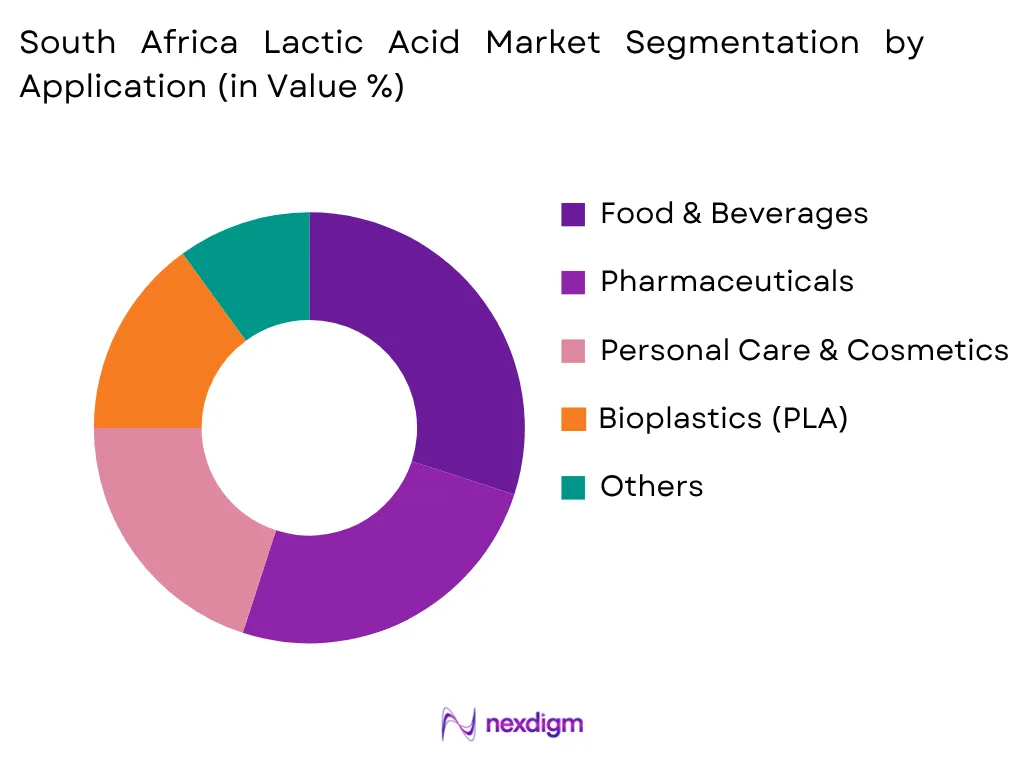
Among these, Food & Beverages holds the largest share of the South Africa Lactic Acid Market, driven by beverage acidification and dairy preservation applications that dominate demand across Gauteng and the Western Cape, South Africa’s two largest food and beverage manufacturing hubs. The African Development Bank projects the continent’s food and beverage industry to grow from USD 313 billion in 2020 to USD 1 trillion by 2030, a trajectory that is expected to sustain strong underlying demand for lactic acid as a natural preservative and acidulant across South African dairy, bakery, and beverage manufacturing. The Pharmaceuticals segment is also a notable contributor, with Cape Town’s pharmaceutical manufacturing cluster expanding pH adjuster consumption for intravenous formulation production, reflecting the city’s established role as a hub for sterile and parenteral drug manufacturing serving both the domestic market and export destinations across the Southern African Development Community.
Competitive Landscape
The South Africa Lactic Acid Market features a mix of established multinational producers and long-standing domestic chemical distribution groups. Corbion N.V. and Cargill lead the market owing to their advanced fermentation technologies and wide product portfolios, according to DigiRoads Research, while Galactic S.A. and Henan Jindan Lactic Acid Technology Co., Ltd. are expanding their reach in Africa through strategic partnerships and regional distributors. Domestically, Rolfes Group, trading through its Bragan Ingredients division, is a market leader in the South African food and beverage ingredients sector, importing and distributing food additives including lactic acid since the group’s founding in 1938; Rolfes was acquired by pan-African chemicals group Solevo in August 2024, extending its distribution reach across sub-Saharan Africa. The Department of Health’s updated foodstuffs regulations have tightened food additive labelling requirements, pushing manufacturers toward certified food-grade suppliers aligned with the South African Health Products Regulatory Authority (SAHPRA), reinforcing the competitive advantage of established, compliance-ready distributors such as Rolfes, CJP Chemicals, and African Chemicals SA.
| Company | Establishment Year | Headquarters | Primary Product Portfolio | Lactic Acid Portfolio
|
Manufacturing Presence | Major End-Use Industries | Key Strategic Focus | Certifications & Compliance |
| Rolfes Group (Bragan Ingredients) | 1938 | ~ | ~ | ~ | ~ | ~ | ~ | ~ |
| Galactic S.A. | 1994 | ~ | ~ | ~ | ~ | ~ | ~ | ~ |
| Corbion N.V. | 1919 | ~ | ~ | ~ | ~ | ~ | ~ | ~ |
| Henan Jindan Lactic Acid Technology Co., Ltd. | 1993 | ~ | ~ | ~ | ~ | ~ | ~ | ~ |
| Brenntag AG | 1874 | ~ | ~ | ~ | ~ | ~ | ~ | ~ |
South Africa Lactic Acid Market Analysis
Growth Drivers
Urbanisation and Growth of Processed Food and Beverage Consumption
The South Africa lactic acid market is experiencing sustained growth due to increasing urbanisation and changing consumer lifestyles, which continue to fuel demand for processed foods and packaged goods, according to DigiRoads Research. The African Development Bank projects the continent’s food and beverage industry to expand from USD 313 billion in 2020 to USD 1 trillion by 2030, a structural growth trajectory that directly benefits South Africa as one of the two most significant lactic acid producer and consumer markets in Africa, alongside Nigeria. Beverage acidification and dairy preservation applications currently dominate demand across Gauteng and the Western Cape, South Africa’s largest economic hubs, reflecting the concentration of food and beverage manufacturing capacity in these provinces. As South African consumers increasingly shift toward convenience foods, flavoured dairy products, and packaged beverages, demand for lactic acid as a natural preservative, acidulant, and pH regulator is expected to continue rising in line with broader processed food consumption trends.
Growth of Pharmaceutical Manufacturing and Regulatory-Driven Quality Demand
Cape Town’s pharmaceutical manufacturing cluster is expanding pH adjuster consumption for intravenous formulation production, according to MarkWide Research, reflecting the city’s established role as a centre for sterile and parenteral drug manufacturing in South Africa. This growth is reinforced by the Department of Health’s updated foodstuffs regulations, which mandate certified food-grade supplier documentation and are filtering procurement toward South African Health Products Regulatory Authority (SAHPRA)-aligned distributors. As regulatory scrutiny increases across both the food and pharmaceutical sectors, manufacturers are increasingly consolidating procurement toward fewer, more rigorously certified lactic acid suppliers capable of providing documented purity specifications and Good Manufacturing Practice alignment, a trend that favours established distributors with deep regulatory compliance capabilities and is expected to continue shaping the competitive structure of the South African market.
Market Challenges
High Dependence on Imported Lactic Acid
South Africa’s lactic acid market remains substantially dependent on imports, as the country’s domestic chemicals sector, while the most advanced and largest in Africa, comprises only around 0.5% of global chemical production capacity, according to InvestSA, with petrochemicals accounting for approximately 55% of locally produced chemicals rather than specialty fermentation products such as lactic acid. Although South Africa is home to significant sugarcane cultivation in KwaZulu-Natal and Mpumalanga, this feedstock base has not translated into large-scale domestic lactic acid fermentation capacity, leaving the market reliant on established global producers including Corbion, Cargill, Galactic, and Henan Jindan Lactic Acid Technology, which supply the market through distribution partners such as Rolfes Group, Brenntag, and Foodchem International Corporation rather than local manufacturing facilities. This import dependency exposes South African food, pharmaceutical, and industrial manufacturers to currency fluctuation risk, given the historical volatility of the South African Rand, as well as shipping costs and lead times from the Durban Container Terminal to inland processing hubs in Gauteng.
Regulatory Compliance Complexity and Extended Supplier Qualification Timelines
The South African lactic acid market is subject to an evolving and increasingly stringent regulatory environment. The Department of Health’s updated foodstuffs regulations mandate certified food-grade supplier documentation, filtering procurement toward SAHPRA-aligned distributors and increasing compliance costs for smaller or newer market entrants, according to MarkWide Research. Fermentation technology advancement and regulatory tightening on food additive purity are compressing supplier margins while elevating certified-grade premiums across African procurement channels. Stakeholders must additionally monitor regulatory convergence between South Africa’s national food safety authorities and the African Continental Free Trade Area’s emerging technical barriers-to-trade protocols, as harmonised standards across the region will determine which grade specifications achieve cross-border recognition, creating both compliance complexity and, longer term, the potential for streamlined regional trade once harmonisation matures.
Market Opportunities
Domestic Fermentation Capacity Investment and Sugarcane Feedstock Valorisation
South Africa’s substantial sugarcane cultivation base in KwaZulu-Natal and Mpumalanga, combined with the availability of cost-effective molasses and starch feedstocks across the region, presents a meaningful opportunity for domestic fermentation capacity investment that could reduce the market’s current reliance on imports. Increased foreign investments and technology transfer in African manufacturing facilities are expected to strengthen local production capacity over the coming years, according to DigiRoads Research, with dairy processors and industrial bioplastics manufacturers already adopting pilot-scale cell immobilisation and solid-state fermentation systems in South Africa and Egypt. Equipment footprint reduction associated with these newer fermentation technologies is miniaturising capital requirements for mid-scale entrants that were previously excluded by conventional batch reactor economics, potentially opening the door for new domestic lactic acid production capacity over the forecast period.
AfCFTA-Enabled Regional Distribution Expansion
The African Continental Free Trade Area, which came into operation in January 2021, presents a substantial opportunity for South African lactic acid distributors and manufacturers to expand across the Southern African Development Community and beyond, according to InvestSA. Food-grade lactic acid traders are already consolidating compliance documentation to exploit emerging cross-border passporting provisions, while long-term offtake agreements with volume commitments are increasingly replacing spot market transactions in trading hubs including Johannesburg. As South Africa’s Department of Health foodstuffs regulations, Nigeria’s NAFDAC standards, and East African Community technical regulations continue converging toward mutual recognition frameworks, established South African distributors such as Rolfes Group, with its existing pan-African distribution reach following its 2024 acquisition by Solevo, are well positioned to capture growing regional demand for certified, compliant lactic acid supply across the wider African market.
Future Outlook
The South Africa Lactic Acid Market is expected to witness steady expansion over the forecast period, supported by continued urbanisation, growth in processed food and beverage consumption, and South Africa’s position as one of Africa’s two most significant lactic acid producer and consumer markets alongside Nigeria. Growing pharmaceutical manufacturing activity centred on Cape Town, rising demand for PLA bioplastics amid regional sustainability pressures, and increasing foreign investment in local fermentation capacity will further accelerate market development. The market is also likely to benefit from regulatory harmonisation across the African Continental Free Trade Area, even as manufacturers and distributors continue to navigate substantial import dependency, currency fluctuation risk, and increasingly stringent certified food-grade supplier documentation requirements enforced by the Department of Health and SAHPRA.
Major Players
- Corbion N.V.
- Galactic S.A.
- Henan Jindan Lactic Acid Technology Co., Ltd.
- Brenntag AG
- Foodchem International Corporation
- Cargill, Incorporated
- NatureWorks LLC
- BASF SE
- Jungbunzlauer Suisse AG
- Musashino Chemical Laboratory, Ltd.
- Futerro S.A.
- Rolfes Group (Bragan Ingredients)
- CJP Chemicals (Pty) Ltd
- African Chemicals SA (Pty) Ltd
- Garth Holdings (Pty) Ltd
Key Target Audience
- Lactic Acid Manufacturers
- Food & Beverage Processing Companies
- Personal Care and Cosmetics Manufacturers
- Pharmaceutical Manufacturers
- Bioplastics and Packaging Manufacturers
- Investment and Venture Capitalist Firms
- Government and Regulatory Bodies (Department of Health, South African Health Products Regulatory Authority (SAHPRA), National Regulator for Compulsory Specifications (NRCS))
- Specialty Chemical Distributors and Industrial Raw Material Suppliers
Research Methodology
Step 1: Identification of Key Variables
The research process begins with identifying the complete ecosystem of the South Africa Lactic Acid Market, including raw material and feedstock suppliers, lactic acid manufacturers, specialty chemical distributors, end-use manufacturers, and regulatory authorities. Extensive secondary research is conducted using company annual reports, government publications, trade associations, customs statistics, industry journals, and proprietary databases to determine the variables influencing market demand, pricing, production, consumption, and technological developments.
Step 2: Market Analysis and Construction
Historical market information is collected and analysed to estimate market size, production volumes, import-export activity, application-wise demand, and pricing trends. A combination of top-down and bottom-up approaches is used to estimate market revenues and validate segment-level performance. Consumption patterns across food and beverages, personal care, pharmaceuticals, and bioplastics are evaluated to establish an accurate representation of the industry.
Step 3: Hypothesis Validation and Expert Consultation
The preliminary findings are validated through Computer-Assisted Telephone Interviews (CATIs) and structured discussions with lactic acid manufacturers, procurement managers, distributors, food technologists, regulatory experts, and senior executives operating within the South African food, pharmaceutical, and industrial chemicals industries, spanning Gauteng, the Western Cape, and KwaZulu-Natal. These interviews help verify market assumptions, competitive developments, technology adoption trends, pricing dynamics, and future investment opportunities while refining the overall market estimates.
Step 4: Research Synthesis and Final Output
The final stage integrates insights obtained from primary interviews with quantitative information collected through secondary sources. Data triangulation techniques are applied to reconcile differences between supply-side and demand-side estimates, ensuring robust market forecasting. The report is then reviewed through multiple quality assurance checkpoints to deliver a comprehensive analysis covering market size, segmentation, competitive landscape, future outlook, and strategic recommendations for industry stakeholders.

- Executive Summary
- Research Methodology (Market Definitions and Assumptions, Abbreviations, Market Sizing Approach, Top-Down Analysis, Bottom-Up Analysis, Demand-Side Assessment, Supply-Side Assessment, Primary Industry Interviews, Secondary Research Validation, Data Triangulation, Forecasting Framework, Limitations and Future Conclusions)

- Definition and Scope
- Market Evolution and Industry Genesis
- Timeline of Major Industry Developments
- Lactic Acid Industry Value Chain Analysis
- Supply Chain Analysis

- Growth Drivers (Growing Clean Label Food Demand, Increasing Urbanisation and Processed Food Consumption, Rising Demand for Biodegradable Plastics, Growth of Pharmaceutical Manufacturing, Availability of Cost-Effective Sugarcane Feedstock, Regulatory Support for Food-Grade Certification)
- Market Challenges (High Dependence on Imported Lactic Acid, Limited Domestic Fermentation Capacity, Raw Material Price Volatility, Regulatory Compliance Complexity, Logistics Costs from Coastal Ports to Inland Markets, Currency Fluctuation Risk)
- Market Opportunities (Domestic Fermentation Capacity Investment, Sugarcane and Molasses Valorisation, PLA Bioplastics Manufacturing, Personal Care AHA Formulation Growth, AfCFTA Cross-Border Distribution Expansion, Clean Label Reformulation Projects)
- Market Trends (Certified Food-Grade Supplier Consolidation, Direct Procurement from Fermentation Specialists, Long-Term Offtake Agreements, Rising Demand for Compostable Packaging, Regional Regulatory Harmonisation, Multi-Functional Acidulant Blends)
- Government Regulations (Department of Health Foodstuffs Regulations, SAHPRA Compliance Requirements, Food Labelling Requirements, Maximum Permitted Usage Levels, Import Compliance, AfCFTA Technical Barriers to Trade Protocols)
- Import and Export Analysis (Trade Volume, Major Import Sources, Export Destinations, HS Code Analysis, Trade Balance)
- Raw Material Availability Analysis (Sugarcane Cultivation (KwaZulu-Natal and Mpumalanga), Molasses Availability, Corn and Maize Substrates, Starch-Based Substrates, Microbial Strains)
- Technology Landscape (Submerged Fermentation, Cell Immobilisation Technology, Solid-State Fermentation, Purification and Separation Technologies, Polymerisation Technologies for PLA)
- Sustainability Assessment (Renewable Feedstock Sourcing, Carbon Footprint Reduction, Waste Valorisation, Biodegradable Packaging Alignment, Energy-Efficient Fermentation)
- PESTLE Analysis
- SWOT Analysis
- Porter’s Five Forces Analysis
- Stakeholder Ecosystem
- Competition Ecosystem

- By Market Value (2020-2025)
- By Volume Consumption (2020-2025)
- By Average Selling Price (2020-2025)

- By Raw Material (In Value %)
Sugarcane
Molasses
Corn
Starch-Based Substrates
Other Crops - By Application (In Value %)
Food & Beverages
Personal Care & Cosmetics
Pharmaceuticals
Polylactic Acid (PLA) & Bioplastics
Industrial Applications (Solvents, Cleaning Agents and Coatings)
Animal Feed - By Distribution Channel (In Value %)
Direct Sales to Manufacturers
Ingredient and Specialty Chemical Distributors
Industrial Raw Material Suppliers
Online B2B Ingredient Platforms - By End User (In Value %)
Food & Beverage Manufacturers
Personal Care and Cosmetics Manufacturers
Pharmaceutical Manufacturers
Bioplastics and Packaging Manufacturers
Industrial and Chemical Manufacturers - By Region (In Value %)
Gauteng
Western Cape
KwaZulu-Natal
Rest of South Africa

- Market Share of Major Players (By Value, Volume, Raw Material Source, Application Industry, Product Category)
- Cross Comparison Parameters (Product Portfolio Breadth, Import Logistics and Port Access, Purity and Grade Range, Application Technical Support Capability, Distribution Network Reach, Regulatory Compliance & Certifications, Customer Base Across Industries, Innovation & New Product Launch Frequency)
- SWOT Analysis of Major Players
- Pricing Analysis by Product Category and Grade
- Production Capacity Analysis
- Manufacturing Footprint Analysis
- Distribution Network Analysis
- Innovation Benchmarking
- Detailed Profiles of Major Companies
Corbion N.V.
Galactic S.A.
Henan Jindan Lactic Acid Technology Co., Ltd.
Brenntag AG
Foodchem International Corporation
Cargill, Incorporated
NatureWorks LLC
BASF SE
Jungbunzlauer Suisse AG
Musashino Chemical Laboratory, Ltd.
Futerro S.A.
Rolfes Group (Bragan Ingredients)
CJP Chemicals (Pty) Ltd
African Chemicals SA (Pty) Ltd
Garth Holdings (Pty) Ltd

- Consumption Pattern Analysis (Industrial Usage, Batch Size, Product Category Penetration, Seasonal Demand, Reformulation Activity)
- Purchasing Criteria (Purity and Optical Activity, Regulatory Compliance, Cost Efficiency, Supply Consistency, Certified Food-Grade Documentation, Shelf Life)
- Procurement and Supplier Selection Analysis
- Clean Label Adoption Assessment
- Premium vs Conventional Product Demand
- Product Attribute Preference Analysis (Purity Level, L(+)/D(-) Isomer Ratio, Thermal Tolerance, Sensory Neutrality, Natural Origin, Label Friendliness)
- Consumer Health & Wellness Influence on Product Development
- Pain Point Analysis
- Decision-Making Process

- By Market Value (2026-2035)
- By Volume Consumption (2026-2035)
- By Average Selling Price (2026-2035)


 Request a Sample
 Ask for Customization
 Get a Quote
 Enquire Now