

 Download PDF
 Download PDF
Market Overview
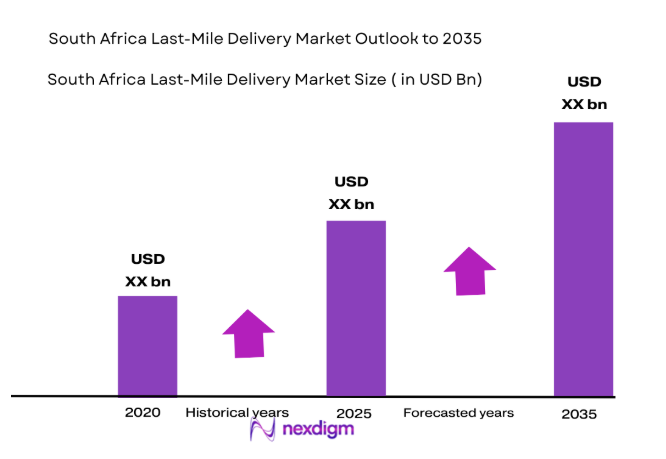
South Africa’s last-mile delivery market is expanding rapidly due to the accelerating growth of digital commerce and increasing parcel shipment volumes across urban retail supply chains. Based on a recent historical assessment, South Africa’s e-commerce sector generated approximately USD ~ billion in online retail sales according to the Electronic Commerce Forum Africa. This transaction volume directly drives demand for courier and last-mile delivery services responsible for transporting parcels from distribution centers to consumers. Logistics providers therefore expand fleet capacity, automated sorting infrastructure, and digital route optimization systems to manage growing delivery volumes efficiently across metropolitan regions.
Johannesburg, Cape Town, and Durban dominate logistics operations due to their strong commercial ecosystems, dense urban populations, and advanced transportation infrastructure. Johannesburg functions as the primary logistics hub because it hosts major courier headquarters, national distribution centers, and integrated highway networks connecting regional trade corridors. Cape Town benefits from high digital retail adoption and strong port logistics activity supporting import distribution networks. Durban also plays a critical role as the country’s largest container port, handling cargo flows valued above USD 90 billion according to national trade statistics, which strengthens regional parcel distribution across South Africa’s logistics ecosystem.
Market Segmentation
By Product Type
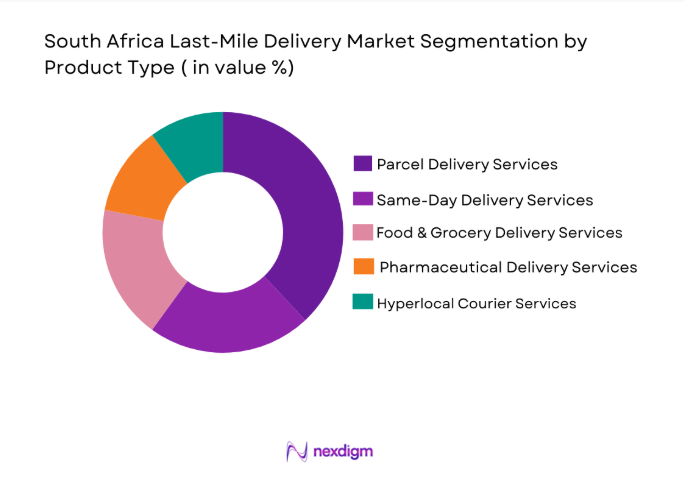
South Africa Last-Mile Delivery Market is segmented by product type into parcel delivery services, same-day delivery services, food and grocery delivery logistics, pharmaceutical delivery services, and hyperlocal courier services. Recently, parcel delivery services has a dominant market share due to factors such as demand patterns, brand presence, infrastructure availability, and consumer preference. Rapid expansion of online retail transactions generates extremely high parcel volumes across consumer electronics, apparel, and household goods categories requiring dependable door-to-door delivery networks. Courier companies invest heavily in parcel sorting hubs, fleet expansion, and automated dispatch systems designed specifically for parcel shipments. National e-commerce platforms depend on parcel logistics providers to ensure rapid shipment fulfillment across large metropolitan areas. The operational scalability and standardized logistics processes associated with parcel delivery services enable providers to handle millions of packages efficiently. These factors collectively strengthen parcel delivery services as the most widely adopted product type within the national last-mile delivery ecosystem.
By Platform Type
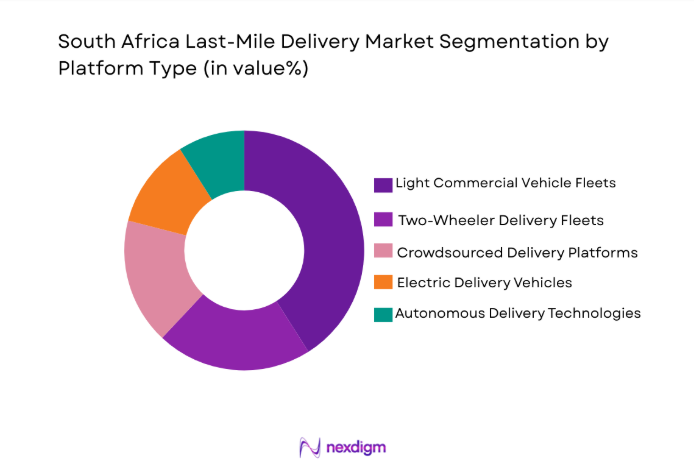
South Africa Last-Mile Delivery Market is segmented by platform type into two-wheeler delivery fleets, light commercial vehicle fleets, electric delivery vehicles, crowdsourced delivery platforms, and autonomous delivery technologies. Recently, light commercial vehicle fleets has a dominant market share due to factors such as logistics infrastructure compatibility, cargo capacity advantages, and operational efficiency across urban delivery routes. Courier operators widely deploy vans and small commercial trucks capable of transporting high parcel volumes during each distribution cycle. These vehicles efficiently support warehouse-to-consumer logistics routes linking sorting hubs with residential delivery destinations. Their cargo capacity allows companies to consolidate shipments and reduce delivery frequency while maintaining operational reliability. Established logistics providers therefore maintain extensive fleets of light commercial vehicles capable of supporting high-volume parcel distribution across metropolitan regions. This operational advantage strengthens their role as the dominant logistics platform supporting last-mile delivery services across South Africa’s urban distribution ecosystem.
Competitive Landscape
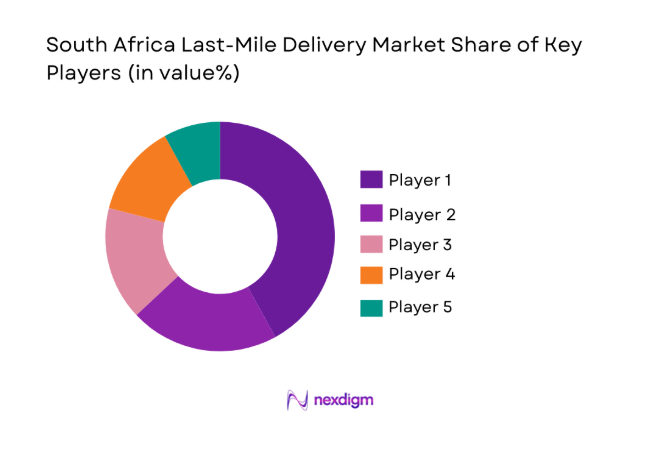
South Africa’s last-mile delivery market exhibits a moderately consolidated competitive structure where established courier companies and digital logistics platforms compete for large parcel volumes generated by e-commerce expansion. Major players operate extensive distribution networks supported by automated sorting centers, digital delivery management systems, and large vehicle fleets capable of servicing dense urban markets. Competition increasingly revolves around delivery speed, technology integration, pricing flexibility, and geographic coverage across metropolitan and suburban areas. Strategic partnerships with online retail platforms further strengthen market positioning for leading logistics operators.
| Company Name | Establishment Year | Headquarters | Technology Focus | Market Reach | Key Products | Revenue | Fleet Capacity |
| DHL Express South Africa | 1969 | Bonn, Germany | ~ | ~ | ~ | ~ | ~ |
| Aramex South Africa | 1982 | Dubai, UAE | ~ | ~ | ~ | ~ | ~ |
| The Courier Guy | 2000 | Johannesburg, South Africa | ~ | ~ | ~ | ~ | ~ |
| RAM Hand-to-Hand Couriers | 1988 | Johannesburg, South Africa | ~ | ~ | ~ | ~ | ~ |
| Dawn Wing | 1989 | Johannesburg, South Africa | ~ | ~ | ~ | ~ | ~ |
South Africa Last-Mile Delivery Market Analysis
Growth Drivers
Expansion of E-commerce Driven Parcel Volumes
The rapid expansion of digital retail platforms across South Africa significantly increases demand for reliable last-mile delivery services capable of managing extremely high parcel volumes generated by online purchases. E-commerce transactions across consumer electronics fashion groceries and household goods create substantial logistics activity requiring rapid parcel dispatch from distribution centers to consumers. Retailers therefore depend heavily on courier and delivery companies to manage the final stage of supply chain distribution. Logistics providers expand automated sorting hubs, warehouse infrastructure, and digital order management systems designed to process high shipment volumes efficiently. Technology-enabled route optimization tools further improve operational productivity by reducing transportation time and fuel consumption across delivery fleets. Courier companies also establish micro-fulfillment centers located near densely populated urban areas to accelerate parcel distribution cycles. Integration of real-time parcel tracking platforms improves delivery transparency and customer satisfaction. As digital commerce ecosystems continue expanding nationwide the volume of last-mile parcel shipments increases substantially. These structural shifts position last-mile logistics providers as essential infrastructure supporting South Africa’s rapidly growing e-commerce distribution network.
Urbanization and Demand for On-Demand Delivery Services
Accelerating urban population growth across major metropolitan regions significantly increases demand for fast and reliable last-mile delivery services capable of meeting consumer expectations for rapid product fulfillment. Dense population clusters generate high volumes of daily parcel shipments requiring efficient logistics coordination between warehouses and residential neighborhoods. Urban consumers increasingly rely on same-day delivery services for groceries food pharmaceutical products and consumer goods purchased through mobile commerce applications. Logistics providers respond by expanding delivery fleets and deploying technology-enabled dispatch systems capable of coordinating thousands of deliveries across complex urban transportation networks. Smart route planning platforms help companies minimize delivery times and improve operational efficiency despite heavy traffic congestion. Local courier companies also partner with retail platforms and restaurants to support hyperlocal delivery services. Growth in urban consumption therefore directly strengthens demand for last-mile logistics infrastructure. Investments in delivery technology vehicle fleets and distribution hubs continue expanding rapidly across South Africa’s major cities. These developments collectively reinforce the importance of last-mile delivery services within urban retail and consumer distribution ecosystems.
Market Challenges
Urban Traffic Congestion and Infrastructure Constraints
South Africa’s major metropolitan regions experience significant traffic congestion which creates operational challenges for last-mile delivery providers attempting to maintain reliable delivery schedules. Delivery vehicles navigating congested urban corridors often encounter delays that reduce fleet productivity and increase operational costs for logistics companies. Road infrastructure limitations and inconsistent traffic management systems further complicate delivery operations particularly during peak commuting hours. Courier operators must therefore invest heavily in route optimization technologies capable of identifying alternative delivery paths across dense urban road networks. Delivery delays can negatively influence customer satisfaction and reduce service reliability for e-commerce retailers dependent on timely parcel fulfillment. Logistics providers also face challenges managing high delivery volumes across narrow residential streets and densely populated neighborhoods. Parking limitations frequently force drivers to travel additional distances to complete deliveries. These operational inefficiencies increase fuel consumption and fleet maintenance expenses. As urban population density continues increasing transportation infrastructure constraints remain a significant challenge affecting last-mile delivery efficiency across South Africa’s largest metropolitan markets.
Rising Fuel Prices and Transportation Cost Pressures
Increasing fuel prices significantly influence operational expenditure for last-mile delivery companies because vehicle fleets represent the primary logistics asset used to distribute parcels across urban distribution networks. Fuel expenses constitute a large proportion of delivery costs particularly for courier providers operating extensive national distribution fleets. When fuel prices rise logistics companies experience immediate pressure on profit margins and operational budgets. Delivery operators therefore explore alternative solutions such as electric vehicles hybrid fleet technologies and route optimization platforms to reduce fuel consumption. However transitioning large delivery fleets to alternative energy vehicles requires substantial capital investment and supporting infrastructure development. Smaller courier firms may struggle to finance fleet modernization programs necessary for long-term cost efficiency. Logistics providers must therefore balance rising transportation expenses with competitive pricing expectations from e-commerce retailers. High fuel costs can ultimately influence delivery pricing structures affecting consumer shipping fees. These financial pressures represent a persistent operational challenge for last-mile delivery providers operating across South Africa’s competitive logistics industry.
Opportunities
Expansion of Electric Vehicle Delivery Fleets
Growing interest in sustainable logistics solutions creates significant opportunities for the adoption of electric vehicle delivery fleets across South Africa’s last-mile delivery sector. Electric delivery vehicles reduce fuel dependency and help logistics companies control long-term operational costs associated with conventional combustion engine fleets. Urban delivery routes are particularly suitable for electric vehicles because they involve shorter distances and frequent stop-and-go driving conditions. Government initiatives promoting clean transportation technologies further encourage logistics providers to explore electric mobility solutions for distribution operations. Electric delivery fleets also support environmental sustainability goals by reducing carbon emissions across urban logistics networks. Several courier companies therefore begin pilot programs integrating electric vans and cargo bikes into last-mile delivery fleets operating within metropolitan regions. Technological advancements in battery efficiency and charging infrastructure continue improving the practicality of electric delivery operations. As environmental regulations and corporate sustainability commitments expand the adoption of electric vehicle logistics fleets represents a major opportunity shaping the future development of last-mile delivery networks across South Africa.
Growth of Smart Parcel Locker and Micro-Fulfillment Networks
Increasing parcel volumes generated by digital commerce create strong opportunities for logistics companies to expand smart parcel locker networks and micro-fulfillment facilities across urban areas. Parcel locker systems allow consumers to collect shipments at convenient public locations such as retail centers transit hubs and residential complexes. These systems reduce delivery failures associated with unattended home deliveries and improve operational efficiency for courier companies. Micro-fulfillment centers located near dense residential neighborhoods enable faster distribution cycles and same-day delivery services for online retailers. Logistics providers integrate automated storage technologies and digital inventory management platforms within these facilities to streamline parcel processing. Retail companies increasingly collaborate with logistics providers to deploy parcel locker infrastructure within commercial complexes and transportation hubs. These technological solutions significantly improve delivery efficiency while lowering operational costs for logistics operators. As e-commerce adoption continues expanding the development of parcel locker networks and micro-fulfillment hubs offers substantial growth opportunities for last-mile logistics providers across South Africa.
Future Outlook
The South Africa last-mile delivery market is expected to experience sustained growth supported by rising digital commerce adoption, urban population expansion, and continuous investments in logistics infrastructure. Technological innovations including automated sorting systems, artificial intelligence route planning, and electric delivery vehicles will significantly improve operational efficiency across distribution networks. Government initiatives supporting smart transportation infrastructure and sustainable logistics solutions will further strengthen the sector’s development. Growing demand for same-day delivery services, hyperlocal distribution networks, and micro-fulfillment centers will continue reshaping the competitive dynamics of the last-mile logistics ecosystem.
Major Players
- DHL Express South Africa
- FedEx South Africa
- Aramex South Africa
- The Courier Guy
- Dawn Wing
- RAM Hand-to-Hand Couriers
- Fastway Couriers South Africa
- DSV South Africa
- Takealot Delivery Team
- Uber Eats Logistics
- Mr D Delivery
- Pargo
- Picup Technologies
- Imperial Logistics
- DPD Laser South Africa
Key Target Audience
- Investments and venture capitalist firms
- Government and regulatory bodies
- E-commerce retailers
- Logistics and supply chain companies
- Courier and express delivery operators
- Technology platform providers
- Transportation infrastructure developers
Research Methodology
Step 1: Identification of Key Variables
Key market variables including parcel shipment volumes, urban logistics infrastructure, e-commerce transaction growth, and fleet deployment strategies were identified. These variables form the foundation for evaluating demand patterns and operational capacity within the last-mile delivery ecosystem.
Step 2: Market Analysis and Construction
Comprehensive analysis of logistics networks, delivery service providers, technology adoption, and distribution infrastructure was conducted. Data from logistics associations, government trade statistics, and company disclosures was synthesized to construct a detailed market structure.
Step 3: Hypothesis Validation and Expert Consultation
Industry hypotheses regarding delivery demand, logistics technology adoption, and fleet expansion strategies were validated through expert consultations with logistics executives, courier companies, and supply chain specialists operating within South Africa’s delivery sector.
Step 4: Research Synthesis and Final Output
Validated findings were synthesized into structured market insights highlighting industry dynamics, operational trends, competitive positioning, and future logistics infrastructure developments shaping the South Africa last-mile delivery market.

- Executive Summary
- Research Methodology (Definitions, Scope, Industry Assumptions, Market Sizing Approach, Primary & Secondary Research Framework, Data Collection & Verification Protocol, Analytic Models & Forecast Methodology, Limitations & Research Validity Checks)

- Market Definition and Scope
- Value Chain & Stakeholder Ecosystem
- Regulatory / Certification Landscape
- Sector Dynamics Affecting Demand
- Strategic Initiatives & Infrastructure Growth

- Growth Drivers
Rapid Expansion of E-commerce and Digital Retail Platforms
Increasing Urban Population Driving On-Demand Delivery Services
Investment in Smart Logistics Infrastructure and Fleet Optimization Technologies - Market Challenges
Urban Traffic Congestion Affecting Delivery Efficiency
High Fuel Costs Increasing Last-Mile Transportation Expenses
Infrastructure Limitations in Rural and Remote Regions - Market Opportunities
Expansion of Electric Vehicle Delivery Fleets
Development of Smart Parcel Locker Networks
Growth of Same-Day and Hyperlocal Delivery Services - Trends
Adoption of AI-Based Route Optimization and Fleet Management Systems
Expansion of Micro-Fulfillment Centers Near Urban Consumption Hubs - Government Regulations
Transport and logistics regulatory compliance for commercial delivery fleets
Data protection regulations for digital logistics platforms
Urban transport policies influencing delivery vehicle operations - SWOT Analysis
- Porter’s Five Forces

- By Market Value, 2020-2025
- By Installed Units, 2020-2025
- By Average System Price, 2020-2025
- By System Complexity Tier, 2020-2025

- By System Type (In Value%)
Parcel Delivery Services
Same-Day Delivery Services
Express Courier Delivery
Food & Grocery Delivery Logistics
Crowdsourced Delivery Platforms - By Platform Type (In Value%)
Two-Wheeler Delivery Fleets
Light Commercial Vehicle Fleets
Electric Delivery Vehicles
Autonomous Delivery Solutions
Drone-Based Delivery Platforms - By Fitment Type (In Value%)
In-House Delivery Operations
Third-Party Logistics Integration
Crowdsourced Delivery Networks
Hybrid Delivery Models - By End User Segment (In Value%)
E-commerce Retailers
Food Delivery Platforms
Pharmaceutical & Healthcare Distributors

- Market Share Analysis
- Cross Comparison Parameters (Fleet Size, Delivery Speed Capability, Geographic Coverage, Technology Integration, Pricing Structure, Service Portfolio, Partnership Network)
- SWOT Analysis of Key Competitors
- Pricing & Procurement Analysis
- Key Players
DHL Express South Africa
FedEx South Africa
Aramex South Africa
The Courier Guy
Dawn Wing
RAM Hand-to-Hand Couriers
Fastway Couriers South Africa
DPD Laser South Africa
Takealot Delivery Team
Uber Eats Logistics
Mr D Delivery
Pargo
Picup Technologies
DSV South Africa
Imperial Logistics

- Growing reliance of e-commerce retailers on fast urban delivery networks
- Food delivery platforms expanding hyperlocal logistics partnerships
- Healthcare distributors adopting rapid pharmaceutical delivery solutions
- Retail chains integrating omnichannel distribution with last-mile delivery services

- Forecast Market Value, 2026-2035
- Forecast Installed Units, 2026-2035
- Price Forecast by System Tier, 2026-2035
- Future Demand by Platform, 2026-2035


 Request a Sample
 Ask for Customization
 Get a Quote
 Enquire Now