
 Download PDF
Market Overview
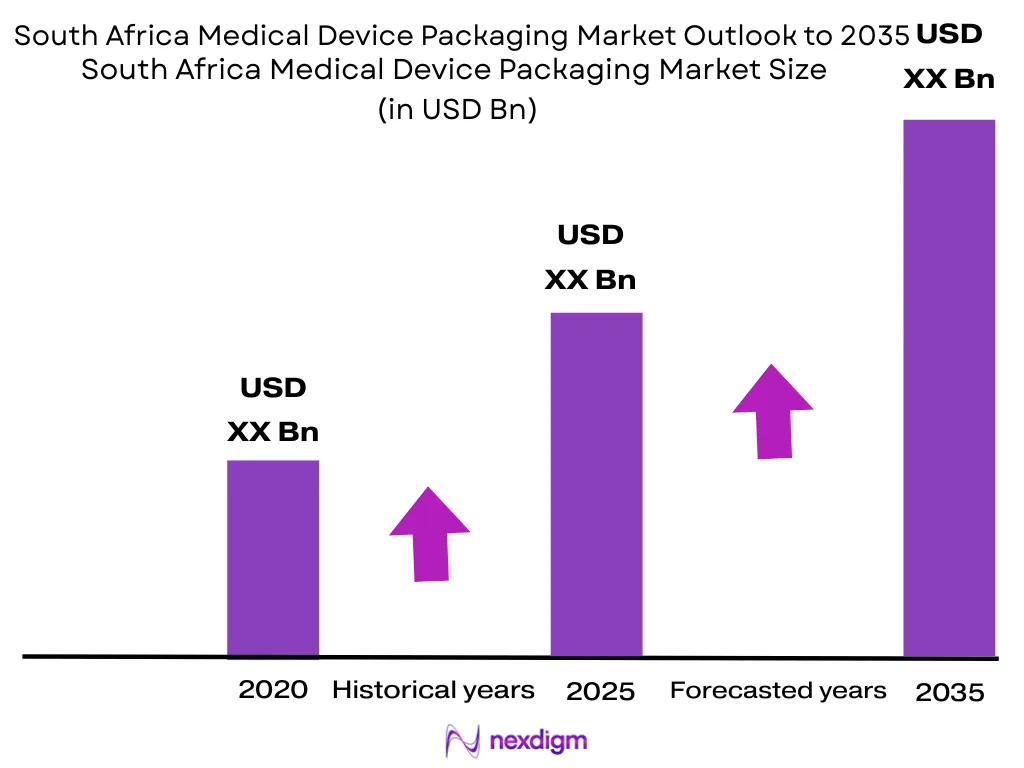
The South Africa medical device packaging market is valued at approximately USD ~ billion, compared with USD ~ billion in the preceding annual period. The values remain placeholders because no audited public source separately reports national medical-device-packaging revenue. Demand is supported by a medical-device sector valued at approximately USD 1.34 billion, including about USD 1.20 billion of imported devices, creating requirements for sterile pouches, trays, labels, protective cartons and distribution packaging. Gauteng, the Western Cape and KwaZulu-Natal dominate the South Africa medical device packaging market because they concentrate hospitals, device distributors, packaging converters, logistics facilities and technical service providers. Gauteng benefits from Johannesburg, Ekurhuleni and Pretoria’s industrial and regulatory ecosystem, while Cape Town supports life-sciences manufacturing and export activity. The country has more than 600 registered medical-technology companies, and a population of approximately 63.1 million creates nationwide healthcare and device-distribution requirements.
Market Segmentation
By Packaging Format
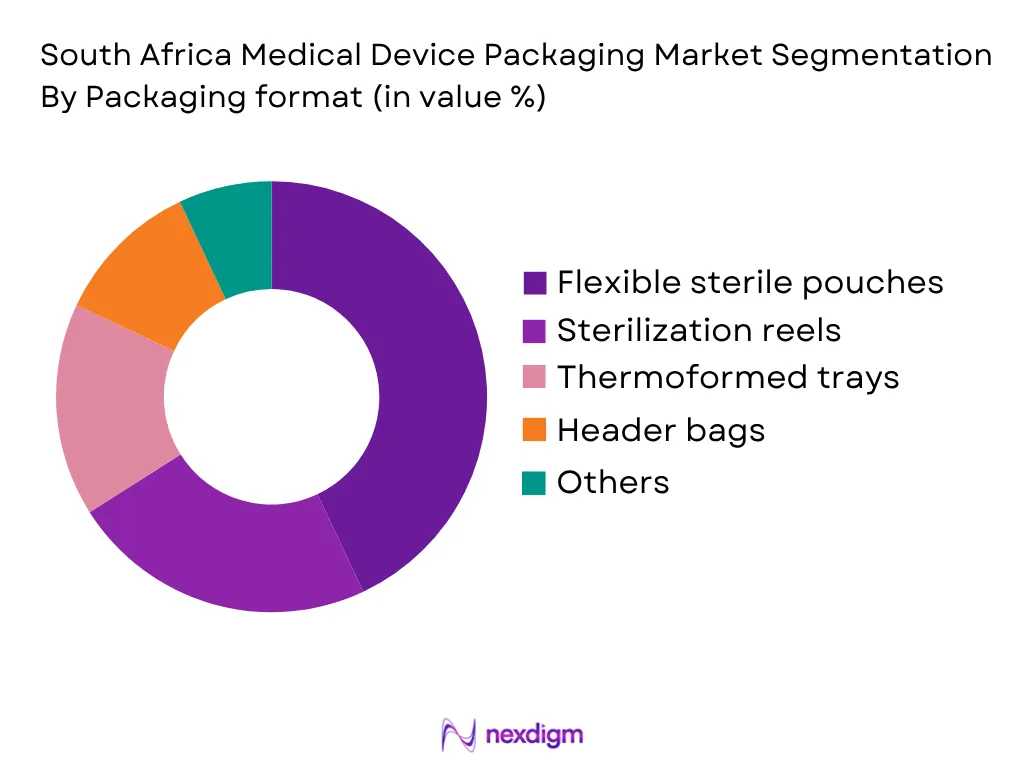
The South Africa medical device packaging market is segmented into flexible sterile pouches, sterilization reels, thermoformed trays, form-fill-seal packs, header bags, blister packaging, rigid containers and other protective formats. Flexible sterile pouches hold the dominant market position because they can package wound-care products, catheters, syringes, diagnostic consumables, dental products and surgical accessories while using less material and storage space than rigid systems. Paper–film and Tyvek–film structures provide microbial protection, visibility and controlled peel opening. Sterilization reels are also widely used by hospitals and suppliers handling different device dimensions. Thermoformed trays remain essential for implants, surgical instruments and sharp products requiring immobilization or puncture resistance. The fragmented device mix and dependence on imported products favour flexible packaging because converters and distributors can maintain multiple standard pouch sizes without investing in device-specific tooling for every application. SAHPRA’s quality-system requirements further support validated sealing, traceability and documented sterile-barrier performance.
By Packaging Material
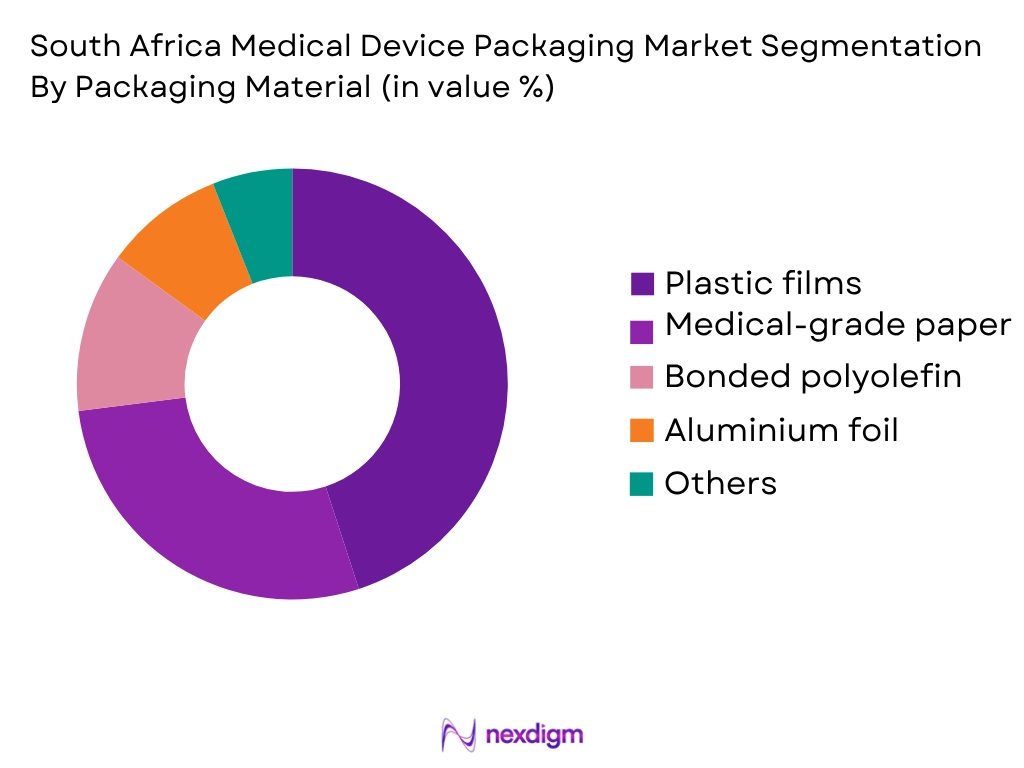
The South Africa medical device packaging market is segmented into medical-grade paper, plastic films and thermoforming sheets, spun-bonded polyolefin, medical-grade paperboard, aluminium laminates and other specialist structures. Plastic films and thermoforming sheets hold the largest share because polyethylene, polypropylene, PETG, APET and multilayer materials provide sealability, transparency, puncture resistance and moisture protection. These substrates are used in pouch webs, tray bottoms, blisters and automated form-fill-seal systems. Medical-grade paper remains important for breathable sterilization reels and pouches used with ethylene oxide or steam processes. Spun-bonded polyolefin is used where stronger microbial-barrier performance, durability and low particulate generation are required. South Africa’s reliance on imported medical devices and specialist substrates gives an advantage to suppliers that maintain local inventory and approved alternative materials. Packaging-material substitutions are difficult because revised films, papers or coatings may require seal-window studies, aging, sterilization and package-integrity revalidation.
Competitive Landscape
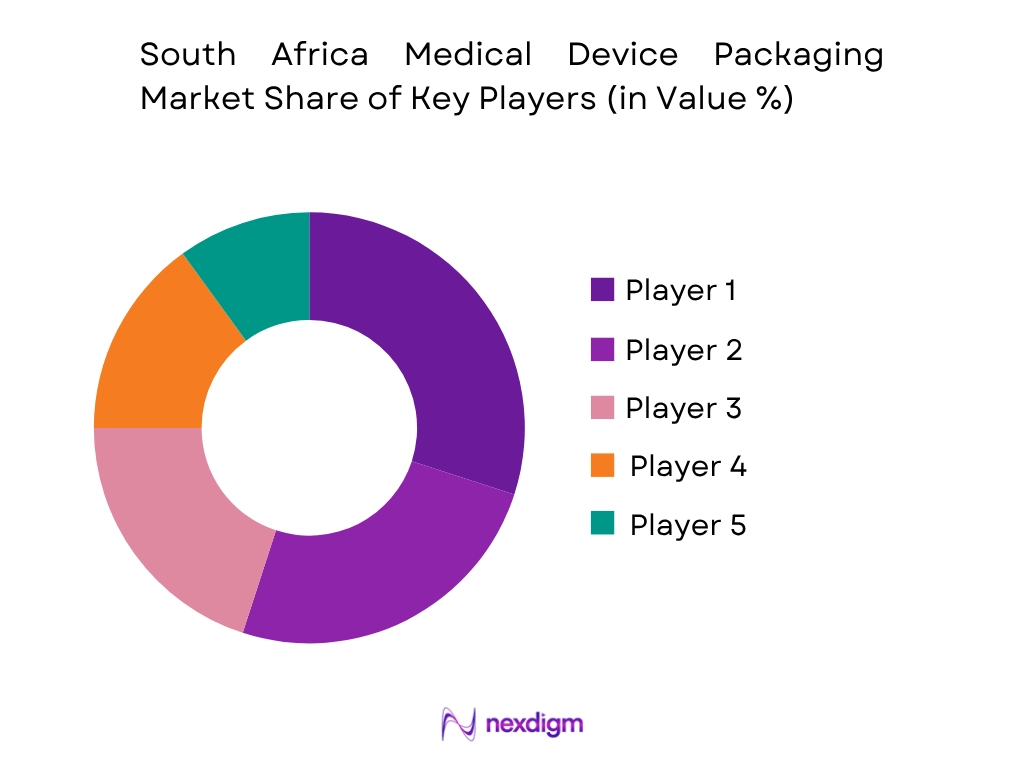
The South Africa medical device packaging market combines multinational healthcare-packaging groups, domestic paper and plastics converters, medical-product distributors and specialist sterile-packaging suppliers. Global companies influence advanced sterile barriers and material technology, while local manufacturers compete through shorter lead times, custom conversion, regional inventory and familiarity with South African procurement conditions. Competition increasingly depends on ISO 13485 readiness, cleanroom capability, sterilization compatibility, package-validation support and the ability to supply both public-sector tenders and private hospital networks. SAHPRA’s phased ISO 13485 requirement raises barriers for suppliers without formal medical-device quality systems.
| Company | Establishment year | Headquarters | Core medical packaging | Material capability | Sterilization compatibility | Validation support | South Africa relevance | Sustainability capability |
| Amcor | 1860 | Zurich, Switzerland | ~ | ~ | ~ | ~ | ~ | ~ |
| Mondi | 1967 | Weybridge, United Kingdom | ~ | ~ | ~ | ~ | ~ | ~ |
| Huhtamaki | 1920 | Espoo, Finland | ~ | ~ | ~ | ~ | ~ | ~ |
| DuPont | 1802 | Wilmington, United States | ~ | ~ | ~ | ~ | ~ | ~ |
| Mpact | 2004 | Johannesburg, South Africa | ~ | ~ | ~ | ~ | ~ |
South Africa Medical Device Packaging Market Analysis
Growth Drivers
Medical-Technology Localization and Domestic Production
South Africa’s medical-technology localization agenda is increasing demand for domestically converted sterile pouches, sterilization reels, thermoformed trays, medical-grade labels and protective transport packaging. The national Medical Technology Master Plan was developed to expand local manufacturing, strengthen supplier capabilities and reduce reliance on imported finished products. Its initial implementation framework targeted approximately 1,000 additional jobs and ZAR 1 billion in localization-linked activity. As medical-device assembly moves closer to South African hospitals and distributors, packaging design, sealing, labelling, validation and sterilization coordination must also be performed locally. This creates opportunities for converters serving surgical consumables, diagnostics, wound-care products, orthopedic devices and procedure kits. South Africa’s macroeconomic base supports this industrial activity: the World Bank recorded gross domestic product of USD 401.14 billion and GDP per capita of USD 6,267.2 in 2024. The population reached approximately 63.1 million, creating substantial demand for medical products across public hospitals, private hospital groups, laboratories and home-care channels. Localized production is particularly important for products used in national and provincial procurement programmes because suppliers must maintain dependable inventories and reduce exposure to international shipping delays. Packaging companies located near Gauteng, Cape Town and KwaZulu-Natal medical-technology clusters can shorten prototype cycles, support customer line trials and respond quickly to design changes. Domestic production therefore expands the addressable packaging opportunity beyond imported finished-device distribution into cleanroom assembly, primary sterile-barrier conversion, customized tray tooling and validated commercial packaging.
Stronger SAHPRA Quality-System and Packaging Controls
SAHPRA’s progressive strengthening of medical-device quality requirements is increasing demand for packaging suppliers capable of documented process control, traceability and sterile-barrier validation. The regulator oversees establishment licensing and medical-device registration for both in-vitro diagnostic and non-IVD products. From 1 June 2025, establishment-licence holders were required to provide an ISO 13485 quality-management-system certificate under the phased regulatory programme. In 2026, SAHPRA further clarified that certification must be performed by an independent conformity-assessment body accredited by the South African National Accreditation System and recognized by the regulator. These requirements affect packaging because material specifications, supplier controls, sealing parameters, environmental monitoring, non-conformance management and change notification must be incorporated into the device manufacturer’s quality system. A converter supplying sterile pouches or tray lids can no longer rely only on visual product acceptance; it must demonstrate consistent production, controlled material lots and documented corrective action when defects occur. South Africa’s regulated healthcare environment operates within an economy that generated USD 401 billion in nominal output in 2024, according to the IMF, and supported a population of nearly 64 million in its 2026 country profile. The scale of the healthcare and distribution system increases the consequences of seal channels, pinholes, incorrect labels or damaged barriers. Stronger regulation therefore raises the technical value of medical-device packaging and favours suppliers offering validated sealing, package-integrity testing, formal audit support and electronic batch traceability.
Market Challenges
Import Dependence and Exchange-Rate Exposure
South Africa’s medical-device packaging supply chain remains exposed to imported specialist substrates, precision equipment and finished medical products. High-performance spun-bonded polyolefin, coated medical paper, PETG thermoforming sheet, multilayer barrier films, adhesives and non-destructive leak-testing systems may be sourced through international supply networks. This creates operational risk because a medical-grade material cannot usually be replaced through a routine purchasing decision. A substitute may require new seal-window development, sterilization compatibility testing, accelerated aging, distribution simulation and customer approval before commercial use. The challenge is intensified by South Africa’s modest economic growth. Stats SA reported that real GDP expanded by only 0.5 units for every 100 units in 2024, after growth of 0.8 units in 2023; the economy then grew by 1.1 units in 2025. World Bank data placed 2024 GDP at USD 401.14 billion, while the IMF reported GDP per capita of approximately USD 6,253. Slow expansion places pressure on working capital and discourages excessive inventory, yet regulated packaging suppliers must maintain safety stock to protect customers from international delays. Imported equipment also raises maintenance and spare-parts exposure, particularly for thermoformers, medical sealers, vision systems and vacuum-decay instruments. Smaller local converters may have adequate film, printing or carton capability but lack the financial capacity to import specialized machinery and keep multiple qualified substrates in stock. Dependence on imported inputs therefore affects lead times, customer qualification, inventory requirements and the feasibility of expanding local sterile-packaging capacity.
Limited Cleanroom, Validation and Specialist Workforce Capacity
Medical-device packaging requires a combination of cleanroom production, polymer engineering, sterilization knowledge and regulatory documentation that is not widely available across South Africa’s general packaging sector. A sterile-barrier supplier may need controlled environmental facilities, calibrated heat sealers, precision tray tooling, package-integrity instruments and trained quality personnel. Each package can require installation qualification, operational qualification and performance qualification, followed by seal-strength assessment, accelerated aging and transportation testing. These requirements are difficult to standardize because Class A consumables, Class D implants, diagnostic cartridges and long catheters have different geometries, barrier needs and sterilization exposures. South Africa’s labour market adds pressure. Stats SA reported a population of approximately 63.1 million, while official unemployment remained above 32 units for every 100 economically active people in early 2026. High unemployment does not translate automatically into availability of sterile-barrier engineers, validation specialists, cleanroom technicians or medical-device quality managers. Technical expertise is concentrated around Gauteng, the Western Cape and KwaZulu-Natal, while device distributors and healthcare facilities operate across all nine provinces. Packaging companies serving remote customers may also need to coordinate testing and sterilization over long distances. SAHPRA’s ISO 13485 requirement further increases competition for experienced quality-system personnel because every licensed establishment must implement and maintain a formal medical-device quality framework. The resulting skills gap can extend tooling approval, delay failure investigations and constrain the number of simultaneous packaging-development projects a supplier can manage.
Market Opportunities
Automated Package Integrity Testing and Digital Traceability
Automation offers a significant growth opportunity because South African device manufacturers, importers and contract packagers require stronger evidence of process consistency under the ISO 13485 transition. Connected sealing systems can record temperature, pressure, dwell time and line speed for every production order, allowing operators to detect parameter drift before defective packages reach sterilization. Machine-vision systems can identify wrinkles, seal contamination, misplaced labels, missing components and tray-lid misalignment. Vacuum-decay, pressure-decay and high-voltage leak detection can improve defect sensitivity while reducing dependence on destructive testing. These technologies are particularly relevant for implants, procedure kits, diagnostics and devices distributed over long distances, where a package defect may remain undetected until clinical use. South Africa’s public-sector capital expenditure increased from ZAR 234 billion in 2023 to ZAR 276 billion in 2024, indicating renewed investment in infrastructure and fixed assets. The country also recorded GDP of USD 401.14 billion in 2024, providing an industrial base for automation suppliers, cleanroom contractors and testing laboratories. Digital traceability can connect substrate batch numbers, operator identities, machine recipes, sterilization loads and inspection results. During a complaint or recall, manufacturers can isolate affected lots rather than withdrawing a wider product population. Future demand is therefore likely to extend beyond basic pouch and tray supply toward integrated services combining automated conversion, electronic batch documentation, package-integrity analytics and validation support.
Regional Contract Packaging and Southern African Export Platforms
South Africa can develop regional contract-packaging and sterilization platforms serving both domestic manufacturers and medical-device suppliers distributing across Southern Africa. The country has comparatively advanced ports, road corridors, private hospital networks, laboratories and packaging-conversion capabilities, particularly in Gauteng, Cape Town and Durban. A specialist provider can offer cleanroom assembly, pouch sealing, tray lidding, procedure-kit configuration, labelling, accelerated aging, integrity testing and sterilization coordination without requiring every device company to build separate infrastructure. This model is relevant to small domestic manufacturers, international suppliers localizing final packaging, and distributors adapting products for regional markets. The current macroeconomic and demographic base supports such investment: the World Bank recorded GDP of USD 401.14 billion and GDP per capita of USD 6,267.2 in 2024, while the IMF listed a population of approximately 63.97 million in 2026. South Africa also borders 6 countries and provides commercial access to wider Southern African Development Community markets. Regional packaging platforms can manage multilingual labels, local importer details, transport reinforcement and country-specific kit configurations from a single qualified facility. The opportunity is strengthened by SAHPRA’s 2026 medical-device reliance guideline, which addresses establishment licensing, ISO 13485 audits, post-market activity and regulatory reliance. Greater alignment with trusted regulatory systems can support cross-border commercialization, provided packaging documentation remains controlled. Contract providers combining local inventory, technical validation and regional distribution can therefore capture future growth from import substitution, medical-technology localization and Southern African healthcare supply.
Future Outlook
The South Africa medical device packaging market is forecast to expand at approximately ~% CAGR during the forecast period. The rate is a placeholder because no authoritative source separately forecasts this packaging category. Growth will be supported by medical-technology localization, stronger quality-system requirements, private hospital demand, diagnostic expansion and the country’s role as a distribution hub for Southern Africa. The Medical Technology Master Plan establishes a coordinated framework for developing South Africa’s medical-technology industry through domestic production, investment, supplier development and export activity. The programme was launched with an initial objective of supporting approximately 1,000 new jobs and ZAR 1 billion in localization. Greater local production would shift packaging activities from imported finished-device handling toward domestic pouching, tray sealing, kit assembly, labelling and sterilization coordination. South Africa remains heavily dependent on imported medical devices. Publicly available trade guidance places device imports at approximately USD 1.20 billion, compared with exports of approximately USD 238 million. This imbalance creates two packaging opportunities. Imported devices require robust transit and distribution packaging suited to long supply chains, while localization policies create demand for domestic primary sterile barriers and cleanroom conversion. Flexible sterile pouches and reels will remain important because the healthcare system consumes large volumes of dressings, syringes, catheters, diagnostic products and surgical accessories. Thermoformed trays will gain relevance where domestic companies expand into orthopedic, cardiovascular and diagnostic devices requiring secure retention or double sterile barriers. Packaging suppliers with both standardized pouch capacity and custom tooling will be positioned to serve this mixed demand.
Major Players
- Amcor
- Mondi
- Huhtamaki
- Berry Global
- DuPont
- Oliver Healthcare Packaging
- Nelipak Healthcare Packaging
- Wipak Group
- STERIMED
- PAXXUS
- Medhold Medical
- Surgicare Medical South Africa
- Lovell Industries
- Berry Packaging South Africa
- Mpact
Key Target Audience
- Medical device packaging manufacturers and sterile-barrier converters
- Medical device and in-vitro diagnostic manufacturers
- Medical device importers and distributors
- Contract packaging and sterilization service providers
- Medical-grade polymer, paper and barrier-material suppliers
- Public and private healthcare procurement organizations
- Investments and venture capitalist firms
- Government and regulatory bodies
Research Methodology
Step 1: Identification of Key Variables
The initial phase constructs an ecosystem map covering medical-device manufacturers, packaging converters, importers, material suppliers, sterilization providers, laboratories and healthcare buyers. Critical variables include device shipments, packaging units per device, sterile-barrier format, substrate consumption, cleanroom capacity, sterilization method and import dependence. Primary sterile barriers are separated from protective, secondary and tertiary packaging.
Step 2: Market Analysis and Construction
Historical demand is assessed through device imports, domestic production, packaging-converter revenues, material consumption and hospital procurement. The top-down approach converts device-category supply into packaging-unit demand. The bottom-up approach aggregates sterile-pouch, reel, tray, lidding, carton and contract-packaging revenues before reconciling the outputs through unit-weight, material-yield and average-realization checks.
Step 3: Hypothesis Validation and Expert Consultation
Market assumptions are validated through computer-assisted telephone interviews with packaging engineers, medical-device manufacturers, importers, distributors, sterilization companies and testing laboratories. Discussions assess format penetration, material sourcing, customer qualification, line utilization, package failures and regulatory readiness. Responses are normalized by device class, packaging format, customer size and domestic-versus-imported supply model.
Step 4: Research Synthesis and Final Output
The final phase integrates SAHPRA guidance, government policy, trade data, company disclosures and primary interviews. Market size is triangulated across packaging revenue, unit shipments, device supply and material demand. Forecast assumptions incorporate localization, ISO 13485 implementation, contract packaging, public procurement and regional exports. Competitive positioning is validated against cleanroom capability, technical support and customer qualification.

- Executive Summary
- Research Methodology (Market Definitions and Assumptions, Medical Device Packaging Taxonomy, Abbreviations, Top-Down Market Sizing, Bottom-Up Converter Revenue Aggregation, Device Shipment-to-Packaging Unit Conversion, Demand-Side Assessment, Supply-Side Capacity Mapping, Import–Export Reconciliation, Public Procurement Analysis, Primary Industry Interviews, Data Triangulation, Forecasting Framework, Scenario Analysis, Limitations and Future Conclusions)

- Definition and Scope
- Medical Device Packaging Market Evolution and Industry Genesis
- Timeline of Major Regulatory, Manufacturing and Packaging Developments
- Medical Device Packaging Business Cycle
- Packaging Demand Linkage with Domestic Medical Technology Production
- Medical Device Classification and Packaging Requirement Mapping

- Growth Drivers (Medical Technology Localization, Public Healthcare Procurement, Expansion of Domestic Device Manufacturing, Increasing Surgical and Diagnostic Demand, Growth of Single-Use Consumables, Private Hospital Investment, Export Development and Higher Infection-Control Requirements)
- Market Challenges (Medical-Grade Material Import Dependence, Exchange-Rate Exposure, Limited Cleanroom Conversion Capacity, Sterilization Bottlenecks, Long Packaging Qualification Cycles, Public Procurement Pressure, Skilled Validation Workforce Shortages and Sustainability–Sterility Trade-Offs)
- Market Opportunities (Localized Sterile Barrier Production, Medical-Grade Paper Conversion, Custom Thermoformed Trays, Contract Packaging Expansion, Packaging for Diagnostic Devices, Automated Integrity Testing, Regional Export Platforms and Sustainable Healthcare Packaging)
- Market Trends (Paper–Film Sterilization Pouches, Tyvek-Based Barriers, Thermoformed Tray Optimization, Double Sterile Barriers, Digital Package Prototyping, Automated Seal Inspection, Procedure-Kit Assembly and Cleanroom Packaging Outsourcing)
- SWOT Analysis
- Porter’s Five Forces Analysis
- PESTLE Analysis

- By Market Value (2020-2025)
- By Packaging Units (2020-2025)
- By Medical-Grade Material Consumption (2020-2025)

- By Packaging Format (In Value %)
Flexible Sterile Pouches
Paper–Film Sterilization Pouches
Tyvek–Film Pouches
Sterilization Reels
Thermoformed Medical Trays
Header Bags - By Packaging Material (In Value %)
Medical-Grade Paper
Spun-Bonded Polyolefin and Tyvek
Polyethylene Films
Polypropylene Films
Polyethylene Terephthalate Films and Sheets
Bio-Based and Recyclable Healthcare Packaging Materials - By End-User Organization (In Value %)
Domestic Medical Device Manufacturers
Multinational Medical Device Subsidiaries
Medical Device Importers and Distributors
Contract Development and Manufacturing Organizations
Original Equipment Manufacturers
Public Hospital and Provincial Health Suppliers
Private Hospital Group Suppliers - By Geographic Market (In Value %)
Gauteng
Western Cape
KwaZulu-Natal
Eastern Cape
Free State
Limpopo

- Market Share of Major Players
- Cross Comparison Parameters (Sterile Barrier Product Portfolio, Medical-Grade Material Expertise, South Africa Cleanroom Manufacturing Footprint, Sterilization Compatibility Coverage, Packaging Validation and Testing Capability, Domestic Medical Device Customer Coverage, Custom Tooling and Prototyping Capability, Sustainable Healthcare Packaging Portfolio)
- SWOT Analysis of Major Players
- Detailed Profiles of Major Companies
Amcor
Mondi
Huhtamaki
Berry Global
DuPont
Oliver Healthcare Packaging
Nelipak Healthcare Packaging
Wipak Group
STERIMED
PAXXUS
Medhold Medical
Surgicare Medical South Africa
Lovell Industries
Berry Packaging South Africa
Mpact

- Packaging Demand and Utilization Assessment
- Medical Device Manufacturer Procurement Criteria
- Packaging Supplier Qualification Process
- Packaging Engineer Decision-Making Process
- Regulatory and Quality Team Requirements
- Domestic Medical Device Manufacturer Analysis
- Multinational Medical Device Company Analysis

- By Market Value (2026-2035)
- By Packaging Units (2026-2035)
- By Medical-Grade Material Consumption (2026-2035)


 Request a Sample
 Ask for Customization
 Get a Quote
 Enquire Now