
 Download PDF
Market Overview
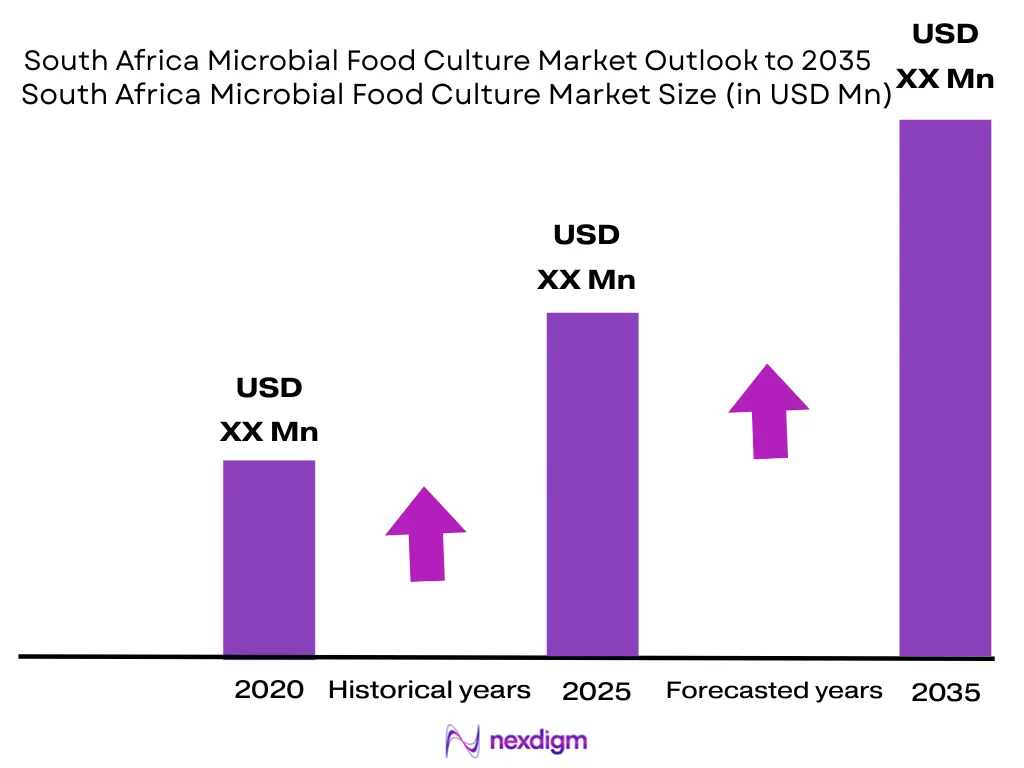
The South Africa Microbial Food Culture Market is valued at approximately USD ~ million and is forecast to expand at a CAGR of % during 2026–2035. Demand is driven by yoghurt, amasi, cheese, bakery, fermented meat, probiotic beverages, and cereal-based foods. National economic output increased from approximately ZAR 7.0 trillion to ZAR 7.3 trillion, while annual real output growth moved from 0.7% to 0.6%, supporting continued industrial food-processing activity. Gauteng, Western Cape, and KwaZulu-Natal dominate the South Africa Microbial Food Culture Market because they contain major dairy processors, industrial bakeries, meat manufacturers, beverage companies, ports, refrigerated warehouses, and ingredient distributors. Gauteng provides the country’s largest commercial and consumer base, the Western Cape supports dairy, cheese, bakery, and beverage processing, and KwaZulu-Natal offers port access and food-manufacturing capacity. South Africa’s population increased from approximately 62.0 million to 63.0 million, broadening demand for packaged fermented foods.
Market Segmentation
By Culture Type
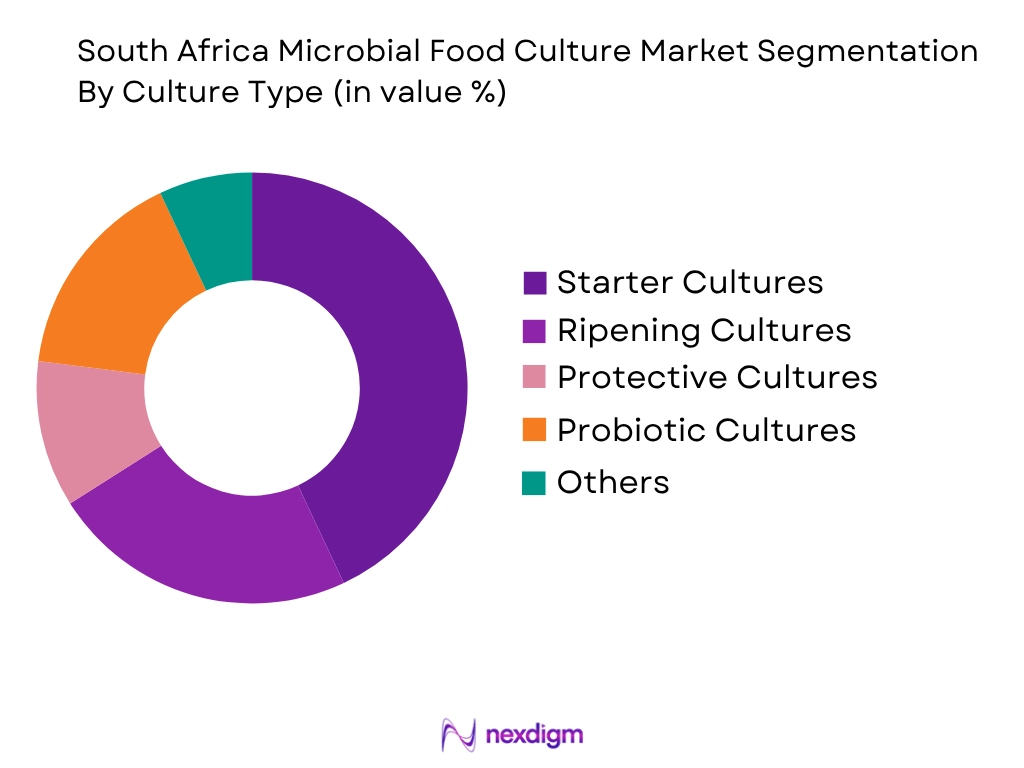
The South Africa Microbial Food Culture Market is segmented into starter cultures, probiotic cultures, protective cultures, adjunct and ripening cultures, customized mixed cultures, and indigenous microbial cultures. Starter cultures hold the dominant position because they initiate controlled fermentation in yoghurt, amasi, cultured buttermilk, cheese, bread, fermented meat, mageu, and other cereal-based products. They allow processors to standardize acidification, flavour, texture, and production time while reducing dependence on variable spontaneous fermentation. Direct-vat cultures are particularly relevant to industrial processors because they limit mother-culture preparation and lower contamination exposure. South African dairy regulations specifically recognize yoghurt cultures composed of defined lactic acid bacteria and establish classifications for cultured dairy products. Probiotic cultures are gaining relevance in functional dairy and beverages, while protective cultures are used selectively to control spoilage. Indigenous cultures offer longer-term potential for commercializing amasi, sorghum, maize, and traditional beverage fermentations without eliminating familiar sensory attributes.
By Application
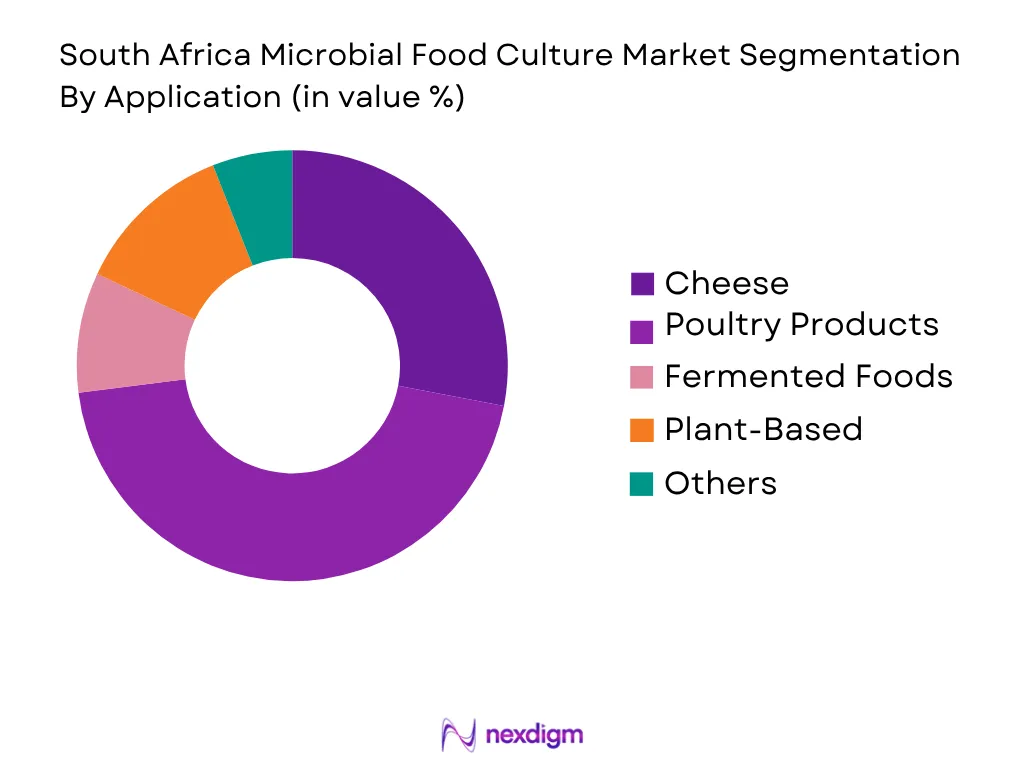
The South Africa Microbial Food Culture Market is segmented into fermented dairy, cheese, bakery and sourdough, fermented meat, fermented beverages, traditional African fermented foods, and plant-based products. Fermented dairy holds the dominant market position because yoghurt, amasi, cultured milk, buttermilk, and probiotic dairy require defined cultures in every production batch. Cultures control pH reduction, gel formation, viscosity, aroma, and post-acidification, making them essential manufacturing inputs. Amasi provides a distinctly South African demand base, while yoghurt supports broad household and retail consumption. Cheese is another significant application, particularly cheddar, gouda, mozzarella, feta-type, cottage, and specialty ripened products. Bakery fermentation is widespread, although conventional yeast represents a substantial portion of usage. Traditional cereal beverages and foods provide future commercial-culture potential, but many smaller producers continue to rely on spontaneous fermentation or carried-over starters. Standardized culture penetration is therefore more mature in organized dairy and cheese manufacturing than in community-based maize and sorghum fermentations.
Competitive Landscape
The South Africa Microbial Food Culture Market includes multinational bioscience companies, specialist fermentation businesses, regional distributors, and local technical suppliers. Novonesis has a formal South African channel through Cultures For U, which supplies dairy, meat, and plant-based cultures. Savannah Fine Chemicals distributes Lallemand specialty cultures for cheese applications. Competition depends on strain-library breadth, fermentation reliability, local inventory, application support, regulatory documentation, phage-management capabilities, and the ability to serve both industrial and smaller processors.
| Company | Establishment Year | Headquarters | Core Culture Portfolio | Principal Applications | Product Formats | South Africa Route to Market | Technical Capability | Strategic Differentiation |
| Novonesis | 2024 as merged entity | Lyngby, Denmark | ~ | ~ | ~ | ~ | ~ | ~ |
| International Flavors & Fragrances | 1958 | New York, United States | ~ | ~ | ~ | ~ | ~ | ~ |
| dsm-firmenich | 2023 as merged entity | Kaiseraugst and Maastricht | ~ | ~ | ~ | ~ | ~ | ~ |
| Lallemand | 1915 | Montreal, Canada | ~ | ~ | ~ | ~ | ~ | ~ |
| Lesaffre | 1853 | Marcq-en-Barœul, France | ~ | ~ | ~ | ~ | ~ | ~ |
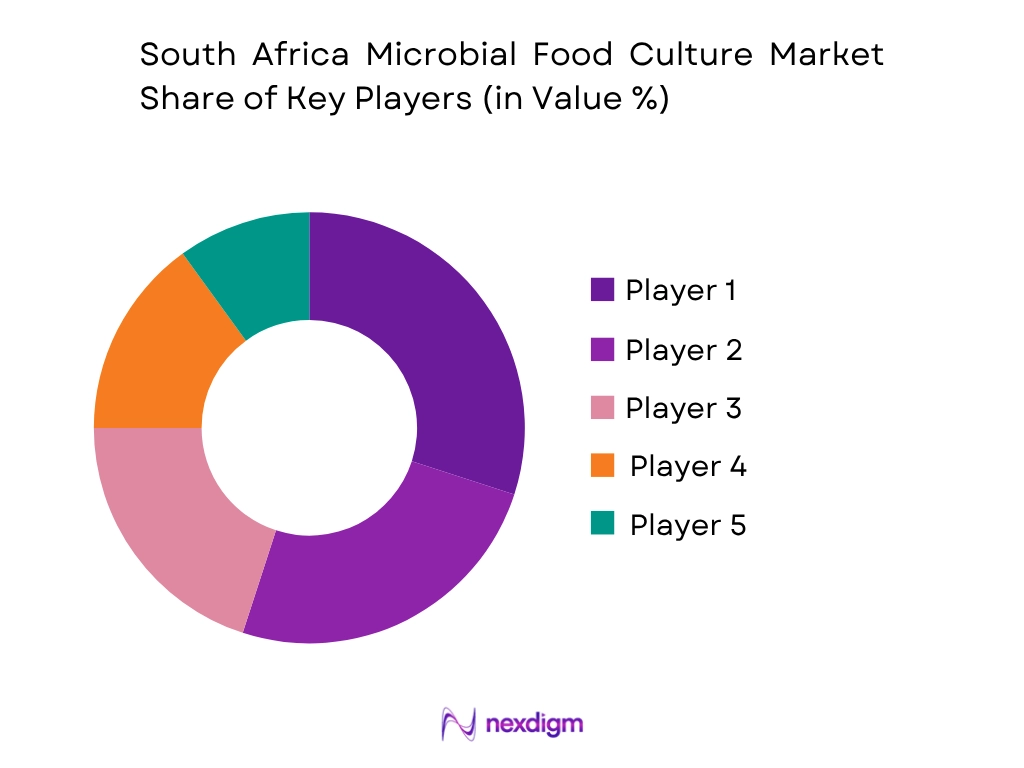
South Africa Microbial Food Culture Market Analysis
Growth Drivers
Urbanization and Concentrated Demand for Packaged Fermented Foods
South Africa’s growing and increasingly concentrated population supports demand for standardized microbial cultures used in yoghurt, amasi, cultured buttermilk, cheese, sourdough, fermented meat, probiotic beverages, mageu, and plant-based products. Statistics South Africa estimated the national population at 63.02 million people in 2024, while its revised estimate placed the population at 63.1 million in 2025. Gauteng contained more than 15.9 million residents in 2024, KwaZulu-Natal had approximately 12.3 million, and the Western Cape had approximately 7.6 million. Together, these three provinces accommodated 35.8 million people, creating concentrated consumer and processing markets around Johannesburg, Pretoria, Durban, Cape Town, Stellenbosch, Paarl, and Pietermaritzburg. These locations contain modern retailers, foodservice operators, refrigerated warehouses, dairy factories, industrial bakeries, meat processors, and ingredient distributors. Their scale makes commercial starter cultures more practical than uncontrolled fermentation because manufacturers must supply products with repeatable acidity, flavour, texture, and shelf performance across large retail networks. Yoghurt and amasi require lactic acid bacteria that consistently reduce pH and establish the desired gel structure. Cheese producers need cultures that control acidification, moisture, flavour formation, and ripening, while industrial bakeries depend on yeast and sourdough systems that perform reliably across high-speed production lines. The World Bank recorded South African gross domestic product at USD 401.14 billion in 2024, with gross domestic product per person of USD 6,267.2. Although real national output expanded by only 0.6 percentage points, the overall size of the consumer economy supports continued demand for packaged dairy, bakery, meat, and convenience foods. Urban distribution also increases the distance between factories and consumers. Products may move through regional distribution centres, supermarket depots, convenience stores, institutional caterers, and online grocery channels before consumption. This increases the value of cultures that control post-acidification, suppress selected spoilage organisms, and maintain texture during refrigerated storage. Population concentration further improves the economics of local technical support. A culture supplier can position refrigerated inventory and application specialists in Gauteng, the Western Cape, or KwaZulu-Natal and serve multiple industrial customers within the same processing corridor. The urban market is also culturally diverse, supporting both established products such as amasi and newer formats including Greek-style yoghurt, probiotic dairy drinks, artisanal sourdough, fermented plant-based beverages, and specialty cheese. Urbanization therefore drives the microbial food culture market through concentrated food consumption, expanding organized retail, larger industrial production batches, and the replacement of variable back-slopping practices with documented culture systems.
Industrial Food Processing and Standardization of Fermentation
South Africa’s established agro-processing and manufacturing base creates recurring demand for starter, probiotic, protective, adjunct, ripening, and yeast cultures. Statistics South Africa reported that manufacturing contributed positively to national economic activity during the second quarter of 2024, when the economy expanded by 0.4 percentage points. Formal non-agricultural employment reached 10.72 million people in June 2024, following the addition of 42,000 jobs during the quarter. The national Department of Agriculture’s annual agro-processing review reported that the food-products manufacturing division contracted by 0.4 percentage points in 2024, after increasing by 2.6 percentage points in 2023. Within the division, dairy-product manufacturing declined by 1.7 percentage points, following growth of 8.5 percentage points in the preceding period. The short-term contraction does not remove the need for microbial cultures; it increases the importance of process efficiency and product consistency because food manufacturers must reduce failed batches, control production time, and obtain more reliable output from existing plants. Defined cultures help processors manage these operational requirements. Industrial yoghurt and amasi manufacturers need cultures with predictable acidification curves, viscosity development, and limited post-acidification. Cheese plants require starter and adjunct systems that influence curd formation, moisture, flavour, eye development, and ripening. Fermented-meat processors use selected bacteria to control pH, colour, aroma, and pathogen risk, while industrial bakeries rely on yeast and sourdough systems that withstand mechanical mixing, frozen storage, proofing variation, and high-throughput ovens. The South African economy reached approximately USD 401.14 billion in 2024, while public-sector capital expenditure increased from ZAR 234 billion in 2023 to ZAR 276 billion in 2024. Infrastructure investment supports electricity systems, transport, water, industrial facilities, and logistics that are necessary for temperature-controlled culture storage and food manufacturing. South Africa also possesses ports, cold stores, laboratories, ingredient distributors, and food-processing clusters capable of serving domestic and neighbouring African markets. Industrialization changes microbial cultures from optional formulation components into controlled production inputs. Large processors cannot rely on spontaneous fermentation because naturally occurring organisms vary with raw-material quality, season, sanitation, and factory environment. A delayed fermentation can occupy tanks longer than planned, interrupt filling schedules, increase exposure to contaminants, and affect deliveries to retailers. Direct-vat inoculation cultures reduce the need to maintain mother cultures, while freeze-dried formats simplify dosing and inventory control. Protective cultures can complement hygiene, packaging, and refrigeration by suppressing selected spoilage organisms. As processors automate fermentation and introduce digital pH, temperature, and time monitoring, they require cultures with documented performance profiles that can be incorporated into standard operating procedures. Industrial food processing therefore supports market development through larger batch sizes, tighter quality specifications, recurring culture consumption, and growing reliance on validated microbial systems rather than variable artisanal propagation.
Market Challenges
Cold-Chain Reliability, Electricity Exposure, and Culture Performance
The biological sensitivity of commercial cultures creates a major operating challenge in South Africa. Starter and probiotic cultures contain living microorganisms that must retain adequate activity from international production facilities through freight, customs clearance, distributor storage, inland transportation, and final use. Frozen concentrates require continuous low-temperature handling, while freeze-dried cultures still need protection from heat, humidity, oxygen, and prolonged storage. South Africa’s extensive geography increases the number of transfer stages between ports, warehouses, and processors in Gauteng, the Western Cape, KwaZulu-Natal, the Eastern Cape, and inland provinces. The market serves a population of 63.02 million people in 2024, spread across provinces ranging from approximately 15.9 million residents in Gauteng to around 1.4 million in the Northern Cape. This distribution creates long last-mile routes for processors outside the main industrial hubs. Electricity and infrastructure reliability further affect culture handling. Public-sector capital expenditure reached ZAR 276 billion in 2024, up from ZAR 234 billion in 2023, reflecting increased investment needs across infrastructure systems. Culture distributors and processors still require backup electricity, alarmed cold rooms, calibrated temperature loggers, and emergency operating procedures to protect sensitive inventory. A freezer interruption may not visibly damage a pack, but reduced microbial activity can cause slow acidification or inconsistent fermentation. In yoghurt and amasi, weak activity can produce poor gel formation, whey separation, excessive fermentation time, or unstable flavour. In cheese, it can alter curd development, moisture, and ripening. In fermented sausage, insufficient acidification can affect product consistency and microbiological control. Bakery cultures and yeast can also lose performance when exposed to unsuitable storage, resulting in altered proofing time and loaf volume. The challenge continues after delivery because processors must manage stock rotation, thawing, rehydration, dosing, and hygienic inoculation. Repeated opening of culture packs or leaving them in warm processing areas can reduce viability or introduce contaminants. Bacteriophages create an additional technical risk in dairy factories. These viruses infect specific bacterial starter strains and may delay or stop fermentation even when culture transport and storage were correct. Effective management requires culture rotation, whey segregation, hygienic zoning, air-flow controls, sanitation, and rapid diagnosis. The food-products manufacturing division contracted by 0.4 percentage points in 2024, while dairy manufacturing declined by 1.7 percentage points, increasing pressure on processors to avoid wasted batches and production downtime. Suppliers must therefore offer more than packaged cultures. They need validated local inventory, temperature-monitored delivery, emergency replacement capability, culture-rotation programs, and factory-level troubleshooting. Companies with only import and resale capabilities face difficulty competing against suppliers that can diagnose process failures and separate culture-related issues from raw-material, sanitation, heat-treatment, or equipment problems. Cold-chain reliability and fermentation control consequently remain structural barriers, particularly for smaller regional processors without microbiology laboratories, backup power, or dedicated culture-management systems.
Limited Specialized Fermentation Skills and Uneven Technical Capacity
South Africa has a large labour force and an established food-manufacturing sector, but the microbial food culture market is constrained by the limited availability of personnel who combine food microbiology, dairy science, fermentation engineering, quality assurance, and regulatory expertise. Commercial cultures are not interchangeable ingredients. Their selection depends on substrate composition, processing temperature, salt concentration, desired acidity, flavour profile, texture, oxygen exposure, packaging, and storage period. In the first quarter of 2024, only 9.8 out of every 100 employed young people were graduates, according to Statistics South Africa. Formal non-agricultural employment reached 10.72 million in June 2024, but the economy lost 144,000 formal jobs between June 2023 and June 2024. Education-related labour-market outcomes remained difficult in 2025: individuals without matric recorded an unemployment rate of 39.0 percentage points in the first quarter, while graduates recorded 11.7 percentage points. By the first quarter of 2026, approximately 3.9 million of 10.3 million people aged 15–24 were not in employment, education, or training. These figures illustrate the gap between broad labour availability and the narrower pool of technically qualified workers required for controlled microbial processing. A dairy technologist must distinguish between delayed starter activity, bacteriophage infection, antibiotic residues, poor milk heat treatment, incorrect incubation temperature, dosing error, and environmental contamination. Cheese production requires knowledge of acidification, syneresis, salt tolerance, adjunct metabolism, and ripening. Fermented-meat manufacturing requires control of pH, water activity, colour, pathogen inhibition, and drying. Traditional cereal products such as mageu, mahewu, ting, and sorghum ferments present additional complexity because their flavour and texture may depend on mixed microbial communities rather than a single strain. Replacing spontaneous fermentation without losing accepted sensory characteristics requires microbial isolation, screening, pilot testing, and consumer-compatible formulation. Small processors, farm dairies, and community-based manufacturers may not employ dedicated microbiologists. Production managers therefore handle cultures alongside procurement, sanitation, maintenance, and general quality responsibilities. Incorrect thawing, rehydration, or storage can lead to inconsistent results and cause processors to blame the culture rather than the process. This raises the technical-service burden for suppliers. Culture companies must conduct factory trials, develop standard operating procedures, train operators, interpret fermentation curves, and provide corrective action after failures. Geographic concentration worsens the constraint: specialized support is more accessible in Gauteng, the Western Cape, and KwaZulu-Natal than in remote dairy or cereal-processing areas. The 2025 population distribution placed approximately 16.1 million people in Gauteng and 12.2 million in KwaZulu-Natal, reinforcing the concentration of technical services in major economic provinces. Market expansion therefore depends on investment in local application laboratories, microbiology training, pilot fermenters, rapid-testing capability, and technical teams able to serve medium and small processors rather than only national food manufacturers.
Market Opportunities
Indigenous Culture Development and Advanced Fermentation Technologies
South Africa has an opportunity to develop microbial culture solutions specifically for amasi, mageu, mahewu, ting, sorghum products, fermented maize foods, dairy products, meat, and plant-based applications. The country’s population reached 63.02 million in 2024, while gross domestic product was USD 401.14 billion and gross domestic product per person was USD 6,267.2. These current indicators provide a large domestic food base and an industrial platform for application laboratories, pilot fermentation, freeze-drying, genomic screening, microencapsulation, and digital process control. Indigenous fermented foods contain lactic acid bacteria, yeasts, and other organisms adapted to local substrates and sensory expectations. Commercial development can begin by isolating strains from established products, confirming their identity, screening for undesirable antimicrobial resistance or virulence characteristics, and testing their acidification, flavour, texture, and stress tolerance. Selected organisms could be combined into standardized cultures that retain the familiar characteristics of traditional foods while reducing fermentation variability. Amasi cultures could be optimized for acidity, viscosity, aroma, and post-acidification. Mageu and sorghum systems could be designed to control sourness, fermentation time, and microbial stability. Meat cultures could be selected for salt tolerance, colour development, and biological protection. Technology can also improve imported and locally developed cultures. Freeze-drying and cryoprotectant systems can increase stability during inland distribution. Microencapsulation can protect probiotics against oxygen, acidity, and storage stress. Direct-vat inoculation formats can reduce contamination and make commercial cultures easier to use in medium-sized factories. Digital sensors can continuously track pH, temperature, fermentation time, and equipment conditions, allowing processors to identify abnormal performance before an entire batch is lost. Such systems are relevant because South Africa’s public-sector infrastructure expenditure increased to ZAR 276 billion in 2024, indicating continuing investment in the physical systems supporting manufacturing and logistics. Technology can also compensate partly for limited specialized labour. In 2024, only 9.8 out of every 100 employed young people were graduates, making standardized dosing, automated monitoring, and simplified culture formats valuable for factories with limited microbiology staff. Protective cultures provide another development route. They can suppress selected spoilage yeasts, moulds, or bacteria in dairy, cheese, meat, bakery fillings, and plant-based foods when used alongside sanitation, refrigeration, and packaging controls. Probiotic development can target cultured dairy and cereal beverages, provided strain identity, viable counts, and claims are properly supported. The opportunity is not dependent on speculative future numbers; it is supported by South Africa’s current population, manufacturing base, food traditions, and need for more reliable fermentation. Suppliers that combine strains with local testing, formulation, digital monitoring, and technical service can create a differentiated market position instead of competing only through imported standard products.
International Collaboration and Expansion across African Food Markets
International partnerships can accelerate South Africa’s access to strain libraries, probiotic documentation, protective-culture technology, cheese-ripening systems, fermentation equipment, genomic tools, and cold-chain expertise. South Africa’s 2024 gross domestic product reached USD 401.14 billion, making it one of the continent’s largest industrial and consumer economies. Its population of 63.02 million provides a substantial domestic market, while established ports, laboratories, dairy processors, bakeries, meat manufacturers, and ingredient distributors create a platform for serving neighbouring countries. South Africa’s major economic provinces provide the initial operating base: Gauteng had more than 15.9 million residents, KwaZulu-Natal approximately 12.3 million, and the Western Cape approximately 7.6 million in 2024. These provinces contain Johannesburg, Pretoria, Durban, Cape Town, Stellenbosch, Paarl, and major freight corridors. International culture manufacturers can collaborate with South African distributors to hold frozen and freeze-dried inventory locally, shorten delivery times, offer smaller packs, and provide emergency replacements. Partnerships can progress from import distribution to local application testing, blending, repacking, quality control, pilot fermentation, and eventually selected domestic production. South African processors contribute knowledge of amasi, mageu, sorghum fermentation, local milk conditions, meat products, retail requirements, and consumer flavour preferences. International bioscience companies contribute proprietary strains, phage-management programs, safety documentation, freeze-drying expertise, and experience across dairy, bakery, meat, beverage, and plant-based applications. Combining these capabilities can reduce the risk of directly transferring a culture developed for European or North American products into South African formulations without validation. Collaboration can also strengthen regional exports. South Africa’s ports in Durban, Cape Town, Gqeberha, and other locations support distribution into Southern African markets, while its laboratories and regulatory systems provide a stronger technical base than is available in many smaller neighbouring economies. Local inventory could serve processors producing yoghurt, cultured milk, bread, fermented meat, cereal beverages, and traditional foods across the Southern African Development Community. Current economic performance also supports the need for efficiency-oriented partnerships. The national economy expanded by only 0.6 percentage points in 2024, while food-products manufacturing contracted by 0.4 percentage points and dairy manufacturing declined by 1.7 percentage points. Under these conditions, processors benefit from cultures that reduce fermentation variability, shorten troubleshooting, improve batch recovery, and enable differentiated products rather than merely adding production capacity. International collaboration can also address skills constraints through operator training, laboratory exchanges, remote fermentation monitoring, and certification programs. The first quarter of 2026 still recorded 3.9 million people aged 15–24 outside employment, education, or training, demonstrating the value of industry-led technical development. Partnerships that build South African microbiology, dairy, and fermentation capabilities can support both commercial expansion and workforce development. The most attractive model is therefore not simple import resale, but a regional biosolutions platform combining inventory, local trials, indigenous-strain research, technical service, and cross-border distribution.
Future Outlook
The South Africa Microbial Food Culture Market is expected to expand during 2026–2035 as industrial processors increase their use of standardized fermentation systems. Growth will be supported by cultured dairy production, cheese diversification, functional foods, clean-label preservation, artisanal bakery development, and the commercialization of traditional African fermented products. Starter cultures will remain central to yoghurt, amasi, cheese, bakery, and meat applications. Direct-vat inoculation formats should gain acceptance because they simplify production, improve traceability, and reduce contamination associated with maintaining mother cultures. Freeze-dried formats may be preferred by processors requiring greater storage flexibility and smaller production runs. Amasi and other cultured dairy products offer an important localization opportunity. Suppliers can develop culture blends that provide familiar acidity, aroma, viscosity, and mouthfeel while improving batch consistency. Cultures that limit excessive post-acidification may help processors maintain product quality across longer retail distribution routes. Protective cultures should receive greater attention in dairy, cheese, meat, bakery fillings, and plant-based foods. These cultures may inhibit selected spoilage yeasts, moulds, or undesirable bacteria. They will complement rather than replace hygiene, heat treatment, refrigeration, packaging, and environmental monitoring. Traditional foods provide a differentiated innovation pathway. Mageu, mahewu, ting, sorghum beverages, maize ferments, and indigenous cereal products contain microbial communities that could be isolated and screened for industrial use. Commercialization would require strain identification, genomic safety assessment, sensory validation, pilot fermentation, and controlled scale-up. Plant-based fermentation is another developing opportunity. Maize, sorghum, oats, soy, peas, nuts, and legumes can be fermented to improve flavour, texture, digestibility, and nutritional positioning. Suppliers that combine cultures with enzymes and formulation support will be better positioned to help manufacturers overcome raw-material variability.
Major Players
- Novonesis
- International Flavors & Fragrances
- dsm-firmenich
- Lallemand
- Lesaffre
- Kerry Group
- Sacco System
- CSK Food Enrichment
- Biochem
- Angel Yeast
- AB Biotek
- LB Bulgaricum
- Biena
- Cultures For U
- Savannah Fine Chemicals
Key Target Audience
- Dairy and cultured-milk processors
- Cheese and fermented-meat manufacturers
- Industrial bakery and fermented-beverage producers
- Traditional African fermented-food manufacturers
- Food-ingredient importers and distributors
- Investments and venture capitalist firms
- Private-equity and strategic food-industry investors
- Government and regulatory bodies
Research Methodology
Step 1: Identification of Key Variables
The initial phase involves constructing an ecosystem map covering culture manufacturers, importers, distributors, dairy processors, cheese producers, bakeries, meat companies, beverage manufacturers, and regulatory authorities. Desk research identifies variables such as culture format, strain type, application, dosage, processor size, import dependency, refrigeration requirements, and local technical capability.
Step 2: Market Analysis and Construction
Historical information is compiled by culture type, microorganism, application, end-user, distribution model, and province. The bottom-up model evaluates processor output, fermentation-batch frequency, average culture dosage, and commercial-culture penetration. The top-down model reviews food-manufacturing activity, culture imports, supplier revenues, and relevant fermented-product categories.
Step 3: Hypothesis Validation and Expert Consultation
Preliminary hypotheses are validated through computer-assisted telephone interviews with culture suppliers, dairy technologists, microbiologists, production managers, procurement personnel, distributors, and regulatory specialists. These discussions examine purchasing cycles, product trials, storage losses, technical requirements, culture-switching behaviour, and the conversion from spontaneous to standardized fermentation.
Step 4: Research Synthesis and Final Output
Demand-side and supply-side findings are triangulated to reconcile supplier shipments, distributor inventory, and processor consumption. Segment shares and forecasts are tested against application volumes, culture dosages, import lead times, product portfolios, and expert feedback. The final output presents a consolidated market assessment and strategic outlook.

- Executive Summary
- Research Methodology (Market Definitions and Assumptions, Product Inclusion and Exclusion Criteria, Abbreviations, Market Sizing Approach, Top-Down Analysis, Bottom-Up Analysis, Culture-Dosage Consumption Model, Dairy-Processing Output Assessment, Demand-Side Assessment, Supply-Side Assessment, Import-Based Supply Assessment, Primary Industry Interviews, Data Triangulation, Forecasting Framework, Scenario Analysis, Limitations and Future Conclusions)

- Definition and Scope
- Market Evolution and Industry Genesis
- Development of Commercial Food Fermentation in South Africa
- Transition from Traditional Back-Slopping to Standardized Starter Cultures
- Role of Microbial Cultures in South African Food Manufacturing
- Evolution of Cultured Dairy, Cheese, Bakery and Fermented Meat Applications
- Timeline of Major Industry Developments

- Growth Drivers (Expansion of Cultured Dairy Production, Established Amasi and Yoghurt Consumption, Growth of Cheese Manufacturing, Industrial Bakery Demand, Commercialization of Traditional Fermented Foods, Functional and Probiotic Product Development, Clean-Label Preservation, Expansion of Modern Food Retail)
- Market Challenges (Dependence on Imported Proprietary Strains, Electricity-Supply Reliability, Refrigerated Storage Constraints, Culture Viability Loss, Limited Fermentation Skills, Bacteriophage Contamination, Raw-Milk Quality Variability, Fragmented Small-Processor Base)
- Market Opportunities (Commercialization of Indigenous Strains, Standardized Amasi Cultures, Mageu and Sorghum Fermentation Systems, Protective Cultures for Dairy and Meat, Probiotic Functional Foods, Plant-Based Fermentation, Local Culture Blending and Repacking, Sub-Saharan African Export Expansion)
- Market Trends (Direct-Vat Inoculation, Freeze-Dried Culture Adoption, Multi-Strain Blends, Mild-Acidification Systems, Exopolysaccharide-Producing Cultures, Clean-Label Bioprotection, Phage-Robust Culture Rotation, Indigenous Strain Screening, Low-Lactose Fermentation and Customized Cultures for Local Foods)
- SWOT Analysis
- Porter’s Five Forces Analysis
- PESTLE Analysis

- By Market Value (2020-2025)
- By Culture Consumption Volume (2020-2025)
- By Active Microbial Preparation Volume (2020-2025)
- By Domestic Supply and Imports

- By Culture Type (In Value %)
Starter Cultures
Probiotic Cultures
Protective and Biopreservation Cultures
Adjunct and Ripening Cultures
Aroma and Flavour Development Cultures
Customized Mixed Cultures
Indigenous Microbial Culture Preparations - By Application (In Value %)
Fermented Dairy Products
Cheese and Ripened Dairy Products
Bakery and Sourdough Products
Fermented Meat Products
Fermented Beverages
Traditional African Fermented Foods
Fermented Vegetables and Pickled Foods - By Distribution Model (In Value %)
Direct Sales by Culture Manufacturers
Authorized Food-Ingredient Distributors
Specialist Dairy-Ingredient Distributors
Bakery and Brewing Ingredient Distributors
Food-Ingredient Importers
Application-Solution Providers
Digital and Catalogue-Based B2B Procurement - By Province (In Value %)
Gauteng
Western Cape
KwaZulu-Natal
Eastern Cape
Free State
Mpumalanga
North West

- Market Share of Major Players (By Value, Culture Volume, Application, Culture Type, Customer Segment and Distribution Model)
- Cross Comparison Parameters (Culture Portfolio Breadth, Microbial-Strain Library Depth, Amasi and Dairy Application Coverage, Indigenous Fermented-Food Capability, Culture Format and Viability Performance, South Africa Technical-Support Presence, Regulatory Documentation Strength, Product Innovation and Customization Capability)
- SWOT Analysis of Major Players
- Detailed Profiles of Major Companies
Novonesis
International Flavors & Fragrances
dsm-firmenich
Lallemand
Lesaffre
Kerry Group
Sacco System
CSK Food Enrichment
Biochem
Angel Yeast
AB Biotek
LB Bulgaricum
Biena
Cultures For U
Savannah Fine Chemicals

- Dairy Processor Analysis
- Cheese Manufacturer Analysis
- Bakery Manufacturer Analysis
- Fermented Meat Processor Analysis
- Traditional Fermented-Food Processor Analysis
- Fermented Beverage Producer Analysis

- By Market Value (2026-2035)
- By Culture Consumption Volume (2026-2035)
- By Active Microbial Preparation Volume (2026-2035)


 Request a Sample
 Ask for Customization
 Get a Quote
 Enquire Now