

 Download PDF
Market Overview
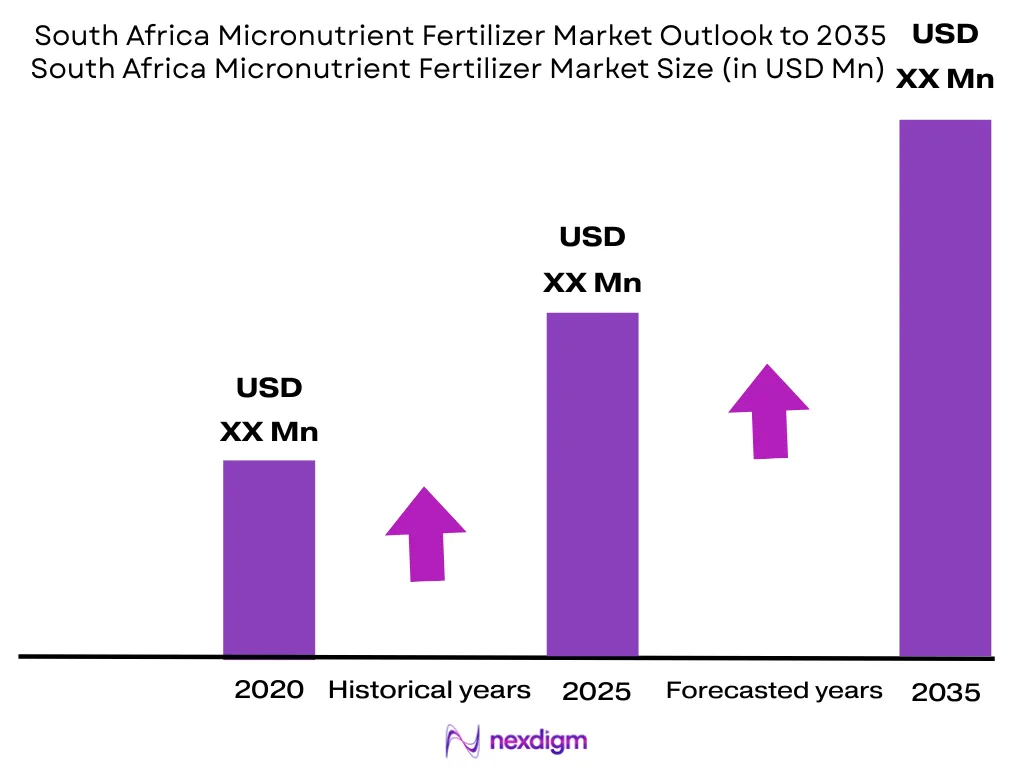
The South Africa Micronutrient Fertilizer Market was valued at USD ~ Million in 2024, compared to USD ~ Million in 2023. The market is primarily driven by increasing concerns regarding micronutrient deficiencies in agricultural soils, rising demand for yield optimization, and growing cultivation of high-value crops such as citrus, grapes, vegetables, and maize. Commercial farming operations are increasingly adopting crop-specific nutrient management programs to improve productivity and soil health. The expansion of precision agriculture practices and the growing awareness regarding balanced fertilization continue to support demand for micronutrient fertilizers across the country.
Market Segmentation
By Nutrient Type
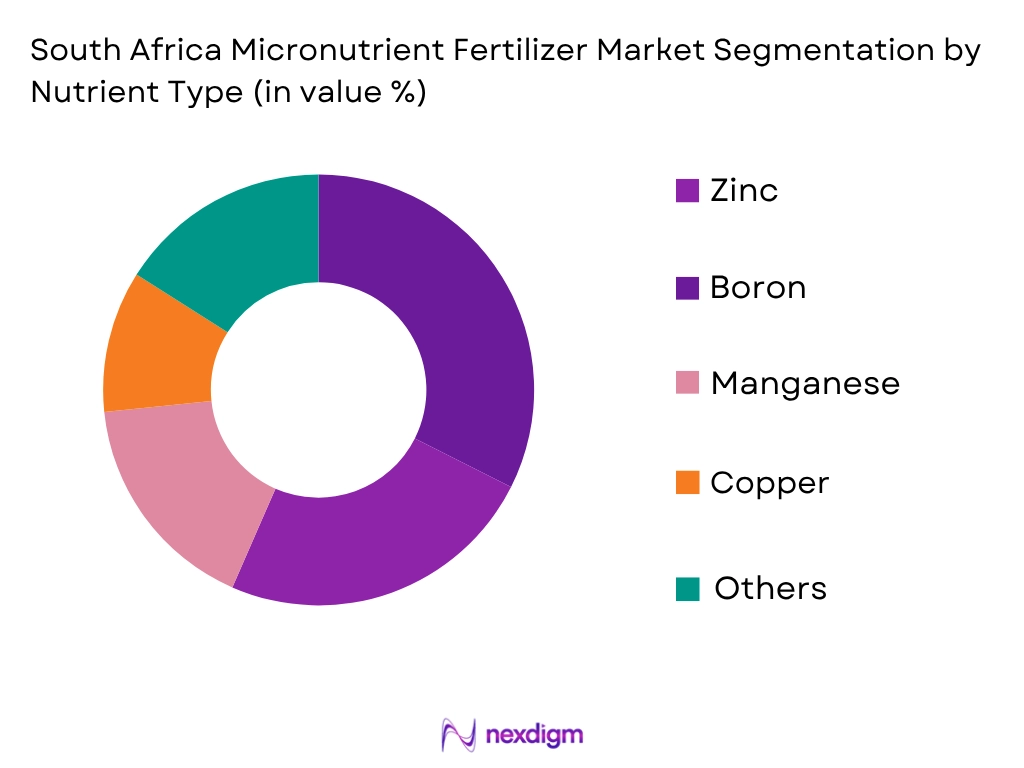
South Africa Micronutrient Fertilizer Market is segmented into Zinc Fertilizers, Boron Fertilizers, Manganese Fertilizers, Copper Fertilizers, and Others. Recently, Zinc Fertilizers have held the dominant market position. This dominance is attributed to widespread zinc deficiencies observed across agricultural soils and the importance of zinc in improving crop growth, nutrient absorption, enzyme activation, and grain quality. Zinc-based formulations are widely used across maize, wheat, vegetables, and fruit crops due to their proven effectiveness in improving productivity. Agricultural cooperatives, fertilizer manufacturers, and agronomic consultants actively recommend zinc supplementation as part of balanced fertilization programs. Additionally, increasing adoption of precision agriculture and soil testing practices has further highlighted zinc deficiencies, resulting in higher demand compared to other micronutrients.
By Crop Type
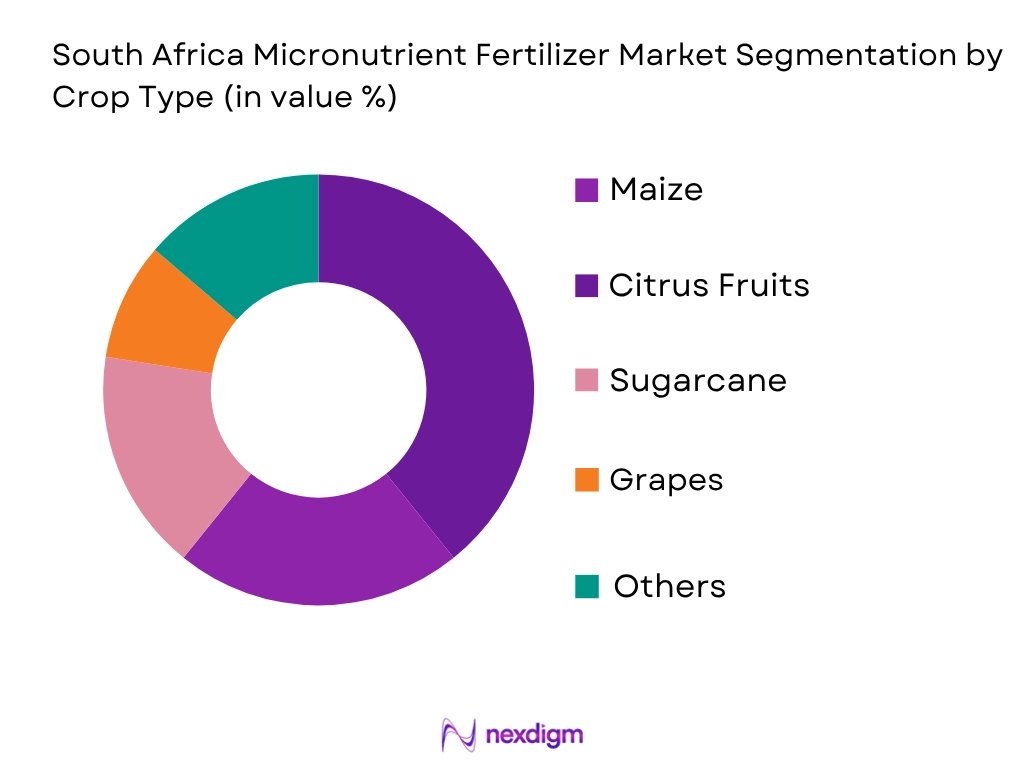
South Africa Micronutrient Fertilizer Market is segmented into Maize, Citrus Fruits, Sugarcane, Grapes, and Others. Maize dominates the crop segment owing to its extensive cultivation and strategic importance in the country’s agricultural economy. As one of the most nutrient-demanding crops, maize requires balanced micronutrient applications to maximize yields and maintain soil fertility. Commercial maize growers increasingly utilize micronutrient fertilizers as part of integrated nutrient management strategies. The large cultivated area dedicated to maize production, coupled with the growing focus on improving crop productivity amid climate variability, supports its leading position. Furthermore, micronutrient fertilizers are frequently incorporated into maize production programs due to their ability to improve nutrient uptake efficiency, root development, and overall crop performance.
Competitive Landscape
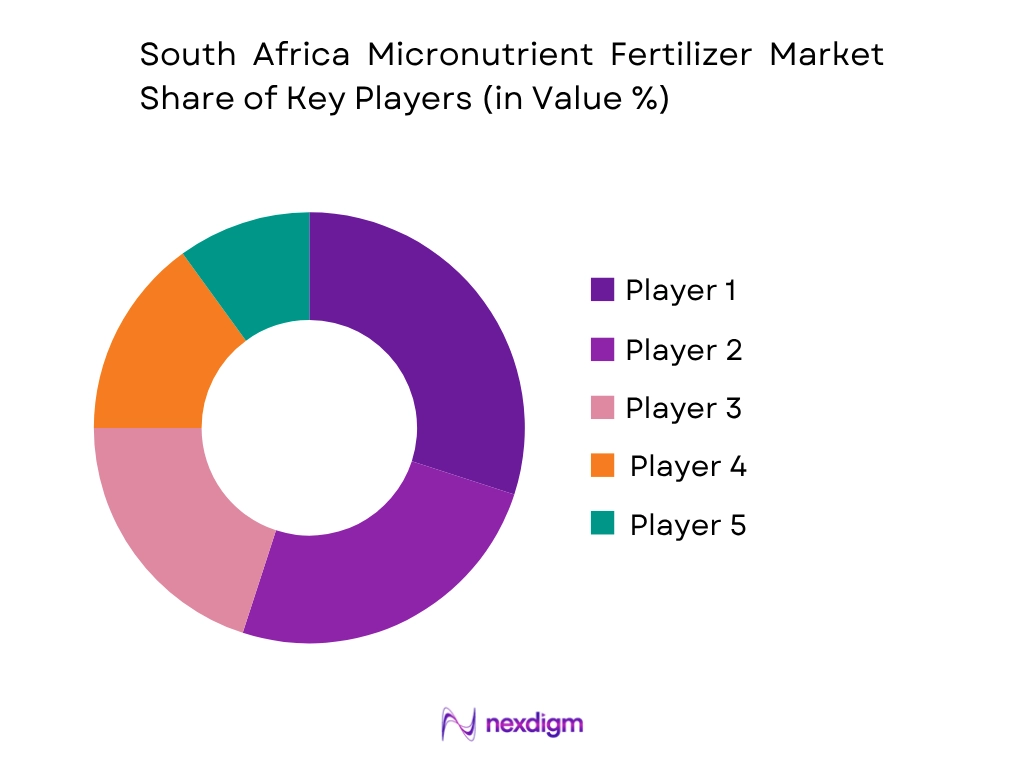
The South Africa Micronutrient Fertilizer Market is moderately consolidated with the presence of both multinational fertilizer companies and regional agricultural input suppliers. Major companies compete through product innovation, agronomic support services, extensive dealer networks, and crop-specific nutrient solutions. Companies are increasingly investing in specialty fertilizers, chelated micronutrients, and precision agriculture technologies to strengthen their market position.
| Company | Establishment Year | Headquarters | Micronutrient Portfolio | Chelated Portfolio | Crop Focus | Distribution Reach | Technical Support | Manufacturing Presence |
| Omnia Holdings | 1953 | ~ | ~ | ~ | ~ | ~ | ~ | ~ |
| Kynoch Fertilizer | 1919 | ~ | ~ | ~ | ~ | ~ | ~ | ~ |
| ICL Group | 1968 | ~ | ~ | ~ | ~ | ~ | ~ | ~ |
| Yara South Africa | 1905 | ~ | ~ | ~ | ~ | ~ | ~ | ~ |
| Haifa Group | 1966 | ~ | ~ | ~ | ~ | ~ | ~ | ~ |
South Africa Micronutrient Fertilizer Marketb Analysis
Growth Drivers
Rising Micronutrient Deficiencies in Agricultural Soils
South Africa’s micronutrient fertilizer market is strongly driven by increasing soil nutrient deficiencies across major agricultural regions. According to the Department of Agriculture, Land Reform and Rural Development (DALRRD), maize-producing areas in Free State, North West, and Mpumalanga have reported recurring deficiencies of zinc, boron, manganese, and copper due to continuous cultivation and intensive nutrient extraction. South Africa maintains approximately 12.4 million hectares of arable land, while maize cultivation alone exceeds 2.5 million hectares annually. The country produced over 16 million tonnes of maize and approximately 2.7 million tonnes of wheat during recent harvest cycles, creating significant nutrient demand. The World Bank reported South Africa’s agricultural value added exceeded USD 12 billion, highlighting the economic importance of maintaining soil productivity. Commercial farmers increasingly rely on micronutrient fertilizers to improve nutrient-use efficiency and crop quality. Furthermore, South Africa exported agricultural products worth more than USD 13 billion, requiring growers to maintain international quality standards for fruits, citrus, grapes, and vegetables. Micronutrient applications are becoming critical for sustaining yields and addressing long-term soil degradation. As nutrient depletion continues across intensively farmed land, demand for zinc, boron, manganese, and multi-micronutrient formulations is expected to strengthen among commercial farming operations.
Expansion of High-Value Horticultural and Export Crops
The growth of South Africa’s high-value horticulture sector continues to support demand for micronutrient fertilizers. South Africa remains one of the world’s leading exporters of citrus fruits, grapes, avocados, and deciduous fruits. Citrus production exceeds 2 million tonnes annually, while table grape production remains above 300,000 tonnes. Agricultural exports generated more than USD 13 billion, reflecting the importance of maintaining crop quality and export competitiveness. High-value crops have greater nutrient requirements compared to staple crops and require precise management of zinc, boron, iron, manganese, and copper. Western Cape, Limpopo, and Eastern Cape remain major horticultural hubs where micronutrient deficiencies directly impact fruit size, color, shelf life, and export acceptance. According to the IMF, South Africa’s GDP exceeds USD 400 billion, while agriculture remains a strategic export contributor supporting rural employment and foreign exchange earnings. Producers increasingly adopt micronutrient fertilizer programs to maximize orchard productivity and comply with international market standards. The expansion of irrigation infrastructure, fertigation systems, and precision agriculture technologies further enhances micronutrient application rates. Growing export-oriented cultivation therefore continues to generate sustained demand for specialty micronutrient fertilizer products throughout South Africa’s commercial farming regions.
Market Challenges
Dependence on Imported Micronutrient Raw Materials
South Africa’s micronutrient fertilizer industry faces significant challenges due to dependence on imported specialty nutrient raw materials. Products such as chelated zinc, boron compounds, EDTA formulations, molybdenum products, and specialty blends often rely on international supply chains. South Africa imported goods valued at more than USD 115 billion, reflecting the country’s reliance on global trade networks. Currency volatility remains a major concern, as fluctuations in the South African Rand directly influence fertilizer input costs and inventory management. According to the South African Reserve Bank, exchange rate instability continues to affect agricultural input procurement. Logistics challenges further increase supply risks, particularly during periods of port congestion and global shipping disruptions. South Africa’s agricultural sector supports more than 800,000 formal jobs and contributes significantly to export earnings, making fertilizer availability essential for productivity. Import dependency exposes distributors and farmers to external supply chain shocks that may affect product availability during critical planting seasons. As commercial farms increasingly adopt specialty nutrient programs, ensuring reliable access to imported micronutrient inputs remains a major industry challenge. The market therefore continues to seek greater local blending capabilities and diversified sourcing strategies to improve resilience.
Limited Awareness Among Smallholder and Emerging Farmers
Although South Africa possesses a well-developed commercial agriculture sector, micronutrient fertilizer adoption among smallholder and emerging farmers remains relatively limited. The country has approximately 2 million households engaged in some form of agricultural activity, yet many producers focus primarily on macronutrient fertilizers such as nitrogen, phosphorus, and potassium. Limited access to soil testing services, agronomic advisory programs, and precision agriculture technologies reduces awareness of micronutrient deficiencies. South Africa’s rural population exceeds 18 million people, creating a substantial agricultural user base requiring technical support and education. According to the World Bank, South Africa’s unemployment level remains elevated, constraining farm investment capacity among smaller producers. Many farmers continue to rely on traditional fertilizer practices despite increasing evidence of zinc, boron, manganese, and copper deficiencies. The cost of soil analysis and specialized nutrient recommendations may further limit adoption. While large commercial farms routinely implement balanced nutrition programs, smaller operations often lack access to agronomists and technical guidance. Expanding farmer education initiatives and nutrient management awareness programs therefore remains critical for increasing micronutrient fertilizer penetration across South Africa’s broader agricultural sector.
Market Opportunities
Growth in Precision Agriculture and Customized Nutrient Solutions
South Africa presents significant opportunities for micronutrient fertilizer suppliers through the growing adoption of precision agriculture technologies. The country possesses more than 12 million hectares of arable land and remains one of Africa’s most technologically advanced farming economies. Commercial farms increasingly utilize GPS-guided machinery, satellite imagery, drone monitoring, variable-rate application systems, and digital agronomy platforms. These technologies enable growers to identify nutrient deficiencies at field level and apply customized micronutrient formulations. South Africa’s agricultural exports exceeding USD 13 billion encourage producers to maximize productivity while meeting international quality standards. Precision farming allows growers to optimize zinc, boron, manganese, iron, and copper applications according to crop-specific requirements. Large-scale maize, citrus, grape, and horticultural operations are increasingly investing in nutrient efficiency and sustainability initiatives. The expansion of digital agriculture platforms and data-driven farm management creates opportunities for manufacturers to introduce premium micronutrient blends tailored to regional soil conditions. As South African agriculture continues modernizing, customized nutrient solutions are expected to gain importance, supporting future demand for advanced micronutrient fertilizer products across both domestic and export-oriented farming systems.
Expansion of Sustainable Agriculture and Soil Health Programs
The growing focus on sustainable agriculture and soil health management provides another major opportunity for South Africa’s micronutrient fertilizer market. Agriculture remains an important contributor to rural livelihoods and export revenue, while climate variability increases pressure on productivity and resource efficiency. South Africa has committed to multiple sustainability and climate adaptation initiatives designed to improve long-term agricultural resilience. Conservation agriculture practices are expanding across major farming regions, encouraging greater emphasis on balanced nutrient management and soil restoration. According to the World Bank, South Africa’s renewable natural resource management programs continue receiving support to improve agricultural sustainability. Commercial producers increasingly recognize the role of micronutrients in improving nutrient-use efficiency, crop resilience, and soil biological activity. Demand for chelated micronutrients, specialty blends, and environmentally efficient nutrient formulations is increasing among export-oriented growers. Sustainable farming initiatives also encourage regular soil testing and precision nutrient application, creating additional opportunities for micronutrient fertilizer manufacturers. As producers seek to improve yields while preserving soil fertility, the adoption of targeted micronutrient management programs is expected to become an increasingly important component of South Africa’s agricultural development strategy.
Future Outlook
The South Africa Micronutrient Fertilizer Market is expected to witness sustained growth during the forecast period due to increasing adoption of precision agriculture, rising demand for higher crop yields, and growing awareness regarding soil nutrient deficiencies. Expansion of commercial farming, increasing production of export-oriented horticultural crops, and greater use of soil-testing technologies are expected to support market development. The industry is also likely to benefit from advancements in chelated micronutrients, fertigation systems, and customized nutrient formulations designed for specific crop requirements.
Major Players
- Omnia Holdings
- Kynoch Fertilizer
- Yara South Africa
- Sasol Agriculture
- Villa Crop Protection
- Agrichem
- Nutri-Flo
- Haifa Group
- ICL Group
- Compo Expert
- Koch Agronomic Services
- Nulandis
- Tradecorp Africa
- BMSA Group
- FSG Fertilizer Solutions Group
Key Target Audience
- Fertilizer Manufacturers
- Micronutrient Producers
- Agricultural Cooperatives
- Commercial Farming Enterprises
- Agrochemical Distributors and Dealers
- Precision Agriculture Solution Providers
- Investment and Venture Capitalist Firms
- Government and Regulatory Bodies
Research Methodology
Step 1: Identification of Key Variables
The research process begins with mapping the entire South Africa Micronutrient Fertilizer ecosystem, including manufacturers, distributors, importers, agricultural cooperatives, farmers, and regulatory authorities. Extensive secondary research is conducted to identify critical variables influencing market demand, supply, pricing, and adoption patterns.
Step 2: Market Analysis and Construction
Historical industry trends are analyzed using both top-down and bottom-up approaches. Demand is assessed across crop categories, micronutrient types, and agricultural regions. Supply-side assessment includes manufacturing capabilities, imports, distribution networks, and product availability.
Step 3: Hypothesis Validation and Expert Consultation
Market assumptions are validated through interactions with fertilizer manufacturers, agronomists, distributors, agricultural consultants, and commercial farmers. Expert feedback is incorporated to refine market estimates and evaluate future growth opportunities.
Step 4: Research Synthesis and Final Output
The final stage involves data triangulation using primary and secondary sources. Quantitative findings are cross-validated with industry insights to produce a comprehensive analysis of the South Africa Micronutrient Fertilizer Market, including competitive benchmarking, segmentation, and future outlook.

- Executive Summary
- Research Methodology (Market Definitions and Assumptions, Abbreviations, Market Sizing Approach, Bottom-Up Market Assessment, Top-Down Validation Framework, Primary Research Methodology, Expert Interviews, Demand-Supply Modeling, Data Triangulation, Limitations and Future Conclusions)

- Definition and Scope
- Market Evolution and Industry Genesis
- South Africa Agricultural Production Landscape
- Timeline of Major Industry Developments
- Micronutrient Deficiency Mapping Across Crops and Regions

- Growth Drivers (Soil Micronutrient Deficiency Management, Expansion of Commercial Agriculture, High-Value Horticulture Production, Precision Farming Adoption, Yield Optimization Requirements)
- Market Challenges (Import Dependence for Specialty Nutrients, Climatic Variability and Drought Conditions, Limited Smallholder Awareness, Currency Exchange Volatility, Regulatory Registration Complexity)
- Market Opportunities (Specialty Crop Cultivation Expansion, Customized Crop Nutrition Programs, Fertigation and Precision Application Systems, Sustainable Agriculture Initiatives, Bio-Based and Chelated Micronutrient Solutions)
- Market Trends (Growing Adoption of Chelated Micronutrients, Expansion of Liquid Fertilizer Applications, Digital Agronomy and Smart Farming Solutions, Crop-Specific Nutrient Formulations, Integrated Soil Health Management Programs)
- Government Regulations (Fertilizers, Farm Feeds, Agricultural Remedies and Stock Remedies Act, Fertilizer Registration and Product Approval Framework, Department of Agriculture Input Quality Standards, Import and Trade Compliance Requirements, Sustainable Agriculture and Soil Conservation Policies)
- SWOT Analysis
- Stakeholder Ecosystem
- PESTLE Analysis
- Porter’s Five Forces Analysis
- Competition Ecosystem

- By Market Value (2020-2025)
- By Volume Consumption (2020-2025)
- By Average Selling Price (2020-2025)

- By Nutrient Type (In Value %)
Zinc Fertilizers
Boron Fertilizers
Manganese Fertilizers
Iron Fertilizers
Copper Fertilizers
Molybdenum Fertilizers
Chelated Micronutrients
Multi-Micronutrient Blends - By Crop Type (In Value %)
Maize
Wheat
Citrus Fruits
Grapes
Sugarcane
Vegetables
Deciduous Fruits
Oilseeds
Others - By Form Type (In Value %)
Chelated Micronutrients
Non-Chelated Micronutrients
Sulfate-Based Micronutrients
Oxide-Based Micronutrients
EDTA-Based Micronutrients
Liquid Micronutrients - By Application Method (In Value %)
Soil Application
Foliar Application
Fertigation
Seed Treatment
Hydroponic Application - By Farm Type (In Value %)
Commercial Farms
Medium-Scale Farms
Emerging Farmers
Smallholder Farms

- Market Share of Major Players (By Value, Volume, Product Portfolio, Crop Coverage, Provincial Presence)
- Cross Comparison Parameters (Micronutrient Product Portfolio, Chelated Product Offering, Crop-Specific Solutions, Production Capacity, Distribution Network Strength, Agronomic Technical Support, Presence Across Key Agricultural Provinces, Import and Sourcing Capabilities)
- SWOT Analysis of Major Players
- Pricing Analysis Basis SKUs (Zinc Sulphate, Borax, Manganese Sulphate, Iron Chelates, Copper Sulphate, Sodium Molybdate, EDTA Zinc, Multi-Micronutrient Blends)
- Detailed Profiles of Major Companies
Omnia Holdings
Kynoch Fertilizer
Yara South Africa
Sasol Agriculture
Villa Crop Protection
Agrichem
Nutri-Flo
Haifa Group
Compo Expert
ICL Group
Koch Agronomic Services
Nulandis
BMSA Group
Tradecorp Africa
FSG Fertilizer Solutions Group

- Crop-Wise Fertilizer Demand Assessment
- Micronutrient Utilization Rate Analysis
- Farmer Purchasing Power and Spending Patterns
- Fertilizer Adoption Barriers
- Farmer Pain Point Analysis
- Decision-Making Framework for Product Selection
- Brand Awareness and Loyalty Assessment
- Return on Nutrient Investment Analysis

- By Market Value (2026-2035)
- By Volume Consumption (2026-2035)
- By Average Selling Price (2026-2035)


 Request a Sample
 Ask for Customization
 Get a Quote
 Enquire Now