
 Download PDF
Market Overview
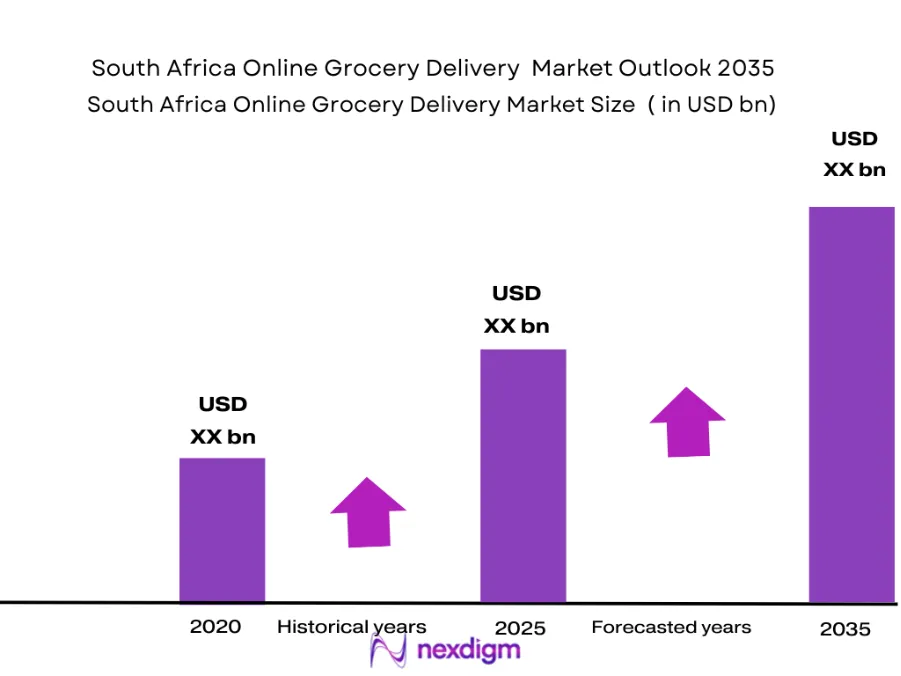
The South African online grocery delivery market is valued at approximately USD ~T billion, driven by key factors such as increasing smartphone penetration, high internet access, and changing consumer behaviors. With the rise in urbanization and the adoption of e-commerce platforms, the demand for home grocery delivery services has surged. The COVID-19 pandemic also accelerated this growth as consumers increasingly preferred to shop online for groceries due to the convenience and safety it provided. According to credible sources, the market is expected to maintain a strong growth trajectory due to continued technological advancements and the adoption of digital payment systems.
The primary drivers of the South African online grocery delivery market are cities like Johannesburg, Cape Town, and Pretoria. Johannesburg, as the largest city in the country, dominates the market due to its high population density, strong economic base, and better digital infrastructure. Cape Town and Pretoria follow closely, benefiting from a growing middle class and tech-savvy population. These cities also have a significant expat community, which further boosts the demand for online grocery delivery services. The concentration of e-commerce platforms in these urban centers has facilitated market growth, while rural areas are expected to see gradual adoption as logistics and internet infrastructure improve.
Market Segmentation
By Product Type
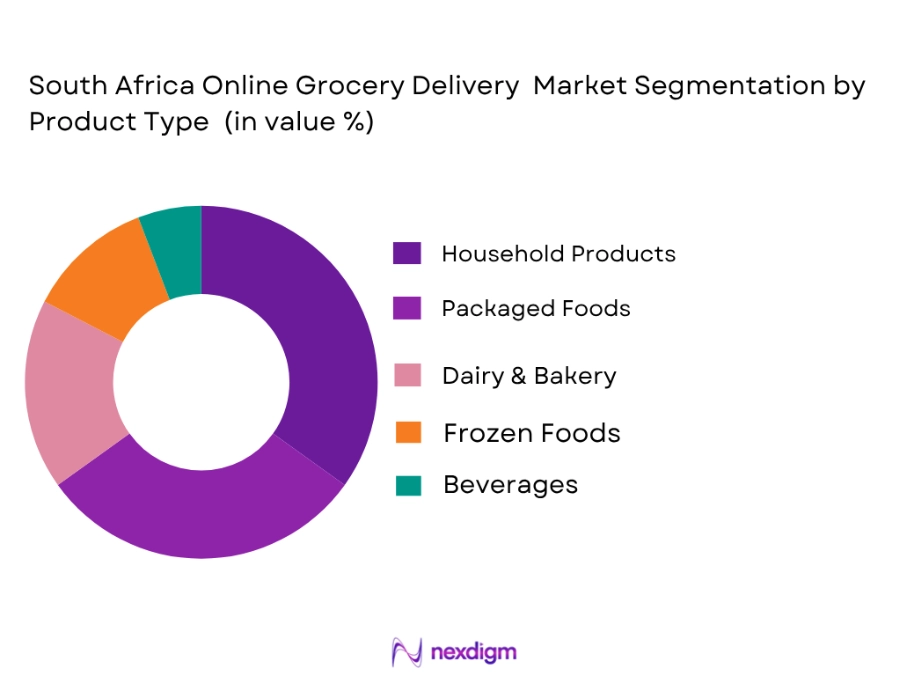
The South African online grocery delivery market is segmented by product type into categories such as fresh produce, packaged foods, beverages, dairy and bakery, frozen foods, and household items. Packaged foods are the dominant sub-segment in this market, primarily due to the consumer preference for convenience. Packaged foods, including snacks, canned goods, and ready-to-eat meals, are popular because they have a longer shelf life and can be easily stored. These products are widely available across online platforms, and their ability to cater to the busy lifestyles of South African consumers has significantly contributed to their market dominance.
By Delivery Model
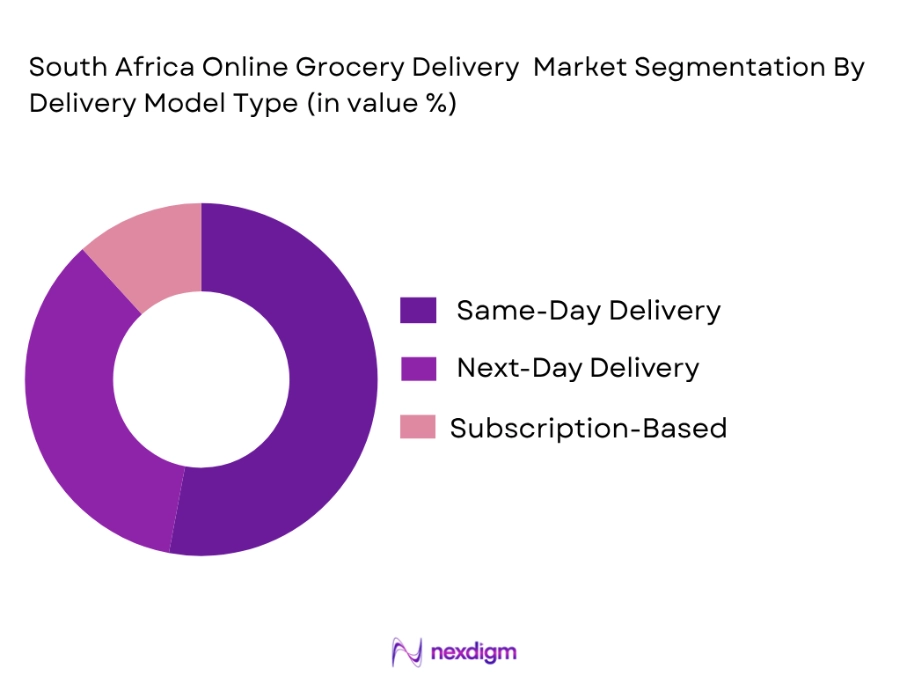
The market is also segmented by delivery model, including same-day delivery, next-day delivery, scheduled deliveries, and subscription-based deliveries. Same-day delivery is the dominant model, especially in larger cities like Johannesburg and Cape Town. The increasing demand for quick delivery of groceries has pushed e-commerce platforms to optimize their delivery networks to offer same-day services. Consumers in urban areas have shown a preference for getting their grocery orders delivered within hours, making same-day delivery services a significant factor driving the growth of the market. This demand for immediacy and convenience is expected to continue to grow.
Competitive Landscape
The South African online grocery delivery market is dominated by key players like Woolworths, Pick n Pay, Checkers, and Amazon South Africa, as well as newer entrants like Uber Eats and Mr D Food. Woolworths has been a prominent player, leveraging its established brick-and-mortar presence and high-quality products to strengthen its online grocery services. Similarly, Pick n Pay and Checkers have expanded their online grocery services to meet the rising demand for convenience. The market is highly competitive, with local and international players focusing on faster deliveries, improved customer service, and a wide variety of products to differentiate themselves.
| Company Name | Establishment Year | Headquarters | Product Portfolio | Delivery Network | Revenue (2024) | Customer Base | Market Position |
| Woolworths | 1931 | Cape Town, South Africa | ~ | ~ | ~ | ~ | ~ |
| Pick n Pay | 1967 | Cape Town, South Africa | ~ | ~ | ~ | ~ | ~ |
| Checkers | 1979 | Cape Town, South Africa | ~ | ~ | ~ | ~ | ~ |
| Amazon South Africa | 2016 | Johannesburg, South Africa | ~ | ~ | ~ | ~ | ~ |
| Uber Eats South Africa | 2016 | Johannesburg, South Africa | ~ | ~ | ~ | ~ | ~ |
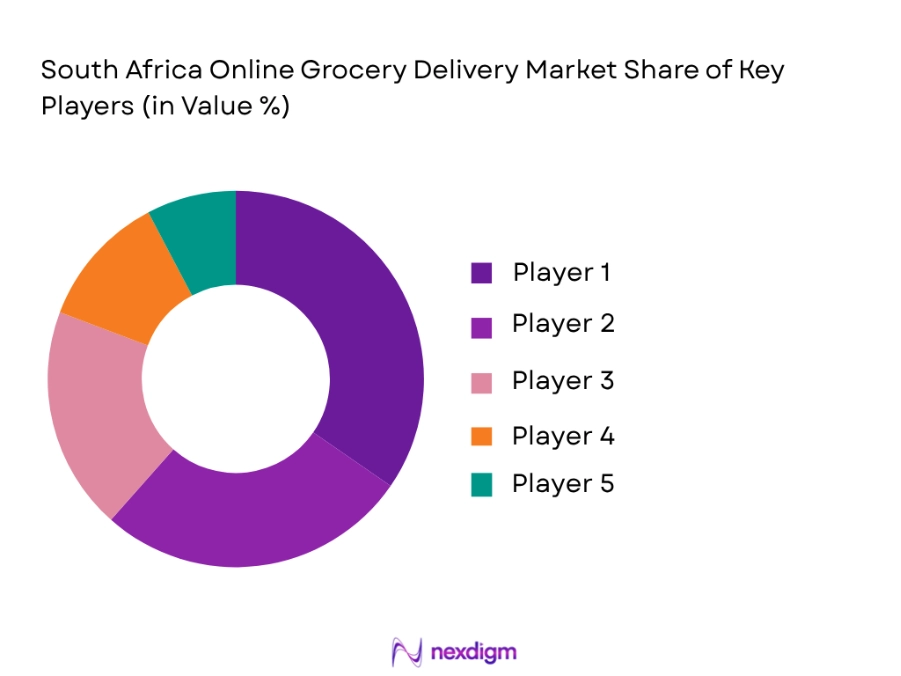
South Africa Online Grocery Delivery Market Analysis
Growth Drivers
Increasing Health & Wellness Awareness
The increasing focus on health and wellness in South Africa has led to a growing demand for fresh and organic food, which in turn has contributed to the rise in online grocery deliveries. As consumers become more health-conscious, there is an increased interest in products like fresh produce, dairy, and organic food items. This shift in consumer behavior is prompting more people to adopt online grocery shopping as a way to access healthier food options conveniently. E-commerce platforms are responding to this demand by offering a wide variety of health-focused grocery products.
Digital Payment Systems Advancements
The growth of digital payment systems has been crucial for the expansion of the South African online grocery delivery market. With more consumers opting for secure and convenient payment methods, the acceptance of digital wallets, mobile payments, and card-based transactions has made online shopping much easier. Digital payment systems such as mobile banking, credit cards, and e-wallets have driven the adoption of online grocery shopping, providing a seamless transaction experience. This has also played a significant role in increasing consumer confidence in online platforms, thereby boosting sales in the grocery delivery segment.
Challenges
Logistics and Supply Chain Constraints in Rural Areas
While the online grocery delivery market is booming in urban areas, rural regions face significant logistics and supply chain constraints that hinder market growth. Limited transportation infrastructure, long delivery times, and the higher cost of delivery in less accessible areas present challenges for e-commerce platforms. In addition, rural areas have less-developed cold storage facilities, which affects the quality and freshness of perishable goods. To expand the market, online grocery platforms need to invest in improving logistical solutions, distribution networks, and addressing the unique challenges posed by rural deliveries.
Regulatory Issues and Compliance Challenges
Regulatory issues and compliance challenges present another significant hurdle for online grocery platforms in South Africa. Food safety regulations, import standards, and labeling requirements are critical to ensuring that products meet health standards. However, navigating these regulations can be complex, especially with varying rules for different categories of products. The need for certifications and compliance with safety standards increases the operational costs for online platforms. Additionally, regulatory hurdles can create delays in the delivery process, affecting customer satisfaction and leading to higher operational costs.
Opportunities
Expansion of E‑Commerce Platforms and Delivery Networks
The expansion of e-commerce platforms and the growth of delivery networks offer significant opportunities for the South African online grocery delivery market. As more consumers embrace online shopping, there is potential for platforms to tap into new customer segments in underserved areas. E-commerce platforms are also exploring partnerships with local grocery stores and vendors, allowing them to expand their product offerings and increase reach. By enhancing logistics, delivery efficiency, and access to remote areas, online grocery platforms can capture market share in emerging regions, including smaller cities and rural locations.
Adoption of Smart Logistics and Delivery Systems
The adoption of smart logistics and delivery systems offers considerable opportunities to improve the efficiency and speed of grocery deliveries. Technologies such as route optimization, AI-powered inventory management, and real-time tracking systems can help online grocery platforms reduce delivery times, improve customer satisfaction, and cut down operational costs. Smart logistics also helps enhance supply chain resilience and reduce the impact of disruptions, providing a competitive edge. By integrating technology into the delivery process, platforms can offer faster, more reliable services, and improve overall market competitiveness.
Future Outlook
Over the next five years, the South African online grocery delivery market is expected to experience substantial growth, driven by the continued expansion of internet access, smartphone adoption, and digital payment systems. As consumers increasingly prioritize convenience, the demand for faster delivery models, including same-day and next-day services, will remain strong. Moreover, as logistics networks improve and e-commerce infrastructure in rural areas expands, the market will see more penetration into these regions. The integration of AI-powered solutions for personalized recommendations and supply chain optimization will also enhance customer experiences, further driving market growth.
Major Players
- Woolworths
- Pick n Pay
- Checkers
- Amazon South Africa
- Uber Eats South Africa
- Mr D Food
- Spar South Africa
- Makro
- Dischem Pharmacies
- Clicks Group
- Food Lover’s Market
- Zando
- Takealot
- Boxed
- Click and Collect
Key Target Audience
- Investments and Venture Capitalist Firms
- Government and Regulatory Bodies
- Private Equity Firms
- Retail and E-commerce Industry Leaders
- Online Grocery Retailers
- Logistics and Delivery Service Providers
- Manufacturers of Packaged and Fresh Foods
- Consumer Goods Brands
Research Methodology
Step 1: Identification of Key Variables
The initial phase involves constructing an ecosystem map encompassing all major stakeholders within the South African online grocery delivery market. This is underpinned by extensive desk research, utilizing a combination of secondary and proprietary databases to gather comprehensive industry-level information. The primary objective is to identify and define the critical variables that influence market dynamics.
Step 2: Market Analysis and Construction
In this phase, historical data pertaining to the South African online grocery delivery market is compiled. This includes assessing market penetration, the ratio of online platforms to service providers, and the resultant revenue generation. Additionally, an evaluation of service quality statistics will be conducted to ensure reliable and accurate revenue estimates.
Step 3: Hypothesis Validation and Expert Consultation
Market hypotheses will be developed and subsequently validated through expert consultations with industry professionals from e-commerce, retail, and logistics sectors. These consultations will help refine and corroborate the market data.
Step 4: Research Synthesis and Final Output
The final phase involves engaging with various stakeholders, including local grocery stores and e-commerce platforms, to gather detailed insights into product segments, consumer preferences, and technology trends. This interaction will serve to verify and complement the statistics derived from the bottom-up approach, ensuring a comprehensive, accurate, and validated analysis of the South African online grocery delivery market.

- Executive Summary
- Research Methodology (Market Definitions and Assumptions, Abbreviations, Top‑Down & Bottom‑Up Sizing Approach, E‑Commerce & Retail Channel Data Sources, Primary Research Framework, Secondary Data Validation, Forecasting Models and Assumptions, Limitations and Sensitivity Analyses)

- Definition and Scope
- Ecosystem Genesis and Evolution of Online Grocery Adoption
- Macro‑Economic and Grocery Demand Drivers
- Digital Adoption Index in Grocery Retail
- Import Dependency & Supply Chain Characteristics
- Retail & After‑Sales Service Infrastructure Mapping

- Growth Drivers
Increasing Health & Wellness Awareness
Digital Payment Systems Advancements
Growing Internet Penetration and Mobile Usage
Demand for Convenience and Time-Saving Solutions - Challenges
Logistics and Supply Chain Constraints in Rural Areas
Regulatory Issues and Compliance Challenges
Competition with Traditional Grocery Stores
Price Sensitivity and Affordability Concerns - Opportunities
Expansion of E‑Commerce Platforms and Delivery Networks
Adoption of Smart Logistics and Delivery Systems
Increasing Demand for Subscription-Based Grocery Models
Integration of Digital Health and Food Tracking Solutions - Trends
Increased Popularity of Same-Day and Express Delivery Models
Integration of Online Grocery Services with Mobile Apps
Growth in the Demand for Eco-Friendly Packaging Solutions - Government Regulations & Standards
Food Safety Standards and Import Regulations
Packaging and Labeling Requirements for Online Groceries
Regulatory Support for E-Commerce and Digital Transactions - SWOT Analysis
- Porter’s Five Forces
- Stakeholder Ecosystem

- By Retail Value, 2020-2025
- By Unit Sales, 2020-2025
- By Average Selling Price (ASP) and Device Tier, 2020-2025
- By Channel Contribution, 2020-2025

- By Product (In Value %)
Packaged Foods
Dairy & Bakery
Frozen Foods
Beverages
Household Products - By Delivery Model (In Value %)
Same-Day Delivery
Next-Day Delivery
Subscription-Based - By End‑User (In Value %)
Urban Consumers
Suburban Consumers
Rural Consumers
SMEs
Institutional Buyers (Hotels, Restaurants, etc.) - By Distribution Channel (In Value %)
Supermarket Chains
Online Marketplaces
Direct-to-Consumer Websites - By Price Tier (In Value %)
Premium
Mid-Tier
Value

- Market Share by Value and Volume
- Cross‑Comparison Parameters (Product Portfolio Breadth, Technology Intensity Score, Distribution Network Reach, Retail Touchpoints & Dealer Penetration, Brand Positioning, Price Point Clustering, Service & Warranty Footprint After‑Sales Revenue Streams, Manufacturing/Assembly Presence, Import Volume & Duty Classification, Supply Chain Resilience Index, Consumer Satisfaction & Return Rate, Revenue and Growth Metrics)
- SWOT of Major Players
- Pricing Tier Benchmark Analysis
- Major Competitors
Woolworths
Pick n Pay
Checkers
Amazon South Africa
Uber Eats South Africa
Deliveroo South Africa
Makro
Food Lover’s Market
Boxed
Zando

- Trends and Preferences in Online Grocery Shopping
- Adoption of Smart Grocery Shopping Solutions
- Impact on Equipment and Product Demand
- The Role of Digital Platforms in Consumer Shopping Habits

- By Retail Value, 2026-2035
- By Unit Sales, 2026-2035
- By Average Selling Price (ASP) and Device Tier, 2026-2035
- By Channel Contribution, 2026-2035


 Request a Sample
 Ask for Customization
 Get a Quote
 Enquire Now