

 Download PDF
 Download PDF
Market Overview
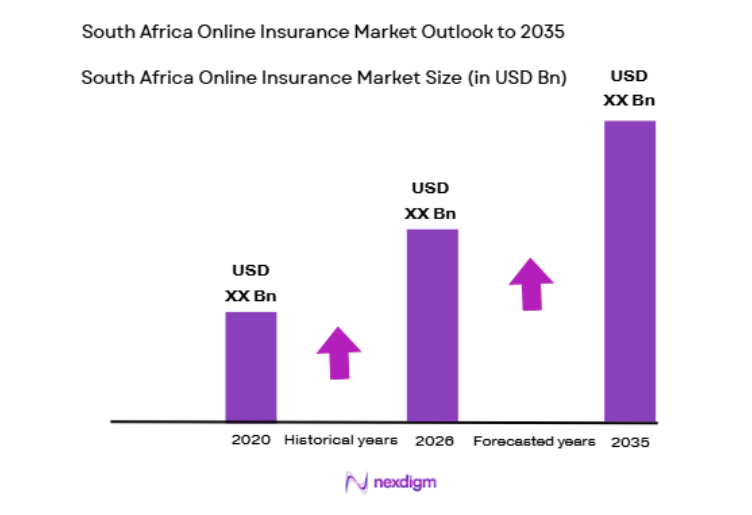
The South Africa online insurance market is poised for considerable growth, with a projected market size in 2025 reaching USD ~ billion. This growth is primarily driven by an increasing preference for digital insurance platforms, which offer greater convenience, accessibility, and competitive pricing. The rise of smartphones, the expansion of internet penetration, and digital transformation in the financial sector are major contributing factors to this growth. These elements have made it easier for consumers to access a variety of online insurance products and services, thus fueling demand.
South Africa’s key cities, including Johannesburg, Cape Town, and Pretoria, dominate the online insurance landscape. These urban centers are the financial hubs of the country, housing major insurers and digital platforms that cater to a large and diverse consumer base. Johannesburg, as the financial capital, leads in terms of technological infrastructure, while Cape Town benefits from a high concentration of digital-savvy millennials. The country’s progressive approach to mobile financial services further supports the expansion of online insurance in these regions.
Market Segmentation
By Product Type
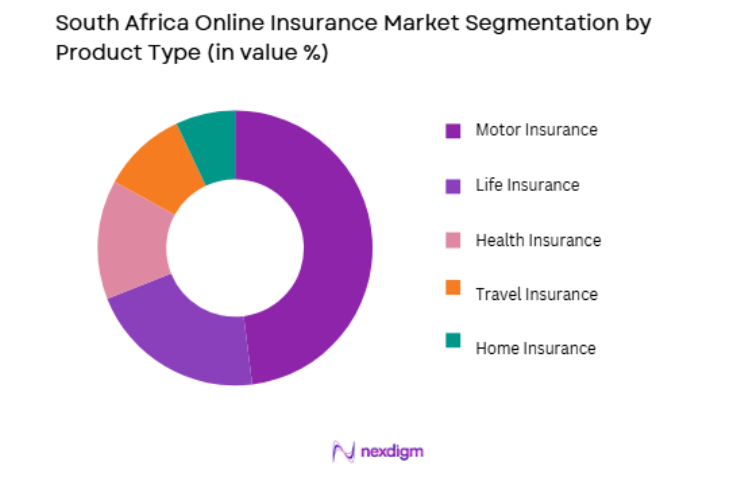
South Africa online insurance market is segmented by product type into motor insurance, life insurance, health insurance, travel insurance, and home insurance. Recently, motor insurance has dominated the market share due to its widespread adoption among both private vehicle owners and fleet operators. The high prevalence of vehicle ownership in South Africa, combined with mandatory third-party liability insurance requirements, has made motor insurance the most commonly purchased product.
By Platform Type
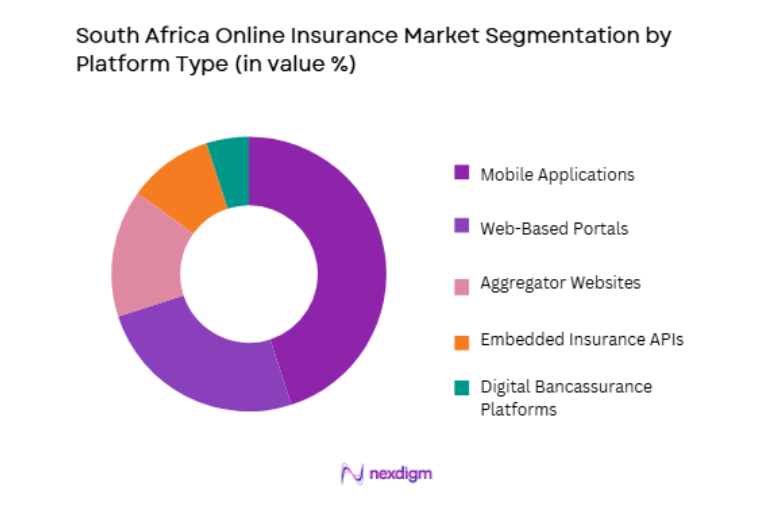
The market is also segmented by platform type, including web-based portals, mobile applications, aggregator websites, embedded insurance APIs, and digital bancassurance platforms. Mobile applications currently hold the dominant market share, attributed to the widespread adoption of smartphones and the increasing preference for app-based services. Mobile apps offer a more seamless experience for consumers to manage policies, make claims, and receive personalized recommendations. This has made them particularly appealing to younger consumers, driving their prominence in the South African market.
Competitive Landscape
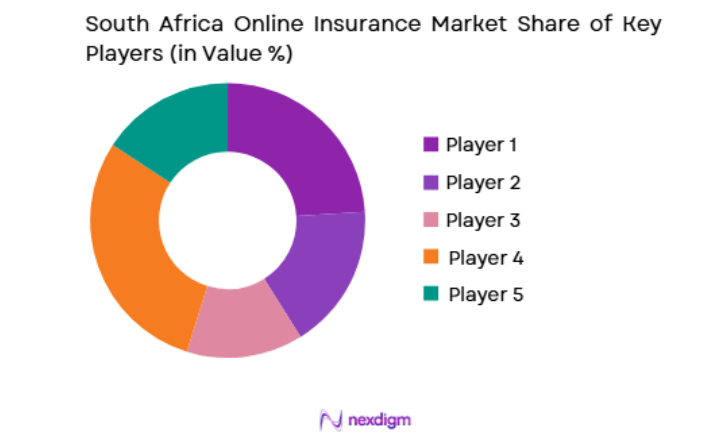
The South African online insurance market is characterized by increasing consolidation as traditional insurance companies and digital-native insurers seek to expand their reach. Major players, such as Old Mutual, Discovery, and Sanlam, are leading the charge in digital innovation, with an increasing number of mergers and partnerships aimed at enhancing service delivery and technology integration. These companies are leveraging their financial expertise and customer trust while adopting new technologies to stay competitive in a fast-evolving digital space.
| Company Name | Establishment Year | Headquarters | Technology Focus | Market Reach | Key Products | Revenue | Market-specific Parameter |
| Old Mutual | 1845 | Cape Town | ~ | ~ | ~ | ~ | ~ |
| Discovery | 1992 | Sandton | ~ | ~ | ~ | ~ | ~ |
| Sanlam | 1918 | Cape Town | ~ | ~ | ~ | ~ | ~ |
| Hollard | 1980 | Johannesburg | ~ | ~ | ~ | ~ | ~ |
| MiWay | 2008 | Johannesburg | ~ | ~ | ~ | ~ | ~ |
South Africa Online Insurance Market Analysis
Growth Drivers
Digital Adoption in Financial Services
The increased digital adoption in South Africa has been a critical driver of the online insurance market. As the country has embraced mobile banking, e-commerce, and digital financial products, the insurance industry has followed suit, leveraging digital tools to enhance accessibility. With a growing middle class and an increasingly tech-savvy population, consumers are more inclined to purchase insurance products online rather than through traditional channels. This shift has been bolstered by government efforts to promote digital financial inclusion and fintech innovation, which makes insurance products more accessible to both urban and rural populations. Digital insurance platforms are also lowering operating costs for insurers, thus offering more competitive pricing, which has further accelerated market growth. The convenience of online platforms, offering instant quotations, policy management, and claims processing, has contributed to higher adoption rates. Additionally, the ability for consumers to compare different offerings and make informed decisions online has shifted the buying behavior toward digital solutions.
Increasing Demand for Customized Products
The demand for personalized insurance products in South Africa has seen a sharp increase, particularly among the younger, tech-savvy consumer base. Insurers are leveraging data analytics, AI, and machine learning to create customized offerings based on consumer behavior, preferences, and risk profiles. Personalized insurance products not only cater to individual needs but also offer dynamic pricing, which has proven popular with consumers who seek more control over their insurance policies. Telematics-based motor insurance, where premiums are adjusted based on driving habits, has been particularly well-received. The ability for consumers to pay premiums according to their specific circumstances—rather than a one-size-fits-all approach—has made the insurance process more attractive and relevant to the evolving needs of the market. This trend toward customized insurance solutions is expected to continue growing, further fueling the market expansion.
Market Challenges
Cybersecurity Risks and Fraud Prevention
A significant challenge for the South African online insurance market is cybersecurity risks and fraud prevention. As the market continues to shift toward digital platforms, insurers face the ongoing threat of cyberattacks, data breaches, and identity theft. Consumer trust is a critical factor for insurers to maintain as they transition their services online, and any security vulnerabilities could undermine confidence in these platforms. Insurance companies must invest heavily in securing their digital platforms, ensuring that customer data is protected, and implementing robust fraud detection systems. Additionally, regulatory requirements around data protection, such as the Protection of Personal Information Act (POPIA), impose stringent demands on insurers. Failure to comply with these regulations could result in fines and reputational damage, further complicating the ability to operate effectively in the digital space.
Regulatory Challenges and Compliance Costs
Regulatory challenges also pose a significant barrier to the growth of the South African online insurance market. The government has implemented several regulations designed to protect consumers and ensure that insurers operate transparently and fairly. However, these regulations often come with high compliance costs, which can be burdensome for smaller, digital-native insurance providers. Larger, established insurers may have the resources to navigate these regulations effectively, but for smaller players, regulatory hurdles can delay market entry or limit their ability to innovate. Moreover, the complexity of cross-border regulations for insurers with international ambitions adds an additional layer of difficulty, as the industry must navigate different regulatory environments. These regulatory complexities, combined with the costs of compliance, are a significant challenge for insurers looking to expand and remain competitive in a rapidly evolving market.
Opportunities
Expansion of Digital Payment Solutions
The growth of digital payment solutions presents a significant opportunity for the South African online insurance market. As mobile payments, digital wallets, and fintech platforms gain momentum, insurers can leverage these technologies to improve the purchasing and claims processes for customers. By integrating their platforms with mobile wallets and providing easy, secure payment options, insurers can attract a broader audience and simplify the user experience. Moreover, digital payments enable insurers to offer flexible payment plans, further increasing the appeal of online insurance products. This opportunity is particularly relevant for the underinsured segments of the population, where traditional payment methods have been a barrier to insurance adoption. As digital payment infrastructure continues to improve across the country, it will provide an even greater opportunity for insurers to expand their customer base and improve accessibility to their products.
Increased Adoption of AI and Data Analytics
The integration of AI and data analytics in the South African online insurance market offers a range of opportunities. By utilizing AI, insurers can improve underwriting processes, optimize claims management, and personalize policies to better suit individual consumer needs. Additionally, data analytics can help insurers identify new market segments, predict trends, and offer more competitive pricing. The use of AI-powered chatbots and automated customer service systems enhances operational efficiency, reducing customer response times and lowering service costs. As insurers increasingly adopt these technologies, they will be able to enhance customer experiences and stay ahead of competitors. This will foster greater consumer confidence and loyalty, which will likely drive further growth in the market.
Future Outlook
The South African online insurance market is expected to experience sustained growth in the coming years, driven by technological advancements, regulatory support, and changing consumer behavior. Increasing internet penetration, mobile device adoption, and the rise of digital payment solutions will continue to push the market forward. Additionally, the integration of artificial intelligence and machine learning will enable insurers to offer more personalized and dynamic products. Regulatory frameworks supporting digital financial inclusion will further bolster market expansion, while an increasing focus on cybersecurity will help build consumer trust. Overall, the market’s future is promising, with significant opportunities for both established insurers and new digital players.
Major Players
- Old Mutual
- Discovery
- Sanlam
- Hollard
- MiWay
- BrightRock
- Momentum Metropolitan
- PSG Konsult
- The Hollard Insurance Group
- Liberty Holdings
- Absa Insurance
- FNB Insurance
- Auto & General Insurance
- Mutual & Federal
- Standard Bank Insurance
Key Target Audience
- Investments and venture capitalist firms
- Government and regulatory bodies
- Insurers and insurance brokers
- Technology providers for insurance platforms
- Digital payment solution providers
- Fintech companies
- Mobile application developers
- Retailers offering insurance as a service
Research Methodology
Step 1: Identification of Key Variables
The first step in the research methodology involves identifying the key variables that affect the online insurance market, including technology trends, consumer behavior, and regulatory frameworks.
Step 2: Market Analysis and Construction
This step includes analyzing market trends, historical growth patterns, and segmentation data to build a comprehensive market model that reflects the current and future landscape.
Step 3: Hypothesis Validation and Expert Consultation
Experts in insurance technology, market strategy, and digital finance are consulted to validate assumptions and refine the research approach.
Step 4: Research Synthesis and Final Output
All data and findings are synthesized into a final report, which is reviewed and presented to stakeholders for approval.

- Executive Summary
- Research Methodology (Definitions, Scope, Industry Assumptions, Market Sizing Approach, Primary & Secondary Research Framework, Data Collection & Verification Protocol, Analytic Models & Forecast Methodology, Limitations & Research Validity Checks)

- Market Definition and Scope
- Value Chain & Stakeholder Ecosystem
- Regulatory / Certification Landscape
- Sector Dynamics Affecting Demand

- Growth Drivers
Growing Smartphone Penetration
Government Digitalization Initiatives
Rising Affordability and Internet Access - Market Challenges
Cybersecurity and Data Privacy Concerns
Regulatory Compliance
High Competition and Market Fragmentation - Market Opportunities
Adoption of Telematics and IoT in Insurance
Partnerships with Fintech Firms
Growth in Demand for Microinsurance - Trends
Shift Toward Personalized Insurance Products
Integration of AI and Automation in Claims Processing - Government Regulations
- SWOT Analysis
- Porter’s Five Forces

- By Market Value, 2020-2025
- By Installed Units, 2020-2025
- By Average System Price, 2020-2025
- By System Complexity Tier, 2020-2025

- By System Type (In Value%)
Digital Motor Insurance
Online Health Insurance
Digital Life Insurance
Travel Insurance
Microinsurance - By Platform Type (In Value%)
Web-Based Portals
Mobile Applications
Aggregator Websites
Embedded Insurance APIs
Digital Bancassurance Platforms - By Fitment Type (In Value%)
On-premise Solutions
Cloud-based Solutions
Hybrid Solutions
Modular Solutions - By End User Segment (In Value%)
Individual Consumers
Small and Medium Enterprises (SMEs)
Large Corporations

- Market Share Analysis
- Cross Comparison Parameters (Interest Rate Structure, Loan Tenure, Loan-to-Value Ratio, Processing Time, Digital Application Capability, Claim Settlement Time, Customer Satisfaction, Policy Customization, Premium Payment Flexibility)
- SWOT Analysis of Key Competitors
- Pricing & Procurement Analysis
- Key Players
Sanlam
Discovery Insurance
Old Mutual
Hollard Insurance
Momentum Metropolitan
MiWay
Outsurance
Virgin Money
1Life
King Price Insurance
Auto & General
DirectAxis
African Bank
Nedbank Insurance
The Foschini Group

- Increasing Adoption Among Young Adults
- Shift Towards Online and Mobile Platforms
- Demand for Flexible and Customizable Insurance
- Growth of Urban Population and Digital Engagement

- Forecast Market Value, 2026-2035
- Forecast Installed Units, 2026-2035
- Price Forecast by System Tier, 2026-2035
- Future Demand by Platform, 2026-2035


 Request a Sample
 Ask for Customization
 Get a Quote
 Enquire Now