
 Download PDF
Market Overview
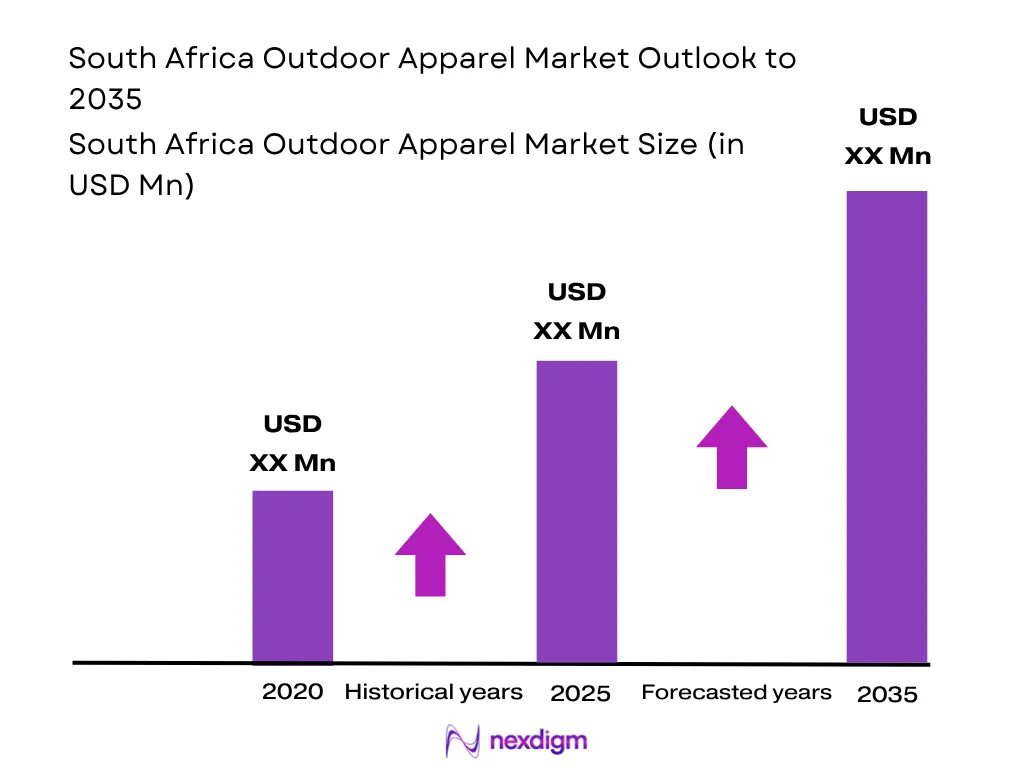
The South Africa outdoor apparel market is valued at USD ~ million in 2025, based on Nexdigm’s comprehensive industry analysis of localized sportswear and outdoor clothing revenue data. This figure reflects a consolidation of demand driven by increased participation in outdoor activities and heightened consumer interest in active lifestyle and athleisure segments. Expansion of organized retail channels and growing e‑commerce penetration have broadened access to both global and local outdoor apparel brands, enhancing total market revenues.
In terms of geographic influence, cities such as Johannesburg, Cape Town, and Durban dominate the South Africa outdoor apparel market owing to higher disposable incomes, dense retail ecosystems, and robust tourism activity. Johannesburg and Cape Town serve as major retail and commercial hubs for international and domestic outdoor brands, while Durban’s coastal lifestyle supports demand for versatile outdoor leisure wear. These urban centers also host major specialty sporting chains and flagship brand stores, which further drive overall market engagement.
Market Segmentation
By Product Type
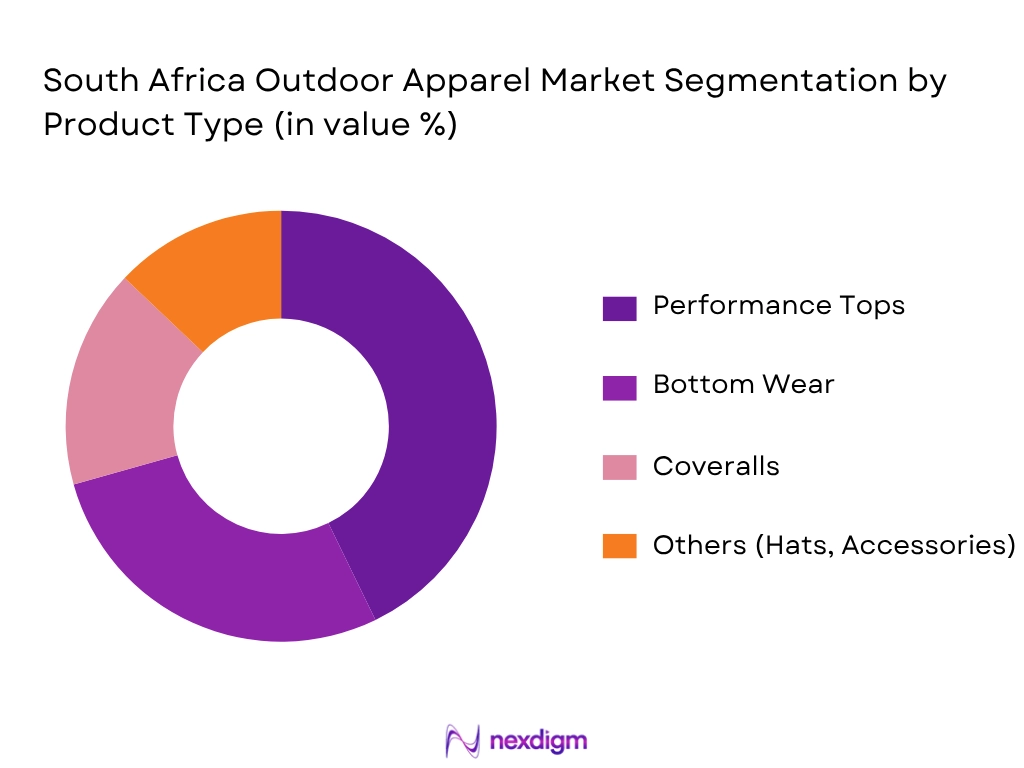
The South Africa outdoor apparel market is segmented by product type into performance top wear, performance bottom wear, coveralls, and other outdoor apparel. Among these, performance top wear dominates the segment, driven by strong consumer preference for versatile and high‑functionality shirts, jackets, and fleece layers that cater to hiking, trekking, and multi‑day outdoor activities. Performance top wear is often the first purchase for outdoor enthusiasts due to its direct impact on comfort and activity performance. Additionally, leading brands have positioned top wear as flagship product lines supported by advanced fabrics like moisture‑wicking, UV protection, and thermal insulation, reinforcing its dominance in revenue share and visibility across retail and e‑commerce platforms.
By Material Type
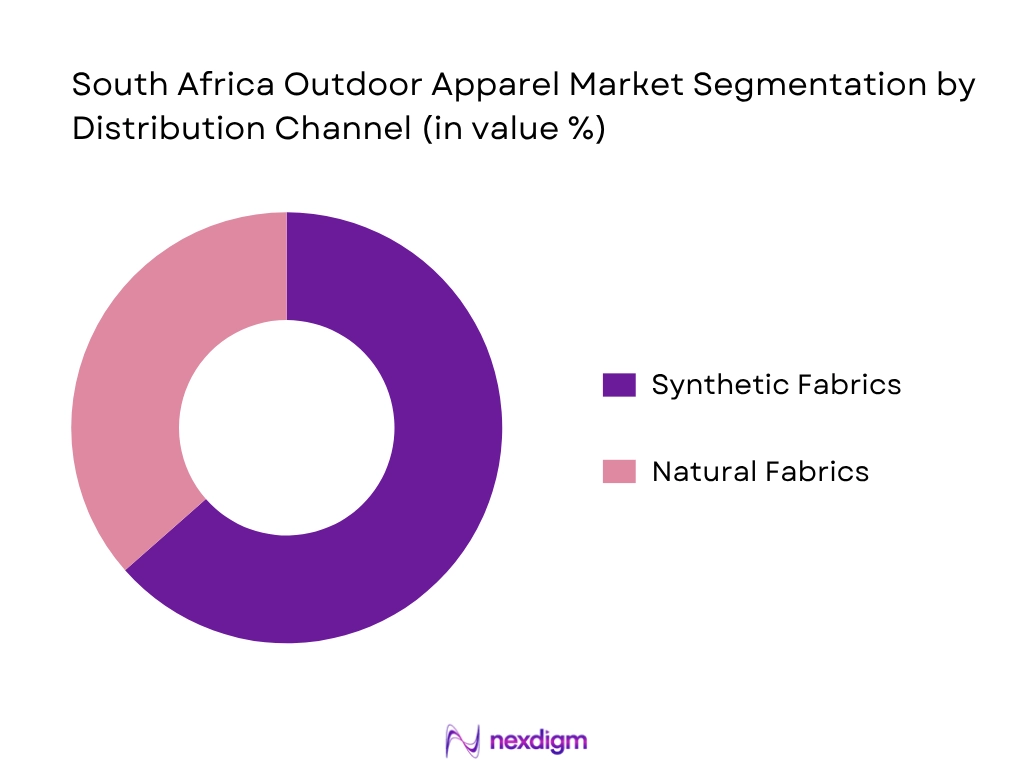
The material segment divides into natural and synthetic fabrics. In 2024, synthetic materials hold the majority market share, largely because synthetic fibres such as polyester and nylon offer high durability, moisture control, and enhanced performance suited to diverse South African outdoor conditions. Moreover, synthetic materials are more widely available at competitive price points across global suppliers, which supports broader adoption among both premium and mid‑market brands. Synthetic fabrics also align with consumer preferences for lightweight, versatile apparel suitable for both activity and everyday wear, reinforcing their category lead.
Competitive Landscape
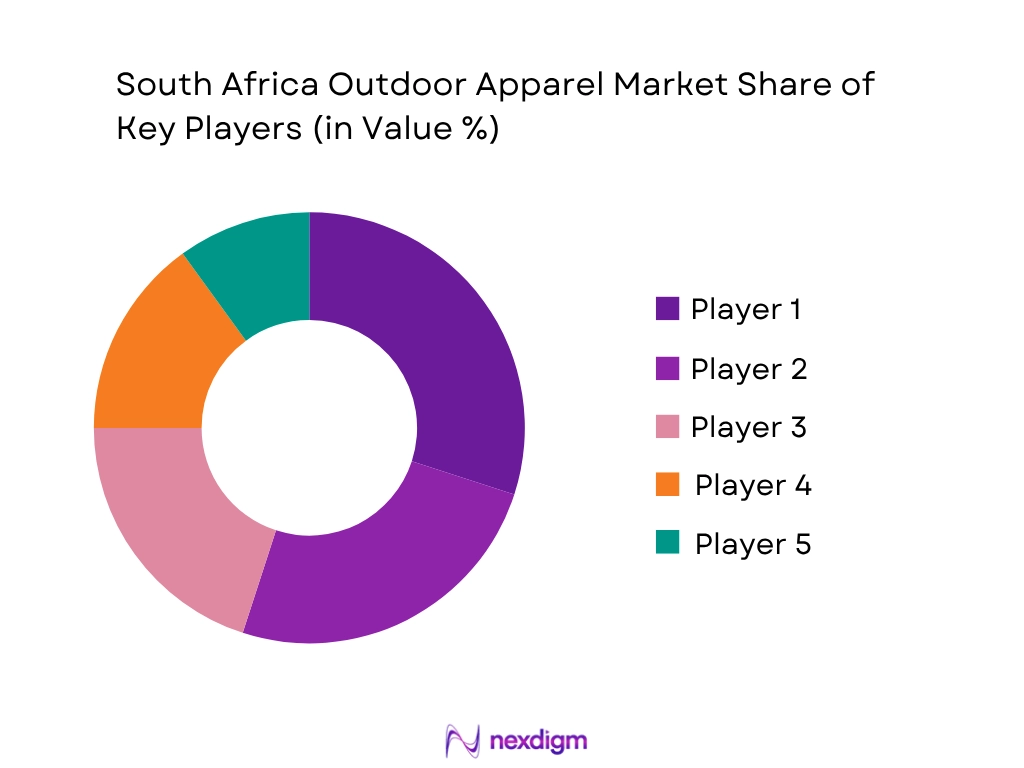
The South Africa outdoor apparel market is moderately consolidated but competitive, featuring both established global brands and strong local retailers. Global sportswear and outdoor labels compete alongside South African specialty retailers that have expanded outdoor apparel assortments. Partnerships, brand franchise agreements, and local retail expansion have strengthened market presence, while diversified channel strategies across physical retail and online marketplaces intensify competition. Overall, leading players leverage brand appeal, product innovation, and distribution reach to maintain their influence in this evolving market.
| Brand / Company | Establishment Year | Headquarters | Product Focus | Retail Presence | Online Sales Reach | Technical Fabric Adoption | Sustainability Initiatives |
| Cape Union Mart | 1998 | Cape Town, SA | ~ | ~ | ~ | ~ | ~ |
| First Ascent | 1999 | Johannesburg, SA | ~ | ~ | ~ | ~ | ~ |
| Trappers Outdoor | 2000s | SA | ~ | ~ | ~ | ~ | ~ |
| Natural Instincts | 2000s | SA | ~ | ~ | ~ | ~ | ~ |
| Salomon | 1947 | Annecy, France | ~ | ~ | ~ | ~ | ~ |
South Africa Outdoor Apparel Market Analysis
Growth Drivers
Adventure & Hiking
Outdoor apparel demand in South Africa is strongly influenced by broader participation in tourism and nature‑based activities. According to Statistics South Africa’s Tourism Satellite Account, the tourism sector supported 953 981 direct jobs in 2024 (5.7% of the labour force) and generated total tourism spending of R779.2 billion, with domestic tourism contributing R665.3 billion of that figure. Domestic tourism continues to be a major driver of outdoor participation because it includes visits to national parks, hiking trails, and natural outdoor attractions that rely on supportive infrastructure and services. Domestic visitors, representing 85 % of internal tourism expenditure, frequently engage in trail hiking, wildlife viewing, and outdoor leisure, all of which contribute to demand for performance clothing suited to these environments. International arrivals also expanded, with 8.92 million visitors in 2024, reinforcing the role of tourism in outdoor activity engagement that supports outdoor apparel purchases. These tourism dynamics indicate a sustained base of consumers participating in activities requiring technical and comfortable outdoor wear, which underpins growth in outdoor apparel demand.
Park/Trail Usage and Premium Brand Adoption
Nature and park visitation statistics point to robust outdoor engagement that supports demand for outdoor apparel with performance features. The Western Cape Government reported that between January and April 2024, 3 206 546 visits were recorded across 53 attractions, with major outdoor sites like Table Mountain National Park drawing over 1 176 683 visitors. These visitor volumes reflect strong active leisure and hiking participation patterns that underpin demand for functional performance garments. South Africa’s tourism ecosystem, encompassing trails, parks and natural attractions, also benefits from rising international and domestic tourism statistics, with international arrivals reaching nearly 9 million in 2024 stimulating apparel purchases for activities ranging from trail exploration to safari and adventure travel. At the same time, a larger share of consumers is increasingly gravitating toward high‑performance and premium outdoor brands that offer technical multipurpose apparel capable of addressing varied climatic conditions across South Africa’s diverse landscapes. The sheer volume of nature‑based visits, supported by these tourism trends, creates an expanding market for higher‑end outdoor apparel that emphasizes durability, weather protection and comfort for extended outdoor use.
Market Challenges
Material Prices
Material pricing and general inflationary pressures in South Africa present challenges to the outdoor apparel market by increasing production and retail input costs. World Bank data shows that South Africa’s inflation rate (consumer prices) levelled at around 4.4 % in 2024, reflecting persistent price pressures across key consumer categories, including clothing and footwear. The country’s GDP was valued at USD 401.14 billion with real GDP growth at about 0.5 % in 2024, indicating subdued economic expansion that limits broad spending power even as material costs rise. Within this economic environment, higher raw material or intermediate goods costs feed into finished apparel pricing. For instance, year‑on‑year inflation pressures on transportation and utilities can escalate the logistical and production cost base for apparel manufacturers and brands distributing outdoor clothing. With consumer inflation still elevated above more stable price environments, brands often face difficulty absorbing cost increases while maintaining price points that are acceptable to a price‑sensitive segment of consumers. This macroeconomic background impacts sourcing decisions, supply chain prioritization, and margins within outdoor apparel businesses, making material cost volatility a notable challenge for sustainable market development.
Supply Chain Disruptions
Supply chain and logistics disruptions remain a critical headwind for the South Africa outdoor apparel market, shaped by national infrastructure and transport challenges. According to World Bank and IMF‑linked data, South Africa’s GDP growth was modest at 0.5 % for 2024, reflecting broader structural constraints and subdued economic performance that influence production and distribution networks. Furthermore, inflation dynamics, with consumer price measures around 4.4 % in 2024, signal cost pressures across transportation, utilities and supply services, which affect supply chain reliability. Historically, South Africa’s rail and port infrastructure has faced bottlenecks and disruptions that delay imports of raw materials and finished goods, creating inventory volatility for retailers and apparel brands operating on just‑in‑time models. Moreover, logistics challenges, including intermittent power shortages and freight backlogs at key ports, can disrupt stock replenishment cycles for both retail chains and direct‑to‑consumer channels. As most outdoor apparel brands rely on global supply chains for technical fabrics and finished goods, these domestic infrastructure constraints translate into increased lead times and higher distribution costs, which can constrain market responsiveness and product availability for consumers at key peak seasons.
Opportunities
Sustainable/Circular Product Lines
The growing preference for sustainability and environmentally responsible consumer products presents a significant opportunity for the South Africa outdoor apparel market. Domestic and international tourism statistics illustrate strong engagement with natural environments, as evidenced by 3 206 546 visits to nature attractions in the Western Cape early in 2024 showing that consumers prioritizing outdoor experiences may also value sustainable product attributes. This trend aligns with broader shifts in consumer behaviour where environmental impact and ethical production influence purchase decisions. Sustainable apparel using recycled materials, reduced‑impact manufacturing, and circular product life‑cycle models resonates with eco‑conscious consumers exploring South Africa’s biodiversity and natural landscapes. Given that outdoor activities inherently connect participants with natural ecosystems, there is increased receptivity to apparel brands that emphasize lower environmental footprints and responsible sourcing. Moreover, tourism’s rebound, with 8.92 million international arrivals in 2024, brings a mix of global visitors whose outdoor lifestyle preferences often include sustainability‑oriented apparel, amplifying the opportunity for brands to differentiate on eco‑credentials. Capitalizing on this preference can help outdoor apparel companies strengthen brand affinity while aligning product offerings with ethical and long‑term ecological considerations.
Direct‑to‑Consumer (DTC) Expansion
The expansion of direct‑to‑consumer (DTC) retail channels offers a compelling opportunity for outdoor apparel brands in South Africa, supported by broader retail digitization and consumer internet usage patterns. While specific South Africa internet penetration figures for 2024 show continued growth in digital connectivity overall, macro data from the World Bank reports a GDP of USD 401.14 billion in 2024 and an improving services sector that increasingly includes digital commerce components. As inflation stabilizes around 4.4 %, consumers maintain discretionary spending on online retail platforms for convenience and product variety. Outdoor apparel brands can leverage DTC strategies, including proprietary e‑commerce sites, localized online marketplaces, and targeted digital marketing to reach consumers more directly, bypassing traditional retail markups and improving customer data capture. The rising engagement in tourism and outdoor activities, with millions of domestic visitors spending on experiences, underlines a consumer base receptive to online product discovery and purchase. These trends create an environment where outdoor apparel brands can scale DTC efforts, optimize margins, and tailor offerings based on real‑time consumer insight, enhancing both reach and profitability without relying solely on third‑party retail distribution.
Future Outlook
Going forward, the South Africa outdoor apparel market is expected to build on its current momentum, supported by dynamic consumer trends in active lifestyles and omni‑channel retail strategies. Continued growth in outdoor and leisure pursuits, combined with greater industry emphasis on functional and sustainable apparel, will shape future expansion. Market players are likely to intensify investment in performance fabrics, eco‑friendly materials, and digital commerce capabilities to capture broader consumer segments. Competitive pressures will remain centered around innovation, affordability, and product diversification to accommodate the wide range of outdoor activities popular in the country. Based on adjacent outdoor gear forecasts that cover related outdoor apparel markets, the outdoor apparel ecosystem is projected to grow at a CAGR of approximately 6.87% during 2026‑2035, reflecting expanding consumer interest and sustained retail sector development across South Africa.
Major Players
- Cape Union Mart
- First Ascent
- Trappers Outdoor
- Natural Instincts
- Salomon
- Columbia Sportswear
- The North Face
- Arc’teryx
- Nike South Africa
- Adidas Terrex
- Puma Outdoor
- Overland Outdoor Apparel
- Kakiebos Outdoor Apparel
- Hi‑Tec
- Outdoor Warehouse
Key Target Audience
- Retail & Apparel Brand Investors
- Outdoor Specialty Retail Chains
- Omni‑Channel & E‑Commerce Apparel Platforms
- Private Equity & Venture Capital Firms (Investments and Venture Capitalist Firms)
- Sports & Leisure Event Organisers
- Tourism & Outdoor Activity Associations
- Import & Trade Regulatory Bodies (Government and Regulatory Bodies: South African Department of Trade, Industry & Competition; South African Bureau of Standards)
- Textile & Material Technology Manufacturers
Research Methodology
Step 1: Identification of Key Variables
The initial phase involves constructing a comprehensive ecosystem model of stakeholders in the South Africa outdoor apparel market. This incorporates detailed desk research drawing upon authoritative secondary databases, published reports, and reviewed financial data to identify critical market drivers, segmentation variables, and revenue benchmarks. The objective is to define the primary factors that influence demand, distribution channels, and competitive positioning.
Step 2: Market Analysis and Construction
In this stage, historical revenue and volume data are compiled and analyzed to reveal baseline market size and trends. The evaluation includes segmentation performance, channel mix (retail vs e‑commerce), and product adoption rates. Qualitative insights from industry insights help refine estimates while ensuring analytical rigor in revenue and market share computation.
Step 3: Hypothesis Validation and Expert Consultation
Market assumptions and projected growth hypotheses are validated through structured interviews with industry professionals, retail operators, and technical fabric suppliers. Insights from these consultations provide real‑world context to consumer behavior, competitive dynamics, and supply chain realities, reinforcing the quantitative findings.
Step 4: Research Synthesis and Final Output
The final phase synthesizes primary insights with data from top‑downn and bottom‑up analyses. Direct engagement with leading brands, retailers, and trade associations helps verify segmentation accuracy and competitive rankings. This integrated approach delivers a validated and holistic view of the South Africa outdoor apparel market that supports strategic decision‑making.

- Executive Summary
- Research Methodology (Market Taxonomy & Definitions, Data Sources and Triangulation Logic, Primary vs Secondary Validation Framework, Top‑Down & Bottom‑Up Sizing Logic, Sampling Plan (Retail & Online Panel Coverage), Retail Scanner Data Methodology, Forecast Assumptions & Sensitivity Checks, Bias and Data Quality Controls)

- Market Definition & Technical Scope
- Market Genesis & Structural Evolution
- South Africa Outdoor Activities Landscape
- Functional vs Lifestyle Adoption (Performance Apparel vs Athleisure Convergence)
- Seasonal Consumption Patterns & Climate Impact
- South Africa Retail & E‑commerce Apparel Framework

- Growth Drivers (Adventure & Hiking, Park/Trail Usage, Premium Brands, Urban Outdoor Lifestyle, Digital Channels, Eco Fabrics, Seasonal Demand, Fitness Trends)
- Market Challenges (Material Prices, Supply Chain Disruptions, Channel Fragmentation, Counterfeits, Price Sensitivity, Inventory Management, Limited Local Fabrics, Import Dependence)
- Opportunities (Sustainable/Circular Lines, DTC Expansion, Rental/Resale, Customization, Wearable Tech, Private Labels, E-Commerce Growth, Tourism Partnerships)
- Emerging Trends (Smart Fabrics, Influencer Marketing, Seasonal Capsules, Sustainable Packaging, Hybrid Urban/Outdoor, Activity-Based Personalization, Eco Editions, Local Designer Collabs)
- Regulatory Environment (SABS Compliance, Tariffs/Imports, Environmental/Labor Standards, OEKO-TEX/Bluesign, Advertising Verification, Packaging Rules, Local Sourcing, Safety Standards)
- Porter’s Five Forces (New Entrants, Supplier Power, Buyer Power, Substitutes, Rivalry)
- SWOT Analysis (Strengths, Weaknesses, Opportunities, Threats)
- Value & Supply Chain (Materials: Polyester, Nylon, Wool, Recycled, Laminates; Local vs Imports; Production in Gauteng/Western Cape; Logistics & Distribution; Retail/E-Commerce; Quality Testing; Returns; Seasonal Inventory)
- Consumer Behavior & Analytics (Frequency, Basket Affinity, Loyalty, Online vs Offline, Social Influence, Seasonal Buying, Willingness-to-Pay, Activity-Based Selection)

- By Value Market Size (2020-2025)
- By Volume Market Size (2020-2025)
- By Channel Value Share (2020-2025)
- By Average Selling Price Levels (2020-2025)
- By Import vs Local Production Value Ratios (2020-2025)

- By Product Type (In Value%)
Performance Outerwear
Hiking & Trekking Apparel
Trail Running Apparel
Casual / Outdoor Leisure Wear
Multi‑Function / Convertible Apparel - By Fabric & Material Tech (In Value%)
Natural Fibres
Synthetic Tech Fabrics
Recycled / Eco Fibre Adoption
Technical Blends - By End‑User Demographic (In Value%)
Men
Women
Youth / Students
Urban Adventurers
Tourists & Expedition Buyers - By Distribution Channel (In Value%)
Outdoor Specialty Retailers
Sportswear & Department Chains
Branded Direct‑to‑Consumer (DTC) Online
General Retail / Superstore Apparel Sections
Multi‑Brand Outdoor E‑marketplaces - By Geography (In Value%)
Gauteng & High‑Density Urban
Western Cape Outdoor Hub
KwaZulu‑Natal Active Market
Inland and Tourism Corridors - By Price Tier (In Value%)
Premium Technical Segment
Mid‑Market Performance
Value / Entry Outdoor Apparel

- Market Share & Positioning (Revenue & Volume Share, Premium vs Mid-Market Presence, Local vs Global Brand Footprint, Channel Penetration)
- Cross‑Comparison Parameters (Revenue & CAGR, Brand Positioning & Value Proposition, Channel Penetration (Store Count / Online Reach), Material / Tech Offering, Product Innovation Index, Sustainability & Ethical Sourcing Score, Distribution Footprint (Specialty Retail vs Marketplace), Local Manufacturing Capability, Marketing & Sponsorship Presence)
- SWOT of Key Players (Strengths, Weaknesses, Opportunities, Threats for each major competitor)
- Pricing & SKU Analysis (Average Selling Price, SKU Tiering, Channel-Specific Pricing, Promotions & Discounts)
- Innovation & Go-To-Market Strategies (Product Innovation, Technical Fabric Adoption, Marketing & Sponsorship Initiatives, Omnichannel Expansion, Collaboration / Designer Partnerships)
- Distribution & Retail Presence (Specialty Retail Stores, Department Chains, E-Commerce & DTC Channels, Multi-Brand Marketplace Presence, Seasonal/Regional Coverage)
- Brand Loyalty & Consumer Perception (Customer Awareness, Retention Rates, Activity-Based Preference, Sustainability & Eco-Conscious Perception, Social Media Influence)
- Major Competitor Profiles
Cape Union Mart
First Ascent
Trappers Outdoor
Gone. Outdoor Supply Co.
Natural Instincts
Hi‑Tec
Salomon
Columbia Sportswear
The North Face
Arc’teryx
Nike ACG
Puma Outdoor
Adidas Terrex
Overland Outdoor Apparel
Kakiebos Outdoor Apparel

- Purchase Drivers (Performance, Comfort, Style, Durability, Sustainability, Brand Reputation, Price, Seasonal/Weather Fit)
- Demographics & Segmentation (Men, Women, Youth/Students, Urban Adventurers, Tourists/Expedition Buyers Behavior Patterns (Frequency of Purchase, Basket Affinity, Brand Loyalty, Online vs In-Store, Seasonal/Activity-Based Buying, Cross-Selling Tendencies)
- Preferences & Trends (Material/Tech Preference, Eco-Friendly Fabrics, Hybrid Urban/Outdoor Styles, Customization Demand, Influencer/Peer Influence, Social Media Engagement)
- Decision-Making Process (Research Channels, Price vs Quality Trade-Off, Peer Recommendations, Brand Trust, Activity-Specific Requirements)
- Channel & Retail Analytics (Specialty Retail, Department Stores, E-Commerce, Omni-Channel Conversions, Promo Sensitivity, Stock Availability & Seasonal Planning)
- Willingness-to-Pay & Value Perception (Premium vs Mid-Market Segments, Technical Feature Valuation, Sustainability Premium, Loyalty Incentives, Price Elasticity by Consumer Segment)
- Consumer Insights Summary (Activity-Based Apparel Choices, Urban vs Tourism Segment Differences, Eco-Consciousness Levels, Seasonal Demand Drivers, Brand Switching Tendencies)

- By Value Market Size (2026-2035)
- By Volume Market Size (2026-2035)
- By Channel Value Share (2026-2035)
- By Average Selling Price Levels (2026-2035)
- By Import vs Local Production Value Ratios (2026-2035)


 Request a Sample
 Ask for Customization
 Get a Quote
 Enquire Now