

 Download PDF
Market Overview
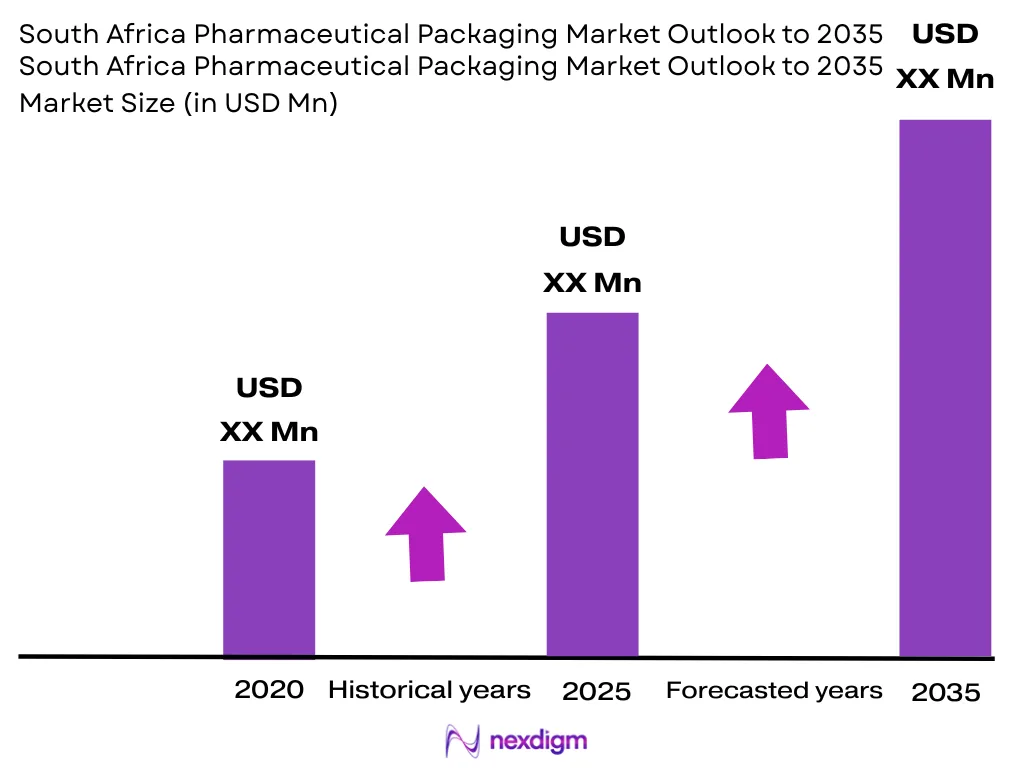
The South Africa Pharmaceutical Packaging Market reached USD ~ Million in 2025 and is projected to reach approximately USD ~ Million by 2034, reflecting a compound annual growth rate of approximately 7.53% during 2026-2034. The market is directly underpinned by South Africa’s position as sub-Saharan Africa’s most sophisticated pharmaceutical market, accounting for approximately 28% of the total African pharmaceutical market by value in 2024, when the broader South African pharmaceutical sector was valued at approximately USD 7.88 billion. Pharmaceutical and medical packaging applications reached ZAR 38 billion (approximately USD ~ billion) in manufacturing output in 2025, as Aspen Pharmacare and Adcock Ingram expanded local production capacity to satisfy the South African Health Products Regulatory Authority’s (SAHPRA) localization targets for essential medicines. SAHPRA’s 2025 membership in the International Council for Harmonisation (ICH) further aligned local regulatory standards with the FDA and EMA, reinforcing South Africa’s role as the primary regulatory and manufacturing gateway for multinational pharmaceutical companies pursuing African market access.
Market Segmentation
By Material
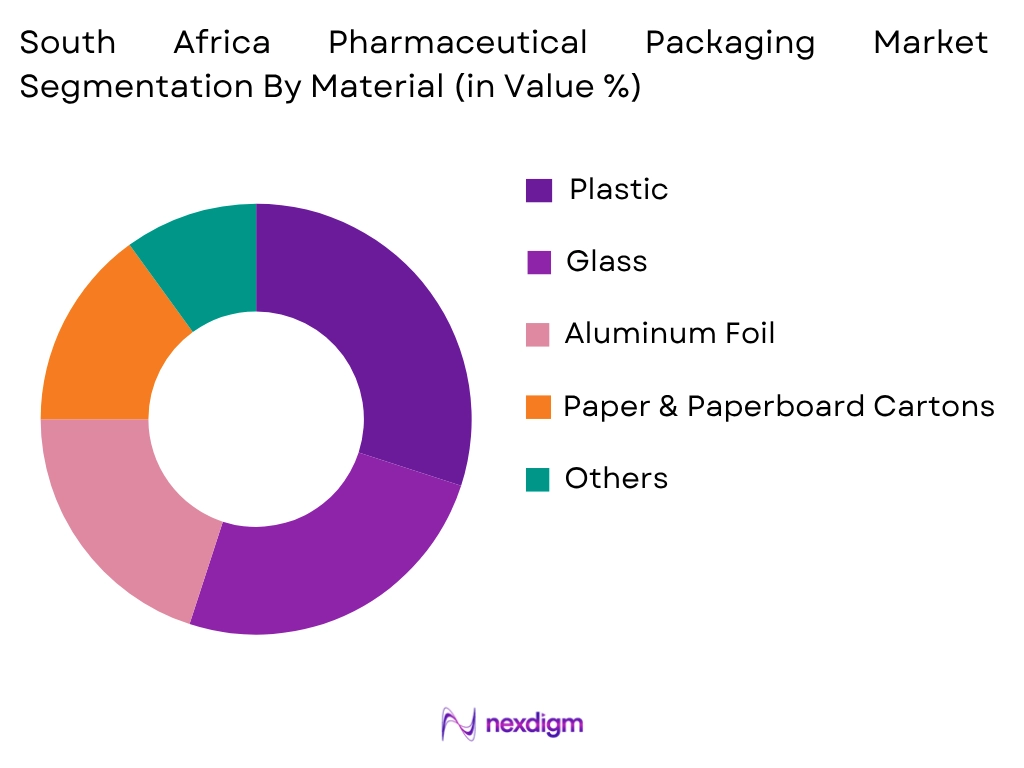
Plastic materials, primarily used in blister films and bottles, hold a substantial share of the South Africa Pharmaceutical Packaging Market, supported by their cost-effectiveness and compatibility with the high-speed packaging lines operated by Aspen Pharmacare and Adcock Ingram across their South African manufacturing facilities. Glass packaging, encompassing vials and ampoules, retains a critical role for South Africa’s sterile, biologics, and vaccine manufacturing base, an area in which Aspen Pharmacare has built particular strength through its niche and complex production capabilities across 23 WHO-compliant manufacturing sites nationally. Recycled PET content is gaining meaningful share following ALPLA’s June 2025 expansion of its Gauteng recycling plant, which processes approximately 1.8 billion bottles annually using 8 megawatts of rooftop solar power, directly boosting the availability of recycled-content plastic feedstock for pharmaceutical packaging applications. Aluminum foil and paperboard cartons continue to serve essential blister lidding and secondary packaging functions, with cartons increasingly required to carry multilingual labeling and traceability codes supporting South Africa’s growing role in continental pharmaceutical distribution.
By Product Type
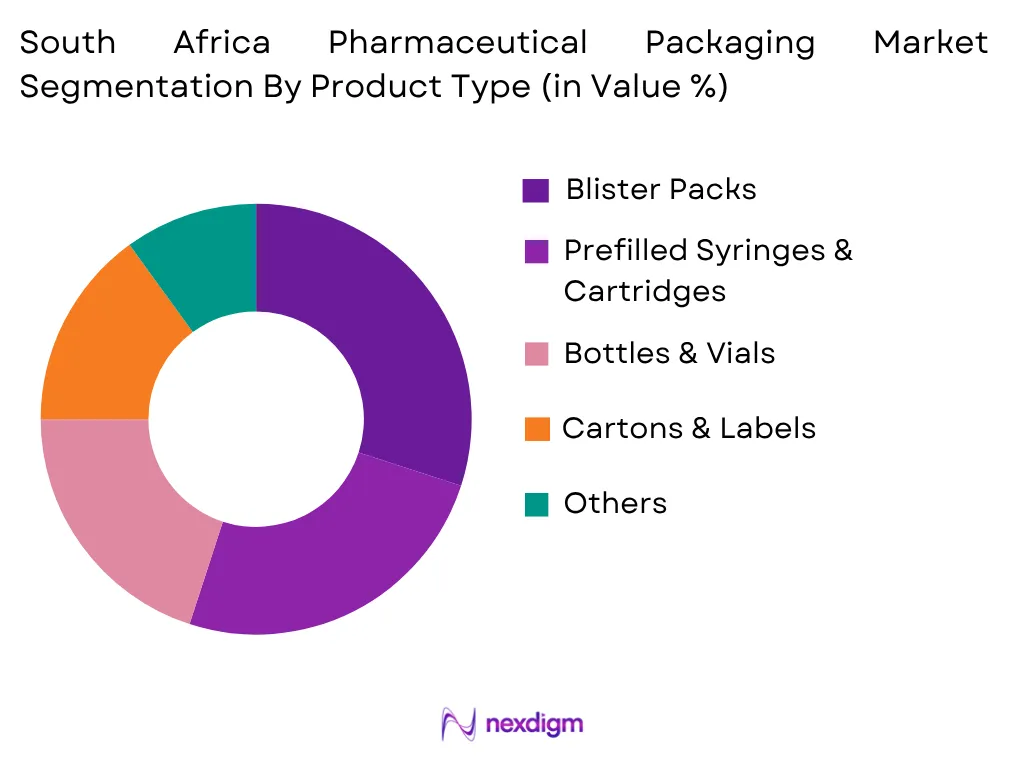
Blister Packs represent the largest product-type segment in the South Africa Pharmaceutical Packaging Market, reflecting their widespread use across the country’s substantial generics manufacturing base, which continues to expand under SAHPRA’s localization targets for essential medicines. Bottles & Vials maintain a significant share supporting both oral liquid formulations and South Africa’s growing sterile injectable and vaccine manufacturing capacity. Prefilled Syringes & Cartridges represent an increasingly important segment, supported by Aspen Pharmacare’s continued investment in sterile fill-finish capability and by rising demand for GLP-1 agonist therapies, exemplified by Aspen’s October 2025 SAHPRA approval to market Eli Lilly’s Mounjaro (tirzepatide) for chronic weight management in South Africa. Cartons & Labels continue to grow in sophistication as export-oriented manufacturers increasingly incorporate traceability and anti-counterfeiting features to support distribution across the Southern African Development Community and broader African export markets.
Competitive Landscape
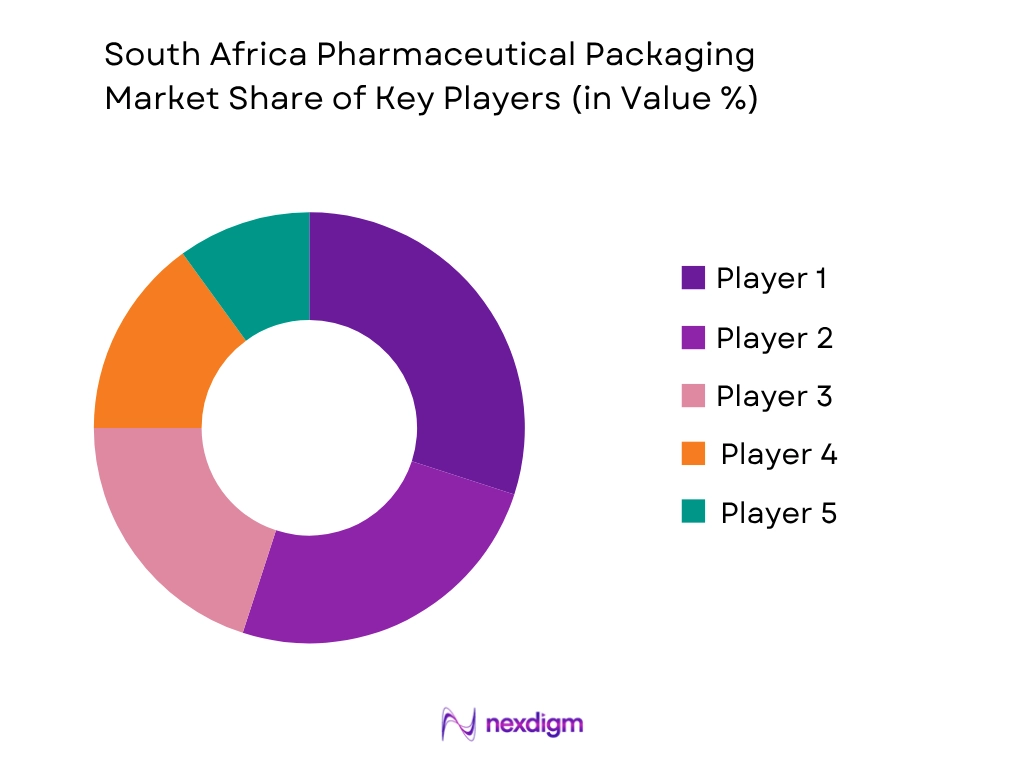
The South Africa Pharmaceutical Packaging Market is anchored by Aspen Pharmacare, the central pillar of South Africa’s domestic pharmaceutical industry, which operates 24 manufacturing facilities globally with a heavy concentration in South Africa and maintains particular strength in niche and complex production capabilities spanning steriles, biologics, and vaccines. Adcock Ingram represents the second major domestic pharmaceutical manufacturer, maintaining substantial local packaging capability supporting both generics and OTC consumer health products. South Africa’s 23 WHO-compliant manufacturing sites allow local champions to secure high-margin contracts for global supply chains, attracting specialized primary packaging partnerships with global suppliers including Gerresheimer for glass vials and ampoules used in sterile and biologic applications. ALPLA’s expanded Gauteng recycling operations have positioned the company as an increasingly important recycled-content packaging supplier to the local pharmaceutical sector, while global packaging specialists including Amcor continue to expand their South African presence to serve both domestic manufacturers and the country’s growing base of export-oriented contract manufacturers.
| Company | Establishment Year | Headquarters | Primary Product Portfolio | Pharmaceutical Packaging Portfolio
|
Manufacturing Presence | Major End-Use Industries | Key Strategic Focus | Certifications & Compliance |
| Aspen Pharmacare Holdings Limited | 1997 | ~ | ~ | ~ | ~ | ~ | ~ | ~ |
| Adcock Ingram Holdings Limited | 1890 | ~ | ~ | ~ | ~ | ~ | ~ | ~ |
| Amcor | 1860 | ~ | ~ | ~ | ~ | ~ | ~ | ~ |
| Gerresheimer AG | 1864 | ~ | ~ | ~ | ~ | ~ | ~ | ~ |
| ALPLA Group | 1955 | ~ | ~ | ~ | ~ | ~ | ~ | ~ |
South Africa Pharmaceutical Packaging Market Analysis
Growth Drivers
SAHPRA Localization Targets and Local Manufacturing Capacity Expansion
The South Africa pharmaceutical packaging market is experiencing sustained growth due to SAHPRA’s localization targets for essential medicines, which have prompted Aspen Pharmacare and Adcock Ingram to expand local production capacity substantially. Pharmaceutical and medical packaging manufacturing output reached ZAR 38 billion, approximately USD 2.1 billion, in 2025, reflecting the scale of this localization-driven capacity expansion. The South African government’s continued encouragement of local medicine manufacturing, combined with National Health Insurance (NHI) implementation efforts aimed at upgrading public health facilities and systems, continues to create structural demand for domestic pharmaceutical packaging capacity. South Africa’s status as the largest and most advanced pharmaceutical industry in sub-Saharan Africa, with more than 80% of manufacturing and distribution revenue originating from the private sector, provides a substantial and growing base of demand for packaging suppliers serving both branded and generic drug manufacturers across the country’s expanding production base.
Continental Export Hub Positioning and Regulatory Harmonization
South Africa’s role as the primary regulatory and manufacturing gateway for multinational pharmaceutical companies pursuing African market access continues to drive sustained investment in export-oriented packaging capacity. SAHPRA’s 2025 membership in the International Council for Harmonisation (ICH) aligned local regulatory standards with the FDA and European Medicines Agency, reinforcing South Africa’s position as a reference regulatory authority within the African Medicines Agency network. South Africa accounts for approximately 28% of the total African pharmaceutical market by value, with Aspen Pharmacare having already demonstrated the country’s capability to serve as a springboard for continental expansion through established operations and strategic acquisitions in Nigeria, Kenya, Tanzania, and Uganda. As African Medicines Regulatory Harmonisation (AMRH) initiatives continue to reduce time-to-market barriers for generics and biosimilars across the continent, South African manufacturers and their packaging suppliers are increasingly well positioned to serve multi-country African distribution from a single, regulatorily sophisticated production base.
Market Challenges
Lengthy Product Qualification Timelines and Regulatory Bottlenecks
The South Africa Pharmaceutical Packaging Market continues to face significant challenges from lengthy product qualification and regulatory approval timelines that constrain the pace of local manufacturing and packaging capacity expansion. At the Conference on Public Health in Africa 2025, Aspen Pharmacare’s Dr. Stavros Nicolaou publicly criticized regulatory bottlenecks and procurement policies, stating that it remains unacceptable for African manufacturers to undergo a six-year qualification process before reaching market when the same process could reasonably be completed in half that time. These extended qualification timelines directly affect packaging suppliers as well as drug manufacturers, since new packaging formats, materials, and serialization technologies must similarly undergo lengthy validation and regulatory approval before commercial deployment. This regulatory friction represents a persistent structural challenge that continues to limit the speed at which local manufacturers can respond to growing demand for new drug formulations, including biosimilars and GLP-1 agonist therapies, and the specialized packaging formats these products require.
Energy Reliability and Import Dependency for Specialized Materials
South Africa’s pharmaceutical packaging converters continue to navigate persistent electricity supply constraints associated with Eskom load-shedding, which has compelled many manufacturers to invest in backup power and on-site solar generation as a standard operational hedge, exemplified by ALPLA’s 8-megawatt rooftop solar installation at its Gauteng recycling facility. Despite South Africa’s advanced pharmaceutical manufacturing base, the country remains dependent on imported pharma-grade glass, specialty polymer films, and elastomer closures for sterile and biologic packaging applications, exposing converters to currency volatility affecting the South African Rand and global supply chain disruptions. These import dependencies particularly affect specialized sterile packaging components required for Aspen Pharmacare’s biologics and vaccine manufacturing operations, where material purity and consistency specifications leave limited room for substitution with lower-cost alternatives. Public-private procurement cost pressures, intensified by budgetary constraints affecting NHI implementation, further compound these operational challenges by limiting the pricing flexibility available to packaging suppliers serving public-sector pharmaceutical procurement programs.
Market Opportunities
Growth in Sterile, Biologics, and GLP-1 Therapy Packaging
Aspen Pharmacare’s continued strategic investment in high-growth therapeutic segments, particularly GLP-1 agonists and biosimilars, creates substantial opportunity for packaging suppliers specializing in sterile fill-finish, prefilled syringes, and specialized primary containment formats. Aspen’s October 2025 SAHPRA approval to market Eli Lilly’s Mounjaro for chronic weight management, expanding from its existing Type 2 diabetes indication, illustrates the type of high-value therapeutic expansion driving demand for advanced injectable packaging formats in South Africa. The company’s niche and complex production capabilities across steriles, biologics, and vaccines, supported by South Africa’s 23 WHO-compliant manufacturing sites, position local and international packaging suppliers to capture growing demand as South African manufacturers continue leveraging local cost advantages to compete in high-growth global therapeutic categories. Packaging suppliers capable of providing validated, internationally compliant sterile packaging alongside cold chain expertise are increasingly well positioned to support this segment’s continued expansion.
Recycled-Content Partnerships and AI-Driven Quality Innovation
Growing investment in sustainable and technologically advanced packaging solutions creates meaningful opportunity for suppliers serving South Africa’s pharmaceutical sector. ALPLA’s expanded Gauteng recycling plant, processing approximately 1.8 billion bottles annually with 8 megawatts of rooftop solar power, directly supports local circular economy goals and reduces pharmaceutical manufacturers’ reliance on virgin plastics. Local pharmaceutical plants have begun deploying AI-powered vision inspection tools that cut packaging defect rates by more than 40% while accelerating blister and bottle line throughput, with AI-driven traceability platforms simultaneously helping to reduce counterfeit risk across the supply chain. The March 2025 Propak Africa exhibition showcased advanced sustainable and smart packaging technologies specifically tailored for pharmaceutical applications, highlighting growing industry demand for recyclable materials, eco-friendly processes, and enhanced traceability solutions. Packaging suppliers that can combine recycled-content capability with AI-enabled quality assurance and traceability features are well positioned to capture premium positioning as South African pharmaceutical manufacturers continue prioritizing both sustainability credentials and supply chain integrity.
Future Outlook
The South Africa Pharmaceutical Packaging Market is expected to witness steady expansion over the forecast period, supported by continued SAHPRA-driven localization of essential medicine manufacturing, South Africa’s strengthening position as a continental regulatory and export hub following its 2025 ICH membership, and growing investment in sterile, biologics, and GLP-1 therapy packaging capacity. Continued investment in recycled-content materials, AI-enabled quality inspection, and traceability technology will further shape competitive positioning across the industry. The market is also likely to benefit from South Africa’s unique position as the gateway for multinational pharmaceutical companies pursuing broader African market access, supported by continued African Medicines Regulatory Harmonisation progress across the continent.
Major Players
- Aspen Pharmacare Holdings Limited
- Adcock Ingram Holdings Limited
- Amcor
- Gerresheimer AG
- ALPLA Group
- Cipla Medpro South Africa
- Pharma Dynamics
- Litha Healthcare Group
- Ascendis Health Limited
- Constantia Flexibles
- Schott AG
- West Pharmaceutical Services
- Mpact Ltd.
- Huhtamaki
- CCL Industries
Key Target Audience
- Pharmaceutical Packaging Manufacturers
- Pharmaceutical & Biotechnology Companies
- Contract Manufacturing Organizations (CMOs)
- Hospitals & Pharmacy Chains
- Export-Oriented Pharmaceutical Manufacturers
- Investment and Venture Capitalist Firms
- Government and Regulatory Bodies (South African Health Products Regulatory Authority (SAHPRA), National Department of Health, South African Bureau of Standards (SABS))
- Raw Material Suppliers and Primary Packaging Component Manufacturers
Research Methodology
Step 1: Identification of Key Variables
The research process begins with identifying the complete ecosystem of the South Africa Pharmaceutical Packaging Market, including raw material suppliers, primary and secondary packaging converters, pharmaceutical manufacturers, contract packaging providers, and regulatory authorities. Extensive secondary research is conducted using company annual reports, government publications, trade associations, customs statistics, industry journals, and proprietary databases to determine the variables influencing market demand, pricing, production, consumption, and technological developments.
Step 2: Market Analysis and Construction
Historical market information is collected and analyzed to estimate market size, production volumes, import-export activity, application-wise demand, and pricing trends. A combination of top-down and bottom-up approaches is used to estimate market revenues and validate segment-level performance. Consumption patterns across generics, biologics, injectables, and OTC packaging are evaluated to establish an accurate representation of the industry.
Step 3: Hypothesis Validation and Expert Consultation
The preliminary findings are validated through Computer-Assisted Telephone Interviews (CATIs) and structured discussions with pharmaceutical packaging suppliers, procurement managers, regulatory affairs specialists, packaging engineers, and senior executives operating within the South African pharmaceutical industry. These interviews help verify market assumptions, competitive developments, technology adoption trends, pricing dynamics, and future investment opportunities while refining the overall market estimates.
Step 4: Research Synthesis and Final Output
The final stage integrates insights obtained from primary interviews with quantitative information collected through secondary sources. Data triangulation techniques are applied to reconcile differences between supply-side and demand-side estimates, ensuring robust market forecasting. The report is then reviewed through multiple quality assurance checkpoints to deliver a comprehensive analysis covering market size, segmentation, competitive landscape, future outlook, and strategic recommendations for industry stakeholders.

- Executive Summary
- Research Methodology (Market Definitions and Assumptions, Abbreviations, Market Sizing Approach, Top-Down Analysis, Bottom-Up Analysis, Demand-Side Assessment, Supply-Side Assessment, Primary Industry Interviews, Secondary Research Validation, Data Triangulation, Forecasting Framework, Limitations and Future Conclusions)

- Definition and Scope
- Market Evolution and Industry Genesis
- Timeline of Major Industry Developments
- Pharmaceutical Packaging Industry Value Chain Analysis
- Supply Chain Analysis

- Growth Drivers (SAHPRA Localization Targets for Essential Medicines, Continental Export Hub Positioning, Growth in Biologics & Sterile Manufacturing, Rising Chronic Disease & GLP-1 Therapy Demand, Regional Regulatory Harmonization (AMRH/ICH), Expansion of Recycled-Content Packaging Capacity)
- Market Challenges (Lengthy Product Qualification Timelines, Energy Reliability & Load-Shedding Costs, Import Dependency for Pharma-Grade Materials, Currency Volatility, Public-Private Procurement Cost Pressure, Limited Domestic Sterile Packaging Capacity)
- Market Opportunities (Growth in Sterile, Biologics & Vaccine Packaging, Recycled-Content Partnerships & Circular Economy Investment, AI-Driven Defect Detection & Traceability, Continental Expansion via SADC & AfCFTA, GLP-1 & Biosimilar Packaging Demand, NHI-Driven Public Sector Manufacturing Investment)
- Market Trends (Growth in AI-Enabled Quality Inspection, Recycled PET Adoption in Pharma Packaging, Smart & Traceable Packaging Development, Regional Regulatory Harmonization, Sterile & Biologics Capacity Expansion, Sustainable Packaging Material Innovation)
- Government Regulations (Medicines and Related Substances Act Compliance, SAHPRA Product Registration Requirements, SAHPRA ICH Membership Standards, National Health Insurance (NHI) Framework, Local Manufacturing Localization Targets, SADC Regulatory Harmonization Standards)
- Import and Export Analysis (Trade Volume, Major Import Sources, Export Destinations, HS Code Analysis, Trade Balance)
- Raw Material Availability Analysis (Pharma-Grade Glass, Imported Polymer Films, Recycled PET Feedstock, Aluminum Foil Stock, Rubber & Elastomer Closures)
- Technology Landscape (Blister Forming & Sealing Technologies, AI-Enabled Vision Inspection Systems, Serialization & Traceability Platforms, Sterile Fill-Finish Technologies, Recycled-Content Processing Technologies)
- Sustainability Assessment (Recycled PET Content Adoption, Solar-Powered Manufacturing Integration, Reduced Carton Material Usage, Glass & Aluminum Circularity, Circular Economy Partnerships)
- PESTLE Analysis
- SWOT Analysis
- Porter’s Five Forces Analysis
- Stakeholder Ecosystem
- Competition Ecosystem

- By Market Value (2020-2025)
- By Volume Consumption (2020-2025)
- By Average Selling Price (2020-2025)

- By Material (In Value %)
Plastic (Blister Films & Bottles)
Glass (Vials & Ampoules)
Aluminum Foil
Paper & Paperboard Cartons
Rubber & Elastomer Closures - By Product Type (In Value %)
Blister Packs
Bottles & Vials
Ampoules
Prefilled Syringes & Cartridges
Cartons & Labels
Pouches & Sachets
Closures & Caps - By Drug Type (In Value %)
Generics
Biologics, Biosimilars & Vaccines
OTC & Consumer Health Products
Injectables
GLP-1 Agonists & Chronic Disease Therapies
Specialty & Orphan Drugs - By End User (In Value %)
Pharmaceutical Manufacturers
Contract Manufacturing Organizations (CMOs)
Hospitals & Pharmacy Chains
Export-Oriented Manufacturers
Public Sector Procurement Programs
Clinical Research Organizations - By Region (In Value %)
Gauteng
Western Cape
KwaZulu-Natal
Eastern Cape
Other Provinces

- Market Share of Major Players (By Value, Volume, Material Type, Drug Type, Product Category)
- Cross Comparison Parameters (Product Portfolio Breadth, Sterile & Biologics Packaging Capability, Recycled-Content Capability, Application Technical Support, Manufacturing Capacity, Regulatory Compliance & Certifications, Continental Export Customer Base, Innovation & New Product Launch Frequency)
- SWOT Analysis of Major Players
- Pricing Analysis by Product Category and Format
- Production Capacity Analysis
- Manufacturing Footprint Analysis
- Distribution Network Analysis
- Innovation Benchmarking
- Detailed Profiles of Major Companies
Aspen Pharmacare Holdings Limited
Adcock Ingram Holdings Limited
Amcor
Gerresheimer AG
ALPLA Group
Cipla Medpro South Africa
Pharma Dynamics
Litha Healthcare Group
Ascendis Health Limited
Constantia Flexibles
Schott AG
West Pharmaceutical Services
Mpact Ltd.
Huhtamaki
CCL Industries

- Consumption Pattern Analysis (Industrial Usage, Batch Size, Product Category Penetration, Seasonal Demand, Reformulation Activity)
- Purchasing Criteria (Regulatory Compliance, Recycled-Content Availability, Cost Efficiency, Barrier Performance, Tamper-Evidence, Sterile Packaging Capability)
- Procurement and Supplier Selection Analysis
- Recycled-Content Adoption Assessment
- Public vs Private Sector Packaging Demand
- Product Attribute Preference Analysis (Moisture Barrier Performance, Tamper-Evidence, Sterile Integrity, Print & Label Clarity, Recyclability, Anti-Counterfeiting Features)
- Localization & Regulatory Compliance Influence on Packaging Investment
- Pain Point Analysis
- Decision-Making Process

- By Market Value (2026-2035)
- By Volume Consumption (2026-2035)
- By Average Selling Price (2026-2035)


 Request a Sample
 Ask for Customization
 Get a Quote
 Enquire Now