
 Download PDF
Market Overview
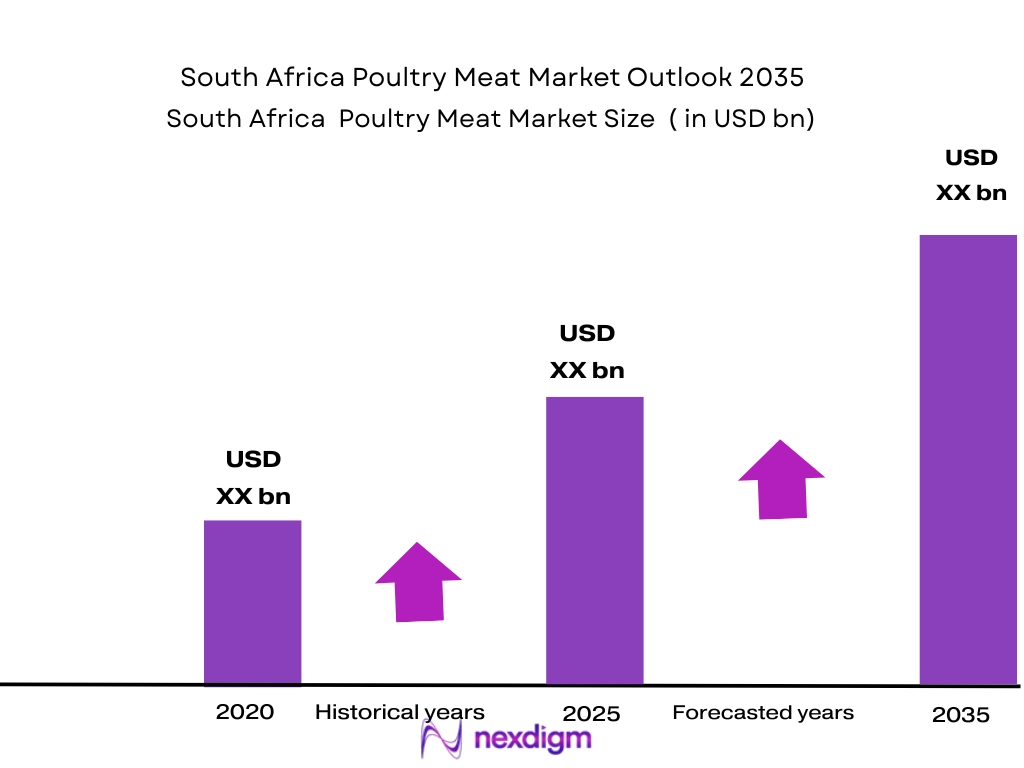
The South Africa Poultry Meat Market is valued at USD ~ billion, with the market expected to grow at a CAGR of 5.8% during 2024–2030. The market is driven by poultry’s role as South Africa’s most affordable animal protein, supported by domestic chicken meat consumption of 2.240 million tonnes and poultry meat production of 1.915 million tonnes, up from about 1.858 million tonnes in the previous annual cycle.
Demand is concentrated around Gauteng, KwaZulu-Natal, and Western Cape, led by Johannesburg, Durban, Pretoria, and Cape Town because these locations combine dense urban populations, large formal retail networks, foodservice demand, and cold-chain infrastructure. South Africa’s population reached 63.02 million, while combined farm income from poultry meat and eggs rose from R79.60 billion to R87.95 billion, strengthening demand-led production and distribution across these urban consumption hubs.
Market Segmentation
By Product Type
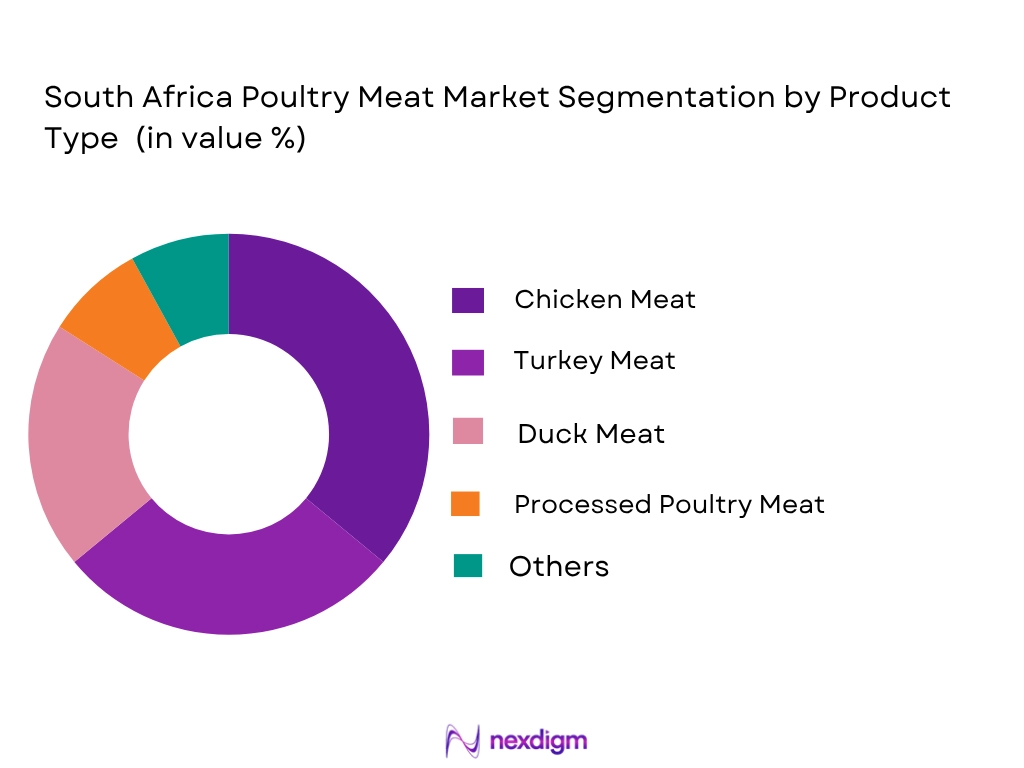
The South Africa Poultry Meat Market is segmented by product type into fresh and chilled chicken meat, frozen chicken meat, processed and value-added poultry meat, mechanically deboned meat and offal, and other poultry meat. Fresh and chilled chicken meat holds the dominant market position due to its routine household usage, wide availability through supermarkets and butcheries, and consumer preference for whole birds, mixed portions, breasts, thighs, and drumsticks for daily cooking. The segment also benefits from strong demand among urban consumers who purchase poultry frequently in smaller baskets rather than stocking large frozen volumes. Large integrated producers prioritize fresh chicken distribution through cold-chain networks, enabling consistent supply to formal retail chains and foodservice buyers. Fresh poultry is also perceived as more versatile and suitable for traditional meals, braai occasions, and family cooking, supporting higher rotation across retail shelves.
By Distribution Channel
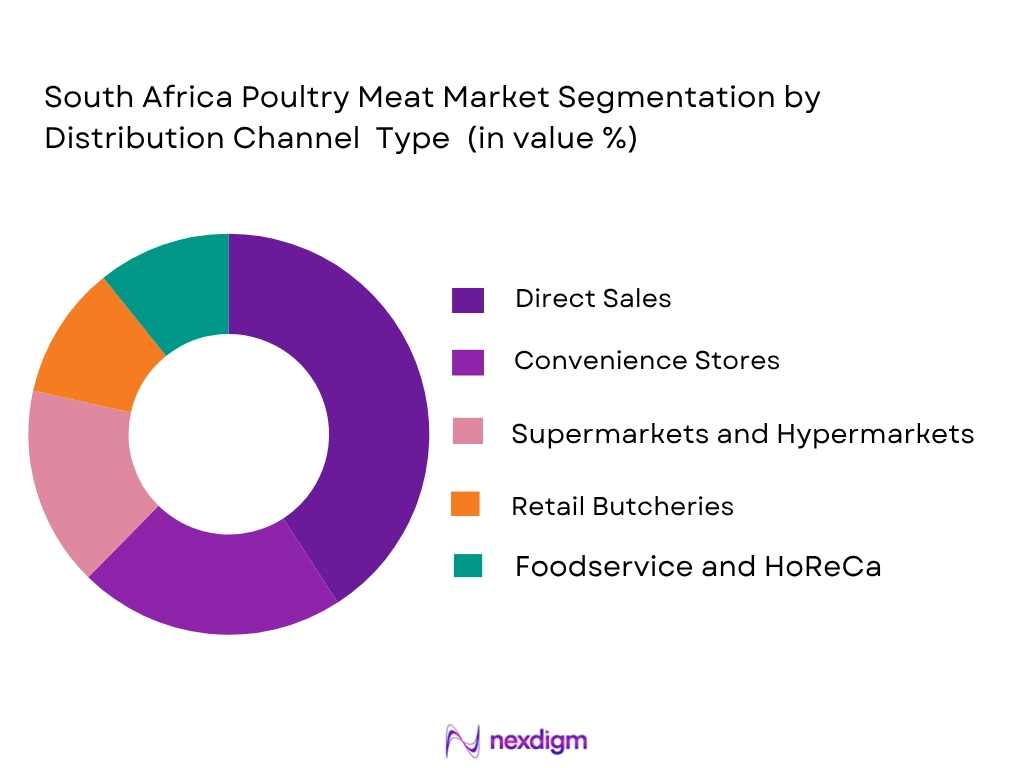
The South Africa Poultry Meat Market is segmented by distribution channel into supermarkets and hypermarkets, foodservice and QSR channels, retail butcheries and traditional meat shops, wholesale and institutional buyers, and online grocery and direct-to-consumer channels. Supermarkets and hypermarkets dominate the market because they provide standardized packaging, reliable refrigeration, frequent promotions, and access to branded poultry products across major urban and peri-urban locations. Retail chains such as Shoprite, Pick n Pay, Checkers, Woolworths, Spar, and Boxer play a central role in distributing fresh, frozen, and value-added poultry to mass consumers. Their dominance is supported by scale procurement, private-label poultry lines, loyalty programs, and the ability to manage cold-chain compliance. Supermarkets also attract both low-income and middle-income households through discounted bulk packs, mixed portions, and frozen chicken formats.
Competitive Landscape
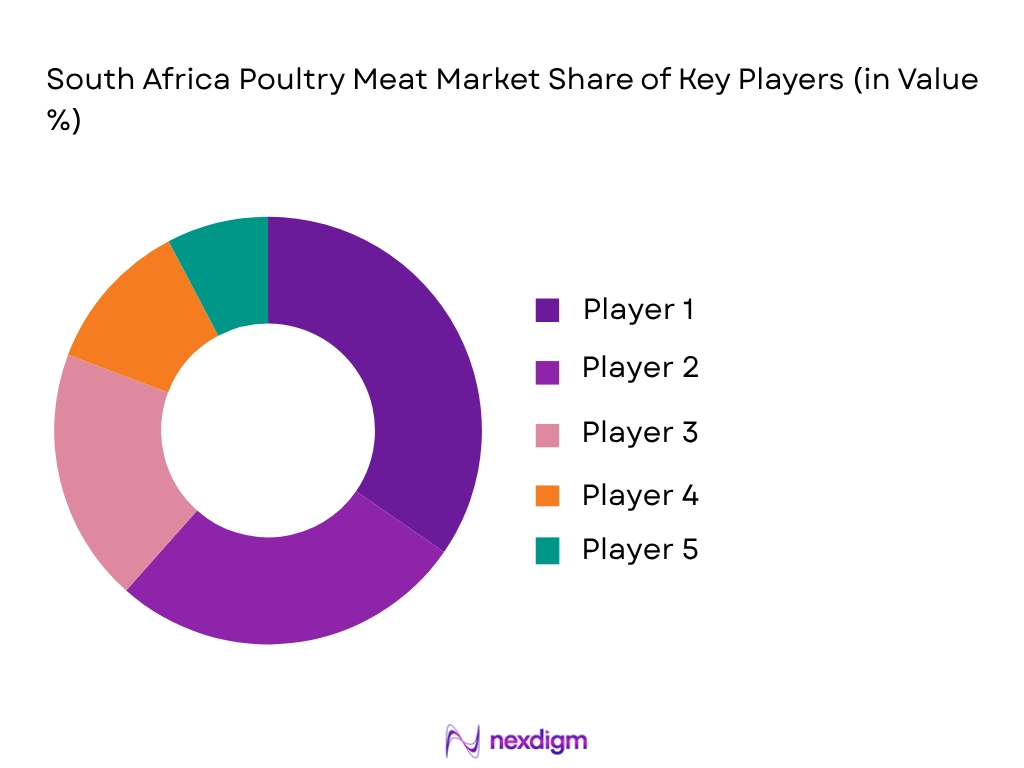
The South Africa Poultry Meat Market is moderately consolidated, with a few vertically integrated producers shaping supply, pricing, processing standards, and retail relationships. Astral Foods, Rainbow Chicken, Country Bird Holdings, Daybreak Foods, and Sovereign Foods are among the most visible players, supported by broiler farming, feed operations, hatcheries, abattoirs, and branded distribution networks. Competition is based on cost control, feed efficiency, product consistency, biosecurity, and access to formal retail and QSR buyers.
| Company | Establishment Year | Headquarters | Core Brands / Product Lines | Integration Level | Key Channels | Processing / Farming Footprint | Strategic Focus | Market-Specific Risk |
| Astral Foods | 2001 | Centurion, Gauteng | ~ | ~ | ~ | ~ | ~ | ~ |
| Rainbow Chicken | 1960 | Westville / Durban, KwaZulu-Natal | ~ | ~ | ~ | ~ | ~ | ~ |
| Country Bird Holdings | 2003 | South Africa | ~ | ~ | ~ | ~ | ~ | ~ |
| Daybreak Foods | 2001 | Gauteng | ~ | ~ | ~ | ~ | ~ | ~ |
| Sovereign Foods | 1948 | Eastern Cape | ~ | ~ | ~ | ~ | ~ | ~ |
South Africa Poultry Meat Market Analysis
Growth Drivers
Rising Demand for Affordable Animal Protein
Poultry meat is one of the most affordable and widely consumed animal protein sources in South Africa. Compared with beef, lamb, and some seafood products, chicken is generally more accessible to middle- and lower-income consumers. This makes it a preferred option for daily household meals, school feeding programs, informal food vendors, and foodservice outlets. Rising food prices have further strengthened consumer preference for cost-effective protein choices. Chicken is also versatile, easy to prepare, and suitable for a wide range of local dishes, which supports consistent demand across urban and rural markets. As consumers continue to balance nutrition, affordability, and convenience, poultry remains a key protein category supporting market growth in South Africa.
Rising Demand for Processed and Value-added Poultry Products
Demand for processed and value-added poultry products is increasing in South Africa as consumers seek convenience, longer shelf life, and easy meal preparation. Products such as frozen chicken portions, nuggets, sausages, burgers, marinated chicken, and ready-to-cook items are becoming more popular among urban households and working consumers. Modern retail stores, supermarkets, and convenience outlets have helped improve access to these products. Foodservice operators and quick-service restaurants also use processed poultry products because they offer consistent quality, portion control, and faster preparation. This trend allows poultry companies to move beyond basic raw chicken sales and develop higher-margin product lines. As lifestyles become busier, value-added poultry products are expected to remain an important growth driver.
Market Challenges
High Feed Cost and Input Price Volatility
High feed cost is one of the biggest challenges for South Africa’s poultry meat market. Feed ingredients such as maize and soybean meal account for a large share of poultry production expenses. Price changes in these commodities can directly affect producer margins and final poultry prices. Input costs such as electricity, fuel, packaging, labor, and veterinary products also add pressure on poultry producers. When costs rise sharply, companies may struggle to pass the full increase to consumers due to strong price sensitivity in the market. This affects profitability and investment capacity, especially for smaller producers. Feed and input price volatility therefore remains a major constraint on stable poultry industry growth.
Disease Outbreaks and Biosecurity Risks
Disease outbreaks create significant risks for South Africa’s poultry industry. Avian influenza and other poultry diseases can cause bird mortality, production losses, supply disruptions, and higher operating costs. Outbreaks may also lead to culling, movement restrictions, and temporary shortages in the market. Strong biosecurity practices are necessary to protect farms, but they require continuous investment in sanitation, vaccination, monitoring, farm access control, and staff training. Smaller poultry producers may find these systems difficult to maintain at a high standard. Disease risks can also affect consumer confidence and export potential. As a result, effective disease prevention, rapid response systems, and strict farm-level biosecurity remain critical challenges for the poultry meat market.
Opportunities
Expansion of Local Poultry Production Capacity
South Africa has a strong opportunity to expand local poultry production capacity to meet rising domestic demand and reduce dependence on imports. Investment in farms, hatcheries, feed mills, processing plants, and cold storage facilities can improve supply reliability and support job creation. Local production expansion also allows companies to serve retailers, wholesalers, and foodservice customers with fresher products and shorter lead times. Government and industry efforts to strengthen domestic poultry production can further support this opportunity. Improved production efficiency, better farm management, and integrated supply chains can help local producers compete more effectively against imported products. As demand for chicken continues to grow, domestic capacity expansion remains an important market opportunity.
Innovation in Marinated, Ready-to-Cook, and Ready-to-Eat Products
Innovation in marinated, ready-to-cook, and ready-to-eat poultry products offers strong growth potential in South Africa. Consumers are increasingly looking for convenient meal options that save preparation time while still offering taste and quality. Products such as seasoned chicken portions, grilled chicken packs, frozen meals, chicken skewers, and microwave-ready poultry dishes can appeal to busy urban households and younger consumers. Foodservice and retail channels can also benefit from these products because they offer standardization and faster service. Poultry brands can differentiate themselves through flavor innovation, local taste profiles, improved packaging, and healthier product options. This creates opportunities for higher-margin sales and stronger brand loyalty in a competitive market.
Future Outlook
Over the next five years, the South Africa Poultry Meat Market is expected to expand steadily as poultry remains the most affordable and widely consumed animal protein in the country. Growth will be supported by urban population concentration, wider supermarket penetration, and the expansion of quick-service restaurants. Producers are expected to invest in automation, feed efficiency, cold-chain improvement, and biosecurity. Value-added formats such as marinated cuts, frozen packs, nuggets, crumbed chicken, and ready-to-cook poultry will gain stronger traction among time-constrained urban households.
Major Players
- Astral Foods
- Rainbow Chicken
- Country Bird Holdings
- Daybreak Foods
- Sovereign Foods
- RCL Foods
- Quantum Foods
- Grain Field Chickens
- Chubby Chick
- Afgri Poultry
- Tyson Foods South Africa
- BRF South Africa
- Crown Chickens
- Earlybird Farm
- Lynca Meats Poultry Division
Key Target Audience
- Poultry meat producers and processors
- Broiler farming companies
- Feed manufacturers and animal nutrition companies
- Supermarket and hypermarket chains
- Quick-service restaurant and foodservice operators
- Cold-chain logistics and refrigerated warehousing companies
- Investments and venture capitalist firms
- Government and regulatory bodies
Research Methodology
Step 1: Identification of Key Variables
The initial phase involves mapping the South Africa Poultry Meat Market ecosystem, including broiler producers, feed suppliers, hatcheries, abattoirs, processors, importers, distributors, retailers, and foodservice buyers. This step identifies the core variables influencing market demand, including production volume, consumption levels, pricing, imports, feed cost, disease risk, and channel-wise distribution patterns.
Step 2: Market Analysis and Construction
In this phase, historical market data is compiled and assessed to understand poultry meat production, domestic consumption, import dependency, retail pricing movement, and institutional demand. The market structure is evaluated through product categories, distribution models, and end-user patterns. This helps construct the value and volume framework for the South Africa Poultry Meat Market.
Step 3: Hypothesis Validation and Expert Consultation
Market hypotheses are validated through structured discussions with poultry producers, distributors, feed companies, cold-chain operators, foodservice buyers, and retail category managers. These consultations help test assumptions on product dominance, procurement cycles, channel margins, disease-related supply disruptions, and the role of fresh versus frozen poultry formats in consumer demand.
Step 4: Research Synthesis and Final Output
The final phase integrates desk research, company-level mapping, trade indicators, production estimates, and primary insights into a validated market model. The output provides market size, segmentation, competitive positioning, growth drivers, and forecast direction. Final estimates are cross-checked through bottom-up demand assessment and top-down industry validation to ensure consistency.

- Executive Summary
- Research Methodology (Market Definitions and Assumptions, Abbreviations, Market Sizing Approach, Consolidated Research Approach, Understanding Market Potential Through In-Depth Industry Interviews, Primary Research Approach, Limitations and Future Conclusions)

- Definition and Scope
- Market Dynamics Overview
- Market Genesis
- Major Players and Market Timeline
- Business Cycle and Trends
- Supply Chain and Value Chain Analysis

- Growth Drivers
Rising Demand for Affordable Animal Protein
Increasing Urbanization and Population Growth
Growth of Quick Service Restaurants and Foodservice Channels
Expansion of Modern Retail and Cold Chain Infrastructure
Rising Demand for Processed and Value-added Poultry Products - Market Challenges
High Feed Cost and Input Price Volatility
Disease Outbreaks and Biosecurity Risks
Competition from Imported Poultry Products
Price Sensitivity Among Consumers
Regulatory Compliance and Food Safety Requirements - Opportunities
Rising Demand for Frozen and Processed Poultry Products
Expansion of Local Poultry Production Capacity
Growth of Online Grocery and Meat Delivery Platforms
Increasing Demand from Foodservice and QSR Chains
Innovation in Marinated, Ready-to-Cook, and Ready-to-Eat Products - Key Trends
Shift Toward Convenience-based Poultry Products
Rising Preference for Locally Produced Poultry Meat
Growing Focus on Food Safety and Traceability
Expansion of Private Label Poultry Products
Increasing Adoption of Sustainable Poultry Farming Practices - Government Regulations
- SWOT Analysis
- Porter’s Five Forces

- By Value, 2020–2025
- By Volume, 2020–2025
- By Average Price, 2020–2025

- By Product Type (In Value %)
Chicken Meat
Turkey Meat
Duck Meat
Processed Poultry Meat
Others - By Form (In Value %)
Fresh Poultry Meat
Frozen Poultry Meat
Chilled Poultry Meat
Processed Poultry Meat - By Processing Type (In Value %)
Raw Poultry Meat
Cooked Poultry Meat
Ready-to-Cook Poultry Products
Ready-to-Eat Poultry Products
Value-added Poultry Products - By Distribution Channel (In Value %)
Direct Sales
Supermarkets and Hypermarkets
Retail Butcheries
Online Channels
Convenience Stores
Foodservice and HoReCa - By End User (In Value %)
Households
Restaurants and Foodservice Operators
Hotels and Catering Services
Quick Service Restaurants
Institutional Buyers - By Region (In Value %)
Gauteng
Western Cape
KwaZulu-Natal
Eastern Cape
Free State
Limpopo
Mpumalanga
North West
Northern Cape

- Market Share of Major Players by Value/Volume
- Market Share of Major Players by Product Type
- Cross Comparison Parameter (Company Overview, Business Strategies, Recent Developments, Strength, Weakness, Organizational Structure, Revenues, Revenues by Product Type, Number of Touchpoints, Distribution Channels, Number of Dealers and Distributors, Margins, Production Plant, Capacity, Unique Value Offering and Others)
- SWOT Analysis of Major Players
- Pricing Analysis Based on Product Categories for Major Players
- Detailed Profiles of Major Companies
Astral Foods
RCL Foods
Country Bird Holdings
Sovereign Foods
Daybreak Farms
Rainbow Chicken
Quantum Foods
Grain Field Chickens
Chubby Chick
Sovereign Foods
Leratong Chickens
Afgri Poultry
Tyson Foods South Africa
BRF South Africa

- Market Demand and Utilization
- Purchasing Power and Budget Allocations
- Regulatory and Compliance Requirements
- Needs, Desires, and Pain Point Analysis
- Decision-Making Process

- By Value, 2026–2035
- By Volume, 2026–2035
- By Average Price, 2026–2035


 Request a Sample
 Ask for Customization
 Get a Quote
 Enquire Now