
 Download PDF
Market Overview
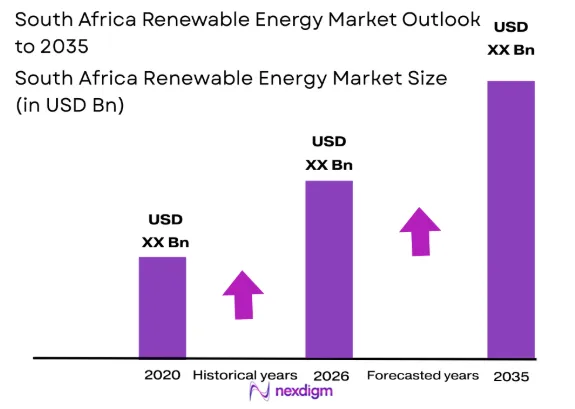
The South Africa Renewable Energy market has experienced substantial growth, driven by increasing demand for clean energy solutions. Based on a recent historical assessment, the market is valued at approximately USD ~ billion, with solar and wind energy being the dominant contributors to this growth. Government policies, including the Renewable Energy Independent Power Producer Procurement Programme (REIPPPP), have accelerated the development of renewable energy infrastructure, fostering private sector investments in clean energy technologies. As the country seeks to meet sustainability goals, the renewable energy market continues to expand.
Key regions driving this market include major urban centers like Johannesburg, Cape Town, and Pretoria, which benefit from strong energy demands and favorable conditions for solar and wind energy production. These cities have become hubs for renewable energy investments, largely due to their geographic advantages, such as high solar radiation and strong wind currents. Additionally, regulatory frameworks in South Africa have fostered an environment conducive to growth, attracting both local and international investments. This is further supported by a growing focus on reducing dependency on coal and moving toward cleaner energy solutions.
Market Segmentation
By Product Type
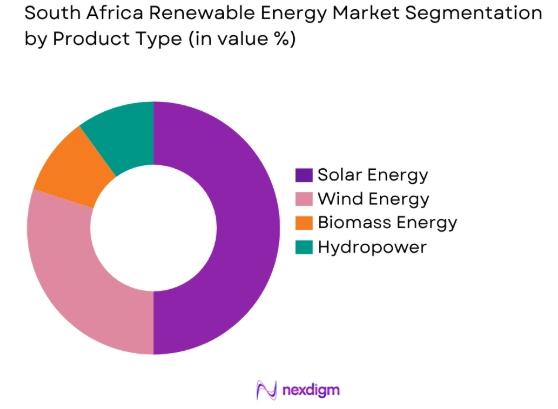
The South Africa renewable energy market is segmented by product type into solar, wind, biomass, and hydropower systems. Solar energy has become the dominant sub-segment due to the country’s abundant sunshine, which makes solar power generation a cost-effective and reliable option. The growing adoption of solar energy is facilitated by the decrease in solar panel costs and government subsidies aimed at promoting clean energy. This has made solar power accessible for both residential and commercial applications.
By Platform Type
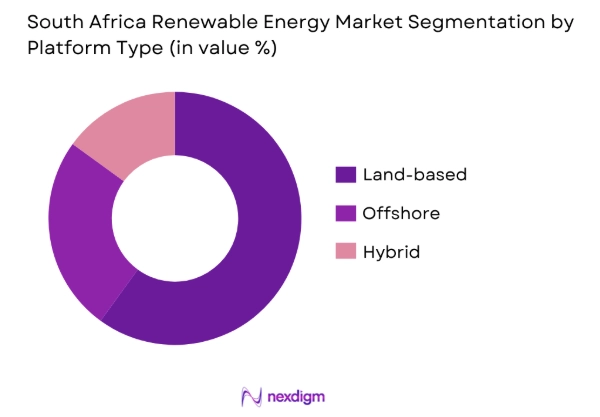
The market is also segmented by platform type into land-based, offshore, and hybrid platforms. The land-based platform sub-segment dominates due to its cost-effectiveness and ease of implementation. Land-based wind and solar farms are more economically viable than offshore systems, which require higher capital investment and more complex infrastructure. The expansion of land-based renewable projects is supported by South Africa’s large available land area and favorable environmental conditions for both solar and wind energy generation.
Competitive Landscape
The South African renewable energy market has a competitive landscape characterized by both local and international players investing in solar, wind, and other renewable technologies. Major players such as SolarReserve, Vestas, and Siemens Gamesa are leading the charge with their innovative renewable energy solutions. These companies are heavily involved in both the development and operation of renewable energy projects in the country, and they are expected to maintain significant influence as the market grows. Additionally, the market is seeing consolidation as smaller firms partner with larger companies to leverage technological expertise and financial resources.
| Company Name | Establishment Year | Headquarters | Technology Focus | Market Reach | Key Products | Revenue (USD) | Additional Parameter |
| SolarReserve | 2008 | USA | ~ | ~ | ~ | ~ | ~ |
| Vestas | 1945 | Denmark | ~ | ~ | ~ | ~ | ~ |
| Siemens Gamesa | 1976 | Spain | ~ | ~ | ~ | ~ | ~ |
| SolarWorld | 1998 | Germany | ~ | ~ | ~ | ~ | ~ |
| Acciona | 1997 | Spain | ~ | ~ | ~ | ~ | ~ |
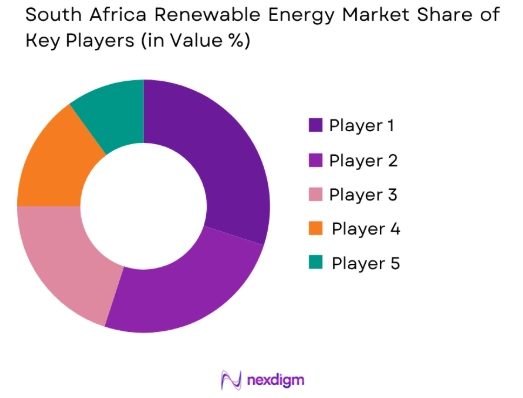
South Africa Renewable Energy Market Analysis
Growth Drivers
Government Support for Renewable Energy
Government initiatives have been instrumental in driving the growth of South Africa’s renewable energy market. The Renewable Energy Independent Power Producer Procurement Programme (REIPPPP) has encouraged private sector investment in renewable projects, fostering a favorable environment for expansion. Additionally, the government’s commitment to carbon reduction and clean energy transition has accelerated the adoption of renewable technologies. Efforts to enhance energy security and diversify the energy mix have further increased the demand for sustainable energy solutions. These initiatives have created significant opportunities for renewable energy development, positioning South Africa as a leader in clean energy adoption and paving the way for future market growth.
Technological Advancements in Solar and Wind Energy
Technological advancements in solar and wind energy have been a key growth driver for South Africa’s renewable energy market. Innovations like more efficient solar panels, advanced wind turbines, and energy storage systems have reduced production costs, making renewable energy more accessible. Additionally, improvements in grid infrastructure and energy storage solutions help mitigate issues related to energy intermittency, ensuring a more reliable and stable renewable energy supply. These advancements have made renewable energy systems more viable for widespread adoption, supporting South Africa’s shift toward cleaner energy sources. As technology continues to evolve, it will further accelerate the growth and integration of renewable energy in the country.
Market Challenges
High Initial Capital Investment
A major challenge facing South Africa’s renewable energy market is the high initial capital investment needed for developing renewable energy projects. While renewable energy systems offer long-term savings, the upfront costs for infrastructure like solar panels, wind turbines, and energy storage systems present a significant barrier. This financial burden can deter potential investors, especially smaller firms or those in rural areas with limited access to financing. Although government incentives help reduce costs, the substantial capital investment remains a critical challenge to the widespread adoption of renewable energy. Overcoming this challenge will require continued support from both the government and private sector to make renewable energy more accessible.
Grid Infrastructure and Intermittency Issues
South Africa’s grid infrastructure struggles to accommodate renewable energy sources due to their intermittent nature. Solar and wind energy generation is heavily dependent on weather conditions, causing fluctuations in energy supply. To address this, South Africa needs significant investments in smart grid technologies and energy storage systems to ensure a stable and reliable energy supply. Upgrading the grid to handle renewable energy and integrating energy storage solutions are critical for large-scale adoption of clean energy sources. However, these necessary infrastructure improvements demand substantial financial investment and time to implement effectively, making it a key challenge in the country’s renewable energy transition.
Opportunities
Expansion of Hybrid Renewable Energy Solutions
Hybrid renewable energy solutions, integrating solar, wind, and energy storage, offer a promising growth opportunity for South Africa’s renewable energy market. These systems ensure a reliable and consistent power supply, even when solar or wind energy generation is intermittent. As businesses and consumers increasingly seek to reduce reliance on the national grid, demand for hybrid solutions is rising. The combination of cost-effectiveness and reliability makes hybrid systems an appealing option for both residential and commercial applications. By offering a sustainable energy solution, hybrid systems are well-positioned to meet South Africa’s growing energy needs, contributing significantly to the country’s renewable energy transition.
International Investment in Renewable Energy
South Africa’s renewable energy market offers significant opportunities for international investment due to its favorable geographic conditions, especially for solar and wind energy generation. International investors are increasingly drawn to the country’s potential for clean energy development. Foreign investment will help expand renewable energy infrastructure while introducing new technologies and expertise to the market. As South Africa progresses toward a more sustainable energy future, international investors will play a key role in accelerating the growth of the renewable energy sector. This influx of capital and knowledge will further enhance the country’s renewable energy capabilities, supporting its transition to cleaner, more reliable energy sources.
Future Outlook
The South African renewable energy market is poised for continued growth, driven by technological advancements, supportive government policies, and rising demand for sustainable energy solutions. The country’s commitment to reducing carbon emissions and transitioning to cleaner energy sources will continue to fuel the expansion of renewable energy infrastructure, particularly in solar and wind energy. Over the next five years, hybrid energy systems, energy storage solutions, and advancements in grid infrastructure will play an increasingly important role in the market’s development.
Major Players
- SolarReserv
- Vestas
- Siemens Gamesa
- SolarWorld
- Acciona
- First Solar
- Mainstream Renewable Power
- Enel Green Power
- SunPower
- Goldwind
- Nordex
- Suzlon Energy
- Senvion
- Iberdrola
- Tesla
Key Target Audience
- Investments and venture capitalist firms
- Government and regulatory bodies
- Renewable energy developers
- Energy sector manufacturers
- Industrial and commercial energy consumers
- Independent power producers
- Utility companies
- Environmental and sustainability agencies
Research Methodology
Step 1: Identification of Key Variables
The key variables that influence the renewable energy market in South Africa are identified, including government policies, technological advancements, and market demand.
Step 2: Market Analysis and Construction
The market is analyzed by collecting data from primary and secondary research, providing insights into market size, growth rates, and segmentation.
Step 3: Hypothesis Validation and Expert Consultation
Expert consultation and industry feedback are used to validate hypotheses and ensure the accuracy of findings.
Step 4: Research Synthesis and Final Output
The research findings are synthesized to create a comprehensive report, providing strategic insights and recommendations for market stakeholders.

- Executive Summary
- Research Methodology (Definitions, Scope, Industry Assumptions, Market Sizing Approach, Primary & Secondary Research Framework, Data Collection & Verification Protocol, Analytic Models & Forecast Methodology, Limitations & Research Validity Checks)

- Market Definition and Scope
- Value Chain & Stakeholder Ecosystem
- Regulatory / Certification Landscape
- Sector Dynamics Affecting Demand
- Strategic Initiatives & Infrastructure Growth

- Growth Drivers
Rising Government Support for Renewable Energy Projects
Increasing Energy Demand and Security Concerns
Technological Advancements in Energy Storage Solutions - Market Challenges
High Initial Capital Investment for Renewable Energy Projects
Grid Infrastructure and Intermittency Challenges
Regulatory and Policy Uncertainty - Market Opportunities
Growth of Hybrid Renewable Energy Solutions
Government Incentives and Subsidies for Clean Energy Projects
International Investment in South Africa’s Renewable Energy Sector - Trends
Increase in Adoption of Solar and Wind Hybrid Systems
Shift Towards Energy Storage and Smart Grids
Focus on Decentralized Renewable Energy Systems - Government Regulations
- SWOT Analysis of Key Competitors
- Porter’s Five Forces

- By Market Value, 2020-2025
- By Installed Units, 2020-2025
- By Average System Price, 2020-2025
- By System Complexity Tier, 2020-2025

- By System Type (In Value%)
Solar Energy Systems
Wind Energy Systems
Biomass Energy Systems
Hydropower Systems
Geothermal Energy Systems - By Platform Type (In Value%)
Land-Based Platforms
Offshore Platforms
Onshore Platforms
Hybrid Platforms
Integrated Platforms - By Fitment Type (In Value%)
On-grid Solutions
Off-grid Solutions
Hybrid Solutions
Modular Solutions
Integrated Solutions - By End User Segment (In Value%)
Commercial Sector
Residential Sector
Industrial Sector
Government and Public Sector
Agriculture Sector - By Procurement Channel (In Value%)
Direct Procurement
Government Tenders
Private Sector Procurement
Online Bidding Platforms
Third-party Distributors

- Market Share Analysis
- Cross Comparison Parameters (System Type, Platform Type, Procurement Channel, End User Segment, Fitment Type, Market Value, Installed Units, Growth Rate, Regional Demand, Technological Adoption)
- SWOT Analysis of Key Competitors
- Pricing & Procurement Analysis
- Key Players
Sasol
Anglo American
Eskom
Enel Green Power
SolarReserve
Vestas
Siemens Gamesa
Mainstream Renewable Power
First Solar
SunPower
Tesla
Apex Solar
Acciona
Senvion
Suzlon Energy

- Commercial Sector’s Growing Demand for Clean Energy
- Residential Adoption of Solar and Wind Power
- Industrial Sector’s Focus on Energy Cost Reduction
- Government Initiatives Promoting Renewable Energy in Rural Areas

- Forecast Market Value, 2026-2035
- Forecast Installed Units, 2026-2035
- Price Forecast by System Tier, 2026-2035
- Future Demand by Platform, 2026-2035


 Request a Sample
 Ask for Customization
 Get a Quote
 Enquire Now