
 Download PDF
Market Overview
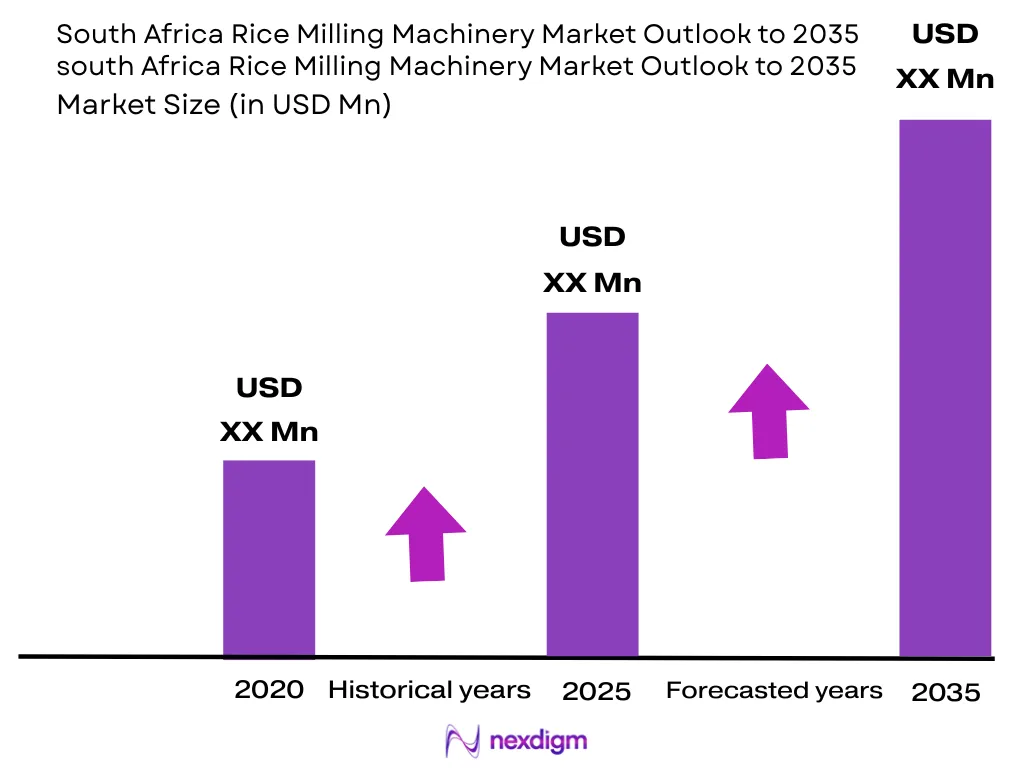
The South Africa Rice Milling Machinery Market was valued at USD ~ Million in 2024, supported by the country’s position as the largest rice-consuming economy in sub-Saharan Africa and one of the continent’s most significant rice importers. South Africa does not produce rice at commercially meaningful scale domestically and relies almost entirely on imported paddy and milled rice to meet national consumption requirements. According to data published by the Department of Agriculture, Land Reform and Rural Development (DALRRD) and the South African Revenue Service (SARS), South Africa imports approximately 1.0 to 1.2 million metric tons of rice annually, sourced predominantly from Thailand, India, Pakistan, and Vietnam. KwaZulu-Natal province, home to the Port of Durban, serves as the primary entry point and processing hub for rice imports, with significant milling, repackaging, and distribution activity concentrated in the Durban-Pinetown industrial corridor. Ongoing modernization of processing infrastructure, rising consumer demand for affordable and consistently high-quality rice, increasing adoption of automated sorting and packaging systems, and food safety compliance requirements driven by retail chain standards are the principal factors driving equipment demand across South Africa.
Market Segmentation
By Machinery Type
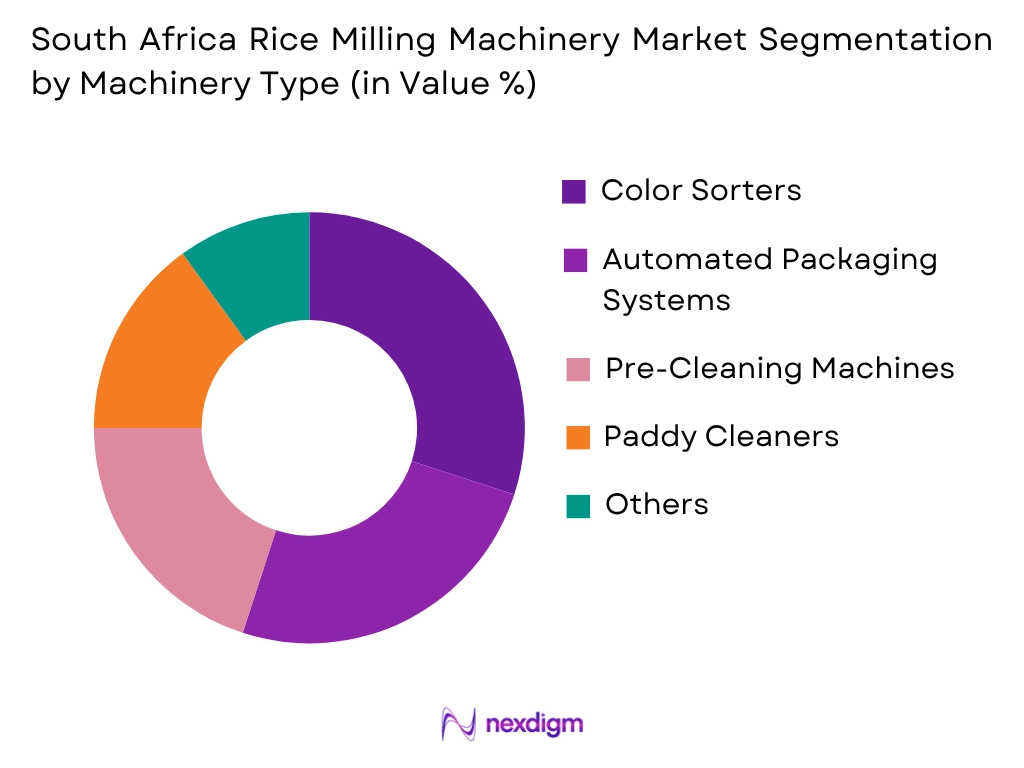
South Africa Rice Milling Machinery Market is segmented by machinery type into Pre-Cleaning Machines, Paddy Cleaners, Destoners, Rubber Roll Huskers, Paddy Separators, Rice Whiteners, Rice Polishers, Color Sorters, Rice Graders, Length Graders, Packaging Systems, and Complete Rice Milling Plants. Recently, Color Sorters and Automated Packaging Systems hold the dominant market share within this segmentation, reflecting South Africa’s role as primarily a rice re-milling, quality sorting, and retail-packaging market rather than a primary paddy husking economy. South African rice processors and re-packers are focused on achieving the visual grain quality, uniformity, and hygiene standards demanded by major domestic retail chains including Shoprite, Pick n Pay, Woolworths, Spar, and Checkers, as well as meeting the requirements of national food safety regulators and the South African Bureau of Standards (SABS). The dominance of branded and private-label rice products in South African retail has driven investment in precision color sorting, grading, and high-speed automated packaging equipment capable of producing consistent consumer packs for township, suburban, and premium market segments. The growing requirement for food provenance documentation and allergen-free processing certifications further encourages investment in equipment with integrated traceability and quality monitoring capabilities. Their direct influence on product presentation quality, regulatory compliance, and retailer satisfaction makes color sorting and packaging systems the most commercially critical equipment investments for South African rice processors.
By Automation Level
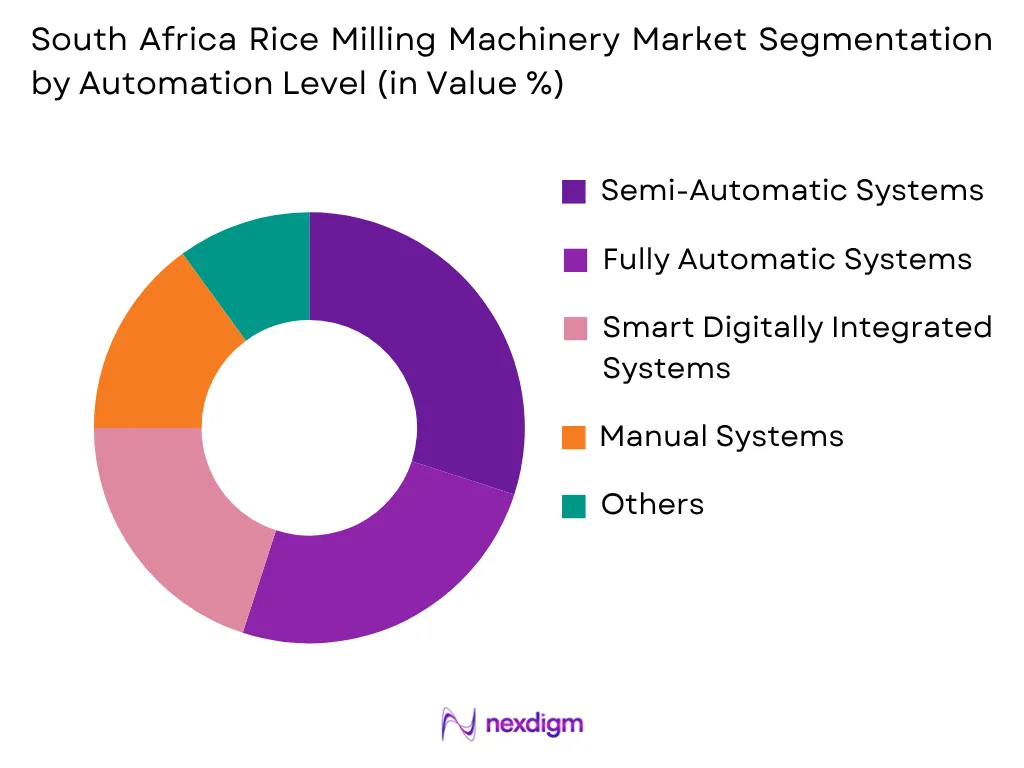
South Africa Rice Milling Machinery Market is segmented by automation level into Manual Systems, Semi-Automatic Systems, Fully Automatic Systems, and Smart Digitally Integrated Systems. Currently, Semi-Automatic Systems hold the largest installed base among smaller and medium-scale processors, while Fully Automatic Systems are rapidly gaining share among large commercial millers and integrated food processing companies. South Africa’s rice processing sector faces a distinctive dynamic in which high structural unemployment and political sensitivity around labor displacement create constraints on the pace of automation adoption, particularly among processors operating in labor-intensive regions. However, rising operational costs, the need for consistent product quality to meet retail chain specifications, and the impact of electricity supply disruptions on manual processing operations are gradually driving investment in automated systems that improve efficiency and reduce dependence on uninterrupted labor availability. Large food processing companies with established South African operations, including Tiger Brands and Pioneer Foods, increasingly invest in automated processing lines to optimize throughput and maintain competitive margins. Additionally, the country’s evolving food safety regulatory environment and the growing adoption of Hazard Analysis and Critical Control Points (HACCP) and ISO 22000 food safety management standards by retail-supplier certified processors are encouraging investment in automated monitoring, sorting, and traceability systems.
Competitive Landscape
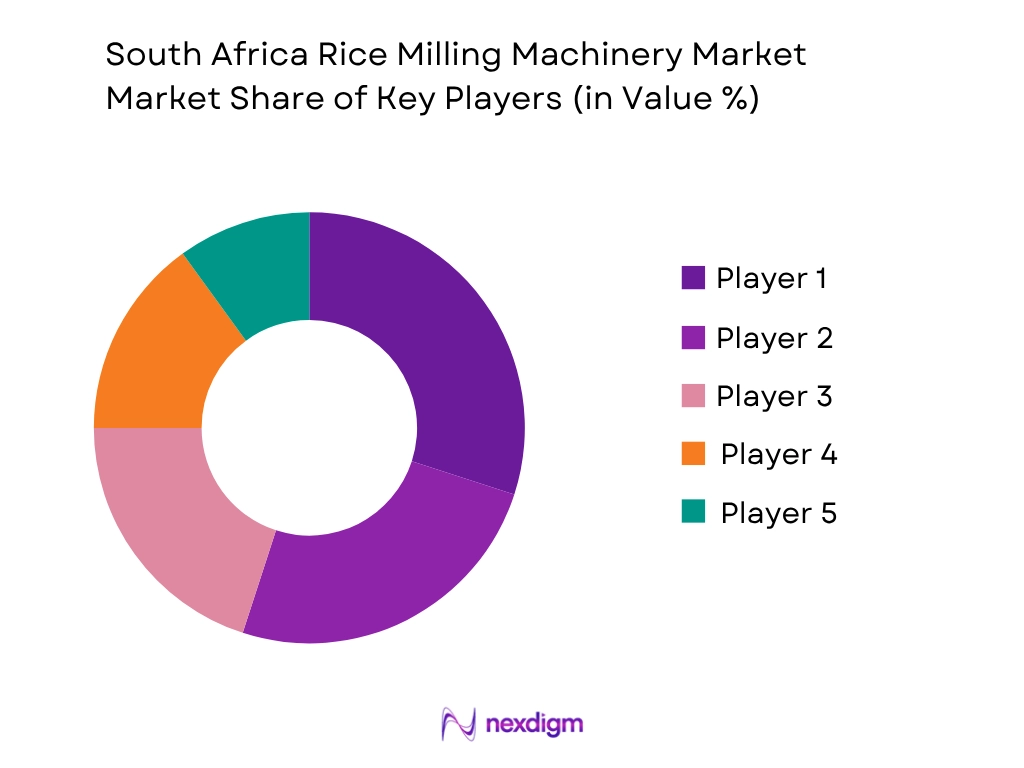
The South Africa Rice Milling Machinery Market is characterized by the presence of leading global technology suppliers, established South African food processing conglomerates, and a network of regional equipment distributors and agents serving the country’s import-driven rice processing industry. International companies such as Bühler Group and Satake Corporation maintain strong positions through advanced milling technologies and sub-Saharan Africa service networks, while major South African food manufacturers including Tiger Brands and Pioneer Foods represent significant end-user demand for processing equipment. Chinese machinery suppliers have established a growing presence by offering cost-competitive sorting and milling equipment suited to the budget constraints of smaller South African processors. Competition is primarily driven by equipment quality, automation capability, energy efficiency, after-sales service responsiveness, and total cost of ownership considerations particularly relevant in South Africa’s challenging electricity supply environment.
| Company | Establishment Year | Headquarters | Rice Milling Portfolio | Automation Capability
|
Color Sorting Technology | Service Network | Turnkey Plant Solutions | Processing Capacity Range |
| Bühler Group | 1860 | ~ | ~ | ~ | ~ | ~ | ~ | ~ |
| Satake Corporation | 1896 | ~ | ~ | ~ | ~ | ~ | ~ | ~ |
| Tiger Brands | 1921 | ~ | ~ | ~ | ~ | ~ | ~ | ~ |
| Pioneer Foods | 1997 | ~ | ~ | ~ | ~ | ~ | ~ | ~ |
| Alvan Blanch Group | 1952 | ~ | ~ | ~ | ~ | ~ | ~ | ~ |
South Africa Rice Milling Machinery Market Analysis
Growth Drivers
Sub-Saharan Africa’s Largest Rice Consumer and Expanding Commercial Processing Infrastructure
The South Africa rice milling machinery market is underpinned by the country’s status as the largest rice-consuming economy in sub-Saharan Africa and a critical node in the continent’s rice import and distribution supply chains. According to the Department of Agriculture, Land Reform and Rural Development (DALRRD) and trade data from the South African Revenue Service (SARS), South Africa imports approximately 1.0 to 1.2 million metric tons of rice annually, with consumption growing steadily as rice increasingly supplements maize as a staple food among urban and peri-urban populations. Statistics South Africa (Stats SA) data confirms a national population exceeding 60 million, with a large and growing urban consumer base in Gauteng, KwaZulu-Natal, and the Western Cape that drives sustained demand for affordable, branded, and consistently high-quality rice products. The Port of Durban, Africa’s busiest container port, serves as the primary gateway for rice imports, and the Durban-Pinetown industrial corridor hosts South Africa’s largest concentration of rice milling, repackaging, and food distribution facilities. Ongoing investment in commercial processing capacity, combined with growing demand from both mass-market and premium retail channels, creates sustained requirements for huskers, whiteners, polishers, color sorters, and automated packaging systems. The expansion of formal retail and the growth of South Africa’s food manufacturing sector, valued at over ZAR 400 billion according to the Department of Trade, Industry and Competition (DTIC), further reinforces the long-term demand environment for advanced rice processing equipment.
Rising Consumer Demand for Affordable Quality Rice and Retail Chain Compliance Requirements
Shifting consumer preferences and increasing retail formalization are significant drivers of rice milling machinery investment in South Africa. According to Statistics South Africa, the country’s consumer price index for food reflects sustained demand growth for rice across all income segments, with rice consumption expanding particularly rapidly in low-to-middle income households in Gauteng, KwaZulu-Natal, and Eastern Cape urban areas. South Africa’s formal retail sector, dominated by large chains including Shoprite Holdings, Pick n Pay, Woolworths Holdings, Spar Group, and Checkers, imposes rigorous food safety, quality consistency, and traceability requirements on rice processors and private-label packers supplying their shelves. These retail quality mandates are directly driving investment in advanced color sorting equipment, automated grading systems, and high-speed packaging lines capable of producing consistent, hygienically sealed consumer packs compliant with SABS and National Regulator for Compulsory Specifications (NRCS) standards. The growing market for value-added rice products, including pre-washed rice, fortified rice, parboiled varieties, and specialty long-grain and basmati products, further stimulates demand for precision milling and sorting technologies. The informal retail and township spaza shop network, which distributes significant rice volumes in loose and bulk formats, is also gradually transitioning toward packaged product requirements as South Africa’s Consumer Protection Act and food labeling regulations extend compliance obligations across the distribution chain, creating additional demand for retail-standard packaging equipment throughout the rice processing sector.
Market Challenges
Chronic Electricity Supply Disruptions and Load Shedding Severely Impacting Processing Operations
The most operationally acute challenge facing the South Africa rice milling machinery market is the country’s chronic electricity supply crisis, characterized by persistent load shedding implemented by state power utility Eskom that has subjected industrial consumers to scheduled power outages of up to eight to twelve hours per day at peak stages. Rice milling operations depend on continuous and stable electrical supply for husking, whitening, polishing, optical sorting, and packaging processes, and power interruptions directly disrupt production schedules, increase operational costs through generator fuel expenses, and in some cases cause equipment damage from voltage irregularities during power restoration. According to Eskom’s own operational reports and data published by the South African Department of Mineral Resources and Energy, load shedding has been a near-permanent feature of the country’s electricity supply landscape, with cumulative gigawatt-hours of unserved energy reaching record levels. The International Monetary Fund has identified South Africa’s energy crisis as one of the primary constraints on the country’s economic growth and industrial productivity. For rice processors, the requirement to install and maintain backup generator capacity and uninterruptible power supply systems adds significant capital expenditure and operational cost burdens on top of equipment investment. Furthermore, the unpredictability of power availability complicates production planning, reduces machinery utilization rates, and discourages investment in new processing capacity. Until South Africa’s electricity supply crisis is structurally resolved, energy reliability will remain the single most significant operational constraint on rice milling machinery utilization and investment across the country.
Currency Volatility and Rand Depreciation Increasing Import Costs for Machinery and Raw Materials
South Africa’s pronounced currency volatility presents a persistent and significant challenge for rice milling machinery operators who must import both raw rice materials and capital equipment in foreign currencies. The South African rand has experienced substantial depreciation against major trading currencies over the past decade, with the Reserve Bank of South Africa and financial market data confirming significant rand weakness against the US dollar, euro, and Japanese yen. Since all rice milling machinery is imported, whether from Switzerland, Japan, India, or China, procurement costs are denominated in foreign currencies and subject to exchange rate risk. Rand depreciation directly inflates the capital cost of equipment purchases, extends payback periods, and reduces the financial attractiveness of machinery investment projects. Similarly, the cost of imported rice, spare parts, and technical expertise is subject to currency risk, compressing processor margins when the rand weakens against Asian rice-exporting currencies. The South African Reserve Bank’s monetary policy decisions, global risk appetite affecting emerging market currencies, and domestic political and fiscal factors all contribute to rand volatility that creates sustained uncertainty for equipment procurement planning. Smaller rice processors with limited financial hedging capacity are particularly exposed to currency risk, as unfavorable exchange rate movements can make previously budgeted equipment investments unaffordable. This currency exposure, combined with South Africa’s relatively high import duties on certain machinery categories, represents a structural challenge that constrains the pace of processing technology modernization across the domestic rice milling industry.
Market Opportunities
Modernization of Retail-Oriented Rice Processing and Premium Consumer Product Development
South Africa’s rice processing industry presents meaningful opportunities for suppliers of advanced sorting, grading, and automated packaging equipment driven by the country’s formalizing retail sector and growing consumer demand for premium and value-added rice products. South Africa’s formal retail food market, with annual turnover exceeding ZAR 400 billion, is increasingly demanding higher quality, better-presented, and traceable food products from suppliers, creating direct commercial pressure on rice processors to invest in equipment that improves grain appearance, ensures consistency, and enables accurate product labeling. The growing mid-market and premium consumer segments in urban centers including Johannesburg, Cape Town, Durban, and Pretoria are showing increasing willingness to pay for higher-quality rice varieties including basmati, jasmine, and parboiled types, encouraging processors to invest in precision milling, sorting, and packaging capabilities. Health-oriented consumer trends are also driving demand for fortified rice, whole grain varieties, and organically certified products, stimulating interest in specialized processing equipment. Opportunities exist for machinery suppliers to provide energy-efficient and generator-compatible equipment solutions specifically designed to perform reliably in South Africa’s constrained electricity environment, representing a significant product differentiation advantage. The Agro-Processing Support Scheme administered by the DTIC, and the Industrial Development Corporation’s (IDC) food and agro-processing financing programs, provide potential funding pathways for rice processors seeking to upgrade processing equipment, offering machinery suppliers the opportunity to position their products within government-supported investment programs.
Growth of South Africa as a Regional Rice Processing and Distribution Hub for Southern Africa
South Africa’s well-developed industrial, logistics, and financial infrastructure positions it as a potential regional rice processing and distribution hub for Southern African Development Community (SADC) member states, creating additional demand for rice milling and packaging equipment beyond domestic consumption requirements. Landlocked SADC countries including Zimbabwe, Zambia, Botswana, Lesotho, Eswatini, and Malawi rely significantly on South African trade corridors and processing infrastructure for food imports and distribution. As South African food processors invest in larger-scale milling and repackaging facilities serving both domestic and regional export markets, demand for higher-capacity, more automated, and more versatile processing equipment increases correspondingly. The African Continental Free Trade Area (AfCFTA), which South Africa ratified and which entered into force in 2021, creates a framework for expanded intra-African food trade that could substantially increase the volume of rice processed in South Africa for re-export to continental markets. The DTIC’s Export Promotion and Investment South Africa (EIPSA) initiative and the SADC Trade Protocol support South African exporters seeking to develop regional food processing and distribution businesses. South Africa’s port infrastructure, including Durban, Cape Town, and Port Elizabeth, combined with road and rail connectivity into the SADC hinterland, provides logistical advantages for processors seeking to serve regional markets. As AfCFTA implementation deepens and intra-African trade in processed food products expands, South Africa’s rice processors are well placed to develop regional supply capabilities that justify investment in modern, high-capacity milling and packaging machinery.
Future Outlook
The South Africa Rice Milling Machinery Market is expected to witness moderate but steady growth over the forecast period, supported by growing domestic rice consumption, ongoing modernization of retail-oriented processing facilities, and increasing adoption of automated sorting and packaging technologies. Resolution of the country’s electricity supply crisis through expanding renewable energy capacity and grid stabilization measures would materially accelerate investment in advanced milling equipment by reducing operational risk and lowering generator dependency costs. Government support through the DTIC’s Agro-Processing Support Scheme, IDC financing programs, and the AfCFTA trade framework are expected to encourage investment in processing capacity serving both domestic and regional Southern African markets. Rising food safety compliance requirements and retail chain quality standards will continue to drive demand for color sorting, grading, and automated packaging equipment throughout the forecast period to 2035.
Major Players
- Bühler Group
- Satake Corporation
- Tiger Brands
- Pioneer Foods (PepsiCo)
- Alvan Blanch Group
- AFGRI Group
- Libstar Holdings
- Zhengzhou VOS Machinery
- Hunan Chenzhou Grain & Oil Machinery
- Wuhan Anon Tech
- CIMBRIA Group
- Alapala Machine Industry
- AKY Technology
- Milltec Machinery
- Skiold Group
Key Target Audience
- Rice Milling Plant Owners and Operators
- Agricultural Equipment Manufacturers
- Grain Processing Equipment Distributors
- Rice Re-Milling and Re-Packaging Enterprises
- Food Processing and Packaging Companies
- Investments and Venture Capitalist Firms
- Government and Regulatory Bodies (DALRRD – Department of Agriculture, Land Reform and Rural Development, DTIC – Department of Trade, Industry and Competition, SABS – South African Bureau of Standards, NRCS – National Regulator for Compulsory Specifications, IDC – Industrial Development Corporation)
- Agricultural Infrastructure and Industrial Development Companies
Research Methodology
Step 1: Identification of Key Variables
The initial phase involves constructing a comprehensive ecosystem map covering rice importers, millers, re-packaging operators, equipment manufacturers, distributors, technology providers, and regulatory authorities within the South Africa Rice Milling Machinery Market. Extensive secondary research is conducted using industry databases, trade publications, company reports, and government statistics published by DALRRD, SARS, Stats SA, DTIC, SABS, and other relevant bodies to identify the critical variables influencing market performance.
Step 2: Market Analysis and Construction
Historical industry data is compiled and analyzed to evaluate machinery installations, equipment replacement cycles, processing capacity additions, and revenue generation across South African provinces and industrial processing corridors. Market sizing is developed through both demand-side and supply-side assessments, enabling a robust understanding of industry dynamics and competitive positioning within South Africa’s import-driven, retail-oriented rice processing ecosystem.
Step 3: Hypothesis Validation and Expert Consultation
Market assumptions and preliminary findings are validated through computer-assisted telephone interviews (CATIs) and consultations with rice processing operators, food manufacturing companies, machinery distributors, and industry experts across KwaZulu-Natal, Gauteng, and the Western Cape. These interactions provide operational insights, purchasing behavior trends, technology adoption patterns, and future investment perspectives specific to South Africa’s rice milling and processing environment.
Step 4: Research Synthesis and Final Output
The final phase involves triangulating data obtained from primary interviews, secondary sources, and proprietary databases. Information regarding product segments, machinery demand, provincial consumption patterns, retail compliance requirements, and competitive developments is consolidated to produce a comprehensive and validated assessment of the South Africa Rice Milling Machinery Market.

- Executive Summary
- Research Methodology (Market Definitions and Assumptions, Abbreviations, Market Sizing Approach, Top-Down Analysis, Bottom-Up Analysis, Demand-Side Assessment, Supply-Side Assessment, Primary Industry Interviews with Rice Millers and Equipment Manufacturers, Trade Data Analysis, Data Triangulation, Forecasting Framework, Limitations and Future Conclusions)

- Definition and Scope
- Market Evolution and Industry Genesis
- Timeline of Major Industry Developments in Rice Processing Industry
- South Africa Rice Production and Processing Ecosystem
- Rice Milling Industry Value Chain Analysis

- Growth Drivers (Rising Rice Import and Processing Volumes, Expansion of Commercial Rice Milling Facilities, Growing Demand for Premium and Affordable Rice Quality, Increasing Processing Efficiency Requirements, Adoption of Automated Milling and Packaging Technologies)
- Market Challenges (No Significant Domestic Rice Production, Complete Dependence on Imported Paddy and Milled Rice, Electricity Supply Constraints and Load Shedding, Currency Volatility and Import Cost Pressures, Skilled Technician Shortages)
- Market Opportunities (Color Sorting Expansion, Smart Mill Automation, Energy-Efficient Milling Solutions, Rice Bran Value Recovery Systems, Integrated Turnkey Milling and Packaging Plants)
- Market Trends (IoT-Enabled Milling Equipment, Optical Sorting Adoption, High Yield Milling Systems, Low Broken Rice Technologies, Digital Monitoring and Traceability Platforms)
- Government Regulations (South African Food Safety Act No. 54 of 1972 and Amendments, DAFF – Department of Agriculture, Forestry and Fisheries Standards, SABS – South African Bureau of Standards Certifications, National Regulator for Compulsory Specifications (NRCS) Requirements, Energy Efficiency Standards)
- SWOT Analysis
- Porter’s Five Forces Analysis
- PESTLE Analysis
- Stakeholder Ecosystem
- Competition Ecosystem
- Rice Processing Cluster Analysis
- Rice Processing Infrastructure Assessment
- Machinery Import and Procurement Assessment

- By Market Value (2020-2025)
- By Units Installed (2020-2025)
- By Average Selling Price (2020-2025)

- By Machinery Type (In Value %)
Pre-Cleaning Machines
Paddy Cleaners
Destoners
Rubber Roll Huskers
Paddy Separators
Rice Whitener Machines
Rice Polishers
Rice Graders
Color Sorters
Length Graders
Packaging and Bagging Systems
Complete Rice Milling Plants - By Milling Capacity (In Value %)
Less than 2 Tons/Hour
2–5 Tons/Hour
5–10 Tons/Hour
10–20 Tons/Hour
Above 20 Tons/Hour - By Automation Level (In Value %)
Manual Systems
Semi-Automatic Systems
Fully Automatic Systems
Smart and Digitally Integrated Systems - By Rice Processing Stage (In Value %)
Pre-Processing Equipment
Husking Equipment
Whitening Equipment
Polishing Equipment
Sorting and Grading Equipment
Packaging Equipment - By End User (In Value %)
Small-Scale Rice Mills
Medium-Scale Rice Mills
Large Commercial Rice Mills
Rice Re-Milling and Re-Packaging Facilities
Integrated Food Processing Companies - By Province (In Value %)
KwaZulu-Natal
Gauteng
Western Cape
Mpumalanga
Eastern Cape
Other Provinces

- Market Share of Major Players (By Value, Units Sold, Installed Base, Product Category, Milling Capacity Segment)
- Cross Comparison Parameters (Rice Milling Capacity Range, Head Rice Recovery Performance, Energy Consumption per Ton Processed, Automation and Digital Integration Capability, Color Sorting Accuracy, After-Sales Service Network Strength, Spare Parts Availability and Lead Time, Turnkey Plant Installation Expertise)
- SWOT Analysis of Major Players
- Pricing Analysis by Equipment Category and Capacity
- Distributor and Dealer Network Assessment
- Detailed Profiles of Major Companies
Bühler Group
Satake Corporation
Tiger Brands
Pioneer Foods (PepsiCo)
Alvan Blanch Group
AFGRI Group
Libstar Holdings
Zhengzhou VOS Machinery
Hunan Chenzhou Grain & Oil Machinery
Wuhan Anon Tech
CIMBRIA Group
Alapala Machine Industry
AKY Technology
Milltec Machinery
Skiold Group

- Milling Capacity Utilization Assessment (Plant Throughput, Downtime, Processing Efficiency, Recovery Rates, Operational Hours)
- Investment and Procurement Analysis (Capex Allocation, Equipment Replacement Cycles, Financing Patterns, Vendor Selection Criteria)
- Rice Recovery and Yield Optimization Assessment (Head Rice Yield, Broken Rice Ratio, Bran Recovery, Milling Losses, Product Quality Consistency)
- Operational Pain Point Analysis (Maintenance Costs, Labor Dependency, Energy Consumption, Spare Parts Availability, Machine Downtime)
- Technology Adoption Assessment (Automation Penetration, Smart Controls Usage, Sensor Integration, Data Monitoring, Predictive Maintenance Adoption)

- By Market Value (2026-2035)
- By Units Installed (2026-2035)
- By Average Selling Price (2026-2035)


 Request a Sample
 Ask for Customization
 Get a Quote
 Enquire Now