
 Download PDF
Market Overview
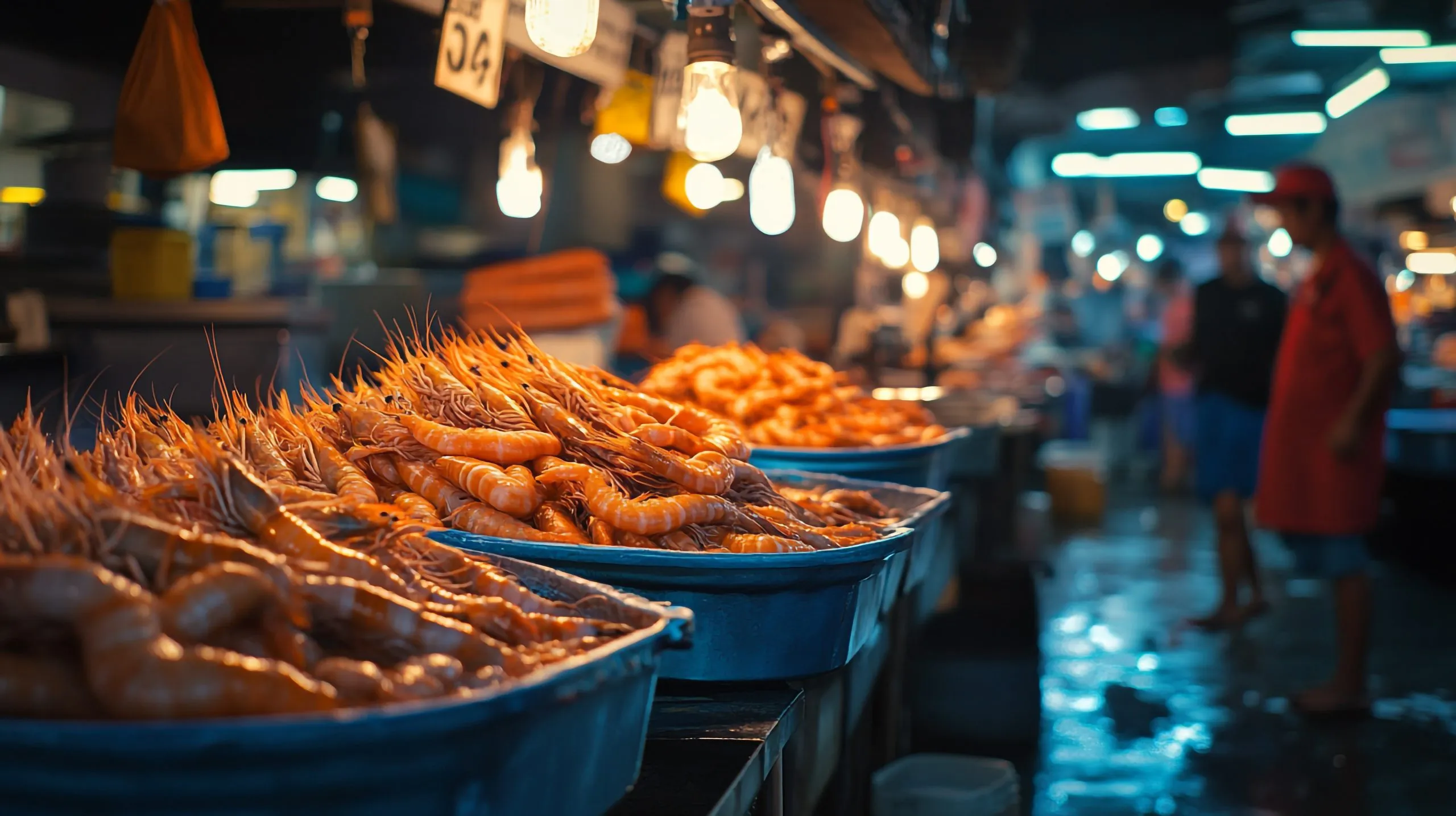
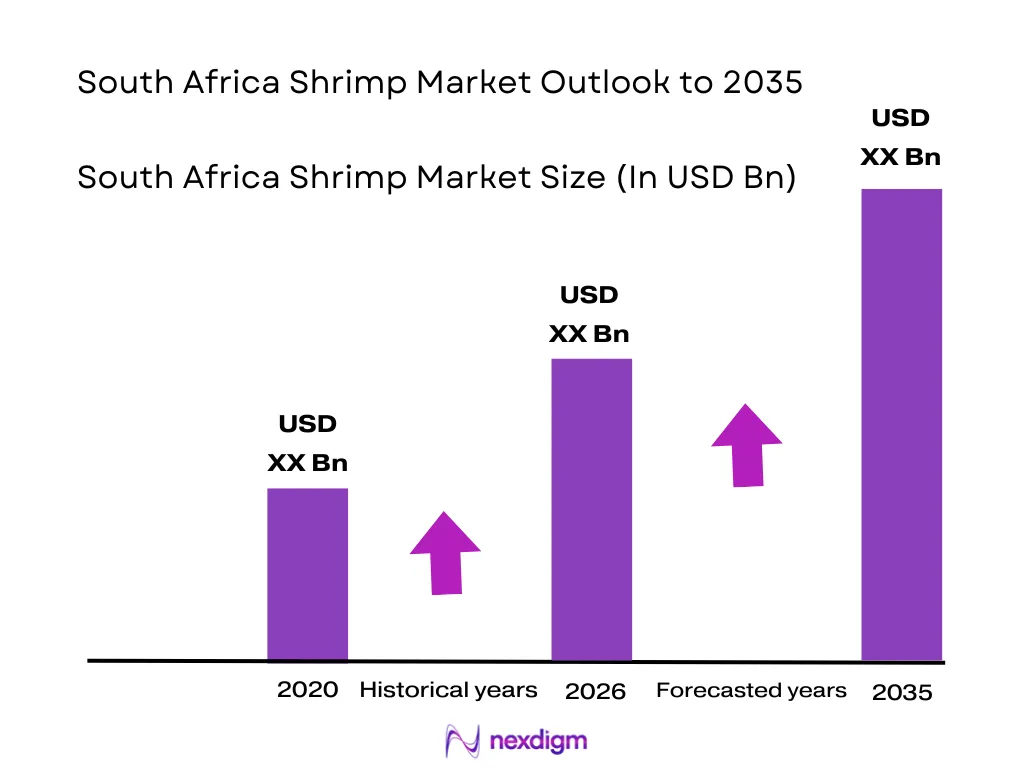
The South Africa Shrimp Market is valued at approximately USD ~ million, supported by increasing shrimp imports, expanding frozen seafood consumption, and rising demand from retail and foodservice channels. South Africa imported more than 6 million kilograms of frozen shrimps and prawns, reflecting strong reliance on international seafood supply networks due to limited domestic shrimp aquaculture capacity. Growth in the market is driven by increasing consumer preference for convenient frozen seafood products, improved refrigerated logistics infrastructure, expanding supermarket seafood availability, and higher shrimp utilization across restaurants, hotels, and catering establishments.
Johannesburg, Cape Town, Durban, Pretoria, and Gqeberha dominate the South Africa Shrimp Market due to their strong urban consumer base, higher concentration of premium foodservice outlets, developed seafood distribution networks, and availability of cold-chain infrastructure. On the supply side, India, Ecuador, Vietnam, Argentina, and other major shrimp-producing countries remain key sources because of their large aquaculture industries, advanced seafood processing facilities, year-round shrimp production capabilities, and established export channels supporting consistent availability across South Africa.
Market Segmentation
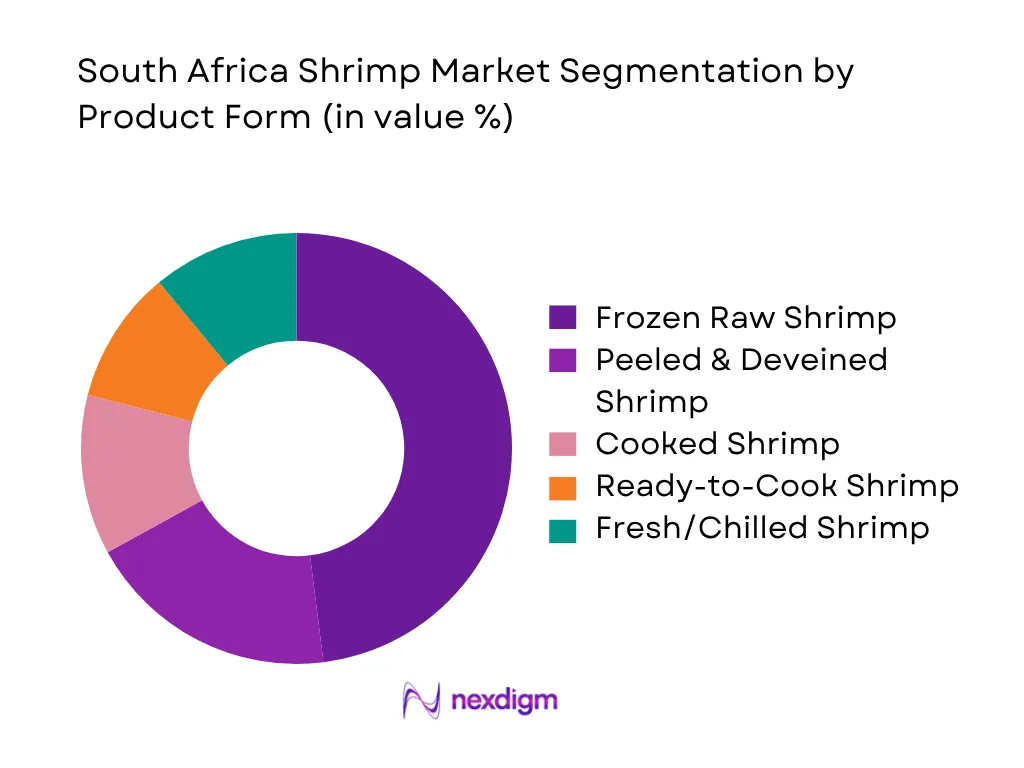
By Product Form
The South Africa Shrimp Market is segmented by product form into frozen raw shrimp, peeled & deveined shrimp, cooked shrimp, ready-to-cook shrimp, fresh/chilled shrimp, and breaded & battered shrimp. Frozen raw shrimp dominates the South Africa Shrimp Market under product form segmentation due to the country’s strong dependence on imported seafood products. Frozen formats are preferred because they maintain product quality during long-distance international transportation and provide longer storage life throughout the supply chain. Retailers, wholesalers, and foodservice operators rely heavily on frozen shrimp because it enables consistent availability, inventory management, and lower wastage. The category also serves multiple consumption applications, including restaurants, hotels, catering businesses, and household cooking. Increasing consumer preference for convenient seafood products and expanding frozen food sections across organized retail channels further support the dominance of frozen shrimp products.
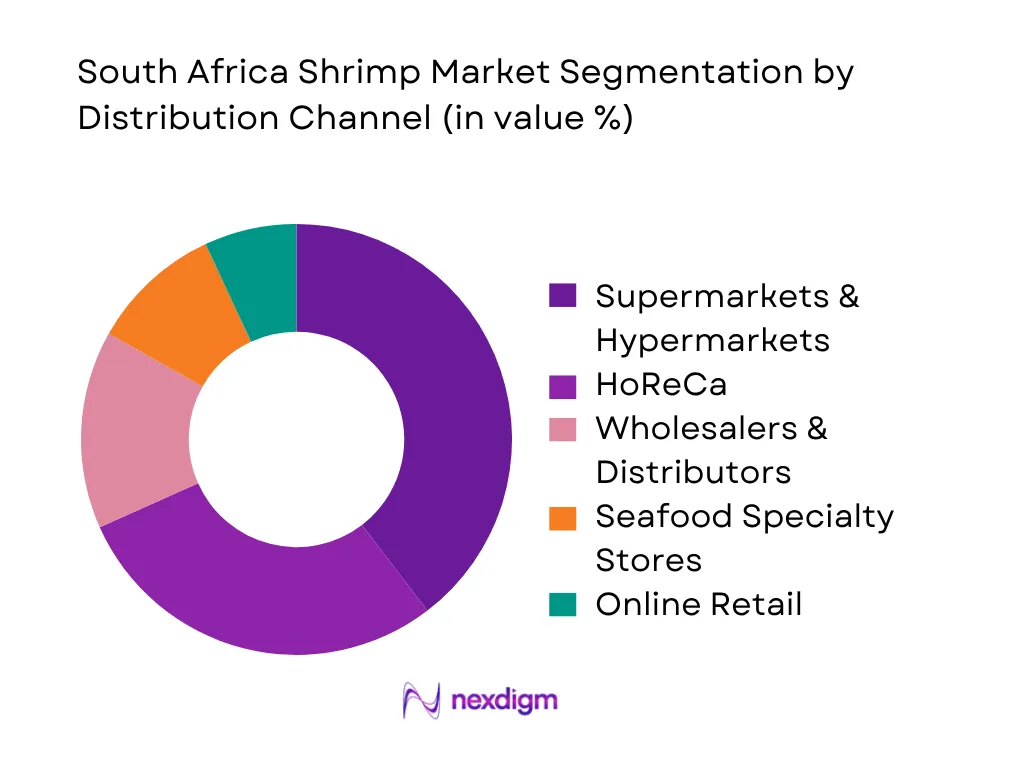
By Distribution Channel
The South Africa Shrimp Market is segmented by distribution channel into supermarkets & hypermarkets, HoReCa, wholesalers & distributors, seafood specialty stores, online retail, and cash & carry stores. Supermarkets and hypermarkets dominate the South Africa Shrimp Market under distribution channel segmentation because of their wide consumer reach, advanced frozen storage capabilities, and extensive seafood product portfolios. These retail formats provide consumers with access to multiple imported shrimp varieties, packaging options, and convenient purchasing experiences. The expansion of organized grocery retail in metropolitan regions has strengthened the availability of frozen shrimp products among household consumers. Retail outlets also benefit from established cold-chain systems that preserve seafood quality from suppliers to consumers. Although foodservice channels continue to generate strong demand, supermarkets remain the preferred purchasing channel due to accessibility, product variety, and regular household consumption patterns.
Competitive Landscape
The South Africa Shrimp Market is moderately consolidated, with market participants competing through seafood sourcing capabilities, import relationships, cold-chain infrastructure, processing strength, and distribution networks. Companies operating in the market focus on maintaining reliable international procurement channels, expanding frozen seafood portfolios, improving traceability practices, and strengthening relationships with retail and hospitality buyers. Competition is influenced by product availability, quality consistency, storage capacity, logistics efficiency, and the ability to serve both consumer and commercial seafood demand.
| Company | Establishment Year | Headquarters | Product Portfolio Breadth | Import Network Strength | Cold Chain Capability | Processing Capability | Foodservice Reach | Sustainability Focus |
| Sea Harvest Group Ltd. | 1964 | Cape Town, South Africa | ~ | ~ | ~ | ~ | ~ | ~ |
| Oceana Group Ltd. | 1918 | Cape Town, South Africa | ~ | ~ | ~ | ~ | ~ | ~ |
| Irvin & Johnson | 1910 | Cape Town, South Africa | ~ | ~ | ~ | ~ | ~ | ~ |
| Bidfood South Africa | 1989 | Johannesburg, South Africa | ~ | ~ | ~ | ~ | ~ | ~ |
| Merlog Foods | 1987 | Johannesburg, South Africa | ~ | ~ | ~ | ~ | ~ | ~ |
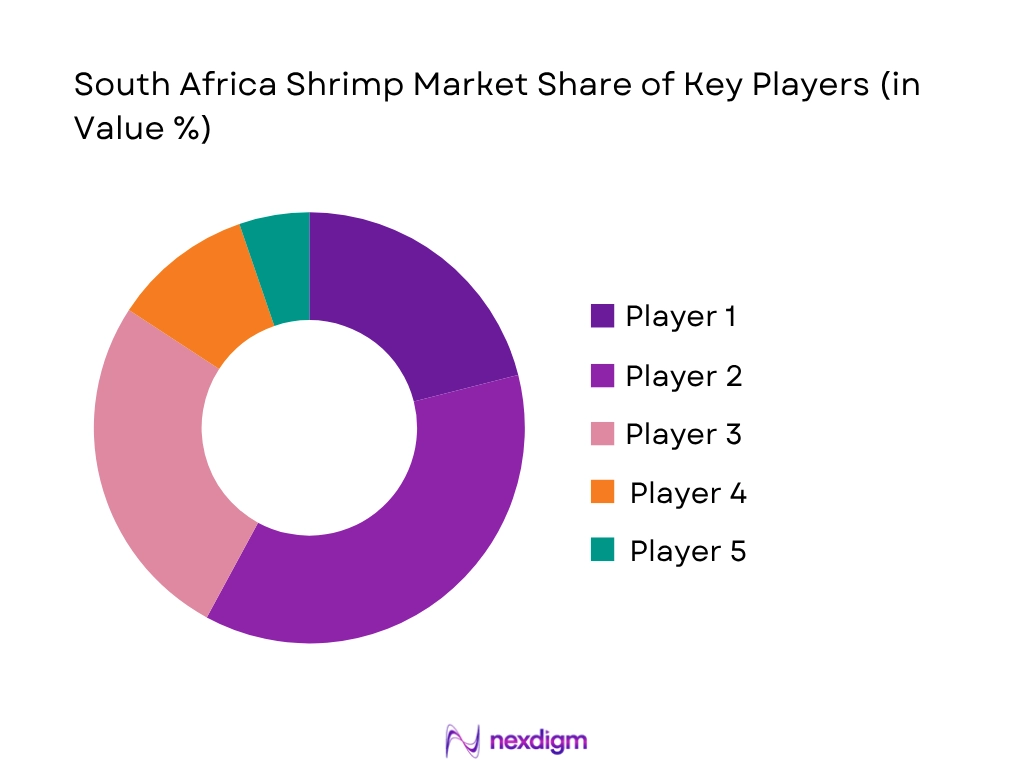
South Africa Shrimp Market Analysis
Growth Drivers
Rising Seafood Imports and International Shrimp Availability
South Africa’s shrimp market growth is supported by strong international sourcing networks due to limited domestic shrimp farming capacity. The country imported more than 6 million kilograms of frozen shrimps and prawns, demonstrating significant dependence on overseas seafood suppliers. Large-scale shrimp-producing countries support South African demand through advanced aquaculture systems, processing facilities, and export infrastructure. South Africa’s total merchandise imports crossed USD 120 billion, reflecting established global trade connectivity and logistics capability. Reliable import channels allow supermarkets, wholesalers, and hospitality operators to maintain consistent shrimp availability throughout the year while offering multiple species, sizes, and product formats.
Expansion of Tourism and Foodservice Demand
Growth in South Africa’s tourism and hospitality industry continues to increase shrimp consumption across restaurants, hotels, resorts, and catering businesses. South Africa received approximately 8.9 million international tourist arrivals, creating higher demand for premium food offerings within hospitality establishments. Shrimp is widely used in fine dining, seafood restaurants, hotel buffets, and event catering because of its premium positioning. Major tourism destinations such as coastal regions and metropolitan cities generate consistent seafood procurement requirements. Expansion of hospitality infrastructure and recovery of travel activities continue to strengthen commercial demand for frozen and processed shrimp products.
Market Challenges
Heavy Import Dependency and Supply Chain Vulnerability
South Africa’s shrimp market faces challenges due to high reliance on imported products and limited domestic production alternatives. More than 6 million kilograms of frozen shrimp imports enter the country through international supply chains, making the market sensitive to external disruptions. Changes in aquaculture output among exporting nations, shipping delays, port congestion, and international trade restrictions can influence product availability. Dependence on long-distance suppliers also increases the importance of maintaining strong refrigerated logistics systems. Limited local production capacity restricts supply flexibility and increases reliance on global shrimp-producing regions.
Limited Domestic Shrimp Aquaculture Production Capacity
Domestic shrimp aquaculture development remains limited compared with leading global producers. South Africa’s aquaculture industry primarily focuses on species such as abalone, trout, mussels, oysters, and finfish rather than commercial shrimp farming. Expansion of shrimp farming faces challenges related to infrastructure investment, water availability, environmental approvals, and operational requirements. Limited local shrimp cultivation reduces opportunities for import replacement and restricts the development of an integrated domestic shrimp value chain. As consumer demand increases, dependence on imported products continues to remain a key structural challenge for the industry.
Market Opportunities
Expansion of Modern Retail Seafood Distribution Networks
The expansion of organized retail infrastructure presents significant opportunities for the South Africa Shrimp Market. The country’s food retail industry is supported by thousands of grocery outlets, developed supply chains, and increasing demand for frozen food categories. Retailers continue investing in refrigerated sections and premium seafood offerings, improving accessibility of shrimp products among urban consumers. Modern retail formats allow better product visibility, packaging innovation, and quality assurance. Increasing adoption of frozen seafood among households creates opportunities for suppliers to expand product portfolios and reach consumers beyond traditional seafood markets.
Growth of South Africa as a Regional Seafood Trade Hub
South Africa has opportunities to strengthen its position as a seafood distribution hub for neighboring African markets due to established port infrastructure, logistics networks, and cold-chain facilities. The country exports shrimp products to regional markets including Namibia, Botswana, Zambia, and Zimbabwe through established trade routes. Developed transportation systems and seafood handling capabilities enable distributors to support cross-border demand. Expansion of regional trade networks creates opportunities for increased seafood processing, warehousing, and re-export activities, strengthening South Africa’s role in the Southern African seafood supply chain.
Future Outlook
The South Africa Shrimp Market is expected to witness steady growth driven by increasing seafood consumption, expansion of organized retail channels, and rising demand from foodservice establishments. Improvements in refrigerated logistics infrastructure are expected to enhance shrimp availability across major cities and emerging regions. Consumer preference for convenient seafood options will encourage growth in frozen, processed, and ready-to-cook shrimp products. Increasing focus on traceability, sustainable sourcing, and quality standards will influence procurement strategies. The country’s strong import networks and regional trade position are expected to support long-term market development.
Major Players
- Sea Harvest Group Ltd.
- Irvin & Johnson
- Oceana Group Ltd.
- Viking Fishing Group
- Bidfood South Africa
- Seafood Connection South Africa
- Fish for Africa
- Etlin International
- Merlog Foods
- Ocean Jewels South Africa
- Lucky Star Foods
- Blue Oceans Seafood
- Rhodes Food Group Seafood Division
- Premier Fishing & Brands Ltd.
- West Coast Seafood Group
Key Target Audience
- Shrimp Importers and Seafood Trading Companies
- Seafood Processing and Packaging Companies
- Frozen Seafood Manufacturers
- Hotels, Restaurants and Catering Operators
- Retail Supermarket Chains
- Cold Chain Logistics Providers
- Investments and Venture Capitalist Firms
- Government and Regulatory Bodies
Research Methodology
Step 1: Identification of Key Variables
The initial stage involved mapping the South Africa Shrimp Market ecosystem by identifying key variables such as import dependency, product formats, distribution networks, seafood consumption patterns, and supplier relationships. Extensive secondary research was conducted using trade statistics, government publications, industry databases, and company information to understand market structure and value-chain participants.
Step 2: Market Analysis and Construction
Historical market assessment was performed through analysis of shrimp trade flows, consumption indicators, retail availability, and foodservice procurement trends. The market structure was developed using bottom-up calculations based on distribution channels, product categories, import volumes, and industry supply patterns across South Africa.
Step 3: Hypothesis Validation and Expert Consultation
Market assumptions were validated through discussions with seafood importers, distributors, processors, wholesalers, and retail stakeholders. These consultations provided insights regarding procurement behavior, supply challenges, product preferences, and operational dynamics affecting the South Africa Shrimp Market.
Step 4: Research Synthesis and Final Output
The final stage combined quantitative and qualitative findings to develop a complete market assessment. Data validation was conducted through triangulation of trade information, industry benchmarks, and stakeholder insights to ensure accurate analysis of segmentation, competition, and future market opportunities.

- Executive Summary
- Research Methodology (Market Definitions and Assumptions, Abbreviations, Research Framework, Bottom-Up Market Estimation, Top-Down Validation, Consumption Mapping, Seafood Trade Flow Assessment, Import Dependency Analysis, Primary Interviews with Importers and Distributors, Forecasting Model, Limitations and Assumptions)

- Definition and Scope
- Evolution of Shrimp Consumption in South Africa
- Industry Ecosystem and Stakeholder Mapping
- Supply Chain and Value Chain Analysis
- Import Dependency Assessment

- Growth Drivers
Rising Seafood Imports and International Shrimp Availability
Expansion of Tourism and Foodservice Demand
Growth in Modern Retail and Frozen Seafood Infrastructure
Increasing Consumer Preference for Premium Seafood Products
Expansion of Cold Storage and Refrigerated Logistics Networks - Market Challenges
Heavy Import Dependency and Supply Chain Vulnerability
Limited Domestic Shrimp Aquaculture Production Capacity
High Cold Chain and Distribution Requirements
Regulatory Compliance and Food Safety Requirements - Market Opportunities
Expansion of Modern Retail Seafood Distribution Networks
Growth of South Africa as a Regional Seafood Trade Hub
Increasing Demand for Value-Added Shrimp Products
Expansion of Sustainable and Traceable Seafood Supply Chains - Market Trends
Growth of Frozen Shrimp Consumption
Premiumization of Imported Shrimp Products
Increasing Adoption of Ready-to-Cook Seafood Products
Expansion of E-Commerce Seafood Retailing
Rising Demand for Traceable and Certified Seafood Products - Government Regulations
Seafood Import Regulations
Food Safety and Inspection Requirements
Aquaculture Licensing Requirements
Product Traceability Standards
Seafood Labeling Compliance
Environmental and Sustainability Requirements - Porter’s Five Forces Analysis
- PESTLE Analysis
- Pricing Analysis
- Competition Ecosystem

- By Value, 2020-2025
- By Volume, 2020-2025
- By Average Import Price, 2020-2025

- By Product Form (in Value %)
Frozen Raw Shrimp
Fresh/Chilled Shrimp
Cooked Shrimp
Peeled & Deveined Shrimp
Breaded & Battered Shrimp
Ready-to-Cook Shrimp Products - By Distribution Channel (in Value %)
Supermarkets & Hypermarkets
HoReCa
Wholesalers & Distributors
Seafood Specialty Stores
Online Retail
Cash & Carry Stores - By Source Type (in Value %)
Imported Shrimp
Farmed Shrimp
Wild-Caught Shrimp - By End User (in Value %)
Household Consumers
Restaurants
Hotels and Resorts
Catering Companies
Food Processing Companies
Institutional Buyers - By Shrimp Size Category (in Value %)
U/15
16-20 Count
21-30 Count
31-40 Count
41-50 Count
51-60 Count
Above 60 Count - By Import Origin (in Value %)
India
Ecuador
Vietnam
Argentina
Saudi Arabia
Thailand
Other Countries - By Packaging Type (in Value %)
Bulk Packaging
Retail Pouches
Vacuum Packaging
Modified Atmosphere Packaging
Carton Packaging - By Region (in Value %)
Gauteng
Western Cape
KwaZulu-Natal
Eastern Cape
Mpumalanga

- Market Share Analysis of Major Players on the Basis of Revenue and Volume
- Cross Comparison Parameters(Company Overview, Shrimp Product Portfolio Breadth, Frozen Seafood SKU Count, Import Network Strength, Distribution Reach, Cold Storage Capacity, Foodservice Presence, Retail Shelf Presence, Import Volume Handling Capacity, Processing Facilities, Regional Distribution Network, Sustainability Certifications, Product Traceability Capability, Pricing Positioning, Strategic Partnerships, EBITDA Margins)
- Competitive Benchmarking Matrix
- SWOT Analysis of Major Players
- Pricing Analysis by Product Form and Shrimp Size Category
- Detailed Profiles of Major Companies
Sea Harvest Group Ltd.
Irvin & Johnson
Oceana Group Ltd.
Viking Fishing Group
Bidfood South Africa
Seafood Connection South Africa
Fish for Africa
Etlin International
Merlog Foods
Ocean Jewels South Africa
Lucky Star Foods
Blue Oceans Seafood
Rhodes Food Group Seafood Division
Premier Fishing & Brands Ltd.
West Coast Seafood Group

- Consumption Frequency Analysis
- Consumer Spending and Basket Analysis
- Retail Purchase Behavior
- Foodservice Procurement Analysis
- Product Preference Mapping

- By Value, 2026-2035
- By Volume, 2026-2035
- By Average Import Price, 2026-2035
- By Per Capita Shrimp Consumption, 2026-2035


 Request a Sample
 Ask for Customization
 Get a Quote
 Enquire Now