

 Download PDF
 Download PDF
Market Overview
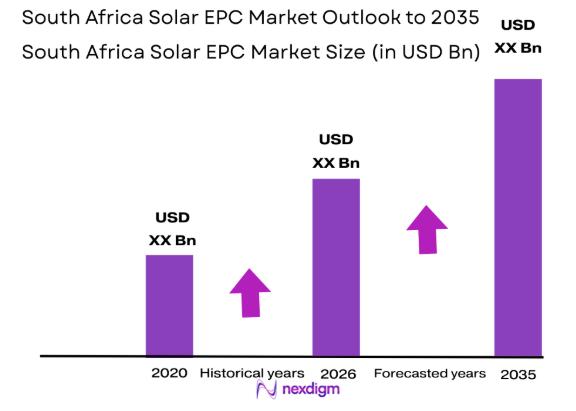
The South Africa Solar EPC market is estimated to reach a market value of USD ~ billion based on a recent historical assessment. Growth in this market is primarily driven by increased government efforts in renewable energy integration, alongside growing infrastructure demands and an increasing desire for energy security. The country’s solar energy capacity is expanding rapidly, bolstered by government policies, local investments, and an accelerating demand for environmentally sustainable power solutions. Furthermore, technological advancements and cost reductions in solar energy generation systems have significantly contributed to market growth.
The dominant regions within South Africa for solar EPC market activity are urban centers such as Johannesburg, Cape Town, and Durban. These regions benefit from high levels of solar irradiance, making them ideal for large-scale solar projects. Moreover, significant government initiatives and local power grid improvements are being implemented to enhance the adoption of solar energy systems in these areas. The private sector, including industrial and commercial players, has also been a driving force in making solar power a more viable option, especially in these cities, where power demand is steadily rising.
Market Segmentation
By Product Type
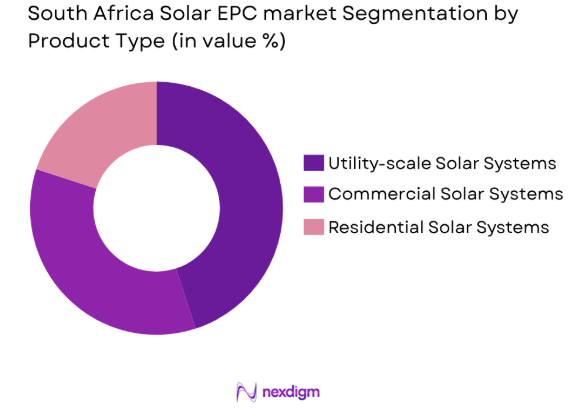
The South Africa Solar EPC market is segmented by product type into residential solar systems, commercial solar systems, and utility-scale solar systems. Recently, utility-scale solar systems have dominated the market share due to factors such as government incentives, large-scale infrastructure investments, and increasing demand from industrial sectors. The large investments from both local and international players, alongside favorable regulations, have made utility-scale projects more attractive. Additionally, economies of scale in these systems have made them increasingly competitive in terms of cost-per-watt produced.
By Platform Type
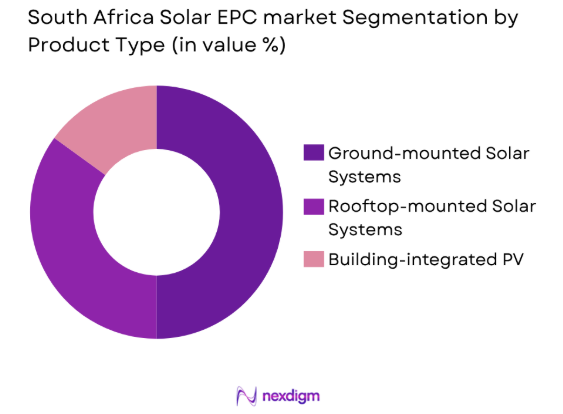
The South Africa Solar EPC market is segmented by platform type into ground-mounted solar systems, rooftop-mounted systems, and building-integrated photovoltaics (BIPV). Ground-mounted solar systems have a dominant market share due to their capacity to harness large amounts of energy in open land spaces. Additionally, ground-mounted systems offer scalability, making them more suitable for large-scale utility and commercial applications. The vast availability of land in South Africa has made ground-mounted systems particularly attractive for utility companies and large enterprises.
Competitive Landscape
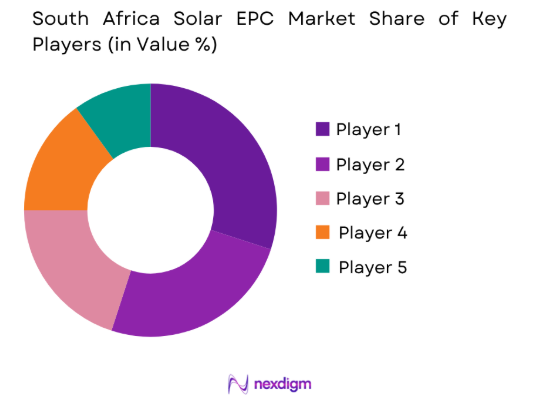
The South Africa Solar EPC market is highly competitive, with both local and international players contributing to market dynamics. The sector has witnessed consolidation due to the growing interest of larger, more experienced companies looking to capitalize on the expanding market. Key players in the sector influence regulatory frameworks and invest in large-scale solar projects, thus playing a significant role in shaping the market’s future. The market is also characterized by rapid technological advancements, fostering greater competition among firms focused on improving the efficiency and cost-effectiveness of solar energy solutions.
| Company Name | Establishment Year | Headquarters | Technology Focus | Market Reach | Key Products | Revenue (USD) | Additional Parameter |
| Juwi Renewable Energy | 1996 | Cape Town | ~ | ~ | ~ | ~ | ~ |
| Scatec Solar | 2007 | Oslo | ~ | ~ | ~ | ~ | ~ |
| First Solar | 1999 | Arizona, USA | ~ | ~ | ~ | ~ | ~ |
| Enel Green Power | 2008 | Rome, Italy | ~ | ~ | ~ | ~ | ~ |
| Trina Solar | 1997 | China | ~ | ~ | ~ | ~ | ~ |
South Africa Solar EPC Market Analysis
Growth Drivers
Government Support for Renewable Energy
The South African government’s policy support for renewable energy plays a pivotal role in driving the solar EPC market. Initiatives like the Renewable Energy Independent Power Producer Procurement Programme (REIPPPP) have spurred significant local and international investment. These policies are crucial as the country works toward its renewable energy targets and reducing reliance on fossil fuels. Favorable regulations, tax incentives, and financial breaks have encouraged a broader range of developers to enter the market, making solar EPC projects increasingly appealing. Moreover, the government’s focus on addressing power shortages and enhancing infrastructure has bolstered investments in solar power solutions, further driving growth within the market.
Technological Advancements and Cost Reductions
Technological improvements in solar panels and energy storage systems have driven significant reductions in cost, making solar power an increasingly competitive and viable alternative to conventional power generation. Companies are focusing on solar technologies that offer higher efficiency rates, such as bifacial panels and advanced inverters, which contribute to better energy conversion and lower overall costs. These advancements allow solar systems to produce more power at a lower price, improving their adoption across a wide range of industries. The integration of energy storage systems with solar installations further enhances their appeal, particularly in regions where energy security is a critical concern.
Market Challenges
Grid Infrastructure Limitations
Despite advancements in solar power generation, South Africa faces significant challenges with its grid infrastructure. The national power grid struggles to accommodate intermittent renewable energy sources like solar, limiting the integration of large-scale solar systems. Transmission losses, insufficient storage facilities, and outdated grid management systems exacerbate this issue, preventing solar energy from becoming a more dominant power source. Addressing these challenges will require substantial investments in grid modernization, including the development of smart grid technologies and energy storage solutions. These improvements are essential to ensure solar energy can be efficiently distributed, stored, and utilized across the country, enhancing its role in the national energy mix.
High Initial Capital Investment
Although the cost of solar systems has decreased over time, the high initial capital investment remains a major barrier for many businesses and consumers. Large-scale utility and commercial solar projects require significant upfront costs for land acquisition, equipment, and installation, which can be financially burdensome for smaller entities. While financing options like power purchase agreements (PPAs) and solar leasing programs are becoming more popular, they are not always sufficient to overcome the high capital outlay required. Many potential market participants are still discouraged by these costs, limiting the broader adoption of solar energy systems despite their long-term economic benefits and reduced operational costs.
Opportunities
Off-Grid Solutions for Rural Areas
South Africa’s rural population remains largely underserved by the national power grid, presenting a significant market opportunity for off-grid solar solutions. Off-grid solar power, including solar home systems and mini-grids, provides an affordable and sustainable means of electricity to remote areas that lack access to centralized energy infrastructure. Government and NGO programs aimed at expanding electricity access in rural areas are expected to increase the demand for off-grid solar solutions, creating a promising growth opportunity for companies specializing in decentralized solar power systems. The ability to offer affordable solar energy in rural areas not only supports the country’s development goals but also presents a lucrative market segment for solar EPC providers.
Energy Storage Integration
The integration of solar energy systems with energy storage solutions, such as batteries, presents a growing opportunity in South Africa’s solar EPC market. Energy storage enables solar power to be stored and used during low sunlight periods, addressing the intermittency issue of solar energy. With decreasing battery costs and a rising demand for reliable energy solutions, this integration is gaining traction. For solar EPC companies, offering integrated solutions that combine both generation and storage could enhance the appeal and efficiency of solar energy. This development opens up new avenues for market growth, as it helps create a more stable and consistent energy supply, particularly in areas with variable sunlight availability.
Future Outlook
The South Africa Solar EPC market is expected to grow significantly in the next five years, driven by government incentives, technological advancements, and an increased focus on renewable energy. The integration of energy storage solutions with solar systems is expected to become a key trend, enhancing the reliability of solar energy. Additionally, the expansion of off-grid solutions will drive adoption in rural and underserved areas. Policy support and investment in infrastructure improvements will continue to play a pivotal role in the market’s growth.
Major Players
- JuwiRenewable Energy
- Scatec Solar
- First Solar
- Enel Green Power
- Trina Solar
- SunPower
- Canadian Solar
- Siemens Gamesa Renewable Energy
- SMA Solar Technology
- Yingli Green Energy
- REC Solar
- Risen Energy
- JA Solar
- LONGiSolar
- Hanergy
Key Target Audience
- Investments and venture capitalist firms
- Government and regulatory bodies
- Energy service providers
- Commercial enterprises
- Industrial manufacturing plants
- Energy infrastructure developers
- Non-governmental organizations (NGOs)
- Financial institutions
Research Methodology
Step 1: Identification of Key Variables
This step involves identifying and defining key variables such as market size, growth trends, and regulatory factors impacting the market.
Step 2: Market Analysis and Construction
This involves analyzing the market structure, segmentation, and key drivers and barriers to market growth.
Step 3: Hypothesis Validation and Expert Consultation
Expert consultation and industry feedback are gathered to validate assumptions and hypotheses made during the analysis phase.
Step 4: Research Synthesis and Final Output
Data is synthesized into actionable insights, and the final report is prepared based on comprehensive research and analysis.

- Executive Summary
- Research Methodology (Definitions, Scope, Industry Assumptions, Market Sizing Approach, Primary & Secondary Research Framework, Data Collection & Verification Protocol, Analytic Models & Forecast Methodology, Limitations & Research Validity Checks)

- Market Definition and Scope
- Value Chain & Stakeholder Ecosystem
- Regulatory / Certification Landscape
- Sector Dynamics Affecting Demand
- Strategic Initiatives & Infrastructure Growth

- Growth Drivers
Increased Government Investment in Renewable Energy
Technological Advancements in Solar Panel Efficiency
Growing Demand for Clean and Affordable Energy
Supportive Policy & Regulatory Environment
Falling Cost of Solar Energy Systems - Market Challenges
High Initial Investment for Solar Systems
Grid Integration and Stability Issues
Lack of Skilled Workforce in the Solar Industry
Regulatory and Policy Uncertainty
Intermittency of Solar Energy Production - Market Opportunities
Expansion of Off-grid Solar Systems in Rural Areas
Advancements in Energy Storage Solutions
Partnerships with International Solar EPC Firms - Trends
Rise in Adoption of Solar as a Service
Growth in Community Solar Projects
Integration of Artificial Intelligence for Solar Performance Monitoring - Government Regulations
- SWOT Analysis of Key Competitors
- Porter’s Five Forces

- By Market Value, 2020-2025
- By Installed Units, 2020-2025
- By Average System Price, 2020-2025
- By System Complexity Tier, 2020-2025

- By System Type (In Value%)
Utility-scale Solar Power Systems
Commercial & Industrial Solar Systems
Residential Solar Power Systems
Solar Pumping Systems
Community Solar Projects - By Platform Type (In Value%)
Ground-mounted Solar Systems
Roof-mounted Solar Systems
Floating Solar Systems
Solar Carports
Building-integrated Photovoltaics (BIPV) - By Fitment Type (In Value%)
On-grid Solar Systems
Off-grid Solar Systems
Hybrid Solar Systems
Roof-top Solar Systems
Community-based Solar Systems - By End User Segment (In Value%)
Residential Consumers
Commercial Enterprises
Industrial Manufacturing Plants
Government & Municipalities
Non-governmental Organizations (NGOs) - By Procurement Channel (In Value%)
Direct Procurement
Tenders & Bids
Third-party Vendors
Online Procurement Platforms
Private Distributors

- Market Share Analysis
- Cross Comparison Parameters (System Type, Platform Type, Procurement Channel, End User Segment, Fitment Type, Installation Location, Financing Models, Regulatory Compliance, Technology Integration, Project Scale)
- SWOT Analysis of Key Competitors
- Pricing & Procurement Analysis
- Key Players
Juwi Renewable Energy
Sungrow Power Supply
First Solar
Scatec Solar
Enel Green Power
Abengoa Solar
Trina Solar
Canadian Solar
Tesla Energy
SMA Solar Technology
Vestas Wind Systems
SolarWorld AG
Risen Energy
Hanergy
Mitsubishi Electric

- Residential Consumers’ Growing Interest in Solar Power
- Commercial Enterprises Seeking Cost-effective Energy Solutions
- Industrial Manufacturing Plants Looking for Energy Independence
- Government Incentives Driving Municipal Solar Adoption

- Forecast Market Value, 2026-2035
- Forecast Installed Units, 2026-2035
- Price Forecast by System Tier, 2026-2035
- Future Demand by Platform, 2026-2035


 Request a Sample
 Ask for Customization
 Get a Quote
 Enquire Now