
 Download PDF
Market Overview
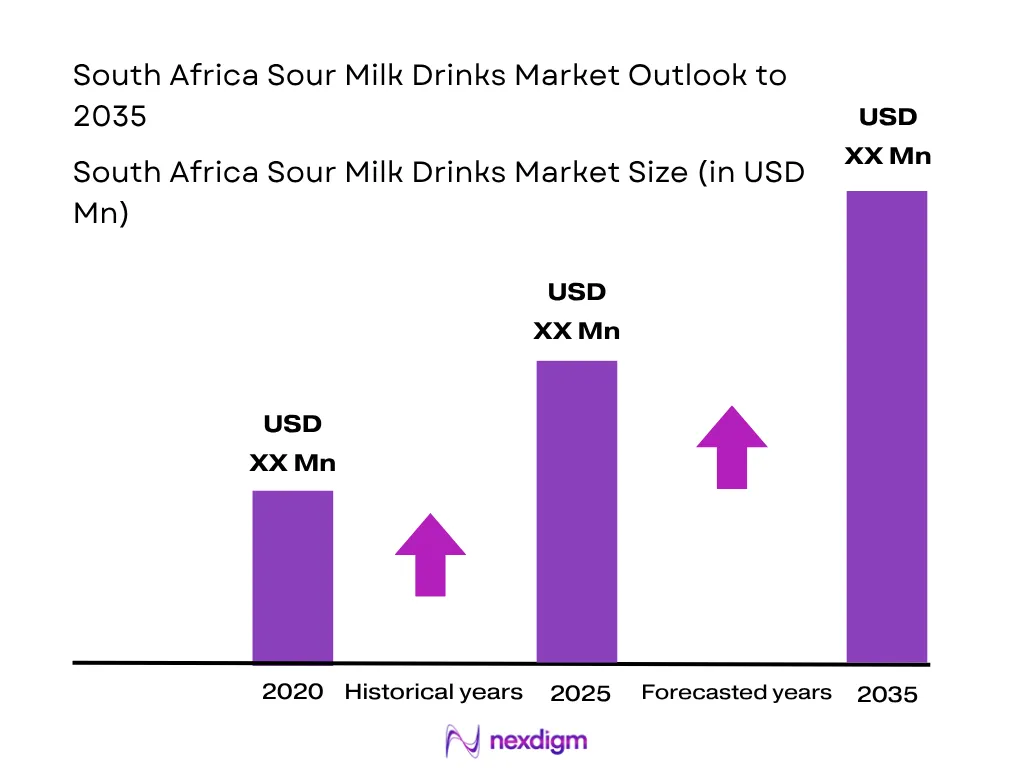
The South Africa Sour Milk Drinks Market is valued at USD ~ million on the latest historical base, while Nexdigm lists the market at USD ~ million on its following base and projects USD ~ million with a 5.06% CAGR forecast benchmark. Demand is supported by amasi/maas, drinking yoghurt and cultured milk, with Milk SA reporting 3,339,272 tonnes of unprocessed milk to market and FAS/Pretoria noting a 1% rise in unprocessed milk consumption.
Johannesburg–Pretoria, Cape Town, Durban, Gqeberha/Humansdorp and Pietermaritzburg dominate the South Africa Sour Milk Drinks Market due to modern grocery concentration, chilled distribution infrastructure, township demand and proximity to milk basins. Milk SA counted 301 Western Cape producers, 155 Eastern Cape producers and 186 KwaZulu-Natal producers in the prior base, shifting to 299, 164 and 182 producers respectively in the latest base; these regions anchor supply, while Gauteng anchors consumption.
Market Segmentation
By Product Type
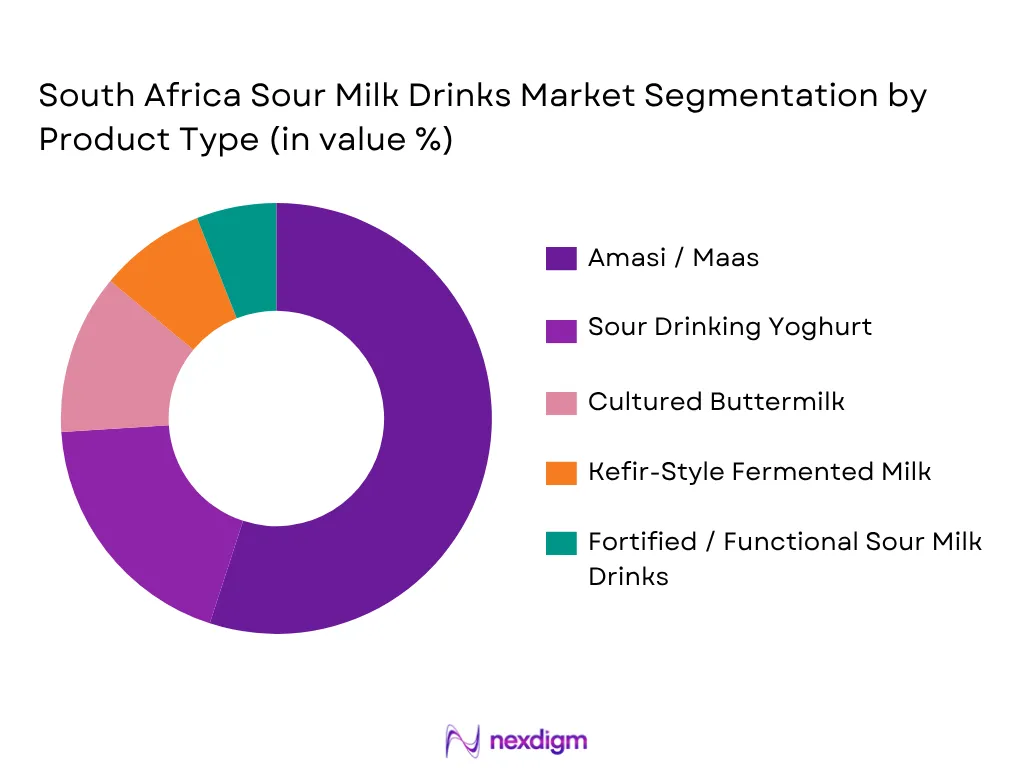
The South Africa Sour Milk Drinks Market is segmented by product type into amasi/maas, drinking yoghurt, cultured buttermilk, kefir-style fermented milk, fortified sour milk drinks and other regional fermented dairy drinks. Amasi/maas dominates the market because it is not positioned only as a beverage but also as a staple meal companion, especially with pap, phuthu and maize-based meals. Its dominance is reinforced by cultural familiarity, affordability, household pack sizes and the South African food-based dietary guideline that specifically encourages consumers to have “milk, maas or yoghurt every day.” Packaged maas also benefits from formal dairy processing and chilled retail availability. While kefir and functional fermented milk are gaining visibility in premium urban channels, their pricing and lower cultural penetration keep them behind amasi/maas in mainstream demand.
By Distribution Channel
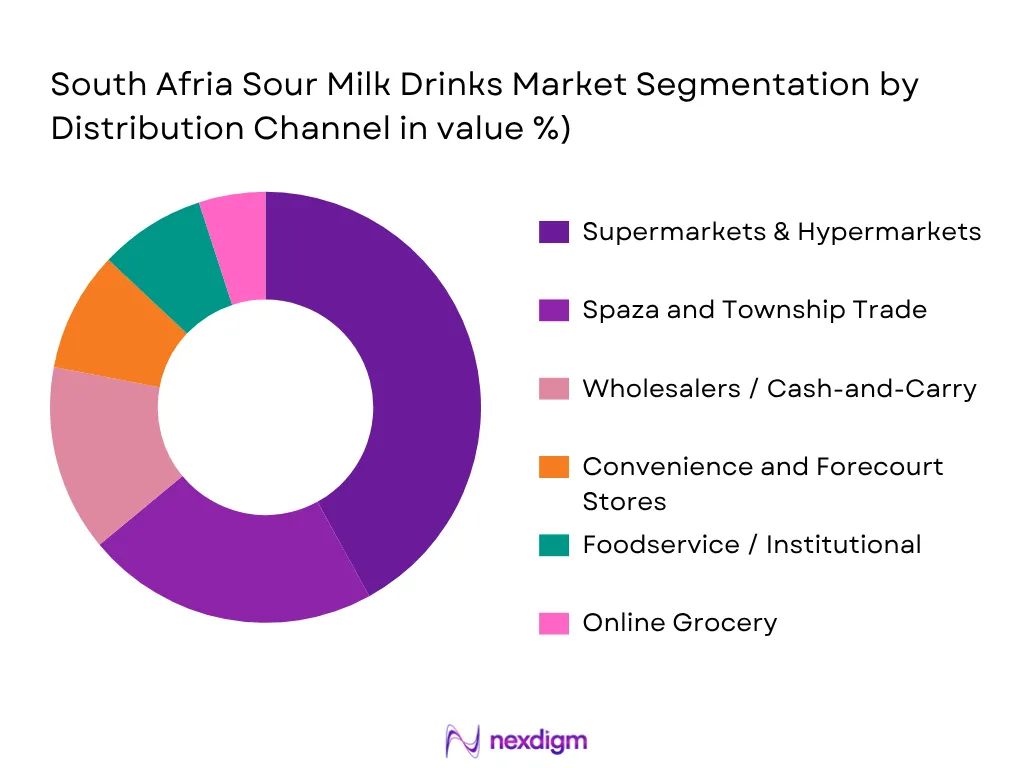
The South Africa Sour Milk Drinks Market is segmented by distribution channel into supermarkets/hypermarkets, spaza and township trade, wholesalers/cash-and-carry, convenience and forecourt stores, foodservice/institutional and online grocery. Supermarkets and hypermarkets dominate because sour milk drinks require refrigerated cabinets, strict date-code control and reliable replenishment, which are easier to execute in organized retail. Large chains also provide national shelf visibility for Clover, Lactalis, Danone, Woodlands Dairy, Dewfresh and private-label products. Spaza and township trade remains critical because amasi/maas is a high-frequency household food item, but refrigeration gaps and limited SKU depth restrict its share. Forecourt retail is gaining relevance for single-serve drinking yoghurt and convenience-led chilled dairy purchases, while online remains small because chilled fulfilment is operationally complex. Euromonitor also identifies distribution format analysis and forecourt gains as relevant to yoghurt and sour milk products in South Africa.
Competitive Landscape
The South Africa Sour Milk Drinks Market is concentrated around large dairy processors with national procurement, manufacturing and chilled distribution capabilities. FAS/Pretoria identifies Clover, Lactalis, Woodlands Dairy, Danone, Dewfresh, Lancewood, Orange Grove Dairy, Nestlé SA, Dairy Group SA and Fair Cape among the top processors, while noting that ten processors represent around 70% of the dairy processing sector. This favors companies with raw milk contracts, cold-chain control, retail listings and multi-format product architecture.
| Company | Establishment Year | Headquarters | Sour Milk / Fermented Dairy Portfolio | Cold-Chain Strength | Pack-Format Strength | Raw Milk / Processing Base | Route-to-Market Position | Competitive Positioning |
| Clover SA | 1898 | Roodepoort / Johannesburg, South Africa | ~ | ~ | ~ | ~ | ~ | ~ |
| Lactalis South Africa / Parmalat | 1933 group origin; SA entity renamed in 2020 | Stellenbosch, Western Cape | ~ | ~ | ~ | ~ | ~ | ~ |
| Woodlands Dairy / First Choice | 1995 | Humansdorp, Eastern Cape | ~ | ~ | ~ | ~ | ~ | ~ |
| Danone Southern Africa | Local operation over 19 years | Gauteng, South Africa | ~ | ~ | ~ | ~ | ~ | ~ |
| Dewfresh | 1973 | Brakpan, Gauteng | ~ | ~ | ~ | ~ | ~ | ~ |
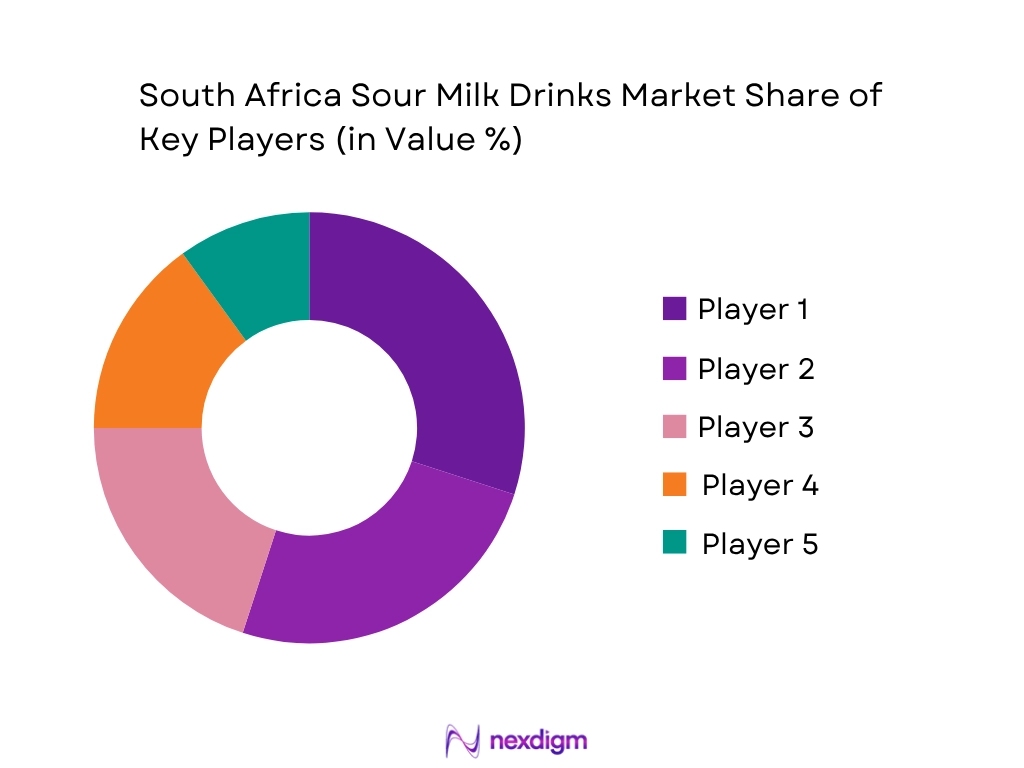
South Africa Sour Milk Drinks Market Analysis
Growth Drivers
Traditional Consumption Base
South Africa’s sour milk drinks market is structurally supported by amasi/maas being part of everyday food habits rather than an occasional beverage. The demand base is broad: Stats SA estimates South Africa’s population at 63.02 million, including 15.83 million people in Gauteng and 12.34 million in KwaZulu-Natal, two major chilled-dairy consumption nodes. The population also includes 16.8 million people younger than 15, supporting family-pack demand for fermented dairy at household level. This aligns with South Africa’s food-based dietary guidance, which specifically states: “Have milk, maas or yoghurt every day.” Milk SA also reported that unprocessed milk channelled into fermented products was higher for 11 months of the latest full year compared with the prior year, reinforcing the category’s durable cultural and dietary base.
Affordable Meal Pairing
Affordable meal pairing is a strong driver because maas is consumed with starch-heavy meals such as pap, phuthu and other maize-based foods, fitting South Africa’s dietary guidance that says starchy foods should be part of most meals and milk, maas or yoghurt should be consumed every day. Demand is reinforced by constrained household conditions: Stats SA’s General Household Survey reported that 22.2 out of every 100 households considered their access to food inadequate or severely inadequate, while 25.2 out of every 100 persons had limited access to food. In metropolitan areas, 18.2 out of every 100 households experienced inadequate or severely inadequate access to food, with Nelson Mandela Bay at 33.4 and Mangaung at 27.8. With World Bank data showing South Africa’s GDP per capita at USD 6,267.2 and GDP growth at 0.5, sour milk drinks remain positioned as a practical, filling, culturally accepted dairy accompaniment.
Market Challenges
Raw Milk Price Volatility
Raw milk price volatility is a market-specific challenge because sour milk drinks depend on a stable flow of unprocessed milk into fermentation lines, and processors cannot easily substitute input milk without affecting product texture, acidity and fat-grade consistency. Milk SA reported 3,458,060 tonnes of unprocessed milk to market, while the number of unprocessed milk producers moved from 882 in January to 885 in the following January; processors moved from 125 to 129, and producer-distributors moved from 54 to 60. This shows a concentrated supply base where small shifts in production, processor demand or disease disruption can affect procurement planning. FAS/Pretoria also noted that unprocessed milk production was affected by weak consumer purchasing power and a foot-and-mouth disease outbreak in one of the largest dairy-producing regions. With World Bank reporting South Africa’s GDP growth at 0.5 and consumer inflation at 4.4, processors face limited room to absorb upstream volatility while maintaining mass-market maas availability.
Load-Shedding Cold-Chain Risk
Load-shedding remains a direct cold-chain risk for sour milk drinks because amasi/maas, drinking yoghurt, buttermilk and kefir-style dairy require chilled storage across plants, depots, retail cabinets, spaza outlets and household refrigerators. Eskom reported 275 consecutive days without load-shedding from 26 March to 27 December, while CSIR reported 281 consecutive days without load-shedding by 31 December. However, the category remains exposed because refrigerated distribution is operationally sensitive even when system performance improves. CSIR recorded total energy production of 221.2 TWh, total demand of 219.6 TWh, peak demand of 33,485 MW, coal-fired generation of 177.9 TWh, renewable generation of 17.8 TWh, and diesel/gas generation of 1.9 TWh. For sour milk drinks, these figures indicate better grid stability but not the removal of cold-chain risk; retailers and township outlets still need backup refrigeration discipline to protect shelf life, freshness perception and product safety.
Opportunities
Fortified Maas
Fortified maas is a strong opportunity because the category already has daily-use credibility and reaches households that need affordable nutrient-dense foods. The Department of Agriculture, Land Reform and Rural Development’s National Food and Nutrition Security Survey reported that 63.5 out of every 100 households were food insecure, and 17.5 out of every 100 food-insecure households were experiencing severe food insecurity. Stats SA also reported 22.2 out of every 100 households with inadequate or severely inadequate access to food. The addressable nutrition context is large: Stats SA estimates 63.02 million people in the country, including 16.8 million people younger than 15. Fortified maas can therefore be positioned around calcium, vitamin D, vitamin A and protein enrichment, while remaining close to existing consumption behaviour. Since South African dietary guidance already includes maas alongside milk and yoghurt, fortification offers future growth through nutrition-led product differentiation rather than a change in consumer habit.
Low-Fat and Diabetes-Friendly SKUs
Low-fat and diabetes-friendly sour milk drink SKUs are an opportunity because South Africa has a substantial non-communicable disease burden and an ageing consumer base, while maas is already an accepted dairy format. IDF Diabetes Atlas data shows 2.3 million adults aged 20–79 living with diabetes in South Africa, and identifies the country as having the fourth highest number of adults with diabetes in the IDF Africa Region. World Bank data lists South Africa’s diabetes prevalence at 7.2 among adults aged 20–79. Stats SA estimates the population at 63.1 million in the following base year, including 6.6 million people aged 60 and older, a cohort more likely to seek lower-fat, lower-sugar and clearly labelled dairy options. The opportunity is not to make disease-treatment claims, but to build compliant SKUs around low-fat maas, no-added-sugar cultured milk, portion-controlled packs and transparent nutritional panels aligned with guidance to use sugar and fats sparingly.
Future Outlook
The South Africa Sour Milk Drinks Market is expected to grow steadily as amasi/maas remains embedded in household consumption and kefir, buttermilk and drinking yoghurt gain health-led visibility. The forecast CAGR benchmark is 5.06%, based on the closest publicly available South Africa-specific forecast period from Nexdigm; for a 2026–2035 reporting frame, it should be treated as the strategic planning benchmark rather than an audited 2035 endpoint.
Growth will be driven by four structural shifts: rising gut-health awareness, continued formalization of chilled dairy sales, premiumization through low-fat and fortified variants, and township-route expansion. Manufacturers that can balance value pricing with reliable chilled delivery will outperform, particularly in Gauteng, KwaZulu-Natal, Western Cape and Eastern Cape. Risks remain concentrated around raw milk prices, energy cost, refrigeration reliability, foot-and-mouth disease disruption and household price sensitivity.
Major Players
- Clover SA
- Lactalis South Africa / Parmalat
- Woodlands Dairy / First Choice
- Danone Southern Africa
- Dewfresh
- Fair Cape Dairies
- Orange Grove Dairy
- Lancewood
- Nestlé South Africa
- Sundale Dairy
- Denmar Estates / Serema Maas
- Bonle / Igula Amasi
- Underberg Dairy
- Limpopo Dairies
- Spring Meadow Dairy
Key Target Audience
- Dairy processors and sour milk drink manufacturers
- Packaged dairy and FMCG beverage companies
- Supermarket, hypermarket and grocery retail chains
- Cold-chain logistics and refrigerated distribution companies
- Raw milk cooperatives and commercial dairy farmer groups
- Private-label dairy sourcing and category management teams
- Investments and venture capitalist firms
- Government and regulatory bodies: Department of Agriculture, Land Reform and Rural Development; Department of Health; Dairy Standard Agency; National Regulator for Compulsory Specifications; South African Revenue Service
Research Methodology
Step 1: Identification of Key Variables
The initial phase involves mapping the South Africa Sour Milk Drinks Market ecosystem across raw milk suppliers, dairy processors, culture suppliers, packaging providers, cold-chain distributors, modern retailers, spaza networks and regulators. Key variables include unprocessed milk availability, fermented dairy utilization, pack size, fat content, chilled retail footprint, price per litre/kilogram and regulatory classification.
Step 2: Market Analysis and Construction
The market is constructed using top-down and bottom-up methods. The top-down view begins with published sour milk drinks market values and dairy processing indicators, while the bottom-up model reviews SKU pricing, retail pack sizes, company portfolios, cold-chain channel coverage and estimated sell-through by product type and distribution channel.
Step 3: Hypothesis Validation and Expert Consultation
Market hypotheses are validated through interviews with dairy processors, retailers, distributors, procurement teams, packaging vendors and category managers. These discussions test assumptions on amasi/maas dominance, price elasticity, refrigerated route density, spaza channel constraints, promotional activity and consumer preference for plain, thick-textured and family-pack sour milk drinks.
Step 4: Research Synthesis and Final Output
The final phase reconciles published market data, dairy supply indicators, retail SKU audits and expert inputs into a validated market model. Findings are synthesized into market size, forecast CAGR, segmentation, competitive benchmarking, growth drivers, risks and strategic recommendations for business professionals evaluating the South Africa Sour Milk Drinks Market.

- Executive Summary
- Research Methodology (Amasi/Maas Market Definition, Fermented Milk Classification, Retail SKU Audit, Processor and Distributor Interviews, Raw Milk Utilization Model, Top-Down Sizing, Bottom-Up SKU Build-Up, Channel Margin Mapping, Limitations and Assumptions)

- Definition and Scope
- Overview Genesis
- Evolution of Traditional Amasi/Maas into Commercial Cultured Milk
- Timeline of Major Players
- Business Cycle
- Supply Chain and Value Chain Analysis
- Raw Milk Procurement and Fermentation Flow
- Cold-Chain, Chilled Storage and Last-Mile Distribution Structure
- Role of Amasi/Maas in South African Food Culture

- Growth Drivers (Traditional Consumption Base, Affordable Meal Pairing, Probiotic/Gut-Health Awareness, Urban Retail Penetration, Pack-Size Accessibility)
- Market Challenges (Raw Milk Price Volatility, Load-Shedding Cold-Chain Risk, Shelf-Life Constraints, Informal Trade Refrigeration Gaps, Consumer Downtrading)
- Opportunities (Fortified Maas, Low-Fat and Diabetes-Friendly SKUs, Township Route Expansion, Private Label, School Nutrition, Foodservice Ingredient Use)
- Trends (Probiotic Positioning, Premium Farmstead Amasi, Pack-Price Engineering, Multi-Serve Buckets, Retailer-Led Promotions, Regional Heritage Branding)
- Government Regulation (R.1510 Dairy Classification, Class Designation, Main Panel Labelling, Heat-Treated Fermented Milk, Food Additive Compliance, VAT Treatment)
- SWOT Analysis (Cultural Relevance, Cold-Chain Limitation, Fortification Potential, Raw Milk Cost Exposure)
- Stakeholder Ecosystem (Dairy Farmers, Milk Processors, Culture Suppliers, Packaging Vendors, Cold-Chain Distributors, Retail Chains, Spaza Networks, Foodservice Buyers, Regulators)
- Porter’s Five Forces (Raw Milk Supplier Power, Retailer Bargaining Power, Private Label Threat, UHT Milk Substitution, Local Maas Brand Rivalry)
- Value Chain Margin Pool (Farmgate Milk, Fermentation and Processing, Packaging, Refrigerated Logistics, Retail Margin, Promotional Spend)

- By Value (2020-2025)
- By Volume (2020-2025)
- By Average Selling Price (2020-2025)
- By Price per Litre/Kilogram (2020-2025)
- By Formal Retail vs Informal Trade Contribution (2020-2025)
- By Chilled Shelf Space Allocation (2020-2025)

- By Product Type (In Value %)
Amasi/Maas
Cultured Buttermilk
Kefir-Style Fermented Milk
Sour Drinking Yoghurt
Fortified Low-Fat Sour Milk - By Fat Content (In Value %)
High-Fat Maas
Full-Cream Amasi
Medium-Cream Maas
Low-Fat Amasi
Fat-Free Cultured Milk - By Packaging Type (In Value %)
Sachets
HDPE Bottles
Plastic Tubs
Multi-Serve Buckets
Cartons
Foodservice Pails - By Pack Size (In Value %)
Up to 500 ml/g
1 L/kg
2 L/kg
L/kg
5 kg and Above - By Distribution Channel (In Value %)
Supermarkets/Hypermarkets
Discounters
Convenience Stores
Spaza and Township Trade
Wholesalers
Online Grocery
Foodservice/Institutional - By End-Use / Consumption Occasion (In Value %)
Pap/Phuthu Pairing
Standalone Beverage
Breakfast and Cereal Use
Cooking and Baking Ingredient
School Feeding
Foodservice Meal Preparation - By Region (In Value %)
Gauteng
KwaZulu-Natal
Eastern Cape
Western Cape
Limpopo
Mpumalanga
Free State
North West
Northern Cape - By Consumer Cohort (In Value %)
Township Households
Rural Households
Urban Mass Market
Middle-Income Families
Lactose-Sensitive Consumers
Health-Oriented Consumers - By Price Tier (In Value %)
Value Sachet/Tub
Mainstream Maas
Fortified Functional Maas
Premium Farmstead Amasi
Imported/Artisanal Fermented Milk

- Market Share of Major Players (Value Share, Volume Share, Chilled Shelf Facings, SKU Count, Regional Availability, Product Type, Channel, Pack Format)
- Cross Comparison Parameters (Amasi/Maas Portfolio Breadth by Fat Grade and SKU Size, Cold-Chain Reach and Township/Modern Retail Coverage, Raw Milk Procurement Base and Milk-Solids Cost Pass-Through, Fermentation Technology and Live-Culture/Probiotic Positioning, R.1510 Class Designation and Nutritional/Fortification Claims, Pack-Price Architecture and Price per Litre/Kg, Regional Plant/DC Footprint and Service Level, Gross Margin and Trade Promotion Intensity)
- SWOT Analysis of Major Players (Brand Equity, Milk Supply Integration, Retail Listing Strength, Innovation Capability, Regional Distribution Gaps)
- Pricing Analysis Basis SKUs for Major Players (250 ml Sachets, 500 ml Bottles, 1 L Bottles, 2 kg Tubs, 4 kg Tubs, 5 kg Bulk Packs)
- Detailed Profiles of Major Companies
Clover SA
Lactalis South Africa / Parmalat
Woodlands Dairy / First Choice
Danone Southern Africa
Dewfresh Products
Fair Cape Dairies
Orange Grove Dairy
Lancewood
Nestlé South Africa
Sundale Dairy
Denmar Estates / Serema Maas
Bonle / Igula Amasi
Underberg Dairy
Limpopo Dairies
Spring Meadow Dairy

- Market Demand and Utilization (Pap/Phuthu Pairing, Drinking Occasion, Baking Use, Breakfast Consumption, Meal Replacement)
- Purchasing Power and Budget Allocation (Price per Litre/Kg, Pack Downtrading, Bulk Family Packs, Promotion-Led Purchasing)
- Needs, Desires and Pain Point Analysis (Tangy Taste, Thick Texture, Creaminess, Freshness, Shelf-Life, Pack Convenience, Digestive Comfort)
- Decision-Making Process (Brand Trust, Price Point, Fat Grade, Pack Size, Freshness Date, Retail Availability)
- Institutional and Foodservice Demand (School Feeding, Canteens, Bakeries, Quick-Service Kitchens, Caterers, Traditional Food Outlets)

- By Value (2026-2035)
- By Volume (2026-2035)
- By Average Selling Price (2026-2035)
- By Price per Litre/Kilogram (2026-2035)
- By Formal Retail vs Informal Trade Contribution (2026-2035)
- By Chilled Shelf Space Allocation (2026-2035)


 Request a Sample
 Ask for Customization
 Get a Quote
 Enquire Now