
 Download PDF
Market Overview
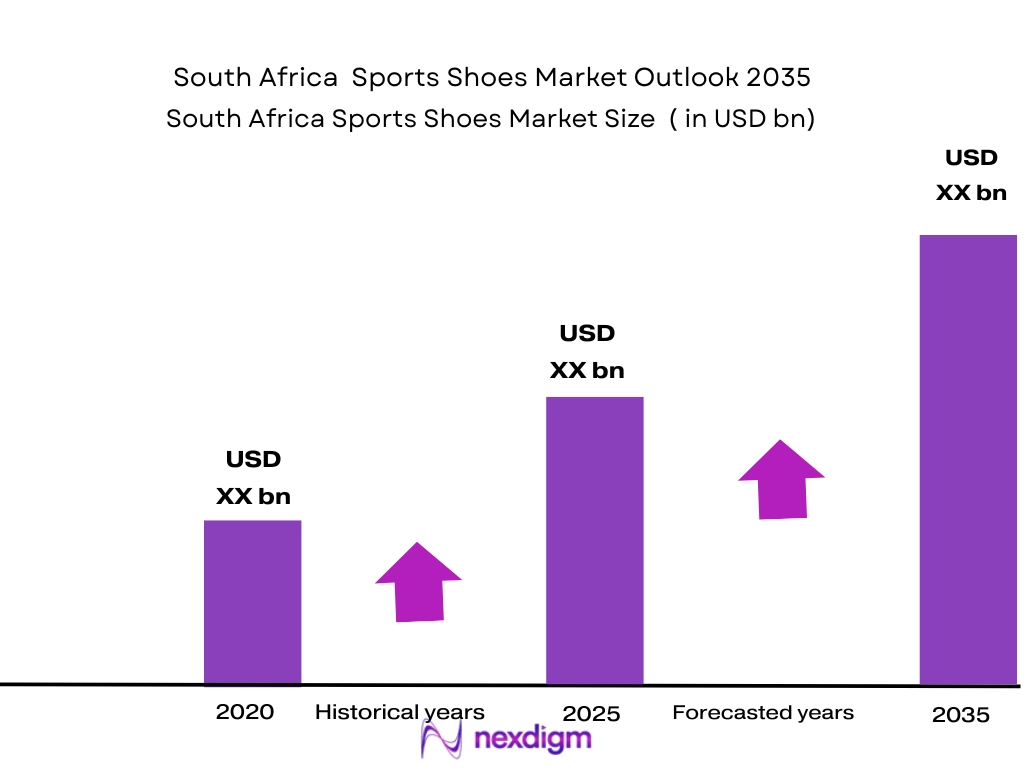
The South Africa sports shoes market is valued at USD ~ billion, based on a historical trajectory from USD 2.36 billion and a projected value of USD 3.38 billion by 2030. The previous-year market level stands at nearly USD 2.47 billion, showing steady demand from running, gym training, football, school sports, and athleisure consumption. Growth is driven by urban fitness participation, branded retail expansion, digital commerce, and consumers using sports shoes as daily casual footwear.
The South Africa sports shoes market is expected to grow at a forecasted CAGR of around 4.6% during 2024–2030, supported by performance footwear adoption, youth-led athleisure demand, e-commerce penetration, and expansion by sportswear retailers. South Africa’s online retail market reached R96 billion in 2024, compared with R71 billion in 2023, strengthening the digital sales base for branded sneakers, running shoes, football boots, and gym shoes.
 Market Segmentation
By Product Type
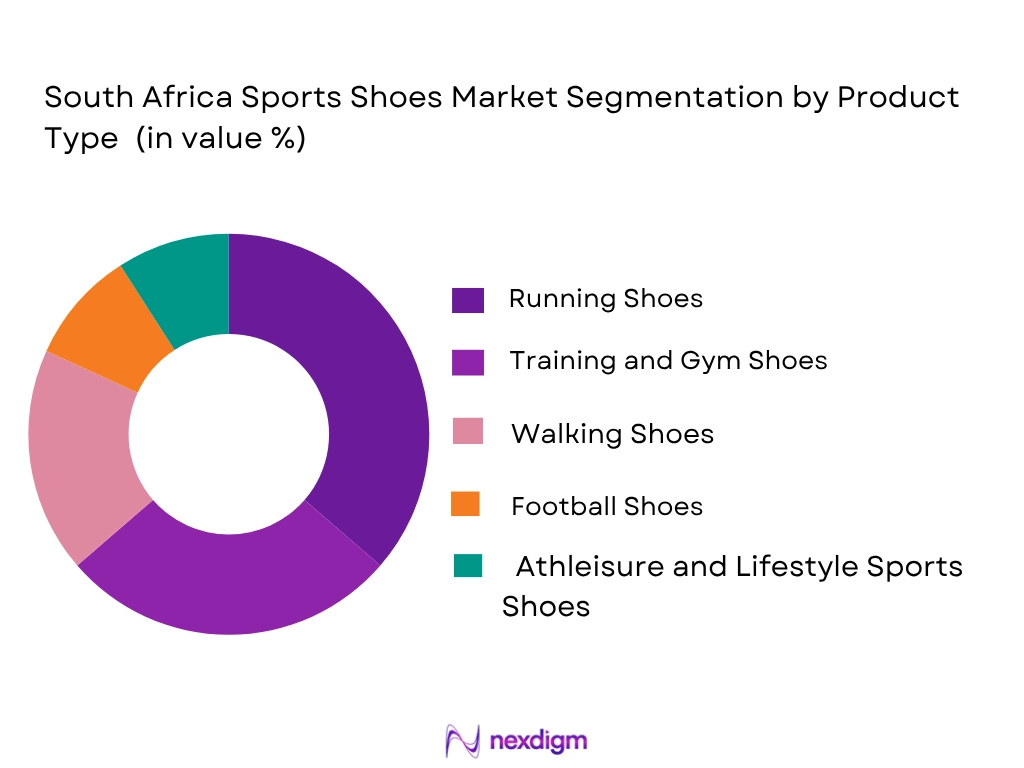
South Africa sports shoes market is segmented by product type into running shoes, training and gym shoes, football shoes, athleisure and lifestyle sports shoes, walking shoes, and others. Recently, running shoes have held the dominant market share under this segmentation, mainly due to their wider consumer use across fitness, casual mobility, school sports, and recreational running. Unlike football or basketball shoes, running shoes serve both performance and everyday use cases, making them attractive across age groups. Organized running clubs, park runs, marathon events, and urban fitness communities have increased demand for cushioned, breathable, and lightweight footwear. Major brands such as Nike, Adidas, Puma, Asics, New Balance, and Under Armour position running shoes as both technical and lifestyle products, which expands their appeal beyond athletes. Retailers also give running shoes higher shelf space because they generate repeat purchases from consumers replacing shoes due to wear, comfort needs, and fashion refresh cycles.
By Distribution Channel
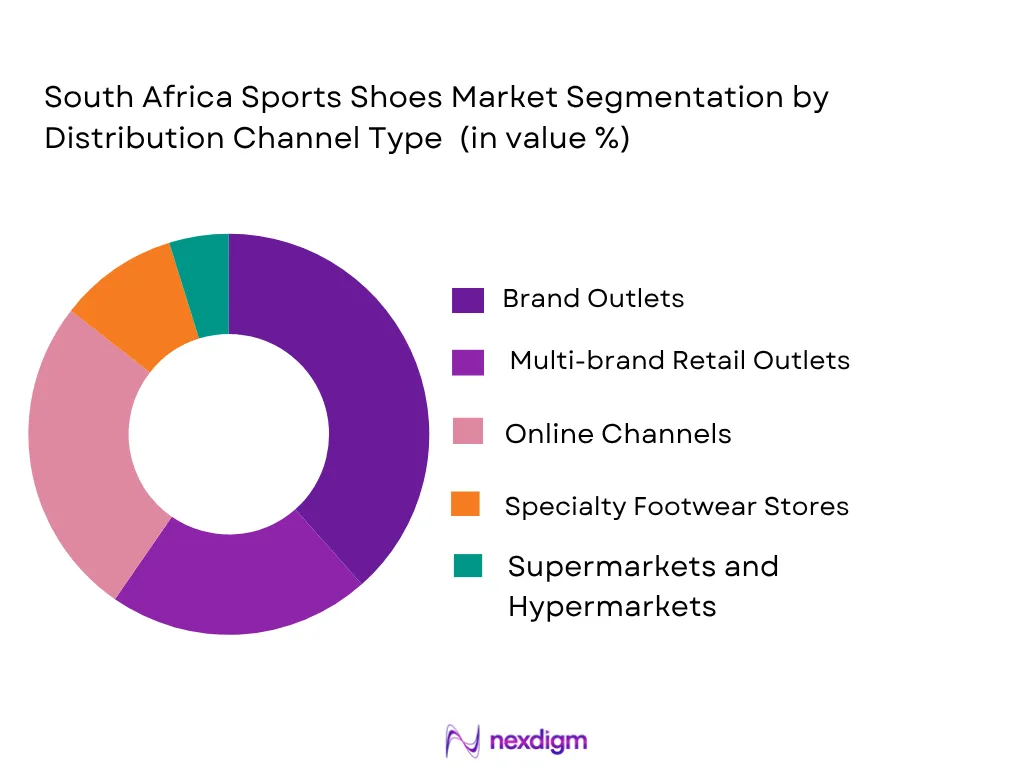
South Africa sports shoes market is segmented by distribution channel into sports specialty stores, brand outlets, online channels, multi-brand retail stores, department stores, supermarkets and hypermarkets, and others. Recently, sports specialty stores have dominated market share under this segmentation due to their strong product depth, trained sales staff, brand assortment, and ability to serve both performance and lifestyle consumers. Retailers such as Totalsports, Sportscene, Sneaker Factory, Tekkie Town, Studio 88, and Mr Price Sport offer broad footwear ranges across running, football, gym, and sneaker categories. Consumers prefer these stores because they provide fit trials, size availability, promotions, and access to multiple brands in one location. Sports specialty retail also benefits from mall concentration in Johannesburg, Cape Town, Durban, and Pretoria, where footfall supports frequent new launches. Online channels are growing quickly, but specialty stores remain important for high-value shoes where comfort, size, and authenticity are central purchase factors.
Competitive Landscape
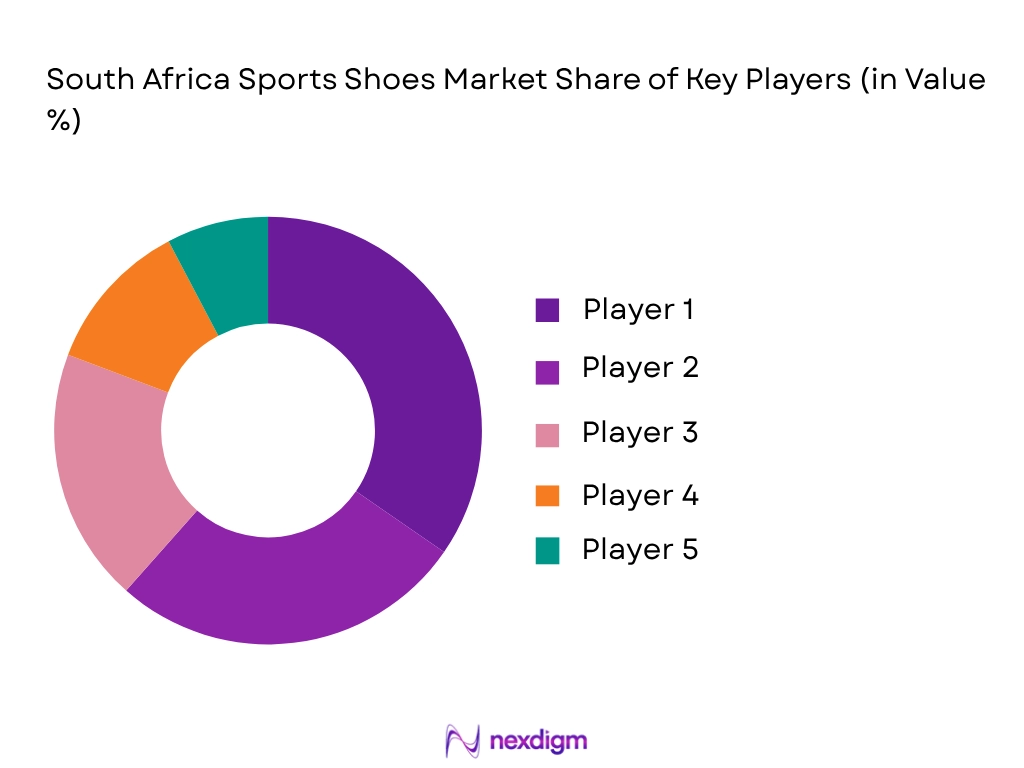
The South Africa sports shoes market is concentrated around international sportswear brands and large domestic retail groups. Nike, Adidas, Puma, New Balance, Asics, Under Armour, and Skechers compete through premium positioning, sports sponsorships, technical footwear launches, and lifestyle sneaker collections. Retail power is held by groups such as TFG, Mr Price Group, Pepkor, and Truworths, which control large physical footprints and online platforms. The entry of JD Sports through TFG and the continued strength of Sportscene, Totalsports, Sneaker Factory, and Studio 88 highlight the importance of scale, mall access, and omnichannel distribution.
| Company | Establishment Year | Headquarters | Core Sports Shoe Categories | South Africa Presence | Distribution Strength | Price Positioning | Brand Strength | Strategic Focus |
| Nike | 1964 | Beaverton, USA | ~ | ~ | ~ | ~ | ~ | ~ |
| Adidas | 1949 | Herzogenaurach, Germany | ~ | ~ | ~ | ~ | ~ | ~ |
| Puma | 1948 | Herzogenaurach, Germany | ~ | ~ | ~ | ~ | ~ | ~ |
| Asics | 1949 | Kobe, Japan | ~ | ~ | ~ | ~ | ~ | ~ |
| New Balance | 1906 | Boston, USA | ~ | ~ | ~ | ~ | ~ | ~ |
South Africa Sports Shoes Market Analysis
Growth Drivers
Rising Health and Fitness Awareness
Rising health and fitness awareness is a major growth driver for the South Africa sports shoes market, as consumers are increasingly adopting running, gym workouts, walking, and outdoor training as part of daily lifestyle routines. Urban consumers in cities such as Johannesburg, Cape Town, Durban, and Pretoria are becoming more conscious of physical wellness, obesity management, cardiovascular health, and active living. This has increased demand for comfortable, durable, and performance-oriented footwear. Sports shoes are no longer purchased only by athletes; they are now used by office workers, students, fitness beginners, and casual walkers. Brands are responding with lightweight, cushioned, breathable, and injury-prevention-focused products. The growing link between wellness, appearance, and lifestyle is strengthening repeat purchases.
Expansion of Organized Retail and E-commerce Channels
The expansion of organized retail and e-commerce channels is supporting the growth of the South Africa sports shoes market by improving product accessibility and brand visibility. Sports specialty stores, brand outlets, shopping malls, and multi-brand footwear retailers allow consumers to compare products across price ranges, styles, and performance categories. At the same time, online platforms are helping brands reach consumers beyond major metropolitan areas. E-commerce enables easier access to new launches, discounts, size options, and international brands. Retailers are also using click-and-collect, digital payments, loyalty programs, and seasonal promotions to attract buyers. This organized retail structure improves consumer trust, reduces dependence on informal channels, and supports higher sales of branded sports shoes.
Market Challenges
High Price Sensitivity Among Consumers
High price sensitivity remains a key challenge in the South Africa sports shoes market, as many consumers are cautious about discretionary spending. Premium sports shoes from global brands are often expensive due to import costs, exchange-rate movement, logistics expenses, and brand positioning. As a result, consumers frequently wait for discounts, outlet sales, seasonal offers, or lower-priced alternatives. This creates pressure on margins for retailers and limits the speed of premium product adoption. Price-sensitive buyers may also shift toward unbranded, private-label, or counterfeit footwear, especially when purchasing for casual use rather than technical sports performance. Brands must balance affordability with durability, comfort, and design to sustain demand across income groups.
Competition from Counterfeit and Low-cost Footwear
Competition from counterfeit and low-cost footwear is a significant challenge for the South Africa sports shoes market, particularly in informal retail channels and price-sensitive consumer segments. Counterfeit shoes often imitate popular global brands at much lower prices, attracting consumers who want branded-looking products but cannot afford original versions. This affects the sales of genuine brands and weakens consumer confidence when product quality is poor. Low-cost imports and unbranded footwear also compete strongly in casual sports and athleisure categories. These alternatives may not offer the same durability, cushioning, or safety standards, but they remain attractive due to affordability. Genuine brands need stronger authentication, distribution control, and value-led product lines.
Opportunities
Growth in Online Sports Footwear Sales
Growth in online sports footwear sales presents a strong opportunity for the South Africa sports shoes market, as consumers increasingly use digital platforms for product discovery, comparison, and purchase. Online channels allow brands and retailers to showcase wider inventories than physical stores, including exclusive styles, limited-edition sneakers, multiple sizes, and specialized performance shoes. Digital platforms also support targeted promotions, influencer marketing, customer reviews, and personalized recommendations. For consumers outside major cities, e-commerce improves access to branded sports footwear that may not be available locally. Retailers can further increase conversion through easy returns, size guides, flexible payment options, and fast delivery. This creates room for both premium and affordable sports shoe brands.
Rising Demand for Women’s Sports Shoes
Rising demand for women’s sports shoes is an important opportunity in the South Africa sports shoes market, driven by increasing participation of women in fitness, running, gym training, walking, and lifestyle sportswear. Women consumers are seeking footwear that combines comfort, support, design, and versatility. The demand is not limited to performance categories; athleisure and casual sports shoes are also gaining traction among working women, students, and urban consumers. Brands can benefit by expanding women-specific product ranges with better fit, lightweight materials, arch support, and fashion-led designs. Marketing campaigns focused on wellness, empowerment, and active lifestyles can further strengthen this segment. Retailers that offer wider women’s collections can capture repeat purchases.
Future Outlook
Over the next five years, the South Africa sports shoes market is expected to grow steadily as consumers continue to combine fitness, comfort, and fashion in footwear purchases. Growth will be supported by urban gym participation, running clubs, football culture, school and university sports, and the use of sneakers as everyday footwear. E-commerce will become more important as retailers improve delivery, returns, digital payment options, and exclusive online launches. Premium brands will continue to compete with value retailers, while mid-range products will attract price-sensitive consumers looking for durability and style.
Major Players
- Nike South Africa
- Adidas South Africa
- Puma South Africa
- New Balance South Africa
- Asics
- Reebok
- Under Armour
- Skechers
- Fila
- Converse
- Vans
- Salomon
- Hi-Tec
- Diadora
- Mr Price Sport
Key Target Audience
- Sports footwear manufacturers
- Sportswear and athleisure brands
- Footwear importers and distributors
- Organized sports retailers and specialty footwear chains
- E-commerce and omnichannel retail platforms
- Mall developers and retail real estate operators
- Investments and venture capitalist firms
- Government and regulatory bodies
Research Methodology
Step 1: Identification of Key Variables
The initial phase involves constructing an ecosystem map covering sports footwear brands, retailers, distributors, importers, e-commerce platforms, and end-user groups in the South Africa sports shoes market. This step uses extensive desk research and proprietary databases to identify major variables such as product type, price range, distribution channel, regional demand, and consumer usage patterns.
Step 2: Market Analysis and Construction
In this phase, historical data for the South Africa sports shoes market is compiled and assessed across value, volume, channel performance, and brand positioning. The analysis includes sports retail penetration, footwear replacement frequency, pricing bands, and sales contribution from physical stores and online platforms. These variables are used to construct a structured market model.
Step 3: Hypothesis Validation and Expert Consultation
Market hypotheses are validated through computer-assisted telephone interviews with footwear retailers, brand distributors, category managers, importers, and sports retail professionals. These consultations provide operational insights on consumer demand, pricing, stock movement, product preferences, and channel-level growth. Expert feedback is used to refine assumptions and validate market segmentation.
Step 4: Research Synthesis and Final Output
The final phase involves synthesizing findings from secondary research, trade-level analysis, and primary inputs from industry participants. Product-level insights are aligned with sales performance, consumer preferences, retail expansion, and brand activity. The final output is built through a bottom-up and top-down validation approach to ensure consistency and practical market relevance.

- Executive Summary
- Research Methodology (Market Definitions and Assumptions Abbreviations, Market Sizing Approach, Consolidated Research Approach, Understanding Market Potential Through In-Depth Industry Interviews, Primary Research Approach, Limitations and Future Conclusions)

- Definition and Scope
- Market Dynamics Overview
- Market Genesis
- Major Players and Market Timeline
- Business Cycle and Trends
- Supply Chain and Value Chain Analysis

- Growth Drivers
Rising Health and Fitness Awareness
Growing Participation in Sports and Outdoor Activities
Increasing Demand for Athleisure and Lifestyle Footwear
Expansion of Organized Retail and E-commerce Channels
Growing Youth Population and Urbanization
Rising Influence of Sports Sponsorships and Celebrity Endorsements - Market Challenges
High Price Sensitivity Among Consumers
Competition from Counterfeit and Low-cost Footwear
Import Dependence and Currency Fluctuations
Supply Chain and Logistics Constraints
Intense Competition Among International and Local Brands
Changing Consumer Preferences and Short Product Life Cycles - Opportunities
Growth in Online Sports Footwear Sales
Rising Demand for Women’s Sports Shoes
Expansion of Affordable and Mid-range Product Categories
Increasing Demand for Sustainable and Eco-friendly Footwear
Growth of Local Sports Leagues and Fitness Communities
Product Innovation in Comfort, Performance, and Durability - Key Trends
Shift Toward Athleisure and Everyday Sports Footwear
Growing Popularity of Running and Fitness Shoes
Rising Demand for Lightweight and Breathable Materials
Increasing Focus on Sustainable Materials and Recyclable Packaging
Use of Digital Marketing and Influencer-led Brand Promotion
Customization and Limited-edition Sports Shoe Launches - Government Regulations
Import Duties and Tariff Regulations
Product Quality and Safety Standards
Consumer Protection Regulations
Labelling and Packaging Requirements
Environmental and Sustainability Regulations
Trade Policies Affecting Footwear Imports - SWOT Analysis
- Porter’s Five Forces

- By Value, 2020–2025
- By Volume, 2020–2025
- By Average Price, 2020–2025

- By Product Type (In Value %)
Running Shoes
Training and Gym Shoes
Football Shoes
Basketball Shoes
Tennis Shoes
Walking Shoes
Athleisure and Lifestyle Sports Shoes
Others - By End User (In Value %)
Men
Women
Kids - By Price Range (In Value %)
Economy
Mid-range
Premium
Luxury - By Usage (In Value %)
Professional Sports
Fitness and Gym
Casual and Athleisure Wear
Outdoor and Adventure Activities
School and College Sports
Others - By Distribution Channel (In Value %)
Brand Outlets
Multi-brand Retail Stores
Sports Specialty Stores
Online Channels
Supermarkets and Hypermarkets
Department Stores
Others - By Region (In Value %)
Gauteng
Western Cape
KwaZulu-Natal
Eastern Cape
Free State
Mpumalanga
Limpopo
North West
Northern Cape

- Market Share of Major Players by Value/Volume
- Market Share of Major Players by Product Type
- Market Share by Distribution Channel
- Cross Comparison Parameters (Company Overview Business Strategies, Recent Developments, Strengths and Weaknesses, Organizational Structure, Revenues, Revenues by Product Type, Number of Retail Touchpoints, Distribution Channels, Dealer and Distributor Network, Margins, Manufacturing/Import Capabilities, Unique Value Offering, Others)
- SWOT Analysis of Major Players
- Detailed Profiles of Major Companies
Nike South Africa
Adidas South Africa
Puma South Africa
New Balance South Africa
Asics
Reebok
Under Armour
Skechers
Fila
Converse
Vans
Salomon
Hi-Tec
Diadora
Kappa
Mr Price Sport
Totalsports
Sportscene

- Market Demand and Utilization
- Consumer Purchasing Power and Spending Patterns
- Brand Preferences and Loyalty
- Needs, Desires, and Pain Point Analysis
- Decision-Making Process
- Buying Frequency and Replacement Cycle
- Impact of Sports Culture, Fashion, and Social Media

- By Value, 2026–2035
- By Volume, 2026–2035
- By Average Price, 2026–2035


 Request a Sample
 Ask for Customization
 Get a Quote
 Enquire Now