
 Download PDF
Market Overview
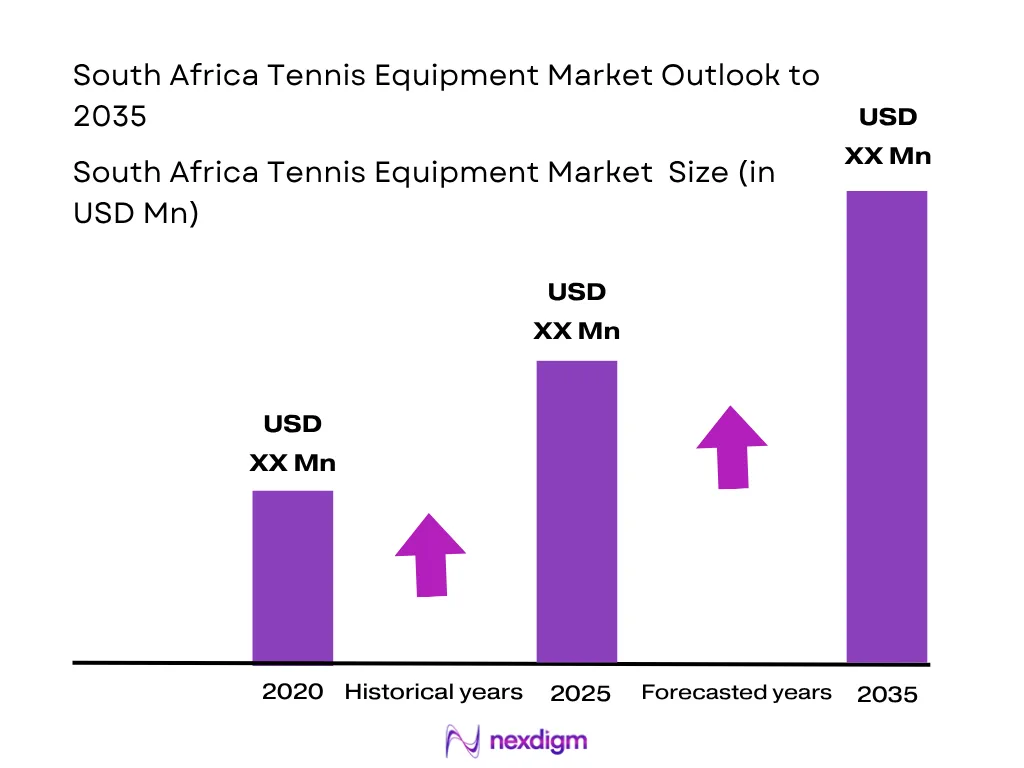
The South Africa tennis equipment market is valued at approximately USD ~ million in 2025, reflecting the broader racket sports equipment segment in the country, which includes tennis gear such as racquets, balls, shoes, and related accessories. This valuation follows historical trends where the market was estimated at USD ~ million in 2023, indicating a steady expansion in consumer demand, increased participation in tennis and racket sports, and broader retail distribution growth within sporting goods retail channels. Growth drivers include rising interest in active lifestyles, expansion of tennis clubs and league participation, and increasing retail availability of international sports brands.
The market is notably concentrated in major urban centers such as Johannesburg, Cape Town, and Durban, where higher disposable incomes, established tennis clubs, and sports infrastructure support higher participation and equipment purchases. Johannesburg’s affluent suburbs and corporate sports sponsorships further reinforce premium equipment adoption, while Cape Town’s recreational tennis culture drives consistent sales of entry to mid‑tier gear. Durban’s coastal affinity for outdoor sports complements tennis engagement. These cities act as epicenters due to better court density, active club leagues, and organized coaching academies that sustain ongoing equipment replacement and upgrades.
Market Segmentation
By Product Type
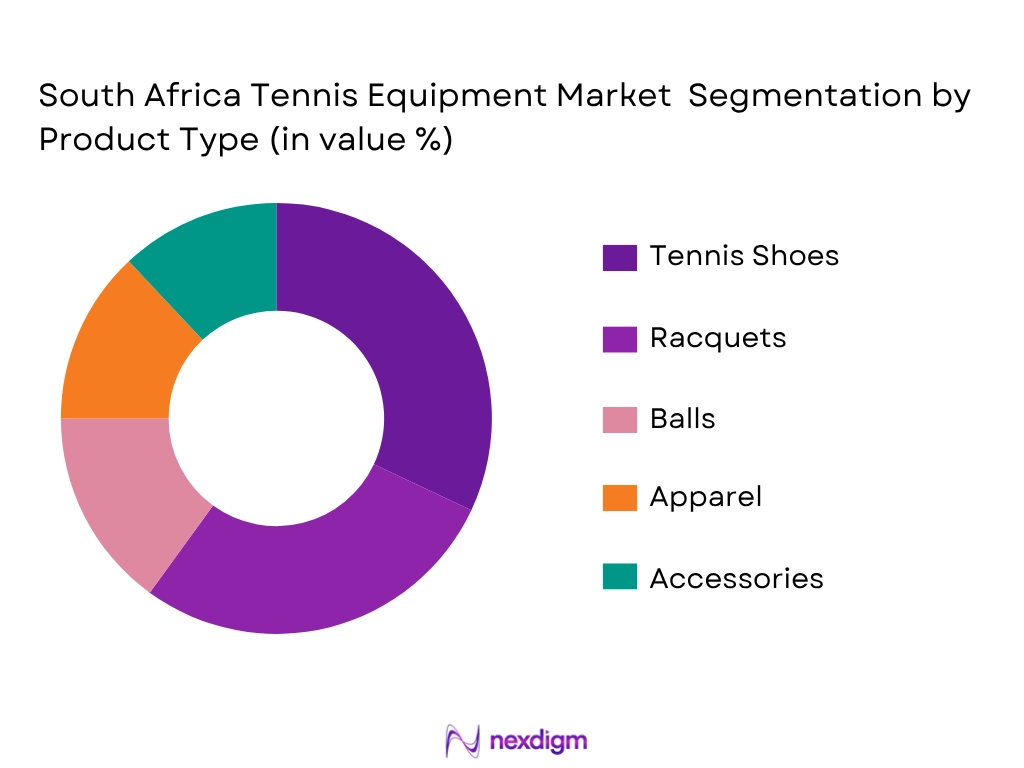
In South Africa, the tennis equipment market is segmented by product type into tennis shoes, racquets, balls, apparel, and accessories. Tennis shoes dominate the market share due to their broad usage across professional, recreational, and fitness segments, often serving both tennis and general sports footwear needs. This cross‑application increases unit sales and retail velocity across specialist and general sporting goods stores. Racquets represent a strong second segment, driven by ongoing demand for replacement gear among club players, academy students, and emerging junior cohorts. Quality and brand differentiation influence purchasing decisions in this segment more than price, sustaining demand for global brands. Tennis balls hold steady share because they are a frequent consumable item for clubs and individual players. Apparel and accessories, while smaller in share, benefit from ties to lifestyle trends and brand loyalty that encourage multi‑category purchases among regular players. The combined effect of these sub‑segments reflects both performance‑driven and convenience‑focused buying patterns in the South Africa tennis context.
By Distribution Channel
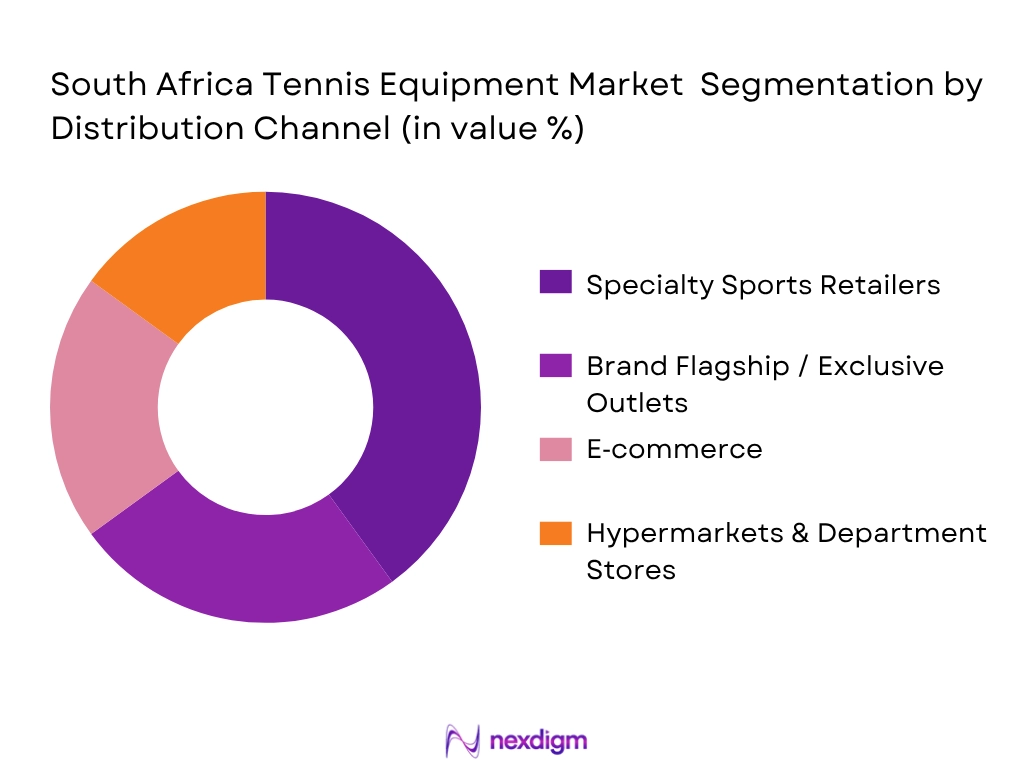
The South Africa tennis equipment market distributes products through specialist sporting goods stores, brand flagship outlets, e‑commerce platforms, and hypermarkets/department stores. Specialist retailers dominate because they provide product expertise, fitting services (especially for shoes and racquets), and targeted inventory that aligns with tennis players’ performance requirements. Brand flagship and exclusive outlets carry premium and full‑range SKUs directly from major manufacturers, attracting brand‑loyal consumers. E‑commerce is growing rapidly, especially among younger and price‑conscious players who secure competitive pricing and broader assortments online. Hypermarkets and department stores capture share via convenience and cross‑category shopping, particularly for lower‑to‑mid tier products, leveraging high footfall to drive impulse purchases
Competitive Landscape
The competitive landscape is moderately consolidated with global major brands exerting significant influence through product innovation, sponsorships, and distribution partnerships. The South Africa tennis equipment market is shaped by a mix of global and regional players that offer racquets, shoes, balls, apparel, and accessories. International brands tend to dominate premium product tiers and specialist retail channels, while some regional distributors provide accessible options for recreational players. This dual‑tier competitive scenario emphasizes performance differentiation at the high end and cost/availability at the value end.
| Brand | Establishment Year | Headquarters | Product Breadth | Distribution Reach | Brand Recognition | Local Sponsorship/Leagues | E‑commerce Presence | Price Tier |
| Wilson Sporting Goods | 1913 | USA | ~ | ~ | ~ | ~ | ~ | ~ |
| Nike, Inc. | 1964 | USA | ~ | ~ | ~ | ~ | ~ | ~ |
| Adidas AG | 1949 | Germany | ~ | ~ | ~ | ~ | ~ | ~ |
| Yonex Co., Ltd. | 1946 | Japan | ~ | ~ | ~ | ~ | ~ | ~ |
| Babolat VS S.A. | 1875 | France | ~ | ~ | ~ | ~ | ~ | ~ |
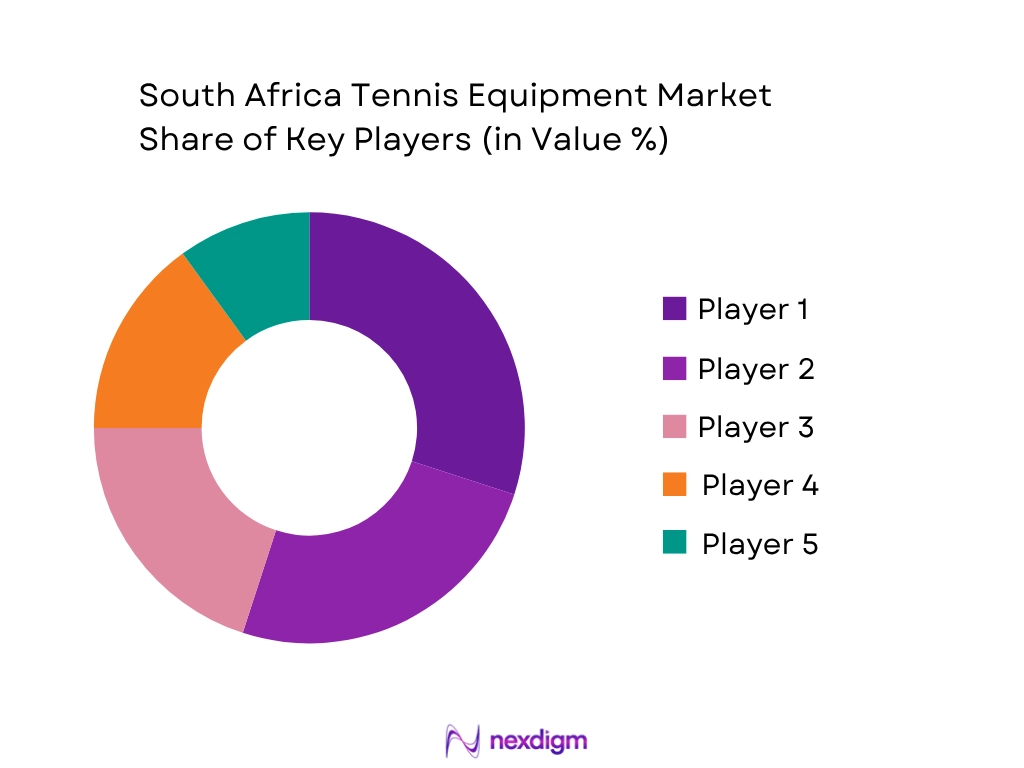
South Africa Tennis Equipment Market Analysis
Growth Drivers
Increasing tennis participation and club memberships
South Africans demonstrate a strong affinity for sport, with approximately 25 million people actively participating in physical sports activities, reflecting broad base engagement with organised athletics that includes tennis and related racket sports even if tennis is not the top three sport nationally. This high overall participation suggests a substantial potential player community for tennis equipment purchases as individuals join clubs and leagues. Growth in formalised development efforts, such as Tennis South Africa’s nationwide programmes that have expanded participation at district, provincial, and national levels, underpins continued demand for racquets, balls, shoes, and accessories. Broader population growth (≈64 million people) and a youth demographic aged 15‑34 numbering over 20 million also enlarge the potential customer base for organized sports participation and equipment investment. These participation trends are consistent with general sports demand patterns in the country.
Shift toward organized fitness culture
South Africa’s macroeconomic context in 2024 shows 78 percent of individuals using the internet, indicating wide digital connectivity that supports fitness engagement and sports content consumption, including tennis instructional and community platforms. At the same time, GDP per capita is around USD 6,253, which, while moderate, supports discretionary spending on fitness and lifestyle activities as part of household expenditure. Increasing health awareness and the adoption of regular fitness routines, reflected in a population where a significant portion engages actively in sports, drive demand for tennis as a leisure‑oriented and fitness sport. Tennis courts and club memberships, increasingly promoted through digital communities and online booking, benefit from growing interest in structured physical activity. These fitness‑oriented behaviours create ongoing demand for performance‑oriented sports gear and reinforce organized sporting culture as a driver of equipment market expansion.
Market Challenges
High import tariffs and foreign exchange volatility
South Africa’s manufacturing sector is limited in high‑performance sporting goods production, leading to heavy reliance on imports for tennis equipment, especially premium racquets, shoes, and technical apparel. The South African economy is characterised by a GDP of approximately USD 401 billion with considerable reliance on imported goods, and volatility in the South African rand exchange rate directly impacts the landed cost of imported tennis gear. High unit costs due to import duties and currency fluctuations reduce price competitiveness and constrain demand among price‑sensitive consumers, particularly when discretionary income is lower relative to imported gear costs. Coupled with unemployment above 30 percent, household budgets are constrained, making premium sports equipment purchases less affordable for a large segment of the population. These macroeconomic headwinds, particularly exchange rate pressures and import cost burdens, continue to challenge market expansion.
Limited local manufacturing infrastructure
South Africa’s industrial landscape reflects limited domestic production capacity for advanced sports equipment, including tennis racquets and performance footwear, resulting in dependency on foreign manufacturers. With real GDP growth under 1 percent and structural industry challenges, investment in specialised manufacturing remains constrained. This lack of local production means the country must import finished goods, reducing opportunities for local value addition and constraining responsiveness to market demand shifts. Manufacturing employment pressures tied to high national unemployment further dampen incentives for localised production of high‑tech sports gear. Consequently, the tennis equipment market faces bottlenecks in supply continuity and cost competitiveness, as import‑centric supply chains are less resilient to logistical disruptions and tariff changes. These structural industry gaps complicate efforts to develop a stronger, more self‑sufficient sports equipment manufacturing ecosystem within South Africa.
Market Opportunities
Expansion of e‑commerce and omnichannel retail
Wide internet access, with 78 per cent of South Africans connected online, presents a clear opportunity for tennis equipment brands and retailers to expand e‑commerce and omnichannel sales strategies. Enhanced digital penetration enables direct‑to‑consumer channels, reducing dependency on physical retail infrastructure and increasing convenience for consumers to access international brands. Online platforms can integrate product education, virtual fittings, video content, and targeted promotions to convert broader fitness‑oriented audiences into tennis equipment buyers. Digital retail ecosystems also enable smaller, specialised retailers to reach national audiences without the cost overheads of multi‑store footprints. As internet use continues to be pervasive across demographic segments, e‑commerce offers a scalable distribution avenue for both premium and value‑oriented tennis gear, bridging gaps created by limited brick‑and‑mortar presence in rural and peri‑urban regions.
Partnerships with tennis academies
The growth of structured tennis development programs and academies across South Africa, including initiatives that introduce tennis at school levels, highlights a strategic partnership opportunity for equipment suppliers. By aligning with academies and coaching networks that operate across the country’s nine provinces, brands can secure early consideration among junior players who progress into recreational and competitive segments. Such alliances can facilitate equipment trials, bulk purchases for academy needs, and branded training gear integration, leveraging institutional demand. Given the growing focus on youth sports programs and community development through organized programmes, suppliers that collaborate with academies can position themselves as preferred partners, driving steady equipment replenishment cycles from novel players who remain engaged with the sport over time an avenue that traditional retail channels alone may not access as effectively.
Future Outlook
Over the next decade, the South Africa tennis equipment market is expected to grow steadily, supported by increased tennis participation, expansion of local clubs and academies, and rising consumer engagement with health‑oriented lifestyles. Growth in e‑commerce and broader retail availability will further facilitate access to international brands. Entry of digital platforms and targeted youth programs may shift purchasing preferences toward performance and lifestyle segments, reinforcing long‑term growth potential across product categories.
Major Players
- Wilson Sporting Goods
- Nike, Inc.
- Adidas AG
- Yonex Co., Ltd.
- Babolat VS S.A.
- HEAD Sport
- ASICS Corporation
- Tecnifibre
- Dunlop Sports
- New Balance, Inc.
- Puma SE
- Solinco Inc.
- Mizuno Corporation
- Volkl Tennis
- Decathlon (local distribution)
Key Target Audience
- Retail Sports Chains and Franchise Owners
- Sporting Goods Importers & Distributors
- Investments and Venture Capitalist Firms
- Government and Regulatory Bodies
- Professional Tennis Leagues and Associations
- Major Tennis Club and Academy Operators
- Retail E‑commerce Platform Buyers
- Large Fitness and Recreational Facility Operators
Research Methodology
Step 1: Market Definition & Secondary Research
The initial phase involved defining the market scope for tennis equipment, identifying product categories and distribution channels, and collecting historical data from secondary sources such as industry databases, government trade statistics, and market research reports. The goal was to assemble comprehensive baseline data for sizing and trend analysis.
Step 2: Segmentation & Data Compilation
This stage compiled data by product types and distribution channels, incorporating historical revenue figures, pricing insights, and channel mix. Quantitative data from secondary databases were structured into segmentation tables for clear share and trend visualization.
Step 3: Validation through Industry Inputs
Market hypotheses and preliminary data were validated through expert interviews with retailers, distributors, and club operators. These consultations provided real‑world insights into inventory turnover, player preferences, and channel performance that refined market estimates.
Step 4: Synthesis & Forecast Modeling
Final synthesis combined historical data, industry inputs, and regional growth projections. Forecast modeling used standardized CAGR projections aligned with broader Africa racket market forecasts to estimate future market trajectory and validate segmentation performance.

- Executive Summary
- Research Methodology (Market Definitions and Tennis Equipment Scope, Abbreviations & Terminology, Market Sizing & Forecast Modelling Approach (Top‑Down, Bottom‑Up, Market Triangulation), Data Sources & Validation (Primary Interviews, Secondary Databases, Retail Scanner Data), Currency and Conversion Metrics, Limitations and Data Assumptions)

- Market Definition and Delineation
- Historical Genesis and Market Evolution
- Role of Tennis Federations and Institutional Framework
- Market Ecosystem & Value Chain
- Distribution Structure and Channel Flow
- Product KPI Benchmarks
- Import vs. Domestic Sourcing Analysis

- Growth Drivers (Increasing tennis participation and club memberships, Rise of youth training programs and school competitions, Shift toward organized fitness culture)
- Market Challenges (High import tariffs and foreign exchange volatility, Limited local manufacturing infrastructure, Price sensitivity among leisure consumers)
- Opportunities (Expansion of e‑commerce and omnichannel retail, Localised manufacturing and customisation (junior & amateur segments), Partnerships with tennis academies)
- Market Trends (Sustainable and eco‑friendly material adoption, Co‑branding and athlete endorsement impact, Digital commerce and direct‑to‑consumer brand models)
- Regulatory & Trade Environment (Import regulations for sporting goods, Standards for safety and quality)
- SWOT Analysis
- Stakeholder Ecosystem (Relationships among manufacturers, distributors, retail chains, sports federations, tennis clubs and coaches)
- Porter’s Five Forces (Competitive rivalry, supplier power (e.g. material suppliers), buyer power, threat of new entrants (niche sports tech startups), threat of substitutes)

- By Market Value (2020-2025)
- By Volume Demand (2020-2025)
- By Price Dynamics (2020-2025)
- By Average Selling Price (2020-2025)

- By Product Category (In Value %)
Racquets
Shoes
Apparel
Balls
Strings & Grips
Bags & Accessories - By Distribution Channel (In Value %)
Specialist Sporting Stores
Brand Flagship Outlets
E‑commerce/Online Sports Retail
Hypermarkets & Department stores - By End‑User Cohorts (In Value %)
Professional Players
Recreational Adult Players
Junior Players & Academies
- By Price Tier
Premium (Global Brand SKUs)
Mid‑Tier (Regional Distributors)
Value Segment (Low‑cost Imports) - By Geographic Region (In Value %)
Gauteng & Johannesburg Metro
Western Cape & Cape Town Region
KwaZulu‑Natal & Durban Metro

- Market Share Analysis of Major Players(by Value, Volume, Brand, Segment)
- Cross‑Comparison Parameters (Product Portfolio Breadth, Retail Channel Reach, Brand Recognition & Local Sponsorship Activities, Pricing Strategy (MSRP vs Discount Pricing), Customer Loyalty & Warranty Policies, Supply & Distribution Network (Import partners / local distributors), SKU Depth & Variants Offered, Digital Engagement & E‑commerce Capabilities)
- Competitive Intensity Mapping (Concentration, Fragmentation)
- Channel and Tier‑Level Competition Dynamics
- SWOT of Major Players (Strengths, Weaknesses, Opportunities, Threats for key companies)
- Pricing & Promotional Benchmarking (Average selling prices and SKU-level pricing for major brands, premium vs standard product lines)
- Detailed Competitive Profiles
Wilson Sporting Goods
Nike, Inc.
Adidas AG
ASICS Corporation
Yonex Co., Ltd.
Babolat VS S.A.
HEAD Sport
Tecnifibre
Dunlop Sports
Prince Tennis
Solinco Inc.
New Balance, Inc.
Puma SE
Mizuno Corporation
Decathlon South Africa

- Demand and Utilization (Sales breakdown by end-user type: recreational players vs professional athletes, academy/club bulk procurement, school sports programs, urban vs regional consumption patterns)/
- Consumer Demographics and Purchasing Behavior (Age distribution, income segmentation; gender split, frequency of purchases, channel preference)
- Budget and Price Sensitivity (Pricing tiers, consumer spending patterns on racquets, balls, footwear, and apparel, seasonal and tournament-driven demand spikes)
Needs, Desires and Pain Points (Comfort, durability, and performance requirements, brand perception and aspirational buying, limited availability in regional markets, fitting services, counterfeit or low-quality imports) - Decision-Making Process (Coach recommendations, academy/club guidance, peer reviews, online research, role of professional endorsements, demo events, and product trials at tournaments)

- By Market Value (2026-2035)
- By Volume Demand (2026-2035)
- By Price Dynamics (2026-2035)
- By Average Selling Price (2026-2035)


 Request a Sample
 Ask for Customization
 Get a Quote
 Enquire Now