

 Download PDF
Market Overview
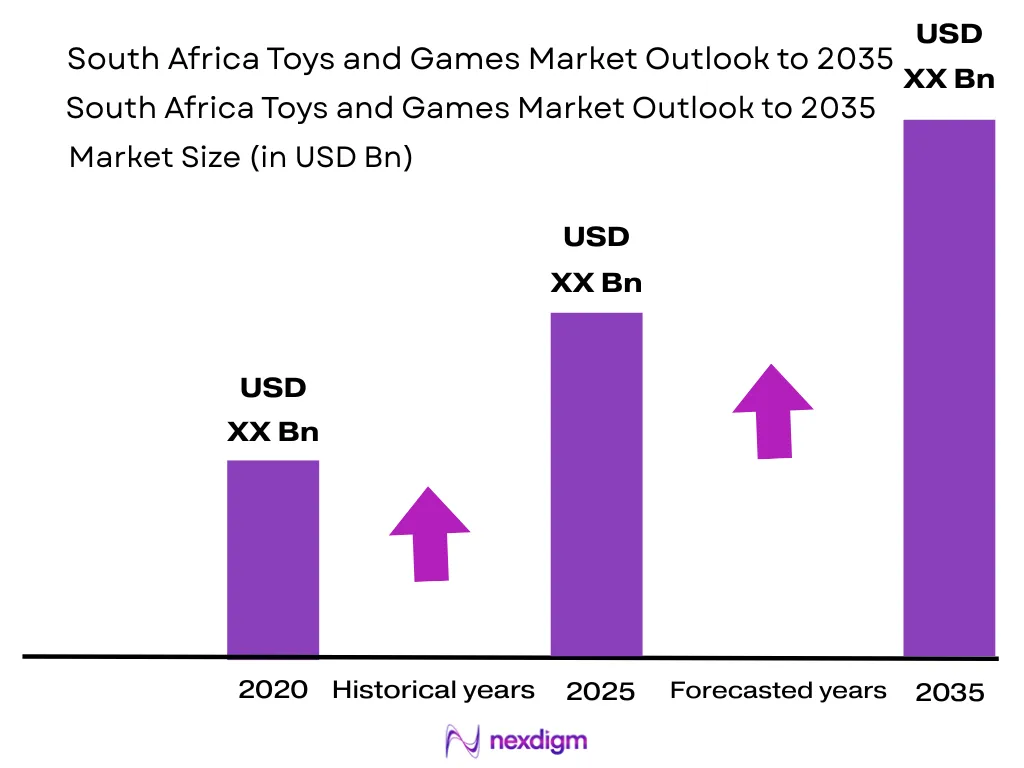
The South Africa toys and games market is valued at approximately USD ~ billion in retail revenue, reflecting consumer expenditure on traditional toys such as action figures and dolls, electronic games, and hobby products. This figure draws on a country‑level analysis that tracks historical and recent revenue performance in 2023 and 2024, reflecting resilient consumer engagement despite economic headwinds such as inflation and cost‑of‑living pressures. Import dynamics, particularly reliance on products sourced from China, influence pricing and availability while broad distribution through specialist retailers, department stores, and e‑commerce platforms supports market breadth. Growth drivers include adaptation to digital play formats and the enduring appeal of physical toys, particularly among family households and millennials with children. Urbanisation and rising disposable incomes among middle‑income segments have also supported broader household engagement with toys that combine entertainment and education. In South Africa’s toys and games sector, Gauteng (particularly Johannesburg and Pretoria) and Western Cape (Cape Town) dominate retail demand due to higher population density, more concentrated retail infrastructure, and elevated disposable income levels compared with other provinces. These metropolitan regions host major toy retail outlets, branded distribution channels, and e‑commerce fulfilment hubs that ensure product accessibility and visibility. Urban families in these regions tend to invest more in both traditional and electronic toy categories, driven by lifestyle trends that prioritise both play and developmental activities for children. In contrast, rural provinces show more limited retail presence and constrained consumer spending due to lower income levels and logistics challenges.
Market Segmentation
By Product Type
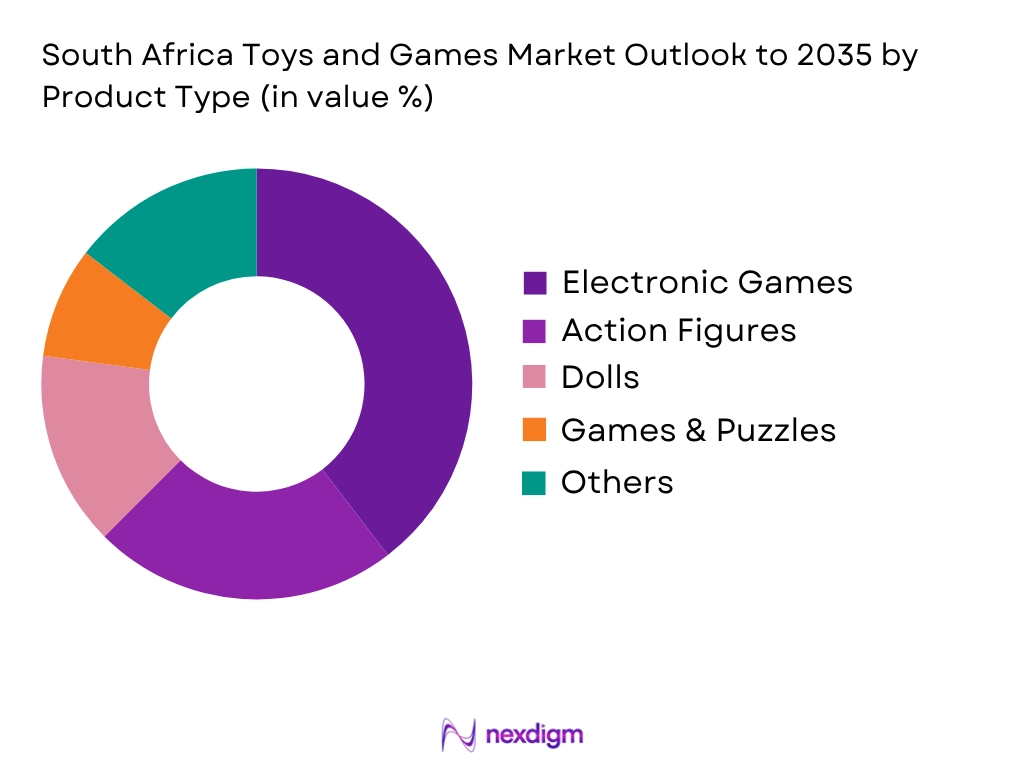
Electronic games dominate the South Africa toys and games market in 2024 with the largest revenue share among product categories. This leadership is driven by strong consumer adoption of video consoles, handheld devices, mobile gaming subscriptions, and software packages that appeal to both children and young adults. The prevalence of mobile devices has expanded the reach of digital play experiences, enabling consumers to access games on smartphones and tablets, often as a lower‑cost alternative to console hardware. Traditional action figures and dolls follow in market importance, supported by licensed brands and nostalgia‑driven purchases. Games and puzzles, though smaller in absolute revenue, are popular in household segments that value collaborative indoor play, particularly in urban areas with limited outdoor space. The mix reflects a transition in consumer patterns where digital interactive play coexists with traditional physical toys.
By Distribution Channel
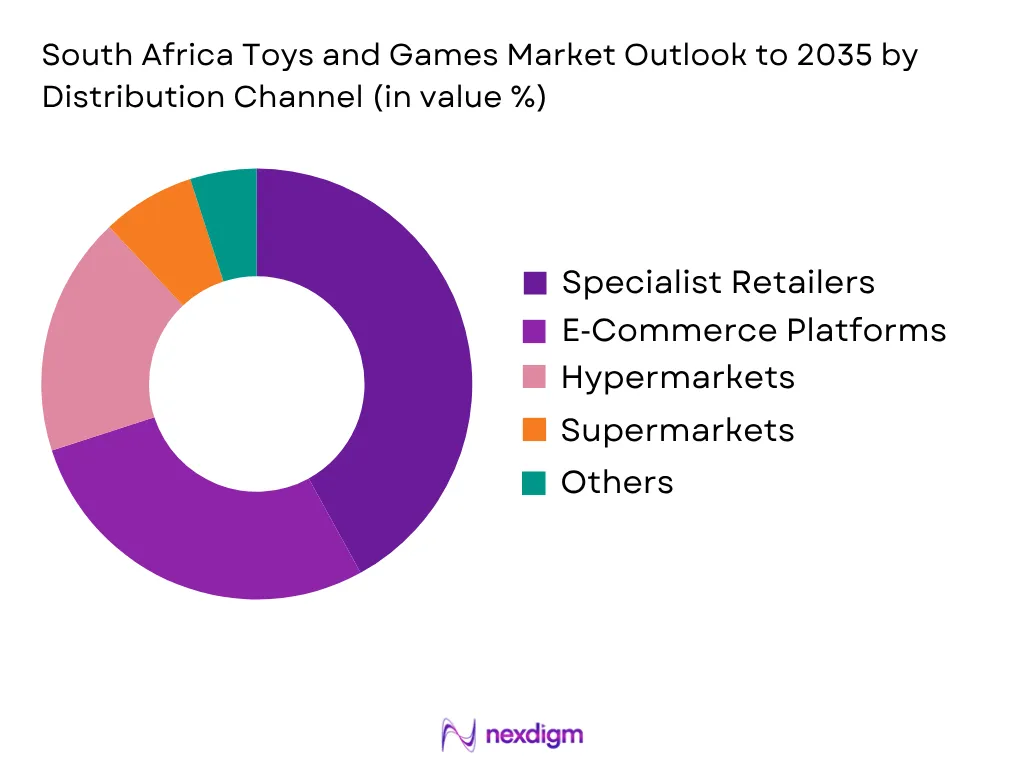
Specialist retailers lead distribution in the South Africa toys and games market, supported by dedicated toy stores and hobby shops that offer curated product ranges, brand exclusives, and customer engagement experiences. These outlets benefit from both foot traffic and brand partnerships that elevate visibility for premium items. E‑commerce platforms occupy the second largest share as digital connectivity and smartphone penetration enable online discovery and purchasing, especially for consumers seeking convenience and variety. Department and hypermarket channels provide broad reach across mainstream segments, with toy aisles integrated into general merchandise departments. Supermarkets and mass merchandisers capture seasonal and impulse purchases, while independent retailers maintain niche positions in community shopping areas.
Competitive Landscape
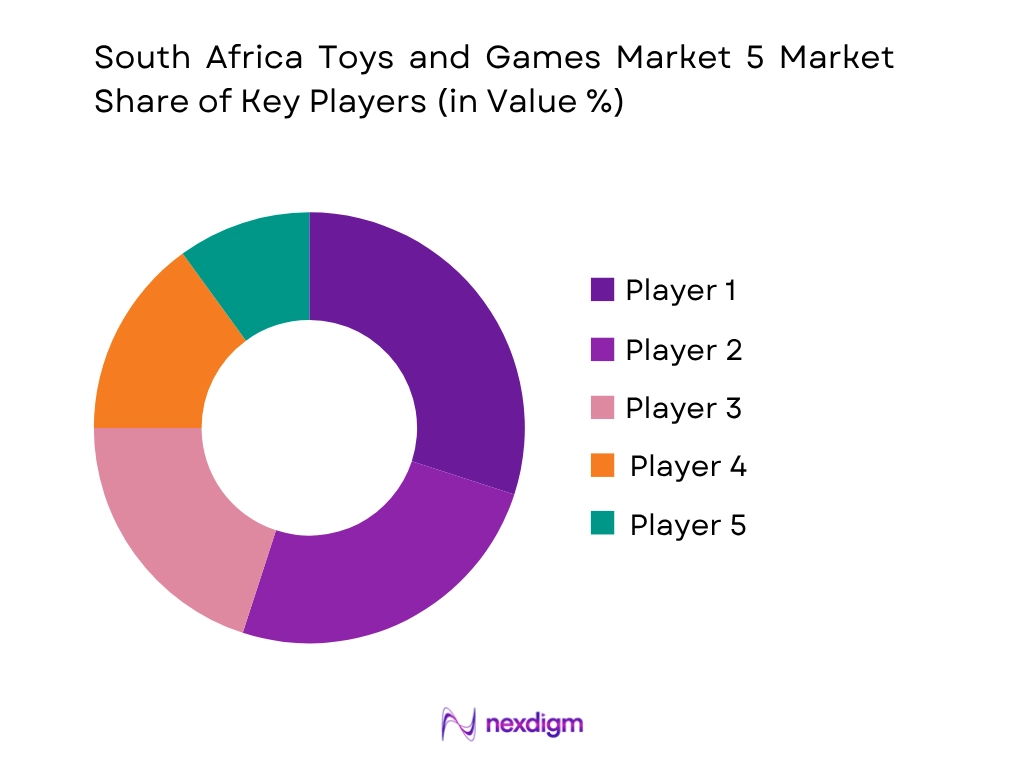
The South Africa toys and games market is moderately consolidated with international licensors and established local distributors shaping retail dynamics. Global brands leverage licensing agreements and broad product portfolios, while domestic retailers focus on accessibility and value offerings.
| Company | Establishment Year | Headquarters Country | Retail Footprint | Licensing Partnerships | E‑Commerce Integration | Distribution Network | Product Portfolio |
| Mattel Inc. | 1945 | United States | ~ | ~ | ~ | ~ | ~ |
| Hasbro Inc. | 1923 | United States | ~ | ~ | ~ | ~ | ~ |
| LEGO Group | 1932 | Denmark | ~ | ~ | ~ | ~ | ~ |
| Prima Toys & Leisure | 1980s | South Africa | ~ | ~ | ~ | ~ | ~ |
| Toy Kingdom | 1970s | South Africa | ~ | ~ | ~ | ~ | ~ |
South Africa Toys and Games Market
Growth Drivers
Household Consumption Patterns and Retail Spending Support Discretionary Purchases
South Africa’s macroeconomic profile supports consumer spending on discretionary categories such as toys and games, even within economic constraints. According to the World Bank, household final consumption expenditure accounted for 64.6 percent of GDP in 2024, up from 64.2 percent in 2023, indicating that households allocate a substantial portion of national economic output to consumption of goods and services. This consumption base underpins retail spending in leisure categories, including toys, puzzles, and games, as households balance essentials with discretionary purchases. South African GDP reached approximately USD 401.14 billion in 2024, placing the nation as one of the largest consumer markets on the African continent. Additionally, online retail activity has expanded rapidly; for instance, South African online retail sales reached 96 billion rand in total turnover, up from approximately 74 billion rand previously, reflecting rising digital engagement across retail categories, including toys and games. This shift toward online shopping increases accessibility for a wider demographic and allows toy brands to reach consumers beyond traditional brick‑and‑mortar channels, supporting demand even amid inflationary pressures and modest GDP growth, which hovered around 0.5 percent in 2024.
Young Population and Urban Concentrations Fuel Demand for Play and Entertainment Products
South Africa’s demographic structure and urban distribution patterns contribute meaningfully to demand in toys and games. The country’s population was estimated at approximately 65.7 million people, with a large proportion of youth and children embedded within school‑age cohorts that are primary consumers of physical and digitally enabled play products. Cities such as Johannesburg, Cape Town, Pretoria, and Durban constitute the most urbanised and economically active regions, housing millions of consumers with access to modern retail infrastructure and entertainment options. Urban household income levels, although constrained by broader economic trends, support demand for age‑appropriate play items, educational toys, and hobbyist games, especially where dual‑income families prevail. South Africa’s GDP per capita stood at around USD 6,267 in 2024, according to World Bank data, positioning households with discretionary spending power relative to median income benchmarks, which influences spending patterns on non‑essential goods. Consumer preferences also reflect a blend of traditional physical toys and video game engagement, driven by rising smartphone penetration and growing demand for digital entertainment among young urban consumers. These demographic and urbanisation dynamics establish a persistent driver for the toys and games market despite broader macroeconomic challenges such as unemployment rates exceeding 32 percent.
Market Challenges
High Unemployment and Limited Disposable Income Curtail Discretionary Spending
A significant macroeconomic challenge for the toys and games market arises from South Africa’s labour market conditions and income constraints, which affect consumer spending capacity for non‑essential products. According to the World Bank, total unemployment stood at around 32.3 percent of the labour force in 2024, indicating that a large segment of the working‑age population lacks steady income. High unemployment directly limits household discretionary income, forcing many families to prioritise essential goods and services over leisure and entertainment products like toys and games, particularly in lower‑income communities. South African GDP per capita was approximately USD 6,267 in 2024, significantly below many Western markets, underscoring a broad income distribution where a majority of consumers may not readily allocate funds to discretionary categories when faced with competing demands for necessities. The slow GDP growth of approximately 0.5 percent in 2024 further constrains employment generation and wage expansion, affecting consumer confidence and spending willingness. Additionally, inflationary conditions, with consumer price inflation around 4.4 percent in 2024, reduce real purchasing power for households already under financial strain. These factors coalesce to create a challenging environment for mass‑market toys and games, particularly in non‑premium categories, as households with limited disposable income remain cautious about discretionary spending.
High Import Dependence and Cost Volatility
South Africa’s toys and games market depends heavily on imported products, especially from Asian manufacturing hubs. This exposes retailers and distributors to exchange-rate volatility, rising freight costs, customs duties, and shipping delays. Since many consumers are price-sensitive, higher import costs can directly increase retail prices and reduce demand. Import reliance also creates seasonal supply risks, particularly during peak sales periods such as holidays and year-end shopping.
Market Opportunities
Growth of Specialist Retail and Online Channels Enhances Accessibility and Engagement
An emerging opportunity within the South Africa toys and games market lies in the expansion of specialist retail outlets and digital commerce platforms, which enhance consumer access to a broad range of products. Market data from specialist retail channels indicate that specialist retailers accounted for approximately 63.1 percent of market revenue through this channel in 2024, generating USD 152.5 million in revenue through concentrated toy and game sales, according to retail sales tracking. Specialist toy stores and dedicated play merchandise outlets attract targeted foot traffic from families seeking quality, brand diversity, and expertise in product offerings. Meanwhile, online retail channels have seen significant expansion in South Africa. Online retail sales approached 96 billion rand, reflecting growing consumer comfort with e‑commerce shopping and logistics networks capable of delivering toys and games nationwide, including to areas with limited physical retail presence. E‑commerce growth is reinforced by digital penetration rates and mobile internet usage, enabling younger consumers and parents to research and purchase play products with convenience. This increased accessibility facilitates market expansion among demographics that may have previously lacked easy retail access, while also supporting omnichannel strategies where brands integrate physical and digital purchasing experiences, thereby enhancing consumer engagement and repeat purchasing potential.
Educational and Developmental Play Demand Amid Household Spending Preferences
A significant opportunity for the South Africa toys and games market stems from household preferences toward educational and developmental play experiences, which align with broader consumer emphasis on learning value and cognitive development. Although precise educational toy penetration data is limited in official sources, retail analysis indicates that traditional toys—including educational and puzzle categories—contribute significantly to revenue, supported by organised specialist retailer sales. South African households increasingly prioritise products that combine play with learning benefits, particularly in urban centres with higher access to curriculum‑complementary products. This preference mirrors global trends where parents allocate spending to toys perceived as enhancing early childhood cognitive and motor skill development, school readiness, and creative problem‑solving, rather than purely entertainment‑oriented categories. Given the nationwide household final consumption figure of 64.6 percent of GDP, discretionary segments that are perceived as educational or beneficial, such as STEM‑aligned toys and learning games, are more likely to receive consumer support relative to purely entertainment items priced at similar levels. Specialist retailers often curate collections that emphasise educational value, further enabling product differentiation and higher perceived value among shoppers willing to pay for incremental developmental benefits.
Future Outlook
The South Africa toys and games market is projected to continue growth supported by increasing urban consumer demand, expansion of digital gaming, and diversification of toy categories such as STEM and educational products. Greater e‑commerce adoption and improving household income dynamics will support broader accessibility. With deeper retail penetration and strategic licensing partnerships, the market is expected to strengthen consumer engagement across age cohorts, including adult collectors (kidults) and tech‑oriented segments. Over the forecast period, product innovation and omnichannel strategies will shape competitive differentiation.
Major Players
- Mattel Inc.
- Hasbro Inc.
- LEGO Group
- LEGO South Africa Distribution
- Prima Toys & Leisure Trading (Pty) Ltd
- Toy Kingdom
- Amic Trading (Toys R Us Distributor)
- Takealot Marketplace (Toys Segment)
- Loot.co.za (Toys & Games Category)
- Makro (Toys Division)
- ZURU Toys Retail Partners
- VTech Holdings Ltd.
- Spin Master Corp.
- Sony Interactive Entertainment (Gaming)
- Nintendo Co., Ltd.
Key Target Audience
- Retail Investors & Venture Capitalist Firms
- Consumer Goods Distributors
- Toy Manufacturers & Importers
- Retail Chain Category Heads
- E‑Commerce Platform Buyers
- Government and Regulatory Bodies
- Licensing and Brand Partnership Managers
- Supply Chain & Logistics Providers
Research Methodology
Step 1: Identification of Key Variables
The initial phase involved mapping the ecosystem of stakeholders in the South Africa toys and games market, defining variables such as product categories, distribution channels, price tiers, and consumer demand drivers based on historical and recent retail sales data.
Step 2: Market Analysis and Construction
This phase compiled 2019–2024 retail revenue data from authoritative sources and assessed penetration patterns across urban regions and online sales, evaluating distribution reach versus product adoption dynamics.
Step 3: Hypothesis Validation and Expert Consultation
Market hypotheses were validated through secondary research, including industry publications, retailer reports, and expert commentary on product trends, consumer behaviour, and import dynamics influencing local retail.
Step 4: Research Synthesis and Final Output
The final phase integrated quantitative market data with qualitative insights to deliver comprehensive segmentation, competitive benchmarking, and growth forecasting delivering a validated view of the South Africa toys and games sector.

- Executive Summary
- Research Methodology (Market Definitions and Assumptions, Abbreviations, Market Sizing and Forecasting Approach, Data Sources and Verification Process, Primary Research Framework, Limitations and Future Research Considerations)

- Definition and Scope
- Sector Genesis and Lifecycle Dynamics
- Household Leisure and Play Consumption Patterns
- Value Chain and Distribution Architecture
- Import Dependence and Retail Structure

- Growth Drivers (Rising Middle‑Class Disposable Income and Changing Consumption Patterns (South African Reserve Bank data shows disposable personal income surpassed 4,798,643 ZAR million, Growth of E‑Commerce and Digital Retail Penetration (Online retail turnover projected over R130 billion with digital toy sales reaching ~84.6 million USD, Rising Demand for Educational and Interactive Play Products)
- Market Challenges (Heavy Dependence on Imported Toys, Mostly from China and global suppliers, Price Sensitivity and Economic Headwinds, Driven by currency volatility and import costs, Shift to Digital Gaming and Devices Reducing Traditional Toy Demand)
- Opportunities (Growth of “Kidult” and Adult Collectibles Segments (Specialty retailers benefit from nostalgia‑driven adult purchases, Eco‑Friendly and Sustainable Toy Products, Localization of Production and Niche Craft Toy Development, Adoption of AR/VR and Hybrid Toy Technologies)
- Trends (Emphasis on Play‑Based Learning and STEM Toy Solutions, Growth of Collectibles and Limited Editions, Integration of Apps, IoT, and Digital Play Enhancements)
- Government (Product Safety and Consumer Protection Frameworks, Import Standards and Tax Policies, Retail Trade Regulations)
- SWOT Analysis
- Porter’s Five Forces Analysis

- By Retail Value (2020-2025)
- By Volume of Units Sold (2020-2025)
- By Product Category Revenue Contribution (2020-2025)

- By Product Type (In Value %)
Action Figures and Collectibles
Dolls and Soft Toys
Building Sets and Construction Toys
Games and Puzzles
Electronic and Digital Play Systems - By Age Group (In Value %)
Babies and Toddlers
Children (5–10 Years)
Preteens (11–15 Years)
Teenagers and Kidults (Adult Collectors) - By Distribution Channel (In Value %)
Specialty Toy Retailers
Department and Hypermarkets
E‑Commerce and Online Marketplaces
Supermarkets and Discount Stores
Independent and Local Outlets - By Geographic Region (In Value %)
Gauteng (Johannesburg / Pretoria)
Western Cape (Cape Town)
KwaZulu‑Natal (Durban)
Eastern Cape

- Market Share – Value & Volume
- Cross Comparison Parameters (Company Overview, Business Strategy Archetype, Product Portfolio Breadth Index, Retail Footprint & Channel Mix, Distribution Network Scale, Brand Equity & Licensing Partnerships, Pricing Strategy & SKU Price Bands, Quality & Safety Compliance Ratings, E‑Commerce Penetration Scores, Marketing and Consumer Loyalty Metrics, Innovation Velocity & New SKU Introduction Score, Import Reliance & Supply Chain Resilience, Local Partnerships & Franchise Models)
- Product Pricing & SKU Mapping by Key Competitors
- Detailed Player Profiles
Hasbro South Africa
Mattel South Africa
LEGO South Africa
ZURU Global
Toy Kingdom
Toys “R” Us South Africa
Prima Toys
Amic Trading
Free Lives
Nyamakop
Sea Monster Games
Takealot Marketplace
Loot.co.za

- Consumer Demand Patterns by Household Type
- Spending Behavior Across Age Cohorts
- Retail Pricing Sensitivity and Decision Drivers
- Needs and Pain Points (Value vs Premium)
- Consumer Purchase Journey

- Forecast by Retail Value (2026-2035)
- Forecast by Sales Volume (2026-2035)
- Distribution Channel Expansion Outlook (2026-2035)


 Request a Sample
 Ask for Customization
 Get a Quote
 Enquire Now