
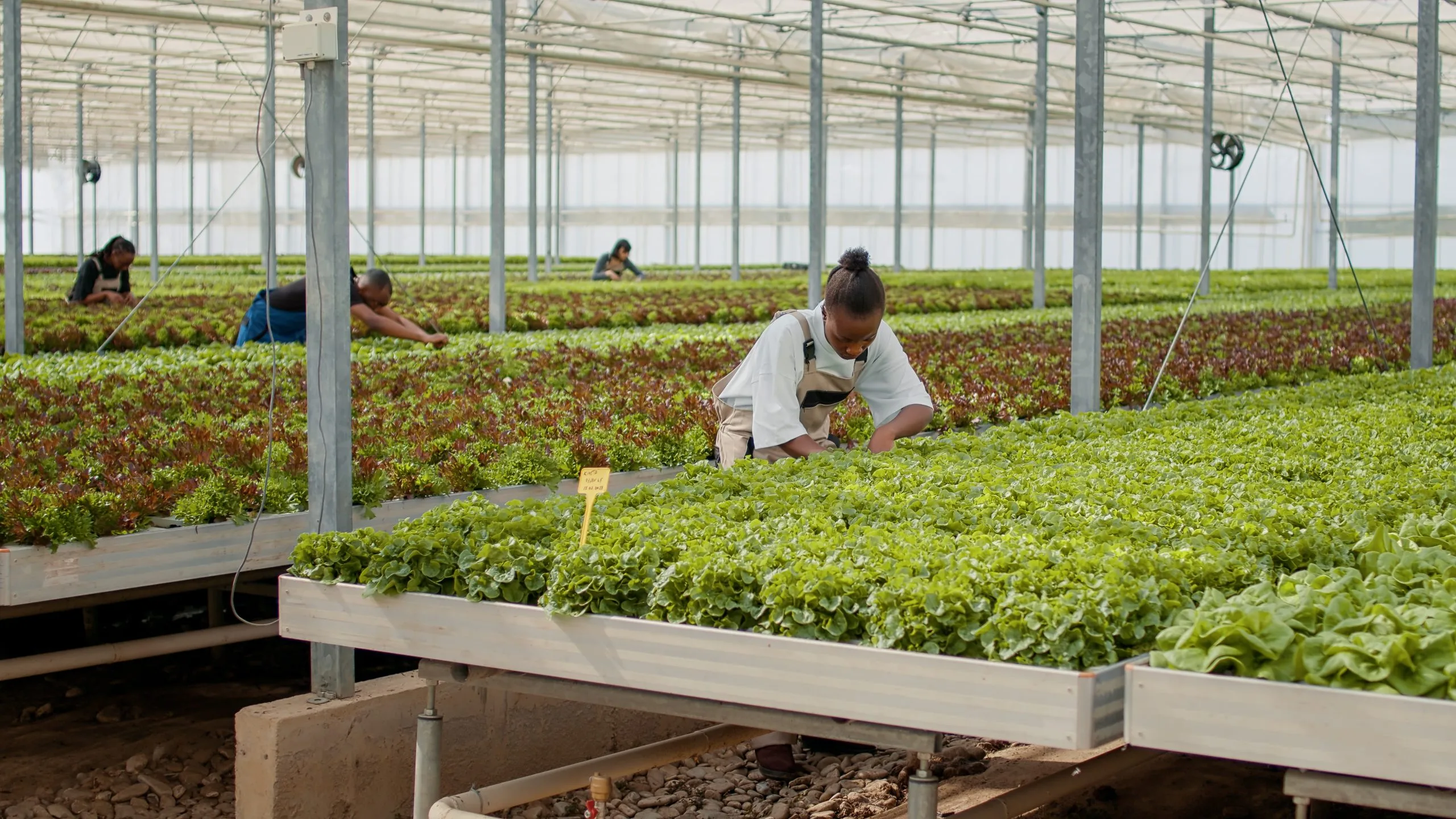
 Download PDF
Market Overview
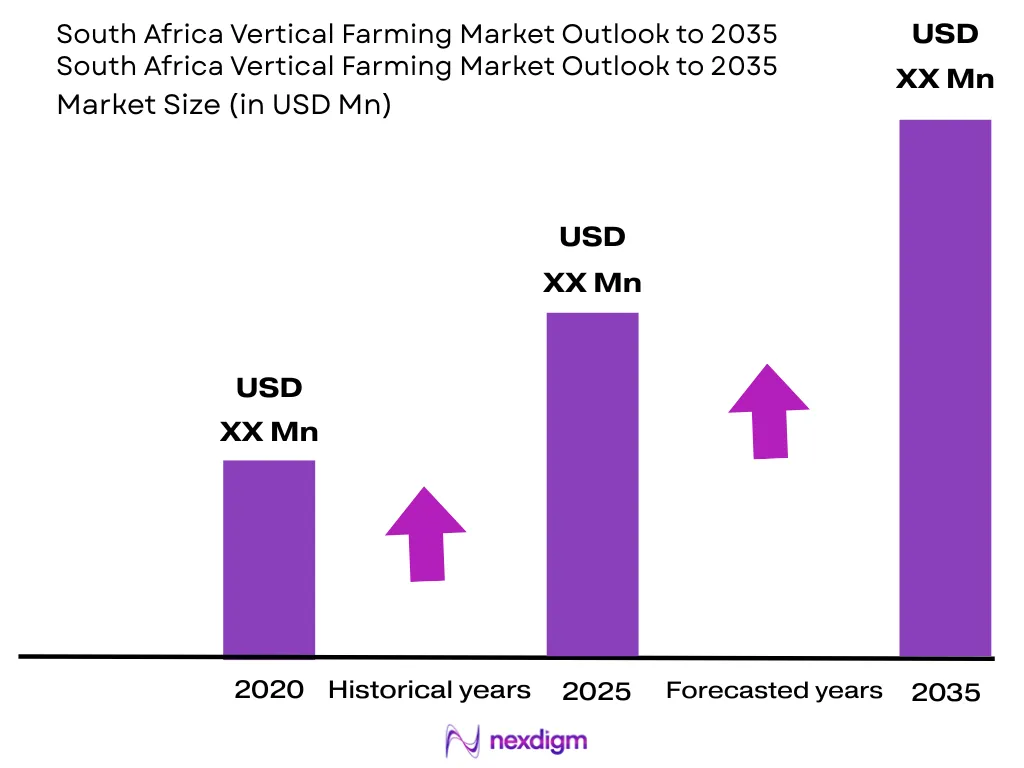
The South Africa Vertical Farming Market was valued at approximately USD ~ million in 2025 and has emerged as the most developed vertical farming market in Sub-Saharan Africa, supported by the country’s status as the continent’s most industrialised and economically diversified economy, with a gross domestic product of approximately USD ~ billion in 2024. Market growth is fundamentally shaped by South Africa’s distinctive structural challenges: chronic electricity grid instability, widely known as load shedding, which has repeatedly disrupted irrigation, processing, and cold-chain operations across the conventional agricultural sector since 2022, and recurring drought cycles, most severely demonstrated by the Western Cape’s 2017-2018 ‘Day Zero’ water crisis, during which the regional agricultural sector was forced to cut water use by 60%. These pressures have positioned controlled environment agriculture, and hydroponic vertical farming in particular, as an increasingly attractive solution for water-efficient, climate-resilient food production sited close to South Africa’s dense urban consumer markets, which comprise approximately 67% of the national population.
Market Segmentation
By Crop Type
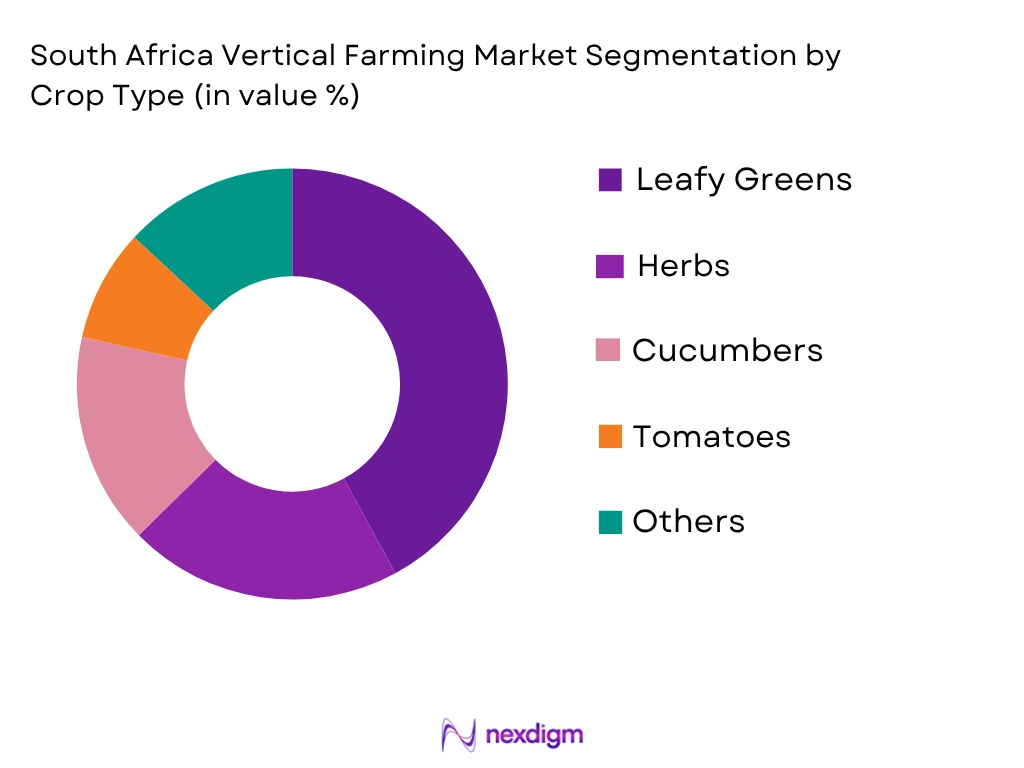
The South Africa Vertical Farming Market is segmented by crop type into leafy greens, herbs, microgreens, tomatoes, strawberries, cucumbers, and other specialty crops including edible flowers. Leafy greens, led by lettuce and spinach, dominate the market due to their short cultivation cycles, high yield density, and strong demand from retailers and restaurants in Cape Town and Johannesburg. Lettuce in particular benefits from exceptional compatibility with hydroponic systems, requiring up to 90% less water than open-field cultivation — a critical advantage in a country where the Western Cape’s agricultural sector was forced to cut water allocation by 60% during the 2017-2018 drought, and where many regions continue to face recurring water-use restrictions. Leafy greens also command premium prices owing to their pesticide-free production and superior freshness, attributes increasingly valued by South Africa’s growing health-conscious urban middle class. The segment further benefits from the operational expertise concentrated among commercial operators such as Arable Grow, making it the preferred crop category for maximising facility utilisation and profitability, while microgreens and edible flowers represent the fastest-growing premium categories as operators differentiate through culinary positioning for Cape Town and Johannesburg’s fine-dining sector.
By Growing Mechanism
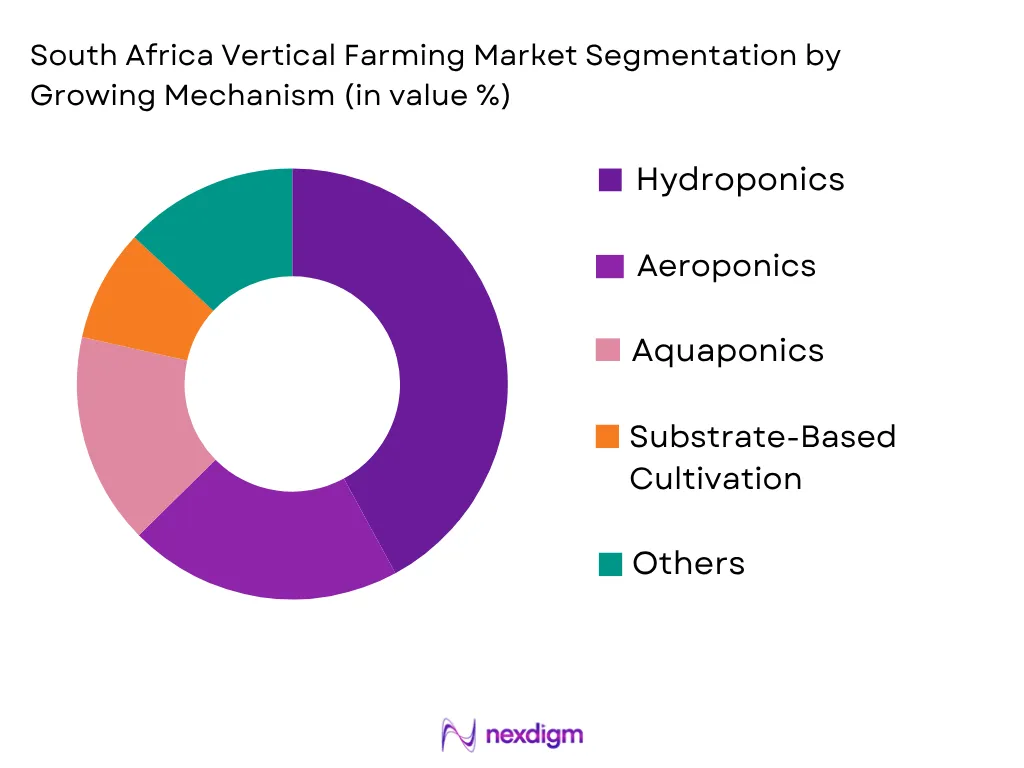
The South Africa Vertical Farming Market is segmented by growing mechanism into hydroponics, aeroponics, aquaponics, and substrate-based cultivation. Hydroponics holds the dominant market share due to its proven commercial viability, lower operational complexity, and substantial water-saving advantages relative to conventional agriculture — hydroponically cultivated plants use approximately 90% less water than soil-based agriculture and occupy approximately 99% less land, a paramount consideration in a country regularly affected by drought and where water scarcity has been described by researchers as the ‘new normal’ for South African farmers. Hydroponic systems enable precise nutrient delivery while dramatically reducing water consumption compared to open-field cultivation, supporting predictable, scalable production well suited to integration with solar power and battery backup systems essential for maintaining continuous cultivation through load shedding. Most established South African operators, including Arable Grow, have built their commercial model around nutrient film technique and drip-based hydroponic systems for leafy greens, herbs, and microgreens, while aeroponic cultivation represents a smaller but growing segment as operators seek further water efficiency gains. The increasing availability of hydroponic equipment and systems integration expertise provided by companies such as VerticalFarming.co.za and Future Farms SA further reinforces hydroponics’ position as the South African industry’s preferred cultivation method.
Competitive Landscape
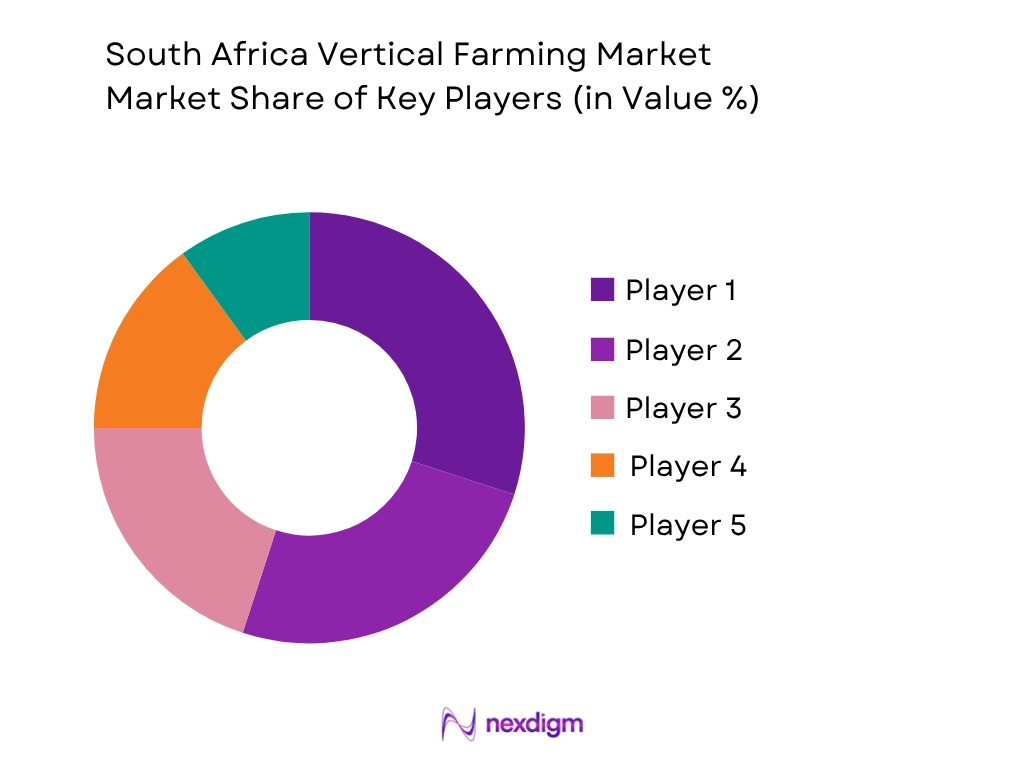
The South Africa Vertical Farming Market is characterised by a fragmented and relatively nascent competitive environment, led by a small number of established commercial operators and hydroponic systems integrators focused on indoor and greenhouse cultivation, water-efficient production, and increasingly, energy resilience through solar and battery backup integration. Leading participants continue to invest in climate-control systems, hydroponic infrastructure, and renewable power solutions to maintain continuous operations despite persistent load shedding. Strategic partnerships with restaurants, specialty grocers, and community organisations — including township-based food security initiatives in areas such as Langa in Cape Town — represent important channels for market development alongside engagement with South Africa’s concentrated formal retail sector. The market has also witnessed growing interest from international vertical farming, aquaponics, and modular farming technology providers establishing their first African operations in Johannesburg, reflecting South Africa’s role as a regional gateway and proof-of-concept market for wider Sub-Saharan African expansion.
| Company | Establishment Year | Headquarters | Primary Crop Focus | Growing Technology | Automation Level | Geographic Presence | Retail Partnerships | Sustainability Focus |
| Arable Grow | 2018 | ~ | ~ | ~ | ~ | ~ | ~ | ~ |
| VerticalFarming.co.za | 2016 | ~ | ~ | ~ | ~ | ~ | ~ | ~ |
| Future Farms SA | 2014 | ~ | ~ | ~ | ~ | ~ | ~ | ~ |
| iFarm South Africa | 2021 | ~ | ~ | ~ | ~ | ~ | ~ | ~ |
| Tower Farms Africa | 2019 | ~ | ~ | ~ | ~ | ~ | ~ | ~ |
South Africa Vertical Farming Market Analysis
Growth Drivers
Chronic Load Shedding Driving Demand for Resilient, Controlled Production Models
South Africa’s persistent electricity grid instability, known nationally as load shedding, represents a uniquely significant driver of the Vertical Farming Market. Rolling power cuts implemented by the national utility Eskom have repeatedly disrupted irrigation systems, processing facilities, and cold-chain logistics across the conventional agricultural sector, with roughly half of the country’s farming income derived from operations classified as heavy power users. Conventional farmers have reported significant additional costs from manually restarting pumps and water systems following outages, equipment damage from unpredictable power cuts, and an inability to access lower-cost off-peak electricity tariffs. Vertical farming operators have responded by investing heavily in rooftop solar power, battery storage, and backup generation systems to maintain the continuous lighting, climate control, and irrigation required for indoor cultivation, positioning controlled environment agriculture as an increasingly resilient alternative to conventional open-field and irrigated agriculture. As load shedding has continued to affect the South African economy, the operational reliability offered by solar-integrated vertical farms has become an increasingly compelling commercial proposition for retailers and hospitality buyers seeking consistent, year-round produce supply.
Recurring Drought, Water Scarcity, and the Legacy of Cape Town’s Day Zero Crisis
South Africa’s exposure to recurring drought and acute water scarcity, most dramatically illustrated by the Western Cape’s 2017-2018 drought and the globally publicised threat of Cape Town reaching ‘Day Zero’ — the point at which municipal water supply would be shut off — has fundamentally shaped commercial and consumer attitudes toward water-efficient agriculture. During the crisis, the Western Cape’s agricultural sector was forced to cut water use by 60%, and the city implemented strict household water restrictions alongside smart water metering and extensive public awareness campaigns. This experience created lasting consumer and commercial awareness of water scarcity as a structural, recurring risk rather than a temporary anomaly, directly supporting demand for hydroponic vertical farming systems capable of reducing water consumption by up to 90% relative to conventional soil-based cultivation. Water-use licensing and resource management regulations administered by national and provincial authorities continue to reinforce the commercial case for water-efficient production methods, particularly within the drought-prone Western Cape, where agricultural water allocation remains subject to ongoing restriction risk.
Market Challenges
Operational Disruption and Cost Burden from Load Shedding
While load shedding has driven adoption of solar-integrated vertical farming models, it simultaneously represents one of the sector’s most significant operational and financial challenges. Indoor and greenhouse facilities require continuous lighting, climate control, ventilation, and irrigation to maintain optimal growing conditions, and unplanned power interruptions can compromise crop quality and yield even with backup systems in place. The capital cost of installing sufficient solar generation and battery storage capacity to fully insulate a commercial vertical farm from grid instability represents a substantial additional investment burden beyond the core cultivation infrastructure, while diesel generator backup — commonly used by South African agricultural and food processing operators — adds significant ongoing fuel costs. This dynamic creates a structural cost disadvantage for South African vertical farming operators relative to peers in markets with more stable electricity grids, compressing margins and constraining the pace of commercial scaling.
Capital Intensity and Affordability Constraints in a Price-Sensitive Market
Establishing commercial-scale vertical farming facilities requires substantial upfront capital investment, encompassing hydroponic infrastructure, climate-control systems, and increasingly, solar and battery backup power — a particularly significant burden in a market characterised by one of the highest levels of income inequality in the world, with the top 10% of earners holding approximately 86% of national wealth. This inequality constrains the addressable market for premium-priced vertically farmed produce to a relatively narrow band of affluent and upper-middle-income urban consumers, limiting the scale economies available to operators and complicating the broader mass-market affordability case relative to South Africa’s well-established and cost-competitive conventional commercial agriculture sector. Currency volatility affecting the South African rand further compounds capital cost challenges, given the sector’s dependency on imported lighting, sensor, and climate-control equipment priced predominantly in US dollars or euros.
Market Opportunities
Solar-Powered Off-Grid Farming Models and Energy Resilience Innovation
South Africa’s rapid build-out of distributed solar power and battery storage capacity in response to load shedding presents a significant opportunity for vertical farming operators to develop fully or substantially off-grid production models. The country’s mature domestic solar installation industry, developed initially to serve residential and commercial backup power demand, provides vertical farming operators with well-established access to financing, equipment, and technical expertise for renewable energy integration — a more developed starting position than many peer markets across Sub-Saharan Africa. Operators that successfully integrate solar generation, battery storage, and energy-efficient LED lighting and climate-control systems stand to achieve both lower long-term operating costs and a meaningful resilience advantage relative to conventional agriculture and food processing operations that remain heavily exposed to grid disruption. As battery storage costs continue to decline globally, the commercial case for solar-integrated vertical farming is expected to strengthen further, supporting improved unit economics and accelerated market expansion.
Urban Food Security Initiatives and Township-Based Expansion
The growing recognition of vertical farming’s potential to address food security challenges in South Africa’s townships and informal settlements presents a distinctive opportunity for market development beyond premium urban retail and hospitality channels. University-affiliated and NGO-backed hydroponic pilot projects, such as those documented in Langa, Cape Town, have demonstrated hydroponic farming’s capacity to provide reliable, low-risk fresh food production in under-resourced communities facing weak infrastructure and inconsistent water and electricity supply. Government and donor-funded food security programmes aligned with the Revised Integrated Food Security Strategy present potential funding pathways for scaling township-based vertical farming initiatives, while successful models could be replicated across other under-served urban areas in South Africa and the wider Southern African region. This dual commercial and social impact positioning may also support access to impact investment capital and partnerships with corporate social responsibility programmes seeking to address urban food insecurity.
Future Outlook
The South Africa Vertical Farming Market is expected to witness steady expansion over the forecast period, supported by continued urbanisation, the structural necessity of reducing exposure to load shedding and water scarcity, and rising demand for traceable, pesticide-free produce among the country’s growing urban middle class. Commercial operators are expected to prioritise solar and battery backup integration as a near-mandatory operational requirement rather than an optional enhancement, given the persistence of grid instability across the South African economy. Sustainability objectives, water conservation imperatives, and food security considerations will continue to encourage gradual adoption among South Africa’s concentrated formal retail sector and premium hospitality buyers, while growing interest from international vertical farming and aquaponics technology providers establishing African operations in Johannesburg is expected to bring additional capital and technical expertise into the market. Additionally, continued improvements in hydroponic and aeroponic technology are likely to expand the commercial viability of fruiting and specialty crops beyond the leafy greens and microgreens that currently dominate the market. Greater integration of renewable energy systems, alongside the potential scaling of township-based urban agriculture initiatives, will further strengthen the sector’s resilience and social relevance. Increasing partnerships between commercial operators, systems integrators, retailers, and food security organisations are expected to reinforce South Africa’s position as the leading vertical farming market in Sub-Saharan Africa through 2035.
Major Players
- Arable Grow
- VerticalFarming.co.za
- Future Farms SA
- Hemp Solutions
- iFarm South Africa
- Infarm South Africa
- Aerofarm Solutions
- Vertical Field South Africa
- Future Light Hydroponics
- Tower Farms Africa
- Aquaponics Johannesburg Ventures
- Langa Urban Hydroponics Project
- GreenTech Africa
- UrbanCrop South Africa
- Khula! Marketplace Growers Network
Key Target Audience
- Vertical Farming Operators and Indoor Agriculture Companies
- Fresh Produce Retail Chains and Supermarkets
- Hospitality, Hotel and Fine-Dining Procurement Organisations
- Quick Service Restaurants and Foodservice Companies
- Agricultural Technology Equipment Manufacturers
- Renewable Energy and Battery Backup Solution Providers
- Investment and Impact Investment Firms
- Government and Regulatory Bodies (Department of Agriculture, Land Reform and Rural Development, Western Cape Department of Agriculture, National Department of Water and Sanitation)
- Controlled Environment Agriculture Infrastructure Developers
- NGOs and Urban Food Security Organisations
- Sustainable Food Supply Chain and Distribution Companies
Research Methodology
Step 1: Identification of Key Variables
The initial phase involves constructing an ecosystem map encompassing all major stakeholders within the South Africa Vertical Farming Market. Extensive secondary research is conducted through industry publications, government databases, company reports, and agricultural technology resources. The objective is to identify key variables influencing production capacity, crop yields, technology adoption, energy resilience investment, and market growth across South Africa’s major provinces.
Step 2: Market Analysis and Construction
This phase focuses on collecting and analysing historical industry data related to production volume, facility expansion, crop output, technology deployment, and revenue generation. Market segmentation is developed based on crop types, cultivation technologies, and end-user demand patterns across South Africa’s provincial markets. Supply-side and demand-side assessments are integrated to establish accurate market estimates, with particular attention paid to the operational impact of load shedding on production continuity.
Step 3: Hypothesis Validation and Expert Consultation
Market assumptions and forecasts are validated through structured interviews with vertical farm operators, hydroponic systems integrators, equipment suppliers, distributors, and industry specialists. These consultations provide operational insights regarding yield performance, cost structures, energy resilience strategies, and future technology adoption trends specific to the South African vertical farming sector.
Step 4: Research Synthesis and Final Output
The final stage combines insights obtained from primary and secondary research sources. Data triangulation techniques are applied to validate market estimates and segment-level findings. The resulting analysis provides a comprehensive view of competitive dynamics, growth opportunities, future trends, and strategic recommendations within the South Africa Vertical Farming Market.

- Executive Summary
- Research Methodology (Market Definitions and Assumptions, Abbreviations, Market Sizing Approach, Top-Down Analysis, Bottom-Up Analysis, Controlled Environment Agriculture Assessment, Demand-Side Assessment, Supply-Side Assessment, Primary Industry Interviews, Data Triangulation, Forecasting Framework, Limitations and Future Conclusions)

- Definition and Scope
- Market Evolution and Industry Genesis
- Timeline of Major Industry Developments
- Vertical Farming Ecosystem Structure
- Controlled Environment Agriculture Value Chain Analysis

- Growth Drivers (Rapid Urbanisation and Urban Food Security Requirements, Chronic Load Shedding Driving Resilient Indoor Production Models, Recurring Drought and Water Scarcity Mitigation, Rising Demand for Pesticide-Free and Traceable Produce, Growth of Formal Retail and Premium Hospitality Channels, Advancements in Solar Power and Off-Grid Agricultural Technology)
- Market Challenges (Operational Disruption from Load Shedding and Grid Instability, Capital Intensive Infrastructure Requirements, Affordability Constraints in a Price-Sensitive Consumer Market, Equipment Import Dependency and Currency Volatility, Skilled Workforce Shortage, Crop Portfolio Limitations)
- Market Opportunities (Solar-Powered and Off-Grid Vertical Farming Models, Expansion into Fruiting and High-Value Crops, Township and Urban Food Security Initiatives, Regional Export Hub Positioning Across the SADC Region, Retailer-Owned and Restaurant-Integrated Vertical Farms, AI-Driven Farm Optimisation and Automation)
- Market Trends (Solar and Battery Backup Power Integration, Modular Container-Based Farm Deployment, Township-Based Urban Agriculture Pilot Projects, Digital Twin and IoT Farm Management, Dynamic Spectrum LED Lighting, Farm-as-a-Service and Hydroponic Systems Installation Models)
- Government Regulations (Department of Agriculture, Land Reform and Rural Development Initiatives, Revised Integrated Food Security Strategy, National Development Plan 2030, Agricultural Policy Action Plan, Provincial-Level Agricultural Support Programmes, Water-Use License and Resource Management Regulations)
- SWOT Analysis
- PESTLE Analysis
- Porter’s Five Forces Analysis
- Stakeholder Ecosystem
- Competition Ecosystem

- By Market Value (2020-2025)
- By Production Volume (2020-2025)
- By Average Selling Price (2020-2025)

- By Crop Type (In Value %)
Lettuce
Spinach and Leafy Salad Greens
Microgreens
Herbs (Basil, Coriander, Parsley, Mint)
Strawberries
Tomatoes
Cucumbers
Edible Flowers and Specialty Crops - By Farming Structure (In Value %)
Building-Based Vertical Farms
Shipping Container Farms
Greenhouse-Integrated Vertical Farms
Hybrid Controlled Environment Farms - By Growing Mechanism (In Value %)
Hydroponics
Aeroponics
Aquaponics
Substrate-Based Cultivation - By Province (In Value %)
Western Cape
Gauteng
KwaZulu-Natal
Other Provinces (Eastern Cape, Free State, and Remaining Provinces) - By End User (In Value %)
Retail Chains and Supermarkets
Hospitality, Hotels and Fine-Dining Restaurants
Quick Service Restaurants and Foodservice
Institutional Buyers
Direct-to-Consumer
Food Processors

- Market Share Analysis of Major Players (By Revenue, Production Volume, Cultivation Capacity, Crop Portfolio, Provincial Presence)
- Market Concentration Analysis
- Cross Comparison Parameters (Cultivation Capacity, Annual Yield Output, Number of Vertical Farming Facilities, Crop Portfolio Diversity, Water Efficiency Performance, Solar and Backup Power Integration Level, Energy Consumption per Kg of Produce, Retail & Foodservice Distribution Reach)
- SWOT Analysis of Major Players
- Pricing Analysis (Per Kilogram Pricing, Premium vs Conventional Produce Pricing, Retail Channel Pricing, Crop-Wise Pricing Benchmarking)
- Detailed Profiles of Major Companies
Arable Grow
VerticalFarming.co.za
Future Farms SA
Hemp Solutions
iFarm South Africa
Infarm South Africa
Aerofarm Solutions
Vertical Field South Africa
Future Light Hydroponics
Tower Farms Africa
Aquaponics Johannesburg Ventures
Langa Urban Hydroponics Project
GreenTech Africa
UrbanCrop South Africa
Khula! Marketplace Growers Network

- Fresh Produce Consumption and Utilisation Assessment (Consumption Frequency, Freshness Preference, Local Produce Demand, Premium Produce Adoption)
- Procurement Behaviour Analysis (Contract Farming Preference, Supplier Switching Rate, Procurement Volume, Supply Consistency Requirements)
- Purchasing Power and Spending Analysis
- Sustainability-Driven Purchase Behaviour (Carbon Footprint Awareness, Water Conservation Preference, Food Miles Reduction Importance)
- Premium Pricing Acceptance Analysis

- By Market Value (2026-2035)
- By Production Volume (2026-2035)
- By Average Selling Price (2026-2035)


 Request a Sample
 Ask for Customization
 Get a Quote
 Enquire Now