

 Download PDF
 Download PDF
Market Overview
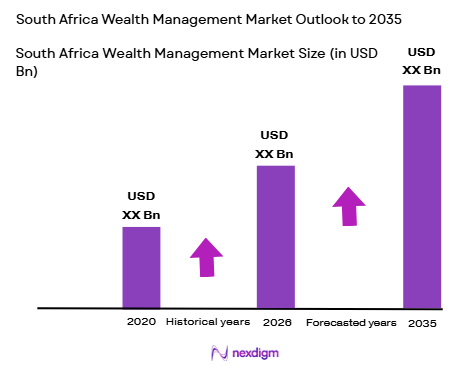
The South Africa wealth management market is valued at approximately USD ~ billion based on a recent historical assessment, with key drivers being an expanding affluent population and the growth of capital markets. The increasing number of high-net-worth individuals (HNWIs) in the country has spurred demand for wealth management services, focusing on asset management, financial planning, and investment advisory. Regulatory changes and the growth of South Africa’s financial sector have also positively impacted the market, encouraging both domestic and international wealth managers to establish a stronger presence.
The dominance of Johannesburg and Cape Town as financial hubs has played a pivotal role in the wealth management market’s growth. Johannesburg, as the financial center of the country, houses the Johannesburg Stock Exchange and many global wealth management firms. Cape Town, on the other hand, serves as a major center for private banking and asset management firms, with its thriving economy and high concentration of affluent individuals. These cities provide the necessary infrastructure, financial expertise, and access to capital markets, further cementing their dominance in the wealth management sector.
Market Segmentation
By Product Type
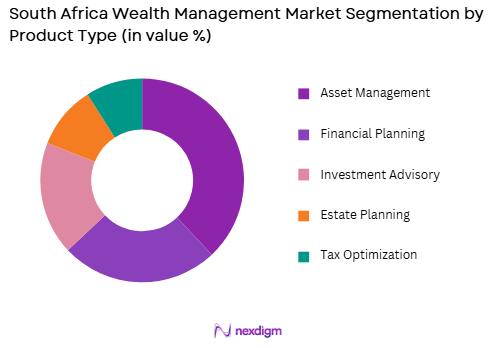
South Africa’s wealth management market is segmented by product type into asset management, financial planning, investment advisory, estate planning, and tax optimization. Recently, asset management has seen a dominant market share due to rising investor demand for diversified investment portfolios and higher returns. This sub-segment is driven by strong institutional support and the growing sophistication of HNWIs seeking tailored wealth solutions. The growth in the number of retirement funds and pension schemes also supports asset management’s dominance in the market, as investors prioritize long-term financial security.
By Platform Type
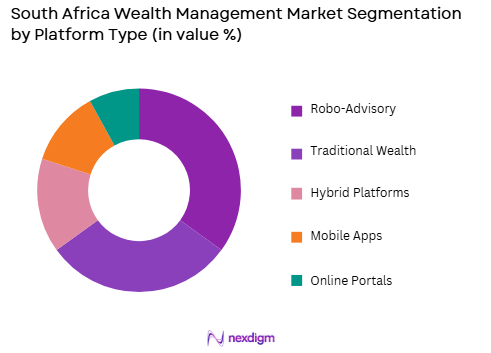
The South Africa wealth management market is segmented by platform type into traditional wealth management, robo-advisory platforms, hybrid platforms, mobile apps, and online portals. Robo-advisory platforms have gained a dominant market share due to their cost-effectiveness, accessibility, and ability to attract younger investors looking for low-fee financial advice. These platforms have increasingly become popular as they combine automated investment management with personalized portfolios, making them more attractive to South Africa’s digitally savvy affluent population seeking a balance between technology and wealth management.
Competitive Landscape
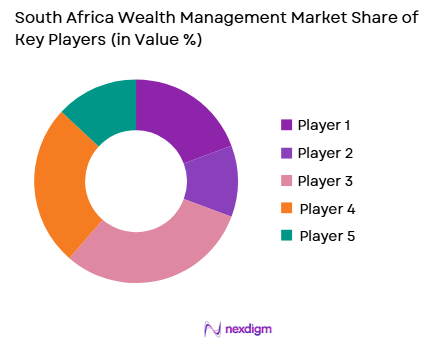
The competitive landscape of the South Africa wealth management market is characterized by a mix of global financial institutions and local players. Consolidation is evident with the increasing number of acquisitions and partnerships, particularly as firms seek to enhance their digital offerings or expand their client base. The major players exert significant influence over the market, setting trends in technology adoption and service diversification, while regulatory bodies play a critical role in ensuring transparency and ethical financial management practices.
| Company Name | Establishment Year | Headquarters | Technology Focus | Market Reach | Key Products | Revenue | Regulatory Compliance |
| Standard Bank | 1862 | Johannesburg | ~ | ~ | ~ | ~ | ~ |
| Absa Wealth | 1991 | Johannesburg | ~ | ~ | ~ | ~ | ~ |
| Investec | 1974 | Johannesburg | ~ | ~ | ~ | ~ | ~ |
| Old Mutual Wealth | 1845 | Cape Town | ~ | ~ | ~ | ~ | ~ |
| Nedbank Private Wealth | 1969 | Johannesburg | ~ | ~ | ~ | ~ | ~ |
South Africa Wealth Management Market Analysis
Growth Drivers
Growth of High-Net-Worth Individuals (HNWIs)
The rise of South Africa’s affluent population has been a significant growth driver for the wealth management market. This demographic has shown an increasing interest in personalized financial services, including asset management, financial planning, and investment advisory. Over the years, many individuals have transitioned from traditional savings methods to more diversified investment portfolios, leading to greater demand for wealth management services. The expansion of HNWIs is attributed to various factors such as entrepreneurship, expanding business sectors, and growth in equity markets. Furthermore, international investment opportunities and the desire to preserve and grow wealth across generations have also significantly contributed to this trend. The increase in affluent investors has encouraged wealth management firms to offer tailored services to meet their specific needs, propelling the market forward.
Technological Advancements and Digital Transformation
The adoption of digital platforms and robo-advisory services has been a driving force in transforming South Africa’s wealth management industry. As digital tools and platforms become more sophisticated, wealth managers have embraced technology to offer services that are more accessible and efficient. Robo-advisory services, in particular, have gained traction due to their low cost and ability to cater to a broader range of customers, especially millennials who are more digitally inclined. The incorporation of artificial intelligence (AI) in portfolio management and financial planning has also enabled wealth managers to offer more personalized advice at a lower cost. These technological advancements have also allowed firms to better track financial trends, optimize investments, and reduce operational costs, ultimately driving market growth. The ongoing digital transformation is expected to continue as firms expand their digital infrastructure, offering a wider variety of services to customers.
Market Challenges
Regulatory Challenges and Compliance Issues
The South African wealth management market faces ongoing regulatory challenges, which continue to impact both local and international wealth managers. Stringent financial regulations and compliance requirements often create barriers to entry for new players and complicate operations for existing firms. The country’s Financial Sector Conduct Authority (FSCA) mandates strict guidelines for financial service providers, ensuring that they comply with transparency, accountability, and customer protection standards. While these regulations help build trust in the financial sector, they can also slow down innovation and increase operational costs for firms. Wealth management firms need to constantly update their systems to meet changing regulations, a process that can be time-consuming and expensive. This complexity, coupled with the slow pace of regulatory reforms in South Africa, poses a significant challenge for wealth managers looking to expand their services.
Economic Uncertainty and Market Volatility
Economic instability and market volatility present another significant challenge to the South African wealth management market. South Africa’s economy has faced several challenges, including fluctuating currency exchange rates, inflation, and political uncertainty. These factors have made it difficult for wealth managers to predict market trends accurately and offer reliable financial advice. In addition, the economic slowdown and rising unemployment levels have affected the wealth creation capacity of many individuals, reducing their ability to invest in wealth management services. As the market becomes more volatile, wealth management firms must adopt more adaptive strategies to mitigate the risks associated with market fluctuations. The uncertainty in the economic landscape has made clients more cautious about investing, further impacting the demand for wealth management services.
Opportunities
Expansion of Robo-Advisory Services
The growing demand for cost-effective and easily accessible financial advice presents a significant opportunity for the South African wealth management market, especially through robo-advisory services. With the increasing penetration of smartphones and the internet, robo-advisory platforms have gained substantial popularity among millennials and Gen Z investors. These platforms offer automated portfolio management and personalized financial advice based on algorithms, making them more affordable and accessible than traditional wealth management services. As more individuals in South Africa become financially literate and tech-savvy, robo-advisors are expected to play a key role in expanding the market. Additionally, the low fee structure of robo-advisory platforms is appealing to those who are cost-conscious but still seek professional guidance in managing their investments. The growth of this segment will offer wealth management firms an opportunity to tap into new customer segments and increase market share.
Increasing Demand for Sustainable Investments
Another significant opportunity for the South African wealth management market lies in the growing demand for sustainable and socially responsible investments. As awareness of environmental, social, and governance (ESG) factors increases, more investors are looking to align their portfolios with their values. Wealth managers who offer ESG investment options can tap into this growing trend by providing clients with investment opportunities that meet their social and environmental preferences. The growing interest in ethical and sustainable investing is seen as a major opportunity to diversify product offerings, attracting investors who seek both financial returns and positive societal impact. This trend is expected to continue to evolve, driven by increasing regulatory support for sustainable investment practices, particularly in the context of the African continent’s need for infrastructure development and environmental stewardship.
Future Outlook
The South Africa wealth management market is expected to continue its upward trajectory, driven by the increasing affluence of individuals, digitalization of financial services, and greater demand for customized investment solutions. Over the next five years, the market is likely to see a greater emphasis on technological innovation, particularly with the rise of robo-advisory platforms and AI-driven wealth management services. The shift towards sustainable investments will also shape the future landscape, as more clients seek socially responsible investment options. Additionally, evolving regulatory frameworks and government support for capital markets are anticipated to provide a conducive environment for market growth. Overall, the wealth management market in South Africa will experience robust growth, though it will need to navigate challenges such as economic volatility and regulatory complexities.
Major Players
- Standard Bank
- Absa Wealth
- Investec
- Old Mutual Wealth
- Nedbank Private Wealth
- PSG Wealth
- FNB Wealth and Investments
- Sanlam Private Wealth
- Rand Merchant Bank Private Banking
- Capitec Bank Wealth
- Citigroup
- Bank of America Merrill Lynch
- Barclays Wealth
- UBS Group AG
- JPMorgan Chase
Key Target Audience
- Investments and venture capitalist firms
- Government and regulatory bodies
- Family offices
- High-net-worth individuals (HNWIs)
- Private equity firms
- Financial institutions
- Insurance companies
- International wealth management firms
Research Methodology
Step 1: Identification of Key Variables
In-depth market analysis begins by identifying the key factors influencing the South Africa wealth management market, including demographics, regulatory trends, economic conditions, and technological developments.
Step 2: Market Analysis and Construction
A comprehensive evaluation of the wealth management market is conducted, incorporating secondary research, historical data, and government reports to construct the market framework.
Step 3: Hypothesis Validation and Expert Consultation
Expert opinions from industry leaders, financial analysts, and wealth management professionals are gathered to validate the initial hypotheses and refine market assumptions.
Step 4: Research Synthesis and Final Output
The gathered data and insights are synthesized to produce a detailed report, which is then verified for accuracy and relevance before final presentation.

- Executive Summary
- Research Methodology (Definitions, Scope, Industry Assumptions, Market Sizing Approach, Primary & Secondary Research Framework, Data Collection & Verification Protocol, Analytic Models & Forecast Methodology, Limitations & Research Validity Checks)

- Market Definition and Scope
- Value Chain & Stakeholder Ecosystem
- Regulatory / Certification Landscape
- Sector Dynamics Affecting Demand
- Strategic Initiatives & Infrastructure Growth

- Growth Drivers
Rising High Net-Worth Individual Population
Technological Advancements in Wealth Management
Increasing Investments in Emerging Markets - Market Challenges
Regulatory Compliance and Risk Management
High Costs of Wealth Management Services
Limited Financial Literacy in Emerging Demographics - Market Opportunities
Growth of Digital Wealth Management Solutions
Integration of ESG Investing
Expansion of Financial Products for Affluent Youth - Trends
Rising Adoption of Digital Wealth Platforms
Increasing Use of Robo-Advisors - Government Regulations
- SWOT Analysis
- Porter’s Five Forces

- By Market Value, 2020-2025
- By Installed Units, 2020-2025
- By Average System Price, 2020-2025
- By System Complexity Tier, 2020-2025

- By System Type (In Value%)
Private Banking
Wealth Advisory
Asset Management
Investment Advisory
Estate Planning - By Platform Type (In Value%)
Digital Platforms
Traditional Branch Services
Hybrid Platforms
Mobile Banking Platforms
Robo-Advisors - By Fitment Type (In Value%)
On-premise Solutions
Cloud-based Solutions
Modular Solutions
Integrated Solutions - By End User Segment (In Value%)
High Net-Worth Individuals
Affluent Individuals
Institutional Investors
Family Offices

- Market Share Analysis
- Cross Comparison Parameters (System Type, Platform Type, End User Segment, Fitment Type, Procurement Channel, Pricing Strategy, Service Offerings, Geographic Presence, Technological Integration)
- SWOT Analysis of Key Competitors
- Pricing & Procurement Analysis
- Key Players
Standard Bank
Nedbank Private Wealth
FNB Wealth and Investment
Absa Private Bank
Investec Wealth & Investment
PSG Wealth
RMB Private Bank
Old Mutual Wealth
Sanlam Private Wealth
Momentum Wealth
BPI Wealth
Sasfin Wealth
Ashburton Investments
Coronation Fund Managers
Fairtree Capital

- Rising Demand for Personalized Investment Solutions
- Shift Towards Sustainable and Impact Investing
- Increasing Trust in Digital Platforms for Wealth Management
- Evolution of Family Offices and Multi-Generational Wealth

- Forecast Market Value, 2026-2035
- Forecast Installed Units, 2026-2035
- Price Forecast by System Tier, 2026-2035
- Future Demand by Platform, 2026-2035


 Request a Sample
 Ask for Customization
 Get a Quote
 Enquire Now