
 Download PDF
 Download PDF
Market Overview
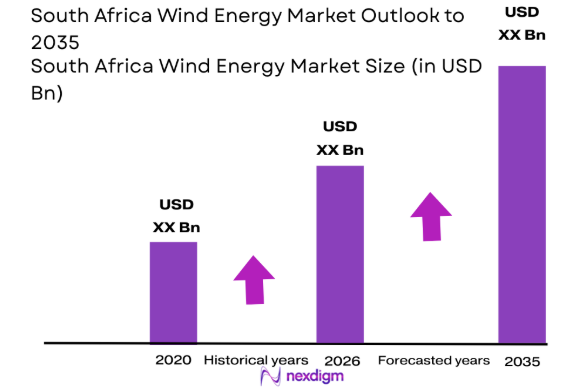
The South Africa Wind Energy market is driven by the increasing demand for clean energy solutions, with significant investments in wind farms across the country. Based on a recent historical assessment, the market is expected to reach an estimated value of USD ~ billion, fueled by government policies promoting renewable energy adoption, as well as favourable wind conditions that support the development of onshore and offshore wind projects. These factors are expected to continue to attract both domestic and international investors to the sector.
South Africa, along with key regions like the Eastern and Western Cape, dominates the wind energy market due to their optimal wind conditions, making them ideal for wind farm development. The country’s commitment to reducing carbon emissions through its renewable energy strategy and the African Renewable Energy Initiative has further supported the growth of this market. Government incentives, such as tax breaks and feed-in tariffs, have made the development of wind energy projects increasingly attractive.
Market Segmentation
By System Type
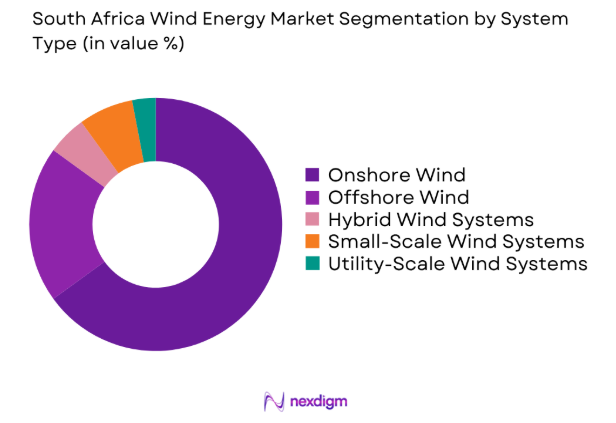
The South Africa wind energy market is segmented by system type into onshore wind, offshore wind, hybrid wind systems, small-scale wind systems, and utility-scale wind systems. Recently, onshore wind systems have dominated the market share due to their lower installation costs, shorter development timelines, and the availability of vast land areas suitable for wind farm development. These factors, combined with supportive government incentives, have positioned onshore wind as the preferred solution for large-scale wind power generation across the country.
By Platform Type
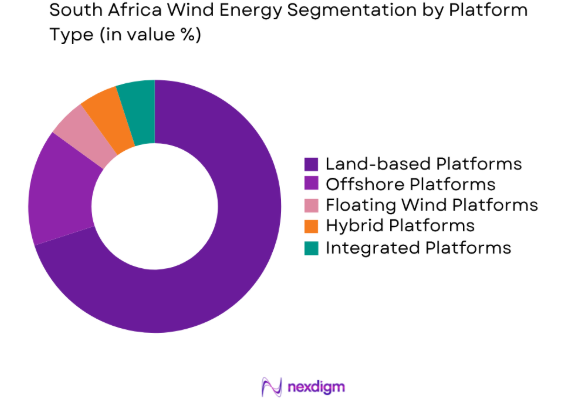
The market is segmented by platform type into land-based platforms, offshore platforms, floating wind platforms, hybrid platforms, and integrated platforms. Land-based platforms hold the dominant share, driven by the availability of land and the relatively lower cost of installation compared to offshore or floating wind platforms. Their widespread adoption is also influenced by the existing infrastructure and government support for land-based renewable energy solutions.
Competitive Landscape
The South Africa wind energy market is becoming increasingly competitive, with both local and international players competing for market share. The market is consolidating as major energy companies collaborate with government agencies to invest in large-scale wind projects. The influence of large players such as Vestas and Siemens Gamesa continues to shape the market, while new entrants focus on innovation in offshore and floating wind turbine technologies to meet growing energy demand.
| Company Name | Establishment Year | Headquarters | Technology Focus | Market Reach | Key Products | Revenue (USD) | Additional Parameter |
| Vestas | 1945 | Denmark | ~ | ~ | ~ | ~ | ~ |
| Siemens Gamesa | 1976 | Spain | ~ | ~ | ~ | ~ | ~ |
| GE Renewable Energy | 1892 | USA | ~ | ~ | ~ | ~ | ~ |
| Nordex | 1985 | Germany | ~ | ~ | ~ | ~ | ~ |
| Suzlon Energy | 1995 | India | ~ | ~ | ~ | ~ | ~ |
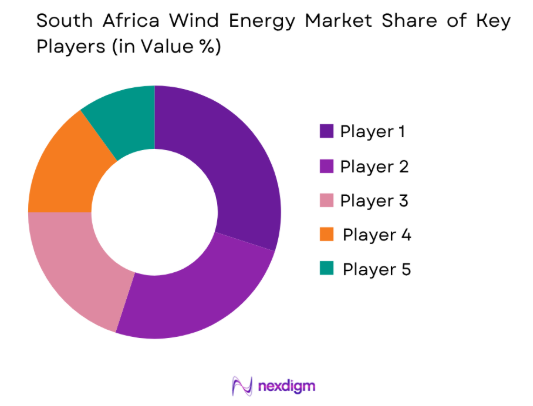
South Africa Wind Energy Market Analysis
Growth Drivers
Government Incentives
Government incentives such as feed-in tariffs, tax credits, and renewable energy auctions are crucial for driving the growth of the wind energy market. These financial incentives lower the initial capital investment required for wind farm development, making the sector more attractive to investors. The South African government’s commitment to renewable energy through initiatives like the Integrated Resource Plan (IRP) has provided a clear roadmap for the future, signaling a long-term focus on reducing carbon emissions. The ongoing support from government policies has made it easier for new projects to gain approval and secure financing, significantly accelerating the pace of wind energy installations.
Technological Advancements
Technological advancements in wind turbine design, especially in offshore and hybrid systems, have significantly boosted market growth. Larger turbine sizes and enhanced efficiency have made wind energy more cost-competitive compared to traditional energy sources. Moreover, progress in energy storage technologies has allowed wind energy to be stored for use during peak demand, addressing its intermittent nature. These innovations are expected to further improve wind energy performance and economics, making it an increasingly viable and attractive option for large-scale power generation in South Africa. As turbine technology continues to evolve, it will play a crucial role in expanding the country’s renewable energy capacity.
Market Challenges
High Initial Capital Costs
A major challenge for the South African wind energy market is the high upfront costs associated with wind farm installations. While operational costs are low, the initial investment in turbines, infrastructure, and grid integration can be a significant barrier for many investors. Securing financing for large-scale wind projects is also challenging, particularly given economic uncertainties and fluctuating currency exchange rates. These financial hurdles make it difficult for smaller players to enter the market and impede the country’s ability to meet its renewable energy targets in the short term. Overcoming these obstacles will be crucial to accelerating the growth of South Africa’s wind energy sector.
Intermittency of Wind Energy
Wind energy is an intermittent resource, making it challenging to provide a consistent and reliable power supply. This issue is especially significant in countries like South Africa, where energy demand peaks at certain times, but wind conditions may not coincide with these high-demand periods. Although advancements in energy storage technologies are helping to address this challenge by storing excess energy for later use, integrating wind power into the national grid remains complex. To improve grid stability, the government and utility companies are increasingly exploring hybrid energy solutions, combining wind with other renewable sources, and incorporating energy storage systems. These strategies aim to provide a more stable and dependable energy supply, ensuring reliability even when wind conditions are not optimal.
Opportunities
Offshore Wind Energy
South Africa has substantial potential for offshore wind energy, driven by its extensive coastline and favorable wind conditions. The development of offshore wind farms offers a significant opportunity to expand the country’s renewable energy capacity. Offshore systems benefit from stronger and more consistent winds, enhancing the efficiency of power generation. While the initial installation costs of offshore wind farms are higher than onshore systems, the long-term benefits make them a promising option. These include higher capacity factors and the potential for large-scale energy generation, making offshore wind a key part of South Africa’s renewable energy future. As technology advances and costs decrease, offshore wind farms are expected to become increasingly competitive.
Hybrid Wind Systems
The integration of wind energy with other renewable sources, like solar power, is becoming an important trend in South Africa. Hybrid systems, which combine wind and solar generation with energy storage solutions, offer the potential for a more stable and reliable energy supply. These systems help address the intermittency challenges of wind power while providing a cost-effective solution to meet the increasing demand for renewable energy. As the cost of energy storage continues to fall, hybrid systems are expected to see significant adoption in the coming years. This combination of renewable resources will play a key role in enhancing grid stability and reducing reliance on conventional energy sources.
Future Outlook
The South Africa wind energy market is expected to experience steady growth over the next five years, driven by technological advancements, favorable government policies, and increased demand for renewable energy solutions. As wind energy becomes increasingly competitive with conventional power generation, South Africa will continue to attract investments in wind farms, both onshore and offshore. Technological innovations, such as floating wind platforms and hybrid systems, will play a key role in expanding the market’s capacity. The country’s regulatory framework, which supports the growth of renewable energy, will also contribute to a more sustainable and diversified energy sector.
Major Players
- Vestas
- Siemens Gamesa
- GE Renewable Energy
- Nordex
- Suzlon Energy
- Siemens Energy
- Enel Green Power
- Acciona Energía
- Iberdrola
- Brookfield Renewable Partners
- First Solar
- Scatec Solar
- EDF Renewables
- Mainstream Renewable Power
- Pattern Energy
Key Target Audience
- Investments and venture capitalist firms
- Government and regulatory bodies
- Energy utility companies
- Renewable energy developers
- Financial institutions providing project financing
- Large-scale industrial energy consumers
- Technology solution providers for wind energy
- Environmental and sustainability organizations
Research Methodology
Step 1: Identification of Key Variables
Identifying the key market drivers, challenges, and growth factors that influence the wind energy sector in South Africa.
Step 2: Market Analysis and Construction
Analyzing historical market data and trends to build a robust market model.
Step 3: Hypothesis Validation and Expert Consultation
Validating market assumptions through interviews and consultations with industry experts.
Step 4: Research Synthesis and Final Output
Compiling data and synthesizing findings to produce the final report on the South Africa wind energy market.

- Executive Summary
- Research Methodology (Definitions, Scope, Industry Assumptions, Market Sizing Approach, Primary & Secondary Research Framework, Data Collection & Verification Protocol, Analytic Models & Forecast Methodology, Limitations & Research Validity Checks)

- Market Definition and Scope
- Value Chain & Stakeholder Ecosystem
- Regulatory / Certification Landscape
- Sector Dynamics Affecting Demand
- Strategic Initiatives & Infrastructure Growth

- Growth Drivers
Increasing Energy Demand
Government Support for Renewable Energy
Technological Advancements in Turbine Efficiency - Market Challenges
High Initial Investment Costs
Intermittency of Wind Energy
Regulatory Barriers and Compliance - Market Opportunities
Expansion of Offshore Wind Farms
Increased Adoption of Hybrid Wind Systems
Collaborations with International Energy Firms - Trends
Development of Floating Wind Turbines
Integration with Energy Storage Systems
Rising Use of Digitalization in Wind Energy - Government Regulations
- SWOT Analysis of Key Competitors
- Porter’s Five Forces

- By Market Value, 2020-2025
- By Installed Units, 2020-2025
- By Average System Price, 2020-2025
- By System Complexity Tier, 2020-2025

- By System Type (In Value%)
Onshore Wind
Offshore Wind
Hybrid Wind Systems
Small-Scale Wind Systems
Utility-Scale Wind Systems - By Platform Type (In Value%)
Land-based Platforms
Offshore Platforms
Floating Wind Platforms
Hybrid Platforms
Integrated Platforms - By Fitment Type (In Value%)
Fixed-Mounted Solutions
Floating Solutions
Modular Solutions
Standalone Solutions
Integrated Solutions - By End User Segment (In Value%)
Private Energy Companies
Government Initiatives
Industrial Energy Users
Utility Providers
Research & Educational Institutions - By Procurement Channel (In Value%)
Direct Procurement
Third-Party Vendors
Government Tenders
Private Sector Investments
Renewable Energy Auctions

- Market Share Analysis
- Cross Comparison Parameters (System Type, Platform Type, Procurement Channel, End User Segment, Fitment Type, Installation Location, Wind Capacity, Technology Integration, Financing Models, Maintenance & Support Services)
- SWOT Analysis of Key Competitors
- Pricing & Procurement Analysis
- Key Players
Vestas
Siemens Gamesa
GE Renewable Energy
Nordex
Suzlon Energy
Enel Green Power
Siemens Energy
Goldwind
General Electric
Suzlon Wind Energy
Mainstream Renewable Power
Acciona Energía
EDF Renewables
Tata Power Renewable Energy
Senvion

- Private Energy Companies Investing in Green Energy
- Government Initiatives Promoting Clean Energy
- Industry Leaders Moving Toward Sustainable Energy Solutions
- Technological Collaborations and Cross-Sector Partnerships

- Forecast Market Value, 2026-2035
- Forecast Installed Units, 2026-2035
- Price Forecast by System Tier, 2026-2035
- Future Demand by Platform, 2026-2035


 Request a Sample
 Ask for Customization
 Get a Quote
 Enquire Now