

 Download PDF
Market Overview
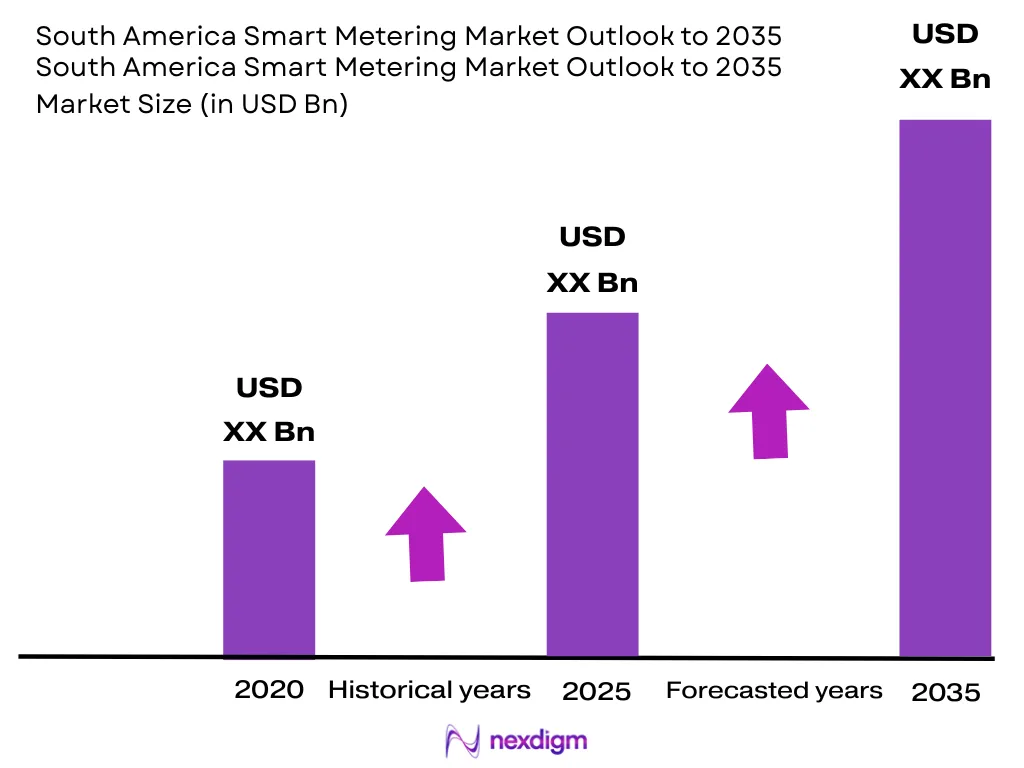
The South America Smart Metering Market was valued at USD ~ Billion in 2024 and is anticipated to expand at a CAGR of ~% during 2026-2035. The market is primarily driven by utility digitalization, government-backed smart grid modernization initiatives, and the region’s persistent challenge of non-technical losses and energy theft. According to industry estimates, the South and Central America Smart Meters Market was valued at approximately USD 1.98 billion in 2025 and is projected to reach approximately USD 2.99 billion by 2031, growing at a CAGR of approximately 7.11%, with shipment volumes expanding from approximately 8.15 million units in 2025 to 11.67 million units by 2030. Smart electricity meters accounted for approximately 63.65% of the region’s smart meters market share in 2025, benefiting from a decade of automated meter reading experience that simplifies procurement specifications and installer training, while smart water meters are delivering the highest CAGR outlook at approximately 9.22% through 2031, driven by accelerating adoption in drought-affected countries such as Chile and Peru.
Market Segmentation
By Type
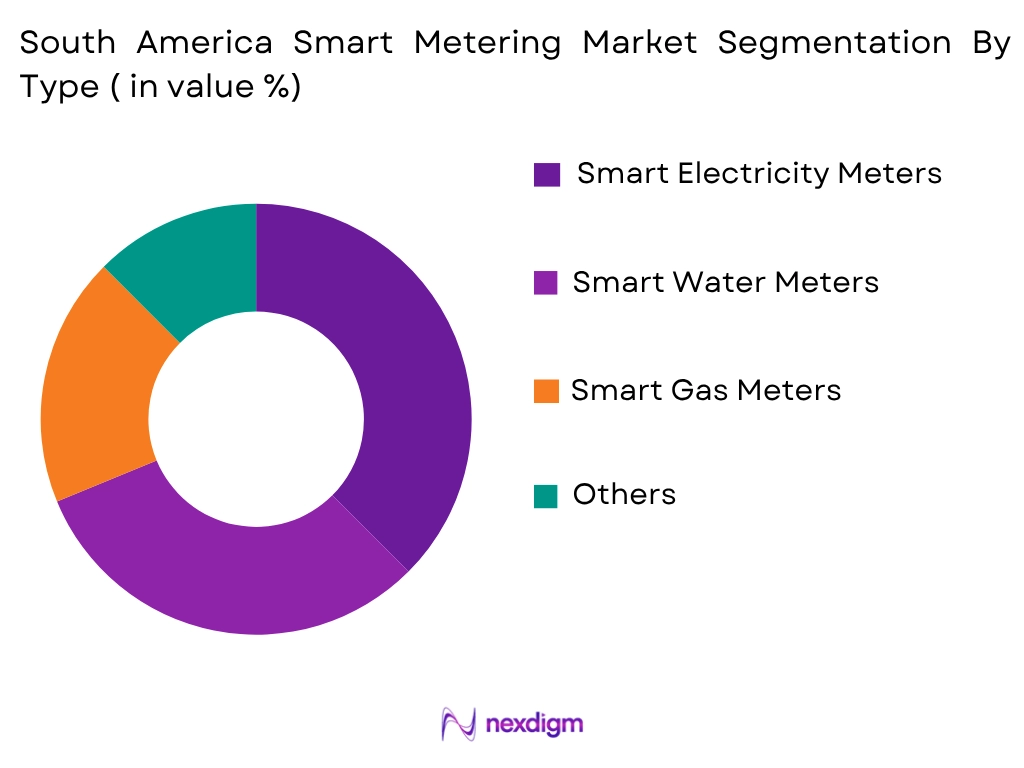
Among these, Smart Electricity Meters hold the dominant share of the South America Smart Metering Market, accounting for approximately 63.65% of the region’s smart meters market in 2025, supported by utilities exploiting voltage sag analytics and phase-imbalance alarms to cut technical losses and improve power-quality reporting to regulators. Smart Water Meters are emerging as the fastest-growing category, delivering the highest CAGR outlook of approximately 9.22% through 2031, as water utilities, particularly in drought-stricken Chile and Peru, fast-track ultrasonic meters fitted with acoustic leakage modules that immediately expose bursts and illegal taps. Smart Gas Meters remain a smaller but steadily growing category, with the South and Central America smart gas meter market projected to expand from approximately USD 100.9 million in 2025 to USD 173.2 million by 2034, supported by expanding gas distribution networks in larger markets such as Brazil and Argentina and rising consumer expectations for transparent, real-time energy usage information.
By Technology
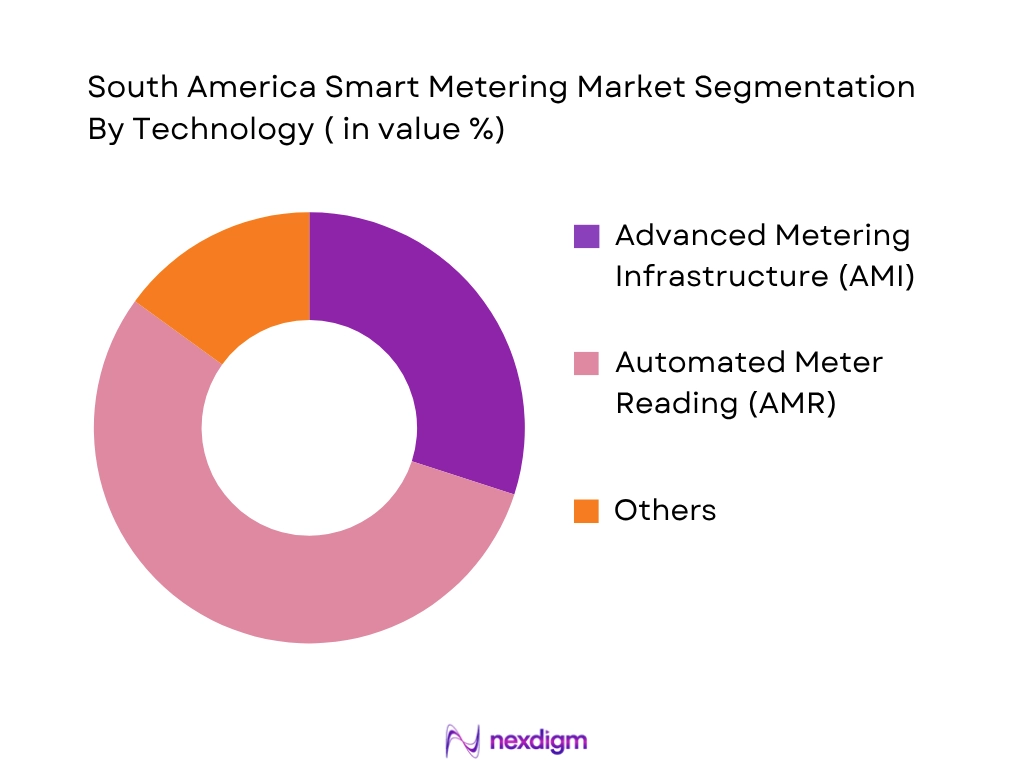
Advanced Metering Infrastructure (AMI) dominated the South America Smart Metering Market across electricity, water, and gas segments in 2024-2025, reflecting the region’s accelerating shift toward two-way communication systems that enable real-time monitoring, remote disconnection, and dynamic pricing capabilities. Utilities across the region continue to prioritize AMI deployment to improve billing accuracy, reduce non-technical losses, and support demand response programs, while Automated Meter Reading (AMR) continues to serve as a transitional technology in markets with more limited communication infrastructure. The Residential end-user segment dominated the market in 2024, reflecting the scale of household electricity, water, and gas connections requiring metering modernization across the region’s rapidly urbanizing population centers. Because utilities typically bill customers in local currencies such as Brazilian real, Argentine peso, and Chilean peso, while purchasing metering electronics in US dollars, meter suppliers are increasingly locating assembly plants inside Mercosur trade zones to hedge against currency exposure and reduce landed costs.
Competitive Landscape
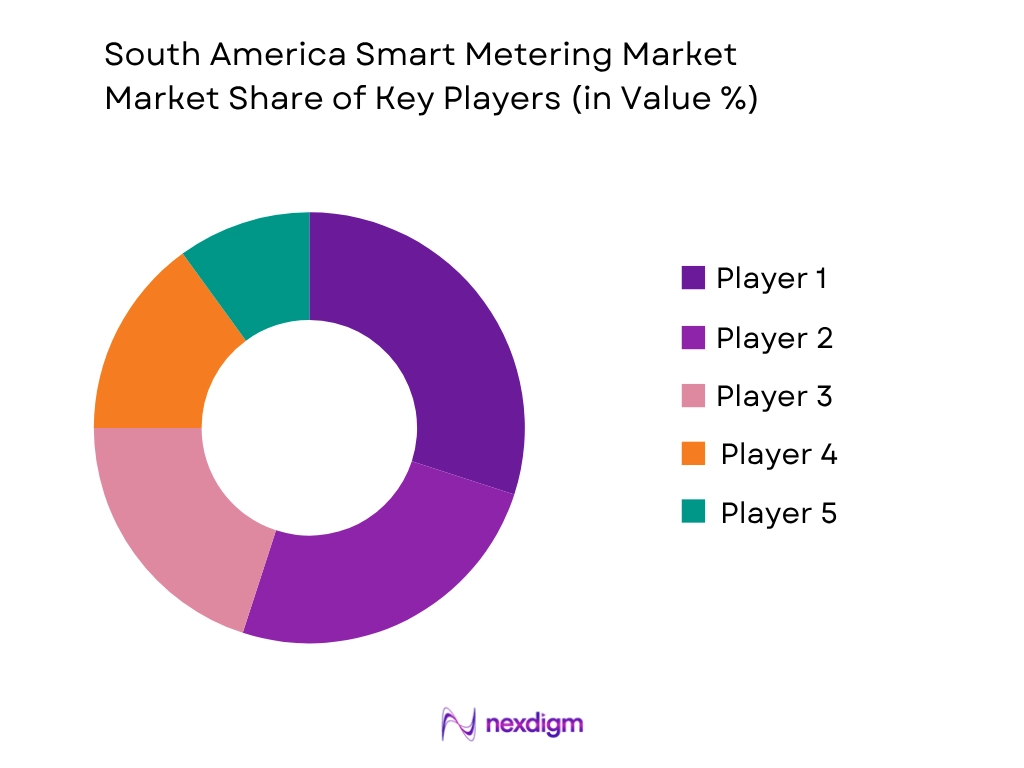
The South America Smart Metering Market is moderately consolidated, dominated by global metering technology leaders alongside specialized regional manufacturers with established local assembly capabilities. Competition is primarily based on measurement accuracy, AMI integration capability, regulatory compliance, local currency pricing strategies, and after-sales technical support. Global players including Landis+Gyr, Itron, Schneider Electric, and Siemens maintain strong positions across the region’s electricity metering segment, while Kamstrup and Sensus (Xylem) have built specialized expertise in ultrasonic water metering technology increasingly favored by utilities in drought-affected Chile and Peru. Regional manufacturers such as Nansen, a Brazilian smart meter producer, continue to serve domestic utility demand with locally assembled products that reduce currency exposure for utilities billing in local currency. Given that utilities across the region bill in local pesos while purchasing metering electronics in US dollars, companies with local assembly plants inside Mercosur zones are increasingly favored, as this manufacturing strategy hedges currency risk and provides more competitive, predictable pricing for large-scale utility procurement programs.
| Company | Established | Headquarters | Electricity Metering Portfolio | Gas/Water Metering Portfolio | Manufacturing Presence | Major End-Use Segments | Key Strategic Focus | Certifications & Compliance |
| Nansen S/A Equipamentos Eletronicos | 1979 | ~
|
~ | ~ | ~ | ~ | ~ | ~ |
| Landis+Gyr AG | 1896 | ~
|
~ | ~ | ~ | ~ | ~ | ~ |
| Itron, Inc. | 1977 | ~
|
~ | ~ | ~ | ~ | ~ | ~ |
| Kamstrup A/S | 1946 | ~ | ~ | ~ | ~ | ~ | ~ | ~ |
| Sensus (Xylem Inc.) | 1911 | ~
|
~ | ~ | ~ | ~ | ~ | ~ |
South America Smart Metering Market Analysis
Growth Drivers
Utility Digitalization and Government-Backed Smart Grid Modernization Initiatives
The South America Smart Metering Market is experiencing sustained growth driven by the digitalization of utilities and government initiatives supporting smart grid modernization. According to industry estimates, the South America Smart Meters Market is projected to grow from approximately USD 9.8 billion in 2025 to USD 22.4 billion by 2031, registering a CAGR of approximately 14.9%, as advanced metering infrastructure adoption accelerates across the region. In Brazil specifically, Sabesp announced in September 2025 a larger IoT-based smart water metering project in partnership with telecom providers to scale smart meter coverage to millions of connections across São Paulo and surrounding areas, illustrating the scale of utility digitalization investment underway. Consumers across the region are increasingly demanding usage transparency and energy optimization, with smart meters providing real-time consumption data through mobile apps and dashboards that help users optimize consumption, while rising digital literacy continues to accelerate adoption of these consumer-facing engagement platforms.
Rising Non-Technical Losses and Energy Theft Driving AMI Adoption
The persistent challenge of energy theft and non-technical losses across many South American countries continues to be a critical driver for smart metering adoption. Utilities are increasingly focusing on reducing non-technical losses through smart grid modernization, exploiting voltage sag analytics and phase-imbalance alarms to cut technical losses and improve power-quality reporting to regulators. Smart electricity meters, which accounted for approximately 63.65% of the region’s smart meters market share in 2025, benefit from a decade of automated meter reading experience that simplifies procurement specifications and installer training for utilities seeking to modernize aging distribution infrastructure. Urbanization trends and expanding gas and electricity distribution networks, especially in larger markets such as Brazil and Argentina, continue to encourage utility companies to invest in advanced metering infrastructure capable of supporting dynamic pricing models that encourage more efficient energy use across the region’s growing urban populations.
Market Challenges
Currency Volatility and Import Dependency for Electronic Components
The South America Smart Metering Market remains significantly exposed to currency volatility given the region’s dependence on imported metering electronics, semiconductors, and communication modules typically priced in US dollars. Because utilities bill customers in local currencies such as Brazilian real, Argentine peso, and Chilean peso, while meter suppliers purchase electronics in US dollars, currency depreciation across the region directly increases landed costs and creates pricing uncertainty for both suppliers and utility procurement programs. This currency exposure has prompted meter suppliers to increasingly locate assembly plants inside Mercosur trade zones to hedge against exchange-rate risk, though this strategy requires substantial upfront capital investment that not all companies can readily deploy. Smaller regional manufacturers without the scale to establish local assembly capabilities remain particularly vulnerable to currency-driven cost fluctuations, creating competitive disadvantages relative to larger multinational suppliers with diversified regional manufacturing footprints.
Fragmented Regulatory Frameworks and High Upfront Capital Costs Across Countries
The South America Smart Metering Market faces significant challenges from fragmented regulatory frameworks that vary considerably across the region’s national electricity and water regulatory agencies, requiring meter suppliers and utilities to navigate distinct certification, communication protocol, and tariff structure requirements in each country. Commercial properties face particularly complex tariff tiers that necessitate class-320 current transformers and multi-load logging capabilities, slowing widespread meter replacement given the higher cost and technical complexity of commercial-grade metering equipment. High upfront capital costs for AMI deployment, including communication infrastructure, data management platforms, and meter hardware, continue to constrain the pace of utility modernization programs, particularly among smaller municipal utilities operating with limited capital budgets. These regulatory and capital cost challenges collectively slow the pace of smart meter deployment relative to the region’s underlying demand potential, particularly in smaller markets beyond Brazil, Argentina, and Chile.
Market Opportunities
Growth in Smart Water Metering Amid Drought Conditions in Chile and Peru
Growing water scarcity concerns across drought-affected countries present substantial opportunities for companies specializing in smart water metering technology. Smart water meters are delivering the highest CAGR outlook of approximately 9.22% through 2031, as water utilities in drought-stricken Chile and Peru fast-track ultrasonic meters fitted with acoustic leakage modules that immediately expose bursts and illegal taps. In Brazil, Sabesp’s September 2025 announcement of a larger IoT-based smart water metering project in partnership with telecom providers to scale coverage to millions of connections across São Paulo demonstrates the scale of investment opportunity within the water metering segment. The South and Central America smart water meter market is projected to grow from approximately USD 202.6 million in 2025 to USD 270.3 million by 2034, driven by growing concerns over water scarcity, aging distribution networks, and operational inefficiencies that continue to push utilities toward smarter metering solutions capable of supporting precise flow measurement and leak detection across the region’s water distribution networks.
Expansion of Local Assembly and Mercosur-Based Manufacturing
The region’s currency volatility challenges simultaneously create significant opportunities for companies establishing local assembly and manufacturing capabilities within Mercosur trade zones. Meter suppliers increasingly locate assembly plants inside Mercosur zones to hedge currency risk given that utilities bill in local pesos while purchasing electronics in US dollars, creating a structural advantage for companies with established regional manufacturing footprints. Companies developing local component sourcing relationships, currency-hedged pricing models, and regional assembly capabilities are well positioned to capture growing utility demand while offering more predictable and competitive pricing than companies reliant on fully imported metering equipment. As utilities across Brazil, Argentina, Chile, Colombia, and Peru continue to scale AMI deployment programs, companies with integrated regional manufacturing and currency risk management strategies are positioned to capture a growing share of the region’s expanding smart metering procurement volumes.
Future Outlook
The South America Smart Metering Market is expected to witness robust expansion over the forecast period, supported by continued utility digitalization, government-backed smart grid modernization programs, and accelerating smart water meter adoption amid growing water scarcity concerns. Continued investment in local assembly capabilities, IoT and data analytics platform integration, and dynamic pricing and demand response programs is expected to further strengthen the market’s competitive landscape. Growing regulatory emphasis on reducing non-technical losses and improving grid efficiency will continue to accelerate AMI deployment across Brazil, Argentina, Chile, Colombia, and Peru through 2035.
Major Players
- Schneider Electric SE
- Landis+Gyr AG
- Itron, Inc.
- Siemens AG
- Wasion Holdings Limited
- Badger Meter, Inc.
- Xylem Inc. (Sensus)
- Honeywell International Inc. (Smart Energy)
- Kamstrup A/S
- Aclara Technologies LLC
- Osaki Electric Co., Ltd. (EDMI)
- Holley Technology Ltd.
- Nansen S/A Equipamentos Eletronicos
- Secure Meters Limited
- EMH Metering GmbH & Co. KG
Key Target Audience
- Smart Meter Manufacturers and Technology Providers
- Electricity, Water, and Gas Utility Companies
- Municipal and Regional Water Authorities
- Government and Regulatory Bodies (ANEEL, ENRE, CNE, CREG, OSINERGMIN)
- Telecommunications and IoT Connectivity Providers
- Investment and Venture Capitalist Firms
- Data Analytics and Consumer Engagement Platform Providers
- Local Component Suppliers and Contract Manufacturers
Research Methodology
Step 1: Identification of Key Variables
The research process begins with identifying the complete ecosystem of the South America Smart Metering Market, including component suppliers, meter manufacturers, utility companies, regulatory authorities, and telecommunications providers. Extensive secondary research is conducted using company annual reports, government publications, regulatory agency disclosures, industry journals, and proprietary databases to determine the variables influencing market demand, pricing, deployment volumes, and technological developments.
Step 2: Market Analysis and Construction
Historical market information is collected and analyzed to estimate market size, deployment volumes, country-wise demand, and pricing trends. A combination of top-down and bottom-up approaches is used to estimate market revenues and validate segment-level performance. Consumption patterns across electricity, water, and gas metering applications are evaluated to establish an accurate representation of the industry.
Step 3: Hypothesis Validation and Expert Consultation
The preliminary findings are validated through Computer-Assisted Telephone Interviews (CATIs) and structured discussions with meter manufacturers, utility procurement managers, regulatory experts, telecommunications executives, and senior executives operating within South America’s smart metering industry. These interviews help verify market assumptions, competitive developments, technology adoption trends, pricing dynamics, and future investment opportunities while refining the overall market estimates.
Step 4: Research Synthesis and Final Output
The final stage integrates insights obtained from primary interviews with quantitative information collected through secondary sources. Data triangulation techniques are applied to reconcile differences between supply-side and demand-side estimates, ensuring robust market forecasting. The report is then reviewed through multiple quality assurance checkpoints to deliver a comprehensive analysis covering market size, segmentation, competitive landscape, future outlook, and strategic recommendations for industry stakeholders.

- Executive Summary
- Research Methodology (Market Definitions and Assumptions, Abbreviations, Market Sizing Approach, Top-Down Analysis, Bottom-Up Analysis, Demand-Side Assessment, Supply-Side Assessment, Primary Industry Interviews, Secondary Research Validation, Data Triangulation, Forecasting Framework, Limitations and Future Conclusions)

- Definition and Scope
- Market Evolution and Industry Genesis
- Timeline of Major Industry Developments
- Smart Metering Industry Value Chain Analysis
- Supply Chain Analysis

- Growth Drivers (Utility Digitalization and Smart Grid Modernization, Rising Non-Technical Losses and Energy Theft, Government-Backed Infrastructure Investment, Growing Water Scarcity Concerns, Urbanization and Rising Electricity Consumption, Enhanced Consumer Demand for Usage Transparency)
- Market Challenges (Currency Volatility and Import Dependency for Electronic Components, Fragmented Regulatory Frameworks Across Countries, High Upfront Capital Costs, Complex Commercial Tariff Structures, Limited Rural Network Connectivity, Aging Distribution Infrastructure)
- Market Opportunities (Growth in Smart Water Metering Amid Drought Conditions, Expansion of Local Assembly and Mercosur-Based Manufacturing, IoT and Data Analytics Platform Integration, Rural and Underserved Area Electrification, Dynamic Pricing and Demand Response Programs, Cross-Utility Data Integration Platforms)
- Market Trends (Shift Toward Ultrasonic Water Meters, Growth in NB-IoT and Cellular Connectivity, Rise of Local Currency-Hedged Manufacturing, Voltage Sag and Phase-Imbalance Analytics, Integration of Mobile Apps and Consumer Dashboards, Expansion of Prepayment Metering Models)
- Government Regulations (National Electricity Regulatory Agency (ANEEL) Requirements in Brazil, Ente Nacional Regulador de la Electricidad (ENRE) Requirements in Argentina, Comision Nacional de Energia (CNE) Requirements in Chile, Comision de Regulacion de Energia y Gas (CREG) Requirements in Colombia, Organismo Supervisor de la Inversion en Energia y Mineria (OSINERGMIN) Requirements in Peru, Mercosur Trade and Import Regulations)
- Import and Export Analysis (Trade Volume, Major Import Sources, Export Destinations, HS Code Analysis, Trade Balance)
- Component Availability Analysis (Metering Chipsets and Semiconductors, Communication Modules, Current Transformers, Ultrasonic Sensors, Battery and Power Systems)
- Technology Landscape (Advanced Metering Infrastructure Platforms, Ultrasonic Flow Measurement Technologies, RF Mesh and Cellular Communication Networks, Data Analytics and Consumer Engagement Platforms, Voltage Sag and Phase-Imbalance Analytics)
- Sustainability Assessment (Energy Loss Reduction, Water Conservation and Leak Detection, Carbon Footprint Reduction Through Grid Efficiency, Renewable Energy Integration Support, Circular Economy Component Recycling)
- PESTLE Analysis
- SWOT Analysis
- Porter’s Five Forces Analysis
- Stakeholder Ecosystem
- Competition Ecosystem

- By Market Value (2020-2025)
- By Installed Base (2020-2025)
- By Average Selling Price (2020-2025)

- By Type (In Value %)
Smart Electricity Meters
Smart Water Meters
Smart Gas Meters - By Technology (In Value %)
Advanced Metering Infrastructure (AMI)
Automated Meter Reading (AMR) - By Communication Technology (In Value %)
RF Mesh
Cellular (2G/3G/4G/NB-IoT)
Power Line Communication (PLC)
Others - By Component (In Value %)
Hardware
Software
Services - By Country (In Value %)
Brazil
Argentina
Chile
Colombia
Peru
Rest of South America - By End User
Commercial Industrial
Residential

- Market Share of Major Players (By Value, Volume, Meter Type, End-User Industry, Communication Technology)
- Cross Comparison Parameters (AMI Portfolio Breadth, Local Assembly and Currency Hedging Capability, Manufacturing Capacity, Application Technical Support Capability, Regulatory Compliance & Certifications, Utility Customer Base, Innovation & New Product Launch Frequency, Regional Distribution Network)
- SWOT Analysis of Major Players
- Pricing Analysis by Meter Category and Communication Type
- Production Capacity Analysis
- Manufacturing Footprint Analysis
- Distribution Network Analysis
- Innovation Benchmarking
- Detailed Profiles of Major Companies
Schneider Electric SE
Landis+Gyr AG
Itron, Inc.
Siemens AG
Wasion Holdings Limited
Badger Meter, Inc.
Xylem Inc. (Sensus)
Honeywell International Inc. (Smart Energy)
Kamstrup A/S
Aclara Technologies LLC
Osaki Electric Co., Ltd. (EDMI)
Holley Technology Ltd.
Nansen S/A Equipamentos Eletronicos
Secure Meters Limited
EMH Metering GmbH & Co. KG

- Consumption Pattern Analysis (Installation Volume, Meter Replacement Cycles, Product Category Penetration, Seasonal Demand, Utility Procurement Activity)
- Purchasing Criteria (Measurement Accuracy, Regulatory Compliance, Cost Efficiency, Communication Reliability, Battery Life, After-Sales Support)
- Procurement and Supplier Selection Analysis
- AMI Adoption Assessment
- Prepayment vs Postpayment Metering Demand
- Product Attribute Preference Analysis (Measurement Precision, Communication Range, Tamper Detection, Battery Longevity, Local Currency Pricing, Regulatory Certification)
- Consumer Usage Transparency Expectations
- Pain Point Analysis
- Decision-Making Process

- By Market Value (2026-2035)
- By Installed Base (2026-2035)
- By Average Selling Price (2026-2035)


 Request a Sample
 Ask for Customization
 Get a Quote
 Enquire Now