
 Download PDF
 Download PDF
Market Overview
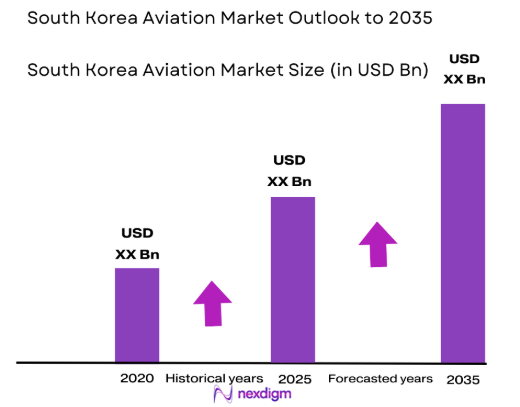
The South Korea aviation market has experienced substantial growth in recent years, driven by factors such as increasing air passenger traffic, enhanced military spending, and expansion in air cargo. Based on a recent historical assessment, the market size is expected to be valued at USD ~ billion. The strong demand for modern aircraft, airport infrastructure developments, and government initiatives focusing on aviation technology are key drivers behind this growth. This expansion is particularly influenced by the continuous rise in both commercial and military aviation sectors.
The dominant cities in South Korea, particularly Seoul and Incheon, play a crucial role in driving the aviation market. Seoul, being the capital, is a central hub for both domestic and international flights. Incheon is recognized for its strategic position, with Incheon International Airport serving as a major international transit hub. The dominance of these cities is further bolstered by government investments, infrastructural developments, and technological advancements that position South Korea as a leading player in the aviation sector in the Asia-Pacific region.
Market Segmentation
By Product Type
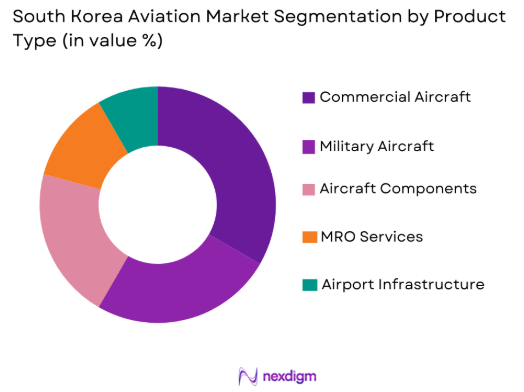
The South Korea aviation market is segmented by product type into commercial aircraft, military aircraft, aircraft components, maintenance, repair & overhaul (MRO) services, and airport infrastructure. Recently, the commercial aircraft sub-segment has a dominant market share due to rising demand for air travel, especially in the passenger segment, as well as the substantial growth of the tourism sector. Furthermore, airlines’ expansion plans and modern fleet procurement have bolstered commercial aircraft demand, making it the largest contributing segment. Additionally, the increasing preference for sustainable aviation fuels and next-generation aircraft technologies is expected to sustain the growth of commercial aircraft.
By Platform Type
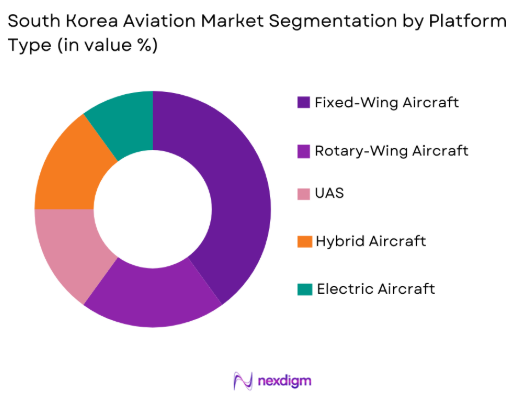
The South Korea aviation market is segmented by platform type into fixed-wing aircraft, rotary-wing aircraft, unmanned aerial systems (UAS), hybrid aircraft, and electric aircraft. Recently, the fixed-wing aircraft sub-segment has dominated the market share due to the high demand for commercial airliners and military aircraft, which have been the primary types of aircraft in use. The fixed-wing segment’s strong performance is attributed to its established presence in both domestic and international aviation networks. Additionally, the rise in global connectivity, as well as the demand for long-haul flights, is expected to continue to support the growth of fixed-wing aircraft.
Competitive Landscape
The South Korea aviation market has a highly competitive landscape, with key global and regional players in both commercial and military sectors. Major international aircraft manufacturers such as Boeing and Airbus compete alongside domestic manufacturers like Korea Aerospace Industries (KAI), and suppliers of aircraft components, technologies, and airport infrastructure. Consolidation is evident as companies merge, invest in innovative technologies, and secure strategic partnerships with government agencies, fostering market growth.
| Company Name | Establishment Year | Headquarters | Technology Focus | Market Reach | Key Products | Revenue (USD) | Strategic Partnerships |
| Korean Air | 1969 | Seoul, South Korea | ~ | ~ | ~ | ~ | ~ |
| Asiana Airlines | 1988 | Seoul, South Korea | ~ | ~ | ~ | ~ | ~ |
| Korea Aerospace Industries | 1999 | Sacheon, South Korea | ~ | ~ | ~ | ~ | ~ |
| Hyundai Heavy Industries | 1972 | Ulsan, South Korea | ~ | ~ | ~ | ~ | ~ |
| Hanwha Aerospace | 1977 | Seoul, South Korea | ~ | ~ | ~ | ~ | ~ |
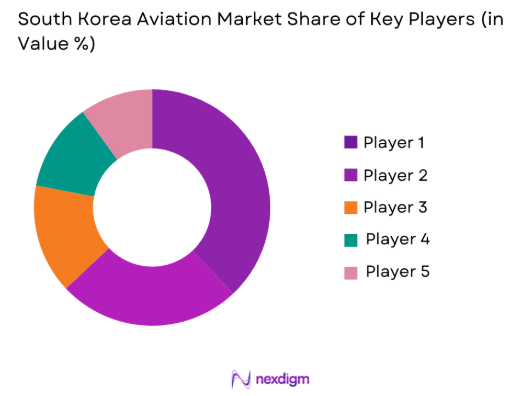
South Korea Aviation Market Analysis
Growth Drivers
Increasing air passenger traffic
The South Korea aviation market is experiencing robust growth, largely driven by the increasing demand for air travel. The country’s expanding middle class, coupled with the rise of international business activities and tourism, has fueled the demand for commercial aviation. South Korea’s strong position as a global travel hub contributes to its aviation market’s growth, with a significant increase in domestic and international flight services. Additionally, improvements in airport infrastructure, such as the expansion of Incheon International Airport, have made it easier for passengers to travel. These factors, combined with the growing adoption of modern aircraft, continue to drive market demand for air travel. Furthermore, the airline industry has benefitted from the increasing affordability of airfares and the reduction in flight costs due to efficient fleet management. This trend is expected to persist, supporting the growth of commercial airlines in the country and fueling market expansion.
Technological advancements in aviation
Another critical growth driver for the South Korea aviation market is the continued technological innovations in both aircraft and airport infrastructure. The aviation industry is rapidly adopting new technologies, such as fuel-efficient aircraft, smart airports, and advanced navigation systems. South Korea’s ability to integrate cutting-edge technologies has played a significant role in making its aviation sector one of the most advanced in the world. For instance, South Korean airlines have increasingly adopted modern, fuel-efficient aircraft, reducing operational costs and minimizing environmental impacts. At the same time, advancements in digital airport infrastructure, such as biometric security and automated check-ins, have improved the overall passenger experience. These technological advancements have also streamlined airport operations, making it easier for airlines to manage increased passenger traffic. The integration of AI, IoT, and automation in various parts of the aviation ecosystem continues to support the country’s competitive edge in the global aviation market.
Market Challenges
High cost of aircraft procurement
One of the most significant challenges facing the South Korea aviation market is the high cost of aircraft procurement, which can create financial burdens for airlines and defense contractors. The price of purchasing modern commercial and military aircraft is substantial, and the high capital expenditure required for such acquisitions often leads to long procurement cycles. Furthermore, maintenance costs for these aircraft can also be expensive, especially as older aircraft fleets require more frequent repairs. Despite government funding and financing mechanisms to support the aviation sector, the upfront investment required for new aircraft, along with the operational costs associated with maintaining a fleet, remains a considerable obstacle for both commercial and defense aviation. These high costs limit the capacity of smaller players to enter the market, reducing competition and innovation, while also straining the budgets of major airlines and military organizations.
Geopolitical tensions in the region
South Korea’s aviation market is also impacted by geopolitical tensions, particularly with neighboring North Korea. The political instability in the region has led to an unpredictable operating environment for airlines, causing disruptions in air traffic and increasing operational risks. Tensions between North and South Korea, coupled with regional security concerns, can lead to fluctuating air travel demand, particularly for international routes. Airlines may face challenges in securing stable and profitable routes due to the uncertainty surrounding regional geopolitics. These tensions also affect investor confidence, which can lead to reduced funding for infrastructure projects and technology investments. Additionally, heightened security risks may require airlines to invest in more stringent safety measures, further increasing operational costs. Despite these challenges, South Korea’s strategic position in the global aviation network continues to attract investment, and the government remains focused on maintaining a stable and secure aviation environment.
Opportunities
Adoption of electric and hybrid aircraft
A significant opportunity in the South Korea aviation market lies in the growing adoption of electric and hybrid aircraft. As the global aviation industry strives to reduce its carbon footprint, South Korea has the potential to become a leader in the development and deployment of electric aircraft. The government has shown strong support for green technologies, with initiatives focused on reducing emissions and promoting sustainable aviation practices. Electric and hybrid aircraft are poised to become more cost-effective, offering airlines the potential to reduce fuel consumption, operating costs, and carbon emissions. Moreover, South Korea’s well-established aerospace industry, strong technological capabilities, and commitment to sustainability position the country as a key player in the global shift toward cleaner aviation technologies. The adoption of electric aircraft will not only contribute to environmental goals but also present new growth avenues for South Korean manufacturers and technology providers.
Expansion of smart airports
Another major opportunity for the South Korea aviation market is the expansion of smart airports. With the rapid growth of passenger traffic, there is a strong demand for improved operational efficiency, reduced delays, and enhanced customer experiences. Smart airports, which integrate technologies such as biometrics, automation, and real-time data analytics, are increasingly being adopted worldwide, and South Korea is at the forefront of this trend. The country’s major airports, such as Incheon, are undergoing upgrades to implement these advanced technologies. The use of AI, machine learning, and big data in managing airport operations will improve security, reduce waiting times, and increase operational efficiency. These developments are expected to create opportunities for technology providers, automation companies, and infrastructure developers. By embracing smart airport solutions, South Korea can strengthen its position as a global aviation hub, improve the passenger experience, and streamline airport operations, driving further growth in the aviation market.
Future Outlook
The South Korea aviation market is expected to continue its growth trajectory over the next five years, with significant advancements in both commercial and military sectors. The country’s aviation industry will benefit from continued investments in airport infrastructure, technological innovation, and the increasing demand for both passenger and cargo services. Additionally, the growing focus on sustainability and electric aircraft will shape the future direction of the market, with more environmentally friendly solutions gaining traction. The government’s support for the aviation sector and the ongoing modernization of South Korea’s military fleet are set to drive market expansion.
Major Players
- Korean Air
- Asiana Airlines
- Korea Aerospace Industries
- Hyundai Heavy Industries
- Hanwha Aerospace
- Airbus
- Boeing
- Lockheed Martin
- Northrop Grumman
- Raytheon Technologies
- Saab Group
- Rolls-Royce
- Mitsubishi Heavy Industries
- Safran
- GE Aviation
Key Target Audience
- Investments and venture capitalist firms
- Government and regulatory bodies
- Airline operators
- Aerospace manufacturers
- Defense contractors
- Commercial aircraft operators
- Airport authorities
- Aviation technology providers
Research Methodology
Step 1: Identification of Key Variables
Key market drivers, growth factors, and challenges are identified through secondary research and expert consultation, focusing on regional trends, customer behavior, and technological advancements.
Step 2: Market Analysis and Construction
Data from primary and secondary sources are analyzed to construct a comprehensive market model, which includes the segmentation of product types, platform types, and key factors affecting demand and supply.
Step 3: Hypothesis Validation and Expert Consultation
The hypothesis formulated from market analysis is validated through discussions with industry experts, key stakeholders, and participants from the commercial and defense sectors to ensure accuracy and relevance.
Step 4: Research Synthesis and Final Output
All findings are synthesized into a coherent and comprehensive market report that presents data in an accessible and actionable format for stakeholders to make informed decisions.

- Executive Summary
- Research Methodology (Definitions, Scope, Industry Assumptions, Market Sizing Approach, Primary & Secondary Research Framework, Data Collection & Verification Protocol, Analytic Models & Forecast Methodology, Limitations & Research Validity Checks)

- Market Definition and Scope
- Value Chain & Stakeholder Ecosystem
- Regulatory / Certification Landscape
- Sector Dynamics Affecting Demand
- Strategic Initiatives & Infrastructure Growth

- Growth Drivers
Government Investments in Aerospace & Aviation
Increasing Demand for Air Travel and Cargo
Technological Advancements in Aircraft Design
Growing Defense Expenditures
Expansion of Aviation Infrastructure - Market Challenges
Supply Chain Disruptions in Aircraft Manufacturing
Rising Fuel Costs Impacting Commercial Airlines
Labor Shortages in Aviation Sector
High Capital Investment in Aircraft Procurement
Stringent Regulatory Compliance for Aircraft Safety - Market Opportunities
Advancements in Electric Aircraft Technologies
Growth in Cross-Border Aviation Networks
Emerging Demand for Sustainable Aviation Solutions - Trends
Rise of Sustainable Aviation Fuel (SAF)
Shift Toward Autonomous & Smart Aircraft Systems
Increase in Air Mobility Solutions
Digitalization of Aviation Infrastructure
Integration of AI & Big Data in Aviation Operations - Government Regulations & Defense Policy
Aircraft Certification & Airworthiness Standards
Environmental Regulations for Aviation Emissions
Government Funding for Aircraft R&D

- By Market Value, 2020-2025
- By Installed Units, 2020-2025
- By Average System Price, 2020-2025
- By System Complexity Tier, 2020-2025

- By System Type (In Value%)
Commercial Aircraft
Military Aircraft
Aircraft Components
Maintenance, Repair & Overhaul Services
Airport Infrastructure - By Platform Type (In Value%)
Fixed-Wing Aircraft
Rotary-Wing Aircraft
Unmanned Aerial Systems
Hybrid Aircraft
Electric Aircraft - By Fitment Type (In Value%)
OEM Solutions
Aftermarket Solutions
Upgrades & Retrofit
Component Manufacturing
Assembly - By End User Segment (In Value%)
Commercial Airlines
Military & Defense
Government & Law Enforcement
Private Aviation
Cargo Services - By Procurement Channel (In Value%)
Direct Procurement
OEM Distributors
Government Procurement
Private Sector Deals
Online Marketplaces - By Material / Technology (in Value%)
Lightweight Composites
Advanced Avionics
Jet Engines & Propulsion Systems
Aircraft Materials & Parts
Battery Technologies

- Market structure and competitive positioning
- Market share snapshot of major players
- Cross Comparison Parameters (System Type, Platform Type, Procurement Channel, End User Segment, Fitment Type, Material/Technology, Market Value, Installed Units, Price)
- SWOT Analysis of Key Players
- Pricing & Procurement Analysis
- Porter’s Five Forces
- Key Players
Korean Air
Asiana Airlines
Hyundai Heavy Industries
Korea Aerospace Industries
Samsung Techwin
Daewoo Shipbuilding & Marine Engineering
Hanwha Aerospace
LIG Nex1
SK hynix
POSCO
KAI Aerospace
LG Electronics
The Boeing Company
Airbus
Bombardier

- Increased Demand for Commercial Aircraft
- Government Focus on National Defense Modernization
- Expansion of Civil Aviation Operators
- Private Aviation’s Growing Affordability and Popularity

- Forecast Market Value, 2026-2035
- Forecast Installed Units, 2026-2035
- Price Forecast by System Tier, 2026-2035
- Future Demand by Platform, 2026-2035


 Request a Sample
 Ask for Customization
 Get a Quote
 Enquire Now