
 Download PDF
 Download PDF
Market Overview
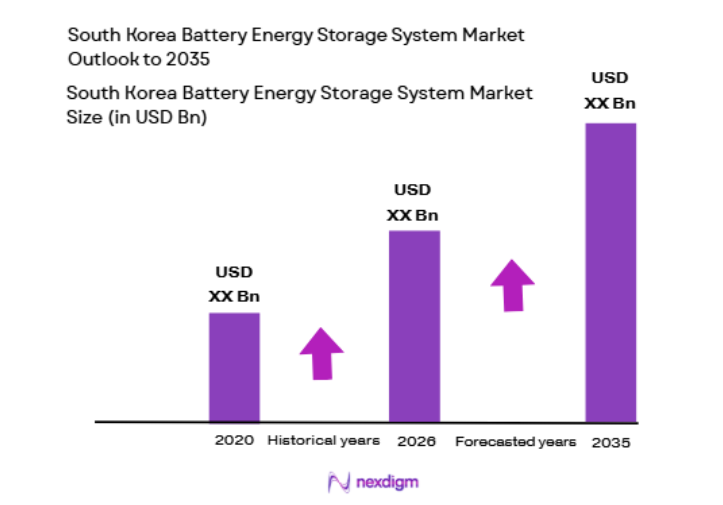
The South Korea Battery Energy Storage System (BESS) market is estimated to reach USD ~ billion based on a recent historical assessment. The market is primarily driven by South Korea’s push for energy sustainability, with a focus on renewable energy integration and grid stabilization. The government’s continued support for the expansion of renewable energy sources, alongside technological advancements in battery storage solutions, propels growth in the BESS market. This is further supported by the rising need for energy storage solutions to optimize the distribution and use of renewable power.
Seoul, Incheon, and Ulsan are key cities leading the deployment of BESS in South Korea, driven by both industrial demand and governmental initiatives. These cities are integral to South Korea’s green energy transformation due to their concentration of energy-intensive industries, renewable energy projects, and strategic infrastructure developments. As South Korea aims to reduce carbon emissions and transition to more sustainable energy sources, the growing adoption of BESS in these urban hubs plays a crucial role in supporting the national energy grid’s flexibility and reliability.
Market Segmentation
By Battery Type
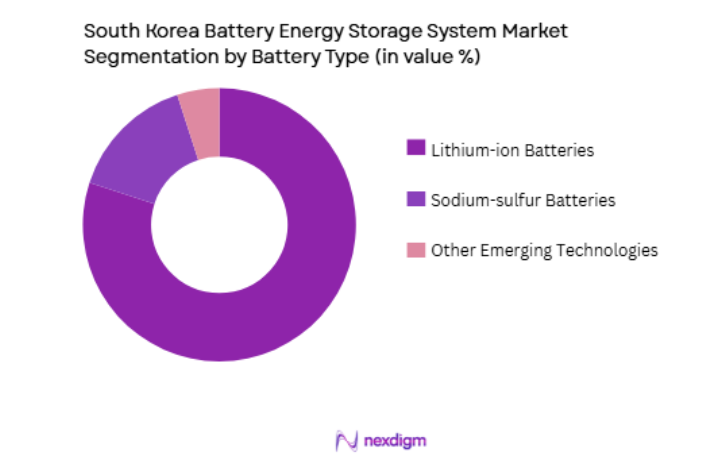
The South Korea Battery Energy Storage System market is segmented by battery type into lithium-ion (Li-ion), sodium-sulfur (NaS), and other emerging technologies. Lithium-ion batteries currently dominate the market due to their high energy density, cost-effectiveness, and maturity in both the EV and energy storage industries. These batteries are widely used in residential, commercial, and utility-scale storage systems. South Korea’s large-scale battery manufacturers, including LG Chem and Samsung SDI, have further accelerated the adoption of lithium-ion-based BESS solutions by lowering costs and increasing efficiency. The growing demand for renewable energy integration and grid stability also drives the dominance of lithium-ion batteries.
By Application
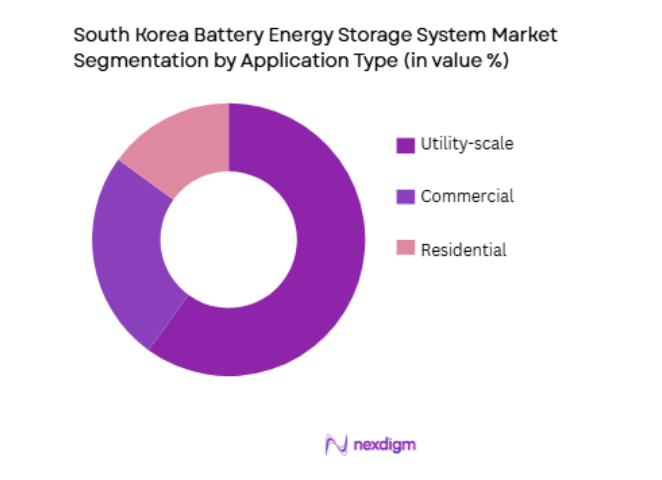
The South Korea Battery Energy Storage System market is also segmented by application into residential, commercial, and utility-scale energy storage. Recently, utility-scale applications have dominated the market due to the increasing demand for large-scale energy storage to support grid stability and renewable energy integration. The government’s investment in smart grids, renewable energy projects, and energy storage for industrial use has led to the growing adoption of utility-scale BESS solutions. Furthermore, energy storage systems at the utility scale are increasingly becoming an integral part of South Korea’s national energy strategy, ensuring a stable and reliable energy supply as renewable energy sources such as solar and wind become more prevalent.
Competitive Landscape
The South Korea BESS market is highly competitive, with several large players dominating the industry. Companies like LG Chem, Samsung SDI, and SK Innovation lead the market in battery manufacturing, providing innovative and high-performance energy storage solutions. These companies have strategically positioned themselves as leaders in the BESS market by focusing on advancements in battery technology, cost reduction, and increasing production capabilities. The growing demand for energy storage systems in both domestic and international markets has led to increased investments and partnerships between energy providers and battery manufacturers. As government policies continue to promote clean energy and renewable integration, these key players are well-positioned to capitalize on the expanding market opportunities.
| Company Name | Establishment Year | Headquarters | Technology Focus | Market Reach | Key Products | Revenue | Market-Specific Parameter |
| LG Chem | 1947 | Seoul, South Korea | ~ | ~ | ~ | ~ | ~ |
| Samsung SDI | 1970 | Seoul, South Korea | ~ | ~ | ~ | ~ | ~ |
| SK Innovation | 1962 | Seoul, South Korea | ~ | ~ | ~ | ~ | ~ |
| BYD | 1995 | Shenzhen, China | ~ | ~ | ~ | ~ | ~ |
| Panasonic | 1918 | Osaka, Japan | ~ | ~ | ~ | ~ | ~ |
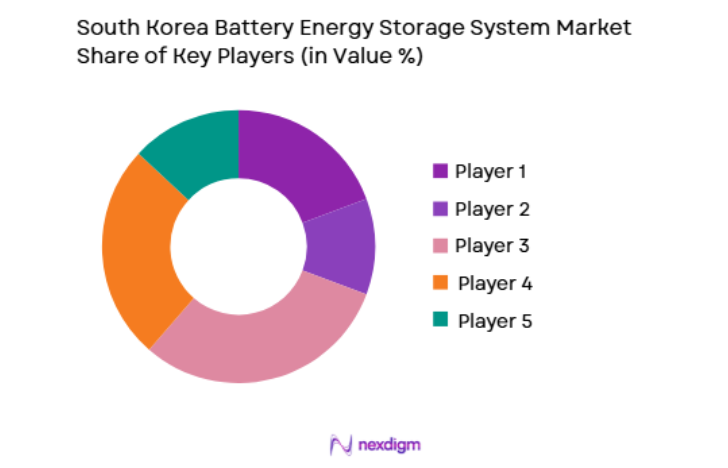
South Korea Battery Energy Storage System Market Analysis
Growth Drivers
Government Support for Renewable Energy Integration
The South Korean government has been a key growth driver for the BESS market, as the nation transitions towards renewable energy sources. With ambitious targets to reduce carbon emissions and achieve carbon neutrality, the government is heavily investing in energy storage systems to facilitate the integration of solar and wind power into the grid. South Korea’s policy push, including subsidies for renewable energy projects and the establishment of smart grids, directly supports the demand for energy storage systems. Additionally, the government’s Green New Deal aims to promote clean energy infrastructure and make energy storage a crucial component of South Korea’s energy strategy. The increased adoption of renewable energy in the country creates a strong demand for BESS to manage intermittent energy supply, thus driving the market for storage solutions.
Technological Advancements in Battery Efficiency
The ongoing technological advancements in battery chemistry and efficiency have been a significant driver of growth in the South Korea BESS market. Lithium-ion batteries, which dominate the market, have seen major improvements in energy density, lifespan, and cost reduction, making them increasingly attractive for energy storage applications. In addition, advancements in solid-state battery technology, which promise even higher energy density and greater safety, are further propelling the market. The development of longer-lasting and more efficient batteries reduces the operational costs of energy storage systems, making them more accessible and viable for large-scale and residential applications. As the technology continues to evolve, South Korea is well-positioned to benefit from these innovations, ensuring the continued growth of its BESS market.
Market Challenges
High Initial Costs of Battery Energy Storage Systems
Despite the growing demand for BESS in South Korea, the high initial costs of these systems remain a significant challenge. The price of energy storage systems, especially for large-scale utility projects, can be prohibitive, limiting widespread adoption. Although the cost of lithium-ion batteries has decreased over the years, it still accounts for a substantial portion of the total investment in energy storage systems. While government incentives and subsidies have helped alleviate some of these costs, the financial barrier remains a challenge for consumers and companies alike. Reducing the upfront costs of BESS through economies of scale, technological advancements, and continued policy support is crucial to making energy storage solutions more accessible to a wider range of customers.
Supply Chain Constraints for Raw Materials
The growing demand for lithium-ion batteries and other energy storage solutions in South Korea has led to supply chain constraints, particularly in securing critical raw materials such as lithium, cobalt, and nickel. These materials are essential for the production of high-performance batteries, and their availability is limited, causing concerns about price volatility and supply shortages. As South Korea continues to expand its energy storage and electric vehicle markets, securing a stable and sustainable supply of these raw materials becomes increasingly important. Supply chain disruptions, geopolitical instability, and price fluctuations in raw materials could slow the growth of the BESS market, making it essential for manufacturers and the government to address these supply chain challenges.
Opportunities
Emerging Second-Life Battery Applications
The rise of electric vehicles (EVs) in South Korea provides an emerging opportunity for the battery energy storage system market. As electric vehicle adoption increases, the number of used batteries that can no longer meet the rigorous demands of EVs will increase. These used batteries, known as second-life batteries, can be repurposed for energy storage applications, providing a cost-effective solution for residential and commercial storage systems. Second-life batteries offer a sustainable way to extend the lifecycle of EV batteries while reducing the environmental impact of battery disposal. As South Korea seeks to enhance its energy storage infrastructure, second-life battery applications present an opportunity to lower costs, increase supply, and promote the circular economy.
Integration of Battery Energy Storage Systems with Smart Grids
The integration of BESS with smart grids presents a significant growth opportunity for South Korea’s energy sector. As the country transitions to a more decentralized and renewable energy-driven grid, the need for efficient energy storage solutions becomes critical. Smart grids, which use digital technology to monitor and manage electricity use, can be paired with BESS to store excess renewable energy and release it during periods of high demand. This integration enhances grid stability and reliability, while also supporting South Korea’s renewable energy goals. The development of smart grid infrastructure in South Korea provides a significant opportunity for the BESS market, ensuring long-term growth and the effective integration of clean energy.
Future Outlook
The South Korea BESS market is expected to grow significantly in the coming years, driven by the increasing integration of renewable energy sources and government support for energy storage systems. The market will benefit from advancements in battery technology, as well as the growing adoption of smart grids and second-life battery applications. With a strong focus on sustainability and carbon neutrality, South Korea is poised to lead the way in energy storage innovation, ensuring the continued growth of the BESS market.
Major Players
- LG Chem
- Samsung SDI
- SK Innovation
- BYD
- Panasonic
- CATL
- Tesla
- A123 Systems
- CALB
- Farasis Energy
- Toshiba
- EVE Energy
- VARTA AG
- Northvolt
- Hitachi Chemical
Key Target Audience
- Investments and venture capitalist firms
- Government and regulatory bodies
- Energy and utilities companies
- Battery manufacturers
- Renewable energy companies
- Smart grid developers
- Environmental organizations
- EV manufacturers
Research Methodology
Step 1: Identification of Key Variables
Identify and define the key market drivers, challenges, and opportunities affecting the South Korea BESS market, such as government policies, technological advancements, and consumer trends.
Step 2: Market Analysis and Construction
Analyze market demand, growth patterns, and technology developments through primary and secondary research to create an accurate market model.
Step 3: Hypothesis Validation and Expert Consultation
Consult with industry experts, government representatives, and market participants to validate assumptions and refine growth projections.
Step 4: Research Synthesis and Final Output
Synthesize findings into a comprehensive report, providing actionable insights and strategic recommendations for stakeholders in the BESS market.

- Executive Summary
- Research Methodology (Definitions, Scope, Industry Assumptions, Market Sizing Approach, Primary & Secondary Research Framework, Data Collection & Verification Protocol, Analytic Models & Forecast Methodology, Limitations & Research Validity Checks)

- Market Definition and Scope
- Value Chain & Stakeholder Ecosystem
- Regulatory / Certification Landscape
- Sector Dynamics Affecting Demand

- Growth Drivers
Government Incentives & Support for Renewable Energy
Increasing Energy Storage Demand for Grid Stability
Technological Advancements in Battery Storage Systems - Market Challenges
High Capital Investment for Deployment
Technological & Performance Limitations of Existing Storage Systems
Regulatory & Compliance Barriers in Energy Storage Integration - Market Opportunities
Integration of Energy Storage with Renewable Energy Sources
Growth of Electric Vehicle Charging Infrastructure
Advancements in Battery Technology and Energy Efficiency - Trends
Increased Investment in Energy Storage for Renewables Integration
Rising Adoption of Energy Storage in Residential Applications - Government Regulations
Energy Storage System Certification Standards
Incentive Programs for Renewable Energy Integration
Policy Guidelines for Battery Recycling and Disposal - SWOT Analysis
- Porter’s Five Forces

- By Market Value, 2020-2025
- By Installed Units, 2020-2025
- By Average System Price, 2020-2025
- By System Complexity Tier, 2020-2025

- By System Type (In Value%)
Utility-Scale Storage Systems
Commercial & Industrial Storage Systems
Residential Storage Systems
Hybrid Storage Systems
Off-grid Storage Systems - By Platform Type (In Value%)
Grid-Connected Platforms
Off-Grid Platforms
Microgrid Platforms
Hybrid Platforms
Integrated Platforms - By Fitment Type (In Value%)
On-premise Solutions
Cloud-based Solutions
Hybrid Solutions
Integrated Solutions - By End User Segment (In Value%)
Utilities
Commercial & Industrial Facilities
Residential Sector

- Market Share Analysis
- Cross Comparison Parameters (System Type, Platform Type, End User Segment, Storage Capacity, Energy Efficiency, Battery Chemistry, Cost per kWh, Scalability, Deployment Time, System Integration Complexity)
- SWOT Analysis of Key Competitors
- Pricing & Procurement Analysis
- Key Players
Tesla
BYD Company
Samsung SDI
LG Chem
Panasonic
VARTA AG
Sonnen
Fluence Energy
Redflow
Eaton
Enphase Energy
Schneider Electric
Sungrow Power Supply Co.
Saft
AES Energy Storage

- Utilities’ Adoption of Energy Storage for Grid Optimization
- Commercial & Industrial Sectors Utilizing Energy Storage for Cost Reduction
- Residential Sector’s Growing Interest in Energy Storage Solutions
- Government Agencies Driving Energy Storage Initiatives

- Forecast Market Value, 2026-2035
- Forecast Installed Units, 2026-2035
- Price Forecast by System Tier, 2026-2035
- Future Demand by Platform, 2026-2035


 Request a Sample
 Ask for Customization
 Get a Quote
 Enquire Now